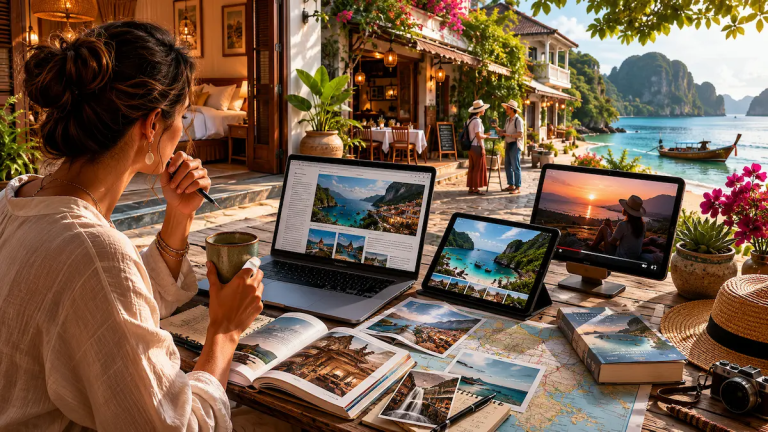

What Is Travel Discovery?
Part of our ongoing exploration of travel discovery, traveller behaviour and the ways people research, compare and make travel decisions.
Quick Summary
- Travel Discovery is the process through which travellers find, research and evaluate destinations, experiences and travel businesses before making travel decisions.
- Modern travellers discover travel businesses through search engines, AI tools, social media, reviews, travel articles, videos, maps and recommendations.
- Discovery is often the first stage of the broader Travel Discovery Process.
- Travel discovery influences which destinations, experiences and businesses travellers ultimately consider and choose.
- Modern travel discovery rarely occurs in one place and increasingly operates within connected Travel Discovery Ecosystems.
What Is Travel Discovery?
When people think about travel, they often focus on the destination, the experience, or the booking itself. What is less visible is the process that happens beforehand. Before a traveller books a hotel, joins a tour, visits an attraction, or chooses a destination, they first need to discover it.
This process is known as travel discovery.
Travel discovery is the way travellers find, research, evaluate and become aware of destinations, experiences and travel businesses before making travel decisions. It includes everything from search engines and AI tools to social media, travel articles, reviews, recommendations and destination guides.
In the past, travel discovery was often associated with a handful of sources such as guidebooks, travel agents and search engines. Today, the process is far more complex. Travellers move between multiple platforms, compare information from different sources, seek validation through reviews and recommendations, and often revisit the same decision several times before making a booking.
As a result, travel discovery has become an important part of the modern travel planning process. It influences which destinations travellers consider, which experiences they compare, and ultimately which travel businesses they choose to engage with.
Understanding travel discovery helps explain how modern travellers make decisions, why some businesses are easier to find than others, and how information, trust and visibility shape travel choices long before a booking takes place.
In this article, we’ll explore what travel discovery is, why it matters, how the process works, and how travellers discover travel businesses online in an increasingly connected digital world.
Defining Travel Discovery
At its simplest, travel discovery is the process through which travellers become aware of destinations, experiences and travel businesses before making a decision.
It is the stage that exists between not knowing something exists and actively considering it as part of a future trip.
For example, a traveller may discover a destination through a social media post, learn about a tour through a travel article, encounter a hotel through an online review, or receive a recommendation from a friend. In each case, discovery occurs before any enquiry, booking or direct engagement takes place.
Travel discovery is not a single action or platform. Rather, it is a broader process that involves exposure to information, exploration of options and the gradual development of awareness and interest.
This is an important distinction because travellers rarely move directly from inspiration to booking. Instead, they often spend time researching destinations, comparing experiences, reading reviews, watching videos and seeking information from multiple sources before deciding what to do next.
As digital information has become more accessible, the number of discovery channels available to travellers has expanded significantly. Search engines, AI tools, social media platforms, destination guides, travel publications, online reviews, maps and video content can all contribute to the travel discovery process.
Because of this, travel discovery is often best understood as the beginning of the traveller journey. It represents the point at which destinations, experiences and travel businesses first enter a traveller’s consideration set and become part of the decision-making process.
While every traveller follows a slightly different path, discovery remains a common starting point. Before people can compare options, evaluate alternatives or make bookings, they must first discover that those options exist.
This is why travel discovery plays such an important role in modern travel planning. It influences not only what travellers choose, but also what opportunities they have the chance to consider in the first place.
Travel discovery matters because it influences the information travellers see, the options they consider and ultimately the decisions they make.
Every travel decision begins with awareness. Before somebody can compare hotels, choose a tour, visit an attraction or book a holiday, they first need to discover that those options exist. In many cases, the businesses and experiences that enter a traveller’s awareness early are more likely to become part of the evaluation process later.
For travellers, discovery helps shape the entire planning journey. It introduces new destinations, uncovers experiences they may not have previously considered and provides information that helps them make more informed decisions. The quality and variety of information available during the discovery stage can significantly influence how travellers perceive destinations, businesses and experiences.
For travel businesses, discovery plays an equally important role. Even the most highly rated tour, hotel, attraction or travel service cannot be considered if travellers never become aware of it. Discovery creates the opportunity for a business to enter the traveller’s consideration set and participate in the decision-making process.
The importance of travel discovery has increased as the travel industry has become more competitive and information-rich. Travellers now have access to an enormous range of destinations, experiences and travel content. As a result, standing out is often less about being the only option and more about being discoverable at the right moment during a traveller’s research process.
Modern travellers rarely rely on a single source of information. They move between search engines, AI tools, social media platforms, reviews, videos, destination guides and recommendations while planning a trip. Each of these sources has the potential to influence what they discover and what they choose to explore further.
This means travel discovery is no longer simply about visibility on one platform. It is about understanding how travellers find information, how they evaluate options and how different sources contribute to the decisions they eventually make.
In many ways, travel discovery sits at the foundation of the entire travel planning process. It creates the opportunities that later become research, comparison, decision-making and, ultimately, bookings.
How Travellers Discover Travel Businesses
Travel businesses can be discovered in many different ways, and the journey that leads a traveller to a destination, experience or service is often more complex than it first appears.
In the past, travel discovery was commonly associated with guidebooks, travel agents and traditional search engines. Today, travellers have access to an enormous range of information sources, allowing them to research destinations, compare experiences and evaluate travel businesses across multiple platforms before making travel decisions.
Search engines remain one of the most important travel discovery channels. Travellers regularly search for destination information, accommodation, attractions, tours and local experiences as part of their travel planning process. A traveller researching things to do in Phuket, for example, may discover several travel businesses long before they are ready to make a booking.
AI tools are also becoming an increasingly influential part of modern travel discovery. Rather than searching individual websites, travellers can now ask questions, compare options and seek recommendations through conversational interfaces. As AI-assisted travel research continues to grow, travel businesses have new opportunities to be discovered through the information, content and expertise that contribute to those recommendations.
Social media platforms play a different but equally important role. Many travel decisions begin with inspiration rather than active research. A traveller might discover a destination, attraction or experience through a photograph, video or recommendation that captures their interest and encourages further exploration.
Reviews continue to influence both travel discovery and travel decisions. Travellers frequently encounter travel businesses while reading reviews, comparing ratings or researching the experiences of previous guests. In many cases, discovery and trust occur simultaneously, with reviews helping travellers decide which businesses deserve further consideration.
Travel articles, destination guides and editorial content also contribute significantly to travel discovery. Travellers often undertake extensive travel research before making decisions, and the destinations, experiences and travel businesses featured within that content can become part of their consideration process.
Maps, videos, tourism websites, online communities and personal recommendations all create additional opportunities for discovery. Each source contributes information that helps travellers build a clearer understanding of their options as they move through the travel planning process.
The important point is that modern travel discovery rarely occurs in one place. Travellers move between search engines, AI tools, social media, reviews, travel articles and recommendations as they gather information and evaluate alternatives. The businesses that ultimately earn attention are often those that appear across multiple stages of that journey.
Understanding How Travellers Discover Travel Businesses Online provides a deeper look at these individual discovery channels and the role each one plays in helping travellers find destinations, experiences and travel businesses.
However, discovering a travel business is only the beginning. Travellers typically continue through a broader Travel Discovery Process that includes research, comparison, validation and decision making before any booking or enquiry takes place.
The Travel Discovery Process
While travellers discover destinations, experiences and travel businesses through many different channels, discovery itself is only the beginning of a much broader journey.
Modern travel decisions rarely occur immediately after somebody encounters a destination or business for the first time. Instead, travellers typically move through a series of stages that help them evaluate options, reduce uncertainty and build confidence before making a booking or enquiry.
This broader journey is often referred to as the Travel Discovery Process.
Although every traveller is different, the process generally begins with initial discovery. A destination, attraction, tour, hotel or travel business enters a traveller’s awareness through search, social media, recommendations, reviews, AI tools or other sources of travel information.
Once discovery has occurred, travellers often move into a research phase. During this stage they seek additional information, explore alternatives and begin comparing options. As discussed in How Travellers Research Trips Today, this research process can involve multiple platforms and sources of information before a traveller develops a clear understanding of their available choices.
Comparison is often the next stage. Travellers rarely evaluate a single option in isolation. Instead, they compare destinations, experiences, accommodation, attractions and travel businesses against competing alternatives. Understanding How Travellers Compare Travel Options helps explain why visibility alone is not always enough to influence travel decisions.
As travellers gather more information, they frequently seek validation. Reviews, recommendations, travel articles and the experiences of previous travellers all help reduce uncertainty and build trust. The role of trust becomes particularly important when evaluating unfamiliar destinations, experiences or travel businesses. This is explored further in Why Validation Matters Before Booking and Why Trust Influences Travel Decisions.
Only after these stages have occurred do many travellers reach the decision-making phase. Even then, bookings are not always immediate. Travellers may revisit research, compare alternatives again or seek additional reassurance before committing to a final choice.
Understanding the Travel Discovery Process is important because it demonstrates that travel discovery is not a single event. Rather, it is part of a larger journey that influences how travellers gather information, evaluate options and make travel decisions.
This also helps explain why modern travel discovery has become increasingly complex. Travellers move between multiple sources of information throughout the process, creating what many now describe as a Travel Discovery Ecosystem rather than a single discovery channel.
How Travel Discovery Has Changed
Travel discovery has always existed, but the way travellers discover destinations, experiences and travel businesses has changed significantly over time.
In the past, travellers often relied on a relatively small number of information sources. Guidebooks, travel agents, brochures, newspapers, magazines and personal recommendations played a central role in helping people learn about destinations and plan trips. Discovery was often limited by the information that was available and the channels through which it could be accessed.
The growth of the internet transformed this process. Search engines gave travellers access to a vast amount of travel information, allowing them to research destinations, compare options and discover travel businesses independently. For many years, search became one of the dominant forms of travel discovery.
However, modern travel discovery extends far beyond search engines alone. Social media platforms introduced new forms of visual discovery. Online reviews created opportunities for travellers to learn from the experiences of others. Video content allowed destinations and experiences to be explored before a journey even began. More recently, AI tools have introduced new ways for travellers to ask questions, compare options and seek recommendations.
As these channels have expanded, travel discovery has become increasingly fragmented. Travellers no longer follow a single path from discovery to booking. Instead, they move between multiple sources of information as they research, compare and evaluate options throughout the travel planning process.
This shift is explored in greater detail in How Travel Discovery Has Changed Over Time, but one trend remains clear: travellers now have more information, more choices and more discovery channels available than at any point in history.
As a result, travel businesses are no longer discovered through a single platform or source. They may be encountered through search engines, social media, AI tools, travel articles, destination guides, reviews, videos or personal recommendations, often as part of the same journey.
This evolution has fundamentally changed the way travel discovery works. Understanding these changes helps explain why visibility, trust and information have become increasingly interconnected within the modern Travel Discovery Ecosystem.
Travel Discovery vs Travel Marketing
Travel discovery and travel marketing are closely related concepts, but they are not the same thing.
Travel marketing focuses on how destinations, experiences and travel businesses promote themselves to potential customers. It includes activities such as advertising, content creation, social media campaigns, public relations, email marketing and other efforts designed to generate awareness and interest.
Travel discovery, by contrast, focuses on how travellers find, research and evaluate information before making travel decisions.
This distinction is important because travellers do not experience the travel industry through the lens of marketing channels. Instead, they experience it through a discovery process that helps them explore destinations, compare options and determine which experiences are most relevant to their interests and travel goals.
For example, a travel business may invest heavily in marketing, but that marketing activity only becomes effective if it contributes to discovery. A social media post, destination guide, review, video or search result has value because it helps travellers become aware of something they may wish to explore further.
In many cases, travel discovery occurs without direct marketing at all. A traveller might discover a business through a recommendation from a friend, an online review, a destination article or a piece of editorial content. While marketing may have helped create awareness somewhere along the journey, the discovery itself can occur through many different sources of information.
Understanding this difference helps explain why visibility alone does not guarantee attention and why marketing activity alone does not guarantee discovery. Travellers still need to encounter information at the right time, in the right context and through channels they trust.
As discussed in How Travellers Discover Travel Businesses Online, discovery often occurs across multiple platforms and information sources rather than through a single marketing channel. Travellers may encounter a business through search, social media, reviews, AI recommendations and travel content before deciding whether it deserves further investigation.
This is one reason modern travel planning has become increasingly complex. Businesses may focus on marketing activities, while travellers focus on discovery. The two are connected, but they represent different perspectives on the same journey.
Ultimately, travel marketing seeks to create awareness, while travel discovery explains how that awareness becomes part of the traveller’s research, evaluation and decision-making process.
Common Misconceptions About Travel Discovery
As travel discovery has become more complex, a number of misconceptions have emerged about how travellers find information and make travel decisions.
One of the most common misconceptions is that travel discovery happens entirely through search engines. While search remains an important part of travel research, most travellers now interact with multiple sources of information throughout the planning process. Social media, reviews, videos, AI tools, destination guides and personal recommendations all contribute to modern travel discovery.
Another misconception is that discovery only occurs when somebody is ready to book. In reality, many travel journeys begin long before a traveller actively starts planning. Inspiration, curiosity and casual browsing often introduce destinations, experiences and travel businesses months before a booking decision is made. Understanding Why Discovery Happens Before Booking helps explain why early visibility can be just as important as visibility at the point of purchase.
Some people also assume that travel discovery is a single event rather than an ongoing process. However, as explored throughout the Travel Discovery Process, travellers frequently move back and forth between discovery, research, comparison and validation before reaching a final decision. Discovery may occur multiple times throughout the same journey as travellers encounter new information and alternatives.
A further misconception is that more visibility automatically leads to more bookings. Visibility certainly creates opportunities for discovery, but travellers still need confidence, trust and relevant information before making decisions. This is one reason why reviews, recommendations and high-quality travel content continue to play such an important role in travel planning.
More recently, some commentators have suggested that AI will replace traditional travel discovery altogether. While AI tools are changing how travellers access information, they are ultimately becoming another part of the discovery ecosystem rather than replacing it. AI recommendations still rely on information, content, reviews, expertise and sources that travellers can trust.
Finally, many people assume that travel discovery works the same way for everyone. In reality, every traveller follows a slightly different path. Some travellers rely heavily on search engines, while others begin with social media, recommendations, videos or destination research. The channels may differ, but the underlying need to discover, evaluate and compare options remains remarkably consistent.
Recognising these misconceptions helps create a more accurate understanding of how travel discovery works today and why it continues to evolve as technology, traveller behaviour and information sources change.
The Future Of Travel Discovery
Travel discovery will continue to evolve as technology, traveller behaviour and information sources change.
Over the past two decades, travellers have moved from relying primarily on guidebooks and travel agents to using search engines, reviews, social media, videos and mobile devices as part of their travel planning process. More recently, AI tools have introduced new ways for travellers to research destinations, compare options and seek recommendations.
While the platforms and technologies involved in travel discovery may continue to change, the underlying goal remains the same. Travellers still need reliable information that helps them understand their options, evaluate alternatives and make confident travel decisions.
One of the most significant trends shaping the future of travel discovery is the increasing number of channels through which travellers access information. Search engines, AI tools, social media platforms, travel articles, reviews, videos and recommendations are becoming increasingly interconnected, creating what many describe as a Travel Discovery Ecosystem rather than a collection of separate discovery channels.
At the same time, trust is likely to become even more important. As the volume of travel information continues to grow, travellers will increasingly seek reliable sources, authentic experiences and information that helps them make informed decisions. Understanding Why Trust Influences Travel Decisions will become increasingly important for both travellers and travel businesses alike.
The future of travel discovery is therefore unlikely to be defined by a single platform or technology. Instead, it will continue to be shaped by the ways travellers discover, research, compare and evaluate information across a growing range of connected channels and sources.
For travellers, this means more opportunities to explore and compare options than ever before. For travel businesses, it reinforces the importance of being discoverable wherever travellers are actively researching, evaluating and making travel decisions.
Conclusion
Travel discovery is the process through which travellers find, research, evaluate and become aware of destinations, experiences and travel businesses before making travel decisions.
While the channels involved in travel discovery have changed significantly over time, the fundamental principle remains the same. Before travellers can compare options, build trust, make decisions or complete bookings, they first need to discover that those options exist.
Today, travel discovery occurs across a wide range of connected channels including search engines, AI tools, social media platforms, reviews, travel articles, destination guides, videos and personal recommendations. Rather than following a single path, travellers often move between multiple sources of information as part of a broader Travel Discovery Process.
Understanding travel discovery helps explain how travellers research trips, why trust and information matter, and how travel businesses become part of the traveller’s decision-making journey. It also highlights why discovery is increasingly shaped by interconnected platforms and information sources operating within a broader Travel Discovery Ecosystem.
As travel planning continues to evolve, travel discovery will remain a critical part of the traveller journey. The businesses, destinations and experiences that travellers ultimately choose are often influenced long before a booking takes place, making discovery one of the most important stages in modern travel decision making.
Continue Exploring Travel Discovery
Travel discovery is only one part of a much broader traveller journey.
To better understand how travellers research destinations, compare options and make travel decisions, explore the related articles below and continue building your understanding of modern travel discovery.
Related Reading
Travel discovery is a broad subject that includes traveller behaviour, research, decision making and the many ways destinations, experiences and travel businesses are discovered online. The following articles explore specific aspects of travel discovery in greater detail.
Why Travel Discovery Matters
Explore why travel discovery influences traveller awareness, research, comparison and decision making throughout the travel planning process.
How Travel Discovery Has Changed Over Time
Discover how travel discovery has evolved from guidebooks and travel agents to search engines, social media, reviews, AI tools and modern digital ecosystems.
Why Discovery Happens Before Booking
Learn why travel discovery often begins long before a traveller is ready to make a booking and how early awareness influences later decisions.
Travel Discovery vs Travel Marketing
Understand the difference between how travel businesses promote themselves and how travellers actually discover destinations, experiences and travel information.
Common Misconceptions About Travel Discovery
Examine some of the most common misunderstandings surrounding travel discovery and how modern travellers really find, research and evaluate travel options.
Frequently Asked Questions About Travel Discovery
What is travel discovery?
Travel discovery is the process through which travellers find, research, evaluate and become aware of destinations, experiences and travel businesses before making travel decisions. It includes discovery through search engines, AI tools, social media, reviews, travel articles, recommendations and other sources of travel information.
Why is travel discovery important?
Travel discovery is important because travellers can only consider options they know exist. Discovery influences which destinations, experiences and travel businesses enter a traveller’s awareness and become part of the decision-making process. Learn more in Why Travel Discovery Matters.
How do travellers discover travel businesses?
Travellers discover travel businesses through a variety of channels including search engines, AI tools, social media platforms, online reviews, travel articles, destination guides, videos, maps and personal recommendations. A more detailed explanation can be found in How Travellers Discover Travel Businesses Online.
Is travel discovery the same as travel marketing?
No. Travel marketing focuses on promoting destinations, experiences and travel businesses, while travel discovery focuses on how travellers find, research and evaluate information before making decisions. Learn more in Travel Discovery vs Travel Marketing.
What is the travel discovery process?
The Travel Discovery Process refers to the journey travellers follow from initial awareness through research, comparison, validation and decision making before making a booking or enquiry.
Why does discovery happen before booking?
Travellers rarely book immediately after discovering a destination, experience or travel business. Most people move through a period of research, comparison and evaluation before making a final decision. This concept is explored further in Why Discovery Happens Before Booking.
How do travellers research trips today?
Modern travellers typically use multiple sources of information when planning a trip. Search engines, AI tools, social media, reviews, videos and travel articles all contribute to the research process. Learn more in How Travellers Research Trips Today.
Has travel discovery changed over time?
Yes. Travel discovery has evolved significantly as travellers have gained access to search engines, social media, online reviews, mobile devices, video content and AI tools. Modern travellers typically use multiple sources of information when planning trips. Learn more in How Travel Discovery Has Changed Over Time.
What influences travel decisions?
Travel decisions are influenced by a range of factors including trust, recommendations, reviews, previous experiences, destination information, pricing and traveller preferences. Explore this topic further in What Influences Travel Decisions?
What role does trust play in travel discovery?
Trust helps travellers evaluate the credibility of information and the suitability of destinations, experiences and travel businesses. Reviews, recommendations and first-hand experiences often play an important role in building confidence before booking. Learn more in Why Trust Influences Travel Decisions.
What is a travel discovery ecosystem?
A travel discovery ecosystem is the network of platforms, information sources and discovery channels that travellers use when researching and planning trips. Search engines, AI tools, social media, reviews, videos and travel content all contribute to this broader ecosystem. Learn more in Travel Discovery Ecosystems.
Why do travel businesses care about travel discovery?
Travel discovery creates opportunities for travel businesses to become part of a traveller’s consideration process. Businesses that are easier to discover have more opportunities to be researched, compared and potentially chosen by travellers. Learn more in Understanding Travel Business Visibility and Why Discoverability Matters For Travel Businesses.
About The Author
David Hibbins is the founder of Travel With Insight and has spent years building websites, creating online content and observing how people discover businesses, destinations and experiences online.
Through his work across travel publishing, tourism businesses, digital marketing and content creation, he has developed a particular interest in Travel Discovery, Traveller Behaviour and the ways people research, compare and make Travel Decisions.
His writing focuses on understanding how travellers discover information, how travel businesses become visible throughout that journey and how modern travel discovery continues to evolve as search engines, AI tools, social media and digital publishing change.
Travel With Insight was created to explore these ideas and help both travellers and travel businesses better understand the Travel Discovery Process that often occurs long before a booking is made.
His work regularly explores topics including How Travellers Discover Travel Businesses Online, What Influences Travel Decisions?, Travel Discovery Ecosystems and the evolving relationship between information, visibility and traveller decision making.