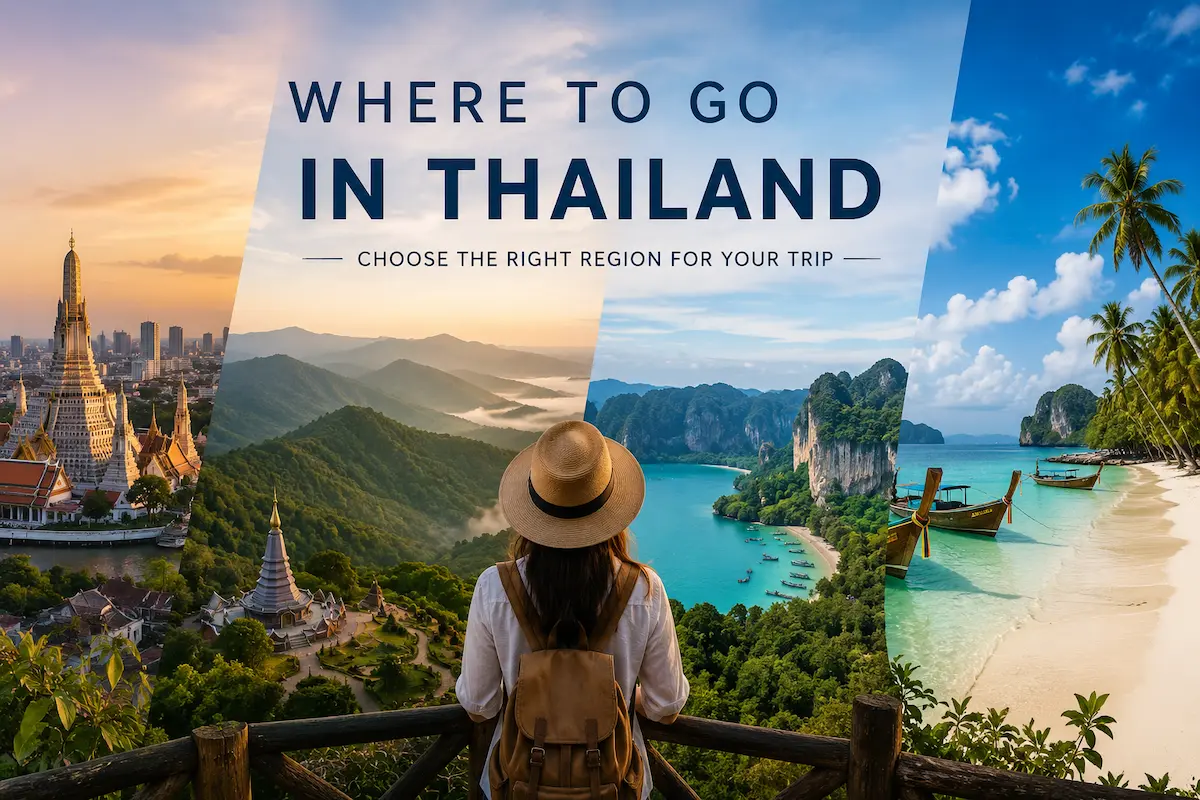
Where to Go in Thailand: Choosing the Right Region for Your Trip
In answering where to go in Thailand it is neccesary first to understand what Thailand can offer and what your motivation is.
Thailand has become one of the world’s most popular travel destinations, welcoming millions of visitors from around the world every year.
For many people, deciding to visit Thailand is the easy part.
With tropical islands, stunning beaches, magnificent temples, incredible food, mountain landscapes, ancient history, colourful festivals and world-famous hospitality, it’s easy to see why Thailand is often at the top of so many travel wish lists.
Choosing where to go, however, is often much harder.
Many first-time visitors begin by searching for famous places like Bangkok, Chiang Mai or Phuket. Others have iconic attractions on their bucket list, such as the Grand Palace, Doi Suthep, the Phi Phi Islands or the Big Buddha, without necessarily knowing where they are or what else each region has to offer.
The good news is that there isn’t a wrong choice.
Every region of Thailand has something unique to offer. The key is finding the one that best matches the kind of holiday you’re hoping to have.
Before comparing cities, islands and attractions, it helps to think about what inspired you to visit Thailand in the first place.
Are you dreaming of relaxing on tropical beaches? Exploring ancient temples? Hiking through mountain landscapes? Experiencing Thailand’s incredible food? Looking for adventure? Or simply spending quality time with the people you’re travelling with?
For most travellers, it’s a combination of several of these.
Once you have a clearer idea of what you’re looking for, choosing where to go becomes much easier.
In this guide, we’ll take a tour through Thailand’s six major geographic regions, looking at what each is known for, the experiences it offers and the types of travellers it suits best. By the end, you should have a much clearer idea of which part of Thailand is the right fit for your trip.
Thailand’s Regions
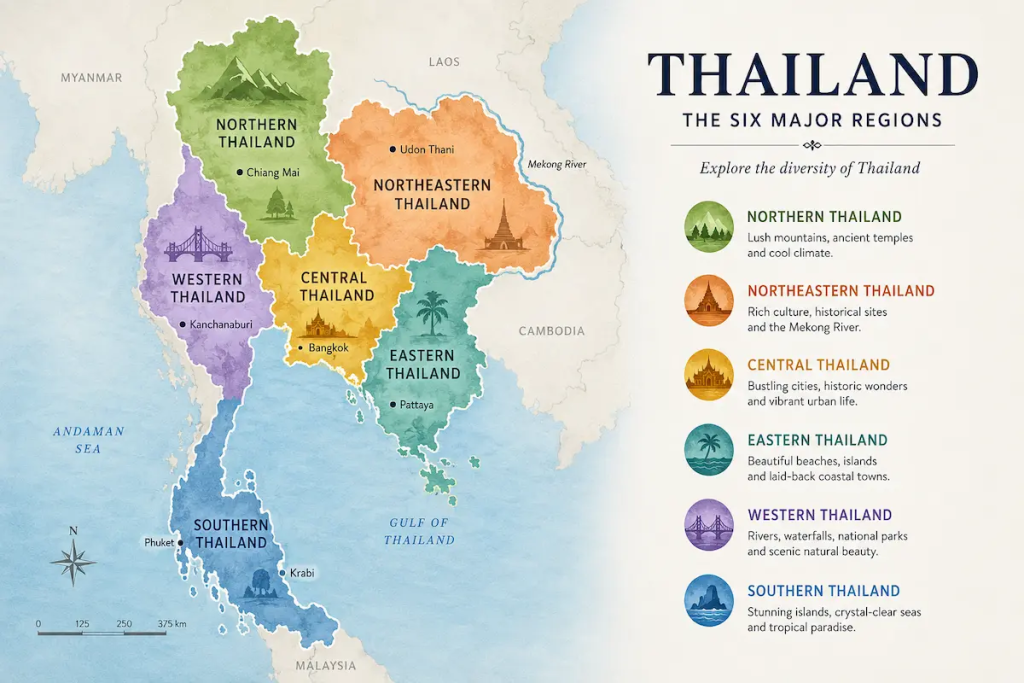
Thailand is a surprisingly diverse country, and each region has its own character, landscapes and travel experiences.
From mountain ranges in the north to tropical islands in the south, bustling cities in the centre and quieter rural communities in the east, west and northeast, travelling through Thailand can feel like visiting several different countries within one.
Rather than trying to see everything in a single trip, many travellers find it more rewarding to choose one or two regions that best match the type of holiday they have in mind.
To help you get your bearings, here’s a quick overview of Thailand’s six major geographic regions, along with some of their best-known destinations and iconic attractions.
| Region | Major Destinations | Iconic Attractions |
|---|---|---|
| Central Thailand | Bangkok, Ayutthaya, Pattaya, Hua Hin, Kanchanaburi | Grand Palace, Wat Arun, Wat Pho, Ayutthaya Historical Park, Damnoen Saduak Floating Market |
| Northern Thailand | Chiang Mai, Chiang Rai, Pai, Mae Hong Son, Lampang | Doi Suthep, Doi Inthanon, White Temple, Golden Triangle, Pai Canyon |
| Northeastern Thailand | Udon Thani, Khon Kaen, Nakhon Ratchasima, Ubon Ratchathani, Nong Khai | Phimai Historical Park, Phanom Rung Historical Park, Sam Phan Bok, Wat Pa Phu Kon, Mekong River |
| Eastern Thailand | Rayong, Koh Chang, Koh Kood, Koh Mak, Chanthaburi | Mu Ko Chang National Park, Koh Kood Beaches, Emerald Golf Coast, Namtok Phlio National Park, Cathedral of the Immaculate Conception |
| Western Thailand | Kanchanaburi, Sangkhla Buri, Mae Sot, Suan Phueng, Thong Pha Phum | Bridge over the River Kwai, Erawan National Park, Hellfire Pass, Three Pagodas Pass, Sai Yok National Park |
| Southern Thailand | Phuket, Krabi, Koh Samui, Khao Lak, Koh Phi Phi | Big Buddha, Phi Phi Islands, Railay Beach, James Bond Island, Khao Sok National Park |
As you can see, many of Thailand’s best-known destinations and attractions are spread across different regions, each offering its own style of travel.
In the following sections, we’ll look at each region in more detail, exploring what it’s known for, who it’s best suited to and the practical considerations that can help you decide whether it’s the right fit for your trip.
What Do You Want From Your Thailand Holiday?
Before deciding where to go, it’s worth taking a moment to think about what you really want from your time in Thailand.
One of the reasons Thailand is such a popular destination is that it appeals to so many different types of travellers. Whether you’re planning your first visit or returning to discover somewhere new, there’s a good chance you’re coming for a combination of experiences rather than just one.
Perhaps you’re dreaming of relaxing on a tropical beach, exploring ancient temples, discovering mountain villages, tasting incredible food, enjoying an island adventure or simply spending quality time with the people you’re travelling with.
While every region has something unique to offer, some naturally lend themselves to particular travel styles more than others.
Thinking about what inspired you to visit Thailand in the first place can make choosing the right region much easier.
Escape
If your idea of the perfect holiday is slowing down and leaving everyday life behind, you’re probably looking for somewhere that offers relaxation, beautiful scenery and a chance to recharge. For many travellers, that means beaches, islands, luxury resorts or peaceful natural surroundings.
Exploration
Some people travel because they love discovering somewhere new. Exploring different landscapes, wandering through local markets, visiting historic towns and experiencing unfamiliar cultures is every bit as rewarding as reaching the destination itself.
Connection
Travel is often about sharing experiences. Whether you’re travelling with a partner, family or friends, or hoping to meet new people along the way, many of our favourite travel memories are created together rather than at a particular attraction.
Achievement
For some travellers, the journey is about challenge and adventure. That might mean hiking through national parks, diving beneath crystal-clear waters, climbing mountains or simply stepping outside your comfort zone and trying something completely new.
Enrichment
Thailand also rewards travellers who want to learn as they explore. From magnificent temples and ancient kingdoms to regional cuisine, festivals and local traditions, every part of the country offers opportunities to gain a deeper appreciation of Thai culture and history.
Most holidays include a little of all five motivations, but one or two usually stand out more than the others.
With that in mind, let’s explore Thailand’s six geographic regions and discover which one is the best fit for the holiday you’re hoping to create.
Central Thailand
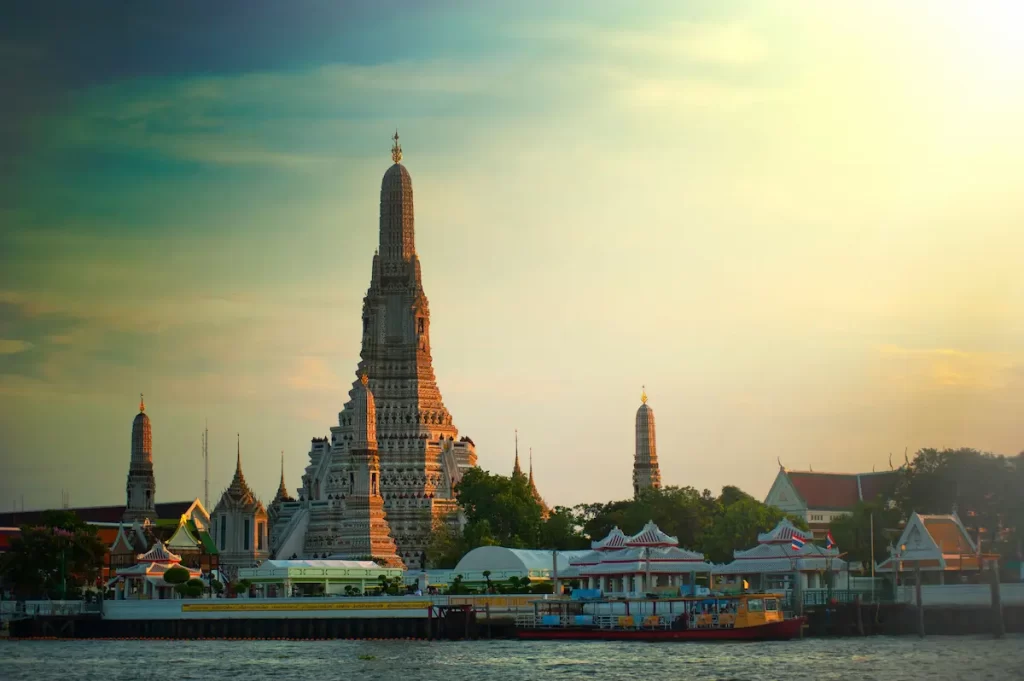
For many travellers, Central Thailand is where the journey begins.
Home to Bangkok, Thailand’s capital and largest city, the region combines modern city life with ancient history, magnificent temples, royal palaces and some of the country’s most recognisable cultural landmarks. It is also the country’s main transport hub, making it the natural starting point for many first-time visitors.
While Central Thailand is often associated with Bangkok, the region offers far more than the capital alone. Historic cities such as Ayutthaya, riverside communities, coastal resorts and national parks all contribute to a diverse travel experience that balances culture, history, food and modern convenience.
Whether you’re spending a few days exploring Bangkok before heading elsewhere or making Central Thailand the focus of your trip, the region provides an excellent introduction to the country.
Major Destinations
- Bangkok
- Ayutthaya
- Pattaya
- Hua Hin
- Kanchanaburi
Iconic Attractions
- Grand Palace
- Wat Phra Kaew
- Wat Arun
- Wat Pho
- Ayutthaya Historical Park
What Is Central Thailand Best Known For?
Central Thailand is best known for its rich history, magnificent temples, royal heritage and vibrant city life. It is home to many of Thailand’s most famous cultural landmarks and offers an excellent introduction to Thai history, cuisine and everyday life.
The region also provides a convenient base for exploring floating markets, historic sites, riverside towns, coastal escapes and nearby national parks, making it one of the country’s most varied regions.
What Type of Traveller Is Central Thailand Best Suited To?
Escape
If your ideal holiday centres on tropical beaches or remote natural retreats, Central Thailand probably wouldn’t be your first choice. However, riverside resorts, quieter coastal towns and peaceful historical settings still offer opportunities to slow down and unwind between sightseeing.
Exploration
Central Thailand is one of the country’s strongest regions for travellers who enjoy discovering history, culture and urban life. Ancient kingdoms, bustling markets, hidden temples and world-famous street food provide endless opportunities to explore.
Connection
Whether you’re travelling as a couple, with family or with friends, Central Thailand offers an enormous variety of shared experiences, from river cruises and food tours to markets, temples and cultural performances.
Achievement
While not Thailand’s primary adventure region, Central Thailand still offers rewarding experiences for active travellers, including cycling through the ruins of Ayutthaya, hiking in nearby national parks and exploring waterways by boat.
Enrichment
If learning more about Thailand is high on your list, Central Thailand is difficult to beat. The country’s royal history, Buddhist heritage, museums, temples and traditional markets provide a rich cultural experience that helps visitors understand Thailand beyond its beaches.
Practical Considerations
Best Time to Visit
Central Thailand can be visited year-round, although the cooler months between November and February are generally the most comfortable for sightseeing.
Ideal Trip Length
Three to five days provides enough time to experience the region’s highlights, although many travellers stay longer or use it as the starting point for a wider journey around Thailand.
Ease of Travel
Excellent. Bangkok is Thailand’s main international gateway, and the region has outstanding road, rail and domestic flight connections.
Budget
Suitable for every budget, from backpackers to luxury travellers.
Accommodation
An extensive range of accommodation is available, from hostels and boutique hotels to international luxury resorts.
Transport
Public transport is excellent in Bangkok, while trains, buses and domestic flights make travelling throughout the region straightforward.
Best Suited For
- First-time visitors
- Culture and history enthusiasts
- Food lovers
- Short city breaks
- Travellers combining multiple regions
Combines Well With
Northern Thailand for mountains and culture, or Southern Thailand for beaches and islands.
Overall Assessment
| Travel Motivation | Rating |
|---|---|
| Escape | ★★★☆☆ |
| Exploration | ★★★★★ |
| Connection | ★★★★☆ |
| Achievement | ★★★☆☆ |
| Enrichment | ★★★★★ |
Northern Thailand
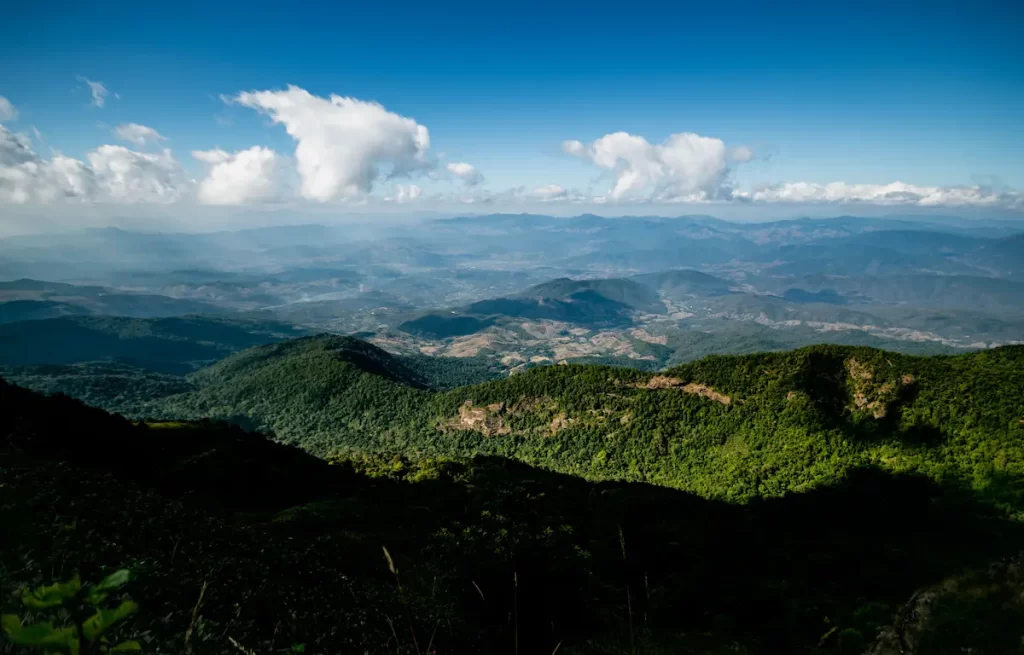
If mountain landscapes, cooler temperatures and a slower pace of travel appeal to you, Northern Thailand is a region well worth exploring.
Known for its rich Lanna heritage, forested mountains, colourful festivals and welcoming atmosphere, Northern Thailand offers a very different experience from the bustling cities and coastal resorts found elsewhere in the country. It’s a place where travellers often spend a little longer, taking time to explore historic temples, visit traditional villages, hike through national parks and enjoy some of Thailand’s most scenic landscapes.
While Chiang Mai is the region’s best-known destination, Northern Thailand is much more than a single city. From the artistic atmosphere of Chiang Rai and the relaxed mountain town of Pai to the country’s highest peak at Doi Inthanon, the region rewards travellers who enjoy combining culture, nature and adventure.
Major Destinations
- Chiang Mai
- Chiang Rai
- Pai
- Mae Hong Son
- Lampang
Iconic Attractions
- Doi Suthep
- Doi Inthanon National Park
- White Temple (Wat Rong Khun)
- Golden Triangle
- Pai Canyon
What Is Northern Thailand Best Known For?
Northern Thailand is best known for its mountain scenery, ancient temples, Lanna culture, national parks and outdoor adventures. It is one of the country’s strongest regions for travellers looking to experience a more relaxed pace of life while discovering a different side of Thailand.
The region is also renowned for its food, artisan markets, coffee culture and some of Thailand’s most celebrated festivals, including Yi Peng and Songkran in Chiang Mai.
What Type of Traveller Is Northern Thailand Best Suited To?
Escape
If your perfect holiday involves fresh mountain air, peaceful scenery and a slower pace, Northern Thailand is an excellent choice. While it doesn’t offer tropical beaches, it provides plenty of opportunities to unwind in nature.
Exploration
Northern Thailand is one of the country’s strongest regions for curious travellers. Mountain roads, historic towns, temples, markets and national parks create endless opportunities to discover something new.
Connection
The region’s relaxed atmosphere makes it particularly well suited to couples, families and independent travellers looking to spend time together while enjoying authentic local experiences.
Achievement
If you’re looking for outdoor adventure, Northern Thailand is one of the best places in the country. Hiking, mountain biking, rafting, ziplining and exploring remote national parks all make this a rewarding destination for active travellers.
Enrichment
Northern Thailand offers a rich cultural experience through its Lanna heritage, traditional crafts, regional cuisine, Buddhist temples and local festivals, providing visitors with a deeper understanding of one of Thailand’s most distinctive regions.
Practical Considerations
Best Time to Visit
The cooler season between November and February is generally considered the best time to visit, offering pleasant temperatures and excellent conditions for outdoor activities.
Ideal Trip Length
Four to seven days allows enough time to experience the region’s highlights, although many visitors choose to stay longer.
Ease of Travel
Very good. Chiang Mai and Chiang Rai are both served by domestic airports, and the region is well connected by road and rail.
Budget
Suitable for all budgets, with particularly good value accommodation, dining and activities compared with some of Thailand’s more tourist-focused destinations.
Accommodation
From boutique guesthouses and mountain lodges to luxury resorts and eco-retreats, Northern Thailand offers a wide variety of accommodation.
Transport
Hiring a car or joining organised tours makes exploring the wider region easier, although many attractions can also be reached by public transport.
Best Suited For
- Nature lovers
- Adventure travellers
- Cultural explorers
- Couples
- Longer holidays
Combines Well With
Central Thailand for history and city life, or Southern Thailand for a mountain-and-beach itinerary.
Overall Assessment
| Travel Motivation | Rating |
|---|---|
| Escape | ★★★★☆ |
| Exploration | ★★★★★ |
| Connection | ★★★★☆ |
| Achievement | ★★★★★ |
| Enrichment | ★★★★★ |
Southern Thailand
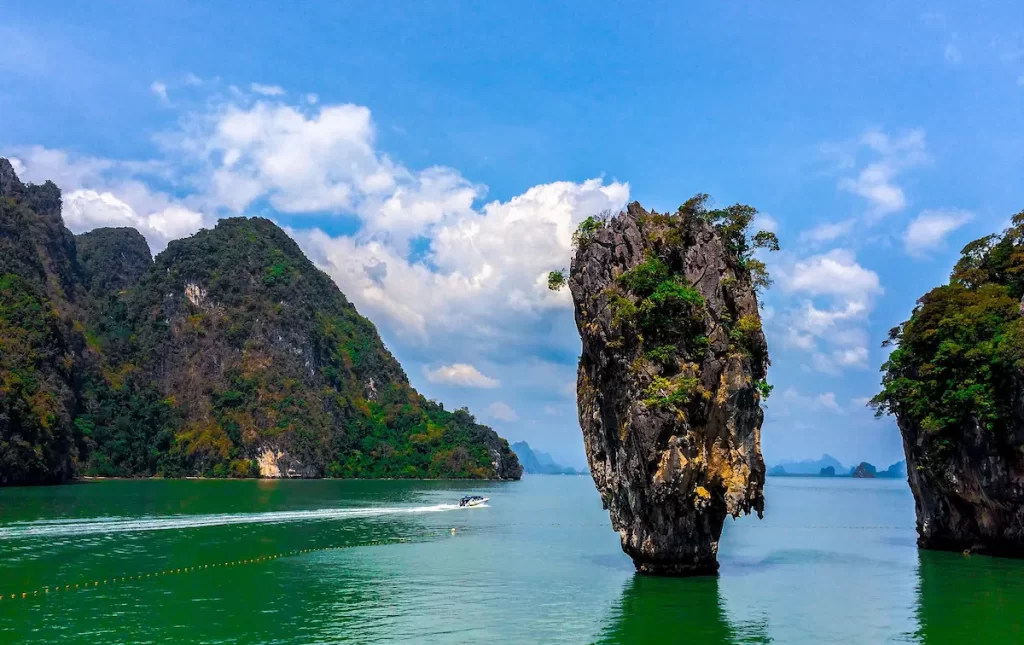
If tropical islands, crystal-clear waters and some of the world’s most beautiful coastlines are what first attracted you to Thailand, there’s a good chance you’re already thinking about Southern Thailand.
Stretching between the Andaman Sea and the Gulf of Thailand, Southern Thailand is home to many of the country’s best-known beach destinations. From Phuket and Krabi to Koh Samui and the Phi Phi Islands, the region offers everything from lively resort towns and luxury escapes to quiet islands, marine parks and untouched stretches of coastline.
While its beaches are undoubtedly the biggest drawcard, Southern Thailand offers far more than sun and sand. Dramatic limestone cliffs, lush rainforests, national parks, world-class diving, island-hopping adventures, local fishing communities and exceptional seafood all contribute to making it one of Thailand’s most diverse and rewarding regions.
Whether you’re looking for a romantic escape, a family holiday, an island adventure or simply somewhere to relax by the sea, Southern Thailand offers an incredible variety of experiences.
Major Destinations
- Phuket
- Krabi
- Koh Samui
- Khao Lak
- Koh Phi Phi
Iconic Attractions
- Big Buddha
- Phi Phi Islands
- Railay Beach
- James Bond Island
- Khao Sok National Park
What Is Southern Thailand Best Known For?
Southern Thailand is best known for its tropical islands, spectacular beaches, turquoise waters and outdoor adventures. It is the region most closely associated with the postcard images that have made Thailand famous around the world.
Beyond the coastline, visitors will also find ancient rainforests, marine national parks, vibrant nightlife, luxury resorts, traditional fishing villages and some of the country’s finest diving and snorkelling.
What Type of Traveller Is Southern Thailand Best Suited To?
Escape
If relaxing beside the ocean is your idea of the perfect holiday, Southern Thailand is difficult to beat. From luxury resorts and boutique beachfront hotels to quiet island retreats, the region offers some of Thailand’s best opportunities to unwind.
Exploration
Southern Thailand rewards curious travellers with hundreds of islands, hidden beaches, limestone caves, national parks and marine environments that invite exploration both on land and beneath the water.
Connection
Whether you’re travelling as a couple, with family or with friends, Southern Thailand offers countless shared experiences, from island-hopping tours and sunset cruises to beachside dining and unforgettable sunsets.
Achievement
Adventure seekers are well catered for, with opportunities to dive, snorkel, kayak, rock climb, hike through rainforest, explore caves and discover marine national parks.
Enrichment
Although better known for its natural beauty, Southern Thailand also offers opportunities to experience local culture through fishing villages, regional cuisine, Buddhist temples and communities influenced by both Thai and Malay traditions.
Practical Considerations
Best Time to Visit
Southern Thailand can be visited throughout the year, although weather varies between the Andaman Coast and the Gulf Coast. Checking seasonal conditions before travelling is recommended.
Ideal Trip Length
Five to ten days allows enough time to experience several destinations or islands without rushing.
Ease of Travel
Excellent. The region is well served by domestic airports, ferries and road connections, making it relatively easy to explore.
Budget
Suitable for every budget, although some islands and luxury resorts are among the more expensive destinations in Thailand.
Accommodation
From backpacker hostels and beach bungalows to luxury villas and international resorts, Southern Thailand offers one of the widest ranges of accommodation in the country.
Transport
Domestic flights, ferries, speedboats and road transfers make travelling between destinations straightforward, although island transport can be weather dependent.
Best Suited For
- Beach lovers
- Couples
- Families
- Divers and snorkellers
- Luxury travellers
- Island-hopping adventures
Combines Well With
Central Thailand for city and culture, or Northern Thailand for a mountain-and-beach itinerary.
Overall Assessment
| Travel Motivation | Rating |
|---|---|
| Escape | ★★★★★ |
| Exploration | ★★★★☆ |
| Connection | ★★★★★ |
| Achievement | ★★★★☆ |
| Enrichment | ★★★☆☆ |
Eastern Thailand

If you’re looking for beautiful beaches and islands without some of the crowds found in Thailand’s most famous destinations, Eastern Thailand is well worth considering.
Stretching along the Gulf of Thailand towards the Cambodian border, the region offers a more relaxed style of travel. Here you’ll find tropical islands, quiet fishing communities, coastal towns, national parks and some of the country’s least-developed island destinations.
While many international visitors head south, Eastern Thailand remains one of Thailand’s hidden gems. Destinations such as Koh Chang, Koh Kood and Koh Mak offer spectacular beaches and crystal-clear waters, while Chanthaburi and Rayong provide a fascinating glimpse into local life, regional cuisine and Thailand’s eastern coastline.
For travellers who prefer a slower pace, fewer crowds and a more laid-back atmosphere, Eastern Thailand can be an excellent alternative.
Major Destinations
- Koh Chang
- Rayong
- Chanthaburi
- Koh Kood
- Koh Mak
Iconic Attractions
- Mu Ko Chang National Park
- Koh Kood Beaches
- Namtok Phlio National Park
- Cathedral of the Immaculate Conception
- Koh Mak
What Is Eastern Thailand Best Known For?
Eastern Thailand is best known for its quieter beaches, tropical islands, fresh seafood and relaxed coastal lifestyle. Compared with many of Thailand’s better-known beach destinations, the region offers a more peaceful experience while still providing excellent opportunities for swimming, snorkelling, diving and island exploration.
The region is also famous for its fruit orchards, gem trading, coastal national parks and welcoming local communities.
What Type of Traveller Is Eastern Thailand Best Suited To?
Escape
If your priority is relaxing away from the busiest tourist centres, Eastern Thailand is one of the country’s strongest choices. Its quieter beaches and islands make it ideal for travellers looking to slow down and enjoy a more peaceful holiday.
Exploration
Island-hopping, coastal drives, national parks and local markets provide plenty of opportunities to explore beyond the well-known tourist trail.
Connection
Eastern Thailand is well suited to couples, families and travellers who enjoy spending time together in a quieter setting without the crowds often found in Thailand’s most popular resorts.
Achievement
The region offers opportunities for diving, kayaking, hiking and exploring national parks, although those seeking more demanding adventure activities may find Northern or Western Thailand a stronger match.
Enrichment
Visitors can experience local fishing communities, regional food, fruit-growing districts and the unique history of Thailand’s eastern provinces, although cultural attractions are generally less prominent than in Central or Northern Thailand.
Practical Considerations
Best Time to Visit
The cooler, drier months between November and April generally offer the most favourable conditions for beach activities.
Ideal Trip Length
Four to seven days provides enough time to experience several islands or combine the coast with inland attractions.
Ease of Travel
Good. Eastern Thailand is easily reached by road from Bangkok, while ferries connect the mainland with the region’s major islands.
Budget
Generally offers good value, with accommodation and dining often more affordable than Thailand’s best-known island destinations.
Accommodation
A good range of accommodation is available, from beachfront resorts and boutique hotels to budget guesthouses and island bungalows.
Transport
Most destinations are reached by road, with ferries providing access to the offshore islands.
Best Suited For
- Couples
- Families
- Beach lovers
- Travellers seeking quieter destinations
- Repeat visitors to Thailand
Combines Well With
Central Thailand for a city-and-coast itinerary, or Cambodia for travellers continuing overland.
Overall Assessment
| Travel Motivation | Rating |
|---|---|
| Escape | ★★★★★ |
| Exploration | ★★★★☆ |
| Connection | ★★★★☆ |
| Achievement | ★★★☆☆ |
| Enrichment | ★★★☆☆ |
Western Thailand
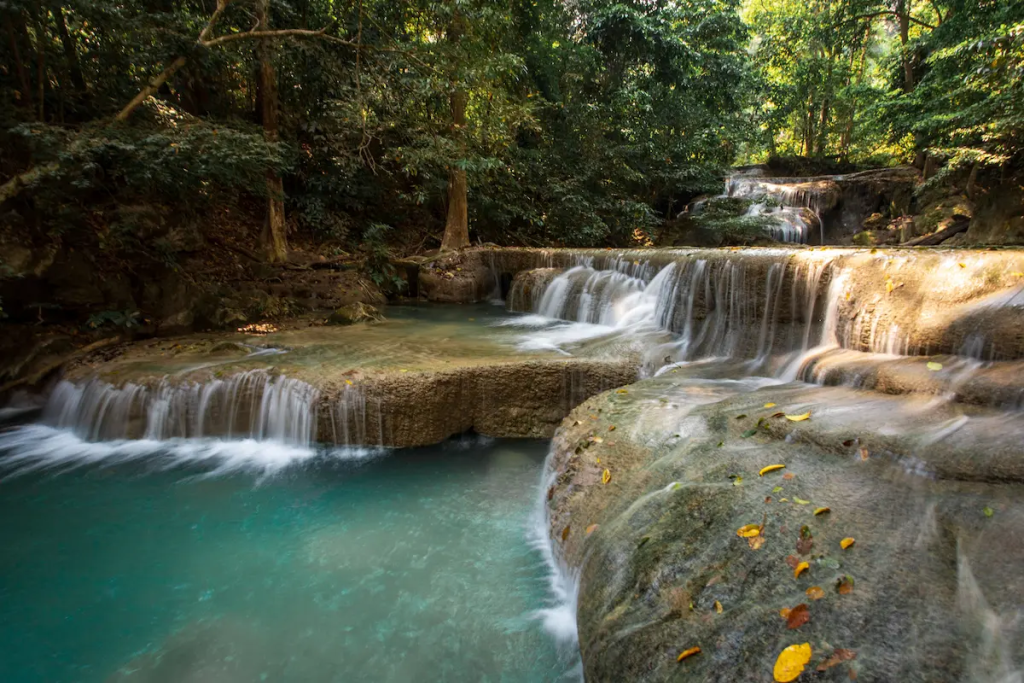
If you enjoy dramatic landscapes, national parks and discovering places beyond Thailand’s main tourist trail, Western Thailand deserves a place on your shortlist.
Stretching along much of Thailand’s border with Myanmar, the region is known for its rugged mountains, dense forests, winding rivers and some of the country’s most spectacular national parks. It also has a fascinating history, with important World War II sites sitting alongside waterfalls, caves and remote wilderness areas.
While Kanchanaburi is the region’s best-known destination, Western Thailand offers much more than the famous Bridge over the River Kwai. Travellers willing to explore further will discover peaceful mountain towns, wildlife-rich forests, scenic lakes and opportunities for outdoor adventure that are very different from the experiences found elsewhere in Thailand.
For visitors who enjoy combining history, nature and active travel, Western Thailand is one of the country’s most rewarding regions.
Major Destinations
- Kanchanaburi
- Sangkhla Buri
- Mae Sot
- Suan Phueng
- Thong Pha Phum
Iconic Attractions
- Bridge over the River Kwai
- Erawan National Park
- Hellfire Pass
- Sai Yok National Park
- Three Pagodas Pass
What Is Western Thailand Best Known For?
Western Thailand is best known for its national parks, waterfalls, mountain landscapes, rivers and historical sites connected to the Thailand–Myanmar Railway. It is also one of the country’s strongest regions for nature-based tourism and outdoor adventure.
The combination of spectacular scenery, rich history and relatively low visitor numbers gives the region a very different feel from Thailand’s better-known tourist destinations.
What Type of Traveller Is Western Thailand Best Suited To?
Escape
Western Thailand is an excellent choice for travellers who enjoy peaceful natural surroundings, mountain scenery and escaping the crowds. Rather than beaches and resorts, the region offers forests, rivers and national parks where it’s easy to slow down and reconnect with nature.
Exploration
Curious travellers will find plenty to discover, from historic railway sites and hidden waterfalls to remote villages and protected national parks.
Connection
Families, couples and groups who enjoy spending time outdoors will find Western Thailand offers a wide variety of shared experiences, particularly those centred around nature and history.
Achievement
This is one of Thailand’s strongest regions for active travellers. Hiking, kayaking, wildlife spotting, cave exploration and visiting remote national parks make Western Thailand an excellent destination for adventure.
Enrichment
Western Thailand provides a fascinating insight into both Thailand’s wartime history and its natural heritage. Museums, memorials and historical landmarks are complemented by traditional communities and beautiful protected landscapes.
Practical Considerations
Best Time to Visit
The cooler, drier months from November to February are generally the most comfortable for exploring the region’s national parks and outdoor attractions.
Ideal Trip Length
Three to five days is ideal for most visitors, although longer stays allow time to explore the region’s more remote destinations.
Ease of Travel
Good. Kanchanaburi is easily reached from Bangkok by road or rail, while some of the more remote areas require private transport or organised tours.
Budget
Western Thailand offers excellent value, with accommodation and activities generally more affordable than many of Thailand’s major tourist destinations.
Accommodation
Visitors will find everything from riverside resorts and boutique hotels to eco-lodges, guesthouses and camping options within national parks.
Transport
Road travel is the most practical way to explore much of the region, particularly if visiting several national parks or remote attractions.
Best Suited For
- Nature lovers
- Adventure travellers
- History enthusiasts
- Couples
- Repeat visitors to Thailand
Combines Well With
Central Thailand for history and culture, or Southern Thailand for travellers wanting to combine mountains with beaches.
Overall Assessment
| Travel Motivation | Rating |
|---|---|
| Escape | ★★★★☆ |
| Exploration | ★★★★★ |
| Connection | ★★★★☆ |
| Achievement | ★★★★★ |
| Enrichment | ★★★★☆ |
Northeastern Thailand
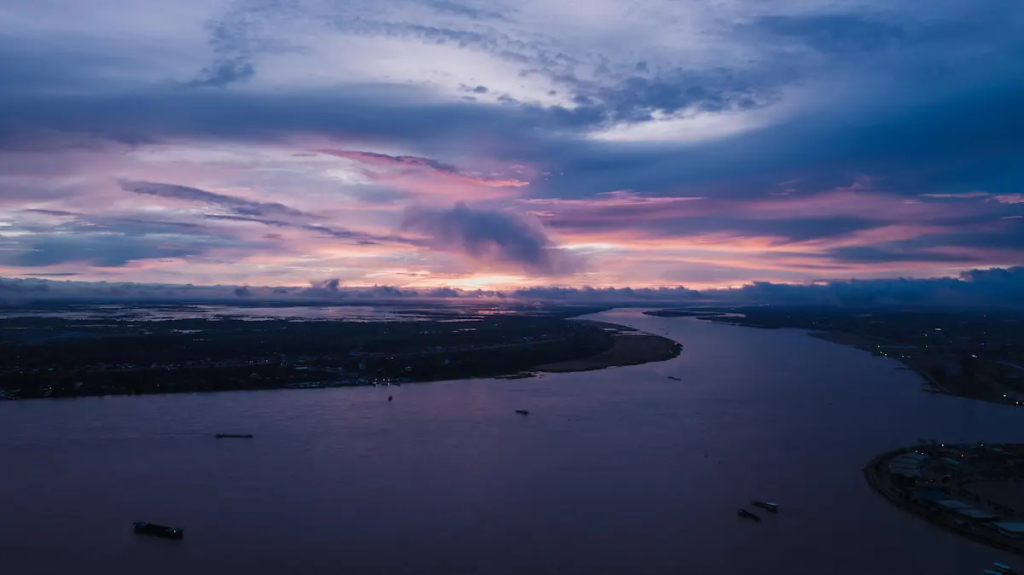
If you’re looking to experience a more authentic side of Thailand, Northeastern Thailand offers something quite different from the country’s better-known tourist regions.
Often referred to as Isaan, this vast region borders both Laos and Cambodia and is shaped by rural landscapes, the Mekong River, ancient Khmer history and a strong sense of local identity. While it receives fewer international visitors than other parts of Thailand, that’s also part of its appeal.
Rather than world-famous beach resorts or bustling tourist centres, Northeastern Thailand rewards travellers with traditional communities, fascinating historical sites, colourful festivals, regional cuisine and a slower pace of life that feels deeply connected to Thai culture.
For visitors who enjoy travelling beyond the usual tourist trail, Northeastern Thailand provides a rewarding opportunity to experience the country from a different perspective.
Major Destinations
- Nakhon Ratchasima (Korat)
- Khon Kaen
- Udon Thani
- Ubon Ratchathani
- Nong Khai
Iconic Attractions
- Phimai Historical Park
- Phanom Rung Historical Park
- Sam Phan Bok
- Wat Pa Phu Kon
- Mekong River
What Is Northeastern Thailand Best Known For?
Northeastern Thailand is best known for its Khmer temples, rich cultural traditions, regional cuisine, rural landscapes and the mighty Mekong River. It is also famous for its festivals, warm hospitality and strong local identity, offering visitors an experience that feels very different from Thailand’s more established tourist destinations.
The region provides a glimpse into everyday Thai life that many visitors never experience.
What Type of Traveller Is Northeastern Thailand Best Suited To?
Escape
If your idea of escape is leaving behind busy tourist centres and discovering quieter places, Northeastern Thailand is an excellent choice. Its rural landscapes, relaxed pace and welcoming communities create a very different atmosphere from Thailand’s beach destinations.
Exploration
Travellers who enjoy discovering lesser-known places will find Northeastern Thailand full of surprises, from ancient Khmer ruins and riverside towns to national parks and local festivals.
Connection
This is one of the country’s strongest regions for travellers hoping to experience genuine local hospitality and connect with traditional Thai communities.
Achievement
While adventure activities are available, they are not the region’s primary focus. Travellers looking for hiking, diving or outdoor adventure may find Northern or Western Thailand better suited to those interests.
Enrichment
Northeastern Thailand is one of the best places in the country for travellers seeking cultural enrichment. Ancient history, regional traditions, local food, Buddhist temples and everyday village life combine to create a rich and rewarding travel experience.
Practical Considerations
Best Time to Visit
The cooler season from November to February offers the most comfortable weather for sightseeing and outdoor exploration.
Ideal Trip Length
Four to seven days allows enough time to experience several destinations while enjoying the region’s slower pace.
Ease of Travel
Good. Major cities are connected by domestic flights, trains and long-distance buses, although travelling between smaller towns may require private transport.
Budget
One of Thailand’s most affordable regions, offering excellent value for accommodation, food and local experiences.
Accommodation
Accommodation ranges from comfortable city hotels and boutique guesthouses to smaller locally operated properties in rural areas.
Transport
Domestic flights, rail services and an extensive bus network connect the region, although hiring a car can provide greater flexibility for exploring historic sites and national parks.
Best Suited For
- Cultural travellers
- History enthusiasts
- Food lovers
- Repeat visitors to Thailand
- Travellers seeking authentic local experiences
Combines Well With
Central Thailand for history and city life, or Northern Thailand for a deeper exploration of Thailand’s cultural heritage.
Overall Assessment
| Travel Motivation | Rating |
|---|---|
| Escape | ★★★★☆ |
| Exploration | ★★★★☆ |
| Connection | ★★★★★ |
| Achievement | ★★☆☆☆ |
| Enrichment | ★★★★★ |
How Do Thailand’s Regions Compare?
By now, you’ve probably noticed that there isn’t a single “best” region in Thailand.
Each offers something different, and that’s one of the country’s greatest strengths. Whether you’re looking for culture, beaches, adventure or a quieter escape, there’s a region that naturally lends itself to the type of holiday you’re hoping to create.
If you’re still deciding, the following comparisons may help narrow down your choices.
Best for First-Time Visitors
If this is your first trip to Thailand, Central Thailand is often the easiest place to begin. Bangkok provides excellent transport connections, while the surrounding region introduces many of the experiences that have made Thailand famous around the world.
Best for Beaches and Island Holidays
If your dream holiday involves tropical islands, white-sand beaches and turquoise water, Southern Thailand is the clear standout. While Eastern Thailand also offers beautiful beaches, Southern Thailand provides the greatest variety of island destinations and coastal experiences.
Best for Culture and History
Both Central Thailand and Northern Thailand excel in this area.
Central Thailand offers royal palaces, ancient capitals and many of Thailand’s most famous temples, while Northern Thailand introduces visitors to Lanna culture, mountain temples and centuries of regional history.
Travellers looking for a deeper cultural experience may also find Northeastern Thailand especially rewarding.
Best for Nature and Outdoor Adventure
If hiking, waterfalls, rainforests, national parks and outdoor activities are high on your list, Northern Thailand and Western Thailand are excellent choices.
Southern Thailand also offers outstanding adventure through diving, snorkelling, kayaking and island exploration.
Best for Relaxation
If slowing down is your priority, Southern Thailand and Eastern Thailand are both excellent options.
Southern Thailand offers world-famous beach resorts and island escapes, while Eastern Thailand provides a quieter, more laid-back coastal experience.
Best for Authentic Local Experiences
Travellers wanting to experience a side of Thailand beyond the main tourist centres should consider Northeastern Thailand and parts of Western Thailand, where traditional communities, local festivals and regional culture remain central to everyday life.
Thailand’s Regions at a Glance
| Region | Escape | Exploration | Connection | Achievement | Enrichment |
|---|---|---|---|---|---|
| Central Thailand | ★★★☆☆ | ★★★★★ | ★★★★☆ | ★★★☆☆ | ★★★★★ |
| Northern Thailand | ★★★★☆ | ★★★★★ | ★★★★☆ | ★★★★★ | ★★★★★ |
| Southern Thailand | ★★★★★ | ★★★★☆ | ★★★★★ | ★★★★☆ | ★★★☆☆ |
| Eastern Thailand | ★★★★★ | ★★★★☆ | ★★★★☆ | ★★★☆☆ | ★★★☆☆ |
| Western Thailand | ★★★★☆ | ★★★★★ | ★★★★☆ | ★★★★★ | ★★★★☆ |
| Northeastern Thailand | ★★★★☆ | ★★★★☆ | ★★★★★ | ★★☆☆☆ | ★★★★★ |
These ratings aren’t intended to suggest that one region is better than another. Instead, they highlight the experiences each region is generally strongest at, helping you match your travel priorities with the part of Thailand that’s most likely to deliver the holiday you’re looking for.
Bringing It All Together
One of the things that makes Thailand such a rewarding destination is its incredible diversity.
Within a single country, you can explore vibrant cities, ancient temples, tropical islands, mountain landscapes, national parks, rural villages and some of the world’s most celebrated food cultures. Few destinations offer such a wide variety of experiences within relatively short travelling distances.
The key isn’t trying to see everything on your first visit.
Instead, think about the type of holiday you want to have.
If history, culture and iconic landmarks are at the top of your list, Central Thailand is a natural starting point.
If mountain scenery, outdoor adventure and a slower pace appeal to you, Northern Thailand may be the better choice.
If you’re dreaming of tropical islands and unforgettable beaches, Southern Thailand is difficult to beat.
Travellers seeking quieter coastal escapes may find Eastern Thailand offers exactly what they’re looking for, while Western Thailand rewards those who enjoy nature, history and exploring beyond the usual tourist trail.
And if your goal is to experience a more traditional side of the country, Northeastern Thailand offers a fascinating glimpse into everyday life, regional culture and ancient history that many international visitors never discover.
Of course, you don’t have to choose just one.
Many of Thailand’s best itineraries combine two or more regions, allowing you to experience different sides of the country within a single trip. A few days exploring Bangkok’s temples can be followed by time in the mountains of the north or on the beaches of the south. That’s one of the great advantages of travelling in Thailand—it’s remarkably easy to combine contrasting experiences into one unforgettable journey.
Whatever you decide, understanding Thailand’s regions before planning the finer details will help you build an itinerary that’s better suited to your interests, your travel style and the memories you hope to create.
Conclusion
Choosing where to go in Thailand doesn’t have to be overwhelming.
By starting with the type of holiday you want rather than a list of destinations, it’s much easier to narrow down the regions that best match your interests. Whether you’re drawn to ancient temples, tropical islands, mountain adventures, quiet coastal escapes or authentic local culture, Thailand offers a region that feels perfectly suited to your travel style.
The best part is that there isn’t a wrong choice.
Every region has its own personality, landscapes and experiences, and each offers a different perspective on one of the world’s most fascinating destinations. Even if this is your first visit, you don’t need to see everything at once. Choosing one or two regions and exploring them well is often far more rewarding than trying to fit the entire country into a single trip.
We hope this guide has helped you understand Thailand a little better and made choosing where to go that much easier.
Wherever your journey takes you, you’re about to discover why Thailand continues to capture the hearts of travellers from around the world.
Ready To Explore Further?
Whether you’re still comparing destinations or have already narrowed your choices, our Destination Hub can help you continue your travel research.
Explore countries, regions, destinations and travel experiences from across Southeast Asia and discover the places that best align with the type of journey you want to create.
Related Reading
Which Southeast Asian Destination Is Right For You?
Still deciding where to travel? Compare Thailand with Vietnam, Indonesia, Malaysia and the Philippines to discover which destination best matches the type of holiday you’re looking for.
Where to Go in Central Thailand
Explore Thailand’s cultural heart, from the bustling streets of Bangkok and the ancient ruins of Ayutthaya to riverside towns, coastal escapes and some of the country’s most iconic landmarks.
Where to Go in Northern Thailand
Discover mountain landscapes, ancient temples, Lanna culture and outdoor adventures as you explore one of Thailand’s most scenic and culturally rich regions.
Where to Go in Southern Thailand
From tropical islands and world-famous beaches to rainforest adventures and spectacular limestone cliffs, discover why Southern Thailand is one of the country’s most popular regions.
Where to Go in Eastern Thailand
Explore quieter beaches, relaxed coastal towns and beautiful islands that offer a more peaceful alternative to some of Thailand’s busiest destinations.
Where to Go in Western Thailand
Discover waterfalls, national parks, wartime history and outdoor adventures in one of Thailand’s most rewarding yet often overlooked regions.
Where to Go in Northeastern Thailand
Experience authentic local culture, ancient Khmer heritage, regional cuisine and a slower pace of travel in Thailand’s fascinating northeastern region.
Frequently Asked Questions
Which region of Thailand is best for first-time visitors?
There isn’t a single “best” region, but Central Thailand is often the easiest starting point for first-time visitors. Home to Bangkok and many of Thailand’s most famous cultural landmarks, it offers excellent transport connections and provides a great introduction to the country’s history, food and culture.
Which region of Thailand has the best beaches?
Southern Thailand is best known for its spectacular beaches and tropical islands, including destinations such as Phuket, Krabi and Koh Samui. Eastern Thailand also offers beautiful beaches and quieter island escapes, making it an excellent alternative for travellers seeking a more relaxed atmosphere.
Which part of Thailand is best for culture and history?
Central Thailand and Northern Thailand are both excellent choices. Central Thailand is home to royal palaces, ancient capitals and some of the country’s most famous temples, while Northern Thailand offers Lanna heritage, mountain temples and distinctive regional traditions.
Which region of Thailand is best for nature and adventure?
Northern Thailand and Western Thailand are ideal for travellers who enjoy hiking, waterfalls, national parks and outdoor activities. Southern Thailand also offers plenty of adventure through diving, snorkelling, kayaking and island exploration.
Which region of Thailand is best for families?
Families can enjoy every region of Thailand, but Central and Southern Thailand are often the most popular choices thanks to their wide range of accommodation, attractions and transport options. The best choice depends on whether you’re looking for culture, beaches, adventure or a combination of experiences.
Which region of Thailand is best for couples?
Southern Thailand is a favourite for couples seeking romantic beaches and island resorts, while Northern Thailand offers peaceful mountain scenery, boutique accommodation and a more relaxed pace. Eastern Thailand is also worth considering for quieter coastal escapes.
How many regions should I visit during one trip?
That depends on how much time you have available. Travellers visiting for one or two weeks often find that exploring one or two regions allows for a more enjoyable and less rushed experience than trying to see the entire country.
What is the best time of year to visit Thailand?
Thailand can be visited throughout the year, although weather conditions vary between regions. Understanding the seasons can make a significant difference to your trip, particularly if you’re planning to visit the islands or spend time outdoors.
Can I combine different regions in one holiday?
Absolutely. Many travellers combine Central Thailand with either Northern or Southern Thailand, while longer itineraries may include three or more regions. Thailand’s domestic flights, road network and rail services make travelling between regions relatively straightforward.
How do I choose the right region for my trip?
The best place to start is by thinking about the type of holiday you want. If you’re looking for beaches, Southern Thailand may be the best fit. If history and culture are your priority, Central or Northern Thailand are excellent choices. Travellers seeking authentic local experiences may enjoy Northeastern Thailand, while nature lovers often gravitate towards Western Thailand.
About the Author
David Hibbins is a travel publisher, destination researcher and the creator of Travel With Insight.
Through years of travel, tourism and publishing projects across Southeast Asia, he has developed a particular interest in how travellers research destinations, compare experiences and make travel decisions.
Rather than relying on popularity rankings, marketing claims or generic “best of” lists, David’s work focuses on helping travellers understand why a destination may be right for them. His guides are designed to provide practical frameworks that help people evaluate destinations and choose experiences that match their own interests, travel style and travel goals.
As the creator of Travel With Insight, David regularly researches destinations, traveller behaviour and the evolving ways people discover and plan travel online. His work explores destination discovery, regional travel planning and the factors that shape memorable travel experiences, with the goal of helping readers travel with greater confidence and deeper understanding.