
How Travel Discovery Has Changed Over Time
Part of our ongoing exploration of travel discovery, traveller behaviour and the ways people research, compare and make travel decisions.
Quick Summary
- Travel discovery has evolved significantly from the days of guidebooks, travel agents and personal recommendations.
- The internet dramatically expanded access to travel information and independent trip planning.
- Search engines became a dominant channel for discovering destinations, experiences and travel businesses.
- Social media, reviews, videos and traveller-generated content further transformed how travellers find and evaluate information.
- AI tools are introducing new ways for travellers to research and compare travel options.
- Modern travel discovery increasingly occurs across interconnected Travel Discovery Ecosystems rather than through a single source of information.
How Travel Discovery Has Changed Over Time
Travel discovery has always been part of the way people plan trips, but the process travellers follow today looks very different from the one that existed just a few decades ago.
In the past, travellers often relied on guidebooks, travel agents, brochures and personal recommendations to learn about destinations and experiences. Information was limited, access was slower and discovery was largely influenced by a relatively small number of sources.
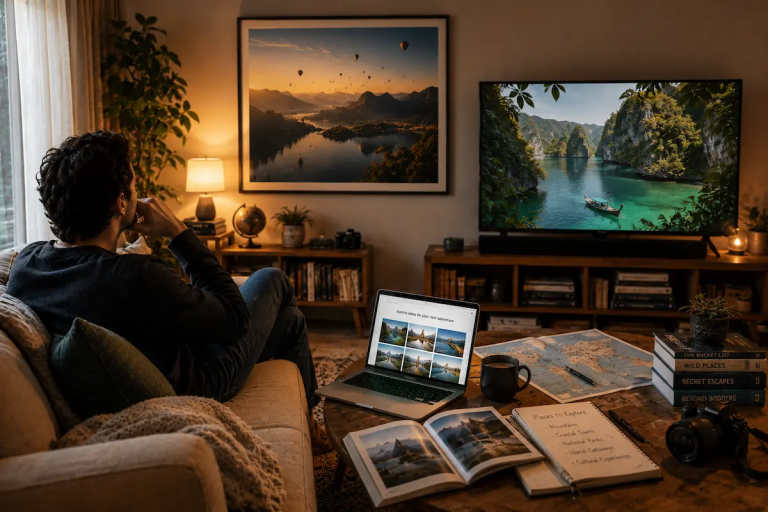
Today, travellers have access to an unprecedented amount of travel information. Search engines, social media platforms, reviews, videos, AI tools and digital publications have transformed how people find, research and evaluate destinations, experiences and travel businesses. Rather than relying on a single source, modern travellers often move between multiple channels throughout the planning process.
As discussed in What Is Travel Discovery?, travel discovery is the process through which travellers find, research and evaluate destinations, experiences and travel businesses before making travel decisions. While the need to discover information has remained constant, the ways travellers access and interact with that information have changed dramatically over time.
Understanding how travel discovery has changed helps explain many aspects of modern traveller behaviour. It reveals why travellers now have more choice than ever before, why discovery rarely occurs in one place and why the journey from awareness to decision making has become increasingly interconnected.
In this article, we’ll explore how travel discovery has evolved from traditional information sources to today’s complex digital environment and examine the key changes that continue to shape how travellers discover the world around them.
Travel Discovery Before The Internet
Before the internet transformed access to information, travel discovery relied heavily on a relatively small number of trusted sources.
Travellers often planned trips using guidebooks, travel magazines, brochures, newspaper travel sections and recommendations from family and friends. Travel agents also played a central role, acting as both information providers and booking facilitators. For many people, these sources represented the primary way destinations, experiences and travel businesses were discovered.
While this system worked effectively for its time, access to information was far more limited than it is today. Travellers were generally exposed to a narrower range of destinations and experiences, often influenced by the information that happened to be available through local travel agents, publishers or tourism organisations.
Discovery was also slower. Learning about a destination could involve visiting a travel agency, purchasing a guidebook, requesting brochures or speaking with people who had previously travelled to the area. Research often required considerable effort, and comparing multiple options was not always easy.
Personal recommendations carried significant weight during this period. Friends, relatives and colleagues frequently influenced travel decisions because first-hand information was difficult to obtain elsewhere. A recommendation from someone who had already visited a destination often provided valuable insight that travellers could not easily find on their own.
Importantly, travel discovery during this era was often linear. Travellers would discover information through one or two primary sources, gather additional details and then move towards making a decision. The number of information channels was relatively small, and the journey from discovery to booking was often more straightforward than it is today.
Although technology has fundamentally changed how travellers access information, many of these traditional discovery methods still exist. Personal recommendations, travel publications and expert advice continue to influence travel decisions, even as they now operate alongside a much larger and more complex digital landscape.
How The Internet Changed Travel Discovery
The arrival of the internet marked one of the most significant turning points in the history of travel discovery.
For the first time, travellers gained direct access to large amounts of travel information without needing to rely solely on guidebooks, travel agents or printed publications. Destinations, accommodation providers, attractions and travel businesses could now publish information online and make it available to a global audience.
This change dramatically expanded the number of options travellers could discover. Information that may once have been difficult to obtain became accessible from a home computer with an internet connection. Travellers could explore destinations, read about experiences and compare travel options without leaving their homes.
The internet also increased traveller independence. Rather than relying primarily on third parties to provide information, people could conduct their own research and investigate destinations that matched their interests, budgets and travel goals. This shift gave travellers greater control over the planning process and significantly broadened their access to information.
At the same time, travel businesses gained new opportunities to become discoverable. Websites allowed destinations, tour operators, accommodation providers and attractions to present information directly to potential travellers. Businesses were no longer limited by geography or traditional distribution channels in the same way they had been previously.
However, the rapid growth of online information also created new challenges. As more websites appeared, travellers faced increasing amounts of content and a growing number of choices. Finding the most relevant information became more important, creating opportunities for new tools and technologies to help travellers navigate the expanding digital landscape.
This environment set the stage for the next major evolution in travel discovery: the rise of search engines and their growing influence on how travellers found information online.
The Rise Of Search Engine Travel Discovery
As the internet expanded, search engines became one of the most important tools travellers used to find information.
Rather than navigating directly to individual websites, travellers could now search for destinations, attractions, accommodation, tours and travel advice through a single platform. Search engines made it easier to access information quickly and compare a wide range of options from anywhere in the world.
For many years, search engines became the dominant form of travel discovery. Travellers routinely searched for destination guides, things to do, hotel recommendations, local experiences and travel tips as part of their planning process. A simple search could expose travellers to destinations and travel businesses they may never have discovered through traditional channels.
This shift also changed the way travel businesses approached visibility. Appearing in search results became increasingly important because search engines often represented the first point of contact between travellers and the information they were seeking. Businesses that could be easily found online gained significant opportunities to enter the traveller’s awareness and consideration process.
Search engines also helped make travel discovery more active. Rather than waiting to encounter information through advertisements, guidebooks or recommendations, travellers could seek out answers to specific questions and explore topics that matched their individual interests and travel goals.
However, as influential as search engines became, they were never the complete travel discovery journey. Travellers still relied on recommendations, reviews and other sources of information when evaluating their options. Over time, additional digital platforms would emerge that expanded travel discovery far beyond search alone.
While search engines remain an important part of modern travel planning, they eventually became one component within a much broader and more interconnected travel discovery environment.
Social Media Expanded Travel Discovery
The rise of social media introduced a fundamentally different form of travel discovery.
While search engines primarily helped travellers find information they were actively looking for, social media created opportunities for travellers to discover destinations, experiences and travel businesses they were not necessarily searching for at all.
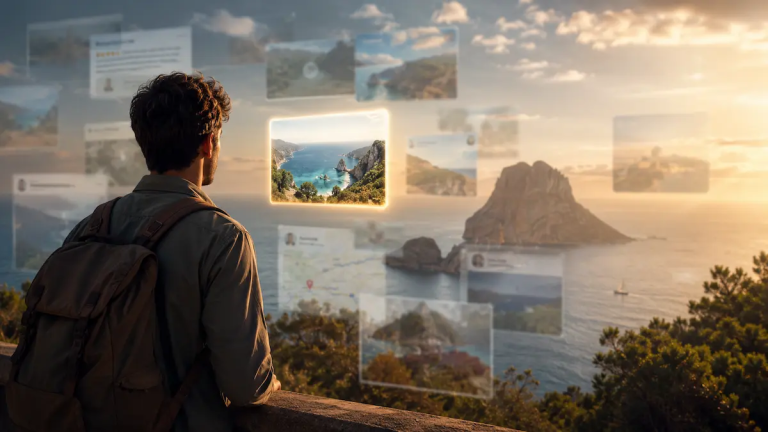
Photographs, videos, travel stories and recommendations began appearing directly within social feeds, exposing travellers to new ideas and destinations through everyday online activity. A traveller scrolling through social media could suddenly encounter a beach, attraction, cultural experience or destination that had never previously been part of their travel plans.
This shift changed the nature of travel discovery from purely research-driven behaviour to a combination of inspiration and research. Many travel journeys now begin long before a traveller starts actively planning a trip. Exposure to travel content can create awareness and interest months or even years before a destination is seriously considered.
Social media also made travel discovery more visual. Rather than relying solely on written descriptions, travellers could see destinations through photographs, videos and personal experiences shared by other travellers. This created new opportunities to understand what a destination looked and felt like before visiting.
At the same time, travel businesses gained additional ways to become discoverable. Social platforms allowed destinations, attractions, accommodation providers and tour operators to reach travellers through content, storytelling and visual experiences rather than relying exclusively on search visibility.
Importantly, social media did not replace search engines. Instead, it added another layer to the travel discovery process. Travellers often discovered destinations through social content and then turned to search engines, reviews and travel articles to gather more information.
This marked an important stage in the evolution of travel discovery. Travellers were no longer relying on a single source of information. Discovery was beginning to occur across multiple platforms, with different channels contributing to different stages of the traveller journey.
Reviews, Videos And Traveller-Generated Content
As travel discovery continued to evolve, travellers increasingly began relying on information created by other travellers rather than information provided solely by destinations and travel businesses. This point became a real shift in how travel discovery has changed over time.
Online reviews became one of the most influential developments in modern travel planning. Platforms that allowed travellers to share their experiences created a new source of information that many people viewed as more authentic and trustworthy than traditional marketing materials. Hotels, tours, attractions and restaurants could now be evaluated through the experiences of previous visitors.
This shift changed the way travel discovery worked. Travellers were no longer simply discovering destinations and businesses through official websites or promotional content. They were also discovering them through reviews, ratings and recommendations from other travellers who had already experienced them firsthand.
Video content introduced another significant change. Platforms such as YouTube allowed travellers to see destinations, attractions and experiences in ways that photographs and written descriptions could not fully capture. Travel videos provided greater context, helping people understand what a destination looked like, how experiences unfolded and what they could realistically expect during a visit.
Traveller-generated content also expanded the amount of information available during the discovery process. Blog posts, travel forums, reviews, videos and social media content created a vast network of perspectives that travellers could use when researching and evaluating their options.
Importantly, these sources did more than simply help travellers discover destinations and businesses. They also helped travellers assess credibility, reduce uncertainty and build confidence in their decisions. Discovery and validation increasingly became interconnected parts of the travel planning journey.
As a result, travel discovery became more diverse and more complex. Travellers were no longer relying on a single source of information. Instead, they were drawing insights from search engines, social media, reviews, videos and traveller experiences, each contributing different pieces of information to the overall decision-making process.
This growing interconnectedness laid the foundation for the next major stage in the evolution of travel discovery, where multiple channels began working together as part of a broader and increasingly connected discovery environment.
AI And The Next Stage Of Travel Discovery
Artificial intelligence is becoming one of the most significant developments in the ongoing evolution of travel discovery.
For many years, travellers primarily discovered information by searching websites, reading articles, comparing reviews and exploring content across multiple platforms. While these behaviours remain important, AI tools are introducing new ways for travellers to access information and evaluate travel options.
Rather than searching through numerous websites individually, travellers can now ask questions using conversational interfaces and receive information drawn from multiple sources. AI tools can help travellers explore destinations, compare experiences, generate travel ideas and identify options that match their interests and preferences.
This represents a shift in how information is accessed. Instead of requiring travellers to locate and interpret information themselves, AI tools increasingly assist in organising, summarising and presenting information in more accessible ways.
However, AI has not replaced traditional travel discovery channels. Travellers still rely on search engines, reviews, videos, travel articles, recommendations and social media when researching trips. In many cases, AI simply becomes another source of information within the broader discovery process.
The growing influence of AI also highlights an important trend. Travel discovery is becoming less dependent on any single platform or channel. Travellers often move between AI tools, search engines, reviews, social media and travel content as they gather information and evaluate alternatives.
This interconnected behaviour reflects the reality of modern travel planning. Discovery no longer occurs through one source at one moment in time. Instead, travellers frequently combine information from multiple channels throughout their journey.
As a result, the evolution of travel discovery is increasingly leading towards a model where different platforms, technologies and information sources work together rather than independently. This shift helps explain the emergence of a broader and more connected discovery environment that many now describe as a travel discovery ecosystem.
From Discovery Channels To Travel Discovery Ecosystems
One of the most important changes in modern travel discovery is the shift from individual discovery channels to interconnected discovery environments.
For many years, travel discovery was often viewed through the lens of a single platform. Businesses focused on search engine visibility, social media audiences or review platforms as separate activities. Travellers, however, rarely experienced travel discovery in such a linear way.
Modern travellers frequently move between multiple sources of information throughout the same planning journey. A destination may first be discovered through social media, researched through a search engine, evaluated through reviews, explored through videos and later discussed with friends or family before any decision is made.
This behaviour has created a far more connected form of travel discovery than existed in the past.
Rather than operating independently, different discovery channels increasingly work together to influence traveller awareness, research and decision making. Search engines, AI tools, social media platforms, reviews, videos, travel publications and personal recommendations all contribute different pieces of information at different stages of the journey.
This broader and interconnected environment is often described as a Travel Discovery Ecosystem.
Within a Travel Discovery Ecosystem, travellers do not rely on a single source of information. Instead, they move between multiple channels as they gather knowledge, compare alternatives and build confidence in their decisions. Discovery becomes a continuous process rather than a single event.
This shift helps explain why travel discovery has become more complex over time. Travellers now have access to more information, more perspectives and more discovery opportunities than ever before. At the same time, travel businesses must consider how they become discoverable across multiple channels rather than focusing on a single source of visibility.
Understanding Travel Discovery Ecosystems provides valuable insight into how modern traveller behaviour has evolved. It reflects the reality that discovery is no longer confined to one platform but instead occurs across a network of connected information sources that collectively influence travel decisions.
In many ways, the emergence of travel discovery ecosystems represents the latest stage in the ongoing evolution of travel discovery, bringing together the various channels, technologies and information sources that travellers now use every day.
What The Evolution Of Travel Discovery Means For Travellers
The evolution of travel discovery has fundamentally changed the way travellers research, compare and make travel decisions.
Modern travellers have access to more information than at any point in history. Destinations, experiences and travel businesses can be discovered through search engines, social media platforms, reviews, videos, AI tools, travel articles and personal recommendations, often within the same planning journey.
This increased access to information creates significant opportunities. Travellers can explore a wider range of destinations, uncover experiences that may have previously remained hidden and make decisions based on a broader understanding of their available options.
At the same time, the abundance of information can create new challenges. With so many sources available, travellers must often decide which information to trust, which recommendations to follow and which options deserve further investigation. Discovery is no longer simply about finding information. It is also about evaluating the quality, relevance and credibility of the information encountered.
The evolution of travel discovery has also made travel planning more flexible. Travellers are no longer limited to a small number of information sources or fixed planning pathways. They can move freely between platforms, compare perspectives and build their own understanding of destinations and experiences before making decisions.
Perhaps most importantly, modern travellers have become active participants in the discovery process. Rather than passively receiving information, they now research, compare, validate and explore options using a wide range of interconnected sources.
While the methods have changed dramatically over time, the underlying purpose of travel discovery remains the same. Travellers still seek information that helps them understand their options, reduce uncertainty and make confident travel decisions. The difference today is that they have more tools, more information and more discovery opportunities available than ever before.
Conclusion
Travel discovery has changed dramatically over time, evolving from a process shaped largely by guidebooks, travel agents and personal recommendations into one influenced by search engines, social media, reviews, videos, AI tools and a wide range of digital information sources.
While the technologies and platforms involved have continued to evolve, the fundamental purpose of travel discovery has remained remarkably consistent. Travellers still need to find information, explore options and develop an understanding of destinations, experiences and travel businesses before making decisions.
What has changed is the scale, speed and complexity of the process. Modern travellers have access to more information than ever before and often move between multiple channels as they research, compare and evaluate their options.
This evolution has transformed travel discovery from a relatively straightforward activity into a highly interconnected journey. Search engines, reviews, social media, AI tools, travel content and personal recommendations now work together to influence traveller awareness and decision making.
Understanding how travel discovery has changed over time helps explain many aspects of modern traveller behaviour. It also highlights why travel discovery increasingly operates within connected ecosystems rather than through isolated channels.
As technology continues to evolve and new sources of information emerge, the methods travellers use may continue to change. However, the need to discover, evaluate and understand travel opportunities will remain at the centre of the travel planning process.
Continue Exploring Travel Discovery
Travel discovery continues to evolve as technology, traveller behaviour and information sources change. Understanding that evolution helps explain why modern travellers rarely rely on a single platform when researching destinations, experiences and travel businesses.
To continue exploring how travel discovery works in today’s connected digital environment, read the related articles below and discover how search engines, travel content, reviews, AI tools and other channels contribute to the modern traveller journey.
Related Reading
What Is Travel Discovery?
Learn how travel discovery helps travellers find, research and evaluate destinations, experiences and travel businesses before making travel decisions.
The Shift From Search Engines To Travel Discovery Ecosystems
Explore why travel discovery has expanded beyond search engines and how interconnected platforms now influence traveller behaviour.
Why Travellers No Longer Discover Businesses In One Place
Understand why modern travellers use multiple channels when researching destinations, experiences and travel businesses.
Frequently Asked Questions About How Travel Discovery Has Changed Over Time
How has travel discovery changed over time?
Travel discovery has evolved from relying primarily on guidebooks, travel agents and personal recommendations to a highly connected process involving search engines, social media, reviews, videos, AI tools and digital travel content.
How did travellers discover destinations before the internet?
Before the internet, travellers often relied on travel agents, guidebooks, magazines, brochures and recommendations from friends and family to learn about destinations and plan trips.
How did search engines change travel discovery?
Search engines made travel information more accessible by allowing travellers to quickly find destinations, experiences, accommodation and travel advice from a wide range of online sources.
How has social media influenced travel discovery?
Social media introduced a more visual and inspiration-driven form of travel discovery. Travellers can now encounter destinations, experiences and travel ideas even when they are not actively planning a trip.
Why are reviews important in modern travel discovery?
Reviews help travellers discover and evaluate destinations, experiences and travel businesses through the experiences of other travellers. They also provide valuable trust and validation during the planning process.
What role do videos play in travel discovery?
Videos allow travellers to see destinations, attractions and experiences before visiting them. They provide additional context and often help travellers better understand what to expect during a trip.
How is AI changing travel discovery?
AI tools are changing how travellers access information by helping them ask questions, compare options and receive information from multiple sources through conversational interfaces.
What are Travel Discovery Ecosystems?
Travel Discovery Ecosystems are interconnected networks of platforms, information sources and discovery channels that travellers use when researching and planning trips. They often include search engines, AI tools, reviews, social media, videos and travel content.
Do travellers still use search engines for travel discovery?
Yes. Search engines remain an important part of travel discovery. However, they now operate alongside many other discovery channels rather than serving as the sole source of information.
Why do travellers use multiple discovery channels today?
Travellers often seek different types of information throughout the planning process. Search engines, reviews, social media, videos, AI tools and recommendations each provide unique insights that help travellers research and evaluate their options.
About The Author
David Hibbins is the creator of Travel With Insight and has spent years building websites, creating online content and observing how people discover businesses, destinations and experiences online.
Through his work across travel publishing, tourism businesses, digital marketing and content creation, he has developed a particular interest in Travel Discovery, Traveller Behaviour and the ways people research, compare and make Travel Decisions.
His writing focuses on understanding how travellers discover information, move through the Travel Discovery Process and evaluate destinations, experiences and travel businesses before making decisions.
Travel With Insight was created to explore these ideas and help both travellers and travel businesses better understand how discovery, research, comparison and trust influence modern travel planning.
His work regularly explores topics including How Travellers Discover Travel Businesses Online, What Influences Travel Decisions?, Travel Discovery Ecosystems and the evolving relationship between information, visibility and traveller decision making.