Phra Phrom Shrine Patong: The Four-Faced Shrine Near Dolphin Roundabout
Near the Dolphin Roundabout at the northern end of Patong Beach, there is a small shrine. Phra Phrom Shrine Patong is easy to pass without giving it much thought. Traffic moves around it, older buildings sit nearby, and the Four Points by Sheraton resort stands farther along the same road.
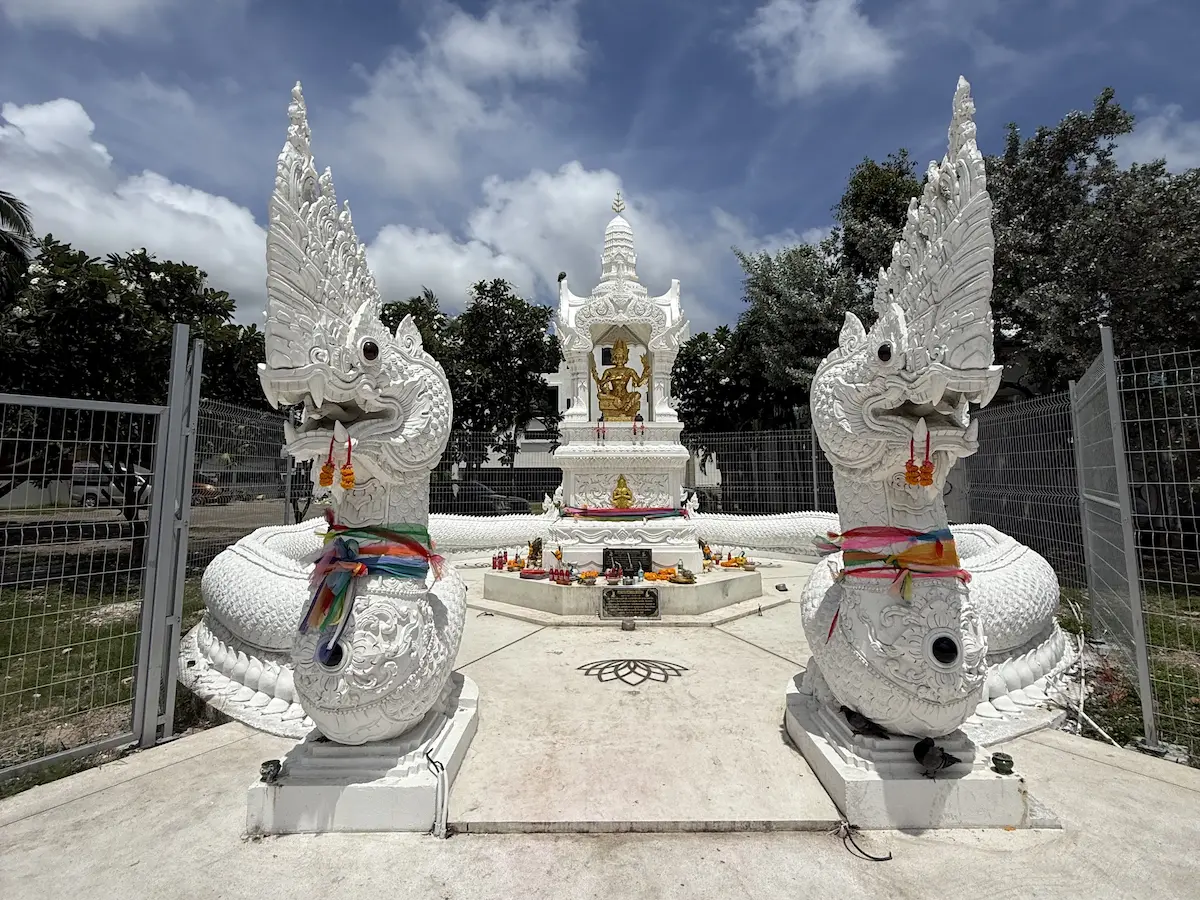
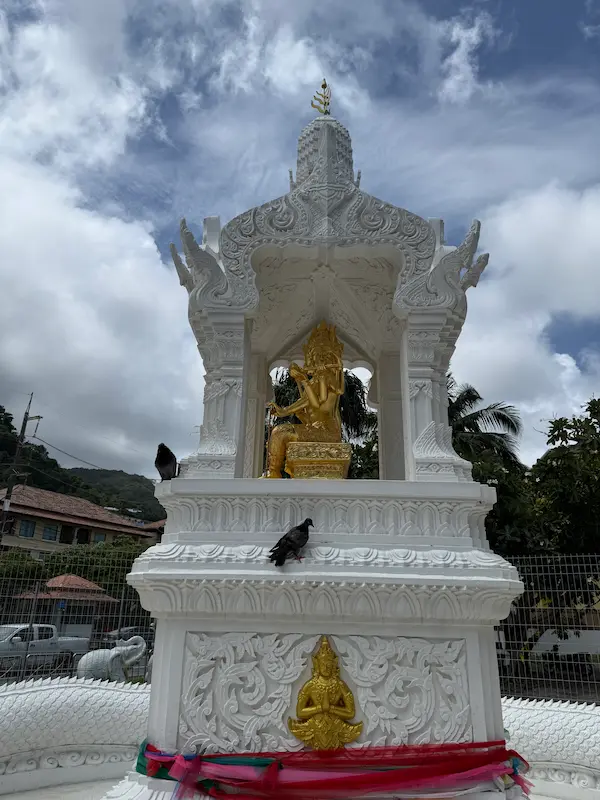
When I walked down for a closer look, the first thing I noticed was how much the shrine had changed. It has recently been renovated and is now enclosed by permanent metal fencing, giving it a much more private and managed appearance than before. At first, I assumed visitors could no longer enter, but there is still a gate at the front.
The shrine is dedicated to Phra Phrom, the four-faced deity associated in Thailand with protection, prosperity and good fortune. It is not one of Patong’s major attractions, but it is an interesting local landmark and a reminder that spiritual traditions remain woven into everyday life, even in one of Phuket’s busiest resort areas.
What Is the Phra Phrom Shrine – Patong?
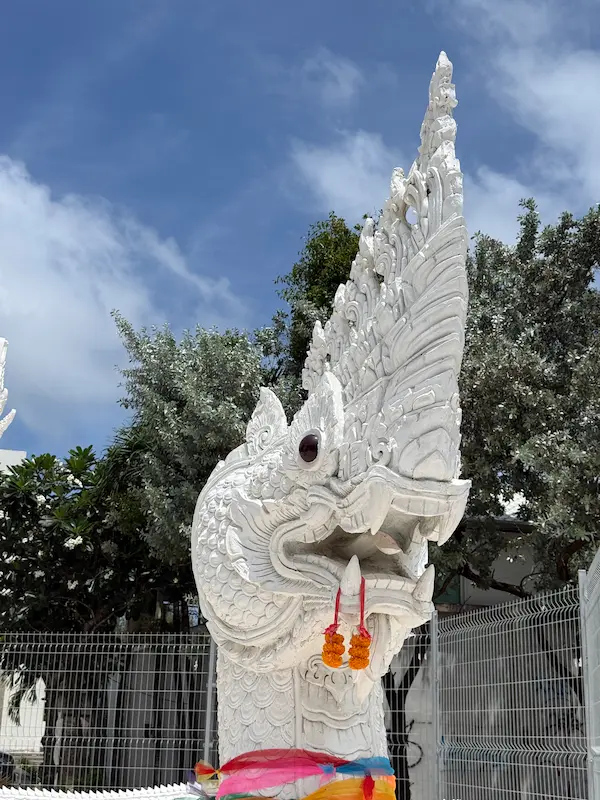
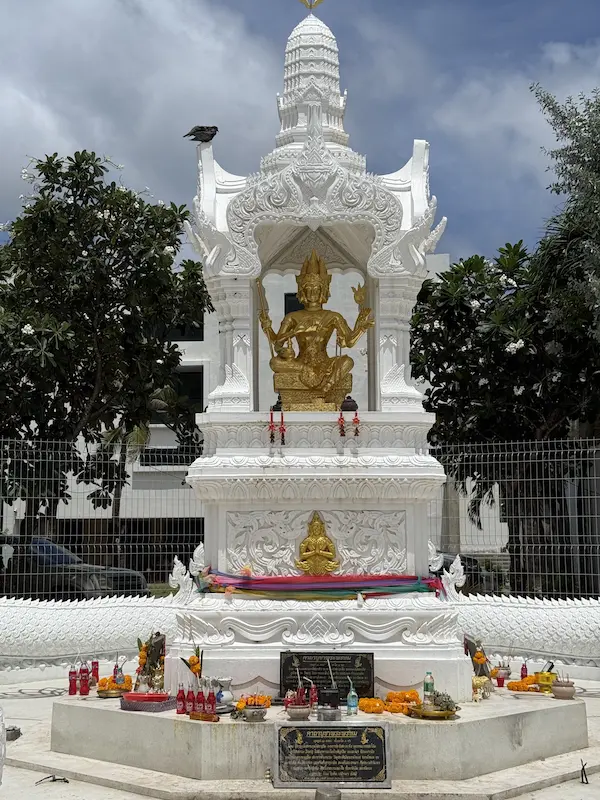
The shrine is dedicated to Phra Phrom, the Thai representation of Brahma, the four-faced deity from Hindu tradition. Visitors sometimes refer to figures like this as a “four-faced Buddha,” but Phra Phrom is not the Buddha, and the site is a shrine rather than a Buddhist temple.
Each face looks in a different direction, creating the sense that Phra Phrom is watching over the surrounding area from every side. In Thailand, people commonly visit shrines like this to ask for protection, good fortune, success in business or help with an important decision.
What makes the Patong shrine interesting is not its size, but where it sits. It stands beside one of the busiest roads in the town, surrounded by traffic, hotels and everyday activity. People can stop for only a few minutes, leave an offering, say a quiet prayer and then continue with their day.
That mixture of the sacred and the ordinary is part of what makes shrines like this feel so naturally woven into daily life in Thailand.
Where Is the Phra Phrom Shrine?
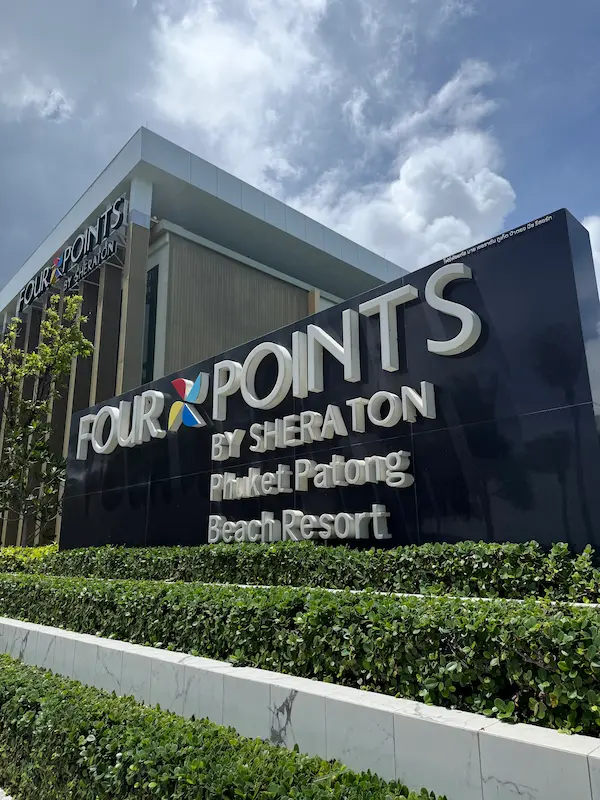
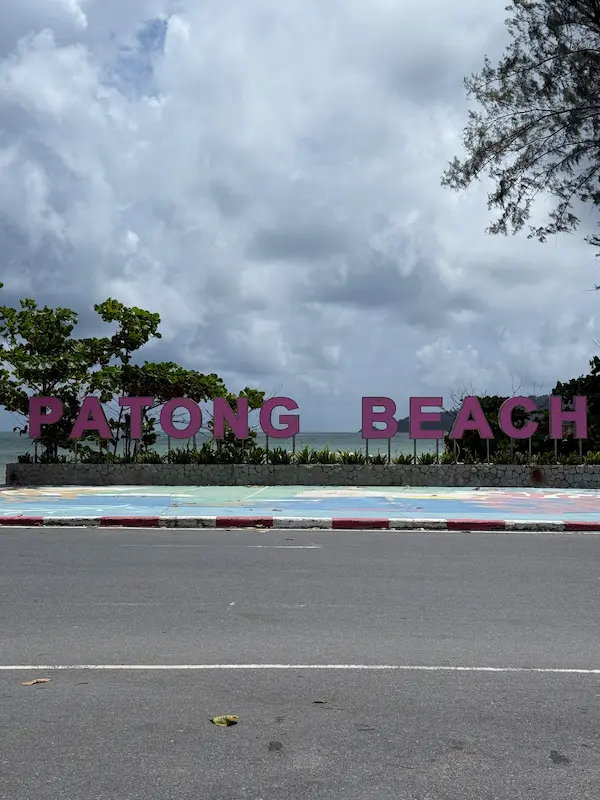
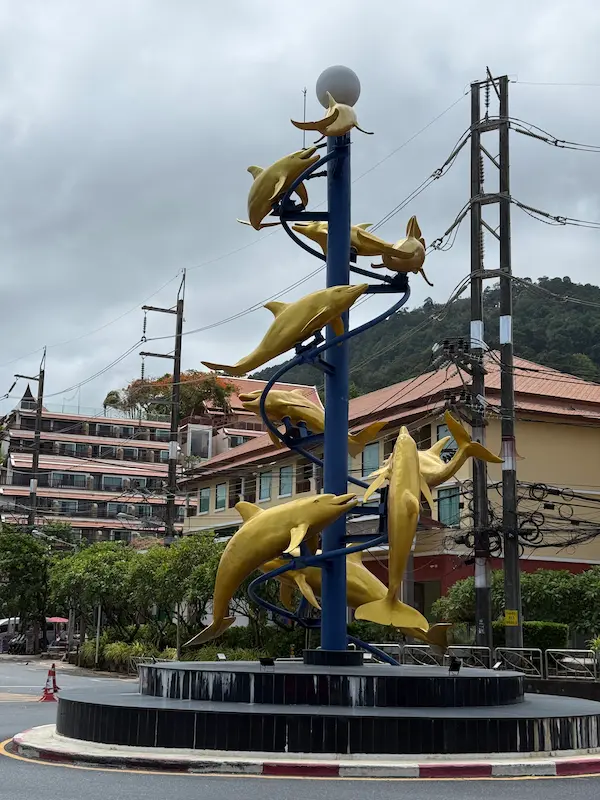
The shrine stands near the Dolphin Roundabout at the northern end of Patong Beach, just across from the beachfront and close to the well-known Patong Beach sign.
It is easy to miss if you are driving past. The shrine sits back slightly from the road, with older-looking buildings nearby and the Four Points by Sheraton resort farther along Thawewong Road. Visually, it does not immediately appear connected to the hotel development, which is one reason it can feel like an independent roadside shrine.
The site is now enclosed by permanent metal fencing. The taller side sections give it a more private and managed appearance than it had previously, but visitors can still enter through the gate at the front.
For anyone walking along northern Patong Beach, it is an easy place to stop for a few minutes. The shrine is not large, but its position beside the roundabout makes it one of those small local landmarks that many people recognise without necessarily knowing what it is.
Why Is This Shrine Significant?
The Phra Phrom Shrine is significant because it offers a small but revealing glimpse into the way spiritual belief remains part of everyday life in Thailand.
Patong is usually associated with beaches, hotels, nightlife and tourism, but shrines like this show another side of the town. They are places where local residents, workers and business owners may pause to pray, leave offerings or ask for protection and good fortune.
The shrine is also a good example of the relationship between spirituality and business in Thailand. Hotels, shopping centres, offices and other major developments often include shrines within their grounds, reflecting a belief that prosperity, harmony and respect for the land should form part of the life of the property.
This particular shrine appears to have been constructed as part of the wider Four Points by Sheraton development, most likely during the years leading up to the hotel’s opening in 2020. Although the exact construction date is not publicly documented, its location within the original development land and its close association with the property make that the most likely explanation.
Its position is slightly unusual because the shrine does not visually sit beside the main hotel building. Older-looking buildings stand between the shrine and the resort, making it feel more like an independent roadside shrine. That separation is part of what makes its history easy to overlook.
Who Is Phra Phrom?
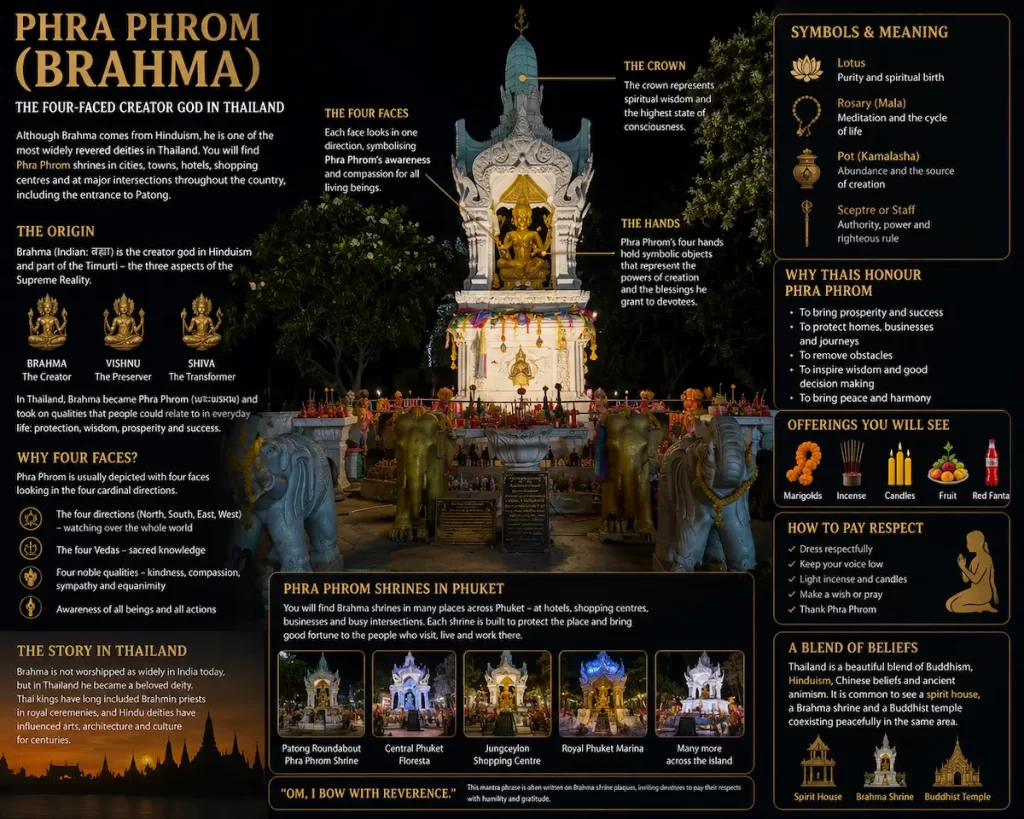
Phra Phrom is the Thai representation of Brahma, one of the principal deities in Hindu tradition. In Thailand, however, worship of Phra Phrom has developed its own place within everyday spiritual life and often exists comfortably alongside Buddhist practice.
The figure is usually shown with four faces, each looking in a different direction. This is commonly understood as a symbol of awareness, protection and the ability to extend blessings in every direction.
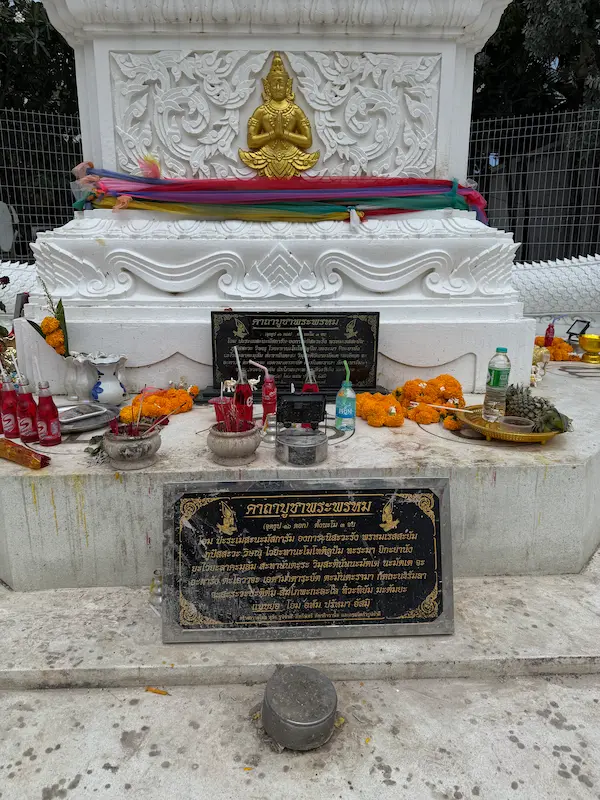
People may visit a Phra Phrom shrine to pray for success, good fortune, protection, progress in business or help with an important personal matter. Offerings often include flower garlands, incense, candles, fruit or drinks.
Visitors planning to make an offering should bring everything with them. There are no offering stalls at the shrine itself, and there is no particularly convenient place immediately nearby to buy flowers, incense or candles.
For visitors unfamiliar with Thai religious traditions, it can seem unusual to see a Hindu-derived deity so closely connected with hotels, businesses and public spaces. In Thailand, though, these traditions are often blended rather than kept separate, which is why a shrine like this can feel entirely natural beside a modern resort road.
What Will You See at the Shrine?
The shrine itself is small, but there is quite a lot to notice once you step inside the gate.
At the centre is the golden figure of Phra Phrom, seated beneath a raised pavilion and facing in four directions. Around the shrine, visitors may see flower garlands, incense holders, candles and other offerings left by people who have stopped to pray.
The recent renovation has made the site feel much more formal than it did before. The new fencing clearly defines the boundary, and the shrine now feels more like a carefully maintained part of the surrounding property than an open roadside space.
Despite that, it remains easy to visit. The gate at the front allows visitors to enter, stand quietly for a few minutes and take a closer look without needing to enter the hotel or speak to anyone.
The setting is part of the experience. Traffic moves around Dolphin Roundabout, the beach is just across the road, and older buildings sit nearby. It is not a peaceful temple complex, but that is exactly what makes it interesting: a working shrine sitting in the middle of everyday Patong.
How to Visit Respectfully
Although the shrine is small and easy to access, it is still an active place of worship rather than simply a roadside photo stop.
Enter quietly through the front gate, avoid standing directly in front of anyone who is praying, and do not touch the statue or move any offerings. Photography is generally fine, but it is best to avoid taking close photographs of worshippers without asking.
There is no need to overthink the visit. Respectful behaviour, a quiet manner and a little awareness of the people around you are usually enough.
The shrine is now enclosed by permanent fencing, so visitors should use the gate rather than trying to approach from the sides. The ground inside is fairly compact, making it better suited to a short, calm visit than a long stay.
Can Anyone Visit the Shrine?
Yes. Although the new fencing gives the shrine a more private appearance, visitors can still enter through the gate at the front.
You do not need to be staying at the Four Points by Sheraton, and there is no ticket or formal entrance. The shrine sits beside the road and can be visited independently as part of a walk around northern Patong.
Because it is a small worship space, it is best suited to a brief visit. A few minutes is usually enough to look around, take photographs and observe the details without getting in the way of anyone who has come to pray.
The entrance is easy to overlook at first, so approach from the front rather than assuming the fenced area is closed.
Is the Phra Phrom Shrine Worth Visiting?
The shrine is not somewhere most visitors would travel across Phuket to see on its own, but it is well worth a short stop if you are already walking around northern Patong Beach.
Its appeal comes from the context rather than its size. The shrine sits beside a busy roundabout, opposite the beach and close to hotels, traffic and older buildings, yet it still functions as a place where people pause to pray and leave offerings.
For anyone nearby who wants to make a short prayer or quiet offering, it is also a convenient place to stop, especially if they have brought incense, flowers or other offerings with them.
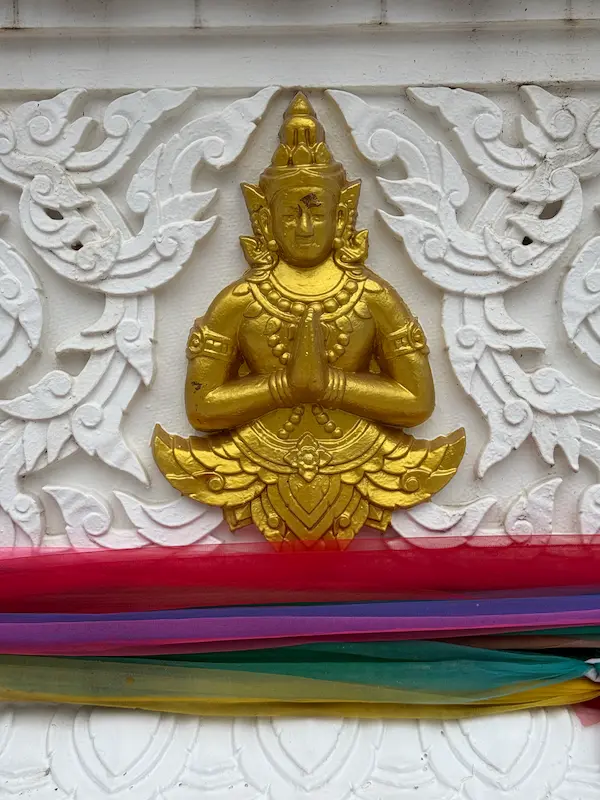
Even for visitors who are not there to pray, the architecture is worth a closer look. The shrine offers a small glimpse into Thai spiritual culture and the way traditional beliefs continue to exist alongside modern tourism, hotels and urban development.
Allow around 10 to 15 minutes. That is enough time to step inside, look at the shrine properly, notice the surrounding details and understand why it remains significant to the people who use it.
Nearby Places to Visit
The shrine is easy to include as part of a short walk around the northern end of Patong rather than treating it as a standalone stop.
Directly nearby is Dolphin Roundabout, one of the most recognisable road landmarks in Patong. The Patong Beach sign and northern section of Patong Beach are also just across the road, making it easy to combine the shrine with a beachfront walk.
Continue north and you will soon reach Kalim Beach, a quieter stretch of coastline known for its rocky shoreline, sunset views and roadside food stalls. Walking south takes you back toward the busier central part of Patong, including Loma Park, the main beachfront and Bangla Road.
For visitors interested in seeing more of Patong’s spiritual side, Wat Suwan Khiri Wong, often called Wat Patong, is the town’s main Buddhist temple and offers a much larger and more traditional religious setting.
Practical Information
Location: Near Dolphin Roundabout at the northern end of Patong Beach, along Thawewong Road
Thai name: ศาลพระพรหม ป่าตอง
Entry fee: Free
Suggested visit time: Around 10 to 15 minutes
Best time to visit: Morning or late afternoon, when the light is softer and the roadside is a little more comfortable
Access: Enter through the gate at the front of the shrine. The fencing can make the site look closed at first glance, but visitors are still able to go inside.
Offerings: There are no flowers, incense or candles for sale at the shrine, so bring them with you if you plan to make an offering.
Photography: Photography is generally fine, but avoid disturbing anyone who is praying or taking close photographs of worshippers without permission.
Good to combine with: Dolphin Roundabout, the Patong Beach sign, northern Patong Beach and a walk toward Kalim Beach.
How to Make a Prayer at the Shrine
There is no need to follow an elaborate ritual to visit the shrine respectfully. You can simply stand quietly before Phra Phrom, bring your hands together in a wai and make a personal prayer in your own words.
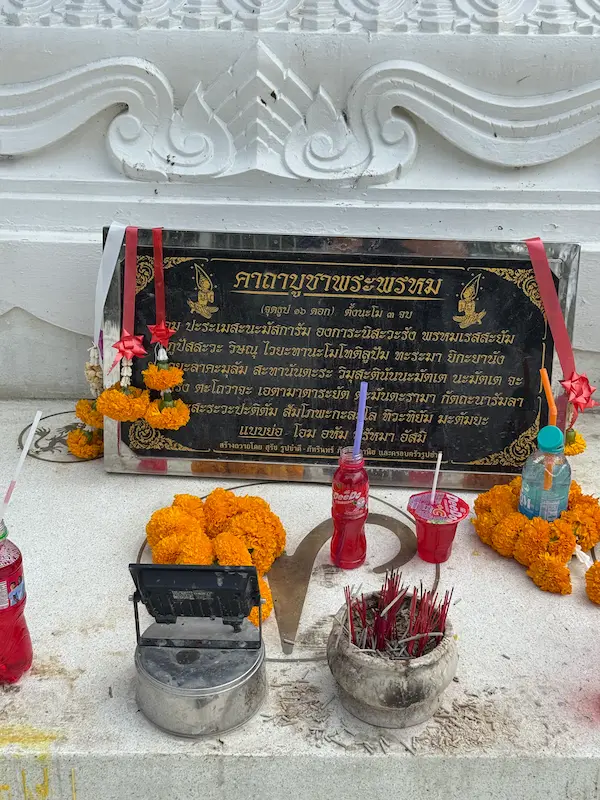
For visitors who want to follow the instruction displayed at the shrine, the plaques advise worshippers to light 16 incense sticks and begin by reciting the traditional Namo homage three times. The plaques then provide a Phra Phrom worship chant.
Because the chant is written in Thai as a phonetic version of an older Sanskrit or Pali-style prayer, it is difficult to translate every word literally. A qualified English interpretation of its meaning would be:
Om. I bow with reverence before Phra Phrom. I offer this worship and ask that it be received. May Phra Phrom watch over me, remove obstacles and grant protection, success, prosperity and favourable blessings. I bow again with respect.
In practical terms, the prayer is an expression of respect followed by a request for guidance, protection and positive progress in life. Worshippers may also add their own personal request, whether it relates to family, work, business, health or an important decision.
The plaque does not clearly explain how the 16 incense sticks should be divided among the four faces, and practices can vary. Visitors should therefore avoid worrying about performing the ritual perfectly. Respect, sincerity and calm behaviour matter more than following a rigid sequence.
Anyone planning to light incense or leave flowers should bring them along, as there are no offering stalls at the shrine itself and nowhere particularly convenient immediately nearby to buy them.
This section gives the article something genuinely useful: not just what people do, but what the act of prayer is intended to mean.
Final Thoughts
The Phra Phrom Shrine near Dolphin Roundabout is a small place, but that is part of its appeal. It is easy to overlook, yet once you stop and look more closely, it tells a much broader story about Patong.
The shrine brings together traditional belief, modern hotel development and everyday local life in a way that feels very Thai. People may visit to pray, make an offering, admire the architecture or simply understand a little more about the spiritual culture that exists alongside Patong’s beaches and tourism.
It will never be one of the town’s major attractions, but it does not need to be. As one of Patong’s quieter local landmarks, it offers a brief and meaningful glimpse into a side of the town that many visitors never notice.
Related Reading
Landmarks of Patong
Discover the small cultural, historic and local places that help define Patong beyond its beaches, nightlife and resort developments.
Best Temples in Thailand
Explore some of Thailand’s most beautiful and significant temples, from famous city landmarks to peaceful spiritual sites surrounded by nature.
Why Visit Phuket?
Discover what makes Phuket one of Thailand’s most varied destinations, including its beaches, cultural landmarks, viewpoints, historic areas and island experiences.
Which Area of Phuket Is Right for You?
Compare Patong, Kata, Karon, Kamala, Bang Tao, Surin, Rawai, Nai Harn and Phuket Town to find the area that best suits your travel style and itinerary.
FAQ: Phra Phrom Shrine Patong
What is the Phra Phrom Shrine in Patong ?
The shrine is dedicated to Phra Phrom, the Thai representation of Brahma. It is a small four-faced shrine near Dolphin Roundabout at the northern end of Patong Beach.
Is Phra Phrom the same as Buddha?
No. Phra Phrom is not the Buddha. He is the Thai form of Brahma, a deity from Hindu tradition who is widely respected in Thailand.
Where is the Phra Phrom Shrine Patong?
It is located near Dolphin Roundabout on Thawewong Road, opposite the northern end of Patong Beach and close to the Patong Beach sign.
Can anyone visit the shrine?
Yes. The shrine is open to passing visitors, and there is no entrance fee. Although it is now surrounded by permanent fencing, there is a gate at the front.
Do I need to be staying at the Four Points by Sheraton to visit?
No. You do not need to be a hotel guest, and you do not need permission to enter the shrine area.
How long should I spend at the shrine?
Around 10 to 15 minutes is usually enough to look around, take photographs and understand the main features of the shrine.
Can I pray at the shrine?
Yes. Visitors may make a quiet personal prayer, offer a wai or follow the prayer instructions displayed on the plaques.
How many incense sticks should I use?
The plaques at the shrine instruct worshippers to light 16 incense sticks. They do not clearly explain how the sticks should be divided among the four faces, and practices can vary.
Can I buy incense or flowers at the shrine?
No. There are no offering stalls at the shrine itself, so bring incense, flowers, candles or other offerings with you.
What do people pray for at a Phra Phrom shrine Patong ?
People commonly pray for protection, good fortune, success, prosperity, guidance and the removal of obstacles.
Was the shrine built by the Four Points by Sheraton hotel?
The shrine most likely formed part of the wider hotel development completed before the resort opened in 2020, although the exact construction and consecration dates are not publicly documented.
Is the shrine worth visiting?
It is worth a short stop if you are already exploring northern Patong Beach, especially if you are interested in Thai spiritual culture, local architecture or lesser-known Patong landmarks.
About the Author
David Hibbins is a travel publisher, destination researcher and the creator of Travel With Insight.
Through years of travel, tourism and publishing projects across Southeast Asia, he has developed a particular interest in how travellers research destinations, compare experiences and make travel decisions.
His work focuses on helping travellers move beyond popularity rankings, marketing claims and generic “best of” lists by providing balanced, research-driven destination guides. Rather than telling people where they should travel, his goal is to help readers understand the strengths, limitations and unique character of each destination so they can choose the places that best match their own interests, travel style and goals.
As the creator of Travel With Insight, David researches destinations throughout Southeast Asia, exploring not only where travellers go, but why they choose certain places, how destinations differ and what creates genuinely memorable travel experiences.
His work covers destination research, regional travel planning, traveller behaviour and the decision-making frameworks that help people plan more rewarding journeys.
Explore More Travel Resources
Every great journey begins with informed decisions. The more you understand a destination before you arrive, the more rewarding your travel experience becomes.
Whether you’re still researching Southern Thailand or you’re ready to start planning your itinerary, these additional resources can help.
Travel With Insight
Continue exploring our in-depth destination guides, travel inspiration and practical planning advice designed to help you make informed travel decisions throughout Thailand and Southeast Asia.
Go Find Asia
Looking for even more travel inspiration? Go Find Asia explores destinations, experiences and travel ideas across Asia, helping you discover where to go, what to see and how to plan your next adventure.
Resurgence Travel
When you’re ready to turn your research into reality, Resurgence Travel offers curated itineraries, personalised travel planning and local expertise to help you experience the very best of Thailand and Southeast Asia.