Patong Beach Phuket Visitor Guide
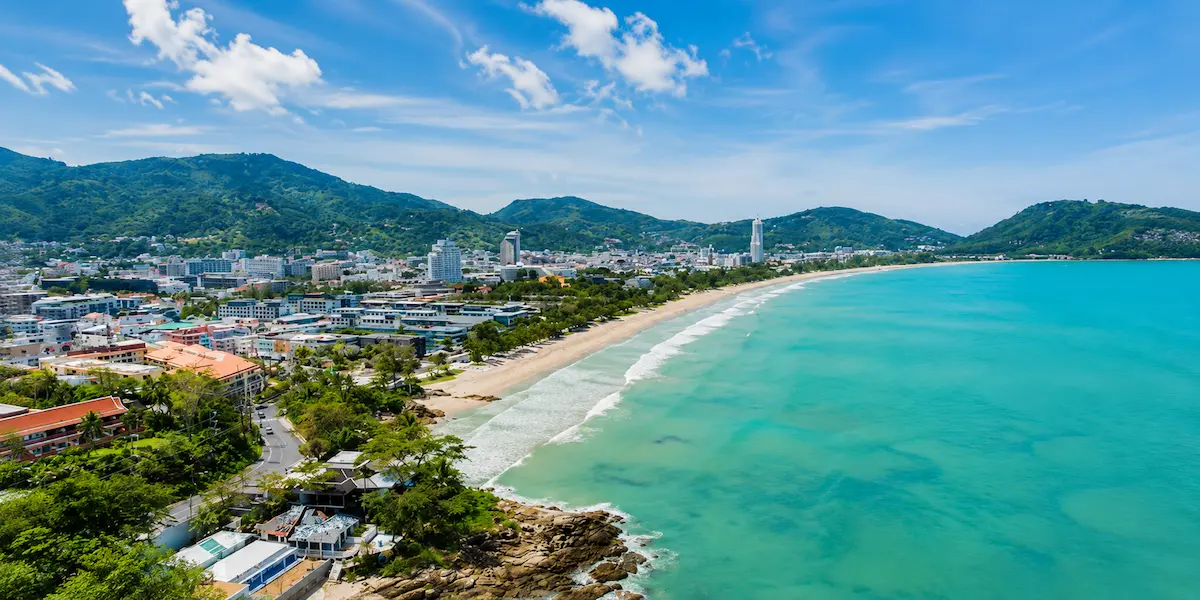
Patong Beach is Phuket’s most recognised beach and the centre of the island’s tourism industry. Stretching for around 3.5 kilometres along a broad crescent-shaped bay on Phuket’s west coast, it combines a long public beach with one of Thailand’s most vibrant resort towns. While other beaches on the island may offer a quieter atmosphere or more dramatic natural scenery, Patong stands apart for the sheer variety of experiences available within a single destination.
Unlike many resort beaches where hotels dominate the shoreline, Patong Beach remains entirely public. A beachfront promenade and Beach Road separate the sand from the town, allowing visitors to move easily between the beach, cafés, restaurants, shopping, markets and entertainment. Whether you spend an hour swimming, enjoy a sunset walk, hire a long-tail boat to explore the coastline or stay well into the evening, everything is within easy reach.
Although many people associate Patong with its famous nightlife, the beach itself has a character that changes along its length. The quieter northern end around Loma Park, the lively central section and the southern waterfront near the creek each offer a slightly different experience, giving visitors the freedom to choose the atmosphere that best suits their day.
This guide explores everything you need to know before visiting Patong Beach, including where to swim, how the different sections compare, what to expect throughout the day and how to make the most of one of Phuket’s most complete beach destinations.
Quick Summary
| Location | Patong, Kathu District, Phuket, Thailand |
|---|---|
| Type | Public beach |
| Length | Approximately 3.5 km |
| Best For | Swimming, beach walks, water sports, sunsets, long-tail boat trips and enjoying Patong’s resort atmosphere |
| Atmosphere | Vibrant and energetic, with quieter areas towards the northern end |
| Entry Fee | Free |
| Opening Hours | Open 24 hours (facilities and vendors operate throughout the day) |
| Swimming | Best in the central and northern-central sections, with designated swimming areas during busy periods |
| Facilities | Beach chairs, umbrellas, lifeguards, public amenities, massage, food vendors and nearby cafés and restaurants |
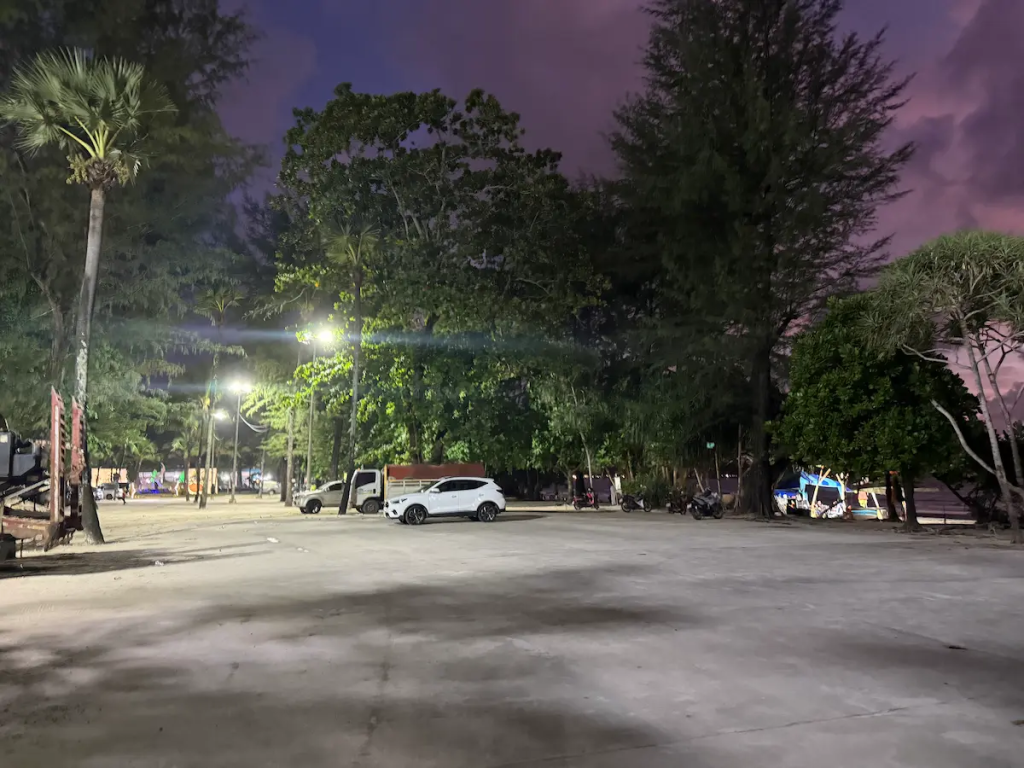
| Parking | Scooter parking is generally easy. Car parking is most convenient around Loma Park at the northern end. |
| Allow | From one hour to a full day, depending on your interests |
Why Visit Patong Beach?
Patong Beach is one of Phuket’s most complete beach destinations, offering far more than just a place to swim. While the beach itself remains the main attraction, its greatest strength is the way it combines a long public shoreline with the convenience of a vibrant resort town. Within a short walk of the sand, visitors can enjoy cafés, restaurants, shopping, markets, beachside massages, water sports and, after sunset, one of Thailand’s most famous nightlife districts.
The beach also offers surprising variety along its length. The northern end around Loma Park provides a more open and recreational atmosphere, the central section is the busiest and most popular for swimming, while the southern end gradually transitions towards the creek and coastal headland. Whether you’re looking for a morning walk, a relaxing afternoon by the sea, a long-tail boat trip to nearby beaches or simply somewhere to watch the sunset, Patong Beach offers enough variety for almost every style of traveller.
Although there are quieter and more secluded beaches elsewhere in Phuket, Patong stands apart for the overall experience it provides. Rather than being defined by a single attraction, it brings together the beach, the town and an extensive range of visitor facilities into one easily explored destination, making it an excellent base for travellers who enjoy having everything close at hand.
Understanding Patong Beach
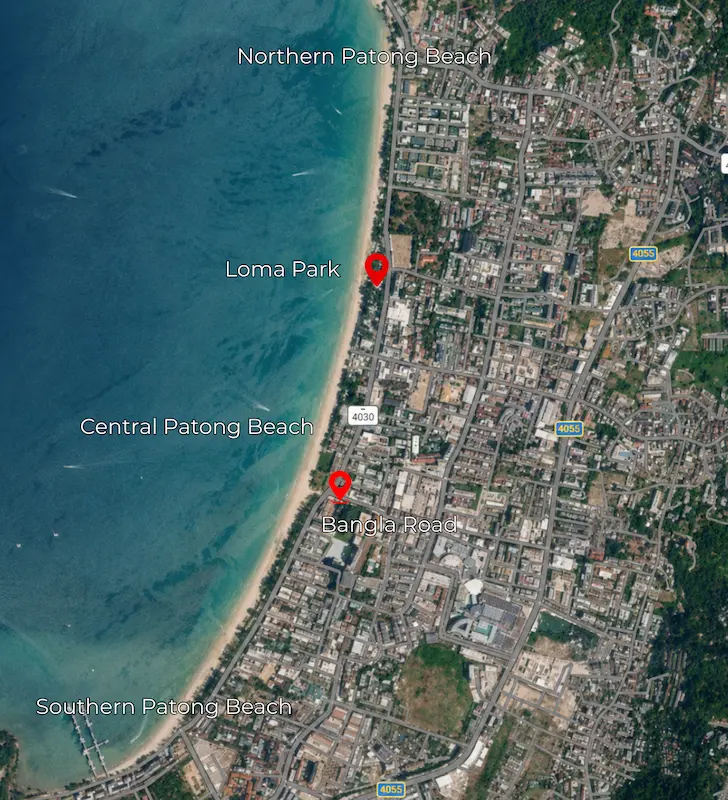
Rather than treating Patong Beach as one continuous stretch of sand, it helps to think of it as three distinct sections, each with its own atmosphere and character. While there are no official boundaries, the experience gradually changes as you walk from north to south. The northern end feels more open and recreational, the central section is the busiest and most active, while the southern end offers a different coastal setting as the beach approaches the creek and headland.
Understanding these subtle differences can help you decide where to swim, where to relax and which part of the beach best matches the experience you’re looking for.
Northern Patong
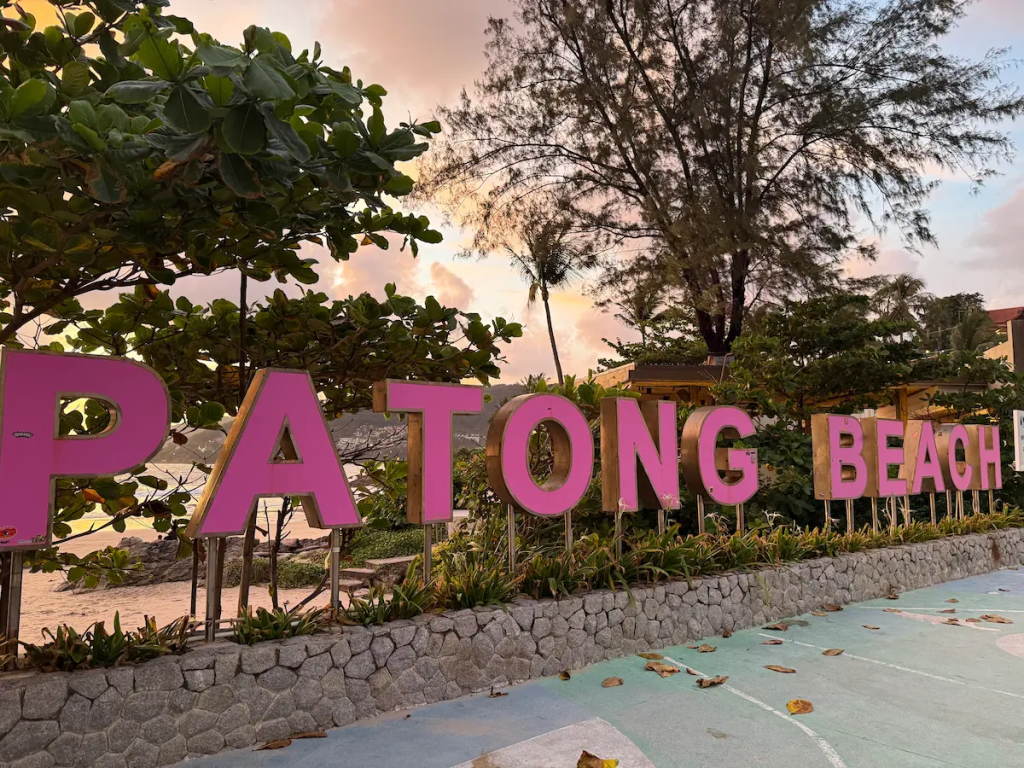
The northern section of Patong Beach extends from around Loma Park to the northern tip of the bay, where the well-known Patong Beach sign marks the end of the beachfront before the coastline transitions towards Kalim Beach. Although it remains within easy walking distance of Central Patong, this part of the beach generally feels more open and relaxed, making it popular with visitors who prefer a little more space while still enjoying the convenience of Patong’s main beachfront.
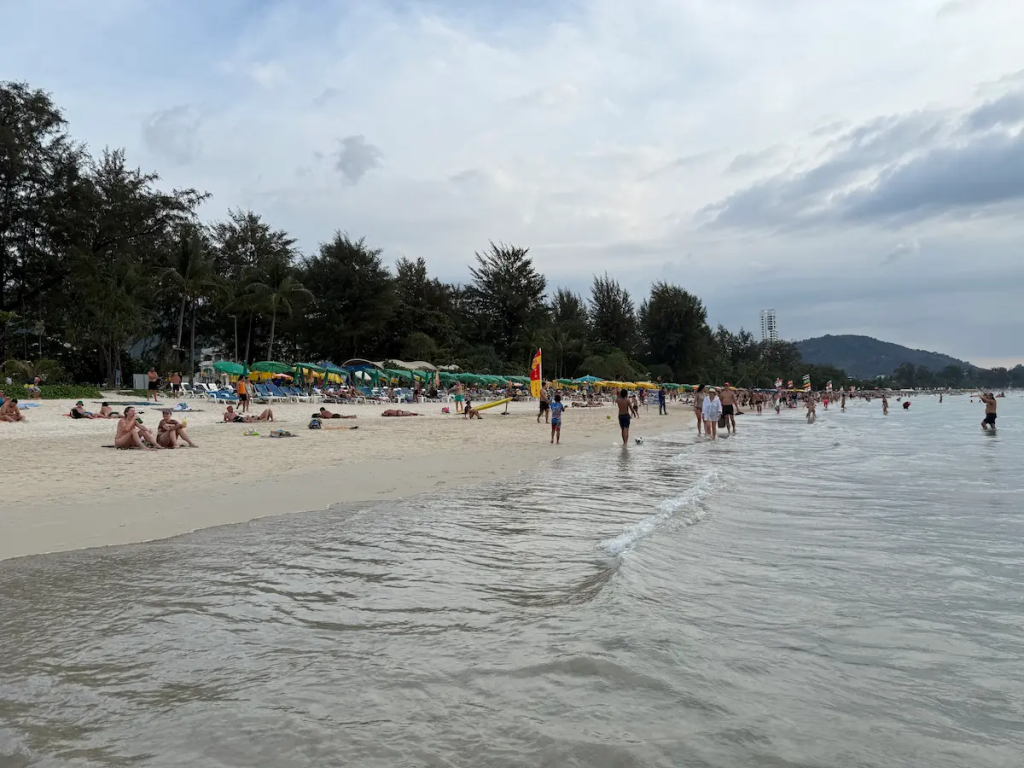
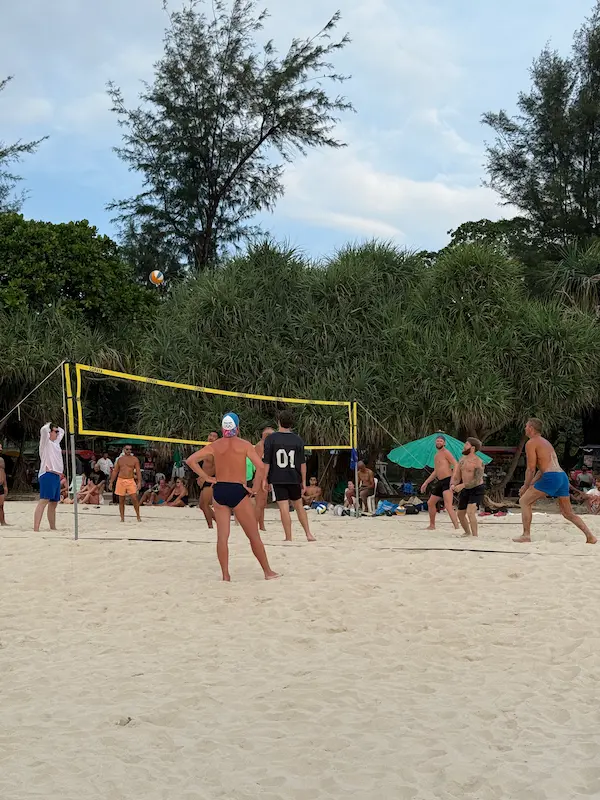
Loma Park forms the focal point of the northern beachfront, providing one of the area’s most convenient public car parks along with public toilets, mature shade trees and a number of small memorials. The surrounding beachfront often hosts beach volleyball, while food vendors, beach massage, chair rentals and lifeguard stations are all commonly found nearby. With calmer surroundings, convenient facilities and easy access to the beach, the northern section is a favourite for morning walks, families and visitors looking to enjoy Patong Beach at a slightly slower pace.
Central Patong
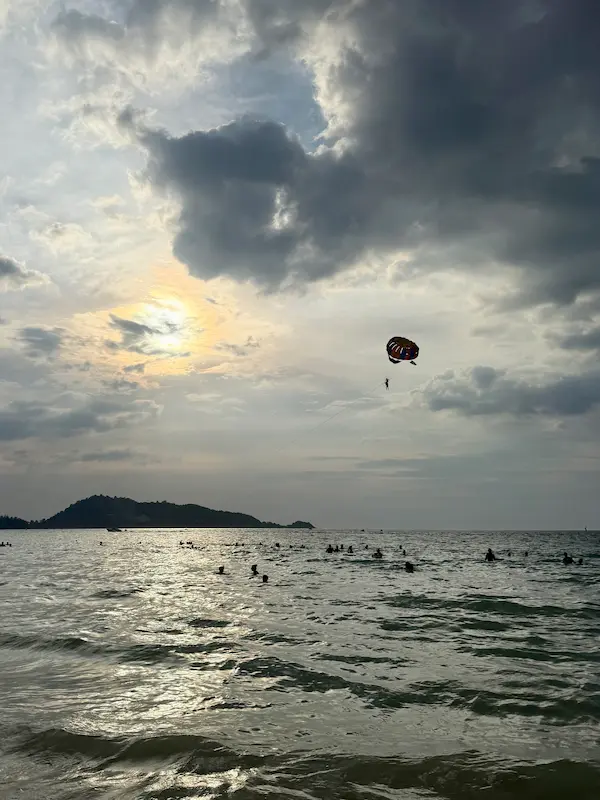
The central section is the heart of Patong Beach and where most visitors naturally gravitate. This is the busiest stretch of shoreline, with the highest concentration of beach chairs, umbrellas, swimming areas and water sports. Directly behind the beach, Bangla Road, Beach Road and the surrounding commercial precinct create an energetic atmosphere that continues from morning through late evening. For many first-time visitors, this is the classic Patong Beach experience they imagine before arriving.
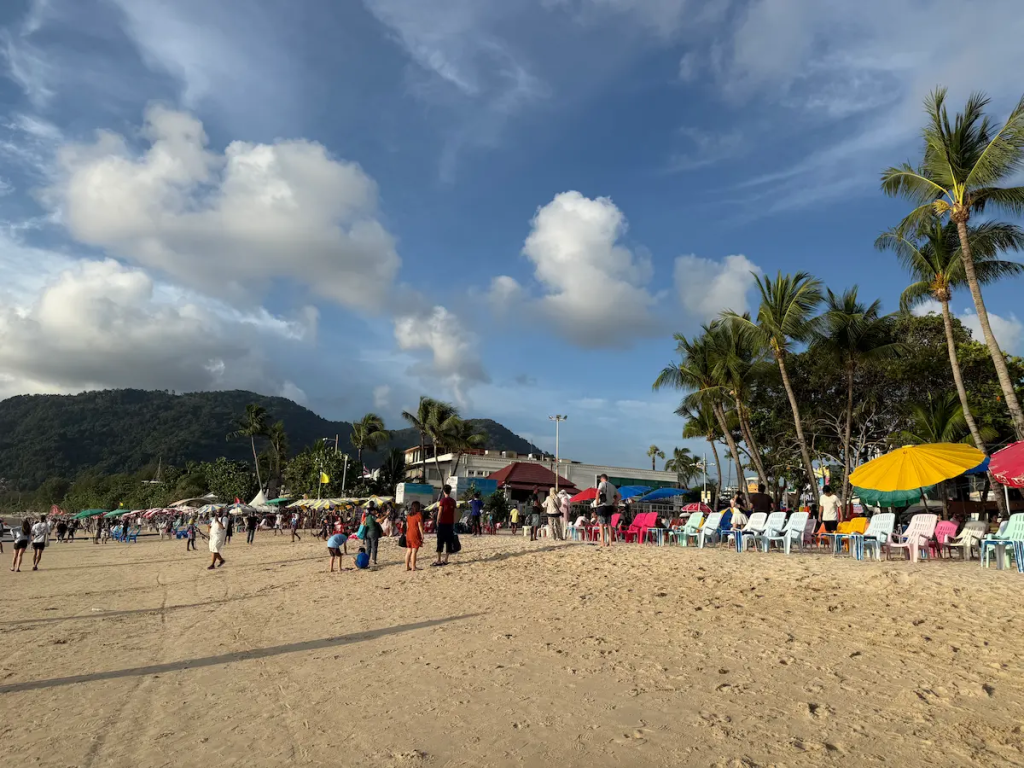
With accommodation, restaurants, shopping centres, nightlife and beachfront activities all within easy walking distance, Central Patong offers unmatched convenience. It is an excellent choice for visitors who want to be in the centre of the action, whether relaxing on the sand during the day, enjoying water activities, watching the sunset or exploring Patong’s famous entertainment district after dark. While it is typically the busiest part of the beach, the vibrant atmosphere is precisely what many visitors come to experience.
South Patong
Towards the southern end, Patong Beach begins to change character. Visitor numbers gradually thin out, creating a more relaxed atmosphere than the busy central section. A raised promenade and seawall separate parts of the beachfront from the sand, while long-tail boats frequently anchor offshore, giving this part of the beach a distinctly different feel. The floating jetty, which serves as the departure point for YONA Beach Club and other boat excursions, is also located here, although it is typically relocated during the southwest monsoon season.
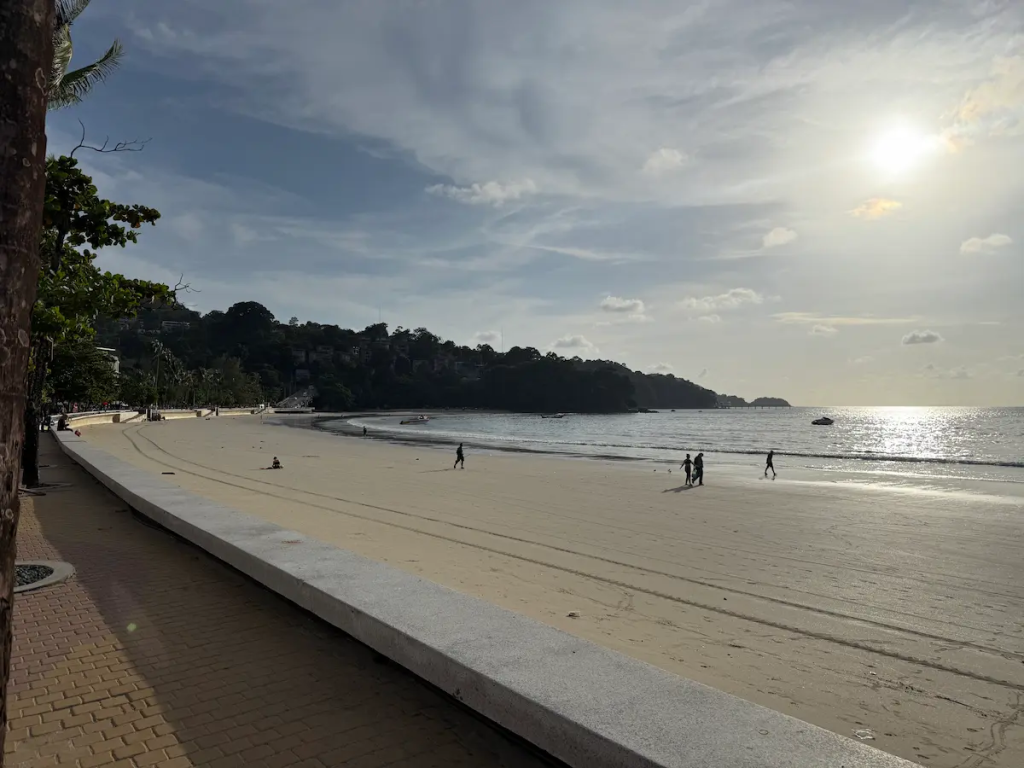
While the beach remains attractive, this area is generally less popular for swimming than the central and northern sections. Instead, it appeals to visitors looking for a quieter place to stroll along the waterfront, watch boats come and go or enjoy the coastal scenery. At the southernmost end of the beach, local seafood vendors often set up in the evening, offering freshly prepared seafood in a more casual setting. South Patong also marks the beginning of the coastal route towards Tri Trang Beach, Freedom Beach and the picturesque headland beyond.
Things to Do at Patong Beach
Patong Beach offers far more than simply a place to relax on the sand. Whether you’re visiting for an hour or spending the entire day, the beach provides a wide variety of activities, from swimming and water sports to long-tail boat trips and sunset walks. While many visitors naturally head towards the central section, exploring different parts of the beach rewards you with changing scenery and a different perspective of Patong.
Relax on the Beach
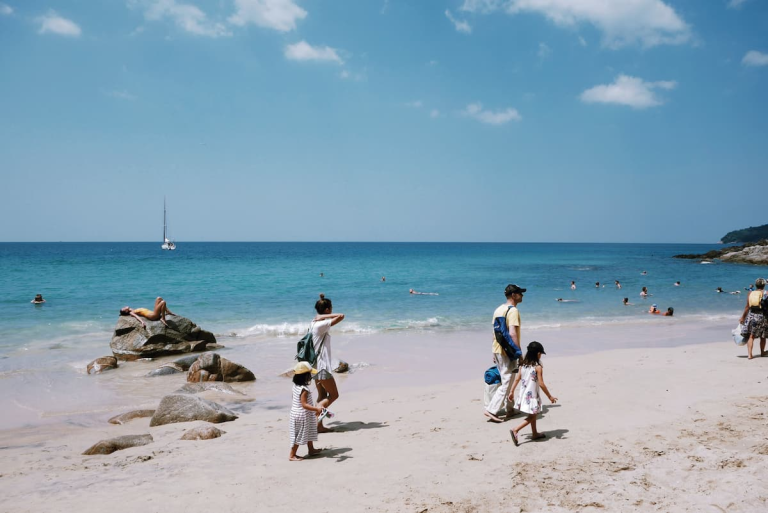
Whether you prefer to spread out a towel or hire a beach chair and umbrella, Patong Beach offers plenty of space to unwind. The central section has the greatest concentration of beach chairs and services, while the northern end generally provides a little more room to relax.
Swim in the Andaman Sea
Swimming is one of the most popular activities at Patong Beach, particularly through the central and northern-central sections where the sandy seabed and beach conditions are generally most favourable. During busy periods, designated swimming areas help separate swimmers from watercraft, while lifeguards monitor many of the more popular sections of the beach.
Walk the Length of the Beach
Walking from one end of Patong Beach to the other is one of the best ways to experience its changing character. Starting around Loma Park, you’ll pass quieter recreational areas before reaching the lively central beachfront and eventually the southern promenade, where the coastline gradually transitions towards the creek and headland.
Take a Long-tail Boat Along the Coast
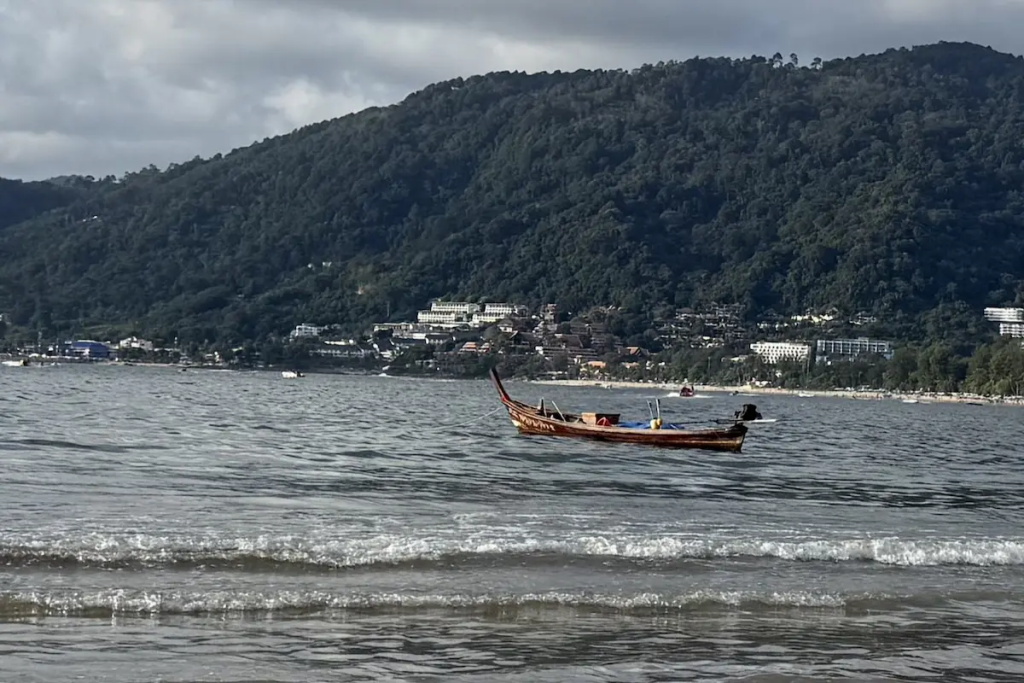
Long-tail boats operating from Patong Beach offer a memorable way to experience Phuket’s coastline from the water. Many visitors hire a boat to nearby beaches such as Freedom Beach, while others choose a sightseeing trip along the bay to enjoy the sweeping coastline, forested headlands and impressive views back towards Patong Beach. It’s a relaxing way to appreciate the area’s natural scenery from a completely different perspective.
Try Water Sports
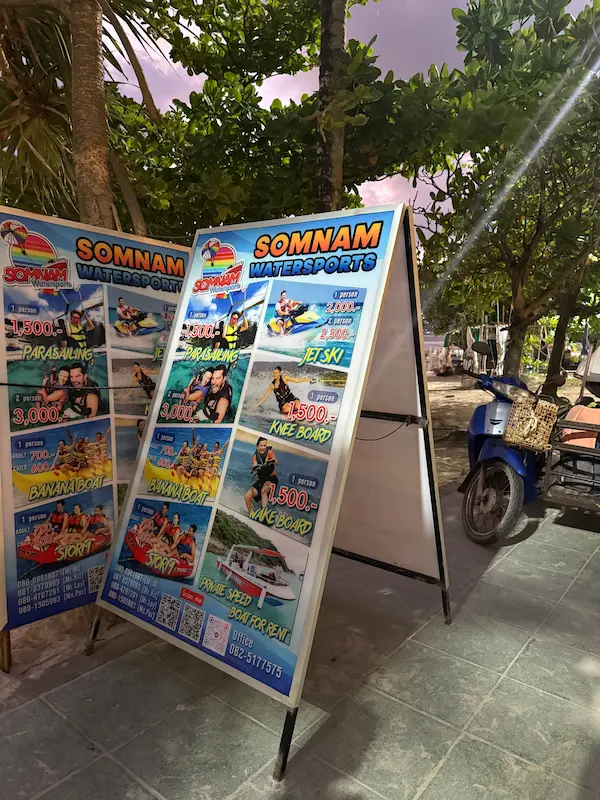
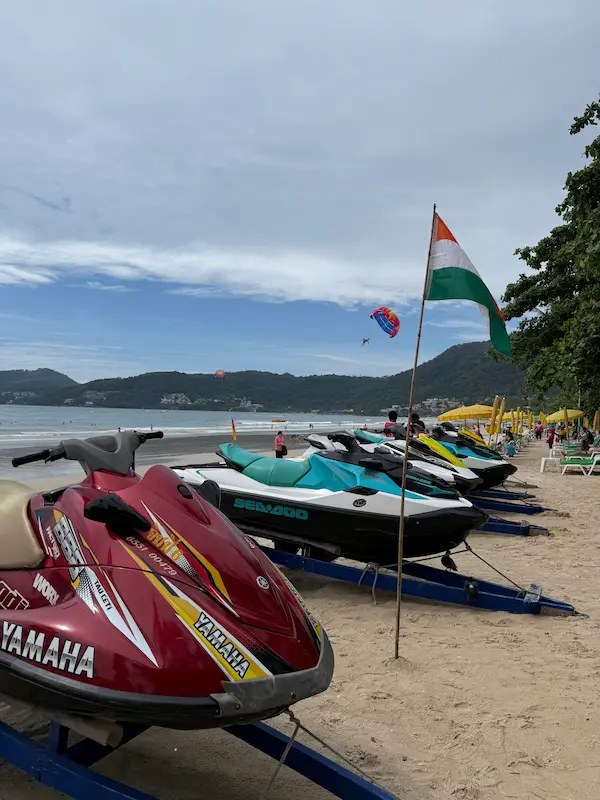
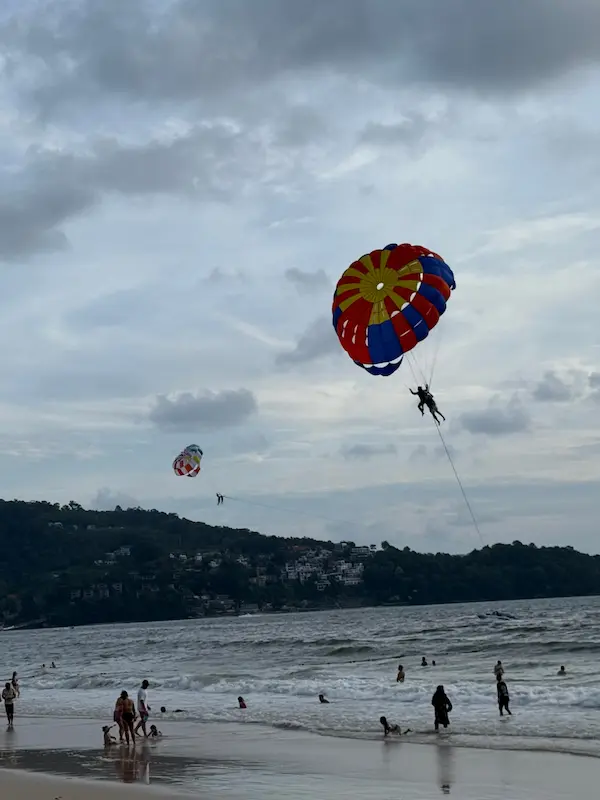
Patong Beach offers a wide range of water sports throughout the day, with operators located along the central section of the beach. Popular activities include parasailing, jet skiing, banana boat rides and other towable inflatables, with prices typically displayed at the booking points before you decide.
Whether you’re looking for an adrenaline-filled experience or simply want to see Patong from a different perspective, these activities remain one of the beach’s most popular attractions.
Enjoy a Beach Massage
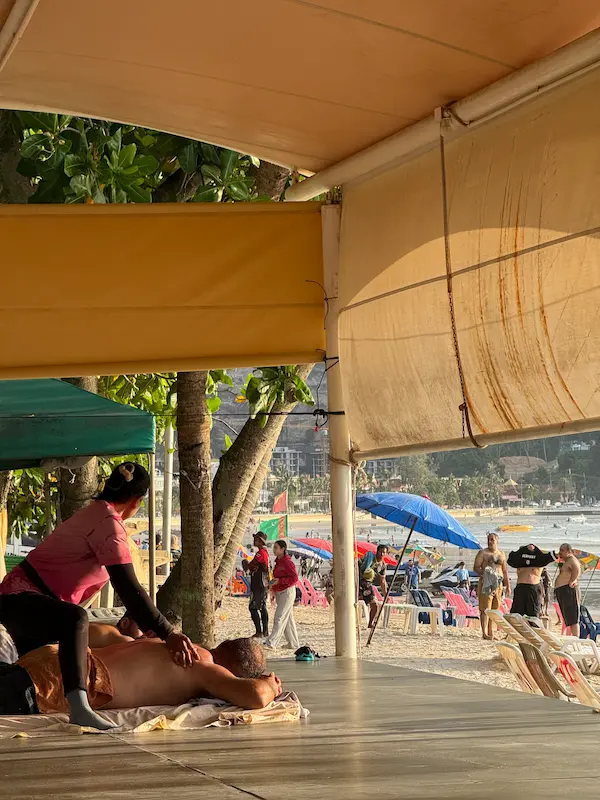
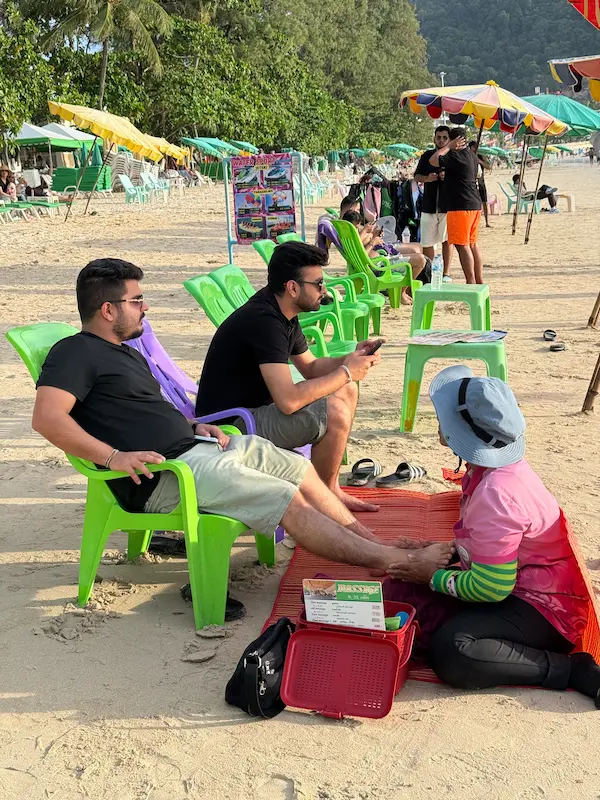
Traditional Thai massage is available from licensed operators along parts of Patong Beach, particularly through the central and southern-central sections. Massage beds and foot massage chairs are set up beneath shaded canopies overlooking the beach, allowing visitors to relax while enjoying the coastal atmosphere. For many people, it’s a popular way to unwind after a swim, a long walk along the shoreline or simply while taking a break from the sun.
Watch the Sunset
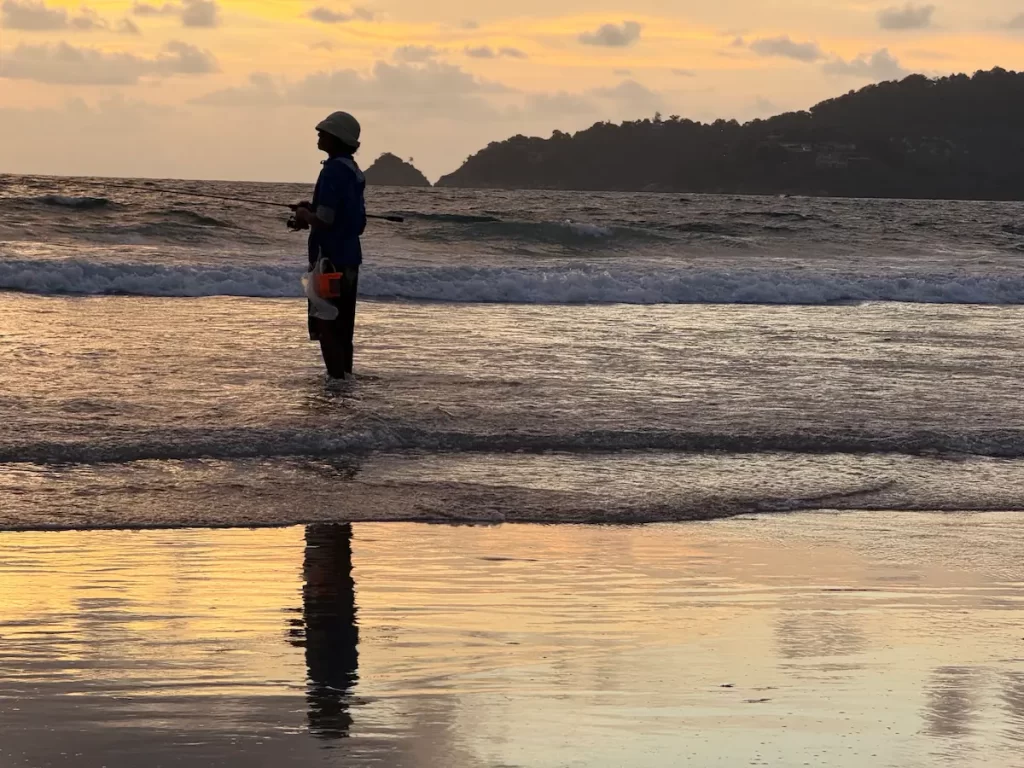
As the afternoon draws to a close, Patong Beach becomes one of Phuket’s most popular places to watch the sunset. The broad curve of the bay, framed by forested headlands at either end, provides a beautiful setting as the sun slowly sinks towards the Andaman Sea. Beach chairs begin to fill, people gather along the shoreline and the atmosphere becomes noticeably more relaxed as daylight fades.
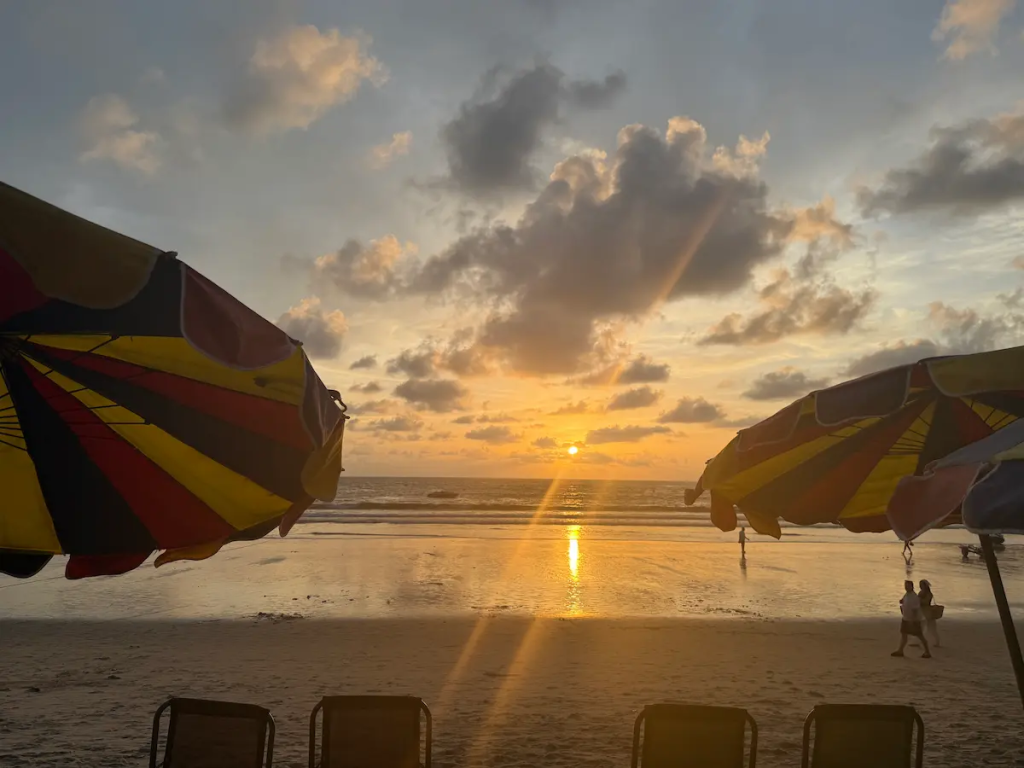
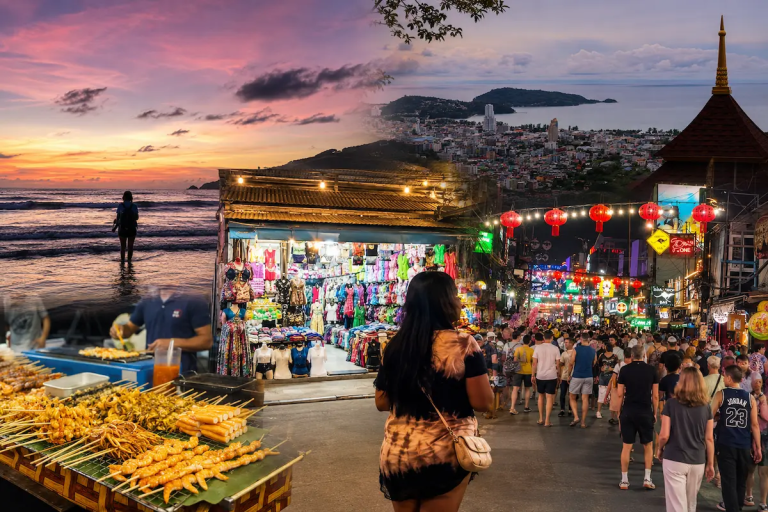
While sunset is naturally one of the busiest times of day, it also marks the transition from a beach destination to one of Thailand’s most vibrant evening entertainment precincts. From here, many visitors continue to nearby restaurants, beach bars, Bangla Road or the surrounding nightlife, making sunset the perfect way to end a day by the sea.
Swimming & Beach Conditions
Patong Beach is generally regarded as one of Phuket’s most popular swimming beaches, particularly through the central and northern-central sections where the sandy seabed, wide beach and easy access make it well suited to both casual swimmers and families. While conditions vary throughout the year, the beach offers plenty of space to enjoy the water, especially during the calmer months of the high season.
The central section provides the best overall swimming experience for most visitors. The beach is at its widest, the sand is generally at its finest and designated swimming areas are often established to separate swimmers from watercraft. The northern section also offers enjoyable swimming and tends to feel slightly less crowded, making it a popular choice for visitors seeking a little more space without sacrificing convenience.
Towards the southern end, conditions gradually change as the beach approaches the creek. Long-tail boats become more common in this area and, depending on recent rainfall, tides and seasonal conditions, the water can sometimes be less appealing for swimming than elsewhere along the beach. While many visitors still enjoy this section, those visiting primarily to swim often prefer the central or northern parts of the bay.
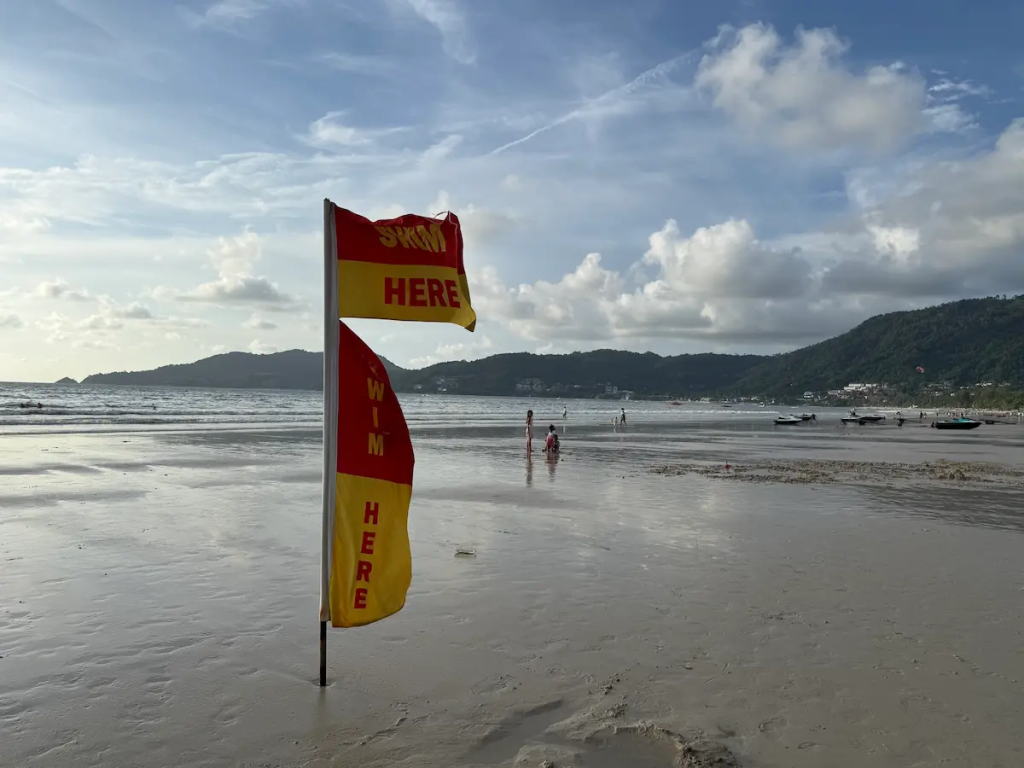
During the southwest monsoon season, stronger waves and rip currents can develop along Phuket’s west coast, including Patong Beach. Lifeguards patrol many of the popular swimming areas, particularly around the northern and northern-central sections, and visitors should always pay attention to beach flags and any instructions provided by lifeguards. Red flags indicate dangerous swimming conditions and should never be ignored.
Although the seabed generally slopes gradually, sea conditions can change quickly with weather and tides. Choosing the designated swimming areas, avoiding watercraft operating zones and exercising normal beach safety will help ensure an enjoyable visit.
Facilities & Amenities
Patong Beach is one of the best-equipped public beaches in Phuket, offering a wide range of facilities that make it easy to spend anything from a few hours to an entire day by the sea. While the beach itself remains public and free to access, many of the services available are privately operated.
Beach Chairs & Umbrellas
Beach chairs and umbrellas are available along much of the central and northern-central sections of Patong Beach. These are privately operated and require a rental fee, providing a comfortable option for visitors planning to spend several hours on the sand. Natural shade is limited across much of the beachfront, making umbrellas a popular choice, particularly during the hottest part of the day.
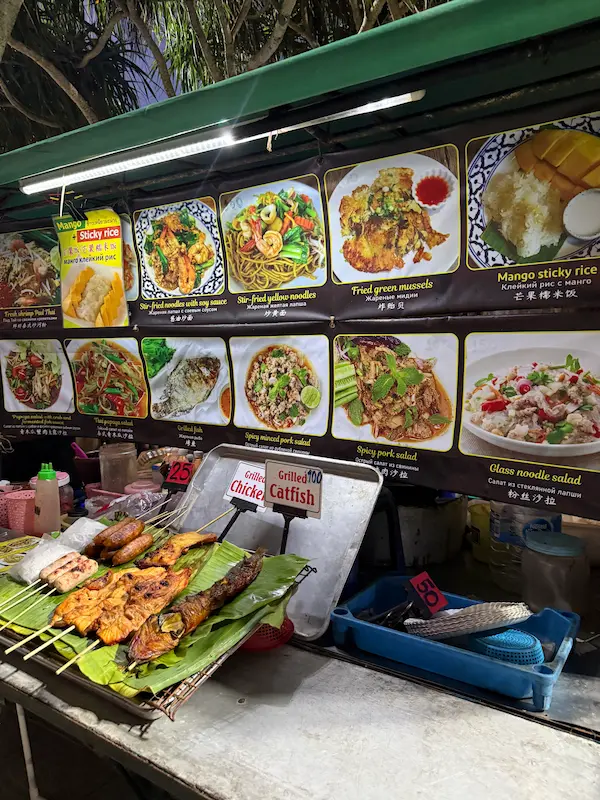
Food & Drinks
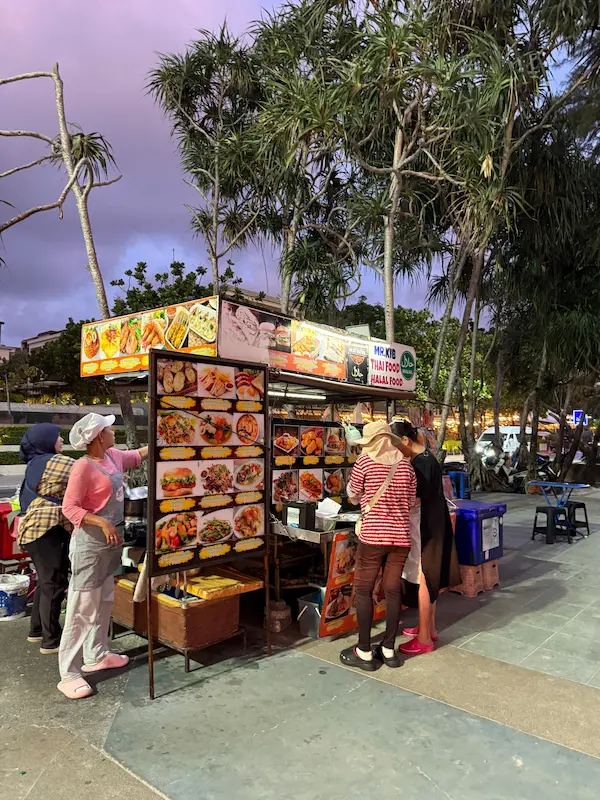
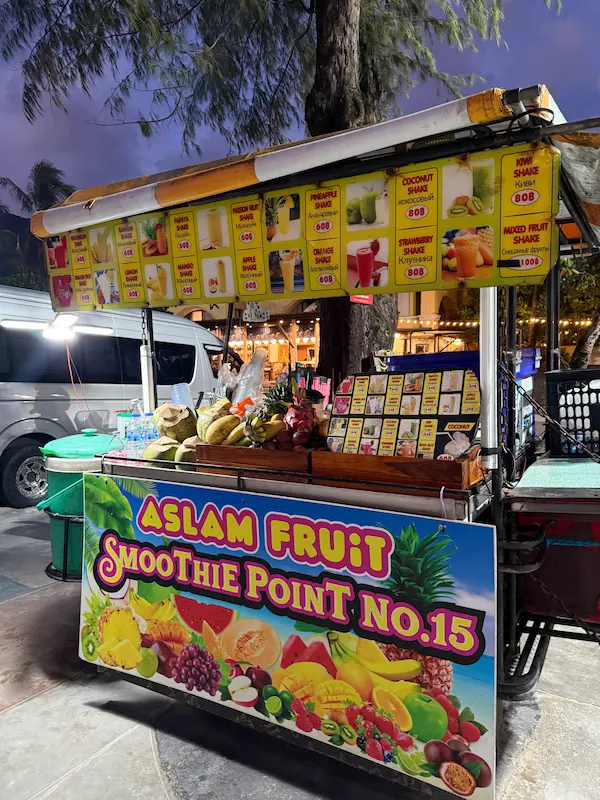
Visitors have plenty of options for food and drinks throughout the day without needing to leave the beachfront for long. Most beach chair operators can arrange drinks and meals to be delivered directly to your lounger, making it easy to relax by the sea without interrupting your day.
Beach Massage
Licensed beach massage operators are available in several areas of Patong Beach, particularly through the central and southern-central sections. Traditional Thai massage is one of the most popular ways to relax after swimming or walking along the beach.
Lifeguards & Beach Safety
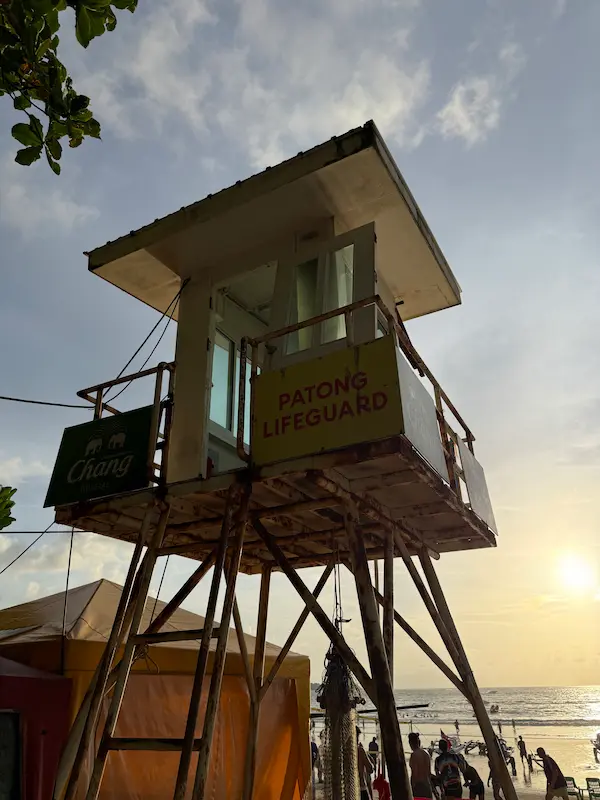
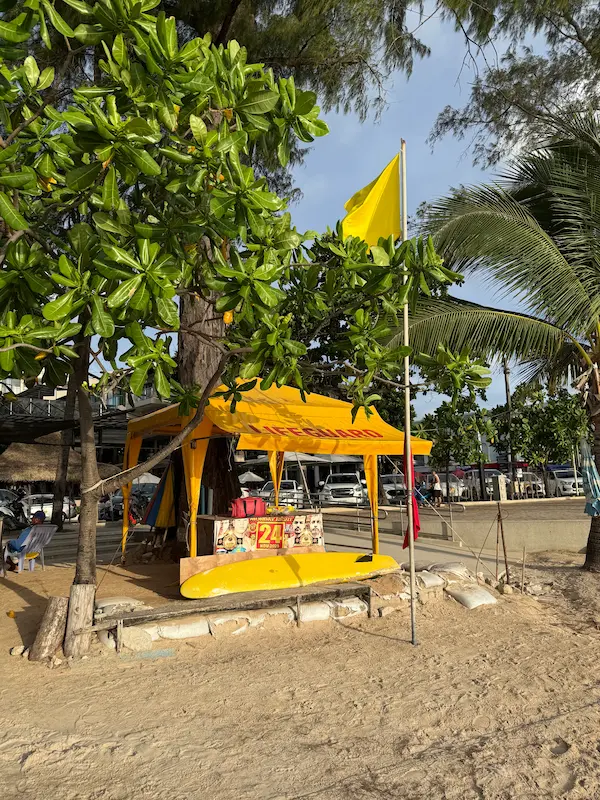
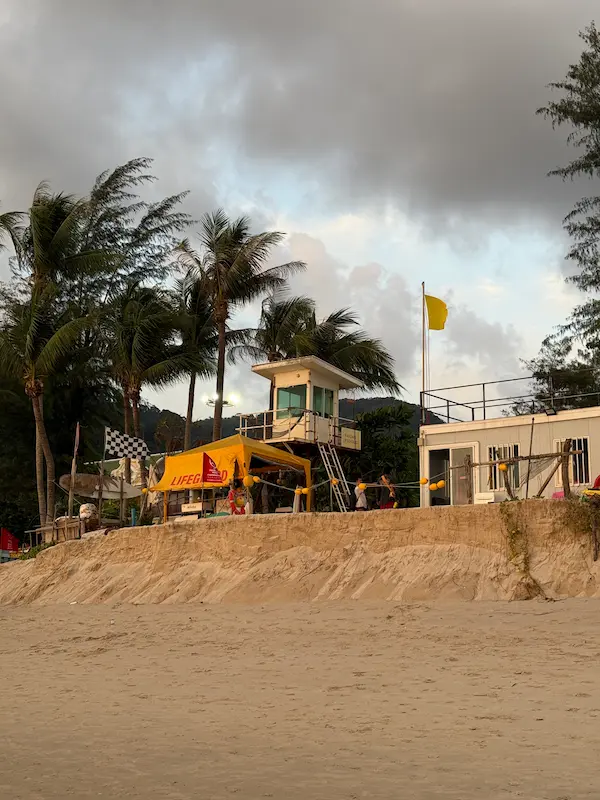
Lifeguards patrol many of Patong Beach’s busiest swimming areas from multiple stations positioned along the beachfront, particularly through the northern and northern-central sections. Safety flags are displayed when conditions require extra caution, and visitors should always swim within designated areas and follow any advice provided by lifeguards.
Toilets & Public Amenities
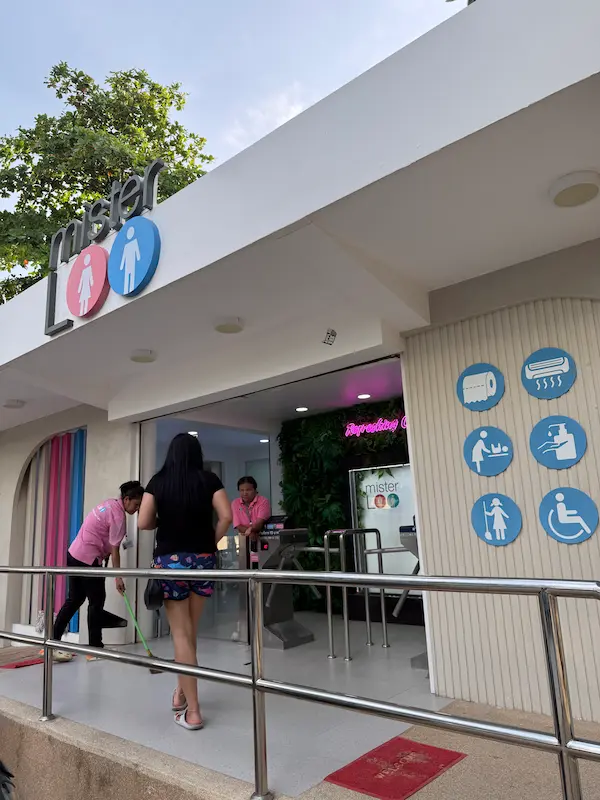
Public toilets are available at several locations along Patong Beach, with the main facilities situated near Loma Park and around the central-southern beachfront, making them accessible from most of the beach. Most public toilets charge a small fee, typically around 10 baht, so it’s worth carrying a little cash or loose change if you’re planning to spend several hours by the sea.
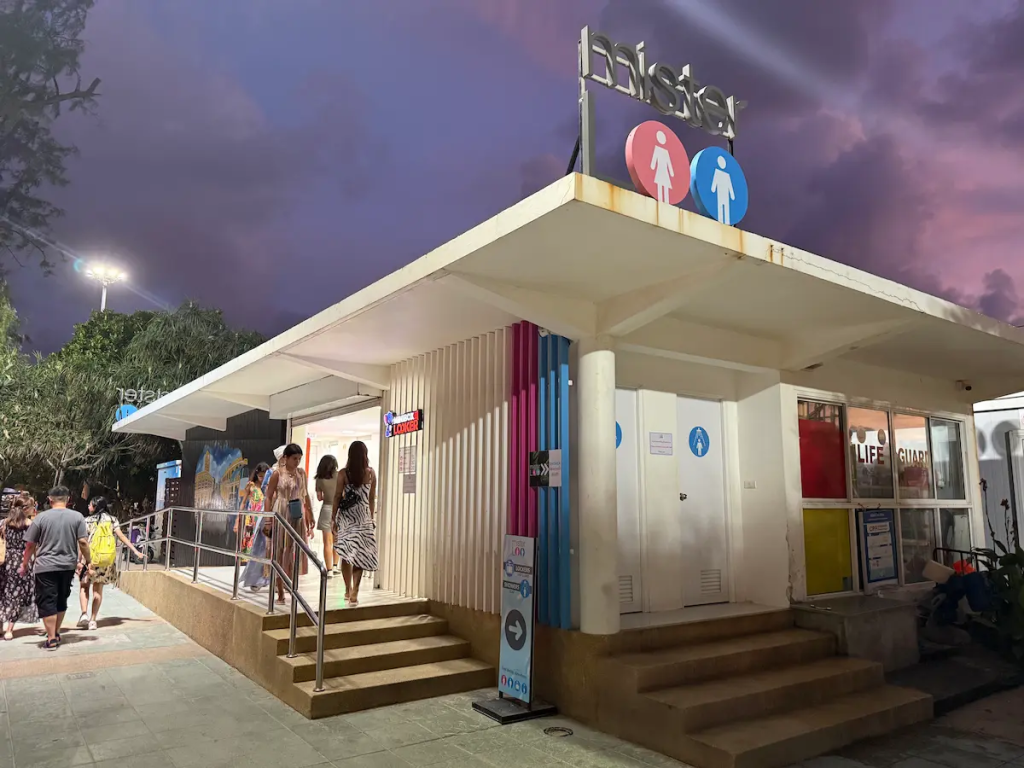
The larger public amenity buildings also provide additional facilities, including showers, changing rooms and lockers at selected locations. Visitors spending the day at the beach may find these facilities particularly useful before heading to restaurants, shopping areas or evening entertainment.

While dedicated public amenities become less frequent towards the southernmost section of Patong Beach, some businesses opposite the beachfront may allow non-customers to use their toilets for a small fee, usually around 10 baht, although this is always at the discretion of the individual business.
Parking
Scooter parking is widely available along much of Patong Beach, with designated parking areas lining sections of Beach Road and the beachfront promenade. As scooters are the most common form of transport in Patong, riders can usually find parking within a short walk of the sand, although spaces become more limited during busy afternoons and evenings.
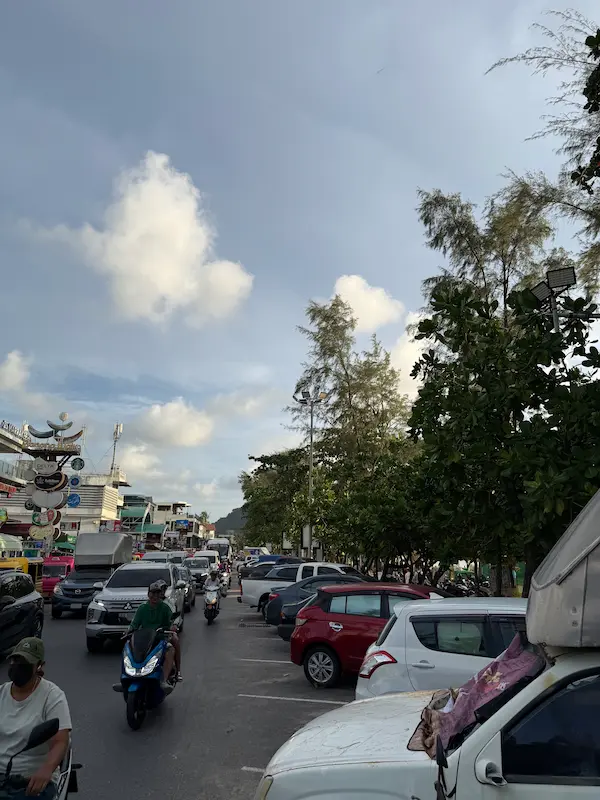
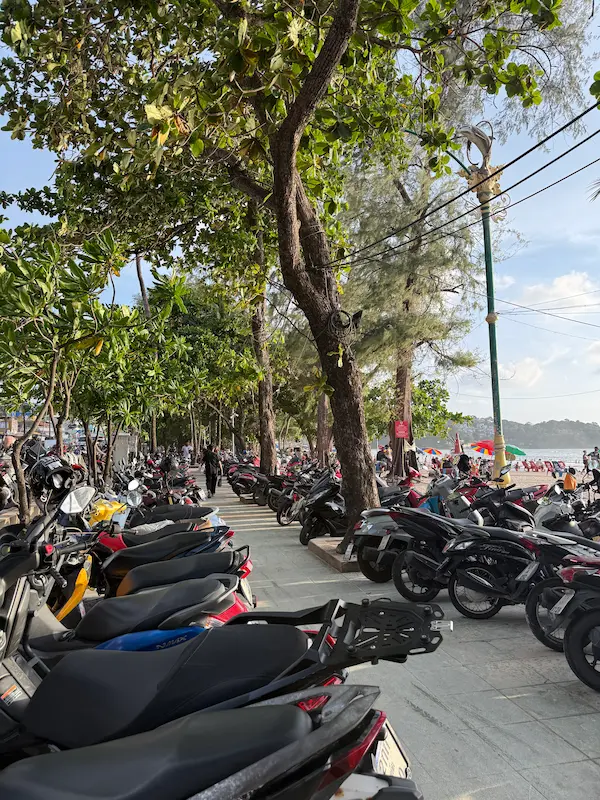
Visitors arriving by car will also find parking available along parts of Beach Road, although spaces can fill quickly during peak periods. The largest and most convenient public car park is located near Loma Park, making it a practical starting point for exploring the beachfront on foot before walking south towards the busier central section of Patong Beach.
Travel with Insight
One of the reasons Patong Beach has remained one of Phuket’s defining destinations is that it offers much more than simply a place to swim. While the beach is naturally the main attraction, its real appeal lies in how seamlessly it connects with the town behind it. Within just a few minutes’ walk, you can move from the sand to cafés, local markets, shopping centres, temples, restaurants and evening entertainment without ever needing to travel across the island.
It’s also worth taking the time to experience Patong Beach beyond its busiest central section. Many visitors naturally settle near Bangla Road and never realise how much the atmosphere changes as they walk north towards Loma Park or south towards the creek. Each section has its own character, and simply walking the length of the beach is one of the best ways to appreciate how Patong has developed around its famous bay.
The beach itself has also witnessed remarkable change. Long before Patong became Phuket’s tourism capital, this coastline was a quiet fishing community surrounded by forested hills and connected more by sea than by road. Following the devastating 2004 Indian Ocean tsunami, parts of the beachfront and promenade continued to evolve, yet Patong retained its defining feature—a long public beach that remains accessible to everyone. Today, millions of visitors experience the same sweeping crescent-shaped bay, often without realising the history that has helped shape the Patong they see today.
Practical Visitor Information
Opening Hours
Patong Beach is open at all times and can be visited throughout the day or evening. While swimming and beach activities are naturally most popular during daylight hours, many visitors return after sunset to enjoy a walk along the beachfront or dine at one of the nearby restaurants.
Best Time to Visit
Early morning is one of the most enjoyable times to experience Patong Beach, with cooler temperatures, calmer conditions and fewer people. Late afternoon is equally popular as visitors gather to watch the sunset over the Andaman Sea before the surrounding cafés, restaurants and entertainment venues come to life for the evening.
What to Bring
Light clothing, sunscreen, a hat and plenty of drinking water are recommended, particularly during the hotter months. If you plan to use the public toilets, carrying a small amount of cash is useful, as a small fee is commonly charged.
Beach Safety
Always pay attention to lifeguards, safety flags and designated swimming areas when entering the water. During the southwest monsoon season, stronger waves and rip currents can develop, making swimming unsafe in some conditions. If red flags are displayed, do not enter the water, and always follow the advice of lifeguards, who monitor changing beach conditions throughout the day.
Accessibility
The beachfront promenade makes much of Patong Beach easy to explore on foot, with numerous access points leading onto the sand. The southern section differs slightly, where a raised promenade and seawall mean access is primarily via stairways. Visitors with limited mobility may find the central and northern sections easier to access.
Photography
Patong Beach offers different photographic opportunities throughout the day. Early morning provides softer light and a quieter atmosphere, while sunset transforms the sweeping bay into one of Phuket’s most photographed coastal scenes. For broader views of the bay and surrounding headlands, consider taking a short long-tail boat trip offshore or visiting one of the nearby viewpoints overlooking Patong.
How to Get to Patong Beach
Patong Beach is located on Phuket’s west coast, approximately 35 kilometres from Phuket International Airport and around 15 kilometres from Phuket Town. As one of the island’s most popular destinations, it is well connected by taxis, ride-hailing services and local transport.
By Taxi or Ride-Hailing Apps
Taxis and services such as Grab are the most convenient way to reach Patong Beach from Phuket International Airport, Phuket Town and other parts of the island. Journey times vary depending on traffic, particularly during the late afternoon and evening.
By Rental Car or Scooter
Hiring a car or scooter offers the greatest flexibility for exploring Patong and the surrounding coastline. Scooter parking is generally easy to find throughout Patong, while visitors arriving by car will usually find the most convenient parking around Loma Park at the northern end of the beach. Remember that Beach Road operates as a one-way street, so reaching different sections of the beach may require a short drive around the local road network.
By Local Bus
Local buses and airport bus services operate between Phuket Town and Patong, providing an affordable option for independent travellers. From the main bus stop, most areas of the beach are within walking distance or a short ride by local transport.
On Foot
If you’re already staying in Patong, walking is often the easiest way to reach the beach. The beachfront is easily accessible from most hotels in Central, North and South Patong, with numerous public access points leading directly onto the sand.
Continue Exploring
The beaches around Patong are just one part of what the area has to offer. Continue exploring Patong to discover its attractions, accommodation, markets and neighbourhoods, or broaden your journey with our comprehensive Phuket Travel Guide.
Patong Travel Guide
Explore everything Patong has to offer, from beaches and attractions to accommodation, dining, shopping, nightlife and practical travel information.
Phuket Travel Guide
Discover Phuket’s beaches, towns, cultural attractions and local experiences to help plan and explore every corner of the island.
Related Reading
If you’re planning to spend more time exploring Patong, these guides may also be helpful:
- Which Patong Beach Is Right for You? – Compare all six beaches around Patong to find the one that best matches your travel style, whether you’re looking for swimming, snorkelling, surfing, relaxation or natural scenery.
- Freedom Beach Visitor Guide – Discover one of Patong’s most beautiful natural beaches, known for its soft sand, clear water and peaceful atmosphere.
- Tri Trang Beach Visitor Guide – Explore a quieter alternative to Patong Beach, offering a more relaxed coastal setting just beyond Patong’s southern headland.
- Paradise Beach Visitor Guide – Find out what to expect at this privately managed beach, including its sheltered bay, visitor facilities and unique beach experience.
Frequently Asked Questions
Is Patong Beach free to visit?
Yes. Patong Beach is a public beach and there is no admission fee. Visitors are free to enjoy the beach at any time, although facilities such as beach chairs, umbrellas and some public toilets charge a small fee.
Is Patong Beach good for swimming?
Yes. The central and northern-central sections generally offer the best swimming conditions for most visitors. During the southwest monsoon season, however, stronger waves and rip currents can occur, so always pay attention to lifeguards and beach safety flags.
Which part of Patong Beach is best?
That depends on what you’re looking for. The northern section offers a slightly quieter atmosphere and convenient parking around Loma Park, the central section is the busiest and best for swimming and beach activities, while the southern end provides a different perspective of the bay and access to long-tail boats.
Can you hire beach chairs and umbrellas?
Yes. Beach chairs and umbrellas are available for hire along much of Patong Beach, particularly through the central and northern-central sections.
Are there restaurants near Patong Beach?
Yes. One of Patong Beach’s greatest advantages is the variety of dining options within walking distance. From beachfront cafés and local Thai restaurants to international cuisine and shopping centre food courts, you’ll find something to suit almost every taste and budget.
Can you take a boat from Patong Beach?
Yes. Long-tail boats operate from Patong Beach and can take visitors to nearby beaches such as Freedom Beach or provide short trips along the coastline, offering a different perspective of the bay.
Is Patong Beach family friendly?
Yes. Despite Patong’s reputation for nightlife, the beach itself is enjoyed by families, couples and independent travellers throughout the day. Families often prefer the northern section around Loma Park, which generally has a more relaxed atmosphere and convenient facilities.
When is the best time to visit Patong Beach?
Early morning is ideal for a quieter experience, while late afternoon is popular for swimming, beach walks and watching the sunset. Sunset is one of the busiest and most enjoyable times of the day as the beach transitions into the evening atmosphere of Patong.
About the Author
David Hibbins is a travel publisher, destination researcher and the creator of Travel With Insight.
Through years of travel, tourism and publishing projects across Southeast Asia, he has developed a particular interest in how travellers research destinations, compare experiences and make travel decisions.
His work focuses on helping travellers move beyond popularity rankings, marketing claims and generic “best of” lists by providing balanced, research-driven destination guides. Rather than telling people where they should travel, his goal is to help readers understand the strengths, limitations and unique character of each destination so they can choose the places that best match their own interests, travel style and goals.
As the creator of Travel With Insight, David researches destinations throughout Southeast Asia, exploring not only where travellers go, but why they choose certain places, how destinations differ and what creates genuinely memorable travel experiences.
His work covers destination research, regional travel planning, traveller behaviour and the decision-making frameworks that help people plan more rewarding journeys.
Explore More Travel Resources
Every great journey begins with informed decisions. The more you understand a destination before you arrive, the more rewarding your travel experience becomes.
Whether you’re still researching Southern Thailand or you’re ready to start planning your itinerary, these additional resources can help.
Travel With Insight
Continue exploring our in-depth destination guides, travel inspiration and practical planning advice designed to help you make informed travel decisions throughout Thailand and Southeast Asia.
Go Find Asia
Looking for even more travel inspiration? Go Find Asia explores destinations, experiences and travel ideas across Asia, helping you discover where to go, what to see and how to plan your next adventure.
Resurgence Travel
When you’re ready to turn your research into reality, Resurgence Travel offers curated itineraries, personalised travel planning and local expertise to help you experience the very best of Thailand and Southeast Asia.