Travel Discovery Ecosystems
Part of our ongoing exploration of travel discovery, traveller behaviour and the ways people research, compare and make travel decisions.
Quick Summary
- Travel discovery ecosystems describe the interconnected network of channels that influence how travellers discover, research and evaluate destinations, experiences and travel businesses.
- Modern travellers rarely rely on a single source of information and often move between search engines, AI tools, social media, reviews, maps, videos and travel articles.
- Discovery channels increasingly work together rather than independently, forming connected ecosystems that influence traveller behaviour.
- Information discovered through one channel often leads travellers towards other sources as they research and compare options.
- Multi-platform visibility has become increasingly important because discovery opportunities are distributed across multiple channels.
- Artificial intelligence is becoming an important part of modern travel discovery while operating within broader discovery ecosystems.
- Understanding travel discovery ecosystems provides a more complete framework for understanding how modern travel discovery and traveller decision making actually work.
Travel Discovery Ecosystems
Travel discovery no longer happens in a single place.
In the past, travellers often relied on a limited number of information sources when planning a trip. Guidebooks, travel agents, brochures and personal recommendations played a significant role in helping people discover destinations, experiences and travel businesses. Today, however, the traveller journey is far more complex.
As explored in What Is Travel Discovery?, discovery occurs when a destination, experience or travel business first enters a traveller’s awareness. The difference is that modern travellers now encounter discovery opportunities across a growing range of platforms, channels and information sources.
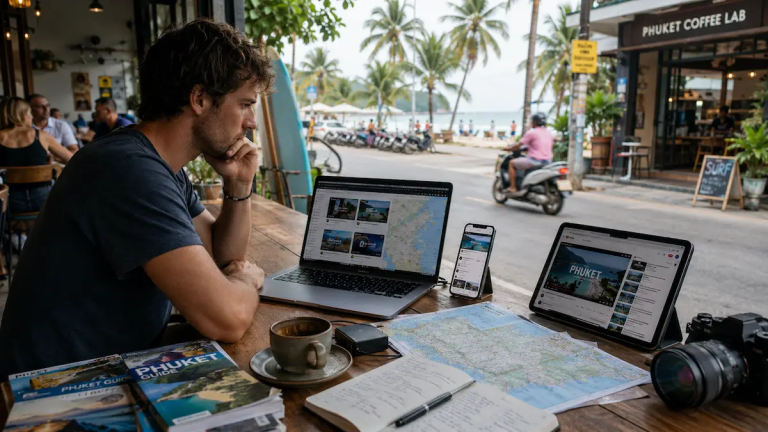
A traveller may discover a destination through social media, research it using a search engine, compare options with the help of AI tools, validate choices through reviews and use maps while planning an itinerary. In many cases, multiple channels contribute to the same travel decision.
This behaviour reflects a broader shift in the way travellers gather information. As discussed in How Travellers Discover Travel Businesses Online, discovery is no longer confined to a single website, platform or interaction. Instead, travellers move between different sources of information throughout their planning journey, often combining insights from multiple channels before making decisions.
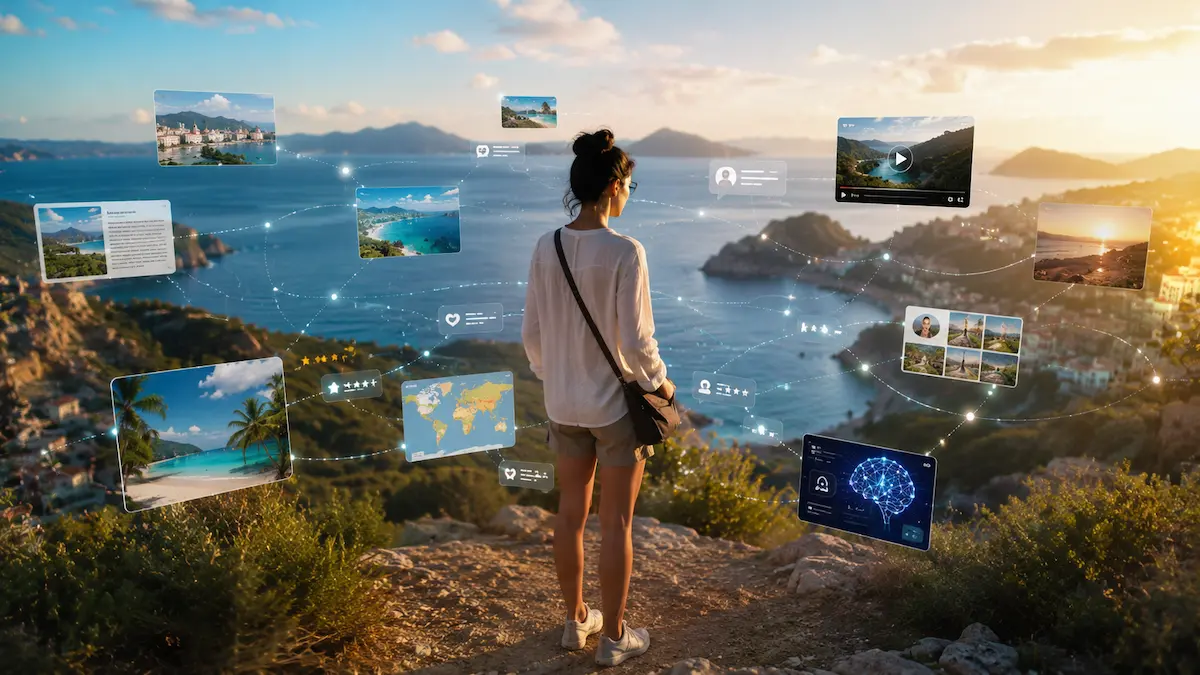
The result is a more interconnected form of travel discovery in which search engines, AI tools, social media platforms, reviews, maps, videos and travel content increasingly work together rather than independently. These connected networks of information sources are often described as travel discovery ecosystems.
Understanding travel discovery ecosystems provides valuable insight into modern traveller behaviour. It helps explain why discovery has become more fragmented, why visibility across multiple channels matters and why travel decisions are increasingly shaped by a network of interconnected influences rather than a single source of information.
In this article, we’ll explore how travel discovery ecosystems work, why they have emerged and what they reveal about the future of travel discovery in an increasingly connected digital environment.
What Is A Travel Discovery Ecosystem?
A travel discovery ecosystem is a network of interconnected channels, platforms and information sources that collectively influence how travellers discover, research, compare and evaluate destinations, experiences and travel businesses.
Rather than relying on a single source of information, modern travellers typically move between multiple channels throughout the planning journey. Search engines, AI tools, social media platforms, reviews, maps, videos, travel articles and personal recommendations may all contribute to the same decision.
This interconnected behaviour means that discovery rarely occurs in isolation. A traveller might first encounter a destination through social media, conduct further research using a search engine, read reviews to build confidence and watch videos before making a final decision. Each channel contributes different information while supporting different stages of the traveller journey.
As discussed in How Travellers Discover Travel Businesses Online, individual discovery channels continue to play important roles. However, modern traveller behaviour increasingly demonstrates that these channels are most effective when viewed as part of a broader system rather than as separate and independent sources of information.
Travel discovery ecosystems help explain this shift. Instead of asking where discovery happens, the ecosystem perspective examines how different channels interact and influence one another. Search results may lead travellers to travel articles. Travel articles may encourage social media engagement. Reviews may reinforce information discovered through videos. AI tools may draw upon content originally published elsewhere.
The concept also aligns closely with the broader Travel Discovery Process. Travellers often move through discovery, research, comparison, validation and decision making while interacting with multiple channels at different stages. The ecosystem provides the environment in which these interactions occur.
Importantly, travel discovery ecosystems are shaped by traveller behaviour rather than technology alone. The ecosystem exists because travellers seek information from multiple sources, compare perspectives and look for consistency before making decisions. The channels are connected because travellers themselves connect them through their actions.
Understanding travel discovery ecosystems provides a more realistic view of modern travel planning. It reflects the way travellers actually gather information and helps explain why discovery has become increasingly distributed across a wide range of interconnected sources.
Why Travellers No Longer Discover Businesses In One Place
One of the defining characteristics of modern travel discovery is that travellers rarely rely on a single source of information.
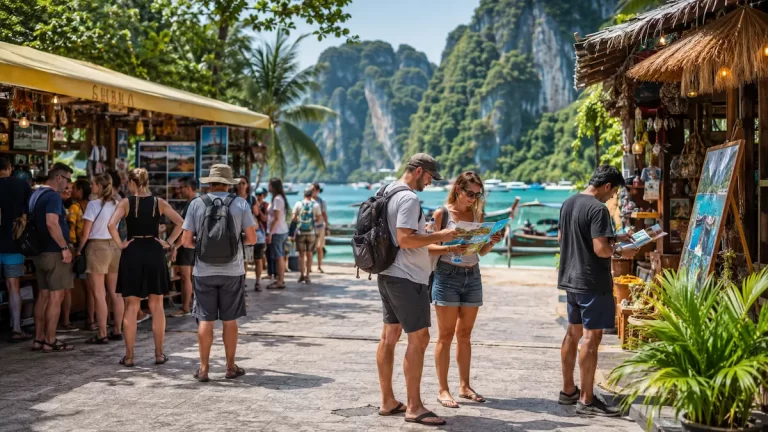
In the past, discovery often occurred through a relatively small number of channels. Travellers might consult a travel agent, read a guidebook or seek recommendations from friends and family before making decisions. While multiple influences still existed, the number of available information sources was significantly more limited than it is today.
As explored in Why Travellers No Longer Discover Businesses In One Place, the digital age has dramatically expanded the ways travellers gather information. Search engines, AI tools, social media platforms, reviews, maps, videos and travel publications now provide access to information at almost every stage of the traveller journey.
This increased access has changed traveller behaviour. Rather than relying on a single source, travellers often move between multiple channels as they research destinations, compare options and evaluate travel businesses. Information discovered in one place is frequently validated, expanded upon or challenged through another source.
For example, a traveller may first discover a destination through social media, conduct additional research through search engines, seek recommendations within online communities, read reviews to build confidence and watch videos to better understand the experience. In many cases, no single channel dominates the entire decision-making process.
This behaviour reflects a broader desire for confidence and certainty. Travellers often seek information from multiple sources because they want a more complete understanding of their options. Different channels provide different perspectives, helping people reduce uncertainty and make more informed decisions.
The result is that travel discovery has become increasingly distributed across a wide network of interconnected channels. Discovery no longer belongs to a single platform or source of information. Instead, it occurs through a combination of interactions that collectively shape traveller awareness and decision making.
Understanding this shift is essential for understanding travel discovery ecosystems. The ecosystem exists because travellers themselves have adopted multi-channel behaviours, creating a more connected and complex discovery environment than ever before.
Understanding Travel Discovery Ecosystems
Understanding a travel discovery ecosystem requires a shift in perspective.
Rather than viewing search engines, AI tools, social media platforms, reviews, maps, videos and travel articles as separate channels, it is often more useful to view them as parts of a connected network that collectively influences traveller behaviour.
As explored in Understanding Travel Discovery Ecosystems, travellers rarely follow a simple, predictable path when researching destinations, experiences and travel businesses. Instead, they move between channels according to their needs, interests and stage within the planning journey.
A traveller who discovers a destination through a video may later conduct research using search engines. Another traveller may begin with an AI-generated recommendation before reading reviews and travel articles to validate their options. While the paths vary, the channels themselves remain interconnected through the actions of travellers.
This interconnected nature is what distinguishes an ecosystem from a collection of individual platforms. Within an ecosystem, information flows between channels. A travel article may appear in search results, be shared on social media, referenced within reviews or contribute to AI-generated responses. Similarly, videos, reviews and recommendations often influence one another as travellers continue gathering information.
The ecosystem perspective also highlights an important reality: different channels perform different functions. Some channels are particularly effective at creating awareness, while others support research, comparison, validation or decision making. Together, they contribute to the broader Travel Discovery Process that travellers follow before making decisions.
Because of these relationships, no single channel can fully explain modern travel discovery. Search engines remain important, but they operate alongside reviews, social media, AI tools, videos, maps and travel content. Each contributes unique information while also influencing how other channels are used.
Travel discovery ecosystems therefore provide a more complete framework for understanding modern travel behaviour. They recognise that discovery is no longer confined to isolated platforms but instead occurs across an interconnected environment shaped by information, technology and human behaviour.
This broader perspective helps explain why travel discovery has become increasingly complex and why understanding the relationships between channels is often just as important as understanding the channels themselves.
The Relationship Between Discovery Channels
One of the most important aspects of a travel discovery ecosystem is the relationship between individual discovery channels.
Although search engines, AI tools, social media platforms, reviews, maps, videos and travel articles are often discussed separately, travellers rarely use them in isolation. Instead, these channels frequently interact and influence one another throughout the planning journey.
As explored in The Relationship Between Discovery Channels, information discovered through one source often leads travellers towards another. A social media post may encourage further research through search engines. A travel article may prompt travellers to read reviews. An AI-generated recommendation may lead to videos, maps or destination guides. Each channel becomes part of a broader chain of discovery and evaluation.
These interactions occur because different channels serve different purposes. Social media may create awareness, search engines may support research, reviews may provide validation and maps may assist with practical planning. Rather than competing with one another, they often complement each other by supporting different traveller needs.
The relationship between channels can also strengthen confidence. When travellers encounter consistent information across multiple sources, trust tends to increase. A destination that appears in travel articles, receives positive reviews, features in videos and is recommended through other channels may feel more credible than an option encountered only once.
Importantly, the flow of information is rarely linear. Travellers often move back and forth between channels as they research and compare alternatives. A review may trigger a new search. A video may lead to additional reading. An AI recommendation may encourage deeper investigation through other sources. Discovery therefore becomes an ongoing process rather than a single event.
These relationships help explain why modern travel discovery is best understood as an ecosystem. The channels are connected not because they share the same technology, but because travellers continually use them together while making decisions.
Understanding these connections provides a more realistic view of how travel discovery works. It highlights the fact that discovery is often shaped by the combined influence of multiple channels rather than the isolated impact of any one platform or source of information.
Why Multi-Platform Visibility Matters
If travellers discover information across multiple channels, visibility within a single channel is often only part of the picture.
Modern traveller behaviour demonstrates that people frequently move between search engines, AI tools, social media platforms, reviews, maps, videos and travel content while researching destinations, experiences and travel businesses. As a result, discovery opportunities are increasingly distributed across a broader ecosystem rather than concentrated within a single platform.
As explored in Why Multi-Platform Visibility Matters, visibility is no longer simply about being found in one place. Instead, it is often influenced by how frequently travellers encounter information across different stages of the planning journey.
A traveller may first discover a business through a search result, encounter it again within a travel article, see related content on social media and later read reviews before making a decision. Each interaction contributes to awareness, familiarity and confidence over time.
This does not mean that every travel business must be present on every platform. Rather, it highlights the importance of understanding how travellers gather information and how different channels contribute to discovery, research and validation.
Multi-platform visibility can also reinforce trust. When travellers encounter consistent information across multiple sources, confidence often increases. A business that appears repeatedly throughout the travel planning process may feel more familiar and credible than one encountered only once.
The concept aligns closely with the broader idea of travel discovery ecosystems. Because travellers move between interconnected channels, visibility within the ecosystem becomes more important than visibility within any individual platform alone.
Understanding multi-platform visibility therefore provides valuable insight into modern discoverability. It helps explain why traveller awareness is increasingly shaped by a network of interactions and why discovery often occurs through the combined influence of multiple channels rather than a single source of information.
From a traveller perspective, this creates richer opportunities for research and comparison. From a business perspective, it highlights the growing importance of participating in the places where travel discovery is actually happening.
Travel Discovery In An AI-Driven World
Artificial intelligence is becoming an increasingly important part of the modern travel discovery ecosystem.
While search engines, social media platforms, reviews, maps, videos and travel articles continue to play significant roles, AI tools are introducing new ways for travellers to discover, research and evaluate destinations, experiences and travel businesses.
As explored in Travel Discovery In An AI-Driven World, AI is changing how travellers interact with information. Rather than navigating multiple websites and sources independently, travellers can now ask questions, compare options and seek recommendations through conversational interfaces that provide information in a more accessible and personalised format.
Importantly, AI does not exist outside the travel discovery ecosystem. Instead, it operates within it.
Many AI-generated responses are informed by information that originates from other channels. Travel articles, reviews, destination guides, business websites, videos and other forms of travel content all contribute to the information environment that AI tools draw upon when helping travellers explore their options.
This relationship reinforces the interconnected nature of travel discovery ecosystems. AI does not replace existing channels; it interacts with them. Travellers may use AI to identify potential destinations, then continue researching through search engines, reviews, videos and travel content before making decisions.
AI also reflects a broader trend towards convenience and efficiency within travel planning. Travellers increasingly seek ways to simplify research, compare options more effectively and access relevant information without navigating numerous separate sources.
At the same time, many travellers continue to seek validation beyond AI-generated recommendations. Reviews, personal recommendations, visual content and independent research remain important because travellers often want confirmation from multiple sources before making decisions.
The growing role of AI therefore strengthens rather than weakens the ecosystem perspective. It demonstrates that modern travel discovery is becoming more interconnected, with information flowing between an expanding range of channels and technologies.
Understanding travel discovery in an AI-driven world helps explain not only how traveller behaviour is evolving today, but also how future discovery ecosystems are likely to become increasingly integrated, dynamic and interconnected.
The Future Of Travel Discovery
Travel discovery will continue to evolve as technology, traveller behaviour and information sources change.
While it is impossible to predict every development, one trend appears increasingly clear: travel discovery is becoming more interconnected rather than less. Travellers have access to more information than ever before and continue to move between multiple channels as they research destinations, experiences and travel businesses.
As explored in The Future Of Travel Discovery, the way travellers discover information is likely to become increasingly shaped by connected ecosystems rather than individual platforms operating in isolation. Search engines, AI tools, social media platforms, reviews, maps, videos and travel content will continue to influence one another as travellers navigate the planning process.
Future travel discovery is also likely to become more personalised. AI-driven recommendations, adaptive content and increasingly sophisticated search technologies may help travellers access information that is more relevant to their interests, preferences and travel goals. At the same time, travellers will continue seeking trust, validation and reassurance before making decisions.
Another likely trend is the growing importance of information quality. As travellers gain access to larger volumes of content, the ability to identify reliable, trustworthy and useful information may become increasingly valuable. Reviews, recommendations, first-hand experiences and credible travel content are likely to remain important influences regardless of how technology evolves.
The future may also bring greater integration between discovery channels. Information encountered through one platform may increasingly influence experiences across others, creating even more connected and dynamic travel discovery ecosystems.
Despite these changes, some aspects of traveller behaviour are unlikely to disappear. Travellers will continue seeking inspiration, conducting research, comparing alternatives and looking for confidence before making decisions. The tools may change, but the underlying need to understand options and reduce uncertainty will remain.
For this reason, the future of travel discovery is not simply about new technology. It is also about understanding how travellers adapt to changing information environments and how discovery ecosystems continue to evolve around those behaviours.
Ultimately, the future of travel discovery is likely to be defined by greater connectivity, greater personalisation and an increasingly integrated relationship between the channels that help travellers discover and evaluate their options.
Why Travel Discovery Ecosystems Matter
Travel discovery ecosystems matter because they provide a more accurate understanding of how modern travel discovery actually works.
Traditional approaches often focus on individual channels such as search engines, social media platforms, reviews or travel websites. While these channels remain important, they only tell part of the story. Modern traveller behaviour increasingly involves moving between multiple sources of information rather than relying on a single platform.
Travel discovery ecosystems help explain these interactions by recognising that discovery, research, comparison, validation and decision making often occur across a network of interconnected channels. This perspective provides a more realistic framework for understanding how travellers gather information and make decisions.
The ecosystem approach also helps explain why no single channel can fully influence the traveller journey on its own. Search engines may support research, social media may create awareness, reviews may build trust and videos may provide visual understanding. Together, these channels contribute to a broader discovery experience than any individual platform could provide alone.
As explored throughout The Travel Discovery Process, travellers often move through multiple stages before making decisions. Travel discovery ecosystems provide the environment in which those stages occur, connecting the information sources that travellers use as they progress from awareness to action.
Understanding ecosystems also highlights the growing importance of relationships between channels. Information encountered through one source often leads travellers towards another. Discovery therefore becomes less about isolated interactions and more about how different channels work together throughout the traveller journey.
This perspective is increasingly relevant as new technologies continue to emerge. AI tools, search engines, social media platforms, reviews, maps, videos and travel content are all becoming part of a more connected discovery environment. Understanding the ecosystem helps explain how these influences combine to shape traveller behaviour.
Perhaps most importantly, travel discovery ecosystems remind us that discovery is ultimately driven by people rather than platforms. The ecosystem exists because travellers seek information from multiple sources, compare perspectives and look for confidence before making decisions.
For anyone seeking to understand modern travel discovery, traveller behaviour or the future of travel planning, the ecosystem perspective provides one of the most useful frameworks available.
Conclusion
Travel discovery has evolved significantly from the days when travellers relied on a small number of information sources to plan their journeys.
Today, discovery is shaped by a wide network of interconnected channels that include search engines, AI tools, social media platforms, reviews, maps, videos, travel articles and personal recommendations. Rather than relying on a single source, travellers increasingly move between multiple channels as they research destinations, compare options and make travel decisions.
As explored in What Is Travel Discovery?, discovery begins when a destination, experience or travel business first enters a traveller’s awareness. However, modern discovery rarely occurs through a single interaction. Instead, awareness is often built through repeated exposure across different channels throughout the traveller journey.
This behaviour helps explain why How Travellers Discover Travel Businesses Online has become increasingly complex. Discovery is no longer confined to individual platforms but instead occurs within broader travel discovery ecosystems where different channels interact, support one another and collectively influence traveller behaviour.
Understanding travel discovery ecosystems provides a more complete picture of modern travel planning. It helps explain how information flows between channels, why travellers seek information from multiple sources and how discovery, research, validation and decision making are connected.
Most importantly, it highlights a simple reality: modern travel discovery is not defined by a single platform, technology or source of information. It is shaped by an interconnected ecosystem of channels that travellers use together as they move from awareness to action.
As traveller behaviour continues to evolve and new technologies emerge, understanding these ecosystems will remain an important part of understanding how destinations, experiences and travel businesses are discovered in the modern world.
Frequently Asked Questions About Travel Discovery Ecosystems
What is a travel discovery ecosystem?
A travel discovery ecosystem is a network of interconnected channels, platforms and information sources that collectively influence how travellers discover, research, compare and evaluate destinations, experiences and travel businesses.
Why do travellers no longer discover businesses in one place?
Modern travellers have access to a wide range of information sources including search engines, AI tools, social media platforms, reviews, maps, videos and travel articles. As a result, discovery often occurs across multiple channels rather than through a single platform. Learn more in Why Travellers No Longer Discover Businesses In One Place.
How do travel discovery ecosystems work?
Travel discovery ecosystems work by connecting different discovery channels throughout the traveller journey. Information discovered through one source often leads travellers towards another, creating a network of interactions that collectively influence travel decisions. Learn more in Understanding Travel Discovery Ecosystems.
What are discovery channels?
Discovery channels are the platforms and information sources through which travellers discover destinations, experiences and travel businesses. Examples include search engines, AI tools, social media, reviews, maps, videos and travel articles.
Why is multi-platform visibility important?
Travellers often move between multiple channels while researching and evaluating their options. Businesses may therefore be discovered across different platforms throughout the planning process rather than through a single source of information. Learn more in Why Multi-Platform Visibility Matters.
How do discovery channels influence one another?
Discovery channels are often interconnected. A traveller may discover a destination through social media, conduct research through search engines, watch videos, read reviews and seek additional information through other sources. Explore this topic further in The Relationship Between Discovery Channels.
What role does AI play in travel discovery ecosystems?
AI is becoming an increasingly important discovery channel that helps travellers research destinations, compare options and seek recommendations. However, AI generally operates as part of a broader ecosystem rather than replacing existing channels. Learn more in Travel Discovery In An AI-Driven World.
Are travel discovery ecosystems replacing search engines?
No. Search engines remain an important part of modern travel discovery. Ecosystems do not replace individual channels; they explain how those channels interact and contribute to the broader traveller journey.
How might travel discovery change in the future?
Travel discovery is likely to become increasingly interconnected, personalised and influenced by emerging technologies. However, travellers will continue seeking information, trust and confidence before making decisions. Learn more in The Future Of Travel Discovery.
Why are travel discovery ecosystems important?
Travel discovery ecosystems provide a more realistic framework for understanding modern traveller behaviour. They help explain how discovery, research, comparison, validation and decision making occur across multiple interconnected channels rather than within isolated platforms.
How do travel discovery ecosystems relate to traveller behaviour?
Travel discovery ecosystems exist because travellers naturally seek information from multiple sources before making decisions. The ecosystem reflects the way people actually research, compare and evaluate destinations, experiences and travel businesses.
Do travel discovery ecosystems influence travel decisions?
Yes. Travel decisions are often shaped by information gathered across multiple channels throughout the traveller journey. Discovery ecosystems help explain how those channels collectively influence awareness, trust, confidence and decision making.
About The Author
About The Author
David Hibbins is the creator of Travel With Insight and has spent years building websites, creating online content and observing how people discover businesses, destinations and experiences online.
Through his work across travel publishing, tourism businesses, digital marketing and content creation, he has developed a particular interest in Travel Discovery, Traveller Behaviour and the ways people research, compare and make Travel Decisions.
His writing focuses on understanding how travellers discover information, move through the Travel Discovery Process and evaluate destinations, experiences and travel businesses before making decisions.
Travel With Insight was created to explore these ideas and help both travellers and travel businesses better understand how discovery, research, comparison and trust influence modern travel planning.
His work regularly explores topics including How Travellers Discover Travel Businesses Online, What Influences Travel Decisions?, Travel Discovery Ecosystems and the evolving relationship between information, visibility and traveller decision making.
Continue Exploring Travel Discovery Ecosystems
Understanding travel discovery ecosystems is only one part of understanding how modern travellers discover destinations, experiences and travel businesses.
To explore the topic further, continue reading the articles below and discover how discovery channels, traveller behaviour, visibility and emerging technologies influence the modern travel planning journey.
Related Reading
Travel discovery ecosystems are shaped by the interaction of multiple channels, technologies and traveller behaviours. The following articles explore these relationships in greater detail.
Why Travellers No Longer Discover Businesses In One Place
Explore how modern traveller behaviour has shifted from single-platform discovery to multi-channel information gathering.
Understanding Travel Discovery Ecosystems
Learn how interconnected channels work together to influence travel discovery and decision making.
Why Multi-Platform Visibility Matters
Discover why travellers increasingly encounter destinations, experiences and travel businesses across multiple channels.
The Relationship Between Discovery Channels
Explore how search engines, AI tools, social media platforms, reviews, videos and travel content interact throughout the traveller journey.
The Future Of Travel Discovery
Understand the trends and behavioural shifts likely to influence travel discovery in the years ahead.
Travel Discovery In An AI-Driven World
Explore how artificial intelligence is influencing travel discovery and becoming part of the broader ecosystem.