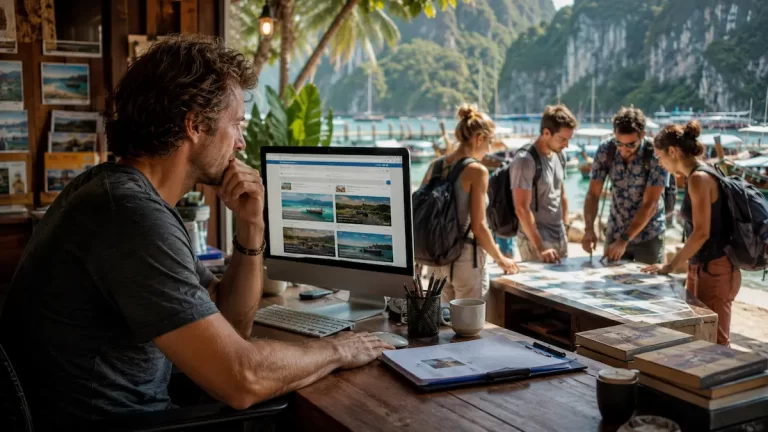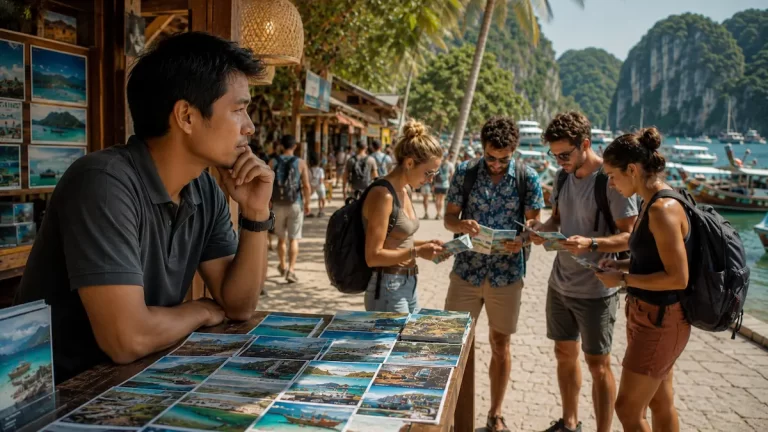

How My Understanding Of Travel Discovery Evolved
Part of our ongoing exploration of travel discovery, traveller behaviour and the ways people research, compare and make travel decisions.
Quick Summary
- My understanding of travel discovery evolved through years of building websites, publishing content and observing traveller behaviour.
- One of the biggest lessons was realising that travellers rarely discover destinations, experiences and businesses through a single platform.
- Building websites revealed that discovery often occurs across multiple interconnected channels rather than within individual sources.
- Over time, I learned that online visibility and travel discovery are related but not identical concepts.
- Watching travellers research trips highlighted the importance of research, comparison, validation and confidence before decision making.
- The rise of AI reinforced the interconnected nature of modern discovery rather than replacing existing discovery channels.
- Years of publishing taught me that discovery is often cumulative and shaped by multiple interactions over time.
- Understanding traveller behaviour ultimately proved more valuable than understanding any individual platform.
Travel discovery is a subject I understand very differently today than I did when I first started building websites and publishing online.
Like many people, my early assumptions were relatively simple. I believed travellers discovered destinations, experiences and businesses through individual platforms. Search engines generated discovery. Social media generated discovery. Reviews influenced decisions. Each channel appeared to operate largely on its own.
Over time, however, that view became increasingly difficult to reconcile with what I was observing. The more websites I built, the more content I published and the more traveller behaviour I studied, the more interconnected the discovery process appeared to become.
Travellers rarely followed the neat pathways I expected. They moved between platforms, compared information from multiple sources and often encountered the same destinations, experiences and travel businesses repeatedly throughout their research journey. Discovery was not occurring in one place. It was unfolding across a network of channels, influences and interactions.
Many of the ideas explored throughout What Is Travel Discovery?, How Travellers Discover Travel Businesses Online and Travel Discovery Ecosystems emerged from those observations. They were not conclusions reached through theory alone, but through years of watching how people search, research, compare and ultimately make travel decisions.
This article is a reflection on that journey. It explores how my understanding of online discovery evolved, the assumptions that proved incorrect, the lessons learned through publishing and website development, and the observations that gradually changed the way I think about travel discovery itself.
In many ways, the biggest lesson was also the simplest. Understanding travel discovery is not primarily about understanding platforms. It is about understanding people and the behaviours that shape the way they discover information in an increasingly connected world.
How My Understanding Of Travel Discovery Evolved
My understanding of travel discovery did not change overnight.
It evolved gradually through years of building websites, publishing content and observing how people interacted with information online. Looking back, many of my early assumptions now seem overly simplistic, although at the time they felt perfectly reasonable.
Like many website owners and publishers, I initially viewed discovery through the lens of individual platforms. Search engines were where people discovered businesses. Social media was where people found inspiration. Reviews helped people make decisions. Each channel appeared to serve a distinct purpose within the traveller journey.
The reality proved far more complex.
Over time, I began noticing that travellers rarely behaved in the structured way I expected. People did not simply discover a destination through one source and immediately make a decision. Instead, they moved between different platforms, gathered information from multiple places and often returned to the same options repeatedly throughout their research process.
What appeared at first to be separate channels were actually connected through traveller behaviour.
A traveller might discover a destination through a social media post, conduct additional research through search engines, watch videos to better understand the experience, read reviews for reassurance and use maps while planning an itinerary. In many cases, the decision was influenced not by a single source of information but by the combined effect of several.
This observation gradually changed the way I viewed discovery itself.
Rather than asking where discovery happened, I became more interested in how travellers moved between information sources and why they felt compelled to seek information from multiple places. The focus shifted away from platforms and towards behaviour.
Many of the ideas explored throughout What Is Travel Discovery? emerged from this change in perspective. Discovery was no longer something that occurred within isolated channels. It was part of a broader process involving awareness, research, comparison, validation and decision making.
The more I observed traveller behaviour, the more obvious it became that modern discovery could not be fully explained by any individual platform. Understanding discovery required understanding the journey travellers followed as they searched for confidence, information and reassurance before making decisions.
That realisation became the foundation for everything that followed.
Why I No Longer Believe Travellers Discover Businesses In One Place
One of the biggest changes in my thinking came when I stopped viewing discovery as something that happened within individual platforms.
For a long time, it was easy to think about discovery in simple terms. People searched on Google and found businesses. People browsed social media and found destinations. People read reviews before booking. Each platform appeared to have a clearly defined role.
The more I observed traveller behaviour, however, the less convincing that explanation became.
Travellers rarely limit themselves to a single source of information. A person researching a destination might begin with a search engine, move to social media for visual inspiration, watch videos to better understand the experience, read reviews for reassurance and use maps to explore nearby attractions. In many cases, they move back and forth between these sources multiple times before making a decision.
What became increasingly obvious was that discovery was not occurring within individual platforms. Discovery was occurring across the journey itself.
The destination, experience or travel business was often encountered repeatedly in different places. Sometimes the first interaction created awareness. A later interaction built interest. Another interaction provided validation. Together, these moments contributed to the eventual decision.
This observation eventually led me to question the idea that any single platform “owns” discovery.
Search engines remain important. Social media remains important. Reviews remain important. But travellers rarely experience these channels in isolation. Instead, they combine information from multiple sources as they build confidence and reduce uncertainty.
This understanding closely aligns with the ideas explored in Travel Discovery Ecosystems. Discovery is increasingly shaped by a network of interconnected influences rather than a single source of information. Travellers themselves create these connections as they move between channels throughout the planning process.
Perhaps the most important lesson was that discovery is often cumulative. What appears to be a booking generated by one platform may actually be the result of numerous interactions that occurred across several different channels over time.
Once I began viewing discovery through that lens, it became much easier to understand how modern travellers actually research, compare and evaluate their options before making decisions.
What Building Websites Taught Me About Online Discovery
Building websites taught me many things about content, visibility and online behaviour, but perhaps the most important lesson was that websites rarely operate in isolation.
In the early years, I often viewed websites as the centre of online discovery. The assumption seemed logical enough. Create useful content, attract visitors and allow people to discover information through the website itself.
Over time, however, I began to realise that visitors rarely arrive without context.
By the time someone reaches a website, they have often already been influenced by a range of other information sources. They may have seen a social media post, encountered a recommendation, watched a video, asked an AI tool a question or read something elsewhere that encouraged them to continue researching.
The website is often not the beginning of discovery. It is simply one stop along the way.
This became particularly noticeable when publishing content across different platforms. The same article could be discovered through search engines, shared on social media, referenced in online discussions or surfaced through AI-generated responses. People arrived from different directions, carrying different expectations and levels of knowledge.
Some visitors were discovering a topic for the first time. Others were looking for confirmation of information they had already found elsewhere. Some were comparing options. Others were close to making a decision and simply wanted reassurance.
Although they arrived at the same website, they were often at very different stages of the journey.
This observation reinforced many of the ideas explored in How Travellers Discover Travel Businesses Online. Discovery is rarely a single event. It is a process that unfolds across multiple interactions and information sources.
It also highlighted the growing importance of understanding the wider discovery environment rather than focusing exclusively on individual websites. A website may contain valuable information, but that information exists within a broader network of search engines, social media platforms, reviews, videos, maps and other discovery channels.
The more websites I built, the more I came to appreciate that online discovery is not primarily about where information lives. It is about how people find, interpret and connect information as they move through their research journey.
That distinction changed the way I thought about visibility, content and discovery itself.
The Biggest Mistake I Made About Online Visibility
The biggest mistake I made about online visibility was assuming that visibility and discovery were the same thing.
For a long time, I believed that if something ranked well, appeared prominently or attracted traffic, discovery would naturally follow. The logic seemed straightforward. Greater visibility meant more opportunities to be found, and more opportunities to be found meant more discovery.
Experience gradually taught me that the relationship is not quite that simple.
Visibility is about being present. Discovery is about becoming part of a traveller’s awareness.
A website can appear in search results without being noticed. A social media post can be seen without being remembered. A business can be visible across multiple platforms yet fail to become meaningful within the traveller’s decision-making process.
What matters is not simply whether information exists, but whether it becomes relevant at the moment a traveller is seeking answers.
Over time, I began noticing that many travel decisions were influenced by repeated exposure rather than a single encounter. Travellers would see the same destination, experience or business multiple times throughout their research journey. Each interaction contributed something different. One created awareness. Another provided information. A later interaction built confidence.
Discovery was often cumulative rather than immediate.
This observation challenged another assumption I had made. I had viewed visibility as a largely platform-specific concept. The goal was often to perform well within individual channels. Yet travellers were not thinking in terms of platforms. They were thinking in terms of questions, interests, concerns and travel goals.
Their journey moved naturally between channels because they were searching for understanding, not platforms.
The more I studied traveller behaviour, the more I realised that visibility only becomes valuable when it contributes to a broader discovery journey. Being present is important, but presence alone is rarely enough. Discovery occurs when information connects with a traveller’s needs and becomes part of the process through which they evaluate their options.
This lesson fundamentally changed how I think about online visibility. Rather than asking how visible something is within a particular channel, I became more interested in how that visibility contributes to the wider process of discovery, research, comparison and decision making.
In many ways, that shift in thinking became one of the foundations of how I now understand Travel Discovery Ecosystems and the interconnected nature of modern traveller behaviour.
Lessons Learned From Watching Travellers Research Trips
If building websites changed the way I thought about visibility, watching travellers research trips changed the way I thought about decision making.
One of the most surprising lessons was discovering how rarely people make travel decisions immediately.
Many travel businesses understandably focus on the moment of booking, enquiry or purchase. Yet when you observe how travellers actually behave, it becomes clear that these actions are often the final stage of a much longer process.
Travellers spend considerable time gathering information before reaching a decision. They explore destinations, compare alternatives, read reviews, seek recommendations, watch videos and return to the same options multiple times. What appears to be a simple booking is often supported by days, weeks or even months of research.
This behaviour became increasingly difficult to ignore.
The more I watched travellers move through the planning process, the more obvious it became that decisions are rarely driven by a single piece of information. Instead, travellers gradually build confidence as they gather insights from different sources and perspectives.
A review might answer one question. A video might answer another. A travel article may provide context, while recommendations from friends or family offer reassurance. Each source contributes a small piece of the overall picture.
This closely reflects the ideas explored in The Travel Discovery Process. Discovery is only the beginning. Travellers often move through stages of research, comparison, validation and decision making before feeling comfortable enough to commit to a choice.
I also learned that travellers are not simply looking for information. They are looking for certainty.
Travel often involves spending significant amounts of time, money and emotional energy. People want to feel confident that they are making the right decision. As a result, they frequently seek confirmation from multiple sources before moving forward.
This helps explain why discovery channels are so interconnected. Travellers naturally move between different sources because each one helps reduce uncertainty in a different way.
Perhaps the most important lesson of all was that traveller behaviour is often far more consistent than the technology surrounding it. Platforms change. New tools emerge. Discovery channels evolve. Yet travellers continue to seek many of the same things they always have: information, confidence, reassurance and a better understanding of their options.
Understanding that behaviour ultimately taught me far more about travel discovery than understanding any individual platform ever could.
How AI Changed The Way I Think About Travel Discovery
When artificial intelligence began playing a larger role in online discovery, my first instinct was to view it as another new platform competing for attention.
Over time, however, I came to see something different.
Rather than replacing existing forms of discovery, AI often revealed how interconnected travel discovery had already become.
One of the reasons AI felt significant was that it encouraged people to interact with information differently. Instead of conducting multiple searches and manually gathering information from various websites, travellers could ask questions in a conversational way and receive structured answers almost instantly.
At first glance, this appeared to represent a major departure from traditional discovery.
The more I examined it, however, the more familiar it seemed.
The answers generated by AI were often influenced by information originating from many of the same sources travellers had always used. Travel articles, reviews, destination guides, business websites, maps, videos and other forms of content continued to play a role. AI simply created a new way for travellers to access and organise that information.
In many respects, AI reinforced ideas that were already emerging through my observations of traveller behaviour.
Travellers were not looking for platforms.
They were looking for answers.
They wanted to compare options, reduce uncertainty and make more informed decisions. AI happened to offer a new way of doing that, but the underlying motivation remained remarkably similar.
This realisation also changed how I thought about online visibility. Rather than viewing AI as a separate channel operating independently, it became increasingly clear that it formed part of a broader discovery environment. Information published in one place could influence discovery somewhere else. Content could flow between channels in ways that were becoming increasingly difficult to separate.
Many of the ideas explored in Travel Discovery Ecosystems became even more relevant as AI adoption grew. Discovery was no longer simply about individual platforms competing for attention. It was becoming an interconnected network where information moved between channels and travellers moved between sources according to their needs.
Perhaps the most important lesson AI taught me was that technology often changes faster than human behaviour.
The tools people use may evolve, but travellers still seek inspiration, research their options, compare alternatives and look for confidence before making decisions. AI may change how those activities occur, but it does not eliminate the underlying behaviours that drive them.
Rather than replacing the principles of travel discovery, AI has largely reinforced the importance of understanding them.
What Years Of Publishing Taught Me About Discovery
Publishing content over many years taught me that discovery is rarely immediate.
When an article is published, it is easy to focus on short-term outcomes. How many people viewed it? Did it generate traffic? Was it shared? Did it rank in search results?
Those metrics can be useful, but they often tell only a small part of the story.
Over time, I began noticing that discovery often unfolds slowly. Content may be discovered months after publication. An article that initially receives little attention may later become highly relevant because traveller interests, search behaviour or technology changes. Information has a way of finding new audiences long after it is first published.
This challenged another assumption I had carried for many years.
I had often viewed publishing as a way of creating visibility. Increasingly, I began viewing it as a way of participating in discovery.
Every article, guide, review, video or piece of travel content becomes part of a larger information environment. Travellers may encounter that information directly or indirectly. They may discover it through search engines, social media, recommendations, AI tools or links from other sources. In many cases, the exact path is impossible to predict.
What matters is that the information becomes available when travellers are looking for answers.
Publishing also reinforced the cumulative nature of discovery. Rarely does a single piece of content completely shape a travel decision. More often, content contributes one part of a larger picture. An article may introduce an idea. A review may provide reassurance. A video may add context. Together, they help travellers develop confidence in their choices.
This closely mirrors the way travellers move through The Travel Discovery Process. Discovery is rarely a single moment. It is often a gradual progression built through multiple interactions across multiple channels.
Perhaps the most valuable lesson publishing taught me was patience.
Discovery does not always happen when content is created. It happens when a traveller encounters information at a moment when it becomes relevant to their needs, interests or questions.
The longer I spent publishing, the more I realised that discovery is not something that can be forced. It can only be supported through useful information, consistent visibility and a genuine understanding of how people search, research and make decisions.
In many ways, years of publishing ultimately reinforced the same lesson that had emerged through everything else: travel discovery is not primarily about platforms, algorithms or technology. It is about helping people find the information they need as they move through their journey from curiosity to confidence.
Why Understanding Travel Discovery Continues To Evolve
One of the most important lessons I have learned is that understanding travel discovery is never truly finished.
The way travellers discover information continues to change. New technologies emerge. Platforms rise and fall in popularity. Search behaviour evolves. Artificial intelligence introduces new ways for people to access information. The environment surrounding discovery is constantly shifting.
Yet despite these changes, the core challenge remains remarkably consistent.
Travellers are still trying to answer the same fundamental questions. Where should I go? What should I do? Which option is best for me? Can I trust this information? Am I making the right decision?
The tools may change, but the need for information, confidence and understanding remains.
This is why I believe studying traveller behaviour is often more valuable than focusing exclusively on individual platforms. Platforms help facilitate discovery, but traveller behaviour explains why discovery happens in the first place. Understanding the motivations behind research, comparison and decision making often provides deeper insights than understanding the mechanics of any single channel.
It is also why my understanding of discovery continues to evolve.
Each new technology tends to reveal something about how people seek information. Each shift in traveller behaviour offers another perspective on how decisions are made. Rather than replacing previous lessons, these developments often add new layers to existing understanding.
The emergence of AI is a good example. While the technology itself is new, many of the underlying behaviours are not. Travellers still seek answers, compare options and look for reassurance before making decisions. The methods may change, but the patterns remain surprisingly familiar.
This ongoing evolution reinforces many of the ideas explored throughout What Is Travel Discovery?, How Travellers Discover Travel Businesses Online and Travel Discovery Ecosystems. Travel discovery is not a static process. It is a constantly evolving relationship between people, information and the channels that connect them.
For me, the journey from viewing discovery as a collection of platforms to viewing it as a reflection of traveller behaviour has been one of the most valuable lessons of all.
And perhaps the most interesting part is that the learning continues.
Conclusion
My understanding of travel discovery has changed considerably over the years.
What began as an interest in websites, online visibility and content publishing gradually evolved into something much broader. The more I observed how travellers search, research, compare and make decisions, the more I realised that discovery could not be fully explained by any single platform, technology or channel.
Travellers rarely follow predictable pathways. They move between information sources, seek validation from multiple perspectives and often build confidence gradually before making decisions. Discovery is not a single event but an ongoing process shaped by curiosity, uncertainty, research and trust.
Many of the ideas explored throughout What Is Travel Discovery?, How Travellers Discover Travel Businesses Online and Travel Discovery Ecosystems emerged from that realisation. The platforms may change and new technologies will continue to appear, but the underlying behaviours that drive discovery remain remarkably consistent.
Looking back, the biggest lesson was not learning how search engines work, how social media influences decisions or how artificial intelligence is changing information discovery.
The biggest lesson was understanding that travel discovery is ultimately about people.
It is about how travellers seek information, evaluate their options and build the confidence needed to make decisions.
And the more I learn about traveller behaviour, the more I realise there is still more to discover.
Frequently Asked Questions About My Understanding of Travel Discovery
Why did your understanding of travel discovery change over time?
My understanding evolved through years of building websites, publishing content and observing how travellers research destinations, experiences and travel businesses. The more I studied traveller behaviour, the more I realised that discovery is influenced by multiple interconnected channels rather than individual platforms operating in isolation.
What is travel discovery?
Travel discovery is the process through which destinations, experiences and travel businesses first enter a traveller’s awareness. As explored in What Is Travel Discovery?, discovery often represents the beginning of a broader journey that includes research, comparison, validation and decision making.
Why do travellers use multiple sources of information?
Travellers often seek information from multiple sources because different channels provide different perspectives. Search engines, reviews, videos, social media, maps and travel articles all contribute unique insights that help travellers build confidence before making decisions.
Do travellers still use search engines to discover travel businesses?
Yes. Search engines remain an important part of modern travel discovery. However, travellers increasingly combine search with other sources such as reviews, social media, videos, maps and AI tools throughout their planning journey.
What role does traveller behaviour play in travel discovery?
Traveller behaviour is central to understanding travel discovery. The way people search, research, compare and evaluate information influences how discovery occurs across different channels and platforms.
Why is online visibility different from travel discovery?
Online visibility refers to being present where people can find information. Travel discovery occurs when that information becomes part of a traveller’s awareness and decision-making process. Visibility can support discovery, but the two concepts are not identical.
How do travel discovery ecosystems influence traveller decisions?
As explored in Travel Discovery Ecosystems, travellers often move between multiple information sources before making decisions. Discovery ecosystems help explain how these interconnected channels collectively influence awareness, trust and confidence.
Has artificial intelligence changed travel discovery?
Artificial intelligence is influencing how travellers access and organise information. However, AI generally forms part of a broader discovery ecosystem rather than replacing existing channels such as search engines, reviews, travel articles and social media.
Why do travellers rarely make travel decisions immediately?
Travel often involves significant investments of time, money and emotion. As a result, many travellers prefer to conduct research, compare options and seek validation before committing to a destination, experience or travel business.
What did years of publishing teach you about discovery?
Publishing reinforced the idea that discovery is often cumulative and unpredictable. Content may influence traveller decisions long after it is published and often contributes as one part of a larger discovery journey.
What is the biggest misconception about online discovery?
One of the most common misconceptions is that discovery happens within individual platforms. In reality, travellers frequently move between multiple channels, combining information from different sources before making decisions.
Why does understanding travel discovery matter?
Understanding travel discovery helps explain how travellers find information, evaluate their options and make decisions. It provides valuable insight into traveller behaviour and the increasingly interconnected nature of modern online discovery.
About The Author
David Hibbins is the founder of Travel With Insight and has spent years building websites, publishing content and observing how people discover destinations, experiences and businesses online.
His interest in travel discovery developed through practical experience rather than theory alone. Through publishing, content creation, tourism businesses and digital projects, he became increasingly interested in the way travellers search for information, compare alternatives and make decisions before booking.
This interest ultimately led to the development of Travel With Insight, a publication dedicated to exploring Travel Discovery, Traveller Behaviour, The Travel Discovery Process and the evolving ways people discover information in an increasingly connected world.
His writing regularly explores topics including How Travellers Discover Travel Businesses Online, Travel Discovery Ecosystems, online visibility, traveller research and the factors that influence modern travel decisions.
Through Travel With Insight, he continues to study how changing technologies, emerging platforms and evolving traveller behaviours are shaping the future of travel discovery.
Continue Exploring Travel Discovery
Understanding how my view of travel discovery evolved is only one perspective on a much broader subject.
Travel discovery continues to change as traveller behaviour, technology and information sources evolve. Exploring the articles below will provide deeper insight into the ways travellers discover destinations, experiences and travel businesses, and how those behaviours continue to shape the modern travel planning journey.
Related Reading
The ideas explored in this article developed through years of observing traveller behaviour, publishing content and studying online discovery. The following articles examine some of those lessons in greater detail.
Why I No Longer Believe Travellers Discover Businesses In One Place
Explore why modern travellers increasingly move between multiple channels rather than relying on a single source of information when researching destinations, experiences and travel businesses.
What Building Websites Taught Me About Online Discovery
Discover how years of website development and publishing revealed the interconnected nature of modern online discovery and traveller behaviour.
The Biggest Mistake I Made About Online Visibility
Learn why visibility and discovery are not always the same thing and how repeated exposure often influences traveller awareness and decision making.
How AI Changed The Way I Think About Travel Discovery
Explore how artificial intelligence reinforced many existing patterns of traveller behaviour while introducing new ways for people to access and organise information.
Lessons Learned From Watching Travellers Research Trips
Understand the common behaviours travellers display as they search, compare, validate and build confidence before making travel decisions.
What Years Of Publishing Taught Me About Discovery
Discover why discovery is often cumulative, why content can influence travellers long after publication and how publishing contributes to broader discovery ecosystems.