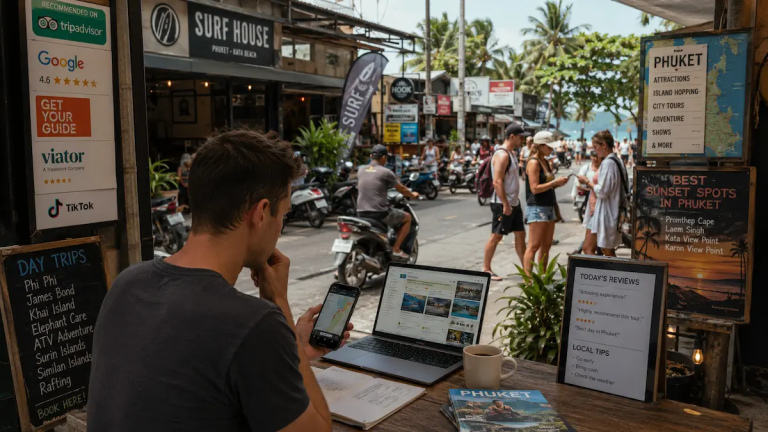

Why Discovery Happens Before Booking
Part of our ongoing exploration of travel discovery, traveller behaviour and the ways people research, compare and make travel decisions.
Quick Summary
- Discovery happens before booking because travellers must first become aware of their options before making decisions.
- Most travel decisions involve research, comparison and evaluation before a booking occurs.
- Discovery creates awareness and introduces destinations, experiences and travel businesses into the traveller’s consideration set.
- Trust, validation and confidence often develop between discovery and booking.
- Travellers frequently continue discovering new options throughout the planning process.
- Understanding why discovery happens before booking helps explain how modern travellers research and make travel decisions.
Introduction
Many travellers think of booking as the beginning of a travel journey, but in reality the process often starts much earlier.
Before a traveller books a hotel, reserves a tour, chooses a destination or purchases a flight, they typically move through a period of discovery, research and evaluation. They encounter information, explore possibilities, compare alternatives and gradually build confidence in the decisions they eventually make.
This is why discovery happens before booking.
Travellers cannot choose destinations, experiences or travel businesses they have never encountered. Before any comparison, evaluation or purchase can occur, travellers first need to become aware that an option exists. Discovery creates that initial awareness and provides the starting point for the broader decision-making journey that follows.
As explored in The Travel Discovery Process, travel planning is rarely a single action. Most travellers move through a sequence of stages that begins with awareness and continues through research, comparison, validation and decision making before a booking finally takes place.
Understanding why discovery happens before booking helps explain many aspects of modern traveller behaviour. It reveals why visibility matters, why research plays such an important role in travel planning and why bookings are often the outcome of a much longer journey rather than an isolated event.
In this article, we’ll explore why discovery happens before booking, examine the stages that often occur between awareness and purchase, and explain how this process influences the way travellers make travel decisions.
Why Discovery Happens Before Booking
At its most fundamental level, discovery happens before booking because travellers must first become aware of their options before they can make decisions about them.
A traveller cannot book a destination they have never heard of, choose a tour they have never encountered or compare accommodation options they do not know exist. Before any evaluation or purchase can occur, some form of discovery must take place.
This is true across almost every area of travel planning. Whether someone is choosing a destination, researching accommodation, comparing activities or evaluating travel businesses, awareness typically comes before action. Travellers first discover possibilities and then decide which of those possibilities deserve further attention.
This is why discovery happens before booking in so many travel scenarios. Discovery creates the pool of options available for consideration. Once those options become visible, travellers can begin gathering information, comparing alternatives and determining which choices best align with their needs and preferences.
The relationship between discovery and booking is therefore not direct. Discovery does not automatically lead to a purchase. Instead, it creates the opportunity for further exploration and evaluation. A traveller may discover dozens of destinations, experiences or businesses before eventually deciding which options to pursue.
Discovery also helps shape the traveller’s consideration set. The destinations, experiences and travel businesses encountered during the discovery stage often become the options that are researched, compared and discussed throughout the planning process. In many cases, options that are never discovered never enter the decision-making journey at all.
Understanding why discovery happens before booking provides valuable insight into how travel decisions are made. Booking may be the final outcome, but discovery is often the event that allows the entire process to begin.
Discovery Creates Awareness Before Decisions Are Made
Before travellers can make decisions, they first need to know what choices are available to them.
This is where discovery plays a critical role. Discovery creates awareness by introducing travellers to destinations, experiences and travel businesses that may become relevant to their plans. Without this initial awareness, there is nothing to compare, evaluate or choose between.
For example, a traveller considering a holiday in Thailand may initially be aware of only a handful of destinations. Through articles, reviews, recommendations, videos or social media content, they may discover additional locations, attractions and experiences that were not previously part of their thinking. Each new discovery expands the range of options available for consideration.
The same principle applies to travel businesses. A traveller cannot research a hotel, compare a tour operator or evaluate a local experience provider until they first become aware that those options exist. Discovery creates the opportunity for those businesses to enter the traveller’s decision-making process.
Awareness is therefore one of the most important outcomes of travel discovery. It determines which destinations, experiences and businesses enter a traveller’s consideration set and which opportunities have the chance to be explored further.
Importantly, awareness alone does not create a booking. Travellers still need to gather information, compare alternatives and assess whether an option meets their needs. However, without awareness, none of those later stages can occur.
This is why discovery occupies such an important position within traveller behaviour. It creates the foundation upon which research, comparison and decision making are built, allowing travellers to move from simply knowing an option exists to determining whether it is the right choice for them.
Why Most Travellers Do Not Book Immediately
Although discovery may create awareness, most travellers do not move directly from discovery to booking.
Travel decisions often involve financial commitments, time investments and personal expectations. As a result, travellers typically want to feel confident that they are making the right choice before committing to a destination, experience or travel business.
This is particularly true for higher-value purchases such as international holidays, accommodation, tours and multi-day experiences. Travellers frequently spend time gathering information and evaluating alternatives before deciding which option best meets their needs.
Uncertainty also plays a role. A traveller who has just discovered a destination or travel business may still have many unanswered questions. They may want to understand costs, compare reviews, evaluate alternatives, assess quality or determine whether an option aligns with their interests and travel goals.
For this reason, immediate bookings are often the exception rather than the rule. While some purchases may occur quickly, many travel decisions involve a period of reflection and evaluation that takes place between initial discovery and final commitment.
The amount of time spent in this stage can vary significantly. Some travellers may move from discovery to booking within hours, while others may spend days, weeks or even months researching and comparing options before making a decision.
This gap between discovery and booking is a natural part of traveller behaviour. It reflects the reality that most travel decisions involve more than simple awareness. Travellers generally seek information, reassurance and confidence before taking action.
Understanding why travellers do not book immediately helps explain why discovery represents only the beginning of the journey. Awareness may create interest, but additional stages often occur before a booking finally takes place.
Research And Comparison Happen Between Discovery And Booking
One of the main reasons discovery happens before booking is that travellers often spend considerable time researching and comparing their options before making a decision.
Once awareness has been established, travellers typically begin gathering additional information. They may investigate destinations, compare accommodation providers, review tour options, assess prices or seek reassurance from reviews and recommendations. This process helps travellers better understand their choices and determine which options best align with their needs.
As explored in How Travellers Research Trips Today, modern travellers have access to an enormous range of information sources. Search engines, reviews, videos, travel articles, social media content and AI tools all contribute to the research process, allowing travellers to examine options from multiple perspectives.
Comparison is also a natural part of travel planning. Rarely does a traveller evaluate only one destination, one hotel or one experience. More commonly, travellers compare several alternatives before deciding which option offers the greatest value, relevance or appeal.
This stage often plays a significant role in reducing uncertainty. Research helps travellers answer questions, while comparison helps them understand how one option differs from another. Together, these activities help build confidence and move travellers closer to making a decision.
Importantly, research and comparison do not occur separately from discovery. New discoveries often emerge during this stage. A traveller researching one destination may uncover another. Someone comparing hotels may discover additional accommodation options. The discovery process frequently continues throughout the planning journey.
This ongoing cycle of discovery, research and comparison helps explain why booking is rarely an immediate response to awareness. Travellers often need time to gather information, evaluate alternatives and build confidence before committing to a final choice.
The Role Of Trust In The Journey To Booking
Trust often plays a crucial role in the period between discovery and booking.
While discovery creates awareness and research provides information, travellers frequently seek reassurance before committing to a decision. They want confidence that a destination, experience or travel business will meet their expectations and deliver the experience they are hoping for.
This is particularly important in travel because many purchases involve uncertainty. Travellers are often making decisions about places they have never visited, businesses they have never used and experiences they have never personally encountered. As a result, trust becomes an important factor in reducing perceived risk.
Travellers build trust in a variety of ways. Reviews from previous customers, recommendations from friends and family, travel articles, videos, photographs and independent sources of information can all contribute to greater confidence in a decision. The more consistent and credible the information appears, the more comfortable travellers often become with moving forward.
Trust also helps travellers narrow their options. During the discovery and research stages, people may encounter many possible destinations, experiences and travel businesses. As they evaluate those options, trust often influences which choices remain under consideration and which are discarded.
Importantly, trust is rarely created through a single interaction. It often develops gradually as travellers gather information from multiple sources and compare different perspectives. A positive review, helpful article or recommendation may contribute to the overall picture, but confidence is often built through the accumulation of evidence over time.
This helps explain why discovery happens before booking in so many situations. Awareness may introduce an opportunity, but trust often helps transform that opportunity into a decision. Before travellers commit their time, money and expectations to a booking, they frequently seek the reassurance that they are making the right choice.
For many travellers, booking is not simply the result of finding an option. It is the result of finding an option, researching it and developing enough trust to proceed with confidence.
Discovery Happens Before Booking In Almost Every Travel Scenario
The principle that discovery happens before booking can be observed across almost every type of travel decision.
When travellers choose a destination, they typically discover potential locations before evaluating which one best suits their interests, budget and travel goals. When selecting accommodation, they often explore multiple hotels, resorts, guesthouses or holiday rentals before deciding where to stay. The same pattern applies to tours, attractions, activities and local experiences.
In each case, awareness comes before evaluation and evaluation comes before commitment.
A traveller cannot compare two destinations without first discovering them. They cannot assess accommodation options they do not know exist. They cannot book an experience they have never encountered during the planning process. Discovery creates the foundation upon which every later stage is built.
This is why discovery happens before booking regardless of whether the traveller is planning a weekend getaway, a family holiday, an adventure tour or an extended international trip. While the specific decisions may differ, the underlying process remains remarkably consistent.
The same principle also applies to travel businesses. Hotels, tour operators, attractions and activity providers must first become visible to travellers before they can be researched, compared or selected. Businesses that are never discovered rarely have the opportunity to participate in the traveller’s decision-making journey.
Even repeat travellers often follow this pattern. Someone returning to a familiar destination may still discover new accommodation, experiences, restaurants or attractions before deciding which options to include in their trip. Discovery is not limited to first-time travel planning. It continues throughout the traveller journey.
While the amount of research, comparison and validation may vary from one traveller to another, the sequence remains largely unchanged. Discovery creates awareness, awareness enables evaluation and evaluation helps lead towards a booking.
This consistent pattern is one of the clearest examples of why discovery happens before booking and why understanding this relationship is so important when examining modern traveller behaviour.
Why Understanding This Matters
Understanding why discovery happens before booking provides valuable insight into how modern travel decisions are made.
For travellers, it highlights the importance of awareness, research and evaluation throughout the planning process. Travel decisions rarely occur in isolation. They are often the result of a journey that begins with discovery and continues through multiple stages before a final choice is made.
For travel businesses, understanding this relationship helps explain why visibility is so important. Businesses cannot be researched, compared or chosen if travellers never discover them in the first place. Discovery creates the opportunity to enter the traveller’s awareness and become part of the decision-making process.
This understanding also helps address a common misconception about travel planning. Many people focus on the booking itself because it represents the final action. However, the booking is often only the visible outcome of a much longer journey that may have begun days, weeks or even months earlier.
As discussed throughout The Travel Discovery Process, travellers often move through a sequence of awareness, research, comparison, validation and decision making before committing to a booking. Each stage contributes to the confidence required to move forward.
Recognising that discovery happens before booking helps create a clearer picture of traveller behaviour. It explains why information matters, why trust influences decisions and why travellers frequently interact with multiple sources before making a final choice.
Most importantly, it reminds us that bookings rarely happen in isolation. They are usually the result of a broader process that begins when a traveller first discovers a destination, experience or travel business and gradually moves towards a decision through research, comparison and confidence-building activities.
Conclusion
Discovery happens before booking because travellers must first become aware of their options before they can evaluate, compare and choose between them.
While booking is often viewed as the final goal of travel planning, it is rarely the starting point. Most travellers move through a broader journey that begins with discovery and continues through research, comparison, validation and decision making before a booking takes place.
Throughout this process, discovery plays a critical role. It introduces destinations, experiences and travel businesses into the traveller’s awareness and creates the opportunities that later become the focus of research and evaluation.
Understanding why discovery happens before booking helps explain many aspects of modern traveller behaviour. It highlights the importance of visibility, information and trust, while also demonstrating why bookings are often the outcome of a much longer decision-making journey.
Whether travellers are choosing a destination, comparing accommodation options, evaluating tours or researching local experiences, the pattern remains remarkably consistent. Discovery creates awareness, awareness enables consideration and consideration helps lead towards a booking.
For both travellers and travel businesses, recognising that discovery happens before booking provides a clearer understanding of how travel decisions are made and why the journey towards a booking often begins long before any purchase occurs.
Continue Exploring Travel Discovery
Travel bookings rarely occur in isolation. They are often the outcome of a broader journey that begins with discovery and continues through research, comparison, validation and decision making.
Understanding why discovery happens before booking provides valuable insight into how travellers move through the planning process and how different information sources influence travel decisions.
To continue exploring modern traveller behaviour, read the related articles below and discover how travel discovery shapes the journey from initial awareness through to final booking decisions.
Related Reading
What Is Travel Discovery?
Learn how travel discovery helps travellers find, research and evaluate destinations, experiences and travel businesses before making travel decisions.
The Travel Discovery Process
Explore the stages travellers often move through between initial awareness and final booking decisions.
How Travellers Research Trips Today
Understand how modern travellers gather information, compare options and evaluate destinations, experiences and travel businesses before making decisions.
Frequently Asked Questions About Why Discovery Happens Before Booking
Why does discovery happen before booking?
Discovery happens before booking because travellers must first become aware of destinations, experiences and travel businesses before they can evaluate and choose between them.
Do travellers always research before booking?
Not always, but most travellers undertake some level of research before making a travel decision. The amount of research often depends on the cost, complexity and perceived risk of the purchase.
What happens between discovery and booking?
Between discovery and booking, travellers often move through stages that include research, comparison, validation and decision making. These activities help build confidence before a commitment is made.
Why don’t travellers book immediately after discovering something?
Many travel decisions involve financial commitments, planning considerations and personal expectations. Travellers frequently seek additional information and reassurance before proceeding with a booking.
How does discovery influence travel decisions?
Discovery influences which destinations, experiences and travel businesses enter a traveller’s awareness and consideration set. Options that are never discovered are unlikely to be researched or chosen.
Does discovery happen before booking for all types of travel?
In most cases, yes. Whether travellers are choosing destinations, accommodation, tours, attractions or activities, discovery typically occurs before evaluation and booking.
Can travellers continue discovering options while researching?
Yes. Discovery often continues throughout the planning process. Travellers may uncover new destinations, experiences or travel businesses while researching and comparing alternatives.
Why is understanding discovery important for travel businesses?
Understanding that discovery happens before booking helps businesses recognise the importance of visibility and awareness. Travellers cannot consider or book businesses they never discover.
Is booking the final stage of the travel discovery journey?
Booking is often the outcome of a broader process that includes discovery, research, comparison and decision making. While the journey may continue after booking, the booking itself usually follows several earlier stages.
How does discovery fit into the travel planning process?
Discovery is often the starting point of travel planning. It introduces travellers to destinations, experiences and travel businesses that may later become the focus of research, comparison and booking decisions.
About The Author
David Hibbins is the creator of Travel With Insight and has spent years building websites, creating online content and observing how people discover businesses, destinations and experiences online.
Through his work across travel publishing, tourism businesses, digital marketing and content creation, he has developed a particular interest in Travel Discovery, Traveller Behaviour and the ways people research, compare and make Travel Decisions.
His writing focuses on understanding how travellers discover information, move through the Travel Discovery Process and evaluate destinations, experiences and travel businesses before making decisions.
Travel With Insight was created to explore these ideas and help both travellers and travel businesses better understand how discovery, research, comparison and trust influence modern travel planning.
His work regularly explores topics including How Travellers Discover Travel Businesses Online, What Influences Travel Decisions?, Travel Discovery Ecosystems and the evolving relationship between information, visibility and traveller decision making.