

Best Time to Visit Patong: Choosing the Right Season for Your Trip
Choosing the best time to visit Patong isn’t as simple as picking the month with the most sunshine. While Phuket enjoys a warm tropical climate throughout the year, the weather, sea conditions, visitor numbers and accommodation prices all change with the seasons. The ideal time to visit depends just as much on the type of holiday you’re planning as it does on the forecast.
Some travellers want calm seas, long beach days and island-hopping excursions, while others are happy to trade occasional rain showers for quieter beaches, lower hotel prices and a more relaxed atmosphere. Understanding these seasonal differences before you book can help you avoid disappointment and make the most of your time in Patong.
This guide explains what to expect throughout the year, compares the advantages and disadvantages of each season, and looks at the best months for different types of travellers. Whether you’re planning your first visit or returning to experience Patong at a different time of year, you’ll have the information you need to choose the season that best matches your travel style and priorities.
Quick Summary
Whether you’re looking for perfect beach weather, lower accommodation prices or fewer crowds, the best time to visit Patong depends on the type of holiday you’re planning. This guide compares the seasons, weather and travel conditions throughout the year to help you choose the right time for your visit.
| Topic | Summary |
|---|---|
| Best Overall Time | November to March offers the most reliable weather and calm seas. |
| Best for Budget Travellers | May to October brings lower accommodation prices and fewer crowds. |
| Peak Tourist Season | December to February is the busiest time of year. |
| Rainy Season | May to October, with September usually the wettest month. |
| Best for Swimming | November to April generally provides calmer sea conditions. |
| Best for Island Tours | November to April offers the most consistent conditions for boat trips. |
| Best for Nightlife | December to March combines lively nightlife with ideal holiday weather. |
| Best for Fewer Crowds | May, June and October often provide a good balance of value and quieter beaches. |
Understanding Patong’s Seasons
Patong experiences a warm tropical climate throughout the year, with temperatures remaining relatively consistent regardless of the season. Rather than dramatic changes in temperature, the biggest differences from month to month are the amount of rainfall, sea conditions, humidity and the number of visitors arriving on the island.
Broadly speaking, the year can be divided into two main seasons. The dry season, which generally runs from November to April, is characterised by calmer seas, more reliable sunshine and ideal conditions for beach holidays and island tours. The green season, from May to October, brings more frequent rain showers, rougher seas and fewer visitors, creating a quieter atmosphere and often better value for accommodation.
While these seasonal patterns provide a useful guide, it’s important to remember that weather is never completely predictable. A week in July may bring long periods of sunshine with only brief afternoon showers, while an occasional tropical downpour can occur during the middle of the dry season. Planning around general seasonal trends rather than expecting perfect weather every day will help you set realistic expectations.
Instead of asking when the “best” time to visit Patong is, it’s often more useful to ask which season best matches the type of holiday you want. For some travellers that means calm seas and busy beaches, while for others it means quieter surroundings, lower prices and the flexibility to enjoy Patong at a slower pace.
Dry Season (November to April)
For many travellers, the dry season is considered the best time to visit Patong. From around November to April, the weather is generally more settled, with lower rainfall, calmer seas and plenty of sunshine. These conditions make it the most popular time of year to enjoy Patong’s beaches, island tours and outdoor attractions.
The calmer waters during the dry season also create better conditions for swimming, snorkelling, scuba diving and boat excursions to destinations such as the Phi Phi Islands, Phang Nga Bay and the Similan Islands. While occasional showers can still occur, they are usually brief and far less frequent than during the green season.
The popularity of these months does come with some trade-offs. Accommodation prices are typically at their highest, particularly between December and February, and Patong is noticeably busier. Hotels often book out well in advance during Christmas, New Year and other peak holiday periods, while beaches, restaurants and popular attractions attract larger crowds throughout the day.
Despite the higher prices and increased visitor numbers, many first-time travellers find the dry season offers the most predictable conditions for a beach holiday. If your priority is reliable weather, calm seas and spending as much time outdoors as possible, this is generally the safest time to plan your visit.
Green Season (May to October)
The green season offers a very different experience of Patong. From around May to October, rainfall becomes more frequent, humidity increases and the Andaman Sea can become much rougher. While many travellers avoid this time of year because of concerns about the weather, it can be an excellent choice for those seeking a quieter and more affordable holiday.
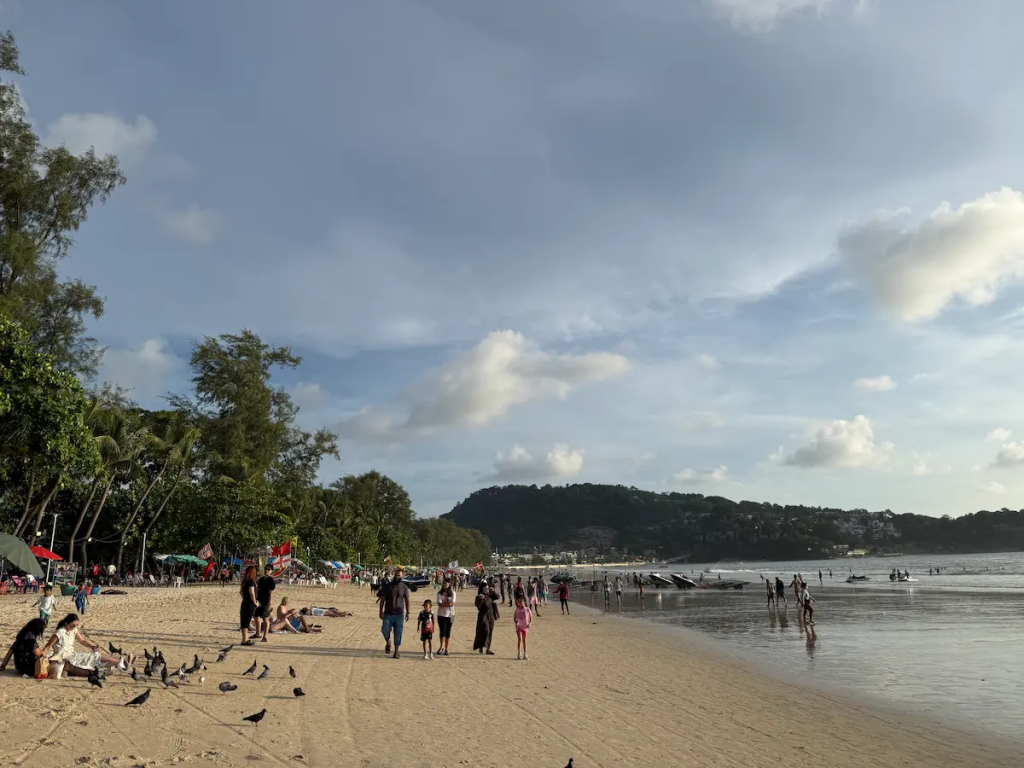
One of the biggest misconceptions is that it rains continuously throughout the green season. In reality, rainfall often comes in short but heavy tropical showers, with many days still enjoying extended periods of sunshine before or after the rain. Some weeks may experience very little rainfall, while others can be considerably wetter, making conditions less predictable than during the dry season.
Accommodation prices are generally lower during these months, and you’ll often find better deals on hotels, making it an attractive option for budget-conscious travellers. Patong’s beaches, restaurants and attractions are also noticeably less crowded, allowing for a more relaxed atmosphere and a different perspective on one of Phuket’s busiest destinations.
The main consideration during the green season is the sea. Stronger waves and rip currents are more common, particularly along Patong Beach, and swimming conditions can change quickly. Always pay attention to the beach warning flags and follow the advice of the lifeguards. While there are still plenty of things to see and do, travellers planning their holiday around swimming, snorkelling or island tours should be aware that some activities may be affected by the weather and sea conditions.
For visitors who don’t mind occasional rain and are happy to be flexible with their plans, the green season can offer a rewarding balance of lower prices, fewer crowds and a more relaxed side of Patong that many travellers never experience.
Month-by-Month Guide
While understanding Patong’s two main seasons provides a good overview, the experience can still vary from month to month. Visitor numbers, rainfall patterns, sea conditions and accommodation prices all fluctuate throughout the year, meaning each month has its own advantages and trade-offs.
The summaries below provide a practical overview of what you can generally expect each month. Although weather can never be guaranteed, these seasonal patterns should help you decide which time of year best matches the type of holiday you’re planning.
January: Excellent Weather and Peak Season
January is widely regarded as one of the best months to visit Patong. The weather is typically warm and sunny, rainfall is generally low, and the Andaman Sea is usually calm, creating excellent conditions for swimming, island tours and spending long days on the beach. It’s also one of Phuket’s busiest months, with visitors arriving from around the world to escape the northern hemisphere winter.
The combination of reliable weather and a lively atmosphere makes January particularly appealing for first-time visitors. Restaurants, markets, nightlife and tours are all operating at full capacity, and outdoor activities are rarely affected by the weather. If you’re planning to explore beyond Patong, conditions are also generally favourable for visiting nearby islands and attractions across Phuket.
Pros
- Excellent beach weather with plenty of sunshine.
- Calm seas that are generally ideal for swimming and island tours.
- Full range of tours, activities and attractions operating.
- Perfect conditions for outdoor sightseeing and photography.
Cons
- One of the busiest months of the year.
- Accommodation prices are among the highest.
- Popular beaches, restaurants and attractions can become crowded.
- Hotels often need to be booked well in advance.
Best for
First-time visitors, beach holidays, couples, families, island hopping, scuba diving, snorkelling and travellers wanting the most reliable weather.
February: Sunny Days and Calm Seas
February continues many of the excellent conditions established in January, making it another of the most popular months to visit Patong. Warm temperatures, plenty of sunshine and generally calm seas provide ideal conditions for beach holidays, swimming and exploring Phuket’s nearby islands. With relatively little rainfall and reliable weather, it’s a favourite month for travellers looking to spend as much time outdoors as possible.
Visitor numbers remain high throughout February, and Patong maintains its lively atmosphere. Beaches, restaurants and nightlife are busy, while tours and outdoor activities continue to operate under generally favourable conditions. If Chinese New Year falls in February, visitors may also experience colourful celebrations, cultural performances and a festive atmosphere across parts of Phuket, adding another dimension to a holiday at this time of year.
Pros
- Warm, sunny weather with low rainfall.
- Generally calm seas for swimming and island tours.
- Excellent conditions for beaches and outdoor activities.
- Opportunity to experience Chinese New Year celebrations in some years.
Cons
- Peak season crowds continue.
- Accommodation prices remain relatively high.
- Popular beaches and attractions can become busy.
- Advance accommodation bookings are often recommended.
Best for
First-time visitors, beach holidays, island hopping, couples, families, cultural experiences and travellers seeking consistently good weather.
March: Warm Weather Before the Green Season
March continues the dry season, offering warm temperatures, plenty of sunshine and generally calm sea conditions. While rainfall remains relatively low, temperatures and humidity begin to rise as Phuket moves towards the hotter months. For many travellers, it’s an excellent time to enjoy the beach, explore the island and take advantage of the favourable conditions before the seasonal weather begins to change.
Although visitor numbers are usually lower than the Christmas and New Year peak, March remains a popular month, particularly during school holidays in some countries. Beaches, restaurants and attractions continue to be lively, while most tours operate as normal. Depending on the year, visitors may also experience Patong Bike Week, one of Phuket’s largest annual events. Despite its name, the festival attracts far more than motorcycle enthusiasts, with live entertainment, concerts, food vendors and a vibrant festival atmosphere adding extra energy to Patong.
Pros
- Warm, sunny weather with generally low rainfall.
- Calm seas that are typically ideal for swimming and island tours.
- Slightly fewer crowds than the peak holiday period.
- Opportunity to experience Patong Bike Week in many years.
- Excellent conditions for beaches, sightseeing and outdoor activities.
Cons
- Temperatures and humidity become noticeably higher.
- Accommodation prices remain above average.
- Popular attractions can still be busy.
- The midday heat can make sightseeing less comfortable.
Best for
Beach holidays, island hopping, couples, outdoor activities, festival atmosphere and travellers wanting excellent weather with slightly fewer crowds than the peak summer holiday period.
April: Hot Days and Songkran Celebrations
April is one of the hottest months of the year in Patong, with high temperatures, increased humidity and plenty of sunshine. Although short tropical showers can become more common towards the end of the month, the weather is still generally favourable for beach holidays, swimming and exploring Phuket. The sea is usually calm, making April another excellent month for island tours and water-based activities.
One of April’s biggest highlights is Songkran, Thailand’s traditional New Year celebration. Held each year from 13–15 April, Songkran transforms Patong into one of the country’s biggest water fights, with Beach Road, Bangla Road and many surrounding streets becoming the centre of the celebrations. While the festival is great fun for many visitors, those looking for a quiet holiday should be aware that getting wet is almost unavoidable during the main celebration days.
Despite the increasing heat, April remains a popular month to visit. The combination of reliable beach weather, warm sea temperatures and the unique atmosphere created by Songkran makes it a memorable time to experience Patong, particularly for first-time visitors wanting to experience one of Thailand’s most famous festivals.
Pros
- Excellent beach weather with generally calm seas.
- Warm water temperatures for swimming and water activities.
- Ideal conditions for island tours and outdoor experiences.
- Opportunity to experience Thailand’s famous Songkran Festival.
- Lively atmosphere throughout Patong.
Cons
- One of the hottest and most humid months of the year.
- Songkran can be crowded and noisy, particularly around Bangla Road and Beach Road.
- Expect to get wet during the festival period.
- Accommodation demand can increase around the Thai New Year holidays.
Best for
First-time visitors, beach holidays, island hopping, festival experiences, nightlife, water activities and travellers wanting to experience Thailand’s most famous annual celebration.
May: Beginning of the Green Season
May marks the transition into Patong’s green season. While many days still enjoy long periods of sunshine, rainfall becomes more frequent and weather patterns become less predictable than during the preceding months. Some visitors experience almost uninterrupted sunshine, while others may encounter short but heavy tropical showers, particularly in the afternoons or evenings.
Sea conditions also begin to change during May. The Andaman Sea can become rougher as the southwest monsoon develops, and beach warning flags become more common when swimming conditions are considered unsafe. Island tours generally continue to operate, although occasional cancellations or itinerary changes can occur if weather conditions deteriorate.
One of May’s biggest advantages is the noticeable reduction in visitor numbers. Beaches become less crowded, accommodation prices often begin to fall, and many travellers appreciate the more relaxed pace that settles over Patong after the busy dry season. For visitors who don’t mind being flexible with their plans, May can offer an excellent balance between reasonable weather and better value.
Pros
- Lower accommodation prices begin to appear.
- Fewer crowds at beaches, restaurants and attractions.
- Many days still offer plenty of sunshine.
- A more relaxed atmosphere compared with the peak season.
Cons
- Rainfall becomes more frequent.
- Sea conditions can become rougher, affecting swimming and water activities.
- Some island tours may be delayed or cancelled due to the weather.
- Weather is less predictable than during the dry season.
Best for
Budget-conscious travellers, returning visitors, couples, relaxed holidays and those happy to trade more variable weather for lower prices and fewer crowds.
June: Quieter Beaches and Better Value
June settles into the green season, bringing a quieter atmosphere to Patong and offering good value for travellers who don’t mind more variable weather. While tropical showers become more common than during the dry season, they’re often interspersed with long periods of sunshine, and many visitors are pleasantly surprised by how much time they still spend enjoying the beach and exploring the island.
The sea is generally rougher than earlier in the year, and strong waves can develop, particularly on exposed beaches. Swimming conditions should always be assessed carefully, with visitors paying close attention to beach warning flags and lifeguard advice. Although island tours continue to operate, weather conditions can occasionally lead to changes or cancellations.
June also marks the beginning of the surfing season along Phuket’s west coast. Beaches such as nearby Kalim become popular with local surfers and visitors looking to take advantage of the seasonal waves. Depending on the year, the Kalim Surf Festival may also take place during this period, adding a relaxed community atmosphere with surfing demonstrations, competitions and local events. Even if you’re not a surfer, it’s an enjoyable time to experience a different side of Phuket’s beach culture.
Pros
- Lower accommodation prices than the dry season.
- Noticeably fewer crowds across Patong.
- A more relaxed and authentic atmosphere.
- Good opportunity to experience Phuket’s surfing season.
- Many days still provide plenty of sunshine between showers.
Cons
- Rainfall is more frequent and less predictable.
- Rougher seas can limit swimming and some water activities.
- Island tours may occasionally be affected by weather conditions.
- Higher humidity than during the dry season.
Best for
Budget-conscious travellers, surfers, returning visitors, couples and anyone looking for a quieter Patong experience while still enjoying many outdoor activities when the weather cooperates.
July: Tropical Showers and Fewer Crowds
July continues the green season, with warm temperatures, increased humidity and a mix of sunshine and tropical rain showers. While rainfall is generally more frequent than during the dry season, it rarely means continuous rain for the entire day. Many mornings begin with clear skies before showers develop later in the afternoon or evening, allowing plenty of opportunities to enjoy the beach and explore Patong between changing weather conditions.
Sea conditions remain an important consideration during July. Strong waves and rip currents are more common, and red warning flags are regularly displayed when swimming is considered unsafe. Visitors planning island tours should also allow some flexibility in their itinerary, as rough seas can occasionally result in delays, route changes or cancellations.
With fewer international visitors than during the peak season, July offers a more relaxed side of Patong. Accommodation prices remain attractive, restaurants are easier to enjoy without long waits, and the beaches generally feel less crowded. For travellers who don’t mind adapting their plans around the weather, July can provide excellent value while still offering plenty of opportunities to experience everything Patong has to offer.
Pros
- Lower accommodation prices than during the dry season.
- Fewer crowds at beaches, restaurants and attractions.
- Warm temperatures throughout the month.
- Plenty of opportunities to explore between tropical showers.
- A quieter, more relaxed atmosphere.
Cons
- More frequent rainfall and higher humidity.
- Rougher seas can make swimming unsafe on some days.
- Island tours may occasionally be affected by weather conditions.
- Outdoor plans sometimes need to be adjusted at short notice.
Best for
Budget-conscious travellers, couples, returning visitors, photographers who enjoy dramatic tropical skies and travellers who are happy to remain flexible with their itinerary.
August: Good Value with Mixed Weather
August continues the green season, with a combination of warm tropical temperatures, sunshine and periods of rain. Weather conditions can vary considerably from one week to the next, but many visitors are surprised by how much good weather they experience. While tropical showers are more common than during the dry season, they often pass quickly, leaving plenty of time to enjoy Patong’s beaches, restaurants and attractions.
The Andaman Sea generally remains rough during August, and swimming conditions can change quickly. Red warning flags are common when strong waves and rip currents develop, making it essential to follow the advice of lifeguards. Island tours continue throughout much of the month, although weather conditions may occasionally affect schedules or result in cancellations.
August remains a popular choice for travellers looking for better value. Accommodation prices are generally lower than during the peak season, and Patong’s beaches, shopping centres and restaurants are noticeably less crowded. For visitors who are prepared to adapt their plans around the weather, August offers a relaxed atmosphere and an opportunity to experience Patong without the peak-season crowds.
Pros
- Good value accommodation and travel deals.
- Fewer visitors than during the dry season.
- Warm temperatures throughout the month.
- Plenty of opportunities to enjoy Patong between rain showers.
- A quieter, more relaxed holiday experience.
Cons
- Rainfall is generally more frequent.
- Sea conditions can make swimming unsafe on some days.
- Island tours may occasionally be disrupted by the weather.
- Outdoor activities require greater flexibility.
Best for
Budget-conscious travellers, couples, returning visitors, longer stays and anyone who values lower prices and fewer crowds over guaranteed sunshine.
September: The Wettest Time of Year
September is generally considered the wettest month of the year in Patong. Rainfall is typically at its highest, humidity remains elevated and unsettled weather becomes more common. While there are still sunny periods, visitors should be prepared for heavier and more prolonged rain than during other months of the green season.
Sea conditions are often at their roughest during September, with strong waves and rip currents occurring regularly along Patong Beach. Red warning flags are common, and swimming may be unsafe for extended periods. Island tours are more likely to be affected by weather conditions than at any other time of the year, with cancellations and itinerary changes occurring more frequently if sea conditions deteriorate.
Despite the weather, September has its own appeal. Accommodation prices are often among the lowest of the year, popular attractions are noticeably quieter and Patong takes on a slower, more relaxed pace. Travellers who plan to spend more time enjoying restaurants, cafés, spas, shopping or simply unwinding at their resort can still have an enjoyable holiday, particularly if they remain flexible with their daily plans.
Pros
- Some of the lowest accommodation prices of the year.
- Very few crowds at beaches, restaurants and attractions.
- A peaceful atmosphere throughout much of Patong.
- Excellent value for flexible travellers.
Cons
- Typically the wettest month of the year.
- Rough seas frequently make swimming unsafe.
- Island tours are more likely to be cancelled or modified.
- Outdoor activities are more dependent on the weather.
Best for
Budget-conscious travellers, returning visitors, longer stays, spa and wellness holidays, and travellers who prioritise value and a relaxed atmosphere over consistently sunny weather.
October: Improving Conditions Before Peak Season
October marks the final month of Patong’s green season and often serves as a transition towards the more settled weather of the dry season. While rainfall can still be frequent, conditions typically begin to improve as the month progresses. Sunshine becomes more common, humidity gradually eases and the sea starts to become calmer, although rough conditions can still occur.
One of October’s highlights is the Phuket Vegetarian Festival, one of the island’s most significant cultural events. Despite its name, the festival is about far more than vegetarian food. It features colourful street processions, Chinese temple ceremonies, traditional rituals and a unique cultural atmosphere that attracts visitors from across Thailand and around the world. While the largest celebrations take place in Phuket Town, events and processions are also held in other parts of the island, making October an interesting time for travellers wanting to experience Phuket’s cultural side.
Accommodation prices generally remain lower than during the peak season, and Patong is still noticeably quieter than it will be in the months ahead. As the weather becomes more reliable towards the end of October, many travellers find it offers an appealing balance between good value and improving beach conditions.
Pros
- Accommodation prices are still relatively low.
- Visitor numbers remain below peak-season levels.
- Weather often improves as the month progresses.
- Opportunity to experience the Phuket Vegetarian Festival.
- A good balance between value and increasingly favourable conditions.
Cons
- Rainfall can still be frequent, particularly early in the month.
- Sea conditions may remain rough on some days.
- Some island tours can still be affected by the weather.
- Conditions are less predictable than during the dry season.
Best for
Travellers looking for good value with improving weather, cultural experiences, photographers, couples and visitors wanting to enjoy Phuket before the busy peak season returns.
November: Sunshine Returns and Crowds Begin to Grow
November marks the beginning of Patong’s dry season, bringing a noticeable improvement in weather for many visitors. Rainfall generally decreases, sunshine becomes more consistent and the Andaman Sea usually begins to calm, making it an excellent time to return to the beach and enjoy outdoor activities. While occasional showers are still possible, they’re typically less frequent than during the preceding months.
As conditions improve, visitor numbers gradually increase, although Patong is often less crowded than during the peak holiday period that follows in December and January. Many travellers consider November one of the best times to visit, offering an attractive balance between favourable weather, more comfortable temperatures and accommodation prices that may still be lower than those charged during the busiest months of the year.
If Loy Krathong falls during your visit, you’ll also have the opportunity to experience one of Thailand’s most beautiful and meaningful festivals. Held on the evening of the full moon in the twelfth lunar month, the celebration sees people release beautifully decorated floating baskets, known as krathongs, onto rivers, lakes and other waterways as a symbolic gesture of letting go of misfortune and welcoming good fortune. While Phuket’s celebrations are generally more modest than those in northern Thailand, Loy Krathong still offers visitors a memorable glimpse into Thai culture and tradition.
Pros
- Generally drier weather with increasing sunshine.
- Calmer seas returning for swimming and island tours.
- Fewer crowds than the peak holiday season.
- Opportunity to experience Loy Krathong in many years.
- Excellent balance between weather, value and visitor numbers.
Cons
- Short periods of unsettled weather can still occur.
- Accommodation prices begin to rise as the peak season approaches.
- Popular hotels start to fill for the Christmas and New Year period.
- Visitor numbers steadily increase throughout the month.
Best for
First-time visitors, beach holidays, couples, families, island hopping, cultural experiences and travellers looking for an excellent balance of favourable weather, moderate crowds and good value.
December: Fantastic Beach Weather and Festive Atmosphere
December marks the start of Patong’s peak holiday season and is one of the most popular times of the year to visit. The weather is typically warm and sunny, rainfall is generally low, and the Andaman Sea is usually calm, creating excellent conditions for swimming, beach holidays and island tours. With reliable weather and a vibrant atmosphere, it’s easy to see why so many travellers choose December for their Phuket getaway.
As the month progresses, Patong becomes increasingly lively in the lead-up to Christmas and New Year. Hotels, restaurants, beach clubs and nightlife venues embrace the festive season with special events, live entertainment and celebrations that continue through to New Year’s Eve. The annual Patong Carnival, traditionally held in December, also marks the start of Phuket’s main tourism season with colourful parades, cultural performances and entertainment along the beachfront. Combined with the festive holiday atmosphere, Patong takes on an energetic character that many visitors return to experience year after year.
The popularity of December also means planning ahead is essential. Accommodation prices are among the highest of the year, and many of the most popular hotels are fully booked months in advance. Beaches, restaurants and attractions are busier than usual, particularly during the second half of the month, but for many travellers the festive atmosphere more than compensates for the larger crowds.
Pros
- Excellent beach weather with plenty of sunshine.
- Generally calm seas for swimming and island tours.
- Vibrant Christmas and New Year atmosphere.
- Full range of tours, activities and entertainment available.
- Ideal conditions for exploring Patong and the rest of Phuket.
Cons
- One of the busiest months of the year.
- Accommodation prices are among the highest.
- Hotels often book out well in advance.
- Beaches, restaurants and attractions can become very crowded, particularly over Christmas and New Year.
Best for
First-time visitors, beach holidays, families, couples, festive celebrations, island hopping and travellers wanting to experience Patong at its most vibrant and energetic.
Best Time to Visit Patong for Different Types of Travellers
The best time to visit Patong depends as much on your travel style as it does on the weather. Some visitors are happy to pay higher prices for reliable sunshine and calm seas, while others prefer quieter beaches, lower accommodation costs and a more relaxed atmosphere. Rather than looking for a single “best” month, consider which time of year best matches the holiday you want to experience.
Best Time for First-Time Visitors
If you’re visiting Patong for the first time, the dry season between December and March generally offers the easiest introduction to the destination. The weather is usually reliable, sea conditions are favourable for swimming and island tours, and nearly every attraction is operating at full capacity. Although you’ll encounter more visitors and higher accommodation prices, the predictable conditions make planning your holiday much simpler.
Best Time for Budget Travellers
Travellers looking to stretch their budget will often find the green season from May to October offers excellent value. Accommodation prices are generally lower, flights can be more affordable and many attractions are less crowded. While you’ll need to be more flexible with your plans due to the weather, the savings can be significant, particularly for longer stays.
Best Time for Beach Holidays
For visitors whose holiday revolves around relaxing on the sand and swimming in the sea, the dry season from November to April is generally the best choice. Calmer waters, lower rainfall and more consistent sunshine create ideal conditions for enjoying Patong Beach and exploring nearby beaches around Phuket.
Best Time for Island Tours
Island tours to destinations such as the Phi Phi Islands and Phang Nga Bay are generally most reliable during the dry season, when calmer seas reduce the likelihood of cancellations and provide more comfortable boating conditions. While tours continue throughout much of the year, weather and sea conditions are more likely to affect schedules during the green season.
Best Time for Families
Families often prefer travelling between December and April, when beach conditions are generally calmer and outdoor activities are easier to plan. School holiday periods naturally bring larger crowds, but the combination of reliable weather and the wide range of family-friendly attractions makes this one of the most popular times to visit.
Best Time for Couples
Couples can enjoy Patong throughout the year, but the ideal time depends on the type of holiday they’re seeking. The dry season offers beautiful beach days, sunset dinners and easy access to island tours, while the green season provides a quieter, more relaxed atmosphere with lower accommodation prices that can make luxury resorts more affordable.
Best Time for Nightlife
Patong’s nightlife operates year-round, so there is never really a bad time to visit if Bangla Road and the entertainment scene are your priority. During the peak season, the atmosphere is at its busiest and most energetic, while the green season offers a slightly more relaxed experience with fewer crowds but plenty of venues still open each evening.
Best Time for Surfers
The green season from May to October brings larger swells to Phuket’s west coast, making it the preferred time for surfing. Nearby Kalim Beach becomes particularly popular with local surfers and visitors looking to take advantage of the seasonal waves. Even if you’re not surfing yourself, this time of year offers a different perspective on Phuket’s beach culture.
Choosing the Right Season
Choosing the best time to visit Patong often comes down to balancing three factors: weather, visitor numbers and your travel budget. The dry season generally offers the most reliable conditions for beaches and outdoor activities, but it also attracts the largest crowds and the highest accommodation prices. The green season, on the other hand, rewards flexible travellers with lower prices and a quieter atmosphere, although the weather and sea conditions are less predictable.
The table below provides a simple comparison to help you quickly identify which season best matches your travel priorities.
| Factor | Dry Season (November–April) | Green Season (May–October) |
|---|---|---|
| Weather | Generally sunny with lower rainfall | More frequent tropical showers |
| Sea Conditions | Usually calm | Can be rough, particularly on the west coast |
| Swimming | Generally excellent | Depends on daily conditions and warning flags |
| Island Tours | Most reliable | Occasionally affected by weather |
| Crowds | Highest | Noticeably quieter |
| Accommodation Prices | Highest | Generally lower |
| Restaurant Availability | Busy, reservations recommended during peak periods | Easier to find tables |
| Photography | Clear skies and sunsets | Dramatic clouds and lush landscapes |
| Overall Atmosphere | Lively and energetic | Relaxed and less crowded |
Rather than thinking of one season as better than the other, it’s more helpful to consider what matters most to you. If reliable beach weather and calm seas are your priority, the dry season is usually the better choice. If you value lower prices, fewer crowds and don’t mind adapting your plans around occasional rain, the green season can offer an equally rewarding holiday with a very different atmosphere.
Travel With Insight Perspective
If you’re looking for the “perfect” month to visit Patong, you may never find it because every season offers something different. While the dry season delivers the classic tropical holiday that many visitors imagine, the green season reveals a quieter side of Patong that some travellers come to prefer.
After spending several years living in Patong, we’ve found that the destination changes with the seasons rather than becoming better or worse. During the busiest months, the town feels energetic, the beaches are lively and the atmosphere is unmistakably international. In the quieter months, it’s easier to slow down, discover local restaurants, enjoy less crowded beaches and experience a more relaxed rhythm of daily life.
For most first-time visitors, we generally recommend travelling between November and March if your schedule allows. The more reliable weather, calmer seas and excellent conditions for sightseeing make it easier to experience everything Patong has to offer. If you’re returning to Phuket, travelling on a tighter budget or simply enjoy avoiding large crowds, the green season can provide excellent value, provided you’re happy to remain flexible with outdoor plans.
Rather than asking, “When is the best time to visit Patong?”, a better question is, “What kind of holiday do I want?” Once you answer that, choosing the right time of year becomes much easier.
Final Thoughts
There is no single best time to visit Patong—only the best time for the type of holiday you want to experience. Whether you’re chasing long days on the beach, planning island-hopping adventures, travelling on a budget or looking to experience Phuket’s cultural festivals, every season offers its own advantages.
For most first-time visitors, the dry season provides the easiest and most predictable experience, with reliable beach weather and calm seas. Returning visitors, however, often discover that the quieter green season offers a different perspective on Patong, with lower prices, fewer crowds and a more relaxed atmosphere that many travellers come to appreciate.
Whatever time of year you choose to visit, a little planning goes a long way. Understanding how the seasons affect weather, crowds and activities will help you set realistic expectations and make the most of your time in Phuket.
Frequently Asked Questions
What is the best month to visit Patong?
For many travellers, January, February and March offer the best combination of sunny weather, calm seas and excellent conditions for beaches and island tours. However, the best month ultimately depends on your priorities, with quieter months during the green season offering lower prices and fewer crowds.
Is Patong worth visiting during the rainy season?
Yes. While the green season brings more frequent rain and rougher seas, many visitors enjoy the quieter atmosphere, lower accommodation prices and fewer crowds. Rain often falls in short tropical showers rather than lasting all day, although weather conditions can vary.
When is the cheapest time to visit Patong?
The lowest accommodation prices are generally found during the green season between May and October, particularly in September. Flights and hotels are often more affordable, making this a popular time for budget-conscious travellers.
Can you swim at Patong Beach all year round?
Swimming is possible throughout much of the year, but sea conditions vary by season. During the dry season, the sea is generally calmer. Throughout the green season, stronger waves and dangerous rip currents can develop, so always pay attention to the beach warning flags and follow advice from lifeguards.
Is Patong too crowded during peak season?
Patong becomes noticeably busier between December and February, particularly over Christmas and New Year. While beaches, restaurants and attractions attract more visitors, many travellers enjoy the lively atmosphere that comes with the peak holiday season.
Which season is best for island tours?
The dry season from November to April generally offers the most reliable conditions for island tours, thanks to calmer seas and more predictable weather. Tours continue throughout much of the year, but weather conditions may occasionally affect schedules during the green season.
Does it rain every day during the green season?
Not usually. Rainfall during the green season often comes in the form of tropical showers, with sunshine still possible before or after the rain. Some days may experience prolonged rainfall, while others remain mostly dry, making the weather less predictable rather than constantly wet.
How many days should I spend in Patong?
Most visitors find three to five days provides enough time to enjoy Patong Beach, experience the nightlife, take an island tour and explore some of Phuket’s nearby attractions. If you plan to discover more of the island, staying five to seven days offers a more relaxed pace.
Continue Planning Your Phuket Holiday
Knowing the best time to visit is just one part of planning a memorable trip to Patong. Our Patong Travel Guide brings together everything you need to organise your visit, including where to stay, the best beaches, local attractions, restaurants, transport tips and practical travel advice to help you make the most of your time in Phuket.
If you’re planning to explore beyond Patong, our Phuket Travel Guide is the perfect next step. It covers the island’s most popular beaches, cultural attractions, scenic viewpoints and travel inspiration, helping you discover even more of what Phuket has to offer.
Related Reading
Planning Your First Visit to Patong, Phuket
Work through the main decisions involved in organising your first Patong holiday, including where to stay, how long to visit, transport and practical preparation.
Patong Weather Guide
Learn what to expect from Patong’s tropical climate, including rainfall, humidity, UV levels, changing forecasts and daily weather conditions.
Where to Stay in Patong
Compare Patong’s principal accommodation areas and choose a location that suits your preferred atmosphere, budget and travel style.
Things to Do in Patong
Explore Patong’s beaches, activities, attractions, markets and entertainment to find experiences suited to the season and holiday you are planning.
Patong Beach Visitor Guide
Understand Patong Beach’s different sections, facilities, seasonal swimming conditions, water activities and practical considerations before visiting.
About the Author
David Hibbins is a travel publisher, destination researcher and the creator of Travel With Insight. He spends considerable time exploring Patong and Phuket, combining first-hand experience with detailed research to understand how each destination changes across different seasons.
His work helps travellers set realistic expectations and plan holidays that suit their interests, available time, budget and preferred travel style.
Plan Your Phuket Holiday
Once you’ve chosen the right time to visit, Resurgence Travel can help you plan and book a Phuket holiday suited to your preferred dates, budget and travel style. Explore your options and begin planning your trip with personalised support.