
Phuket Travel Guide
Discover the Phuket You Want
Built from spending considerable time in Phuket and exploring the island extensively, this guide combines first-hand experience, careful research and practical insight to help you plan a holiday that suits you.
From lively beach resorts and peaceful coastal escapes to historic streets, island adventures and southern Thai food, discover the many different ways to experience Phuket.
A TRAVEL WITH INSIGHT DESTINATION GUIDE
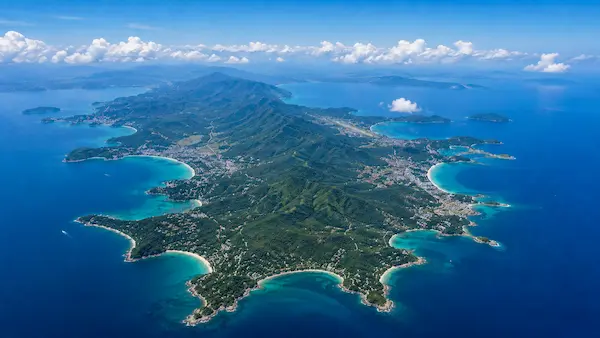
Discovering Phuket Through Experience
Spending considerable time in Patong and exploring Phuket has shown me how dramatically the experience changes across the island. Patong offers energy, convenience and nightlife, while Karon and Kata provide more relaxed beach holidays. Kamala moves at a slower pace, Bang Tao is shaped by resorts and dining, Phuket Old Town reveals the island’s cultural history, and the southern coastline offers quieter beaches and scenic viewpoints.
It is easy to think of Phuket as one continuous beach destination, but choosing the right area can shape your entire holiday. The island’s beaches, accommodation, atmosphere and visitor facilities vary considerably, while traffic and travel times mean that apparently short distances can take longer than expected. Weather and sea conditions also change throughout the year, influencing swimming, surfing and island excursions.
That is why this Phuket travel guide does not simply present another list of popular beaches and attractions. It helps you understand how the island fits together, compare its principal destinations and choose the places, activities and experiences that best suit the holiday you want to create.
| Feature | Information |
|---|---|
| Location | Phuket Province, Southern Thailand, in the Andaman Sea |
| Destination Type | Tropical island and province combining beaches, towns, resorts and cultural attractions |
| Best Known For | Beaches, island excursions, Phuket Old Town, nightlife, temples and southern Thai food |
| Best For | Beach holidays, couples, families, solo travellers, nightlife, island trips and first-time visitors |
| Recommended Stay | 5–10 days, with longer stays allowing more of the island and surrounding region to be explored |
| Atmosphere | Diverse and tropical, ranging from lively resort centres to peaceful beaches, historic streets and quieter coastal communities |
| Top Highlights | Phuket Old Town, Patong, Kata and Karon beaches, Wat Chalong, Promthep Cape, scenic viewpoints and nearby islands |
| Main Gateway | Phuket International Airport, with road connections to mainland Southern Thailand |
| Getting Around | Ride-hailing services, taxis, tuk-tuks, local buses, private transfers and rental vehicles |
| Family Friendly | Yes, with suitable beaches, resorts, attractions and activities available across several parts of the island |
| Best Time to Visit | Generally November to April for more settled weather and calmer sea conditions |
| Main Travel Areas | West-coast resort beaches, Phuket Old Town and the east coast, northern Phuket and the southern coastline |
Why Visit Phuket?
Phuket’s greatest strength is the range of experiences available within one destination. A holiday can combine beaches, island excursions, cultural attractions, nightlife, outdoor activities, local food and resort relaxation without requiring visitors to move between several different parts of Thailand.
The island offers much more than its famous coastline. Phuket Old Town introduces the architecture, shrines and food traditions shaped by the island’s trading history, while Wat Chalong, coastal viewpoints, markets and local communities provide reasons to explore beyond the principal resort areas. Nearby islands and the limestone landscapes of Phang Nga Bay add another dimension to a Phuket holiday.
Phuket is also one of Southern Thailand’s most convenient destinations. Its international airport, extensive accommodation, established visitor facilities and broad selection of organised activities make it particularly accessible for first-time visitors, couples and families. Travellers can choose a simple resort holiday or use Phuket as a base for exploring beaches, islands and neighbouring parts of the Andaman Coast.
The essential guides below will help you compare Phuket’s destinations, beaches, attractions and experiences before deciding what belongs in your holiday.
Essential Phuket Reading
Where To Go In Phuket
Phuket’s destinations can produce very different holidays. Compare the island’s principal areas and choose the beach, atmosphere and location that best fit the experience you want.
Best Things to Do in Phuket
Explore Phuket’s beaches, cultural experiences, island excursions, outdoor activities, nightlife and family-friendly attractions.
Best Experiences in Phuket
Compare Phuket’s standout cultural, adventure, entertainment and family experiences to decide which ones are genuinely worth adding to your holiday.
Best Beaches in Phuket
Compare popular resort beaches, peaceful coastal escapes, scenic bays and beaches suited to swimming, snorkelling and surfing.
Best Islands and Day Trips from Phuket
Compare nearby islands, Phang Nga Bay, marine experiences and day trips departing from different parts of Phuket.
Best Time to Visit Phuket
Find the best time to visit Phuket for beaches, island trips, lower prices and fewer crowds, with practical advice on weather, sea conditions, seasons and what to expect throughout the year.
Making the Most of Your Phuket Holiday
Plan a more rewarding Phuket itinerary by balancing beaches, attractions, island excursions and realistic travel times.
Understanding Phuket
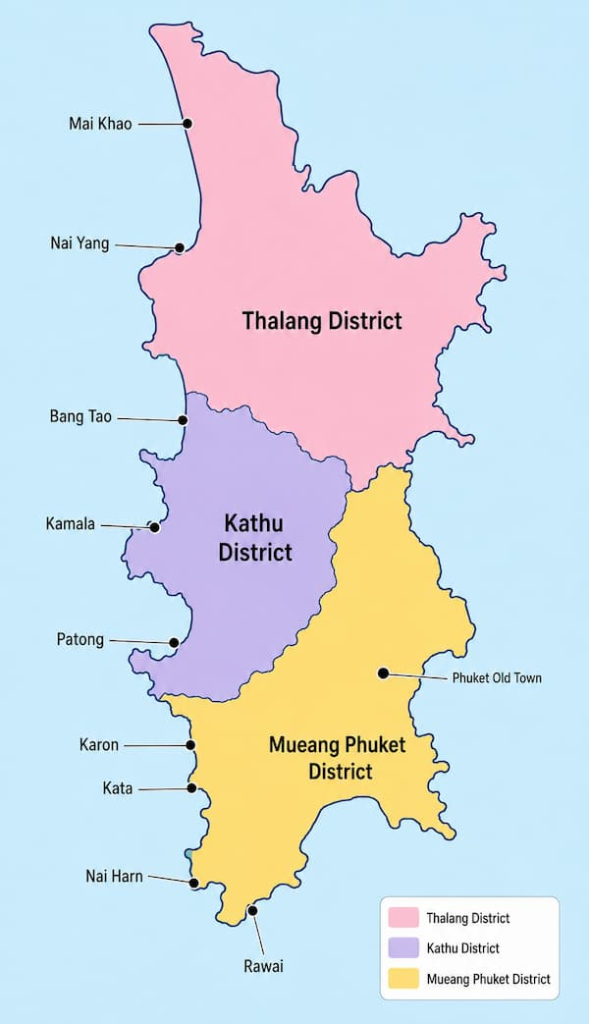
Phuket is Thailand’s largest island and the centre of a province that also includes several smaller surrounding islands. It lies in the Andaman Sea but is connected to mainland Phang Nga by the Sarasin Bridge, allowing visitors to arrive by road as well as air and sea.
Although Phuket is often presented as one destination, its beaches, towns and coastal communities are spread across a varied landscape of hills, bays and developed urban areas. Understanding the differences between the west coast, Phuket Town, the quieter north and the southern part of the island makes it easier to choose where to stay and plan realistic journeys.
The West Coast
Most of Phuket’s principal resort destinations are located along the west coast. Patong, Karon, Kata, Kamala and Bang Tao combine beaches with accommodation, restaurants and visitor facilities, but each offers a different atmosphere.
Patong is the island’s busiest entertainment centre, while Karon and Kata provide more conventional beach holidays. Kamala feels more relaxed, and Bang Tao combines a long beach with resorts, beach clubs and the dining areas around Laguna and Boat Avenue. Farther north, Surin, Nai Thon, Nai Yang and Mai Khao become progressively quieter and less densely developed.
The west coast is also the most exposed to seasonal waves and currents. Sea conditions can vary significantly between the drier months and the southwest monsoon, making local beach flags and safety advice especially important.
Phuket Town and the East Coast
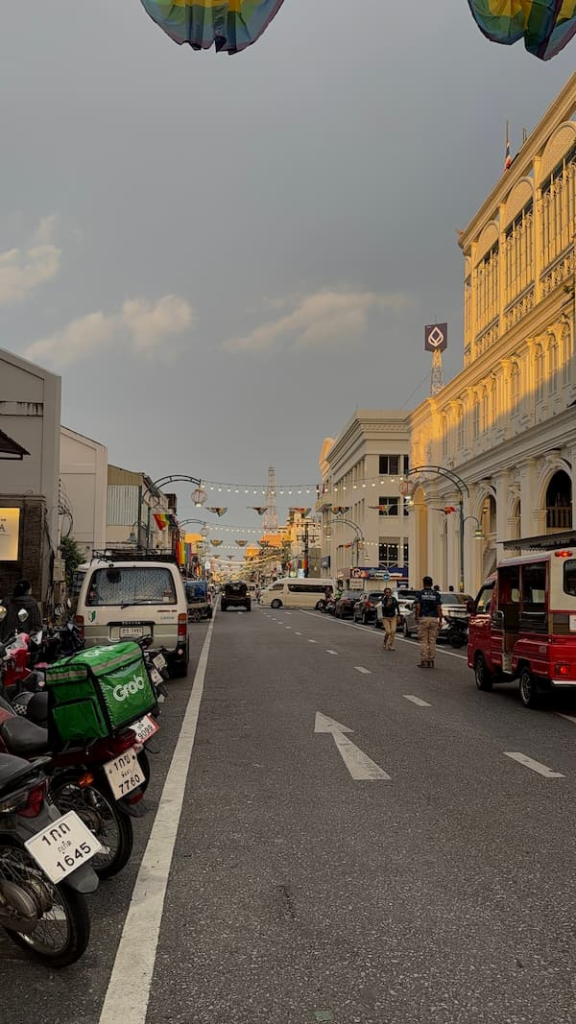
Phuket Town provides a very different experience from the island’s beach resorts. Phuket Old Town is known for its Sino-Portuguese architecture, Chinese shrines, markets, cafés and food traditions, while the wider urban area contains shopping centres, hospitals, government services and everyday local neighbourhoods.
The east coast is generally less suitable for conventional beach holidays because much of its shoreline consists of mangroves, tidal flats, marinas and working waterfronts. However, it plays an important role in Phuket’s transport network, with piers providing access to nearby islands and Phang Nga Bay.
Cape Panwa offers a quieter southeastern coastal setting, while Koh Sirey, Laem Hin and other eastern areas reveal a more locally focused side of Phuket beyond the principal resort towns.
Northern and Southern Phuket
Northern Phuket contains the international airport, quieter beaches and some of the island’s least developed coastal landscapes. Nai Yang and Mai Khao provide a slower atmosphere than the major west-coast resorts, while proximity to the airport makes them convenient for short stays, late arrivals and early departures.
Southern Phuket brings together several different travel areas. Chalong is an important departure point for diving and island excursions, Rawai combines seafood restaurants with a working waterfront, and Nai Harn offers one of the south’s most attractive beach environments. Promthep Cape, coastal viewpoints and smaller beaches provide additional reasons to explore the peninsula.
The south can be rewarding for independent travellers, but attractions and communities are relatively spread out. Access to suitable transport becomes more important when staying outside a compact resort centre.
Distances, Traffic and Travel Times
Distances in Phuket can appear short on a map, but hills, traffic and limited cross-island routes can make journeys take longer than expected. Travel between the airport and southern Phuket can occupy a significant part of the day, while congestion around Patong, Phuket Town, Chalong and major intersections may affect journey times.
Most visitors benefit from choosing accommodation close to the beach, dining or nightlife they expect to use most frequently. Other parts of Phuket can then be explored through selected day trips instead of repeatedly crossing the island.
This makes choosing the right base one of the most important Phuket planning decisions. The following section compares the island’s principal destinations and the different styles of holiday they offer.
Choosing Where to Go
Phuket contains lively resort centres, family-oriented beach towns, historic streets, quiet northern coastlines and residential communities shaped around local life. Choosing the right destination depends on whether you prioritise nightlife, beach access, resort facilities, food, culture, tranquillity or convenient island excursions.
The island’s ten principal visitor destinations offer distinctly different experiences. Patong, Karon, Kata and Kamala support our four complete travel guides, while Bang Tao, Phuket Old Town, Nai Harn, Rawai, Nai Yang and Mai Khao can be explored through comprehensive destination articles.
The comparison below provides a quick overview of what makes each destination different.
| Destination | Best For | Atmosphere | Consider Elsewhere If… |
|---|---|---|---|
| Patong | Convenience, nightlife, shopping and first visits | Lively and energetic | You want tranquillity or seclusion |
| Karon | Spacious beaches, couples and relaxed family holidays | Open and easygoing | Extensive nightlife is important |
| Kata | Families, swimming, dining and seasonal surfing | Friendly and active | You want a very quiet resort |
| Kamala | Couples, families and slower beach holidays | Relaxed and comfortable | You want major shopping and nightlife |
| Bang Tao | Resorts, dining, beach clubs and longer stays | Upscale and spacious | You are travelling on a tight budget |
| Phuket Old Town | Culture, heritage, cafés, markets and local food | Historic and urban | Staying beside the beach is essential |
| Nai Harn | Beach relaxation, scenery and quieter stays | Peaceful and laid-back | You want extensive shopping or entertainment |
| Rawai | Longer stays, seafood, local life and island departures | Residential and locally focused | You want a conventional swimming beach |
| Nai Yang | Airport convenience, nature and relaxed short stays | Quiet and informal | You want a large resort centre or nightlife |
| Mai Khao | Resort seclusion, couples and peaceful coastal escapes | Spacious and tranquil | You want attractions and restaurants within walking distance |
Phuket Travel Guides
Begin with our four complete guides to Patong, Karon, Kata and Kamala. These established west-coast destinations offer different combinations of beaches, accommodation, dining, nightlife and visitor facilities.
Each guide helps you understand the destination’s character, compare its accommodation areas and explore its beaches, attractions, experiences and practical travel considerations.
Patong Travel Guide
Discover Phuket’s busiest coastal entertainment hub through Patong Beach, nightlife, shopping, markets, dining and visitor experiences, particularly suited to travellers who value convenience, energy and having entertainment, services and activities concentrated within a compact area.
Explore the Patong Travel Guide →
Karon Travel Guide
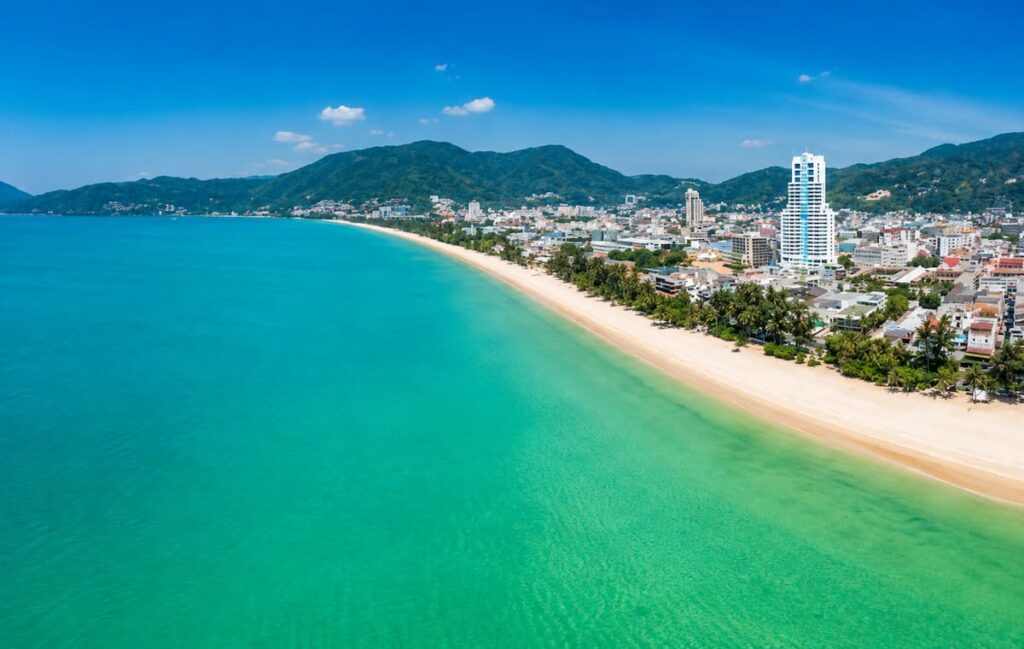
Explore Karon’s long sandy beach, relaxed atmosphere, accommodation, dining and convenient location between Patong and Kata, particularly suited to couples and families wanting an established beach town with useful visitor facilities but less nightlife and intensity than neighbouring Patong.
Explore the Karon Travel Guide →
Kata Travel Guide
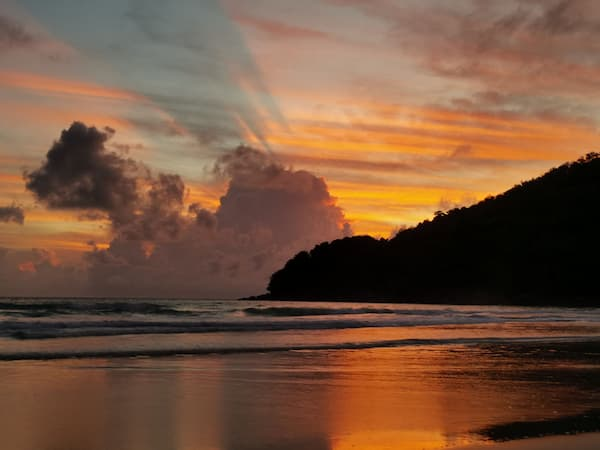
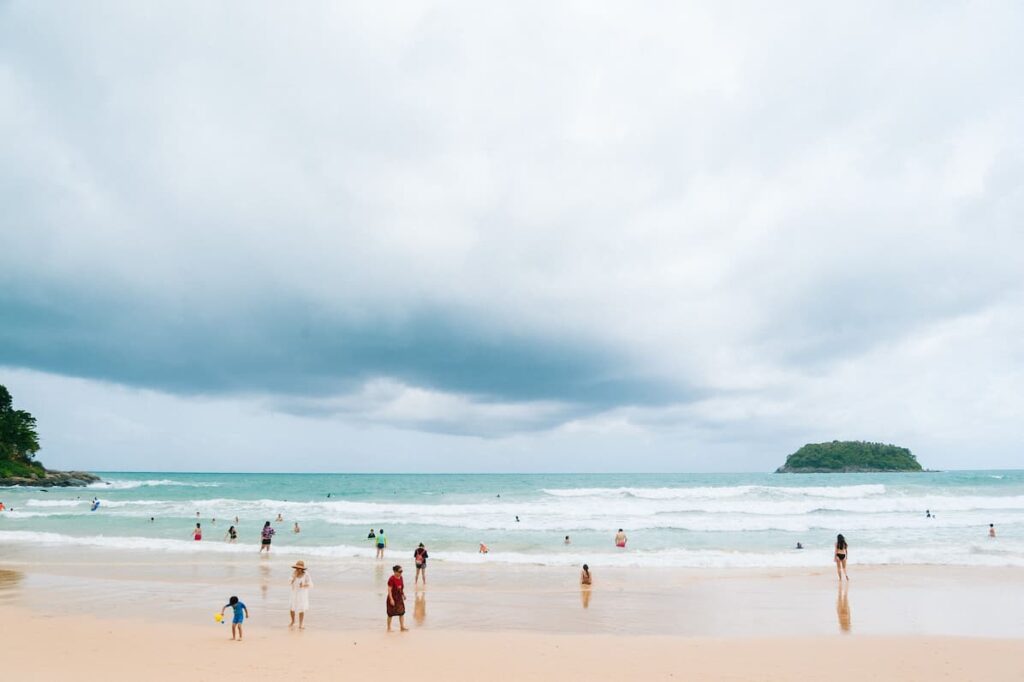
Discover Kata’s popular beach, seasonal surfing, family-friendly accommodation, dining and convenient visitor facilities, particularly suited to couples, families and active travellers wanting a compact beach town with a friendly atmosphere and plenty to experience within easy reach.
Explore the Kata Travel Guide →
Kamala Travel Guide
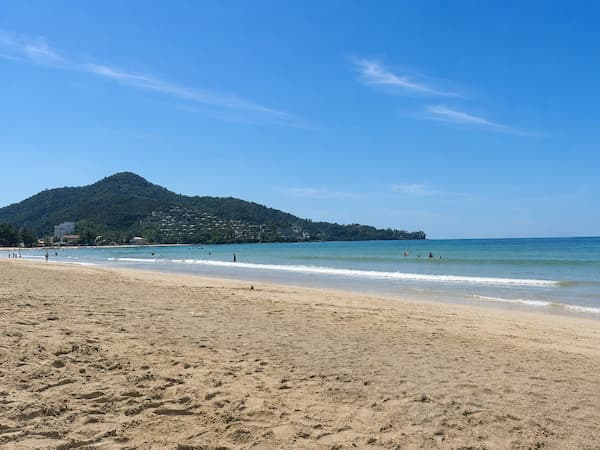
Explore Kamala’s sheltered beach, relaxed atmosphere, accommodation, local dining and family attractions, suited to couples and families wanting a slower and more relaxing Phuket holiday while remaining within reach of Patong and west coast destinations.
Explore the Kamala Travel Guide →
More Places to Explore in Phuket
Beyond Patong, Karon, Kata and Kamala, these six destinations reveal more of Phuket’s beaches, cultural heritage, local communities and quieter coastal areas.
Bang Tao, Phuket Old Town, Nai Harn, Rawai, Nai Yang and Mai Khao each offer a distinctive experience and can be explored further through our comprehensive destination articles.
Bang Tao
A Spacious Beach Destination for Resorts and Longer Stays
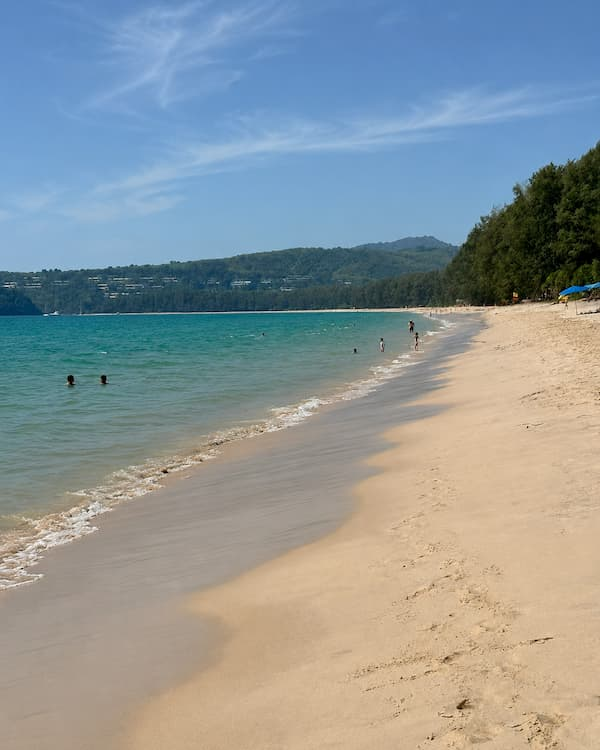
Bang Tao combines one of Phuket’s longest beaches with resorts, beach clubs, restaurants and the modern lifestyle areas surrounding Laguna Phuket. Its spacious setting and broad range of accommodation make it particularly popular with couples, families and travellers planning a longer stay.
The southern part of Bang Tao has a more established local beach atmosphere, while the central Laguna area is shaped by larger resorts, landscaped grounds and leisure facilities. Inland, Boat Avenue and Porto de Phuket provide restaurants, cafés, shopping and evening activity away from the beachfront.
Bang Tao suits travellers seeking a relaxed beach holiday supported by quality accommodation and extensive dining. Its spread-out layout provides greater space than Phuket’s compact beach towns, although transport is useful when moving between the beach, resorts and inland dining areas.
Continue to our Bang Tao guide to explore its beach, accommodation areas, dining, attractions and practical travel considerations.
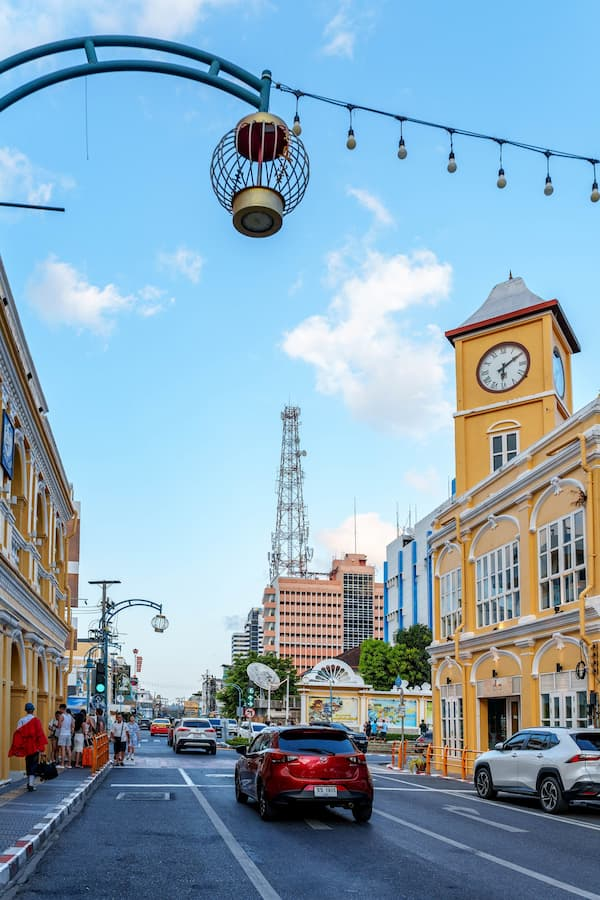
Phuket Old Town
Heritage, Food and Local Culture
Phuket Old Town is the island’s historic and cultural centre, offering a distinctly different experience from its coastal destinations. Colourful Sino-Portuguese shophouses, Chinese shrines, Buddhist temples, museums and long-established businesses reflect the multicultural communities and tin-mining history that shaped modern Phuket.
Thalang Road forms the best-known part of the heritage district, while Dibuk, Phang Nga and Krabi roads offer additional architecture, street art, cafés and local restaurants. The Sunday Walking Street Market brings food, crafts and evening activity into the historic centre, although quieter weekday visits can make its streets easier to explore.
Phuket Old Town particularly suits travellers interested in history, architecture, photography and local food. It works well as a day trip from the beach areas, while an overnight stay provides more time to experience its markets, restaurants and everyday atmosphere after daytime visitors leave.
Continue to our Phuket Old Town guide to explore its historic streets, cultural attractions, food, accommodation and practical visitor information.
Nai Harn
A Scenic Beach Escape in Southern Phuket
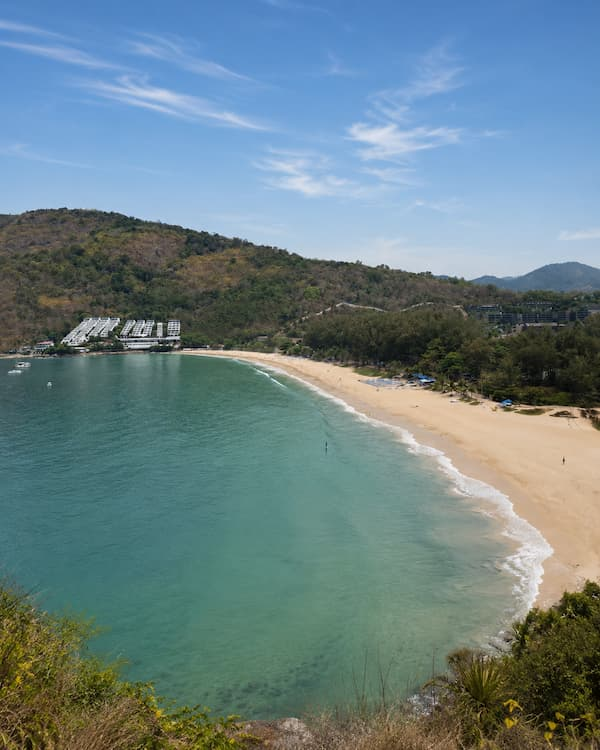
Nai Harn is a relaxed destination in southern Phuket, centred around a picturesque bay backed by forested hills and a freshwater lake. Its beach, natural setting and smaller-scale development create a quieter atmosphere than the island’s major west-coast tourism centres.
The surrounding area provides access to Ya Nui Beach, Windmill Viewpoint, Promthep Cape and the waterfront communities around Rawai. Restaurants, cafés and accommodation are spread through the nearby streets, while seasonal sea conditions influence swimming and beach activities throughout the year.
Nai Harn particularly suits couples, independent travellers and repeat visitors seeking a peaceful beach environment without becoming completely isolated. Transport is useful for reaching restaurants, viewpoints and nearby attractions because the area is less compact than Patong, Kata or Karon.
Continue to our Nai Harn guide to explore its beach, accommodation, nearby viewpoints, dining and practical travel considerations.
Rawai
Local Coastal Life and a Base for Longer Stays
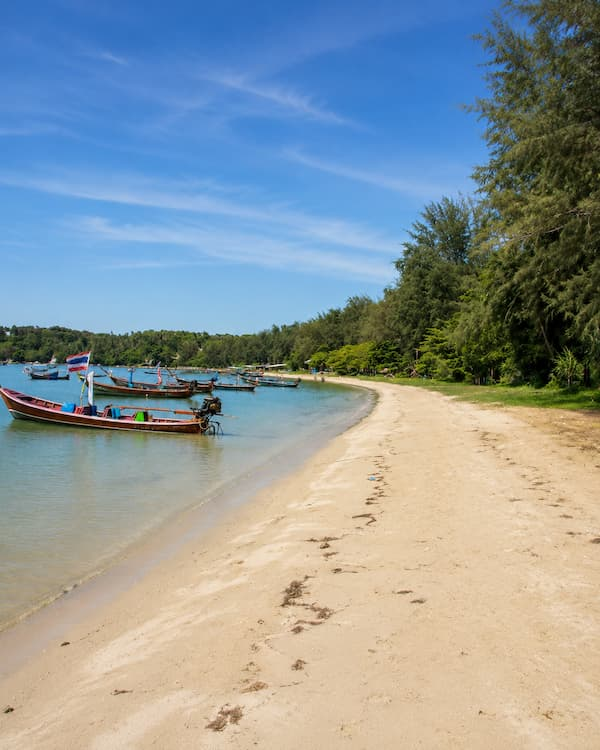
Rawai is a waterfront community in southern Phuket known for seafood, longtail boats and a more residential atmosphere than the island’s principal beach towns. Its broad choice of villas, apartments, cafés and restaurants has made it especially popular with long-stay visitors and repeat travellers.
Rawai Beach is primarily a working waterfront and departure point rather than a conventional swimming beach. Longtail boats provide access to nearby islands, while the seafood market and waterfront restaurants bring much of the area’s daytime activity. Nai Harn Beach, Ya Nui, Promthep Cape and several viewpoints are within easy reach.
Rawai particularly suits independent travellers seeking local amenities, varied dining and a convenient base for exploring southern Phuket. The area is spread out, and visitors wanting regular beach access should consider staying closer to Nai Harn or arranging suitable transport.
Continue to our Rawai guide to explore its waterfront, accommodation areas, dining, island excursions and nearby attractions.
Nai Yang
A Relaxed Beach Stay Close to Phuket Airport
Nai Yang offers a quieter northern Phuket experience centred around a gently curving beach, local restaurants and the natural surroundings of Sirinat National Park. Its informal atmosphere feels noticeably removed from the island’s larger west-coast tourism centres despite being only a short journey from Phuket International Airport.
Casuarina trees provide shade along parts of the beachfront, while small restaurants, cafés, massage shops and accommodation create a compact visitor area close to the sand. Conditions are generally most suitable for swimming during the calmer months, with stronger waves and currents possible during the southwest monsoon.
Nai Yang particularly suits couples, families and travellers wanting a peaceful beginning or end to their Phuket holiday. It is also convenient for late arrivals and early departures, although visitors planning extensive sightseeing will need transport to reach central and southern Phuket.
Continue to our Nai Yang guide to explore its beach, accommodation, dining, national park surroundings and airport connections.
Mai Khao
A Quiet Northern Coastline for Resort Escapes
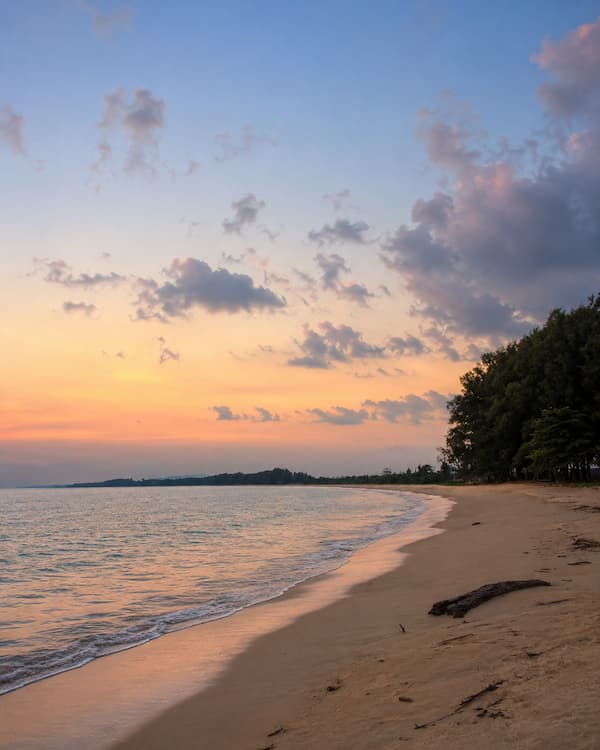
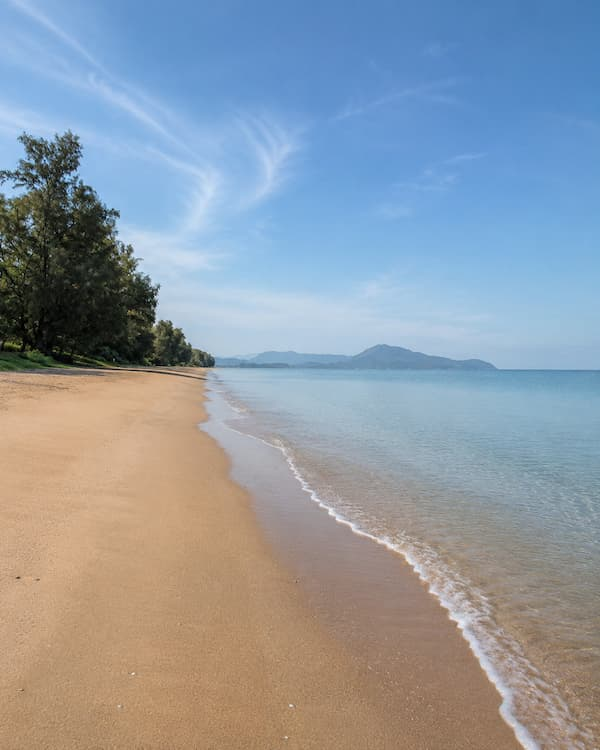
Mai Khao stretches along Phuket’s northern coast, offering a spacious and comparatively undeveloped beach environment close to the island’s airport. Its long shoreline, natural surroundings and widely separated resorts create a strong sense of seclusion compared with Phuket’s busier beach towns.
Much of the coastline borders Sirinat National Park, while larger resorts provide accommodation, dining and leisure facilities within self-contained grounds. The southern end of the beach is also known for views of aircraft approaching Phuket International Airport, although seasonal winds determine which runway direction is used.
Mai Khao particularly suits couples, families and travellers wanting a peaceful resort-based holiday. Restaurants, shops and attractions are spread across the area, making transport useful and careful resort selection important for visitors who do not want to remain primarily within their accommodation.
Continue to our Mai Khao guide to explore its beach, resorts, natural surroundings, airport proximity and practical travel considerations.
Things to Do in Phuket
Phuket has an enormous range of activities, tours and visitor experiences. The following selection goes beyond the familiar sightseeing checklist, bringing together hands-on activities, cultural encounters and outdoor experiences to help you find something that interests you.
Recommendations on which beaches to visit and which islands and day trips to choose are covered in their own sections of this guide. For more detailed recommendations within a particular area, explore our individual destination guides.
Beach & Water Activities · Culture & Heritage · Nature & Outdoors · Shopping and Market · Nightlife & Entertainment · Adventure & Active Experiences
Beach and Water Activities in Phuket
Snorkel Ao Sane’s Coral Reef
Ao Sane has one of Phuket’s better coral reefs accessible directly from the beach, with attractive shallow sections and larger formations farther offshore. Development around the beach and changing access arrangements can affect the experience, so check current conditions before visiting. If access is difficult, Merlin Beach provides a useful alternative for shore snorkelling.
Shore Dive at Kata Reef
Kata Reef allows divers to enter directly from the beach instead of joining a full-day boat excursion. Depths of approximately 3–15 metres accommodate discovery dives, refresher sessions, night dives and relaxed exploration by certified divers. The reef is particularly known for its smaller marine life and is generally best from November to April.
Surf Phuket’s Monsoon Waves
Phuket’s surfing season runs approximately from May to October, when monsoon swells reach the western beaches. Kata is the island’s principal surfing hub, with several breaks and organised instruction, while Kalim provides a more technical reef wave for experienced surfers. Conditions can vary considerably from one day to the next.
Kayak Through a Hidden Mangrove Forest
Join THINN Phuket for a guided paddle through the mangrove channels around Tha Maphrao in northern Phuket. The tide-timed route passes beneath the forest canopy and provides opportunities to observe macaques and other wildlife. A guide helps navigate the channels and introduces the plants and animals that inhabit this coastal ecosystem.
Paddle Through Phuket’s Mangroves by SUP
Paddle Phuket operates guided stand-up paddleboarding journeys through Phuket’s east-coast mangrove waterways. Routes are adjusted according to the tides, weather and participants’ abilities, with instruction available and more open-water paddling possible under suitable conditions. It provides an alternative for travellers who prefer standing on a board to sitting in a kayak.
Learn to Sail on Ao Yon Bay
Sail in Asia operates practical sailing courses from its waterside base at Ao Yon on Cape Panwa. Options range from a two-day keelboat course to more advanced crew and skipper training, allowing participants to handle and sail the boat themselves. This is a hands-on experience for visitors who want to learn sailing skills during their holiday.
Parasail Above Karon’s Sweeping Coastline
Karon provides a less congested parasailing setting than Patong, although it remains busy during the high season. From above, the long curve of sand, open Andaman Sea and green coastal headlands create sweeping views of Phuket’s west coast. Choose an established operator and avoid participating if the conditions, equipment or safety procedures appear unsuitable.
Ride Phuket’s West Coast by Jet Ski
E-JETSKI PATONG advertises a three-hour guided journey from Patong Beach with nine check-in points along Phuket’s western coastline. Instead of circling within a small rental zone, riders travel past beaches, secluded coves, cliffs and southern coastal landmarks. Confirm the planned route and weather conditions when booking, as the itinerary depends on sea conditions.
Kitesurf with Phuket’s Seasonal Winds
Phuket’s kitesurfing schools move between locations to follow the prevailing winds. Nai Yang generally operates from April to September, while Rawai becomes the principal location from November to April. Established schools such as KBA offer lessons for different abilities alongside equipment rental for competent independent riders.
Spend a Day at Andamanda Phuket
Andamanda combines free-fall slides, racing rides, a FlowRider, a vast wave pool and a long lazy river. Swim-up bars, restaurants and private cabanas provide options for couples and groups of adults as well as families. Arrive near opening time to experience the major rides before the busiest part of the day.
Continue reading our Phuket Best Beaches Visitor Guide to compare the island’s beaches, swimming conditions and water-based activities.
Cultural and Heritage Experiences in Phuket
Walk Through Phuket’s Peranakan Past in Old Phuket Town
Explore Thalang, Dibuk, Krabi and Phang Nga roads to see colourful shophouses, hidden courtyards, street art and grand buildings created during Phuket’s tin-mining era. Chinese, Thai, Malay and European influences remain visible in the architecture, food and traditions of the Old Town.
Discover Phuket’s Chinese Story at Thai Hua Museum
Set inside a former Chinese-language school on Krabi Road, Phuket Thai Hua Museum traces the arrival and influence of Chinese communities on the island. Its exhibitions connect immigration, tin mining, commerce, education and family life with the development of modern Phuket.
Taste Phuket’s Heritage on an Old Town Food Tour
Join a guided walk through Phuket Old Town to try dishes shaped by the island’s Thai, Chinese and Peranakan communities. Depending on the tour, tastings may include Hokkien noodles, moo hong, roti, local snacks and traditional desserts, accompanied by explanations of their origins.
Dress in Traditional Peranakan Costume
Several studios in Phuket Old Town offer visitors the opportunity to wear elaborate Baba-Nyonya clothing and pose for photographs among the area’s historic architecture. The experience provides a closer look at the fabrics, jewellery and ceremonial styles associated with Phuket’s Peranakan heritage.
Cook Thai Food After Visiting a Local Market
Choose a cooking class that begins at a local fresh market, where an instructor introduces the herbs, vegetables, spices and pastes used in Thai cuisine. Participants then prepare several dishes themselves, making this both a practical lesson and an introduction to everyday Thai food culture.
Discover the Legend of Phuket’s Half-Buried Buddha
Visit Wat Phra Thong in Thalang to see a golden Buddha image whose lower half remains beneath the ground. Several local legends explain its discovery and why attempts to uncover it were abandoned, giving this quieter temple one of Phuket’s most intriguing cultural stories.
Explore Phuket’s Historic Chinese Shrines
Visit shrines such as Jui Tui, Put Jaw and Bang Neow to see how Chinese spiritual traditions remain part of life in Phuket. Explore incense-filled halls, guardian figures and carved details, while respecting worshippers and any restrictions on photography or access during ceremonies.
Experience the Phuket Vegetarian Festival
Held for approximately nine days during the ninth Chinese lunar month, usually in September or October, the Phuket Vegetarian Festival combines white clothing, meat-free food, shrine ceremonies, processions and acts of extreme spiritual devotion. Some rituals can be confronting, so choose which events to attend and check the dates when planning your visit.
Create Your Own Traditional Batik
Join a workshop to learn how wax and dye are used to create the layered patterns of batik, a textile tradition found across Southern Thailand and the wider Malay world. Design and colour a small piece yourself, producing a personal souvenir while learning the techniques behind the craft.
Watch Thai Legends Come Alive at Phuket FantaSea
Phuket FantaSea in Kamala presents Thai-inspired legends through elaborate costumes, dance, music, illusion and large-scale theatrical staging. This is cultural fantasy rather than a literal account of Thai history. The production includes animal performances, which travellers concerned about animal welfare should consider before booking.
Nature and Outdoor Experiences in Phuket
Observe Rescued Elephants from a Forest Canopy Walkway
Phuket Elephant Sanctuary’s observation-only experience allows visitors to watch rescued elephants move, forage and socialise from an elevated walkway above the forest. The experience avoids riding, bathing and direct interaction, with guides explaining the elephants’ histories and the sanctuary’s approach to their care.
Discover How Phuket’s Rescued Gibbons Return to the Wild
Book a learning session with the Gibbon Rehabilitation Project to understand how rescued gibbons are rehabilitated and prepared for possible release into protected forest. The focus is conservation rather than close animal interaction. Combine the session with nearby Bang Pae Waterfall during the wetter months, when its flow is generally stronger.
Trek Between Two Waterfalls Through Phuket’s Rainforest
Join Feel Phuket for a guided crossing between Ton Sai and Bang Pae waterfalls through Khao Phra Thaeo’s rainforest. The route takes you beyond the short waterfall approaches and into dense forest, with opportunities to observe tropical plants and listen for wildlife. Uneven trails and humid conditions require suitable footwear and a reasonable level of fitness.
Cycle Through the Forests and Farms of Northern Phuket
Feel Phuket’s 21-kilometre countryside ride explores Bang Khanun forest and the agricultural landscapes of Phuket’s quieter northeast. Follow rural routes through farms and patches of forest, seeing working countryside that many beach-based visitors miss. The guided format helps with navigation and introduces the places encountered along the way.
Hike Above Nai Harn to Photograph Phuket’s Wild Southern Coast
Take the longer approach to Black Rock Viewpoint for elevated views across Nai Harn, nearby islands and Phuket’s rugged southern coastline. Allow time for the walk and photography, carrying water and wearing footwear suitable for uneven ground. Experienced hikers can extend their exploration to Laem Krating with careful route planning or local guidance.
Adventure and Active Experiences in Phuket
Complete Phuket’s Full Rainforest Zipline Course
Take on Flying Hanuman’s full course through the forested hills of Kathu, combining ziplines, suspended bridges and abseil descents. Guides lead you between elevated platforms as you move through the canopy. Choose the complete course for a longer experience with a wider variety of challenges.
Ride Through Phuket’s Plantations, Rainforest and Mangrove Coast
Join Phuket ATV Tour’s northern Phuket ride to explore plantation tracks, rainforest and the island’s mangrove coastline. The changing landscapes give the outing more variety than a short circuit around a dedicated riding area. Expect hands-on off-road riding, with terrain and conditions shaping the challenge.
Learn the Art of Eight Limbs in a Beginner-Friendly Muay Thai Session
Try a beginner-friendly session at Dragon Muay Thai, learning basic stance, movement and striking techniques before putting them into practice on pads. The focus is on experiencing the sport with a trainer, without needing fighting experience or committing to a training camp. A one-off lesson offers a physical challenge and a chance to learn skills beyond a conventional workout.
See Phuket from Above on a Tandem Paragliding or Paramotor Flight
TSA Thailand offers separate paragliding and paramotor experiences in Phuket, giving visitors two different ways to take to the air with a pilot. Paragliding uses an unpowered wing and suitable hillside conditions, while paramotoring uses an engine for powered flight. Both offer an aerial perspective of Phuket, with the location and timing dependent on weather conditions.
Explore Phuket’s Jungle Trails on an Electric Motorcycle
Join Surron Ride Phuket to explore jungle trails on an electric off-road motorcycle. The quieter motor lets you hear more of the surroundings, while uneven terrain keeps the ride physically engaging. Choose a session matched to your riding experience, as these are powered motorcycles rather than pedal-assisted bicycles.
Shopping and Market Experiences in Phuket
Explore Patong’s Malls, Markets and Shopping Streets
Start at Jungceylon, then combine its shops, restaurants and entertainment with Central Patong and the surrounding street stalls. Continue towards OTOP Shopping Paradise for souvenirs, casual browsing and a drink between stops. This concentrated district lets you explore several styles of shopping on foot without travelling between different parts of Phuket.
Spend an Evening Browsing and Eating at Chillva Market
Browse clothing, accessories and small independent stalls before choosing dinner from Chillva’s street-food vendors. Its mix of open-air shopping, dedicated eating areas and live music makes it somewhere to spend an evening rather than simply make a purchase. Arrive with time to wander, sample different dishes and settle into the atmosphere.
Browse Old Town Boutiques and Sunday’s Lard Yai Market
Explore Phuket Old Town’s shophouses for independent boutiques, local snacks, textiles and souvenirs, stopping at cafés along the way. On Sunday evenings, Lard Yai Walking Street fills Thalang Road with food vendors, merchandise stalls and street performances. Visit earlier for the permanent shops, then stay as the street changes into an evening market.
Combine Shopping, Dining and Entertainment at Central Phuket
Explore Central Phuket’s Festival and Floresta wings for department stores, international brands, luxury boutiques and a broad choice of restaurants. The complex also includes attractions such as Aquaria Phuket and a cinema, making it easy to combine shopping with other activities. This is the larger shopping complex near Phuket Town, not Central Patong.
Discover Independent Artists at Phuket Art Village
Visit Phuket Art Village in Rawai to explore a small community of artist studios and galleries displaying original paintings and other creative work. When artists are present, you may have the opportunity to discuss their work and buy directly from its creator. Opening arrangements vary between studios, so check ahead if there is a particular artist you want to meet.
Nightlife and Entertainment in Phuket
Find Your Kind of Night on Bangla Road
Explore Patong’s main nightlife street for live bands, open-front bars, nightclubs and adult-oriented entertainment. You can stop for a drink and people-watch, find a band playing familiar songs or continue into a late-night club. The atmosphere changes considerably between venues, so take a look around before choosing where to settle.
Enjoy the Costumes and Stage Spectacle of Simon Cabaret
Watch Simon Cabaret’s performers move through elaborate costumes, choreographed routines and colourful stage sets in a purpose-built theatre near southern Patong. The show combines international musical themes with Thai-inspired performances. It offers a seated evening of entertainment without needing to join Patong’s bar and nightclub scene.
Feel the Atmosphere of a Live Muay Thai Fight Night
Head to Patong Boxing Stadium on Sainamyen Road for an evening of live Muay Thai. Watch the fighters’ contrasting styles, listen to the accompanying traditional music and feel the crowd respond as each bout develops. This is a chance to experience the sport as a spectator, complementing the beginner training session featured under adventure activities.
Watch Sunset Turn into a Beach-Club Night
Arrive at Café del Mar on Kamala Beach for sunset drinks, then stay as the music and evening atmosphere build. Catch Beach Club on Bang Tao Beach provides an alternative for combining seaside dining, drinks and DJ-led entertainment. Check the programme before choosing your night, as a relaxed evening and a headline event can feel very different.
Experience the Illuminated Spectacle of Carnival Magic
Spend an evening at Carnival Magic in Kamala exploring illuminated displays and watching its elaborate indoor parade show. Oversized floats, theatrical effects and extensive light installations make this a visually focused outing rather than a conventional cultural performance. Allow time for both the scheduled show and the illuminated gardens.
Enjoy Elevated Views and Rooftop Drinks
Head to Casa Boho above Kamala for sea views, Latin-inspired food, cocktails and a music-led atmosphere. Alternatively, 360° Bar at The Pavilions offers an open-air hilltop setting for drinks overlooking northern Phuket’s coastal landscape. Arrive before sunset to see the views change as daylight fades.
Discover Phuket-Inspired Cocktails in Old Town
Visit Dibuk House for cocktails in a historic Old Town shophouse setting. Explore the signature menu and ask the bartenders about drinks drawing on local ingredients and Phuket’s food traditions. It offers a more intimate, conversation-focused evening than the larger beach clubs or Patong’s nightlife venues.
Phuket’s Iconic Attractions
Phuket’s best-known sights include hilltop landmarks, ornate temples, historic streets and sweeping coastal viewpoints. These seven attractions offer different perspectives on the island, from its religious and trading heritage to its beaches, headlands and cityscape.
Big Buddha
Phuket’s 45-metre white marble-clad Big Buddha sits high in the Nakkerd Hills, visible from many parts of southern Phuket. Visit to appreciate the statue’s scale and the elevated views towards Chalong Bay and the surrounding coastline. This is a religious site, so dress respectfully and keep shoulders and knees covered.
Wat Chalong
Wat Chalong is Phuket’s most prominent Buddhist temple, with richly decorated buildings, revered monks’ statues and a tall chedi containing a relic believed to be from the Buddha. Explore the grounds and the chedi’s interior paintings depicting the Buddha’s life. Worship continues alongside sightseeing, so give visitors making offerings space and remove shoes where required.
Phuket Old Town
Phuket Old Town’s colourful shophouses, arcaded walkways and grand former merchants’ homes reflect the island’s tin-mining wealth and multicultural trading history. Thalang, Dibuk, Krabi and Phang Nga roads form the core of the historic area. Look beyond the façades for Chinese shrines, traditional businesses and architectural details that distinguish one street from another.
Promthep Cape
Promthep Cape is one of Phuket’s most recognisable coastal landmarks, with a rugged headland extending into the sea near the island’s southern tip. Its elevated viewing area overlooks offshore islands and an open horizon, making it particularly popular around sunset. The lighthouse and elephant-surrounded shrine provide additional points of interest above the cape.
Karon Viewpoint
Karon Viewpoint offers the classic view of three west-coast beaches: Kata Noi in the foreground, followed by Kata and Karon farther north. Green headlands divide the bays, with Koh Pu visible offshore. It is a straightforward stop for seeing how this stretch of Phuket’s coastline fits together and photographing its layered curves.
Windmill Viewpoint
Above Ya Nui Beach, Windmill Viewpoint looks across a small bay, offshore islands and the coastline towards Nai Harn. Its grassy slopes and elevated position offer a different composition from nearby Promthep Cape, with beaches and headlands closer to the foreground. Visit in clear daylight for coastal colour or towards evening for softer light.
Khao Rang Viewpoint
Khao Rang rises above Phuket Town, offering views across the city towards the coast and surrounding hills. Its shaded grounds, viewing terrace and nearby restaurants provide an alternative to the beach-facing viewpoints of southern Phuket. Come for the city panorama by day or watch the streets and buildings light up after sunset.
Phuket’s Beaches
Most of Phuket’s popular swimming beaches line the west coast, but choosing between them involves more than scenery. Patong puts restaurants, shopping and entertainment close to the sand; Karon and Bang Tao offer longer shorelines for walking and finding space. Smaller bays such as Ya Nui and Ao Sane appeal for snorkelling, while Mai Khao offers quieter stretches farther from the main tourist centres. A small or less developed beach is not necessarily uncrowded, particularly in high season.
Sea conditions matter as much as location. November to April generally brings calmer water, while the southwest monsoon produces larger waves and stronger currents along the west coast, including Kata’s seasonal surf. Check conditions on the day, follow lifeguard advice and never enter the water where red flags prohibit swimming.
Patong Beach
Patong’s roughly three-kilometre sandy bay suits visitors who want a beach day with food, shops and activities close at hand. Expect a lively beachfront with vendors and water sports; the northern end generally offers a quieter setting than the central stretch.
- Swimming: Generally calmer from November to April. Use designated swimming areas away from watercraft and follow lifeguard advice and warning flags.
- Best for: Combining swimming, beach walks and sunset views with restaurants, shopping or water sports.
- Facilities: Loungers and umbrellas in designated areas, beach vendors, and plenty of food and drink options along Beach Road.
- Access: Free beach entry, with numerous access points from Beach Road and no steep approach. Parking can be difficult during busy periods.
- Worth knowing: Convenience is Patong’s strength, not seclusion. For a quieter visit, head north and arrive earlier in the day.
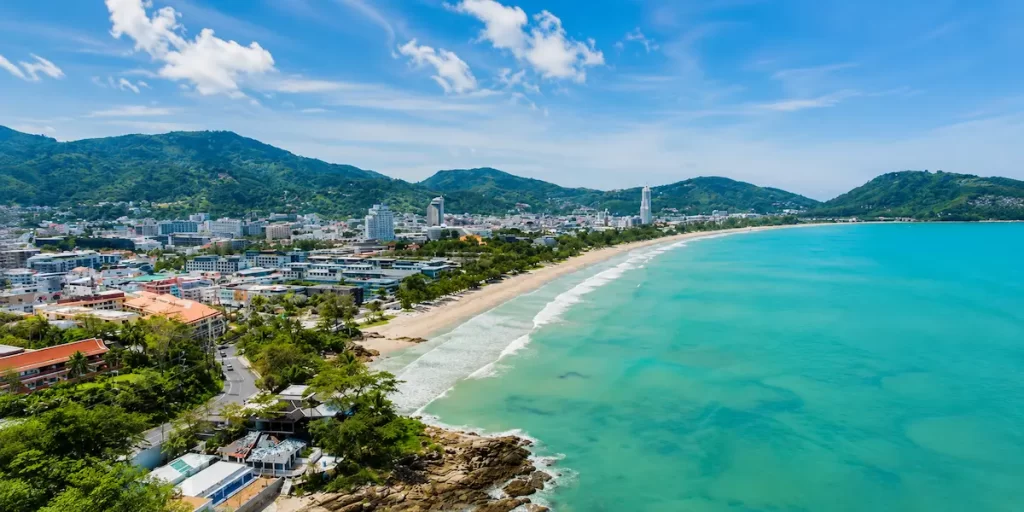
Explore our Patong Beach Guide for detailed facilities, swimming advice and practical visitor information.
Karon Beach
Karon’s long, broad shoreline offers more room to spread out than nearby Patong, with pale sand and open sea views. It suits a straightforward beach day centred on swimming, sunbathing and walking, with restaurants nearby but less concentrated activity on the sand.
- Swimming: Generally calmer from November to April. The exposed coastline can develop strong shorebreak and rip currents, particularly during the monsoon; follow lifeguard advice and warning flags.
- Best for: Long beach walks, sunbathing, sunset views and swimming when conditions allow.
- Facilities: Loungers and umbrellas in designated areas, beach vendors, and restaurants and shops across the coastal road, particularly near either end.
- Access: Free entry, with numerous access points from the beachfront road and no steep approach. Parking availability varies along the beach.
- Worth knowing: Natural shade is limited across much of the sand. Bring sun protection or budget for an umbrella, especially for a midday visit.
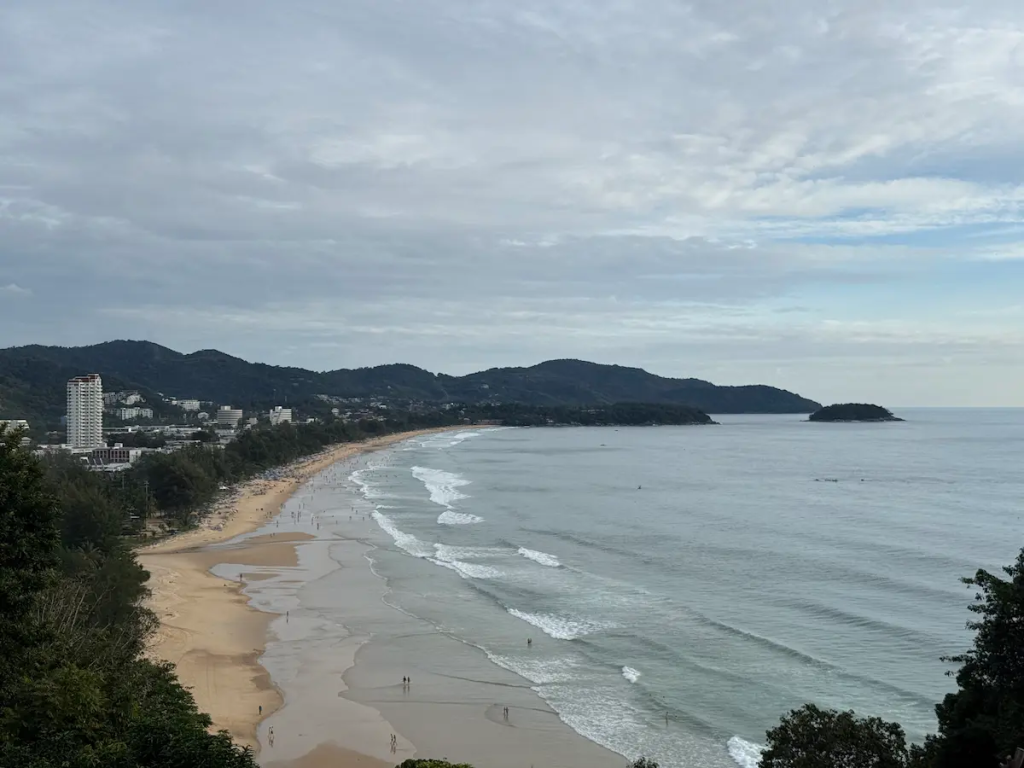
Explore our Karon Beach Guide for detailed facilities, swimming advice and practical visitor information.
Kata Beach
Kata’s curved sandy bay, green headlands and views of Koh Pu offshore make it a scenic choice with plenty of facilities nearby. Expect a popular, active beach rather than a secluded escape, with swimming in calmer months and surfing during the monsoon.
- Swimming: Generally calmer from November to April. Monsoon swells bring surf and rip currents; follow beach flags and keep clear of surfing areas.
- Best for: Swimming when conditions allow, beginner surf lessons in suitable conditions, beach walks and sunset views.
- Facilities: Loungers, umbrellas, food and drink vendors, seasonal surfboard hire and lessons. Restaurants and shops are concentrated around the beach’s approaches.
- Access: Free entry, with main approaches near the northern and southern ends. Club Med occupies much of the land behind the central beachfront, so check your walking route or drop-off point.
- Worth knowing: Kata can feel crowded in high season. Arriving earlier gives you more choice of where to settle before the busiest hours.
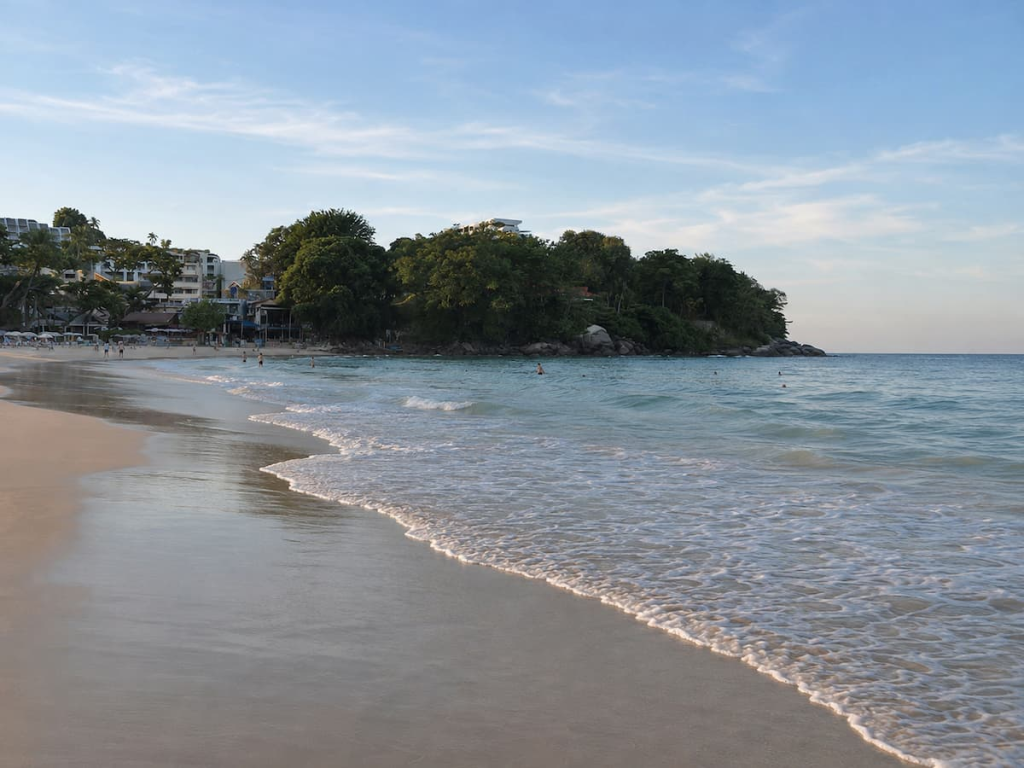
Explore our Kata Beach Guide for detailed facilities, swimming advice and practical visitor information.
Kamala Beach
Kamala combines a gently curving sandy bay with beachfront restaurants and a generally slower pace than Patong. The village end makes it easy to alternate between the beach and a meal, while the northern stretch includes resorts and beach clubs, so the atmosphere varies along the shoreline.
- Swimming: Generally calmer from November to April. Monsoon waves and rip currents can make swimming unsafe; follow lifeguard advice and warning flags.
- Best for: A relaxed beach day, swimming in suitable conditions, beachfront meals and sunset drinks.
- Facilities: Loungers and umbrellas, massage services, and restaurants and cafés close to the sand, particularly along the village beachfront.
- Access: Free entry, with public approaches through the village and at other points along the bay. Parking is more limited around the narrower village streets.
- Worth knowing: Kamala is not uniformly quiet. For a peaceful afternoon, choose a spot away from beach-club speakers and organised water sports.
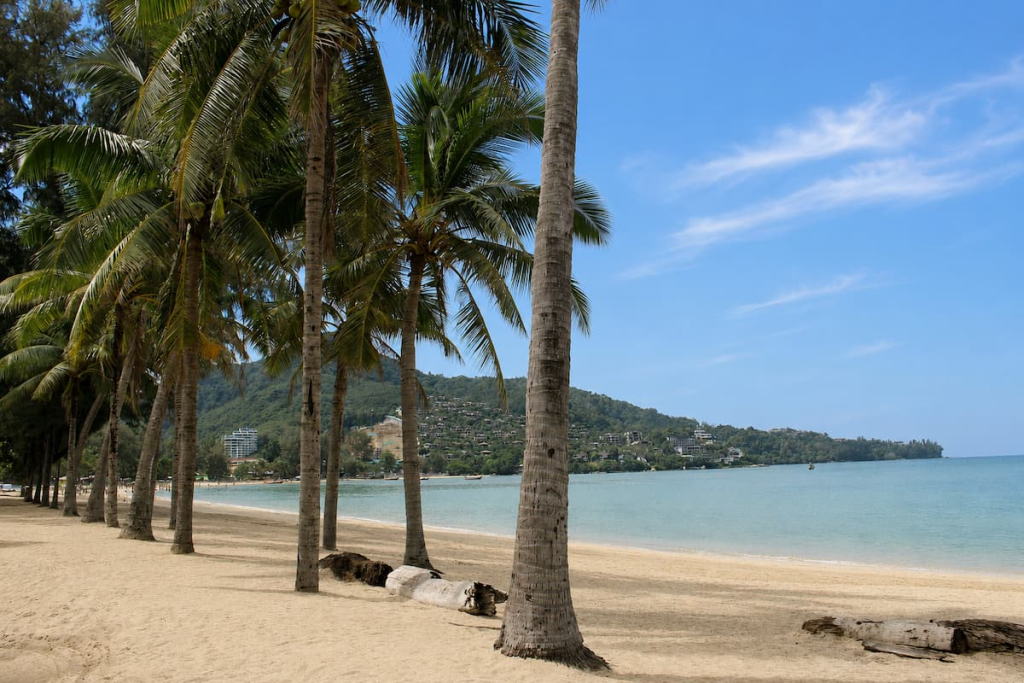
Explore our Kamala Beach Guide for detailed facilities, swimming advice and practical visitor information.
Bang Tao Beach
Bang Tao’s roughly six-kilometre shoreline combines casual beachfront restaurants, beach clubs and resort-backed stretches with room for long walks. The atmosphere changes along the bay: some sections are busy with loungers and music, while others offer more space and fewer facilities.
- Swimming: Generally calmer from November to April. The open coastline can develop strong waves and rip currents during the monsoon; follow warning flags and local lifeguard advice.
- Best for: Long beach walks, swimming in suitable conditions, sunset views and combining beach time with lunch or a beach club.
- Facilities: Restaurants, bars and lounger rentals in busier sections. Facilities are unevenly distributed, and resort pools and loungers are not automatically available to beach visitors.
- Access: Free beach entry via public access roads. Choose a specific access point or venue for your drop-off rather than simply requesting “Bang Tao Beach.”
- Worth knowing: Boat Avenue and Porto de Phuket are inland, not beachfront. Choose somewhere directly on the sand if you want food and drinks without another journey.
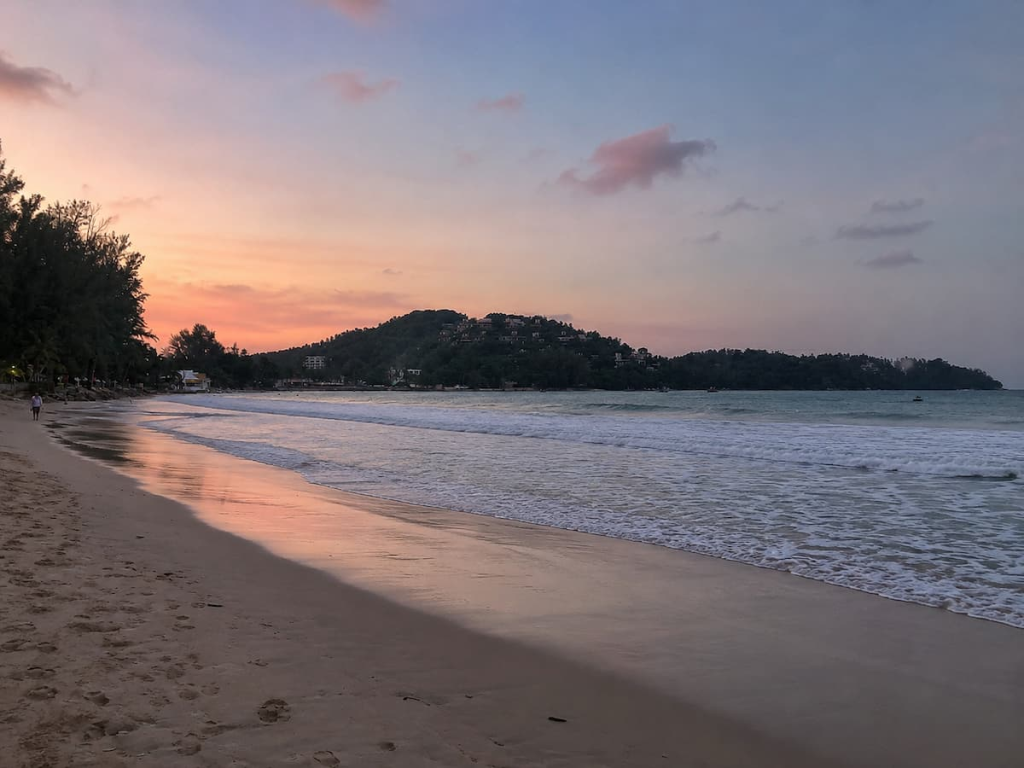
Explore our Bang Tao Beach Guide for detailed facilities, swimming advice and practical visitor information.
Nai Harn Beach
Nai Harn’s sandy bay sits between green headlands, with a lake and temple grounds behind the beach rather than a continuous shopping strip. It offers a scenic setting with food and facilities nearby, although its relatively undeveloped surroundings do not mean an empty beach.
- Swimming: Generally calmer from November to April. Monsoon swells can bring strong shorebreak and rip currents; follow lifeguard advice and warning flags.
- Best for: Swimming in suitable conditions, sunbathing, coastal scenery and combining a beach visit with nearby Windmill Viewpoint or Promthep Cape.
- Facilities: Beach umbrellas and loungers, food stalls, casual restaurants and shops behind the sand. Trees provide some shade along the beach’s back edge.
- Access: Free entry, with road access and parking near the lake and temple. The main approach is straightforward, without a steep descent.
- Worth knowing: Nai Harn attracts both visitors and local residents and can be busy in high season and at weekends. Arrive earlier for easier parking and more choice of where to settle.
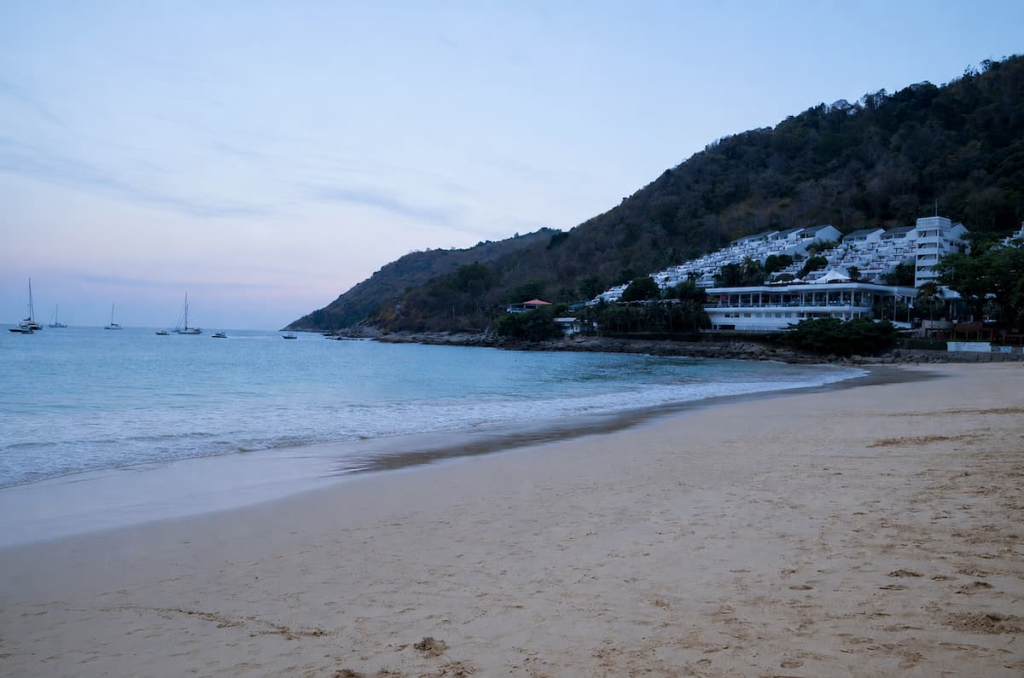
Explore our Nai Harn Beach Guide for detailed facilities, swimming advice and practical visitor information.
Mai Khao Beach
Mai Khao’s long northwestern shoreline offers tree-backed stretches, scattered resorts and considerably more space than Phuket’s busier beaches. Come for beach walks and sunsets, or head towards the airport at its southern end to watch aircraft approaching over the sand.
- Swimming: The seabed drops away steeply, and waves and currents can be strong, particularly during the southwest monsoon. This is not a first-choice beach for children’s swimming. Even in calmer weather, assess conditions and follow warning signs.
- Best for: Long walks, sunset photography and quieter stretches of coastline, with plane spotting at the airport end.
- Facilities: Food, refreshments and shade are available in some areas but are spread out. Bring water, and don’t expect continuous beachfront facilities or access to resort loungers.
- Access: Choose a specific access point rather than simply navigating to “Mai Khao Beach.” For plane spotting, the Soi Mai Khao 7 approach offers parking followed by a walk or paid local shuttle.
- Worth knowing: The plane-spotting area can get busy. Aircraft approach directions depend on the wind; sightings are not guaranteed. Respect posted airport safety boundaries.
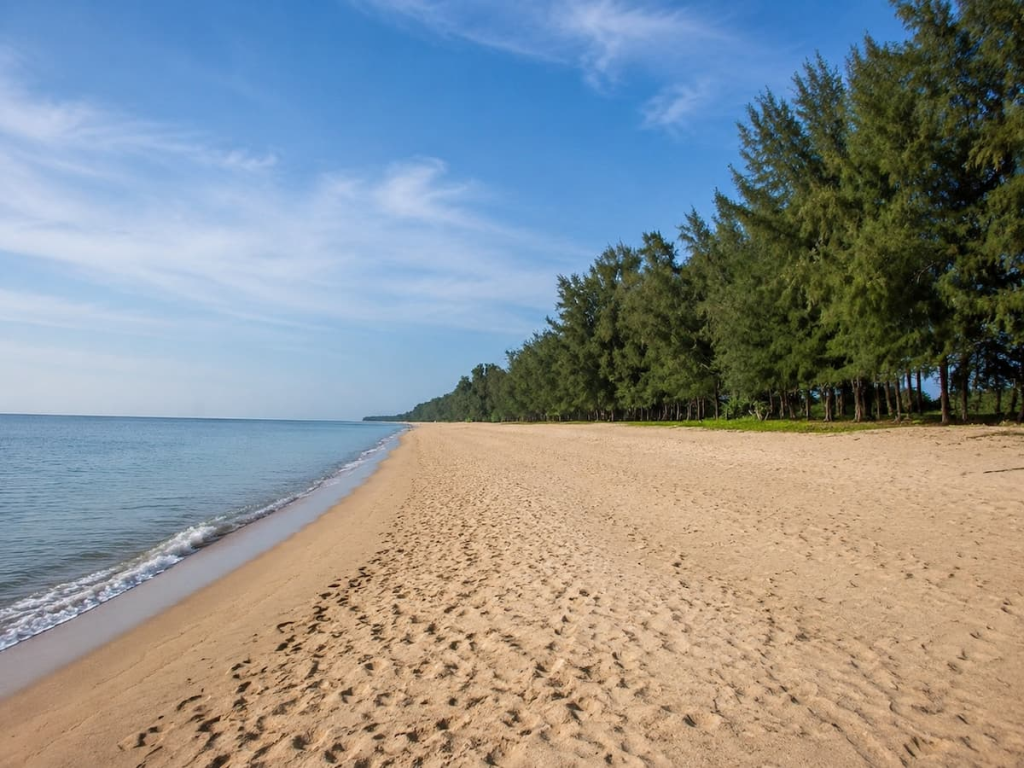
Explore our Mai Khao Beach Guide for detailed access information, facilities and swimming advice.
Other Beaches Worth Exploring
Beyond the seven beaches above, Phuket has smaller snorkelling bays, quieter northern beaches and lively beach clubs. These alternatives are worth considering for a different kind of beach day; the individual guides cover access, facilities and conditions in more detail.
| Beach | Why visit? | Worth knowing |
|---|---|---|
| Freedom Beach | A forest-backed sandy bay close to Patong. | Walking access involves steep ground; boat access depends on sea conditions. Its secluded setting does not guarantee solitude. |
| Paradise Beach | A small bay with organised beach-club facilities near Patong. | Managed access and charges apply; check the current arrangements, particularly around events. |
| Merlin Beach | Shore snorkelling over a reef near the Tri Trang area. | Rocks and exposed reef make it less suitable for casual swimming at low tide. Avoid standing on coral. |
| Surin Beach | An open sandy bay with sunset views and food vendors nearby. | Shade is limited on the open sand, and waves and currents can make swimming dangerous. |
| Kata Noi Beach | A smaller alternative to Kata, framed by green headlands. | Use public beach entrances rather than hotel grounds; it can still get busy in high season. |
| Nai Yang Beach | Tree-shaded stretches, casual beachfront dining and a slower pace near the airport. | Facilities cluster around the village end; park entry charges may apply depending on where you enter. |
| Nai Thon Beach | A compact west-coast bay backed by a small beachfront settlement. | Food and accommodation are close by, but there is less choice than at the larger beach centres. |
| Ya Nui Beach | A small southern cove for snorkelling and kayaking when conditions allow. | Space is limited, so it can feel crowded quickly. Rocks require care when entering the water. |
| Ao Sane Beach | A rocky, tree-backed bay for shore snorkelling near Nai Harn. | Access and nearby construction arrangements should be checked before visiting; expect rocky water entry. |
| Kalim Beach | Monsoon surfing for experienced surfers and coastal food stops just north of Patong. | Its rocky shoreline makes it a poor choice for a conventional swimming beach day. |
For a broader comparison, explore our Best Beaches in Phuket Visitor Guide, with links to individual beach guides covering access, swimming conditions and facilities.
Islands & Day Trips from Phuket
With so many islands, operators and tour packages to choose from, deciding how to spend a day offshore can take more research than expected. We’ve selected five experiences we consider worthwhile, covering famous bays, sea caves, snorkelling and beach time, with options ranging from a short crossing to the Khai Islands to a full-day adventure in the Similans.
Each overview explains where you’ll go, what makes the trip appealing and the practical trade-offs, alongside a suggested operator. Use them to compare the experiences—not simply the number of stops—and choose a day out that suits your interests, available time and comfort with boat travel.
Explore Phi Phi’s Famous Bays and Bamboo Island
A Phi Phi Islands day trip combines limestone cliffs, sheltered lagoons and tropical beaches with swimming and snorkelling. It’s a good choice for seeing several of the Andaman Sea’s best-known sights in one organised outing.
Where you’ll go
The suggested itinerary includes Maya Bay, Pileh Lagoon, sightseeing around Viking Cave and Monkey Beach, lunch on Phi Phi Don, and beach time on Bamboo Island. Stops and their order can change with conditions.
What to look out for
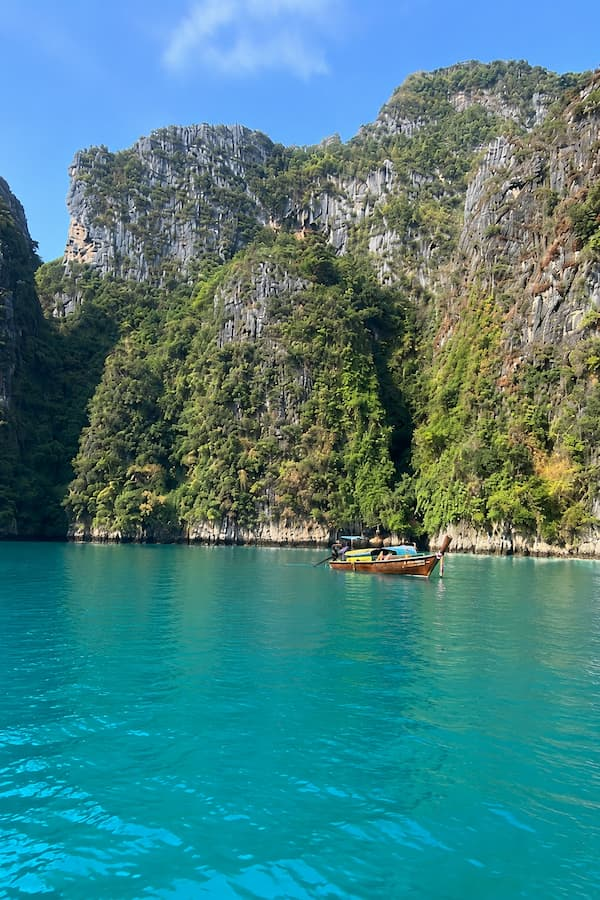
Pileh Lagoon’s steep limestone walls are a highlight, alongside tropical fish at the snorkelling stops. Bamboo Island offers a different setting, with sandy shores and trees replacing the dramatic cliffs.
How long it takes
Allow approximately 8–10 hours for the excursion, with hotel transfers potentially extending your day. Boats depart from Boat Ramp Pier on Phuket’s east coast.
When to go
November to April generally offers more favourable sea conditions. Maya Bay normally closes during August and September for environmental recovery; check the dates for your visit. Swimming is prohibited inside Maya Bay, with swimming and snorkelling taking place elsewhere on the trip.
Why choose it
You get famous scenery, snorkelling and island beaches without organising separate boats or transfers. The variety makes it an appealing introduction to the islands accessible from Phuket.
Things to consider
Popular stops can be crowded, crossings can be rough, and the fixed schedule leaves limited time to explore Phi Phi Don independently. Check whether your package includes hotel transfers and national park fees.
Suggested operator
Yacht Master — Phi Phi, Maya Bay and Bamboo Island day tour.
Discover Phang Nga Bay’s Sea Caves and James Bond Island
Cruise between limestone islands, explore hidden lagoons by canoe and visit one of Thailand’s most recognisable coastal landmarks. This trip suits travellers who enjoy dramatic scenery, photography and exploring the landscape from the water.
Where you’ll go
The suggested itinerary includes canoeing around Panak and Hong islands, lunch aboard the boat, and a landing at Khao Phing Kan to see James Bond Island’s famous rock. A swimming stop around Nakae Island rounds out the route, subject to conditions.
What to look out for
Watch for limestone formations above the cave passages and mangroves growing inside sheltered lagoons. At James Bond Island, the distinctive offshore pillar is Ko Tapu, made famous by The Man with the Golden Gun. Local paddlers handle the canoes, leaving you free to enjoy the surroundings.

How long it takes
Boats depart from Ao Po Pier on Phuket’s northeast coast. Allow approximately 7–8 hours for the boat excursion, with hotel transfers extending the day. Confirm your pickup and return times rather than treating the advertised duration as door to door.
When to go
November to April generally brings drier weather. Trips also operate during the wetter months because Phang Nga Bay is relatively sheltered, although weather can still affect departures. Tides determine which caves and lagoons can be entered.
Why choose it
The combination of a spacious cruising boat and smaller canoes lets you appreciate both the broad bay scenery and its enclosed waterways. Two canoeing stops give the day more variety than simply visiting the famous rock.
Things to consider
James Bond Island can be crowded, and this is a shared group excursion. Boarding canoes and the smaller transfer boat requires some mobility, so discuss any limitations before booking. Check whether national park fees and your hotel transfers are included in the selected package.
Suggested operator
Amazing Canoeing — James Bond Island by Big Boat.
Swim and Snorkel at Racha and Coral Islands
White sand, clear-water bays and time in the sea make this an appealing choice for a beach-focused day out from Phuket. Racha Yai provides the main snorkelling stop, followed by a more relaxed beach visit to nearby Coral Island.
Where you’ll go
Departing from Chalong Pier, you’ll reach Racha Yai in around 30–40 minutes by speedboat. The suggested itinerary includes beach time and snorkelling around Patok or Ter Bay, depending on conditions, followed by lunch on Racha. The afternoon continues at Coral Island before returning to Phuket.
What to look out for
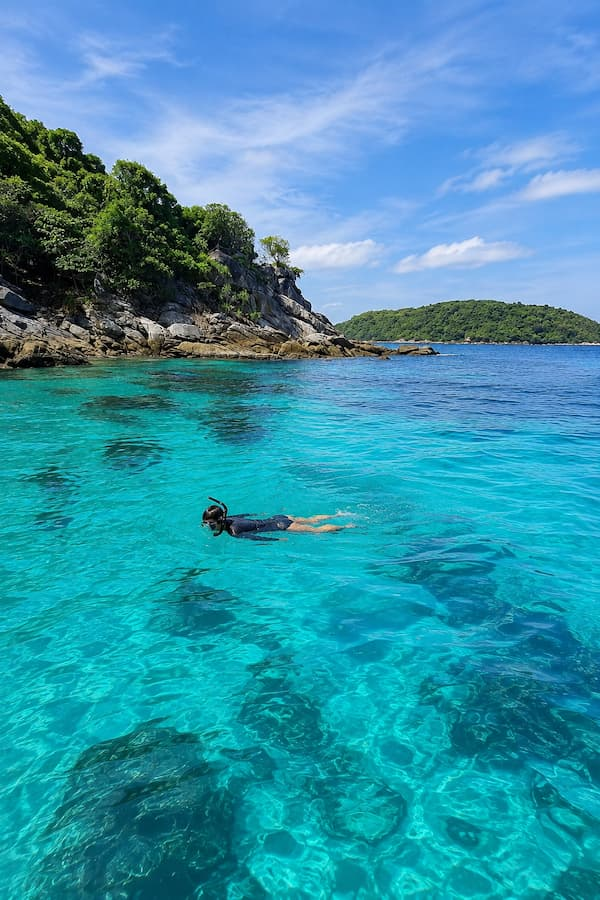
Racha’s sandy bays, rocky edges and reef fish are the highlights. Coral Island adds another opportunity to swim, take photographs or settle on the beach. Despite its name, don’t assume Coral Island will offer the day’s best snorkelling.
How long it takes
Allow a full day. The published boat schedule runs approximately 9:30am–4:15pm, with hotel transfers adding time at either end.
When to go
November to April generally brings calmer seas. Trips also operate during the wetter months, but sea conditions can change the route or prevent departure. Racha’s open-water crossing can be bumpy.
Why choose it
It suits travellers who want swimming, snorkelling and beach time without packing in as many sightseeing stops as a typical Phi Phi tour.
Things to consider
Popular beaches can feel busy, and snorkelling visibility varies. The Coral Island stop is relatively short—around an hour on this itinerary. Beach chairs and optional water sports may cost extra, so check what your package includes.
Suggested operator
QQ Marine — Racha and Coral Island speedboat trip.
Enjoy a Short Island Escape to the Khai Islands
Small sandy islands, tropical fish and a short boat crossing make the Khai Islands an appealing option for swimming and snorkelling close to Phuket. A morning trip gives you several hours on the islands without spending a full day offshore.
Where you’ll go
Departing from Roong Siam Pier on Phuket’s east coast, the speedboat reaches the islands in around 15–20 minutes. The suggested route combines beach stops at Khai Nai and Khai Nok with snorkelling from the boat at Khai Nui, which has no beach.
What to look out for
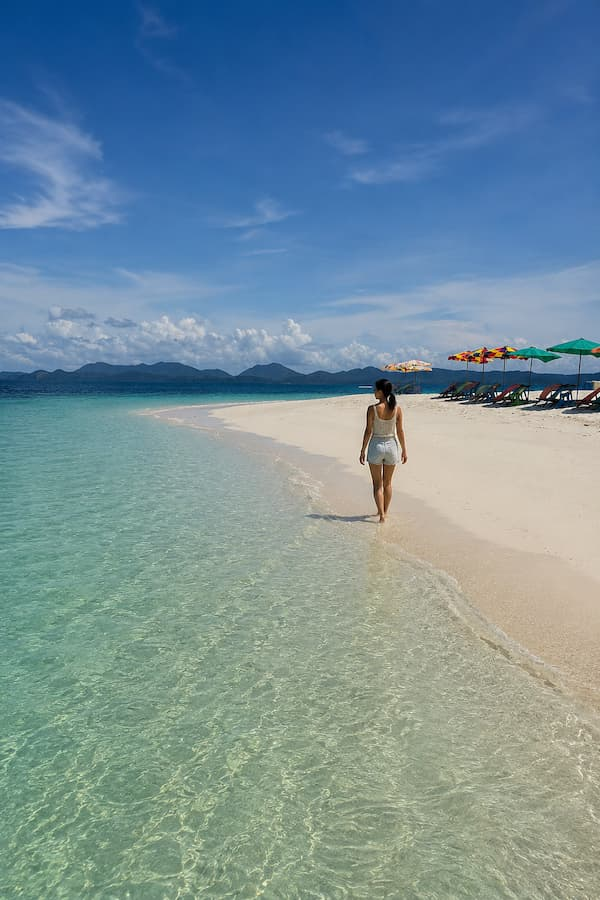
Look for colourful fish close to shore, white sand against turquoise water, and the resident cats on Khai Nai. Enjoy the marine life without feeding fish or standing on coral.
How long it takes
The morning boat trip runs approximately 9:30am–1:15pm. Allow around six to seven hours overall from Patong, Kata or Karon once shared hotel transfers and check-in are included.
When to go
November to April generally offers more favourable sea conditions. Morning departures can help avoid the afternoon influx of boats returning from Phi Phi. Trips also operate during wetter months, but visibility and sea conditions vary.
Why choose it
Choose this for a shorter crossing, beach time and an introduction to snorkelling. Families can spend time on the sand and swim near shore when conditions allow, while confident swimmers can enjoy the boat-based stop.
Things to consider
These are busy excursion islands, with beach chairs, vendors and numerous boats—not secluded escapes. Budget for extras and check your hotel transfer coverage. Even the short crossing can be bumpy, and Khai Nui may be skipped when conditions are unsuitable.
Suggested operator
PNT Phuket — Three Khai Islands Speedboat Tour.
Discover the Similan Islands’ White Beaches and Granite Bays
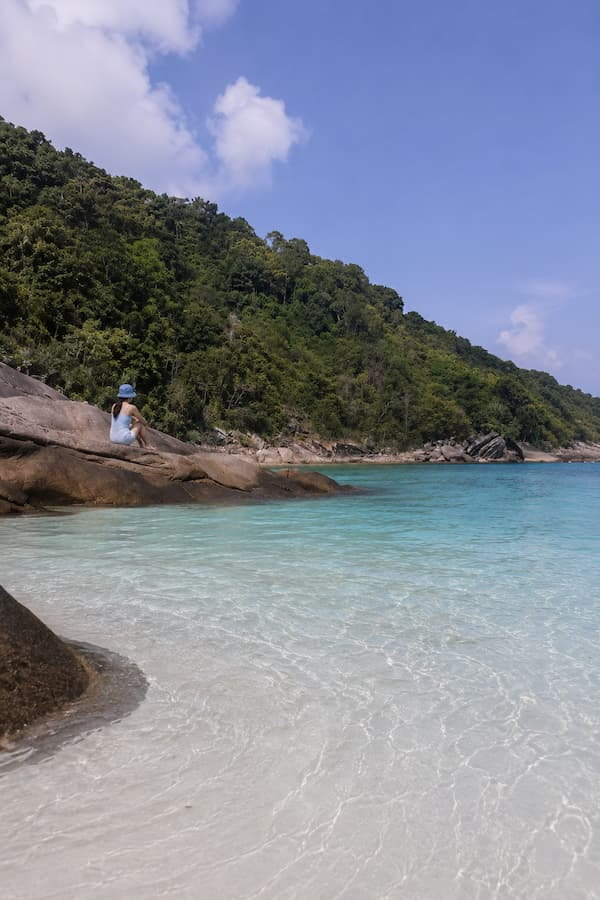
Huge granite boulders, white sand and clear blue water give the Similan Islands a distinctive appearance. This trip combines offshore snorkelling with beach stops and one of the Andaman’s best-known island viewpoints.
Where you’ll go
After a road transfer north from Phuket, depart from Thap Lamu near Khao Lak. The suggested itinerary includes Donald Duck Bay and the Sail Rock viewpoint on Koh Similan, snorkelling around Ba Ngu and Payu, and beach time on Koh Miang, with lunch included. Stops can change with conditions.
What to look out for
The boulders framing Donald Duck Bay are the signature sight. Underwater, look for schools of tropical fish and clownfish among anemones. Sea turtles are possible, but sightings aren’t guaranteed.
How long it takes
Allow roughly 12–14 hours from Phuket, depending on your hotel and transfers. The journey commonly involves around two hours by road and another 75–90 minutes by speedboat each way, making this a very early start and an evening return.
When to go
The usual visiting season runs from mid-October to mid-May, with December to April generally offering favourable conditions. The national park closes during the monsoon; confirm the exact opening dates before booking near either end of the season.
Why choose it
Choose this for the combination of snorkelling, striking granite scenery and island beaches. It suits travellers willing to commit a long day to exploring farther offshore than Phuket’s nearby island trips.
Things to consider
The open-sea crossing can be rough, and popular beaches still attract crowds. Visibility and coral condition vary. Check national park fee inclusions and passport requirements when booking. If Khao Lak is also on your itinerary, taking the trip from there saves considerable road travel.
Suggested operator
Love Andaman — Similan Islands Day Trip.
What To Eat
Phuket has plenty of good restaurants, from simple street stalls to relaxed seaside spots and somewhere special for dinner. For this section, I’ve focused on five savoury dishes and two sweet treats that introduce you to Phuket’s food traditions and the flavours of Southern Thailand.
For each, I explain what’s in it and what to expect, then suggest two places to try it so you can choose whichever is more convenient. Several serve more than one of these dishes, so you don’t need to make a separate trip for every taste.
Phuket Hokkien Mee — Thick Noodles with Seafood and Egg
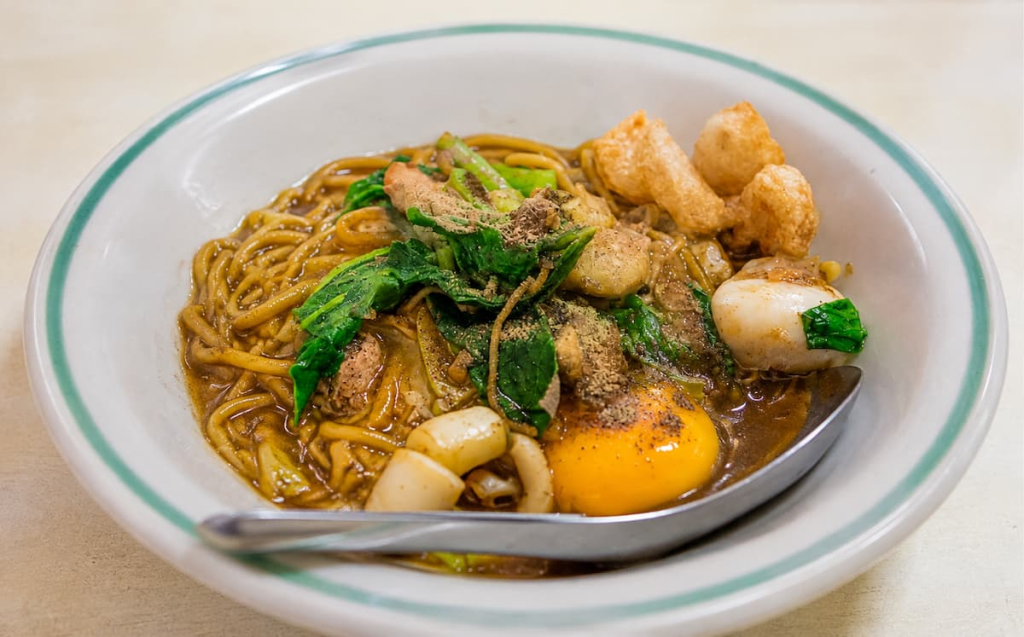
Phuket Hokkien mee reflects the influence of the Hokkien Chinese community on the island’s food culture. Although related noodle dishes can be found elsewhere in Southeast Asia, Phuket developed its own recognisable version: thick yellow wheat noodles cooked with seafood, pork or a combination of both, often with greens and an egg added towards the end.
The noodles are chewy and coated in a savoury, slightly rich sauce with the flavour of the wok behind it. Some kitchens serve the dish relatively moist, while others allow more of the liquid to reduce. Mixing through the egg makes it richer and softens the stronger seafood and soy flavours. We’ve included it because it is distinctly connected to Phuket, easy to approach and substantial enough to serve as a complete lunch.
Mee Sapam Khun Yai Chian — Sapam, north of Phuket Town
Choose Mee Sapam for a lunch stop outside the town centre, particularly if your group wants to sample several local dishes. Its signature seafood Hokkien noodles are the starting point, with pork versions and other Phuket specialities also available. The restaurant is on Thepkrasattri Road in Ko Kaeo, so plan it into your route rather than expecting to walk there from Old Town.
View Mee Sapam Khun Yai Chian on Google Maps
Go La — Kra Road, Phuket Town
Go La is a useful choice when you’re exploring Phuket Town and want a simple noodle meal. Order the yellow Hokkien noodles with egg; customer reviews frequently mention the smoky flavour from the wok. The setting is casual, and recent visitors report a mainly Thai menu, so a translation app can help with additional orders. Find it at 11 Kra Road, and avoid Mondays, when it is listed as closed.
Moo Hong — Phuket-Style Braised Pork Belly
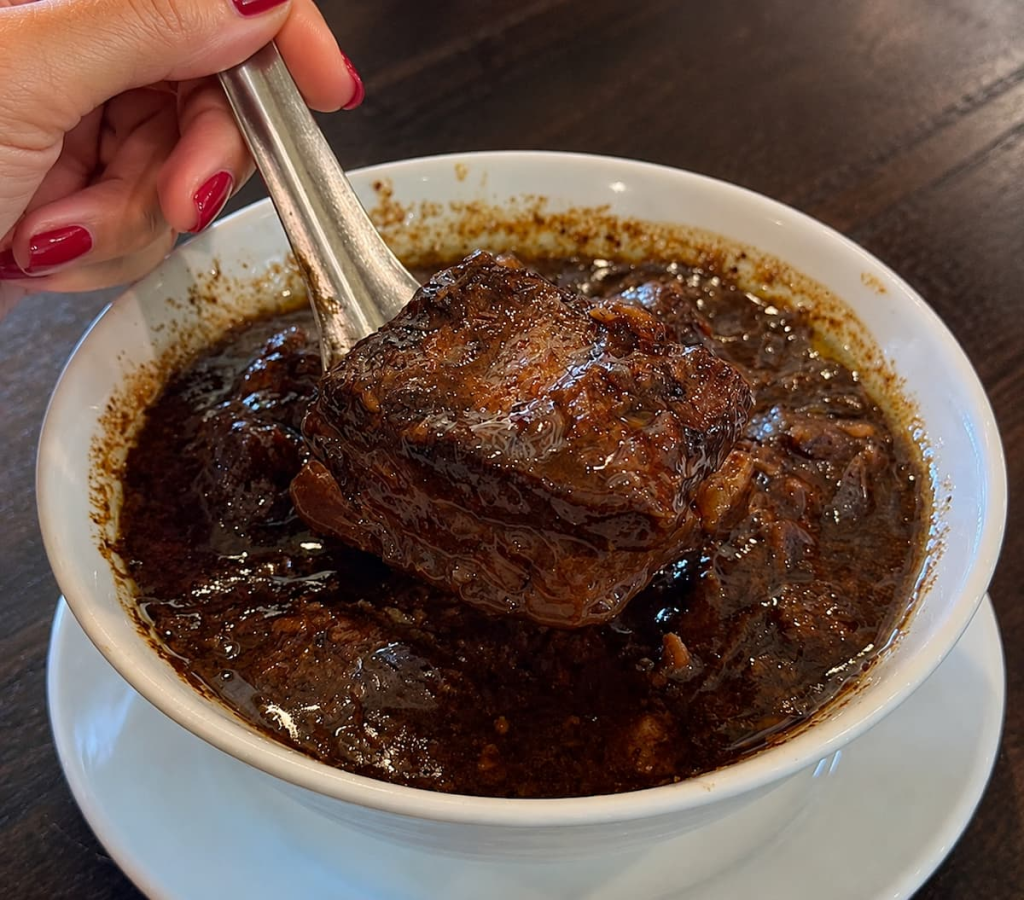
Moo hong reflects Phuket’s Hokkien Chinese and Baba-Peranakan food heritage. Large pieces of pork belly are slowly braised with soy sauce, garlic, coriander root and plenty of pepper until the meat becomes tender and the cooking liquid reduces to a dark, concentrated sauce. The precise balance of sweetness, salt and spice varies between Phuket families and restaurant kitchens.
Expect a rich, savoury dish with a little sweetness and noticeable peppery warmth rather than chilli heat. It is sometimes compared with moo palo, but moo hong generally contains less liquid and does not rely on the full five-spice flavour associated with that dish. The fatty pork and concentrated sauce make it best shared with steamed rice and one or two lighter dishes.
One Chun — Phuket Old Town
Choose One Chun if you want to try moo hong while exploring Old Town. Michelin specifically recommends the restaurant’s version for its bold flavour and tender pork belly, while its broader menu provides an opportunity to share several Phuket and Southern Thai dishes. The restaurant occupies a historic building on Thepkrasattri Road and is popular at conventional lunch and dinner times, so allow for a possible wait.
Pinto Karon — Karon
Pinto Karon is the more convenient choice if you are staying around Karon or Kata and do not want to travel across the island for dinner. Moo hong is presented as one of the restaurant’s signature Phuket dishes, and reviewers often describe the pork as soft and richly flavoured. The restaurant is on Patak Soi 20, inland from Karon Beach, with both indoor and outdoor seating.
Phuket Khanom Jeen — Rice Noodles with Southern Curries
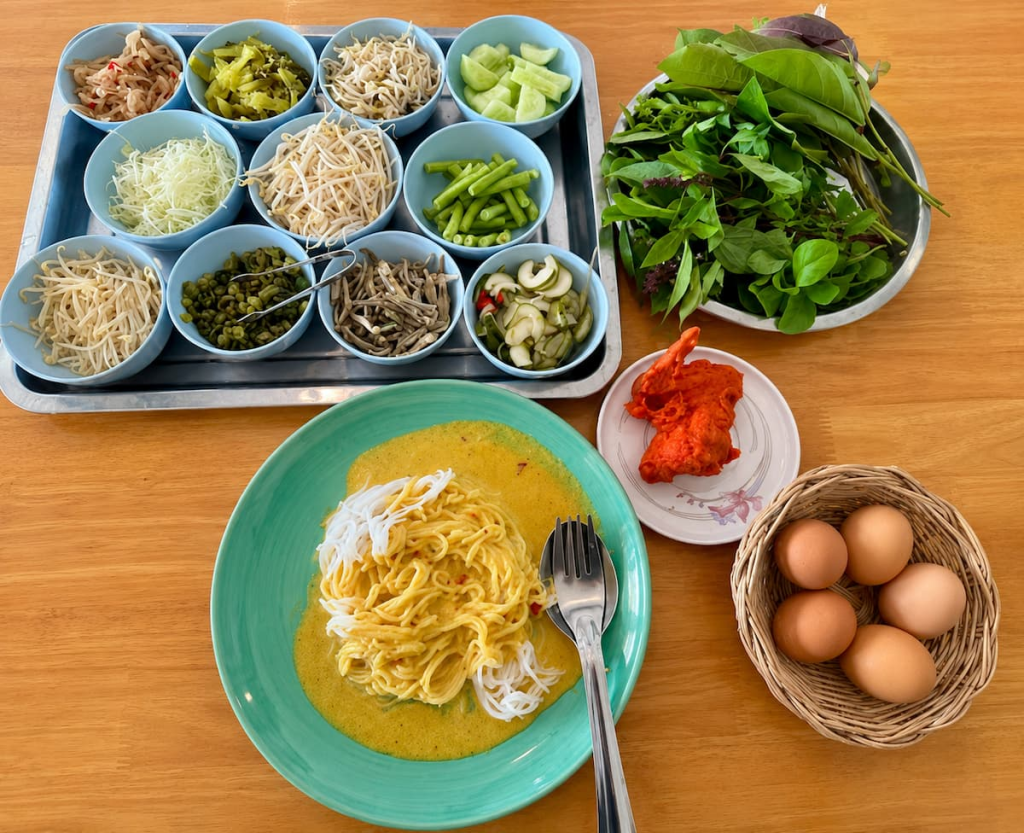
Khanom jeen is made with thin white rice noodles traditionally produced from fermented rice dough, giving them a soft texture and faint tang. In Phuket, the noodles are generally served at room temperature with a choice of curry or sauce and a generous selection of fresh, blanched and pickled vegetables. Although closely associated with breakfast, some specialist restaurants continue serving it through lunch and into the early evening.
Instead of choosing a protein first, you select the curry or sauce to spoon over the noodles. Nam ya, made with fish and aromatic spices, is a classic starting point. Nam prik offers a milder and slightly sweeter alternative, typically combining coconut milk, shrimp and roasted nuts or beans. Depending on the restaurant, you may also find crab, chicken and beef curries, alongside the considerably stronger gaeng tai pla. Some diners combine two sauces, although ordering separate small plates makes it easier to understand each flavour when trying the dish for the first time.
Add vegetables at the table to provide freshness, crunch and contrast to the soft noodles and rich curry. Boiled eggs, fried chicken, fish cakes and hor mok may also be available as separately priced accompaniments.
Khanom Jeen Saphan Hin — Saphan Hin, Phuket Town
Choose Khanom Jeen Saphan Hin for its broad selection of curries and an accessible introduction to how the meal works. Order a plate of noodles with your selected curry at the counter, then help yourself to vegetables before adding any separately priced side dishes. Start with nam ya or nam prik, or order two small plates if you want to compare them before trying a mixed combination. Its longer opening hours also make it practical for lunch or an early dinner rather than breakfast alone.
View Khanom Jeen Saphan Hin on Google Maps
Khanom Jeen Jee Leaw — Thalang
Khanom Jeen Jee Leaw is a useful alternative if you are travelling through northern Phuket or between the airport and other parts of the island. The restaurant serves several curries with an extensive selection of vegetables, accompanied by options such as fried chicken, fish cakes, hor mok and its well-known Phuket-style bá-jàng. A fish or coconut-based curry is an approachable starting point; choose gaeng tai pla only if you are comfortable with pungent, salty and genuinely spicy Southern Thai flavours.
Gaeng Pu Bai Cha Plu — Crab Curry with Wild Betel Leaves
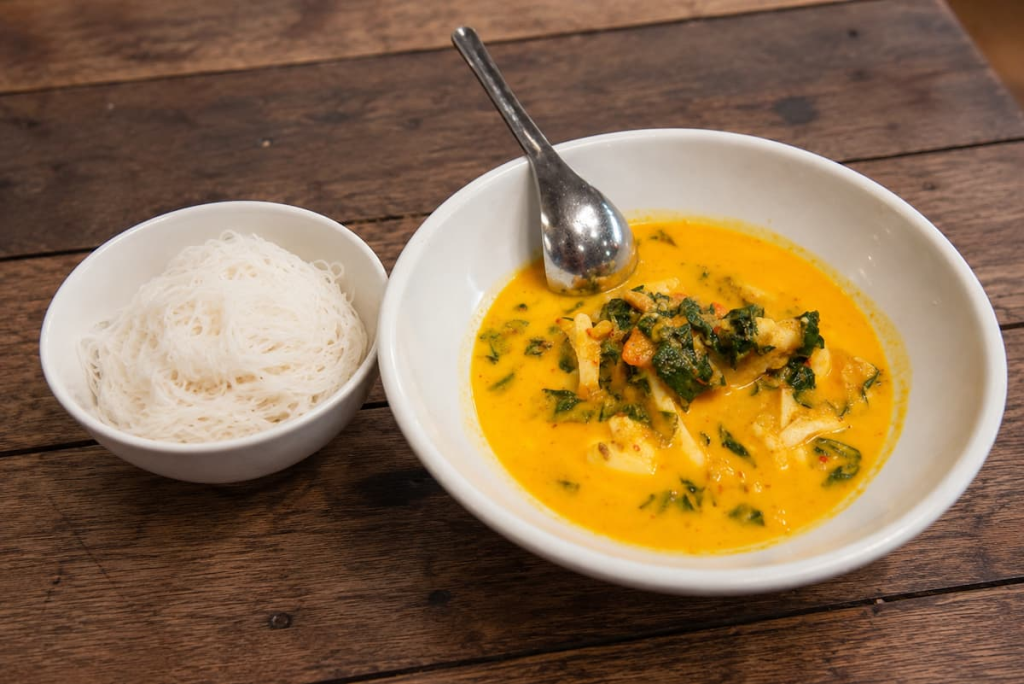
Gaeng pu bai cha plu is a Southern Thai curry that has become one of Phuket’s best-known seafood dishes. Picked crab meat is cooked in coconut milk with a chilli-rich curry paste and sliced bai cha plu leaves, which contribute a distinctive aromatic and slightly peppery flavour. Although commonly translated as wild betel leaf, bai cha plu is a culinary herb and is not the betel leaf traditionally used for chewing.
Expect a rich, creamy curry that balances the sweetness of crab and coconut milk with the heat and fragrance of Southern Thai spices. It is commonly served with sen mee, or fine rice vermicelli, rather than the fermented noodles used for khanom jeen. Place some noodles on your plate and spoon the curry over them, looking for visible pieces of crab among the softened leaves. The curry is generally ordered as a shared dish and is best accompanied by something milder or a vegetable dish.
Raya — Phuket Old Town
Raya is our choice for trying this dish while exploring Phuket Old Town. Its crab curry with bai cha plu is the restaurant’s signature speciality, combining generous pieces of picked crab with a rich coconut curry and bundles of fine rice vermicelli. The kitchen can adjust the heat when requested, making it an approachable choice for visitors unfamiliar with Southern Thai curries. Raya occupies an old Sino-Portuguese house on Dibuk Road, so it is easy to include with an afternoon or evening in Old Town.
Paknam Seafood Thalang — Thalang
Choose Paknam Seafood Thalang if you are staying in northern Phuket or are prepared to make a dedicated trip into the Thalang area. Its crab curry with bai cha plu is served with fine rice vermicelli and is frequently recommended for its generous crab meat, fragrant curry paste and full Southern Thai flavour. The setting is that of a casual local seafood restaurant rather than an Old Town heritage attraction, making it a useful alternative for travellers who want to combine the curry with a broader seafood meal.
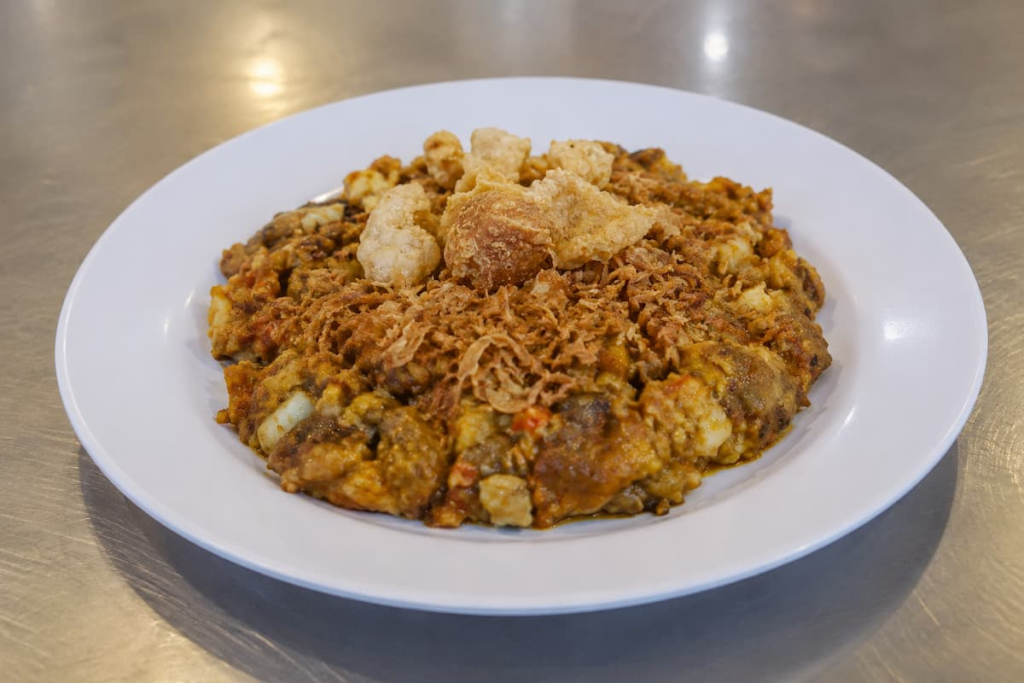
Oh Tao — Phuket Oyster, Egg and Taro Stir-Fry
Oh tao reflects the influence of Phuket’s Hokkien Chinese community and is one of the island’s most distinctive street foods. Small oysters, egg, pieces of taro and a sticky starch batter are stir-fried together on a hot griddle with savoury seasoning and, commonly, chilli. Pork crackling may be scattered over the finished dish, with fresh bean sprouts served alongside.
Although sometimes described as a Phuket-style oyster omelette, oh tao is softer, heavier and more texturally varied than that description suggests. Expect crisp edges mixed with chewy, sticky and tender pieces, a mild earthy sweetness from the taro and, when cooked over charcoal, a faint smoky flavour. It normally arrives already seasoned, so ask about the chilli level when ordering if you prefer less heat. Order one plate as a snack or light meal and eat it while it is still hot.
O Tao Bang Niao — Bang Niao, Phuket Town
O Tao Bang Niao is our first choice for an introduction to the dish. This small family-run roadside stall has operated since 1982 and cooks its oh tao over charcoal, producing the smoky aroma and combination of crisp, soft and sticky textures recognised by the Michelin Guide. Seating is simple and limited, but that is part of the experience rather than a reason to avoid it. Order the traditional oh tao, or add the stall’s crispy seafood omelette if you want to compare the two styles.
View O Tao Bang Niao on Google Maps
O-Tao Ji Pien — Phoonphon Soi 7, Phuket Town
O-Tao Ji Pien offers a different family recipe with a history extending back more than a century. Its traditional version combines small oysters, egg, steamed taro and starch batter before being finished with pork crackling. The stall also offers considerable flexibility, with options such as extra oysters, extra egg, prawns, squid and a vegetarian version. Both recommendations are in Phuket Town because this is where the island’s established oh tao specialists remain concentrated.
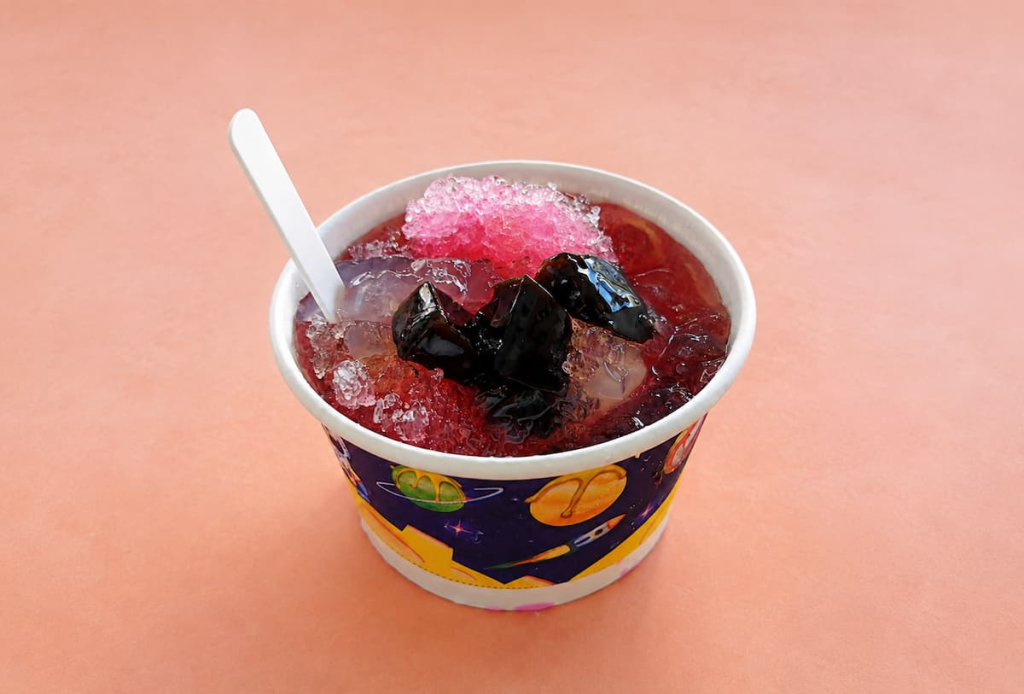
Oh Aew — Phuket Jelly with Crushed Ice and Syrup
Oh aew is a traditional Phuket dessert introduced through the island’s Hokkien Chinese community. Its defining ingredient is a soft, translucent jelly traditionally made by extracting a natural gel from the seeds of a creeping fig variety and mixing it with nam wa banana extract. The jelly has a delicate texture and very little flavour by itself, allowing it to absorb the sweetness of the syrup served over it.
A traditional bowl combines the jelly with crushed or shaved ice and red syrup, commonly adding red beans, black grass jelly or both. Some Phuket vendors use the colours white, red and black as shorthand for the jelly, red beans and grass jelly. Order the mixed version for the greatest variety of textures, or ask for less syrup if you prefer a lighter sweetness. Fruit and other toppings may be available at some shops, but these are variations rather than essential parts of the dessert.
O-Aew Pae Lee — Soi Sun Uthit, Phuket Old Town
O-Aew Pae Lee is our first choice for experiencing the dessert in its traditional form. This small afternoon cart continues a family recipe and serves the jelly plain or with red beans and grass jelly. Choose the mixed version for a first visit. Seating is extremely simple and the trading period is relatively short, so treat it as a quick refreshment while exploring Old Town rather than planning an extended café stop.
View O-Aew Pae Lee on Google Maps
O-Aew Lor Rong — Chamcha Market, Phuket Town
O-Aew Lor Rong is the more practical option if you want to combine dessert with several other Phuket foods. Located at Chamcha Market, also known as Lor Rong Market, the stall serves traditional oh aew with familiar accompaniments such as red beans and grass jelly. The market also contains vendors selling local savoury dishes and snacks, while parking is available behind it. This makes it an easy addition to a broader Phuket food stop rather than a journey for dessert alone.
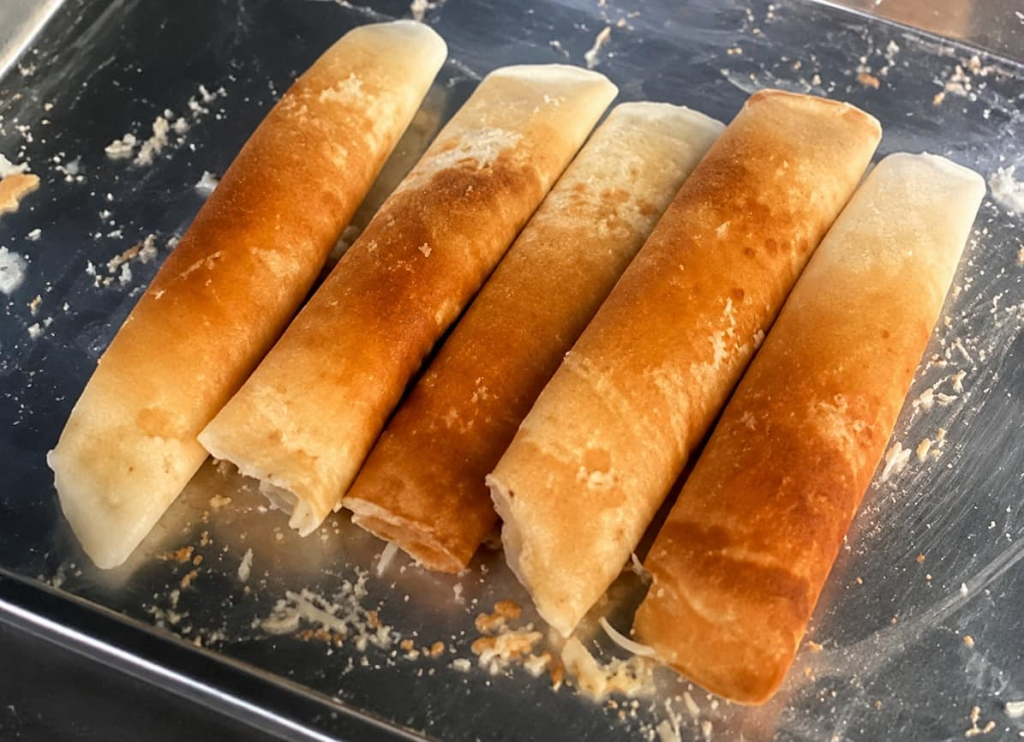
Khanom A-Pong — Phuket’s Crisp Coconut Pancakes
Khanom a-pong is a traditional Phuket snack shaped by the island’s historic migration and trading connections across the Andaman Sea and Malay Peninsula. Its lightly sweet batter is generally made from rice flour, coconut milk, sugar, egg yolk and yeast. The batter is spread around a small wok and traditionally cooked over charcoal.
A well-made a-pong has thin, crisp edges surrounding a slightly thicker centre that remains soft and chewy. It is folded or loosely rolled after cooking and served without fillings, sauces or toppings. Simply order the number of pieces or bags you want and eat them while they are still warm, before steam trapped inside the bag begins softening the crisp edges. A-pong makes a particularly good light snack with tea or coffee.
A-Pong Mae Sunee — Phuket Old Town
A-Pong Mae Sunee is the island’s best-known specialist and a strong choice for seeing the traditional cooking method. Each pancake is prepared individually in a small wok over charcoal, creating crisp, delicate edges and a softer centre with a gentle coconut sweetness. The stall holds a Michelin Bib Gourmand for its quality and value.
Located on Soi Sun Uthit, just off Yaowarat Road, it is an easy addition to a morning in Phuket Old Town. Arrive early because the pancakes are made individually, queues can develop and the day’s batter may sell out before the advertised closing time. There is little conventional seating, so this is primarily a takeaway street-food stop.
View A-Pong Mae Sunee on Google Maps
A-Pong Go Niau — Sam Kong
A-Pong Go Niau provides a useful alternative away from the Old Town tourist streets. This long-established Sam Kong vendor produces an especially thin and delicate version with a lighter sweetness. The edges are brittle and crisp, while the small amount of thicker batter in the centre provides the characteristic soft, slightly chewy contrast.
The stall is on Yaowarat Road near Bangkok Hospital Phuket and generally has a broader daytime schedule than Mae Sunee, making it a practical alternative if the Old Town stall has sold out. Google Maps contains an outdated duplicate marked permanently closed, so use the active listing named อาโป้ง โกเนี้ยว สามกอง and check the current hours before travelling.
Where to Stay in Phuket
Where you stay in Phuket shapes how much time you spend at the beach, walking to restaurants or travelling between attractions. A hotel near nightlife offers a different experience from a hillside villa or a quieter northern beach, and traffic can make travelling across the island slower than distances suggest.
Start by choosing an area that suits your plans, then compare accommodation styles, facilities and budget. The overview below explains the main options and their trade-offs, with links to destination guides for a closer look at each area.
Patong
Patong suits travellers who want restaurants, shopping, nightlife and the beach close together. Accommodation ranges from budget guesthouses and apartments to full-service hotels and luxury properties, making it a practical base for different budgets.
Central Patong offers the easiest access to Bangla Road, Jungceylon and the main beachfront, but noise and traffic are important considerations. The northern and southern ends offer quieter pockets, while hillside properties may provide views at the expense of walkability. Check the actual route to the beach: a short distance on the map can involve steep roads.
Choose Patong for convenience and entertainment rather than seclusion. If you want lively evenings but quiet nights, check the property’s immediate surroundings and recent reviews for noise before booking.
Explore our Patong Travel Guide for an area overview, or our Where to Stay in Patong Guide for a closer comparison of accommodation locations.
Karon
Karon offers a broad beach and a noticeably quieter atmosphere than Patong, making it appealing to families and travellers who want beach days without a strong party scene.
Most hotels sit across the beachfront road, leaving a long, open shoreline rather than a continuous frontage of resort buildings.
Restaurants, casual bars and live music still provide options for evenings out, with Patong nearby when you want something livelier.
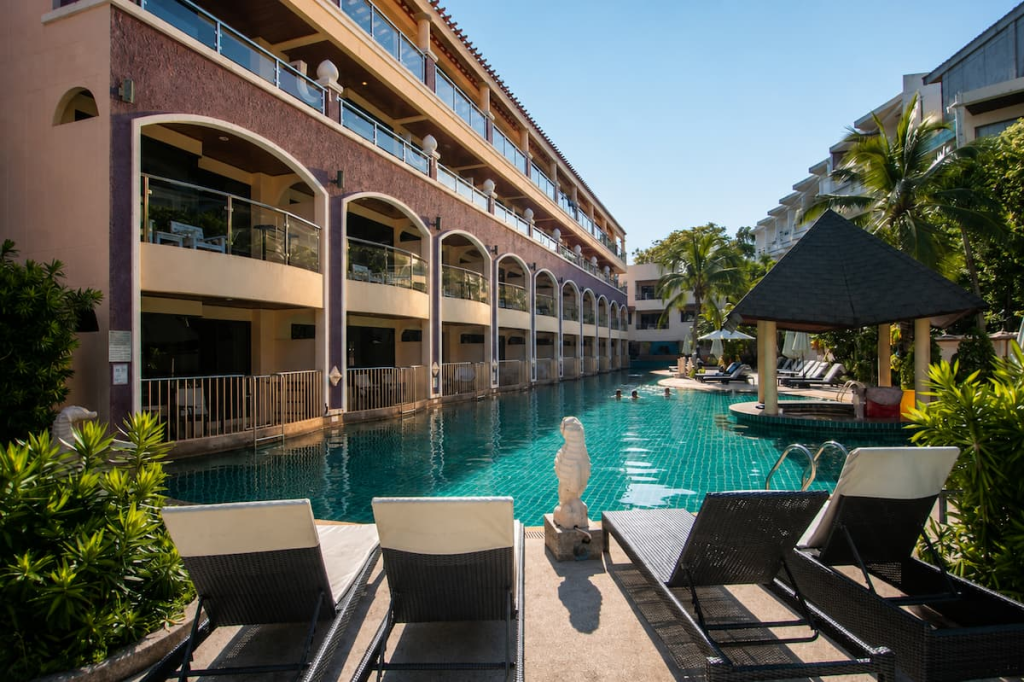
- Best suited to: Families, couples and travellers seeking a beach-focused holiday with a gentler evening atmosphere, while keeping restaurants, shops and entertainment within reach.
- Accommodation & budget: Budget guesthouses, smaller hotels and larger upscale resorts. You don’t necessarily need a luxury budget to stay within walking distance of the beach.
- Walkability: Staying near Karon Circle or the southern dining streets makes everyday outings easier. Inland and hillside properties can involve longer walks or steep approaches; check the actual route.
- Evenings: Thai and international restaurants, casual bars, live music and the Tuesday and Friday temple market provide reasons to stay local after sunset.
- Exploring: Patong lies to the north and Kata to the south. Taxis and the coastal Smart Bus provide connections, although journey times depend on traffic.
- Main trade-off: Karon is spread out. A hotel close to the sand may still be some distance from your preferred restaurants and evening venues.
Explore our Karon Travel Guide for a closer look at the area, its attractions and practical visitor information.
Kata
Kata combines a scenic sandy bay with restaurants, cafés, shops and casual bars, making it an appealing base for beach days and evenings out on foot.
Its less party-focused atmosphere than Patong attracts families, couples and independent travellers, while seasonal surfing adds another reason to visit.
Expect a lively tourist beach town rather than a secluded retreat.
Nearby Kata Noi offers a smaller, more resort-focused setting rather than the same concentration of shops and evening activity.
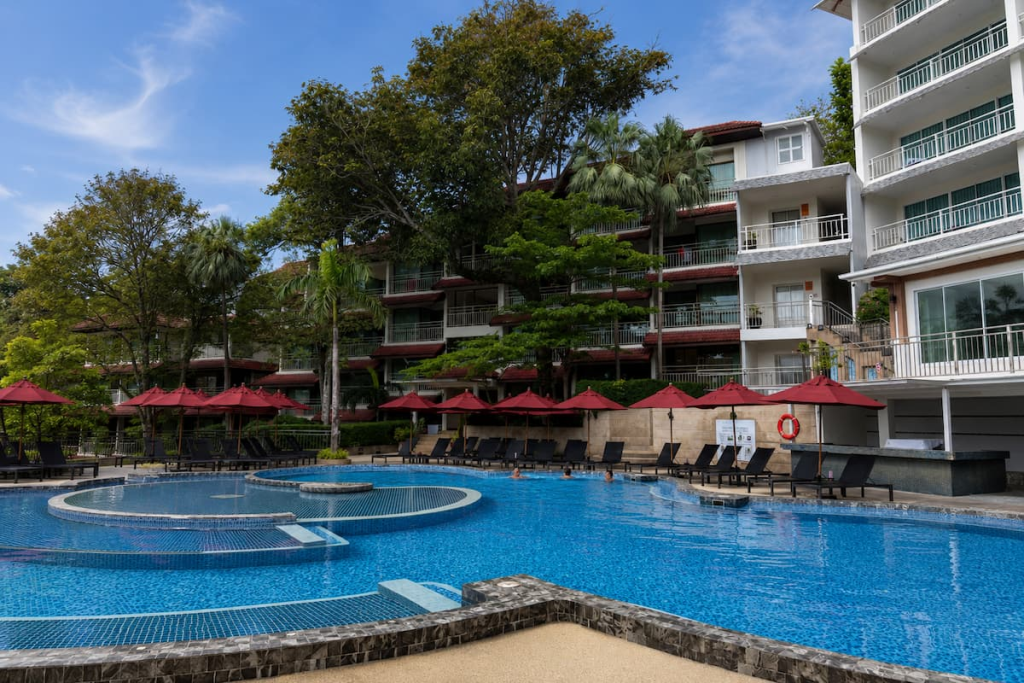
- Best suited to: Travellers who want a beach-focused holiday with dining choices and everyday conveniences nearby, without making nightlife the main attraction.
- Accommodation & budget: Smaller budget hotels, mid-range pool resorts, all-inclusive stays and upscale beachfront or hillside properties provide options across different budgets.
- Walkability: Many hotels are convenient for restaurants and shops, but Club Med’s extensive grounds mean beach access generally involves walking around towards either end. Check the actual route, particularly from inland or hillside accommodation.
- Evenings: Market food, Thai and international restaurants, casual bars and beachfront drinks provide plenty of options for staying local after sunset.
- Exploring: Nearby Karon and Kata Noi offer alternative beach days. The coastal Smart Bus connects Kata with Karon, Patong, Rawai and the airport; other excursions require separate transport planning.
- Main trade-off: Popular streets and the beach can get busy, and a hotel that looks close to the sand may involve a longer walk. Surfing is seasonal, with monsoon conditions also affecting swimming.
Explore our Kata Travel Guide for a closer look at the area, its attractions and practical visitor information.
Kamala
Kamala offers a slower beach holiday than Patong, with beachfront restaurants, casual bars and a village centre where you can walk out for meals and everyday essentials.
It appeals to families and couples wanting relaxed beach days without a dominant party atmosphere, while Café del Mar and nearby evening attractions provide options when you want more entertainment.
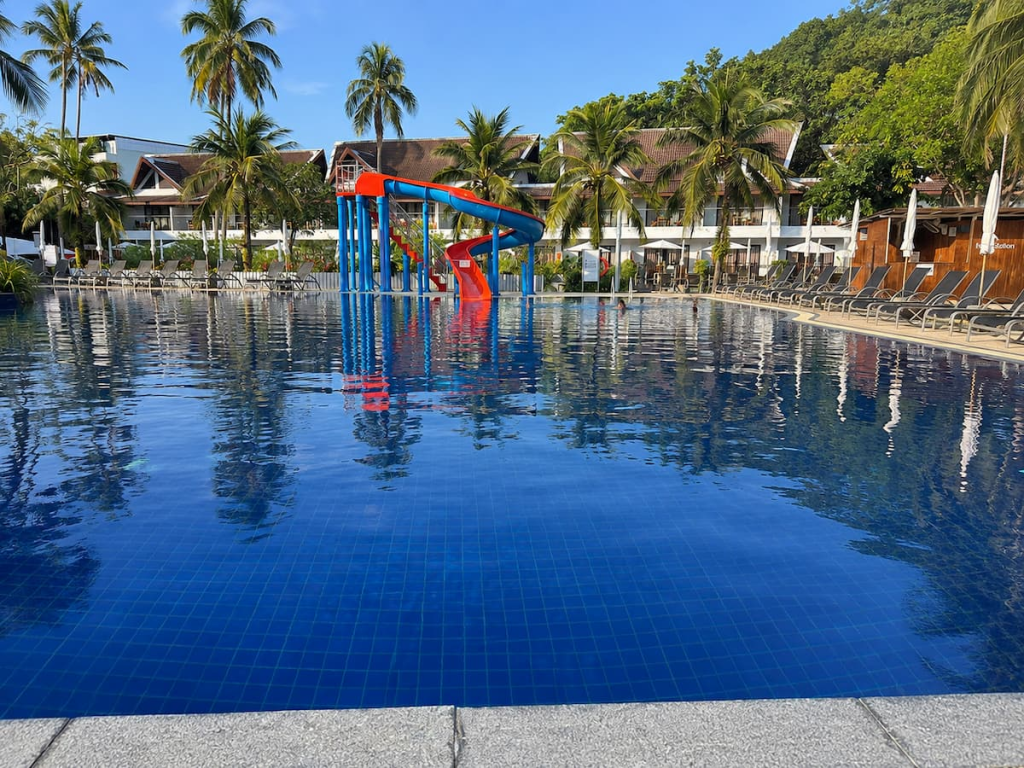
- Best suited to: Travellers wanting beach time, relaxed dining and a quieter base, with a choice between family-focused resorts and adult-oriented stays.
- Accommodation & budget: Smaller hotels, mid-range pool resorts, apartments and luxury villas provide options beyond Kamala’s upscale reputation. Some properties have direct beach access; others sit inland or on the surrounding hills.
- Walkability: Staying near the village and central or southern beachfront makes everyday outings easier. Northern beachfront hotels can involve longer walks into the centre, while hillside properties may require taxis or scheduled shuttles.
- Evenings: Choose beachfront meals, casual drinks, a beach-club night at Café del Mar, or shows at nearby Phuket FantaSea and Carnival Magic.
- Exploring: Surin and Bang Tao lie to the north, with Patong to the south. The coastal Smart Bus connects Kamala with other west-coast destinations and the airport.
- Main trade-off: Village convenience and hillside seclusion offer different holidays. Check the actual beach access and nearby venues rather than assuming every Kamala hotel is walkable or quiet.
Explore our Kamala Travel Guide for a closer look at the area, its attractions and practical visitor information.
Bang Tao
Bang Tao combines a long sandy beach with family resorts, beach clubs and a substantial choice of restaurants.
You can spend your days beside the sea, enjoy Laguna’s resort facilities or head inland to Boat Avenue and Porto de Phuket for dining and shopping.
Although known for luxury accommodation, the area also offers smaller hotels and apartments, making it worth considering for more than an upscale resort holiday.
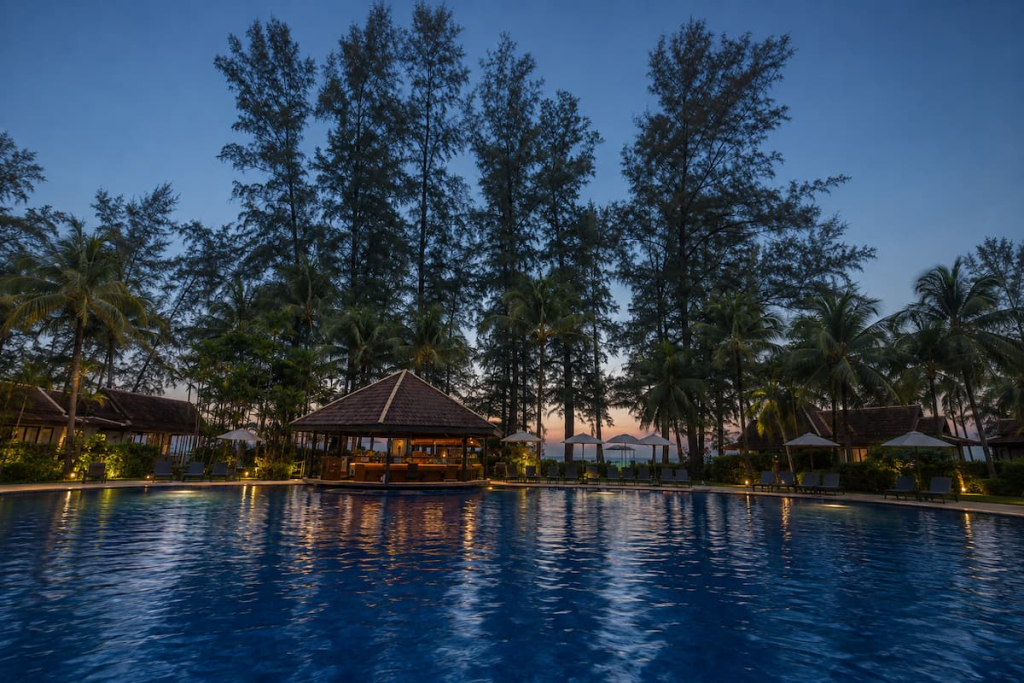
- Best suited to: Families wanting pools and resort facilities, couples combining beach days with dining and beach clubs, and longer-stay visitors seeking apartment-style accommodation.
- Accommodation & budget: Options range from guesthouses and smaller hotels to beachfront resorts, serviced apartments and luxury villas. Laguna includes both beach-access properties and accommodation overlooking its lagoons, so check the actual route to the sand.
- Walkability: Some locations put restaurants and the beach within walking distance, but Bang Tao is spread out. Staying near Boat Avenue prioritises dining and shopping; beachfront accommodation prioritises the sea. Laguna and hotel shuttles can help connect the two.
- Evenings: Choose casual beachfront meals, restaurants and bars around Boat Avenue, or beach-club entertainment at venues such as Catch. Quieter stays are available, but proximity to nightlife matters.
- Exploring: Surin, Kamala and northern Phuket are convenient directions for outings. Trips to Phuket Old Town or the southern beaches require more travel, making transport worth factoring into your plans.
- Main trade-off: Beach access, restaurant choice and resort seclusion are not always found together. Choose your immediate surroundings carefully rather than treating every Bang Tao address as equally convenient.
Explore our Bang Tao Travel Guide for a closer look at the area, its attractions and practical visitor information.
Phuket Old Town
Phuket Old Town puts local food, heritage streets and independent shops at the centre of your stay.
Walk out for breakfast, explore colourful shophouses and museums, then return to the neighbourhood for dinner or cocktails.
It offers a different experience from the beach areas, appealing to travellers who want to explore Phuket’s history and food scene or combine a few nights in town with a coastal stay.
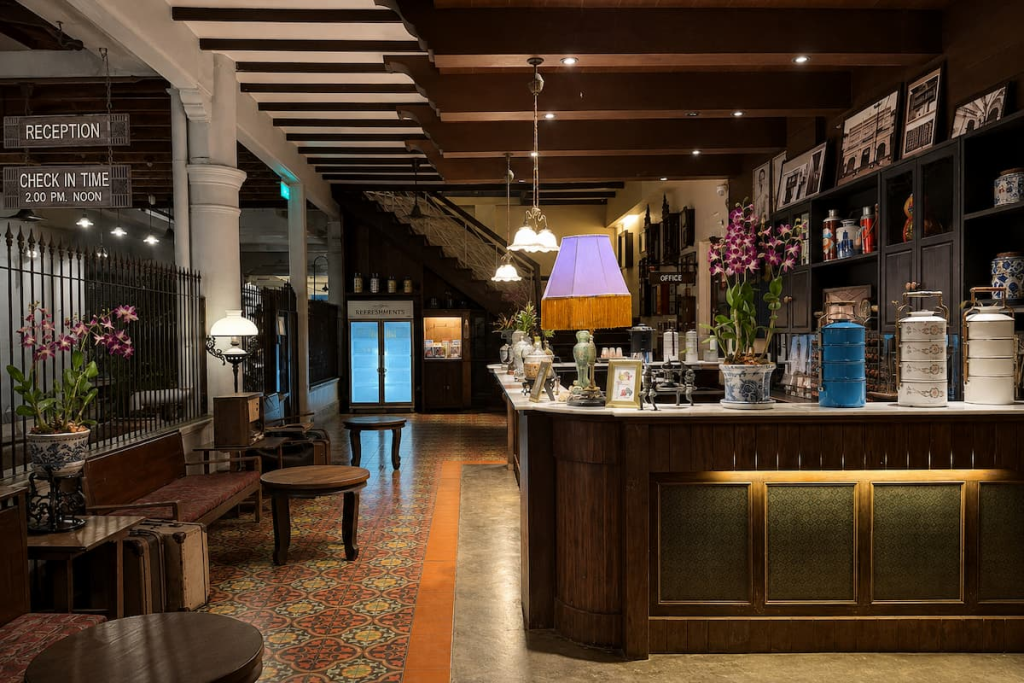
- Best suited to: Travellers interested in local food, architecture, photography, cafés and exploring on foot, rather than spending every day at the beach.
- Accommodation & budget: Choose from guesthouses, smaller modern hotels, restored heritage properties and upscale boutique stays. Some hotels have pools, but extensive resort facilities are less typical.
- Walkability: Staying around Thalang, Phang Nga, Dibuk and Yaowarat roads puts many restaurants, shops and cultural attractions nearby. Check the actual address: accommodation labelled “Phuket Town” can be well beyond the historic centre.
- Evenings: Regional restaurants, casual eateries and cocktail bars provide options throughout the week. The Sunday Walking Street market adds food stalls, shopping and a busier atmosphere, but does not operate every evening.
- Exploring: The historic streets, museums and shrines are easy to combine on foot, and an airport bus connects with town. Beaches and attractions farther across Phuket require transport.
- Main trade-off: You gain everyday access to food and culture but give up a beach on your doorstep. If swimming and beach days are your priority, a coastal base—or a split stay—will usually be more convenient.
Explore our Phuket Old Town Travel Guide for a closer look at its historic streets, food, attractions and practical visitor information.
Nai Harn
Nai Harn suits a holiday centred on beach days, coastal scenery and a gentler evening atmosphere than Patong.
The sandy bay, surrounding hills and nearby lake give the beach area a distinct setting, while restaurants and residential streets extend inland towards Rawai.
Stay near the shore for easy beach access, or consider an inland hotel or villa if space and a longer stay matter more.
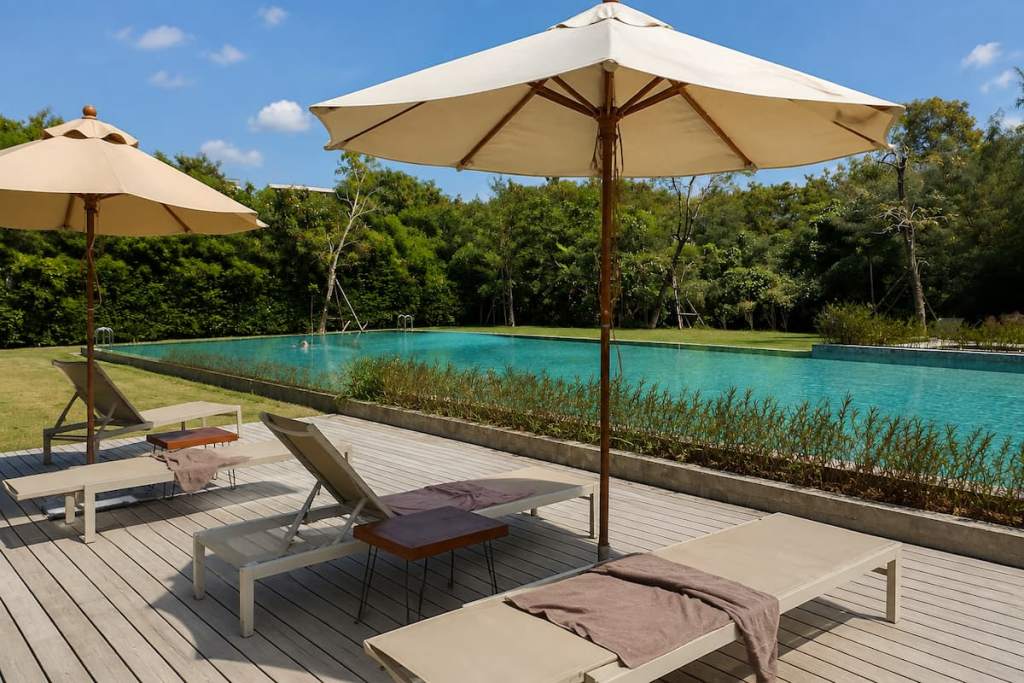
- Best suited to: Couples and families wanting beach time without a dominant party scene, and independent travellers seeking a relaxed base for exploring southern Phuket.
- Accommodation & budget: Options include luxury hotels overlooking the bay, pool resorts, smaller boutique properties and self-catering villas. Inland accommodation broadens the choice, but a Nai Harn address does not necessarily mean walking distance to the beach.
- Walkability: Selected hotels make beach visits straightforward on foot. Inland properties may be closer to restaurants but farther from the sand. Check the actual route and any hills or steps, particularly at hillside resorts.
- Evenings: Expect restaurant meals, sunset drinks and some live music rather than a concentrated nightlife strip. More dining and bar options extend inland towards Rawai.
- Exploring: Ya Nui, Ao Sane, Windmill Viewpoint, Promthep Cape and Rawai are nearby options for outings. Northern Phuket and the airport involve longer journeys.
- Main trade-off: Easy beach access, villa privacy and a wide choice of walkable restaurants are not always available together. Choose the immediate location around the way you want to spend your days.
Explore our Nai Harn Travel Guide for a closer look at the area, nearby beaches, viewpoints and practical visitor information.
Rawai
Rawai combines seafood restaurants, a working waterfront and boat trips with a wide choice of places to stay.
Its cafés, casual bars and everyday services appeal to visitors wanting a less party-focused base than Patong, while pool resorts and private villas suit both holidays and longer stays.
The waterfront is part of the attraction, but for swimming you’ll usually head to nearby Nai Harn or Ya Nui.
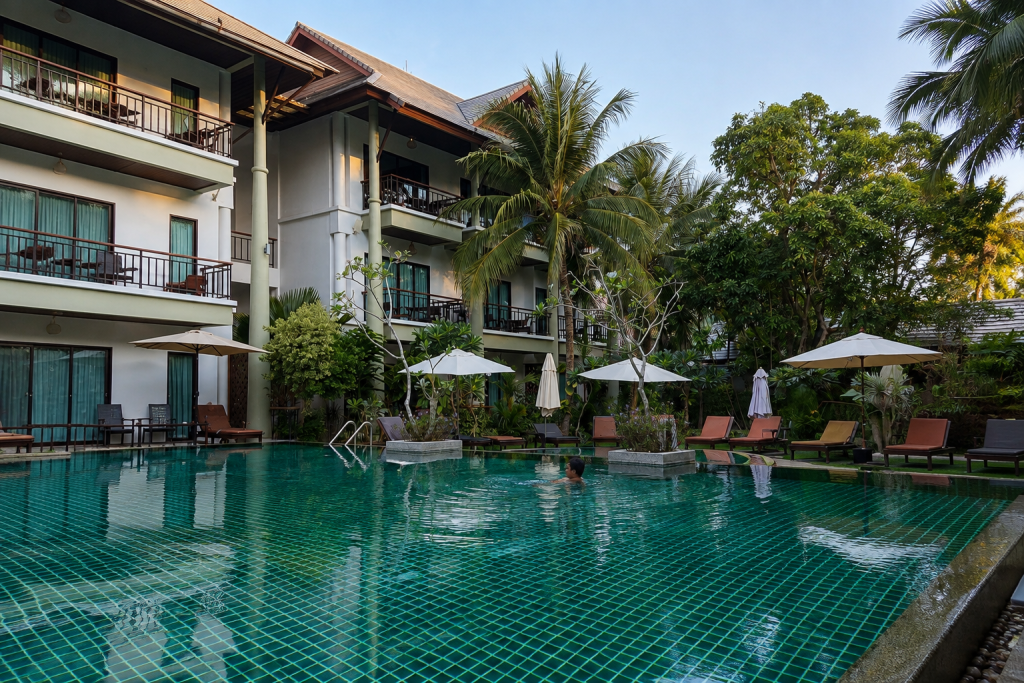
- Best suited to: Travellers interested in waterfront dining, boat outings and exploring southern Phuket, plus families choosing pool resorts and longer-stay visitors wanting space and everyday conveniences.
- Accommodation & budget: Smaller hotels, mid-range pool resorts, suites and luxury villas provide varied options. Some properties are near the waterfront; others sit inland in residential streets. Check for kitchen and laundry facilities if planning a longer stay.
- Walkability: Selected waterfront locations put restaurants, cafés, bars and shops within easy walking distance. Wider Rawai is spread out, so check what surrounds the property rather than relying on its Rawai address.
- Evenings: Expect seafood dinners, waterfront drinks and casual bars, with further choices inland. The atmosphere is less dominated by nightlife than Patong, although individual streets and venues can be lively.
- Exploring: Nai Harn, Ya Nui and Promthep Cape are nearby, and long-tail boats depart from Rawai for surrounding islands. The Smart Bus connects Rawai with west-coast destinations; some hotels also offer beach shuttles.
- Main trade-off: Staying beside the sea here is not the same as staying beside a swimming beach. A good hotel pool and convenient transport to nearby beaches can make a substantial difference to your stay.
Explore our Rawai Travel Guide for a closer look at the waterfront, dining, nearby beaches and practical visitor information.
Nai Yang
Nai Yang combines a tree-lined beach with casual seaside restaurants and a relaxed atmosphere, making it appealing for beach days without the bustle of Phuket’s larger tourist centres.
Its proximity to the airport makes arrivals and departures easier, but it offers more than a convenient stopover.
Stay near the beachfront dining area and you can walk between the sand, restaurants and small shops throughout your holiday.
- Best suited to: Couples and families wanting relaxed beach days and low-key evenings, plus travellers who value a short airport transfer at either end of their trip.
- Accommodation & budget: Options range from simple guesthouses and mid-range pool hotels to spacious suites, pool villas and luxury resorts. Properties closer to the airport are not necessarily the most convenient for the beach.
- Walkability: Staying near the main beachfront restaurant area makes meals, shopping for essentials and beach visits straightforward. Inland hotels and more secluded resorts require a closer check of walking routes and nearby facilities.
- Evenings: Expect beachside dinners, casual drinks and resort restaurants rather than a large nightlife district. There is enough choice for relaxed evenings out without travelling elsewhere every night.
- Exploring: The airport, Nai Thon and northern Phuket are convenient directions for outings. Patong, Phuket Old Town and southern attractions involve longer journeys, making Nai Yang better suited to beach-focused stays than daily cross-island sightseeing.
- Main trade-off: You gain a quieter setting and easy airport access, but have fewer shopping and entertainment options nearby than in Phuket’s larger beach destinations.
Explore our Nai Yang Travel Guide for a closer look at the beach, local dining, nearby attractions and practical visitor information.
Mai Khao
Mai Khao suits a holiday built around long beach walks, pool time and enjoying your accommodation.
Its coastline offers space and a quieter setting than Phuket’s busier beach destinations, with resorts providing much of the dining and entertainment.
Families can choose properties with children’s facilities, while couples have options for private pool villas and secluded stays. The appeal is less about a busy town centre and more about time beside the sea.
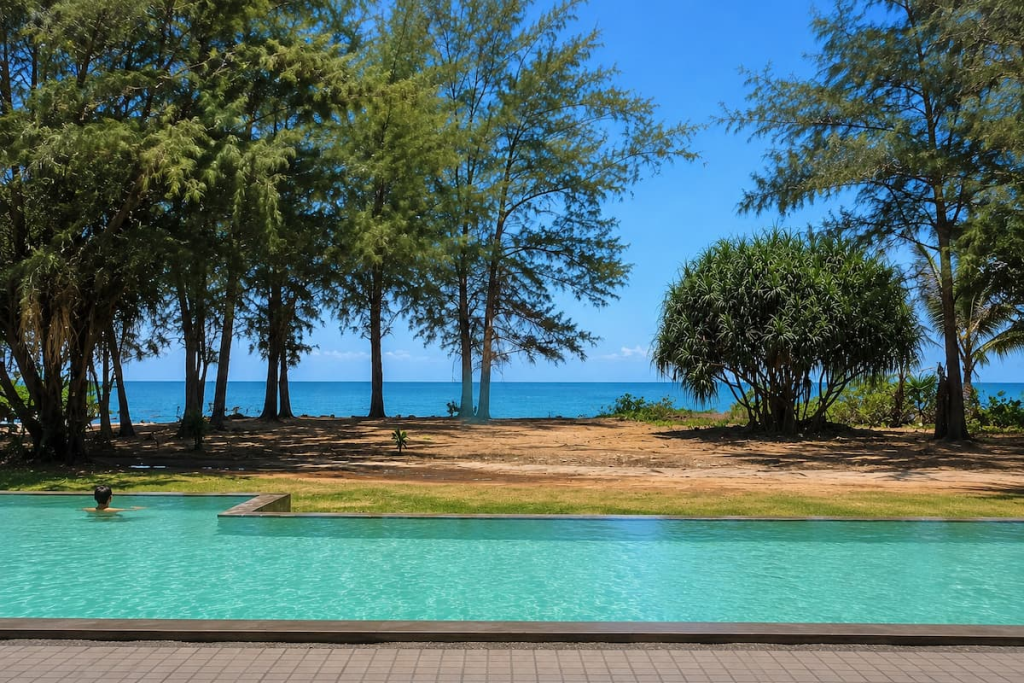
- Best suited to: Couples seeking privacy, families wanting substantial resort facilities, and travellers happy to spend much of their holiday at their hotel and along the beach.
- Accommodation & budget: Full-service resorts, suites and private pool villas are prominent, alongside smaller hotels and simpler inland stays. Compare dining and transport costs as well as the room rate.
- Walkability: The long shoreline is ideal for beach walks, but shops and restaurants are spread out. Properties near Turtle Village have more nearby options than isolated resorts elsewhere along the coast.
- Evenings: Expect resort dining, sunset drinks and quieter nights. Turtle Village adds restaurants, cafés and a pub for visitors staying nearby, but Mai Khao has no continuous nightlife strip.
- Exploring: Northern Phuket and routes towards Phang Nga are convenient directions for outings. Airport transfers vary by property, while Patong, Old Town and southern Phuket involve longer journeys.
- Main trade-off: Space and seclusion come with fewer independent venues on your doorstep. Choose hotel facilities carefully, especially the pool: Mai Khao’s steep shoreline and strong monsoon currents mean sea swimming is not always suitable.
Explore our Mai Khao Travel Guide for a closer look at the coastline, nearby attractions and practical visitor information.
Getting to Phuket
Phuket is connected to the rest of Thailand by air, road and sea. Most international visitors arrive through Phuket International Airport, while buses and private vehicles reach the island across the Sarasin Bridge. Ferries and speedboats also connect Phuket with several neighbouring islands and coastal destinations.
Flying to Phuket
Phuket International Airport receives domestic and international flights and is the most convenient arrival point for most visitors. Direct domestic services connect and other major Thai destinations, while international routes vary according to airline and season.
The airport is in northern Phuket, so the journey to your accommodation depends heavily on where you are staying. Mai Khao and Nai Yang are nearby, while Patong, Karon, Kata, Rawai and other southern destinations require a longer road transfer.
Travelling from Phuket Airport
Private transfers, airport taxis, app-based rides, shared vans, rental cars and public buses are available from the airport. A prearranged transfer is usually the simplest option for families, groups, late arrivals or travellers carrying substantial luggage.
The Phuket Smart Bus follows the west coast towards destinations including Bang Tao, Surin, Kamala, Patong, Karon, Kata and Rawai. A separate airport bus connects the airport with Phuket Town. Public buses cost less than a private transfer but take longer and may not stop close to your accommodation.
Allow flexibility when planning your arrival. Phuket’s traffic can substantially extend transfer times, particularly around peak periods and the approaches to popular beach areas.
Arriving by Road
Phuket is an island, but it is connected to mainland Phang Nga by road bridges. Interprovincial buses and private vehicles therefore reach Phuket without requiring a ferry.
Long-distance buses operate from Bangkok and other destinations in Southern Thailand, generally arriving at one of Phuket Town’s bus terminals. Check which terminal your service uses and arrange the final journey to your accommodation separately.
Driving can be practical when Phuket forms part of a wider Southern Thailand road trip. However, visitors should consider traffic, parking and whether they will actually need a vehicle once they reach their chosen base.
Arriving by Ferry or Speedboat
Passenger boats connect Phuket with destinations including Phi Phi, Krabi and Koh Lanta, although routes and frequency vary by season. Rassada Pier, southeast of Phuket Town, is the island’s principal arrival point for many ferry services.
Other routes may use different piers, so confirm the departure and arrival points before booking. A ticket described simply as travelling to “Phuket” does not necessarily include onward transport to your hotel.
Sea crossings are more dependent on weather than road or air travel. Build some flexibility into connections, particularly during the southwest monsoon or when transferring to a flight on the same day.
Before You Book
Compare the complete journey rather than only the flight, bus or ferry fare. Your arrival point, hotel location, luggage and transfer time can make the cheapest option less convenient than it first appears. Confirm schedules and pickup arrangements directly with the transport provider before travelling.
Getting Around Phuket
Getting around Phuket is easiest when you plan around where you are staying and how often you intend to explore. The island is larger than many visitors expect, and journeys that appear short on a map can take considerably longer because of traffic, steep coastal roads and limited routes between some areas.
Ride-hailing apps and taxis are the simplest choice for occasional journeys, while renting a car can make sense if you plan to explore different parts of the island most days. Public buses offer an inexpensive alternative on selected routes but are slower and less comprehensive than the systems found in Bangkok.
For most visitors, the best solution is a combination: walk within your chosen destination, use ride-hailing services for evenings and shorter trips, and book a tour, driver or rental car for days involving several stops.
Renting a Car or Motorbike
Hiring a car provides the greatest flexibility for reaching quieter beaches, viewpoints, local restaurants and attractions outside the main resort areas. It can be particularly useful for families and travellers staying in northern or southern Phuket, where journeys by taxi can quickly add up.
Traffic is busiest around Patong, Phuket Town, major intersections and the central shopping districts. Coastal roads can be steep and winding, while heavy rain can reduce visibility and make journeys considerably slower. Parking is available at most shopping centres and major attractions, but spaces near popular beaches and Old Town can be difficult to find during busy periods.
Motorbikes are inexpensive and widely available, but Phuket is not a suitable place to learn to ride. Traffic can be unpredictable, road surfaces vary and rain makes steep roads particularly hazardous. Riders need a valid motorcycle licence recognised in Thailand, normally accompanied by an International Driving Permit, and should confirm that their travel insurance covers motorcycle use. Helmets are legally required for both the rider and passenger.
Ride-Hailing Apps, Taxis and Tuk-Tuks
Grab and Bolt are widely used in Phuket and usually provide the simplest way to book a car without negotiating the fare. Prices are shown in the app before confirming, although they can rise when demand is high or traffic is heavy. Pickup locations may occasionally be restricted at airports, transport terminals and some busy venues, so follow the instructions shown in the app.
Traditional taxis are available throughout the island, particularly at the airport, hotels and established taxi ranks. If the vehicle is not using a meter, confirm the total fare before leaving.
Phuket’s tuk-tuks are small converted vehicles rather than the three-wheeled tuk-tuks found in Bangkok. They are convenient for short local journeys and evenings out but can be expensive for the distance travelled. Agree on the fare for the entire vehicle—not per passenger—before getting in.
Public Transport
Phuket’s public transport is affordable but works best when its routes happen to match your plans. Most services follow fixed corridors rather than providing a connected island-wide network.
The Phuket Smart Bus runs between Phuket International Airport and Rawai, stopping at destinations including Bang Tao, Surin, Kamala, Patong, Karon and Kata. It is useful for travelling along the west coast, although the full route is slow and departure times can be affected by traffic.
A separate Smart Bus route connects Phuket Town and Patong, while the free Dragon Line circulates through parts of Phuket Town. Local blue songthaews also depart from Phuket Town for several beaches and surrounding communities. These services are inexpensive, but most routes radiate out from town rather than connecting neighbouring beaches directly. Travelling from one beach to another may therefore require a slow or indirect journey.
Check current routes, live vehicle locations and departure information through Phuket Smart Bus and Phuket OneMap before setting out. Do not rely on public transport when you must reach the airport, a pier or an appointment by a strict time without allowing a substantial buffer.
Walking Within Each Area
Walking works well within parts of Patong, Kata, Kamala and Phuket Old Town, where restaurants, shops and attractions are often concentrated within a manageable area. Karon is longer and more spread out, while Bang Tao, Rawai, Nai Harn and Mai Khao generally require transport for reaching places beyond your immediate neighbourhood.
Walking between different beaches or towns is rarely practical. Routes may involve steep hills, fast-moving traffic and sections without continuous footpaths. Tropical heat and sudden rain can also make a walk that looks reasonable on a map considerably less comfortable.
Use transport to reach each destination, then explore the immediate area on foot. Take particular care when walking after dark, as lighting and footpath quality vary considerably.
Travelling Between Popular Areas
Kata and Karon are close enough to combine easily, while Patong sits between Karon to the south and Kamala to the north. Even these apparently short journeys can slow significantly during the late afternoon, evening rush or heavy rain.
Trips involving Phuket Old Town, the airport, Mai Khao, Rawai or Nai Harn cover much greater distances. Crossing the island can take an hour or more, and congestion around Patong Hill or the main north–south roads can add substantial delays.
Avoid planning several attractions in opposite parts of Phuket on the same day. Group nearby places together—for example, Kata with Karon, Nai Harn with Rawai, or Old Town with central Phuket. For flights, boat departures and pre-booked tours, check live traffic and leave more time than the map’s initial estimate suggests.
Choosing the Best Option
For occasional trips and evenings out, ride-hailing apps will suit most visitors. A rental car becomes more useful if you are staying outside the main centres or plan to explore several areas, while a motorbike should only be considered by properly licensed and experienced riders.
The Smart Bus is a useful budget option when travelling along its established routes, but it is less suitable for a tightly scheduled sightseeing day. If you want to visit several dispersed attractions without driving, hiring a private driver or joining an organised tour may provide better value and use your time more efficiently.
Planning Your Trip to Phuket
Planning a Phuket holiday begins with a few practical decisions: when to visit, where to stay, how much of the island you want to explore and whether island trips will be an important part of your itinerary. These choices affect your accommodation, transport costs and how much time you need.
Phuket can suit anything from a short beach break to a longer holiday combining beaches, local food, cultural attractions and offshore islands. However, the island is larger and busier than many first-time visitors expect. Allowing realistic travel time and avoiding an overfilled itinerary will usually improve the experience more than trying to see everything.
Before Travelling to Thailand
Entry conditions depend on your nationality, passport and intended length of stay. Check the current visa or visa-exemption rules through an official Thai embassy or consulate before booking, particularly if you plan to stay for an extended period.
All non-Thai nationals must complete the Thailand Digital Arrival Card before entering the country. Submit it through the official TDAC website within the three days before your arrival, including the arrival date. The TDAC is free and is not a visa. You will need your passport, travel details and the address of your first accommodation in Thailand.
Travel insurance is strongly recommended. Check that the policy covers medical treatment, cancellations and any activities you intend to undertake. Motorcycle use, scuba diving and some adventure activities may require specific coverage.
Best Time to Visit Phuket
Phuket’s drier season generally runs from November to April. December through March normally brings the most dependable beach weather, with more sunshine, lower rainfall and calmer conditions for swimming and island trips. This is also the busiest and often most expensive period.
March and April can be particularly hot. The wetter southwest monsoon usually affects Phuket from May through October, bringing a mixture of sunshine, cloud, brief showers and occasional periods of persistent heavy rain. September and October are commonly among the wettest months.
The green season can provide lower accommodation prices, fewer visitors and attractive tropical scenery, but sea conditions are less predictable. Boat routes may change, some marine parks close seasonally and west-coast beaches can experience strong currents and dangerous surf. Never enter the water when red warning flags are displayed.
There is no single best month for every traveller. Choose the drier season if beach conditions and island trips are priorities; consider the wetter months if lower prices and a quieter atmosphere matter more than dependable sunshine.
How Long Should You Stay?
Three or four days is enough for a short beach break with one or two major outings, but it requires choosing priorities carefully. A first-time stay of five to seven days provides a better balance, allowing time for the beach, Phuket Old Town, several local attractions and one full-day island trip without filling every day.
Eight to ten days allows for a slower pace, additional beaches and more than one offshore excursion. It may also justify dividing your stay between two areas—for example, a few nights in Phuket Old Town followed by a west-coast beach.
Remember that trips to Phi Phi, Phang Nga Bay, Racha or the Similan Islands occupy most of a day. Avoid scheduling long boat excursions on consecutive days unless that is the main purpose of your holiday.
Budgeting for Phuket
Phuket is generally more expensive than many parts of Thailand, particularly for beachfront accommodation, taxis, beach clubs and organised tours. However, local restaurants, markets, guesthouses and public buses still make a lower-cost trip possible.
As a broad guide, excluding international flights:
- A budget holiday may require around ฿1,500–฿2,500 per person each day.
- A mid-range trip commonly falls around ฿3,000–฿5,500 per person each day.
- Comfortable or luxury travel can begin around ฿7,500 per person each day and rise considerably from there.
These figures are indicative rather than fixed and depend heavily on accommodation, room sharing, transport and tours. A day spent at the beach with local food may cost relatively little, while an island excursion, private driver, resort dinner or beach-club visit can increase the daily total substantially.
Transport is one of the easiest costs to underestimate. Staying close to the places you intend to visit can save more money than choosing a slightly cheaper hotel in an inconvenient location.
Money and Payments
Thailand’s currency is the Thai baht. Cash remains useful for street stalls, markets, songthaews, smaller restaurants and some independent businesses. Cards are widely accepted by hotels, shopping centres, larger restaurants and established tour operators, although minimum purchases or card surcharges may apply.
Thai ATMs commonly charge foreign cards a fixed withdrawal fee of around ฿220 per transaction, in addition to any charge imposed by your own bank. Fewer, larger withdrawals can reduce the effect of this fee, but only carry as much cash as you are comfortable storing securely.
When an ATM or card terminal offers to convert the transaction into your home currency, selecting Thai baht will usually allow your own card provider to perform the conversion and may produce a better rate. Digital QR payments are widespread among Thai residents, but foreign visitors should not assume that their banking app will support them.
Carry more than one way to access money and keep a backup card separate from your main wallet.
Staying Safe and Healthy
Most visits to Phuket pass without serious problems, but the island’s roads and beaches require particular care. Follow beach flags and lifeguard instructions, especially during the green season. Strong currents may be present even when conditions close to shore appear manageable.
Do not rent a motorbike unless you are experienced, properly licensed and covered by insurance. Wear a helmet whether riding or travelling as a passenger. Traffic moves on the left, and Phuket’s hills, rain and busy intersections can challenge visitors unfamiliar with local conditions.
Use sun protection, drink plenty of water and carry mosquito repellent. Bottled or properly filtered water is the safer choice for drinking. Pharmacies are widely available, while Phuket also has several private and public hospitals.
Save these useful emergency numbers:
- Tourist Police: 1155
- Police: 191
- Medical emergency: 1669
What to Pack
Pack lightweight, breathable clothing, swimwear, comfortable footwear, sun protection and a small daypack. A compact umbrella or lightweight rain jacket is useful throughout the year, particularly during the wetter months.
Bring clothing that covers your shoulders and knees for visiting temples and religious sites. Slip-on footwear is convenient because shoes must be removed before entering many temples, homes and some businesses.
A dry bag or waterproof phone pouch is useful for boat trips, while motion-sickness medication may help if you are susceptible to rough crossings. Thailand uses 220-volt electricity and several plug types, so a universal adapter is the simplest option.
A local SIM or eSIM makes it easier to use maps, ride-hailing services and translation tools. Tourist packages are available at the airport and from mobile-network shops throughout Phuket.
A Simple Plan for a First Visit
For a first Phuket holiday, five to seven days in one well-chosen area will suit most travellers. Allow at least one unscheduled or lightly planned day, group attractions by location and avoid crossing the island repeatedly.
Choose one full-day island excursion, spend a separate day exploring Phuket Old Town and central attractions, and leave time to enjoy the beach closest to your accommodation. Check weather and sea conditions shortly before boat trips rather than relying entirely on plans made weeks in advance.
With the main decisions made before arrival, you can keep the daily itinerary flexible and adjust it around Phuket’s traffic, weather and the experiences you enjoy most.
Frequently Asked Questions: Phuket Travel Guide
Is Phuket worth visiting?
Phuket is worth visiting if you want a holiday combining beaches, restaurants, nightlife, cultural attractions and easy access to nearby islands. Its variety is its greatest strength: you can stay in a busy resort centre, a quieter coastal community or historic Phuket Old Town.
It may be less suitable if you are looking for a small, undeveloped island that can be explored entirely on foot. Phuket is large, traffic can be slow and its most popular areas feel busy during the high season.
Which part of Phuket is best for a first visit?
The best area depends on the holiday you want. Patong provides the greatest concentration of nightlife, shopping and entertainment. Kata and Karon combine attractive beaches with convenient tourist facilities, while Kamala offers a quieter atmosphere within relatively easy reach of Patong.
Bang Tao suits resort stays, dining and beach clubs; Nai Harn and Rawai provide a slower southern base; and Nai Yang or Mai Khao work well for quieter northern beaches and airport convenience. Phuket Old Town is best for food, architecture and culture rather than a conventional beach holiday.
For most first-time visitors, choosing the right area is more important than comparing similar hotels in different parts of the island.
How many days should I spend in Phuket?
Three or four days is enough for a focused beach break with one major excursion. Five to seven days is better for a first visit, allowing time for the beach, Phuket Old Town, several attractions and one full-day island trip without rushing.
With eight to ten days, you can explore at a slower pace, take more than one offshore excursion or divide your stay between two areas. Remember that island tours usually occupy an entire day and travelling across Phuket takes longer than the map may suggest.
What is the best time to visit Phuket?
December through March generally offers the most dependable beach weather, with lower rainfall and calmer conditions for swimming and island trips. It is also the busiest and often most expensive period. April remains relatively dry but can be extremely hot.
The wetter southwest monsoon usually affects Phuket from May through October. This period can bring lower accommodation prices and fewer visitors, but also heavier rain, rougher seas and changes to boat schedules. Phuket can be visited throughout the year, although travellers prioritising beaches and island excursions should favour the drier months.
Is Phuket expensive?
Phuket is generally more expensive than many other parts of Thailand, particularly for beachfront accommodation, taxis, beach clubs and organised tours. Local restaurants, markets, guesthouses and public buses can still keep costs manageable.
As a broad guide, a budget trip may cost around ฿1,500–฿2,500 per person each day, while a mid-range holiday commonly falls around ฿3,000–฿5,500. Comfortable and luxury travel can begin around ฿7,500 per person per day and rise considerably. These estimates exclude international flights and vary according to accommodation, transport and activities.
Do I need to hire a car or motorbike in Phuket?
No. Many visitors combine walking with Grab, Bolt, taxis, organised tours and airport transfers. This works particularly well when staying in a central part of Patong, Kata, Karon, Kamala or Phuket Old Town.
A rental car becomes more useful if you plan to explore several areas or are staying somewhere less central. Motorbikes should only be rented by experienced riders holding the correct licence and insurance. Phuket’s traffic, steep roads and tropical rain make it an unsuitable place to learn.
What entry requirements apply when visiting Phuket?
Entry requirements depend on your nationality, passport and intended length of stay, so check current visa or visa-exemption conditions through an official Thai embassy or consulate before travelling.
All non-Thai nationals must also complete the Thailand Digital Arrival Card through the official TDAC website within the three days before arrival, including the arrival date. The TDAC is free, is required for adults and children, and does not replace a visa when one is needed.
Continue Exploring Phuket
Phuket is just the beginning of what southern Thailand has to offer. Whether you’re choosing the right beach, planning island-hopping adventures, comparing accommodation, discovering local attractions or exploring different parts of the island, our collection of detailed travel guides is designed to help you plan every stage of your trip with confidence.
Continue exploring Phuket with our destination guides, attraction guides, beach guides and practical travel advice, or broaden your journey with our Southern Thailand Travel Guide and Thailand Travel Guide to discover even more destinations, experiences and travel inspiration.
Discover More of Phuket
Go beyond Patong and uncover more of what Phuket has to offer with Go Find Asia. Explore beaches, viewpoints, cafés, restaurants, local attractions and hidden gems as you discover one of Thailand’s most diverse island destinations.
Go Find Asia
Discover more of Phuket →
Plan Your Phuket Holiday
Ready to turn your ideas into reality? Resurgence Travel helps you explore Phuket through carefully designed holiday styles, making it easier to choose the experience that best matches the way you want to travel.
Resurgence Travel
Explore Phuket holidays →