

Planning Your First Visit to Patong, Phuket
Planning your first visit to Patong can feel overwhelming at first. Phuket’s most famous beach destination offers everything from lively nightlife and beachfront resorts to quiet neighbourhoods, local markets, cultural attractions and day trips across the island. With so much information available online, it can be difficult to know what really matters before you arrive.
This guide brings together the essentials to help you plan your trip with confidence. Whether you’re deciding where to stay, how long to visit, how to get around or what to prioritise during your time here, you’ll find practical advice and links to our more detailed guides throughout. By the time you’ve finished reading, you’ll have a clear understanding of how to plan a first visit to Patong that suits your interests, budget and travel style.
Quick Summary
Planning your first visit to Patong is much easier when you understand what to expect before you arrive. From choosing the right area to stay and deciding how many days you’ll need to practical local tips, a little preparation can help you make the most of your holiday.
The table below highlights the key points covered in this guide to help you start planning with confidence.
| Topic | Quick Summary |
|---|---|
| Best for | First-time visitors wanting a practical guide to planning a trip to Patong. |
| Recommended stay | At least 3 full days, with 5–7 full days ideal for exploring Patong and the rest of Phuket. |
| Best time to visit | Dry season for reliable beach weather, green season for fewer crowds and better value. |
| Where to stay | Choose an area that matches your travel style, from lively central Patong to quieter northern or Tri Trang areas. |
| Getting around | Walking, Grab and Bolt are suitable for most visitors, with scooters offering additional flexibility. |
| Money tips | Exchange only a small amount at the airport, use local exchange booths where possible and carry some Thai Baht for smaller purchases. |
| Planning tip | Plan your days around travel time, not just distance, and avoid trying to see too much in one day. |
| Don’t forget | Respect beach warning flags, stay hydrated, use sunscreen and take photos of rental vehicles before use. |
Decide What Kind of Holiday You Want
One of the biggest mistakes first-time visitors make is assuming there is only one way to experience Patong. While many people know it for Bangla Road and its nightlife, Patong is far more diverse than its reputation suggests. Alongside the entertainment precinct you’ll find family-friendly hotels, quieter beaches, local markets, waterfront restaurants, cultural attractions and easy access to many of Phuket’s most popular day trips.
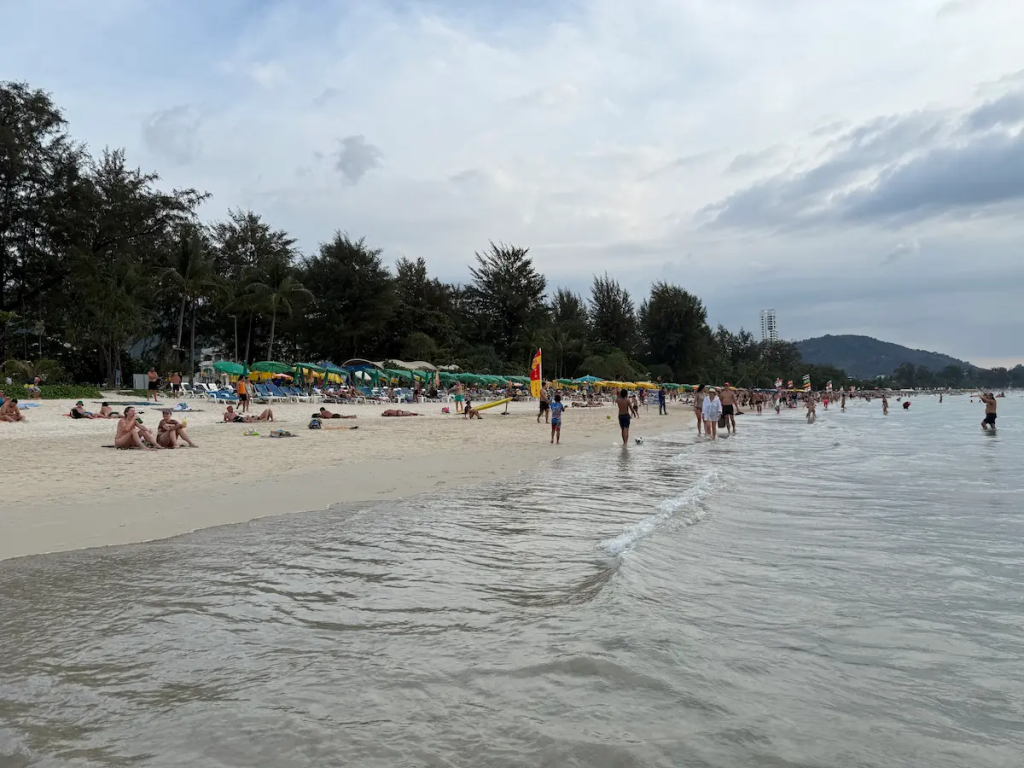
Before booking accommodation or planning your itinerary, take a moment to consider what you want from your holiday. Are you looking for a lively beach destination with plenty of nightlife, a relaxing base to explore Phuket, a family holiday with convenient facilities, or simply somewhere with great food and easy access to the sea? Your priorities will influence almost every decision that follows, from choosing the best area to stay to deciding how many days to spend in Patong.
The good news is that Patong is flexible enough to suit a wide range of travel styles. Understanding what you want from your visit before you arrive will make it much easier to plan a holiday that matches your expectations rather than someone else’s.
Choose the Right Time to Visit
Patong is a year-round destination, but the experience can vary depending on when you visit. While temperatures remain warm throughout the year, the weather, sea conditions and number of visitors change with the seasons, making some times of year better suited to certain travel styles than others.
The dry season generally brings calmer seas, more sunshine and ideal beach conditions, making it the most popular time to visit. During these months you’ll find the busiest atmosphere, higher accommodation demand and a wide range of tours and outdoor activities operating each day.
The green season offers a different experience. Rain showers are more frequent, the sea can become rougher and swimming conditions aren’t always suitable, but many travellers appreciate the quieter atmosphere, lower accommodation prices and the island’s lush tropical scenery. It’s also worth remembering that rain rarely falls all day, with many days still offering long periods of sunshine between showers.
Rather than asking when the “best” time to visit is, consider which season best matches the type of holiday you’re planning. If your priority is beach time and island tours, the dry season is generally the better choice. If you value fewer crowds and better value, the green season can be an excellent alternative. Our detailed guide on the best time to visit Patong explores the seasons in much greater depth.
Decide How Long to Stay
One of the most overlooked parts of planning a holiday to Patong is allowing for your travel days. Depending on where you’re travelling from, your arrival and departure days are often largely consumed by flights, airport transfers and checking in or out of your accommodation. While you may have booked a five-day holiday, you could have only three full days available to explore Patong itself.
Three full days in Patong is a realistic minimum for a first visit. It gives you enough time to enjoy the beach, experience the nightlife, visit local markets, explore a few attractions and get a feel for the destination without rushing from place to place. You’ll still need to prioritise what interests you most, but it’s enough to understand why Patong is such a popular destination.

If you’d also like to include one of Phuket’s popular island tours, consider adding at least one extra day. Island excursions usually occupy most of the day, leaving little opportunity to explore Patong itself. Allowing an additional day creates a more relaxed itinerary and gives you the flexibility to enjoy both experiences without feeling like you’re constantly on the move.
If your schedule allows, around seven days is an ideal length for a first visit. You’ll have time to experience Patong at a comfortable pace, take an island tour, visit other parts of Phuket and still leave room for the unexpected discoveries that often become the highlight of a holiday. Rather than trying to fit everything into a short stay, you’ll be able to enjoy the destination without constantly watching the clock.
Choose the Best Area to Stay
Choosing the right area to stay can have a bigger impact on your holiday than choosing the hotel itself. Patong offers a wide range of accommodation, from beachfront resorts and luxury hillside retreats to budget guesthouses tucked away on quieter inland streets. Understanding the different areas will help you find accommodation that suits your travel style rather than simply booking the first hotel that catches your eye.
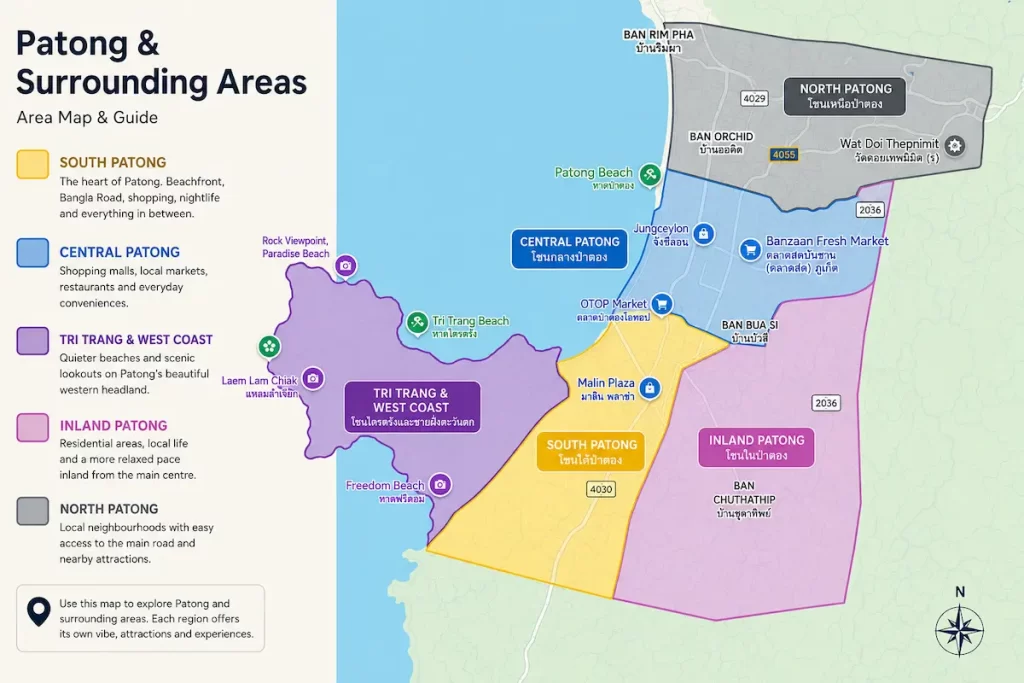
If you’d like to be close to the action, central Patong places you within easy walking distance of Bangla Road, Jungceylon, the beach and many of the area’s restaurants and entertainment venues. It’s a convenient choice for visitors who want to be in the heart of everything, although it also tends to be the busiest part of Patong.
Travellers looking for a quieter experience may prefer the northern end of Patong Beach, the Tri Trang peninsula or some of the inland neighbourhoods. These areas offer a more relaxed atmosphere while still providing convenient access to the beach and Patong’s main attractions. Families, couples and visitors who value peace and quiet often find these locations a better fit than staying in the centre.
Budget is also worth considering. As a general guide, accommodation prices tend to decrease the further you move away from the beachfront, although there are exceptions. Spending a little time comparing the different areas before booking can make a significant difference to both your experience and your budget.
Our guide to where to stay in Patong explores each area in detail, helping you choose the location that best matches the type of holiday you’re planning.
Decide How You’ll Get Around
One of Patong’s biggest advantages is that you don’t necessarily need a car or scooter to enjoy your holiday. Many of the area’s most popular attractions, restaurants, markets and shopping centres are within walking distance of one another, particularly if you’re staying near the beach or in central Patong.
For destinations further away, taxis, tuk-tuks and ride-hailing services such as Bolt and Grab make it easy to travel around Patong and explore other parts of Phuket. While transport costs are generally higher than many first-time visitors expect, they remain a convenient option for those who prefer not to drive themselves.
Some visitors choose to hire a scooter, particularly if they plan to explore beyond Patong. While this offers flexibility, it also carries the greatest safety risk for most travellers. Phuket’s roads can be busy, traffic conditions may be unfamiliar and many visitors have little or no experience riding motorcycles. If you’re not a confident rider, you’ll often enjoy a more relaxing holiday by leaving the driving to someone else.
The best way to get around ultimately depends on your itinerary. Many visitors find they can comfortably spend several days in Patong on foot, using occasional transport when needed, while those planning to explore more of Phuket may benefit from a mix of ride-hailing services, organised tours and private transport. Our detailed guide to getting around Patong explains each option in greater detail, including the advantages, limitations and typical situations where each works best.
Plan What You Want to See and Do
Patong offers far more than many first-time visitors expect. While the beach and nightlife are undoubtedly two of its biggest attractions, you’ll also find cultural landmarks, local markets, scenic viewpoints, water activities and easy access to some of Phuket’s most popular day trips. Having a rough plan before you arrive can help you make the most of your time without filling every hour of your itinerary.
Rather than trying to see everything, focus on the experiences that interest you most. You might spend one day relaxing on the beach, another exploring local markets and viewpoints, and another visiting temples or joining an island tour. Leaving some flexibility in your schedule also gives you the opportunity to follow local recommendations or spend more time in places you unexpectedly enjoy.
If you’re staying for several days, consider balancing time in Patong with experiences elsewhere on Phuket. Popular beaches, Old Phuket Town and many of the island’s natural attractions are all within easy reach, making Patong an excellent base for wider exploration.
Our destination guides cover Patong’s beaches, attractions, markets, viewpoints, cultural sites and practical travel advice in much greater detail, helping you build an itinerary that matches your own interests rather than simply following someone else’s list.
Prepare Before You Leave
A little preparation before you leave home can make your first few days in Patong far more enjoyable. Taking care of a few practical details in advance means you’ll spend less time solving problems after you arrive and more time enjoying your holiday.
Before travelling, make sure your passport has sufficient validity, organise comprehensive travel insurance and check whether you require a visa for Thailand. It’s also worth notifying your bank if necessary and considering how you’ll access money during your trip. While credit cards are widely accepted at larger businesses, carrying some Thai Baht is useful for local markets, smaller restaurants and many street vendors.
Staying connected is another consideration. Many visitors choose to purchase a local SIM card or activate an eSIM before arriving, making it easy to access maps, ride-hailing apps and travel information throughout their stay. Downloading offline maps can also be helpful if you plan to explore beyond Patong.
Finally, think about what you’ll need for Phuket’s tropical climate. Lightweight clothing, comfortable walking shoes, sunscreen, insect repellent and a reusable water bottle are all worthwhile additions to your luggage. Packing appropriately won’t just make your holiday more comfortable—it will also save you time and money once you arrive.
With these practical details taken care of, you’ll be free to focus on enjoying everything Patong has to offer from the moment your holiday begins.
Build a Simple Itinerary
One of the easiest ways to improve your first visit to Patong is to plan around full days rather than the total length of your holiday. In the examples below, we’ve excluded your arrival and departure days, as these are often largely taken up by flights, airport transfers and checking in or out of your accommodation. Whether you’re flying from Europe, Australia or elsewhere in Thailand, thinking in terms of full days gives you a more realistic picture of how much time you’ll actually have to explore.
Three Full Days
Three days gives you enough time to experience the highlights of Patong without feeling constantly rushed. A typical first visit might include a beach day, time exploring local markets and shopping areas, a visit to one or two cultural attractions or viewpoints, and an evening experiencing Patong’s restaurants or nightlife. While you won’t see everything, you’ll leave with a good understanding of what makes Patong such a popular destination.
Five Full Days
With five full days, you can explore Patong at a more relaxed pace while including some of Phuket’s other attractions. Many visitors use one of these days for an island tour, while the remaining days allow time to enjoy the beach, discover different neighbourhoods, visit local markets, explore viewpoints and simply relax. The additional time also gives you the flexibility to revisit places you particularly enjoy instead of feeling pressured to move on.
Seven Full Days
Seven full days provides the opportunity to experience Patong without rushing while using it as a base to discover more of Phuket. You’ll have time to include an island tour, visit attractions beyond Patong, enjoy quieter days at the beach and leave room for spontaneous discoveries that often become the highlight of a holiday. Rather than trying to fit everything into a busy schedule, a week allows you to balance sightseeing with time to simply enjoy being in the destination.
Plan Around Full-Day Activities
When planning your itinerary, remember that some experiences naturally occupy most of the day. Island tours are a good example. They typically include hotel pickup, transport to the departure pier, the tour itself and the return journey to Patong, often leaving little time for additional sightseeing that day. Instead of trying to squeeze multiple major activities into a single day, allow enough time to enjoy each experience without feeling rushed.
Things First-Time Visitors Often Forget
Even with careful planning, there are a few practical details that many first-time visitors overlook. None of them are difficult to manage, but knowing them before you arrive can save time, money and unnecessary frustration during your holiday.
Bring a Small Amount of Cash
If you need Thai Baht when you arrive, exchange only a small amount at the airport. Airport exchange rates are often less favourable than those available in Patong, where you’ll generally find better rates at local exchange booths. If you’re bringing foreign currency, crisp, undamaged banknotes usually receive the best exchange rates.
Know Your ATM Options
If you need to withdraw cash, AEON Bank ATMs typically charge one of the lowest withdrawal fees, although they’re less common than other banks. Kasikorn Bank ATMs usually allow higher withdrawal limits, helping reduce the cost per Baht withdrawn if you need a larger amount. When using an ATM, choose to be charged in Thai Baht without currency conversion, allowing your own bank to determine the exchange rate. If you’re withdrawing a larger amount, an over-the-counter withdrawal at a bank may avoid the ATM fee altogether.
Photograph Rental Vehicles
Before leaving with a scooter, jet ski or rental car, take a slow video or several clear photos showing the condition of the vehicle from all angles. This simple habit provides a record of any existing scratches or damage and can help avoid misunderstandings when it’s returned.
Book Tours Locally
Unless your package already includes tours, you’ll often find better prices at reputable local tour booths than booking through your hotel. Hotel bookings can include an additional commission, and local operators may also be willing to offer a small discount if you ask politely.
Think About How You’ll Get Around
If you’re planning to hire a scooter, make sure you hold the appropriate licence and an International Driving Permit if required. If you don’t intend to drive, download Grab and Bolt before arriving, as they’re often a more economical option than taxis or tuk-tuks.
Don’t Underestimate Travel Times
Many attractions look close together on a map, but Phuket’s traffic can make journeys take much longer than expected. Plan your days around travel time rather than distance, and avoid trying to fit too many major attractions into a single day.
Choose Your Beach Spot Carefully
If you’re planning to spend the day at Patong Beach, the northern end is generally less congested and often provides a more relaxed atmosphere than the central beachfront. It’s a great option if you’re looking for a little more space while still being within easy reach of facilities.
Respect the Sea
During the green season, always pay attention to the beach warning flags. Strong waves and rip currents can develop quickly, even when the water appears inviting. Swim only where conditions are considered safe and follow the advice of the lifeguards.
Eat One or Two Streets Back
Beachfront restaurants often charge a premium for their location. Walking just one or two streets inland can open up a much wider choice of restaurants, with many offering excellent food at more affordable prices.
Drink Bottled Water
Tap water isn’t recommended for drinking in Phuket. Bottled water is inexpensive and widely available, making it easy to stay hydrated throughout your holiday.
7-Eleven Is Your Friend
You’ll find 7-Eleven stores throughout Patong, many open 24 hours a day. They’re an excellent place to buy bottled water, ready-to-eat meals, snacks, sunscreen, toiletries, SIM cards, phone chargers and many of the everyday items travellers often forget to pack.
These small pieces of local knowledge won’t define your holiday, but together they can make your first visit to Patong smoother, more affordable and considerably more enjoyable.
Travel With Insight Perspective
After living in Patong for several years, one piece of advice I find myself giving to almost every first-time visitor is this: don’t try to do too much.
It’s easy to look at a map of Phuket and think that attractions are only a short distance apart. In reality, traffic conditions, winding roads and the number of vehicles on the island often mean journeys take much longer than expected. Spending hours in traffic between attractions can quickly become tiring, particularly during a short holiday.
Fortunately, one of Patong’s greatest strengths is that you don’t need to travel far to enjoy a rewarding holiday. Within a relatively compact area you’ll find beaches, markets, restaurants, nightlife, shopping, viewpoints, cultural attractions and a wide range of accommodation. It’s entirely possible to spend several days here without ever feeling like you’ve run out of things to do.
When you’re ready to explore beyond Patong, think of the rest of Phuket as a series of day trips rather than trying to see everything at once. Phuket Old Town offers a very different atmosphere, Karon provides a quieter beach experience, the island tours showcase the beauty of the Andaman Sea, and many of Phuket’s larger temples and attractions can be comfortably visited as dedicated outings.
In my experience, the most enjoyable holidays aren’t the ones with the busiest itineraries—they’re the ones that leave enough time to slow down, discover places unexpectedly and enjoy each destination without constantly watching the clock. Patong is an excellent base for doing exactly that.
Final Thoughts
Planning your first visit to Patong doesn’t need to be complicated. By deciding what type of holiday you want, choosing the right time to visit, allowing enough days to explore and understanding how to get around, you’ll arrive with realistic expectations and be able to make the most of your time.
Patong offers an excellent balance of convenience, entertainment and access to the rest of Phuket. Whether you’re visiting for a few days or spending a week using it as your base, thoughtful planning before you arrive will help you spend less time solving problems and more time enjoying your holiday.
Most importantly, don’t feel as though you need to see everything on your first trip. Patong has a way of encouraging visitors to slow down, discover places unexpectedly and create their own memorable experiences. Leave yourself a little flexibility, enjoy the journey and you’ll understand why so many travellers choose to return again.
Frequently Asked Questions
Is Patong a good place for a first visit to Phuket?
Yes. Patong is one of the best places for first-time visitors because it offers a wide choice of accommodation, restaurants, shopping, beaches, nightlife and organised tours. It also provides easy access to many of Phuket’s most popular attractions.
How many days should I spend in Patong?
Three full days is a good minimum for a first visit. If you plan to take an island tour or explore more of Phuket, five to seven full days will provide a much more relaxed experience.
What is the best time of year to visit Patong?
The dry season generally offers the most reliable beach weather, while the green season often brings fewer crowds and lower accommodation prices. The best time depends on the type of holiday you’re planning.
Is Patong expensive?
Patong caters to a wide range of budgets. You’ll find everything from affordable guesthouses and local restaurants to luxury beachfront resorts and fine dining, making it suitable for most travellers.
Do I need to hire a scooter in Patong?
No. Many visitors comfortably explore Patong on foot and use Grab or Bolt for longer journeys. Hiring a scooter is optional rather than essential.
Is it safe to swim at Patong Beach?
Patong Beach is generally safe when conditions are suitable, but always pay attention to the warning flags and lifeguard advice. During the green season, strong waves and rip currents can make swimming dangerous.
Should I book tours before I arrive?
Unless you’re travelling during an especially busy period, many tours can be booked after you arrive. Local tour booths often offer competitive prices and a wide range of options.
Can I use credit cards in Patong?
Yes, most hotels, shopping centres and larger restaurants accept credit cards. However, carrying some Thai Baht is recommended for markets, smaller restaurants and local businesses.
Can I explore the rest of Phuket from Patong?
Absolutely. Patong is an excellent base for day trips to places such as Phuket Old Town, Karon, Kata, the Big Buddha area, major temples and the surrounding islands.
Continue Planning Your Phuket Holiday
Planning your first visit to Patong is only the beginning. Once you’ve decided where to stay and how long to visit, you can start exploring the experiences that make Patong and the rest of Phuket such a rewarding destination.
Our Patong Travel Guide brings together detailed articles covering beaches, accommodation, attractions, restaurants, local markets, transport and practical travel advice to help you get the most from your stay. If you’re planning to explore beyond Patong, our Phuket Travel Guide offers destination guides, local insights and travel tips from across the island, helping you confidently plan day trips and discover even more of what Phuket has to offer.
Related Reading
Best Time to Visit Patong
Compare Patong’s seasons, weather conditions, visitor numbers and typical prices to choose the time of year that best suits your holiday.
Where to Stay in Patong
Explore Patong’s different accommodation areas and find the location that best matches your preferred atmosphere, budget and travel style.
Getting Around Patong
Understand your transport options, including walking, tuk-tuks, taxis, ride-hailing services and scooter rental.
Patong Travel Tips
Find practical local advice to help you avoid common problems and enjoy a smoother, more confident visit to Patong.
Is Patong Safe?
Learn about beach safety, transport, nightlife, common scams and the practical precautions that can help you enjoy Patong safely.
Plan Your Phuket Holiday
When you’re ready to turn your research into a confirmed holiday, Resurgence Travel can help you plan and book a Phuket trip suited to your interests, travel style and available time. Explore your options and begin planning your Phuket holiday with personalised support.
About the Author
David Hibbins is a travel publisher, destination researcher and the creator of Travel With Insight. He spends considerable time exploring Patong and Phuket, combining first-hand observations with detailed destination research.
His work helps travellers understand how destinations differ, what they can realistically expect and how to plan holidays that suit their interests, available time and travel style.