
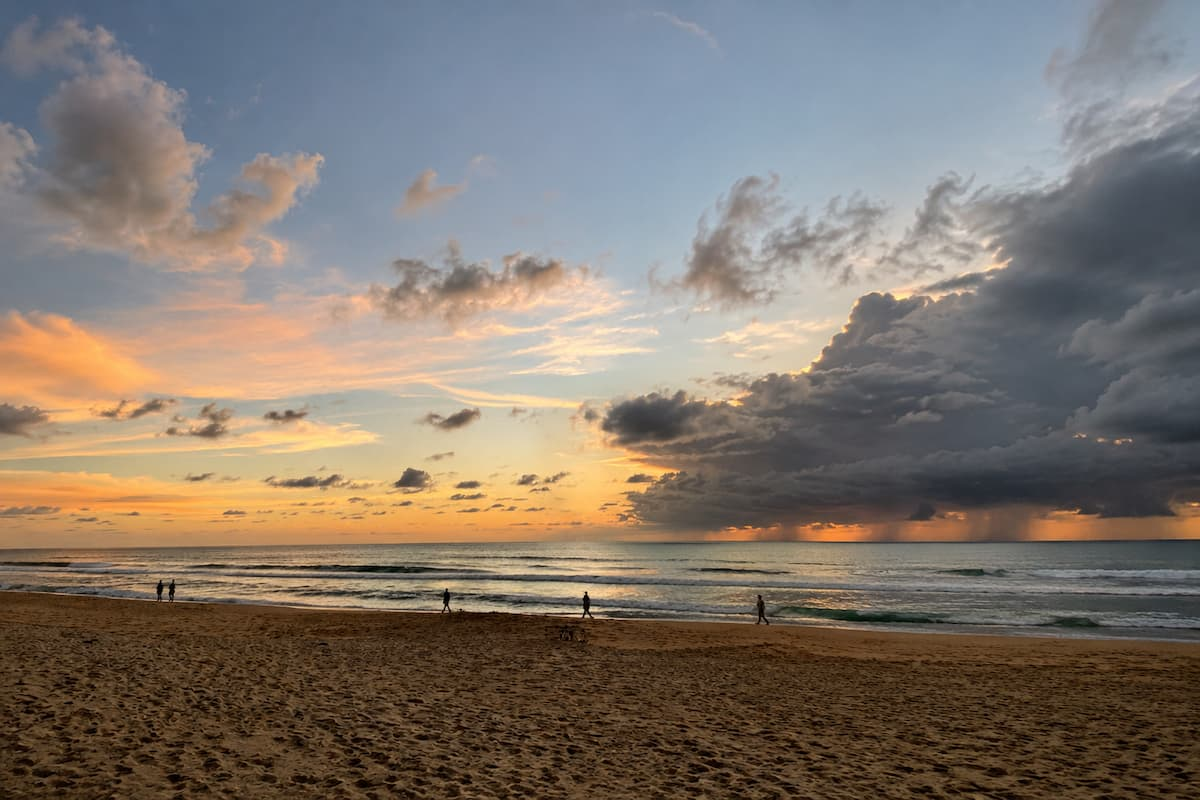
Best Time to Visit Phuket: Weather, Seasons & When to Go
he best time to visit Phuket is generally from December to February, when rainfall is lower, the Andaman Sea is typically calmer and conditions are well suited to beaches, swimming and island trips. It is also Phuket’s busiest and usually most expensive time of year.
But the best time for your Phuket holiday may be different. Travelling outside peak season can mean lower accommodation prices, fewer crowds and a more relaxed experience, while the southwest monsoon months bring the waves that make Phuket’s west coast popular for surfing.
Weather is only part of the decision. Sea conditions, crowds, prices and the experiences you want to enjoy can matter just as much as rainfall. In this guide, we compare Phuket throughout the year to help you choose the right time to visit for your travel style and priorities.
Quick Summary: Best Time to Visit Phuket
Best time overall: December to February offers the most dependable combination of lower rainfall, calmer seas and excellent conditions for beaches and island trips.
Best weather: January and February, with February typically Phuket’s driest month.
Best for beaches and swimming: December to March, when west-coast sea conditions are generally at their most favourable.
Best for island hopping: November to April, particularly December to March if you want the greatest weather reliability.
Best for budget travel: May to July offers lower accommodation prices and fewer visitors without deliberately choosing the wettest part of the year.
Best for good weather and lower prices: November or late March into April can provide a useful compromise between peak-season conditions and cost.
Best for fewer crowds: May to October, provided you are comfortable with greater weather uncertainty.
Best for surfing: May to October, when the southwest monsoon produces waves along Phuket’s west coast.
Wettest period: September and October generally carry the greatest risk of significant rainfall and rough seas.
Hottest period: March to May, with April typically among the hottest months.
For a first Phuket holiday built around beaches, swimming and island trips, choose December to February. If price matters more and you are comfortable changing plans around the weather, May to July can offer excellent value.
When Is the Best Time to Visit Phuket?
For most travellers, December to February is the best time to visit Phuket. These months generally offer the most reliable combination of lower rainfall, sunshine and calmer sea conditions, making them particularly well suited to beach days, swimming, snorkelling and island trips.
The trade-off is that this is also Phuket’s peak season. Popular beaches and attractions are busier, accommodation prices are typically higher, and the Christmas and New Year period can be particularly busy.
Travelling outside these months can make sense depending on your priorities. November and late March into April can offer a good balance between favourable conditions and avoiding the heart of peak season, while May to July can appeal to budget-conscious travellers willing to accept more variable weather and sea conditions.
There are also reasons to deliberately choose the southwest monsoon season. Crowds are generally lower, accommodation can be considerably cheaper, and May to October brings the waves that create Phuket’s surfing season.
Phuket at a Glance: When to Visit
| What matters most | Best time to visit |
|---|---|
| Best overall | December–February |
| Best weather | January–February |
| Beaches and swimming | December–March |
| Island hopping | November–April |
| Diving and snorkelling | November–April |
| Good weather and lower prices | November or late March–April |
| Budget travel | May–July |
| Fewer crowds | May–October |
| Surfing | May–October |
| Songkran | April |
| Phuket Vegetarian Festival | Usually September or October |
These periods should be treated as a guide rather than a guarantee. Phuket has a tropical climate, and sunny days can occur during the wettest months just as rain and rough seas can occasionally occur during the dry season.
The biggest seasonal difference is not simply how much it rains, but how conditions affect the holiday you want to have. A traveller planning to spend most of their time exploring Phuket, eating out and relaxing at a resort can approach the rainy season very differently from someone whose priority is calm beaches and daily boat trips.
Understanding Phuket’s Seasons
Phuket has a tropical climate with warm temperatures throughout the year, so the biggest seasonal differences are not between hot and cold weather. Instead, they come from rainfall, humidity, wind and changing conditions in the Andaman Sea.
The year can broadly be divided into the drier season from November to April and the southwest monsoon season from May to October. However, conditions change gradually rather than switching from one season to another on a particular date.
Dry Season: November to April
From November, rainfall generally begins to decrease and conditions in the Andaman Sea become more settled. December through February provides the most consistently favourable weather, while March and April remain popular but become increasingly hot as the year progresses.
This is the easiest period for travellers wanting the classic Phuket beach holiday. Calmer seas generally make swimming more dependable and provide better conditions for snorkelling, diving and boat trips to surrounding islands.
The disadvantage is demand. December through February is peak season, particularly around Christmas and New Year, so expect more visitors and generally higher accommodation prices.
November and late March into April sit closer to the edges of peak season and can offer a useful compromise, although neither comes without trade-offs. November can still experience significant rain, while April is one of Phuket’s hottest months.
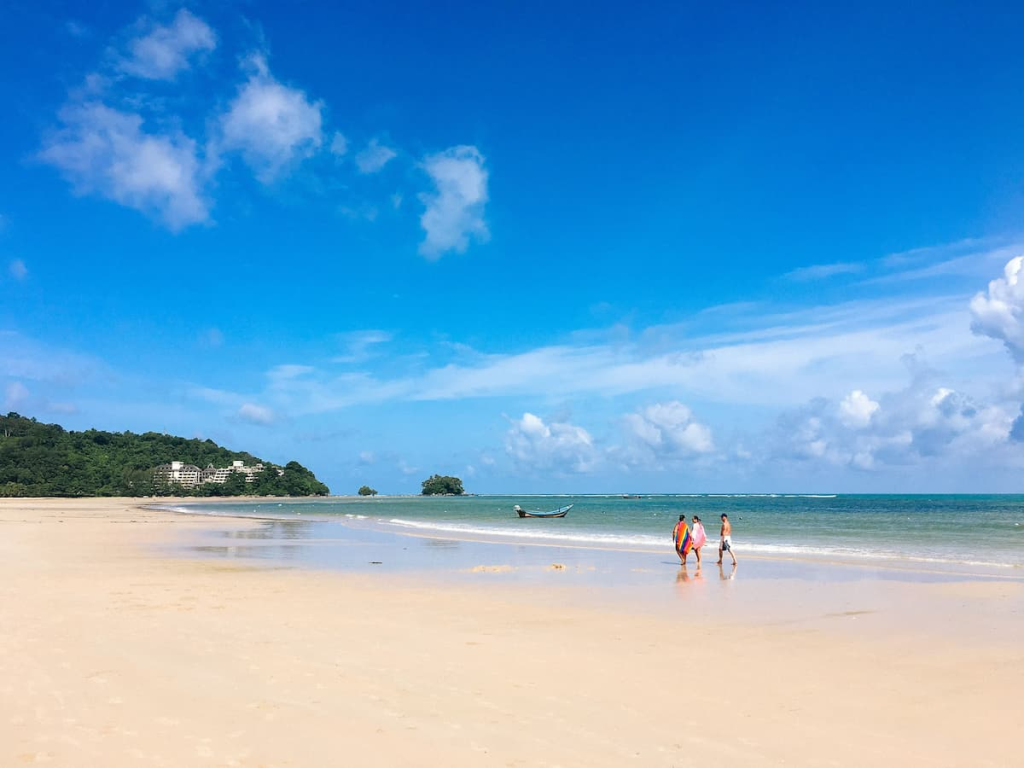
Southwest Monsoon Season: May to October
The southwest monsoon brings increased rainfall, stronger winds and rougher conditions along Phuket’s west coast. September and October generally carry the greatest risk of significant rainfall, although weather varies considerably from year to year.
Rainy season does not necessarily mean continuous rain from morning until night. Phuket can experience heavy tropical showers followed by brighter conditions, and there can be excellent sunny days even during the wetter months. There can also be periods when unsettled weather lasts for several days, so flexibility becomes increasingly important.
The advantages are lower visitor numbers and generally cheaper accommodation. Phuket’s restaurants, shopping, nightlife, spas and most land-based attractions continue operating, making low season particularly attractive to travellers who are not relying on perfect beach conditions every day.
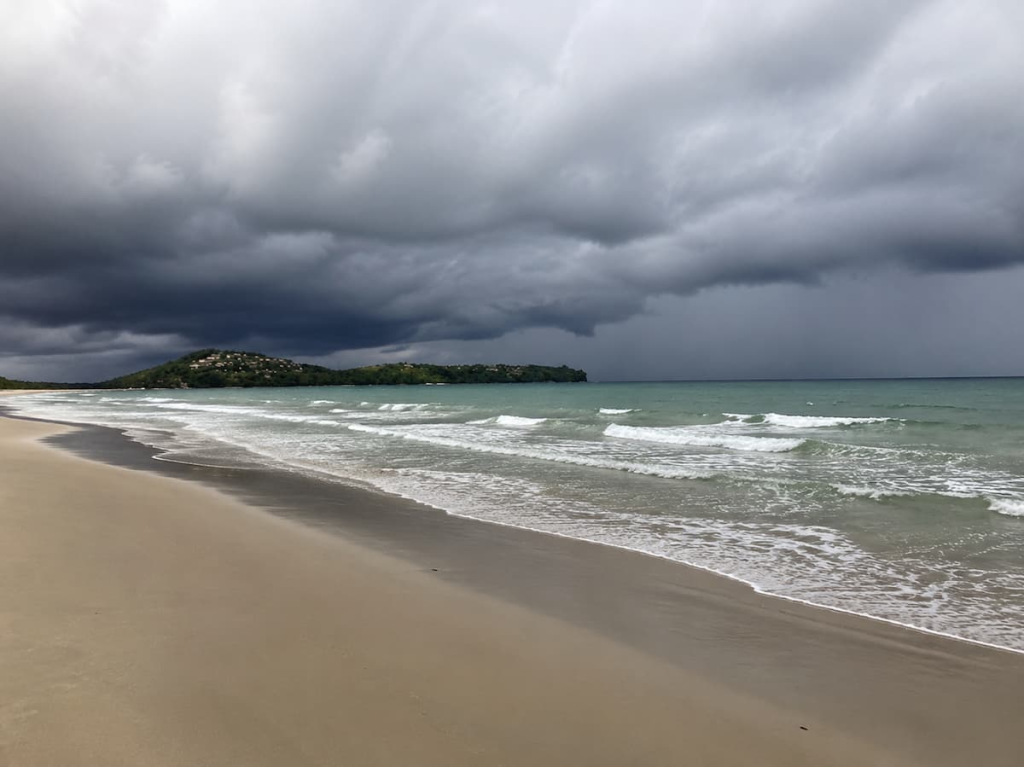
Why Sea Conditions Matter as Much as Rain
When deciding when to visit Phuket, it is easy to focus entirely on the weather forecast. For many holidays, however, conditions in the Andaman Sea can have a greater impact than rainfall itself.
During the southwest monsoon, waves and rip currents can make swimming dangerous at Phuket’s west-coast beaches. Red warning flags should always be taken seriously, even when the weather above the beach looks pleasant.
Rougher seas can also affect snorkelling, diving and boat excursions. Trips may be less comfortable, itineraries can change and departures can occasionally be cancelled when conditions are unsuitable.
A tropical shower may interrupt part of your afternoon. Several days of rough seas can have a much greater effect if your plans revolve around swimming and island hopping.
This is why Phuket’s rainy season can still work very well for a traveller interested in food, culture, nightlife, sightseeing and resort time, while being a much bigger compromise for someone imagining a holiday centred around calm beaches and daily trips on the water.
Best Time to Visit Phuket for Different Types of Holidays
The best time to visit Phuket changes depending on what you want to do. Calm seas matter much more to someone planning a beach and island holiday than to a traveller interested in food, nightlife, shopping or exploring Phuket by road.
Best Time for Beaches and Swimming: December to March
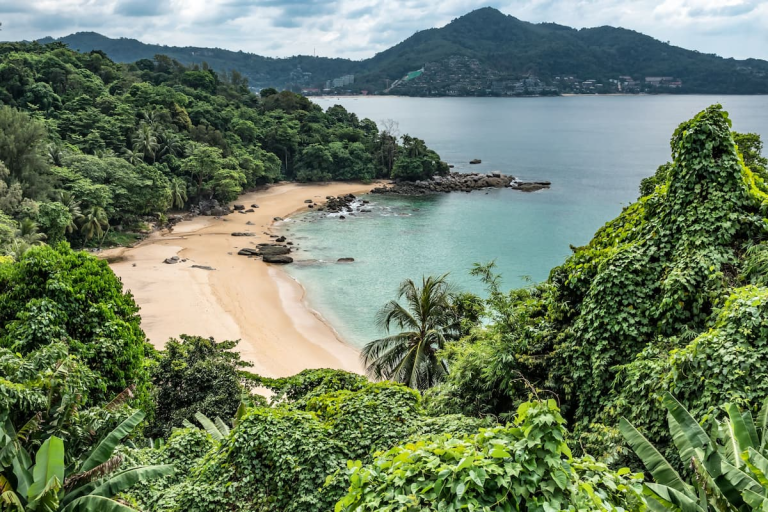
December to March is the best period for a Phuket holiday focused on beaches and swimming. Rainfall is generally lower and the Andaman Sea is typically calmer, providing more dependable conditions along Phuket’s west coast.
January and February are particularly strong choices if beach weather is your main priority. February is historically Phuket’s driest month, while March remains favourable but becomes noticeably hotter.
November and April can also provide excellent beach days, but they sit closer to the seasonal transitions. November retains a greater chance of rain, while April brings increasing heat before the southwest monsoon develops.
Best Time for Island Hopping: November to April
If Phi Phi, Phang Nga Bay, the Racha Islands or other boat trips are an important part of your holiday, November to April provides the most favourable overall window for island hopping from Phuket.
Calmer seas generally mean more comfortable journeys and more reliable conditions for swimming and snorkelling during excursions. December through March offers the strongest combination of weather and sea conditions.
Some destinations are also seasonal. The Similan Islands, for example, are normally open to visitors only during the drier part of the year, with the marine national park closing during the southwest monsoon season.
Boat trips to other destinations continue during much of the low season, but weather and sea conditions can affect departures and itineraries. If several island trips are central to your holiday, travelling during the drier months reduces that uncertainty.
Best Time for Diving and Snorkelling: November to April
November to April is generally the best period for diving and snorkelling around Phuket, with January to March offering a particularly strong combination of calmer seas and favourable weather.
Conditions vary between dive and snorkelling locations, but calmer water can improve visibility and make offshore trips more comfortable. The seasonal opening of the Similan Islands also makes the dry season particularly attractive for divers wanting to explore farther from Phuket.
If snorkelling is simply an occasional addition to your holiday, travelling outside this period may still work. If underwater activities are one of your main reasons for coming to Phuket, the dry season provides a much more dependable choice.
Best Time for Budget Travel: May to July
The cheapest time to visit Phuket is not necessarily the best time for a budget holiday.
Accommodation prices generally fall significantly during the southwest monsoon season, but choosing the wettest part of the year purely because a hotel is cheaper can create a poor trade-off if weather repeatedly interferes with the experiences you came for.
May to July offers a useful budget sweet spot. Visitor numbers are lower, accommodation can be considerably cheaper than during peak season, and there can still be plenty of enjoyable weather between periods of rain.
The compromise is less reliable sea conditions. Travellers should be prepared to rearrange beach and boat days around the weather rather than planning a rigid itinerary.
For someone who wants to enjoy Phuket’s food, nightlife, attractions, resorts and occasional good beach days at a lower overall cost, this can represent excellent value. For someone whose holiday depends on calm seas and frequent island trips, paying more to travel during the dry season may ultimately provide better value.
Best Time for Fewer Crowds: May to October
Travellers who prefer a quieter Phuket should consider May to October. Visitor numbers generally fall during the southwest monsoon season, and beaches, attractions and popular areas can feel noticeably less crowded than during the peak months.
The quieter atmosphere comes with greater weather uncertainty, particularly during September and October. However, visitors who are comfortable changing plans around the weather can enjoy a very different side of Phuket.
This period is particularly well suited to slower holidays where eating out, exploring different areas, visiting Phuket Old Town, enjoying resort facilities and taking advantage of good weather when it appears are more important than following a tightly scheduled beach itinerary.
Best Time for Surfing: May to October
For surfers, Phuket’s southwest monsoon changes the usual seasonal recommendation completely.
May to October is Phuket’s main surfing season, when stronger southwest winds generate waves along the west coast. Kata Beach is the island’s best-known surfing location, with several other west-coast beaches also producing surf when conditions are suitable.
Those same conditions explain why swimming becomes less dependable during this period. Surfing conditions and swimming conditions are not interchangeable, and red flags or local safety warnings should always be respected.
For a traveller coming specifically to surf, the season many conventional Phuket guides describe as the “worst” time to visit can actually be the right time to come.

Best Time for Good Weather and Lower Prices
If you want favourable conditions without travelling during the heart of Phuket’s peak season, November and late March into April can offer a useful balance between weather and price.
These shoulder periods sit on either side of the busiest December to February months. Accommodation can be better value, while conditions can still be suitable for beaches, sightseeing and exploring Phuket. However, each period comes with a different compromise.
November: Improving Weather Before Peak Season
November marks the transition towards Phuket’s drier season. Sea conditions generally begin to settle, more boat trips become dependable and the island moves towards its main tourism season.
However, November should not be treated as a guaranteed dry-season month. Long-term climate averages show that Phuket still receives considerably more rainfall in November than during December, January or February, and unsettled periods remain possible.
For travellers with some flexibility, this can be an attractive compromise: improving conditions without immediately choosing the busiest part of the year.
Late March and April: Good Conditions but Increasing Heat
At the other end of the peak season, late March into April can provide another opportunity to combine generally favourable beach conditions with easing peak-season demand.
Rainfall remains much lower than during the heart of the southwest monsoon, and sea conditions can still be suitable for swimming and boat trips. The major trade-off is heat. March is already hot, and April is typically one of Phuket’s hottest times of the year.
April also brings Songkran, Thailand’s New Year celebrations. Visiting around the festival can be an experience in itself, particularly in busy areas such as Patong and Phuket Town, but demand and crowds around the celebration can temporarily increase.
Value Depends on the Holiday You Want
A cheaper room does not automatically make a particular month better value.
If your Phuket holiday revolves around beaches, snorkelling and island trips, paying more for dependable dry-season conditions may be worthwhile. If you are happy to mix beach time with restaurants, sightseeing, nightlife and resort days, accepting some weather uncertainty can reduce the cost of your holiday considerably.
The best value therefore sits at the point where the money you save is still worth the seasonal compromises you are making.
Is Phuket Worth Visiting During the Rainy Season?
Yes, Phuket can still be worth visiting during the rainy season, particularly if lower prices, fewer crowds and a more flexible holiday appeal to you. However, a low-season Phuket holiday is not simply a cheaper version of visiting in February.
The southwest monsoon generally affects Phuket from May to October. During these months, rainfall becomes more frequent, humidity is high and conditions in the Andaman Sea are less predictable. September and October typically carry the greatest risk of significant rainfall.
That does not mean it rains continuously every day. Phuket can experience heavy tropical showers followed by sunshine, and there can be stretches of very pleasant weather. The difficulty is predictability. You may have several excellent days, or encounter an unsettled period that affects your plans.
What Can You Still Do During Rainy Season?
Most of Phuket does not close when the rainy season arrives. Restaurants, shopping centres, markets, nightlife, spas and most land-based attractions continue operating throughout the year.
Phuket Old Town is still easy to explore when conditions allow, while temples, viewpoints, restaurants and different parts of the island can be worked around passing showers. Resorts with good pools, restaurants, spas and other facilities can also become particularly appealing when the weather is changeable.
Boat trips still operate to many destinations when conditions permit, but this is where flexibility becomes important. Rather than building a rigid itinerary around specific excursion days, it can be better to watch the forecast and sea conditions and take advantage of favourable windows.
What Are the Main Compromises?
The biggest compromise is often the sea rather than the rain.
Phuket’s west-coast beaches can experience larger waves and dangerous rip currents during the southwest monsoon. There may be beautiful sunny weather above the beach while red flags make swimming unsafe.
Island trips can also be rougher, less comfortable or occasionally cancelled, and some seasonal marine destinations are unavailable. The Similan Islands, for example, normally close during the southwest monsoon period.
If calm turquoise water and frequent island excursions are central to how you imagine your Phuket holiday, low season involves a meaningful risk that you will not get that experience.
Who Is Rainy Season Best For?
Rainy season can be a good choice if you are flexible, value-conscious and interested in Phuket beyond its beaches.
It particularly suits travellers who are happy combining good-weather periods with food, sightseeing, shopping, nightlife, wellness and time around their accommodation. Lower visitor numbers can also make parts of Phuket feel considerably more relaxed.
It is less suitable if you have a short stay with a tightly planned itinerary or if swimming, snorkelling and several boat excursions are your main reasons for visiting.
There is nothing inherently wrong with visiting Phuket during the rainy season. The important thing is to understand the trade-off before you book. Come for a flexible Phuket holiday and good weather becomes a bonus; come expecting seven guaranteed days of calm seas and sunshine and you may be disappointed.
Phuket Weather Month by Month
Phuket is warm throughout the year, but rainfall, sea conditions, visitor numbers and prices can change considerably from one month to another. The following month-by-month guide shows what you can generally expect and the main trade-offs to consider.
Phuket in January
Weather: Dry, warm and generally sunny
Sea: Usually calm
Crowds: Very high
Prices: High
Best for: Beaches, swimming, island trips and first-time visitors
January is one of the best months to visit Phuket if weather is your priority. Rainfall is relatively low, the Andaman Sea is generally settled and conditions are excellent for beaches and boat trips.
The trade-off is demand. January sits firmly within peak season, so expect busy popular areas and some of the highest accommodation prices of the year.
Phuket in February
Weather: Typically the driest conditions of the year
Sea: Usually calm
Crowds: High
Prices: High
Best for: Overall weather, beaches, snorkelling and island hopping
February is arguably Phuket’s strongest weather month. Long-term climate averages make it the driest month of the year, while sea conditions are generally favourable for swimming and offshore activities.
If you want the highest probability of experiencing the classic Phuket combination of sunshine, beaches and calm water, February is difficult to beat. You will generally pay peak-season prices for the privilege.
Phuket in March
Weather: Mostly dry but increasingly hot
Sea: Generally calm
Crowds: Moderate to high
Prices: Beginning to ease
Best for: Beaches, islands and late-season sunshine
March remains an excellent month for a beach holiday. Rainfall is relatively low and sea conditions are usually favourable, but temperatures begin climbing towards Phuket’s hottest part of the year.
For travellers comfortable with the heat, March can provide an attractive alternative to the busier January and February period.
Phuket in April
Weather: Hot with increasing chance of showers
Sea: Generally favourable but becoming more variable
Crowds: Variable
Prices: Generally easing outside holiday periods
Best for: Beaches, Songkran and travellers comfortable with heat
April is one of Phuket’s hottest months and marks the transition towards the southwest monsoon. There can still be excellent beach weather, particularly earlier in the month, but conditions become less predictable as the month progresses.
Songkran brings a completely different atmosphere around the Thai New Year celebrations. It can be a memorable time to visit, but travellers who dislike intense heat may prefer an earlier month.
Phuket in May
Weather: Wetter and increasingly humid
Sea: Becoming rougher
Crowds: Low
Prices: Lower
Best for: Budget travel, fewer crowds and flexible itineraries
May marks the beginning of Phuket’s main low season. Rainfall increases and southwest monsoon conditions begin affecting the west coast, but accommodation prices and visitor numbers can fall considerably.
It can be a good budget choice if you are willing to plan around the weather rather than expecting uninterrupted beach days.
Phuket in June
Weather: Wet with a mixture of showers and brighter periods
Sea: Frequently rough
Crowds: Low
Prices: Low
Best for: Budget-conscious travellers and quieter holidays
June sits firmly within the southwest monsoon. Significant rainfall is possible, although this does not necessarily mean continuous rain throughout every day.
Lower prices and fewer visitors make June attractive for travellers interested in Phuket’s food, nightlife, sightseeing and resorts as much as its beaches. Sea conditions are a greater concern if swimming and boat trips are priorities.
Phuket in July
Weather: Wet season, with variable conditions
Sea: Often rough
Crowds: Low to moderate
Prices: Low
Best for: Budget travel, quieter Phuket and flexible stays
July remains firmly within the southwest monsoon, although long-term rainfall averages are lower than those for June and August. This should not be interpreted as a guarantee of better weather, but it demonstrates how much conditions can vary within Phuket’s rainy season.
July can offer very good value if you have enough flexibility to take advantage of sunny periods when they occur.
Phuket in August
Weather: Wet and humid
Sea: Often rough
Crowds: Low to moderate
Prices: Low
Best for: Lower prices and travellers comfortable with uncertain weather
August continues Phuket’s low season, with substantial rainfall possible and variable sea conditions along the west coast.
There can still be beautiful days, but travellers planning a beach-focused holiday should be comfortable with the possibility that swimming or boat excursions may be affected.
Phuket in September
Weather: Typically the wettest period of the year
Sea: Rough and changeable
Crowds: Low
Prices: Among the lowest
Best for: Maximum savings and highly flexible travellers
September generally carries Phuket’s greatest weather risk. Long-term averages make it the wettest month of the year, and unsettled conditions can sometimes persist beyond short afternoon showers.
Accommodation can be very inexpensive compared with peak season, but there is a reason for those lower prices. September can still produce enjoyable holidays, particularly for longer-stay visitors with flexible plans, but it is not the month to choose if dependable beach weather is important.
Phuket in October
Weather: Wet but gradually transitioning
Sea: Often unsettled
Crowds: Low
Prices: Generally low
Best for: Culture, lower crowds and flexible travel
October remains one of Phuket’s wetter months, although conditions gradually begin transitioning towards the drier part of the year.
The Phuket Vegetarian Festival, usually held in September or October according to the lunar calendar, can make this one of the most fascinating times to experience the island’s Chinese-Thai cultural heritage.
For beaches and island trips, however, October still requires considerable flexibility.
Phuket in November
Weather: Improving but rain remains possible
Sea: Becoming calmer
Crowds: Increasing
Prices: Increasing
Best for: Shoulder-season value and improving conditions
November marks Phuket’s transition into the main tourism season. Rainfall generally decreases, sea conditions improve and island excursions become increasingly dependable.
It is an attractive month for travellers trying to balance weather with price, but November should not be treated as identical to January or February. Significant rainfall is still possible, particularly during the seasonal transition.
Phuket in December
Weather: Generally dry and sunny
Sea: Usually calm
Crowds: High, particularly late in the month
Prices: High
Best for: Beaches, island trips and reliable holiday conditions
December brings Phuket firmly into its prime season. Rainfall is much lower than during November, the sea is generally calmer and conditions are excellent for most outdoor and marine activities.
Early December can be particularly appealing before the Christmas and New Year peak. By late December, Phuket becomes considerably busier and accommodation prices can rise sharply, but weather conditions are generally among the most dependable of the year.
Phuket Festivals That May Affect When You Visit
Weather and prices are not the only reasons to choose a particular time to visit Phuket. Two of the island’s most significant annual celebrations can make April and the September–October period particularly interesting, even though neither falls within Phuket’s ideal weather window.
Songkran: April
Songkran, Thailand’s traditional New Year celebration, takes place in April and transforms some of Phuket’s busiest areas into large-scale water celebrations.
Patong is one of the liveliest places to experience Songkran, with water fights spreading through the streets and around the beach area. Phuket Town and other communities across the island also hold celebrations and traditional activities.
Visiting during Songkran can add a memorable cultural and social experience to your holiday, but be prepared to get wet when travelling through busy celebration areas. April is also one of Phuket’s hottest months, making the water festivities particularly welcome.
Phuket Vegetarian Festival: Usually September or October
The Phuket Vegetarian Festival is one of the island’s most distinctive cultural events and usually takes place during September or October, depending on the Chinese lunar calendar.
Centred around Phuket’s Chinese shrines and communities, the festival includes religious ceremonies, street processions, vegetarian food and traditions connected to purification and spiritual devotion. Some ceremonies and processions can be intense and may not suit every visitor.
The festival provides a compelling reason to consider Phuket during a period that would otherwise be regarded as less favourable for weather. It is particularly interesting for travellers wanting to experience the island’s Chinese-Thai heritage rather than spending their entire holiday at the beach.
Festival dates change from year to year, so check the confirmed dates before arranging a trip specifically around either celebration.
When Should You Avoid Phuket?
There is no single month when everyone should avoid Phuket. The least suitable time depends on what you want from your holiday and how much seasonal compromise you are willing to accept.
If reliable sunshine, calm beaches and island trips are your priorities, September and October carry the greatest weather risk. These are among Phuket’s wettest months, and southwest monsoon conditions can produce rough seas along the west coast. You can still have sunny days, but this is not the period to choose if you want the highest probability of classic beach-holiday conditions.
Travellers particularly sensitive to heat may prefer to avoid late March and April. Beach conditions can still be excellent, but April is typically one of Phuket’s hottest months and daytime sightseeing can feel uncomfortable in the heat and humidity.
If you are travelling on a tighter budget or dislike busy destinations, late December through February may actually be the period you prefer to avoid. The weather is at its most dependable, but demand is high, popular areas are busier and accommodation generally costs more. Christmas and New Year are particularly busy.
The southwest monsoon months from May to October require more consideration if swimming and island hopping are central to your holiday. Rougher seas, red-flag beach conditions and greater uncertainty around boat trips can change the experience considerably.
Rather than asking which month you should avoid completely, it is more useful to ask which seasonal compromise matters most to you. Phuket remains a year-round destination, but choosing the wrong season for the holiday you have imagined can make a significant difference.
Choosing the Best Time for Your Phuket Holiday
If this is your first visit to Phuket and you want the best chance of experiencing sunny beaches, calmer seas and island trips, December to February is the safest overall choice. You will generally pay more and share Phuket with more visitors, but conditions are at their most dependable.
If you want good weather without necessarily travelling at the height of peak season, consider November or late March into April. November brings improving conditions as Phuket moves into its dry season, while March and April can still provide excellent beach weather before the southwest monsoon becomes established.
For travellers trying to keep costs down, May to July can provide a much better balance than simply choosing the cheapest month of the year. Accommodation is generally cheaper and crowds are lower, but you need enough flexibility to work around rain and changing sea conditions.
September and October require the greatest tolerance for uncertain weather. They can still suit longer stays, cultural travel and visitors who prioritise lower prices over dependable beach conditions, but they are a much bigger gamble for a short holiday centred around swimming and island hopping.
Ultimately, the best time to visit Phuket depends on what you are prepared to trade. Peak season offers greater weather certainty at a higher cost, while low season rewards flexibility with lower prices and fewer crowds. Choosing the right period is less about finding a perfect month and more about matching Phuket’s changing seasons to the holiday you actually want.
Frequently Asked Questions: Best Time to Visit Phuket
What is the best month to visit Phuket?
February is arguably the best single month to visit Phuket if weather is your main priority. It is typically Phuket’s driest month, with generally favourable sea conditions for beaches, swimming, snorkelling and island trips. January is another excellent choice.
What is the cheapest time to visit Phuket?
Accommodation prices are generally lowest during Phuket’s low season from May to October, although rates vary considerably between hotels and booking periods. Rather than choosing the cheapest possible month, budget travellers may find May to July offers a better balance between lower prices and the experiences available.
What is the rainiest month in Phuket?
September is typically Phuket’s wettest month based on long-term climate averages, with October also among the wetter periods of the year. Actual rainfall can vary significantly from one year to another.
Does it rain all day during Phuket’s rainy season?
Not necessarily. Rain during the southwest monsoon can arrive as heavy tropical showers followed by brighter periods, and there can be sunny days during the rainy season. However, longer periods of unsettled weather are also possible, particularly during the wetter months, so you should not assume every day will follow the same pattern.
Is Phuket worth visiting in June or July?
Yes, June and July can be good months for a lower-cost Phuket holiday if you are comfortable with variable weather. Accommodation is generally cheaper, visitor numbers are lower and most of Phuket continues operating normally. The main compromise is less reliable beach and sea conditions, so flexibility is important if you want to swim or take boat trips.
Is September a bad time to visit Phuket?
September is not automatically a bad time to visit, but it carries one of the highest risks of significant rain and rough sea conditions. It can suit travellers prioritising low prices, fewer crowds and a flexible itinerary, but it is a poor choice if dependable beach weather is essential to your holiday.
When is the sea calmest in Phuket?
The Andaman Sea around Phuket is generally at its calmest during the drier season from approximately November to April, with December to March particularly favourable for swimming and many marine activities. Conditions can still change, so always follow local beach flags and safety advice.
When is Phuket most crowded?
Phuket is generally busiest from December through February, with particularly high demand around Christmas and New Year. This period offers some of the island’s best weather but also brings higher accommodation prices and more visitors to popular beaches, attractions and tourist areas.
Continue Exploring Phuket
Choosing when to visit is only one part of planning your Phuket holiday. Where you stay can make just as much difference to your experience, from the beaches and nightlife of the west coast to quieter areas, local communities and Phuket Old Town.
Continue planning with our Phuket Travel Guide, where you can explore the best areas to stay, beaches, things to do, attractions, island trips, food and practical advice for getting around Phuket.
You can also explore our Southern Thailand Travel Guide if Phuket is part of a longer journey through the region.
Related Reading
Planning your Phuket holiday? These guides can help you decide where to go, what to experience and how to make the most of your time on the island.
- Best Beaches in Phuket – Compare Phuket’s best beaches and find the right one for swimming, scenery, families, activities or a quieter day by the sea.
- Making the Most of Your Phuket Holiday – Practical advice for planning your time, choosing experiences and getting more from your stay in Phuket.
- Best Islands and Day Trips from Phuket – Explore the most popular island and day-trip experiences and decide which excursions are worth adding to your itinerary.
- Things to Do in Phuket – Discover the best activities and experiences across the island, from beaches and cultural attractions to outdoor adventures.
- Southern Thailand Travel Guide – Continue beyond Phuket and explore more of Southern Thailand’s beaches, islands, national parks and destinations.
About the Author
David Hibbins is a travel publisher, destination researcher and the creator of Travel With Insight.
Through years of travel, tourism and publishing projects across Southeast Asia, he has developed a particular interest in how travellers research destinations, compare experiences and make travel decisions.
His work focuses on helping travellers move beyond popularity rankings, marketing claims and generic “best of” lists by providing balanced, research-driven destination guides. Rather than telling people where they should travel, his goal is to help readers understand the strengths, limitations and unique character of each destination so they can choose the places that best match their own interests, travel style and goals.
As the creator of Travel With Insight, David researches destinations throughout Southeast Asia, exploring not only where travellers go, but why they choose certain places, how destinations differ and what creates genuinely memorable travel experiences.
His work covers destination research, regional travel planning, traveller behaviour and the decision-making frameworks that help people plan more rewarding journeys.
Explore More Travel Resources
Every great journey begins with informed decisions. The more you understand a destination before you arrive, the more rewarding your travel experience becomes.
Whether you’re still researching Southern Thailand or you’re ready to start planning your itinerary, these additional resources can help.
Travel With Insight
Continue exploring our in-depth destination guides, travel inspiration and practical planning advice designed to help you make informed travel decisions throughout Thailand and Southeast Asia.
Go Find Asia
Looking for even more travel inspiration? Go Find Asia explores destinations, experiences and travel ideas across Asia, helping you discover where to go, what to see and how to plan your next adventure.
Resurgence Travel
When you’re ready to turn your research into reality, Resurgence Travel offers curated itineraries, personalised travel planning and local expertise to help you experience the very best of Thailand and Southeast Asia.


7 Comments
Comments are closed.