Wat Doi Thep Nimit, Phuket: Complete Visitor Guide, History & Temple Highlights
Just five minutes from the heart of Patong, Wat Doi Thep Nimit feels like a world away from Phuket’s busiest tourist district. Leaving the constant traffic of Phra Barami Road behind, a steep, winding climb leads into the forest, where the noise gradually fades and is replaced by birdsong, mountain breezes and an unexpected sense of calm.
At the summit, visitors are rewarded with one of Phuket’s most peaceful temple experiences. Centred around the striking white Phra Maha Chedi Phurithatto, the temple combines panoramic views over Patong, sacred Buddhist relics, meditation spaces and beautifully crafted shrines dedicated to Thailand’s Forest Tradition. Unlike many of Phuket’s more heavily visited temples, Wat Doi Thep Nimit remains a quiet place for reflection, making it equally rewarding for travellers seeking cultural insight, photography or simply a peaceful escape from the crowds.
This guide explores the temple’s history, architecture, symbolism and visitor highlights to help you appreciate not only what you’ll see, but also the deeper meaning behind it.
Visitor Quick Summary
| Temple Name | Wat Doi Thep Nimit (วัดดอยเทพนิมิต) |
|---|---|
| Location | Patong, Kathu District, Phuket, Thailand |
| Established | 2011 (B.E. 2554) |
| Religious Tradition | Theravada Buddhism – Thai Forest Tradition |
| Principal Landmark | Phra Maha Chedi Phurithatto |
| Sacred Relic | Tooth relic of Luang Pu Man Phurithatto |
| Principal Buddha Image | Phra Phuttha Metta (inside the Phra Maha Chedi) |
| Notable Shrine | Phra Phuttha Palilai depicting the Buddha’s Parileyyaka Forest Retreat |
| Highlights | Phra Maha Chedi, panoramic viewpoints, bell pavilion, ceremonial gong, naga staircase, guardian Yaksha, forest monastery setting |
| Opening Hours | Daily: 6:00 AM – 7:00 PM |
| Admission | Free |
| Dress Code | Modest clothing recommended. Cover shoulders and knees when entering sacred buildings. |
| Photography | Permitted throughout most of the temple grounds. Be respectful inside shrines and avoid disturbing worshippers. |
| Time Required | 45–90 minutes |
| Accessibility | Parking available. The approach road is steep and winding, with stairs and sloping paths throughout the temple grounds. |
History of Wat Doi Thep Nimit
Although Wat Doi Thep Nimit is one of Phuket’s newer Buddhist temples, it has quickly established itself as an important centre for meditation and the Thai Forest Tradition. Nestled on the forested slopes overlooking Patong, the monastery offers a peaceful retreat that feels remarkably removed from the bustling tourist district just a few kilometres away.
The temple’s origins date to 2011 (B.E. 2554), when construction began with the establishment of a kuti (monks’ residence) for Luang Pu Bunpin Katapunyo. What began as a modest forest monastery gradually expanded over the following years, with meditation facilities, shrines and supporting buildings added as the site developed.
A major milestone came in 2018 with the completion of the striking Phra Maha Chedi Phurithatto, the temple’s defining landmark. Inspired by the architectural style of Wat Phra That Phanom in northeastern Thailand, the chedi differs noticeably from the rounded bell-shaped pagodas more commonly found in southern Thailand. It also enshrines a tooth relic of the revered Thai Forest monk Luang Pu Man Phurithatto, making it both the spiritual and architectural centrepiece of the monastery.
The temple occupies approximately 15 rai (2.4 hectares) within the Khao Nak Kerd National Forest Reserve. In 2023, the Royal Forest Department granted the National Office of Buddhism permission to use the protected land for the continued operation of the temple, recognising its role as a place of Buddhist practice while preserving the surrounding forest environment.
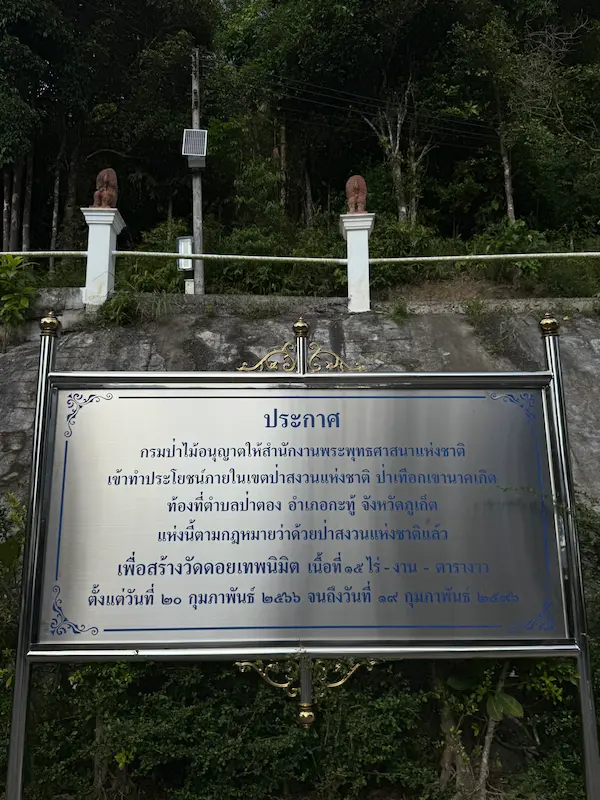
Today, Wat Doi Thep Nimit continues to serve as an active monastery and place of meditation. Rather than focusing on grandeur or large crowds, it offers visitors an opportunity to experience a quieter side of Phuket—one where forest surroundings, panoramic views and Buddhist symbolism combine to create a peaceful place for reflection.
Temple Layout
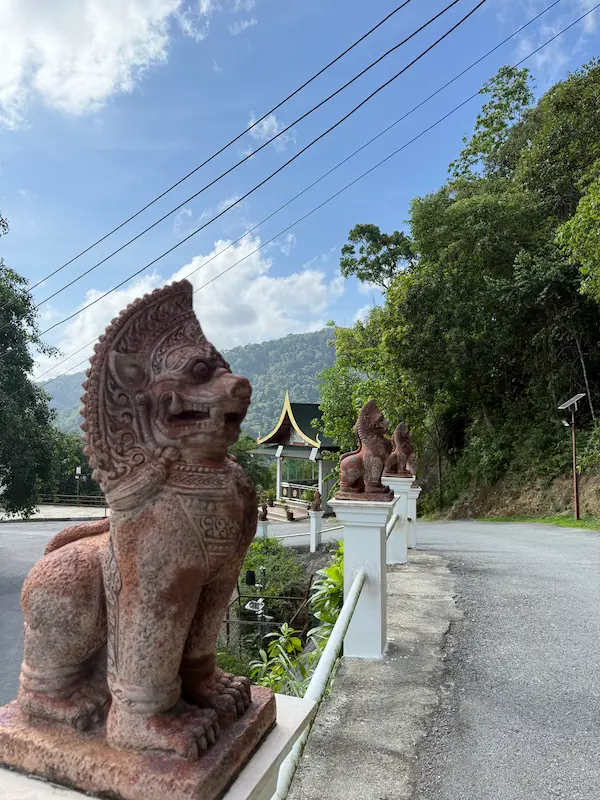
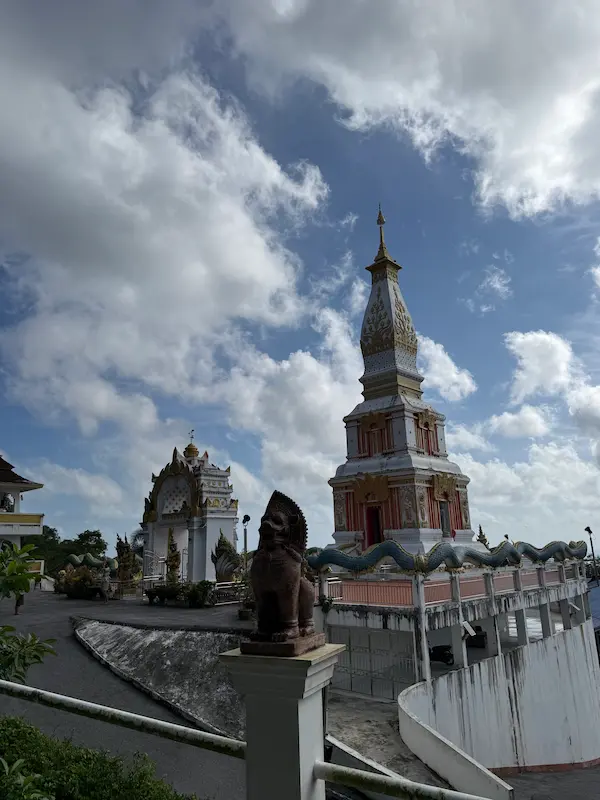
Despite its relatively compact size, Wat Doi Thep Nimit is thoughtfully arranged across a series of terraces built into the forested hillside. Unlike many traditional Thai temples that centre around an ubosot (ordination hall), this monastery is focused on its sacred chedi, meditation spaces and shrines, creating a layout that encourages quiet exploration rather than following a formal ceremonial route.
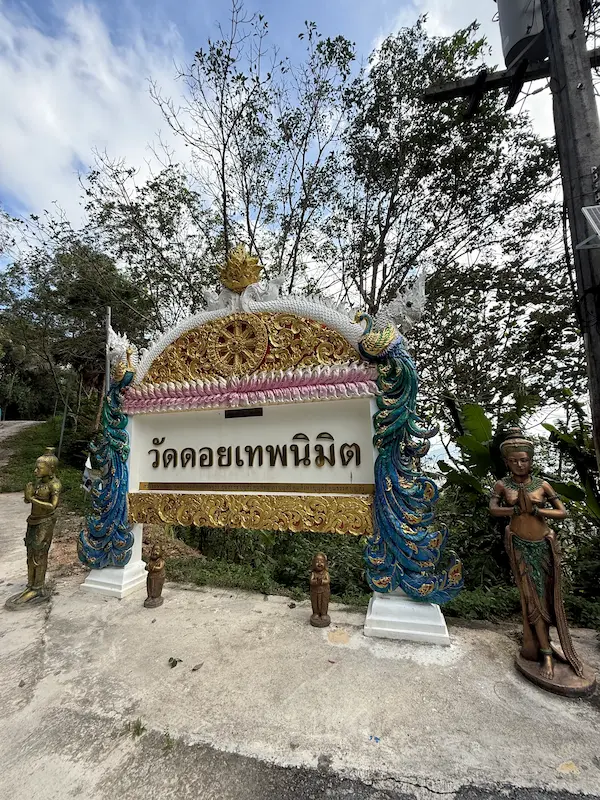
Entering through the simple front gate, visitors descend a gently sloping road towards the main temple grounds. Along the way, stone Singha guardians stand watch over the approach while glimpses of Patong Bay begin to appear through the trees.
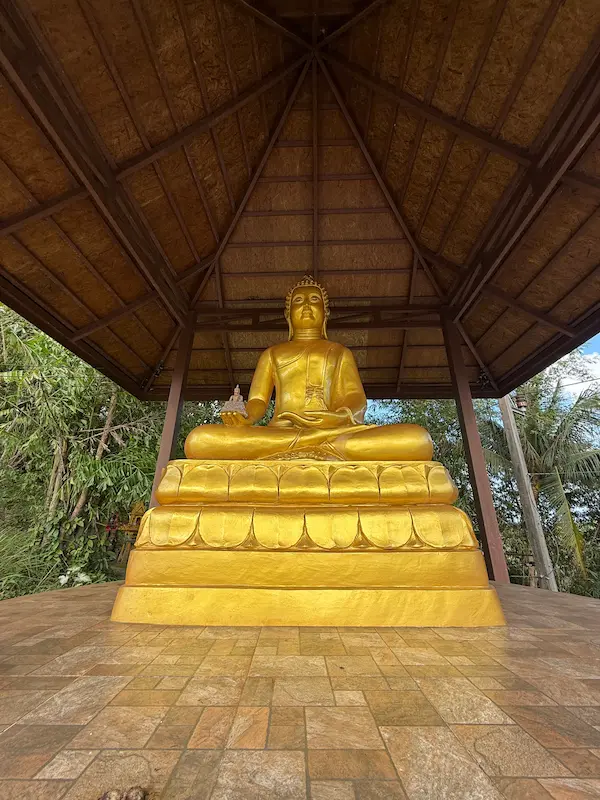
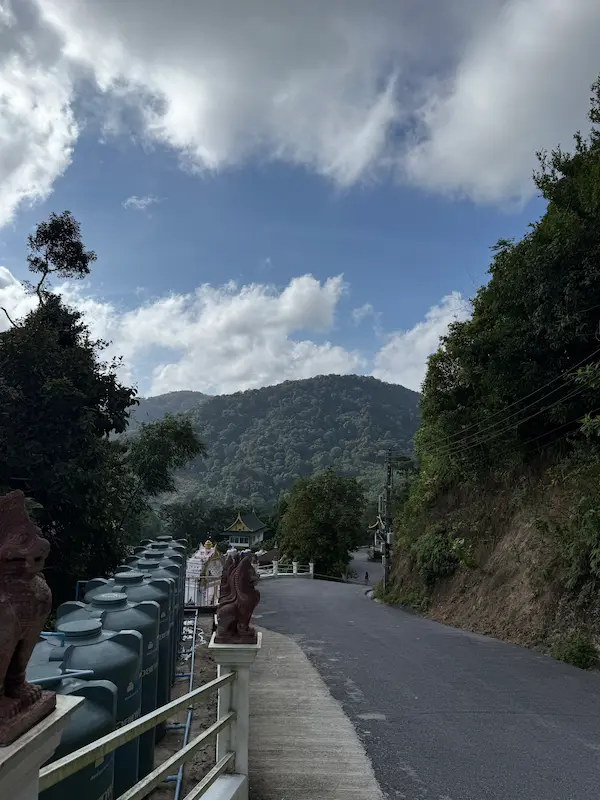
At the heart of the complex stands the impressive Phra Maha Chedi Phurithatto, positioned on an elevated platform carved into the hillside. The terrace surrounding the chedi provides panoramic views across Patong and creates a peaceful space for walking and quiet reflection.
Beside the chedi is a two-level bell pavilion, featuring a ceremonial gong on the ground floor and several large bronze temple bells on the upper level. The pavilion also serves as one of the temple’s finest viewpoints.
Nearby are several smaller shrines, including the Luang Pho Ong Dam Shrine, which honours revered Forest Tradition monks, and the Phra Phuttha Palilai Shrine, depicting the Buddha’s retreat in the Parileyyaka Forest accompanied by the devoted elephant and monkey.
The monastery extends further down the hillside beyond the main visitor areas, where monks’ accommodation and operational buildings are located. As these areas are intended for monastic life rather than tourism, visitors should remain within the publicly accessible parts of the temple unless invited otherwise.
Although the temple can comfortably be explored in under an hour, its peaceful atmosphere and elevated location encourage visitors to slow down, appreciate the surroundings and spend time enjoying one of Phuket’s quietest viewpoints.
Temple Highlights Explained
Wat Doi Thep Nimit may be relatively compact, but every major feature has its own purpose and story. From the sacred Phra Maha Chedi Phurithatto and its protective naga to the bell pavilion, guardian Yaksha and peaceful shrines, each element reflects centuries of Buddhist tradition, symbolism and architectural design.
The following highlights explore not only what you’ll see as you walk through the monastery, but also why these features are important and how understanding them can make your visit even more rewarding.
Phra Maha Chedi Phurithatto
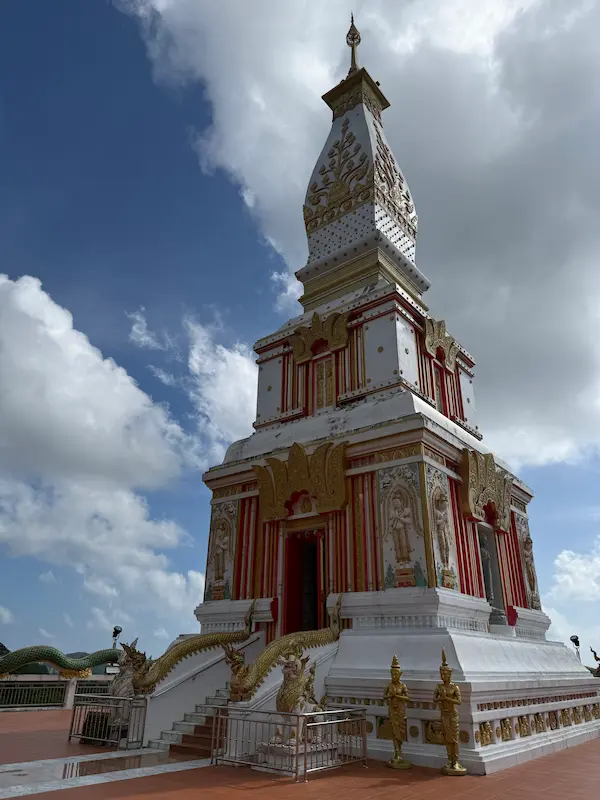
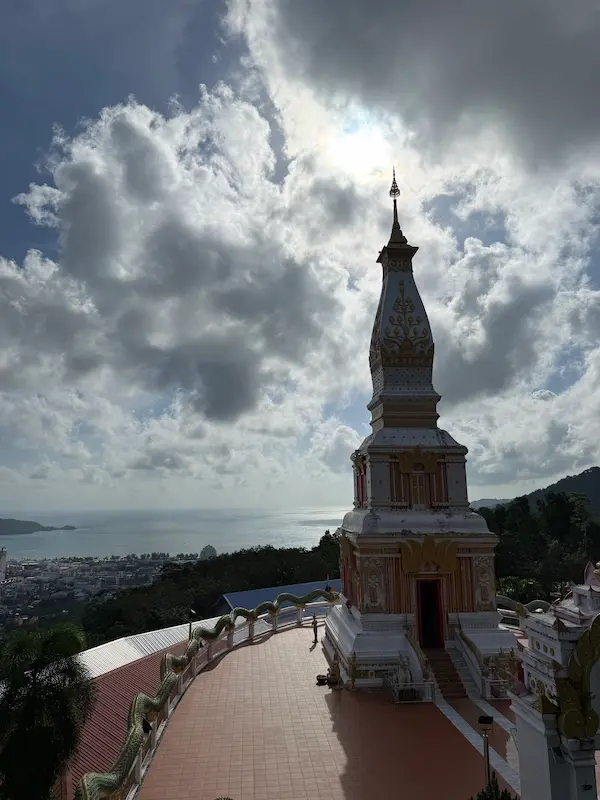
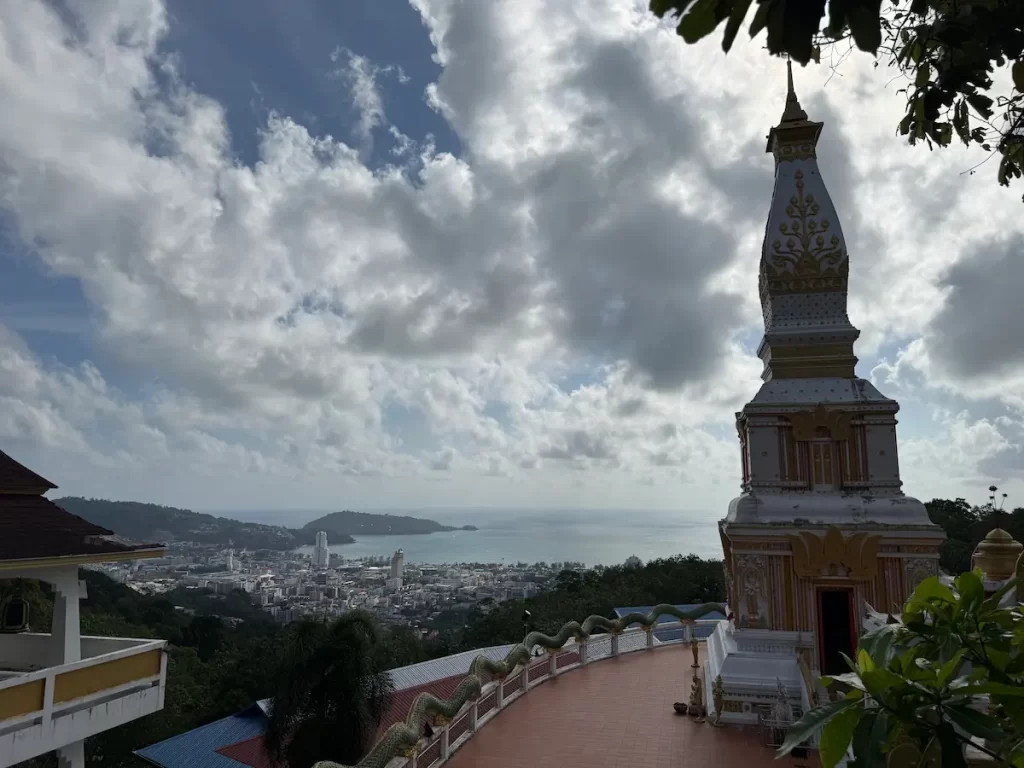
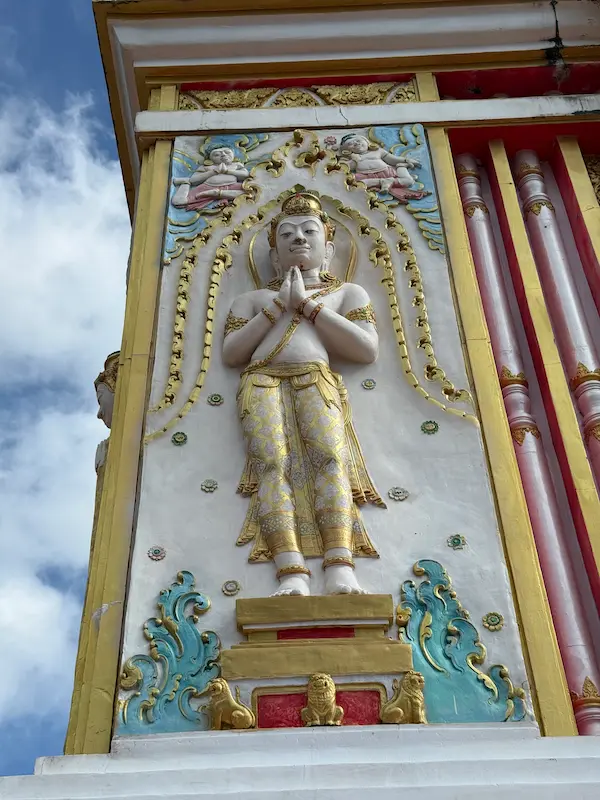
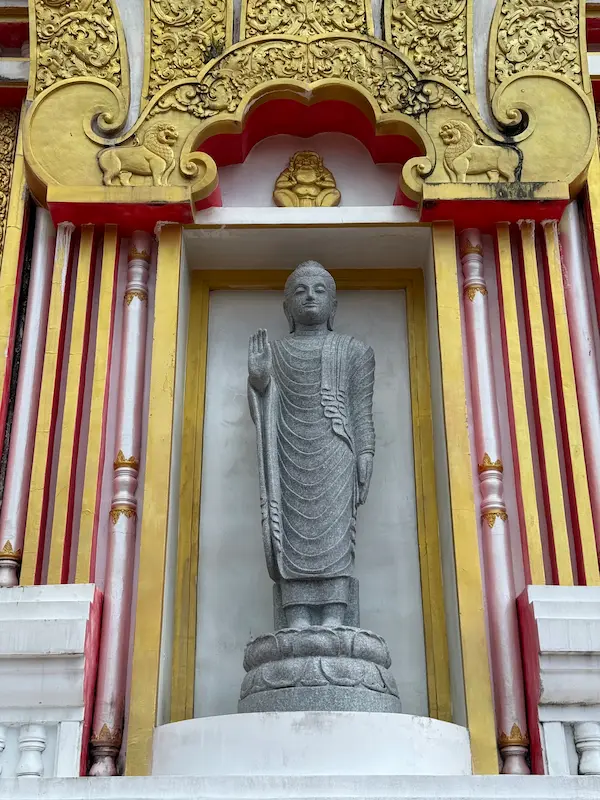
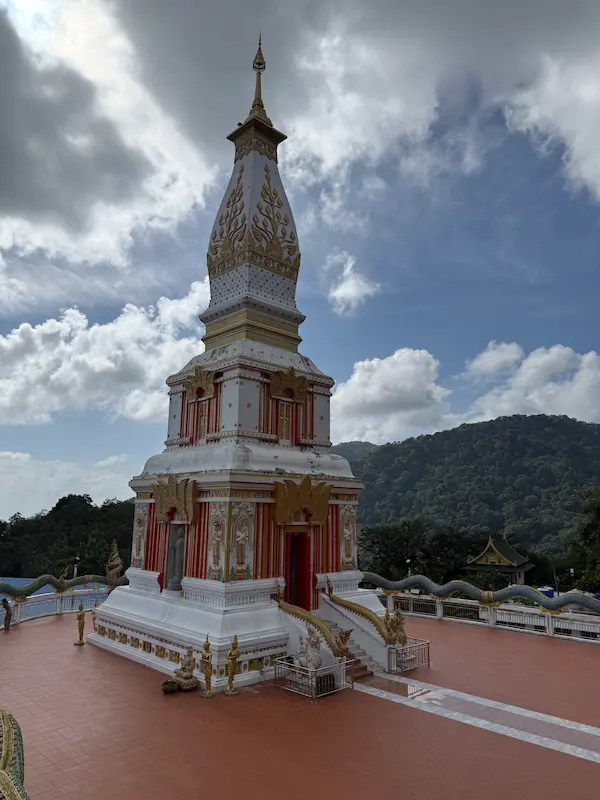
Standing at the heart of Wat Doi Thep Nimit, the Phra Maha Chedi Phurithatto is both the monastery’s spiritual centre and its most recognisable landmark. Completed in 2018, the striking white chedi can be seen from much of the temple grounds, its elegant golden spire rising above the surrounding forest and overlooking Patong.
Unlike the rounded, bell-shaped chedis commonly found at many temples in southern Thailand, the Phra Maha Chedi Phurithatto follows the distinctive architectural style of Wat Phra That Phanom in northeastern Thailand. Its tall, slender proportions and angular profile immediately distinguish it from the region’s more traditional designs, giving the monastery a unique architectural identity.
Beyond its appearance, the chedi serves an important religious purpose. It enshrines a tooth relic of the revered Thai Forest monk Luang Pu Man Phurithatto, one of the most influential meditation masters in modern Thai Buddhism. For Buddhists, relics are not simply historical artefacts; they are sacred reminders of the Buddha and great teachers whose lives continue to inspire faith and practice.
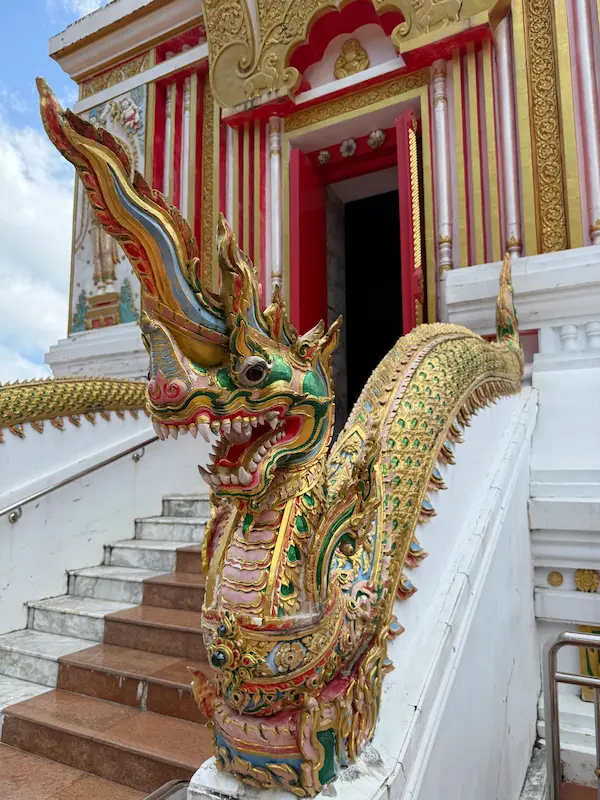
One of the most distinctive features of the chedi is the pair of magnificent seven-headed naga that frame its entrance. Although they appear to be separate sculptures from the front, they are in fact a single continuous artwork. The naga bodies wrap around both sides of the platform before meeting at the rear, where their tails intertwine. In Buddhist tradition, nagas are revered as protectors of the Buddha and guardians of sacred places, making them a fitting presence around a relic chedi.
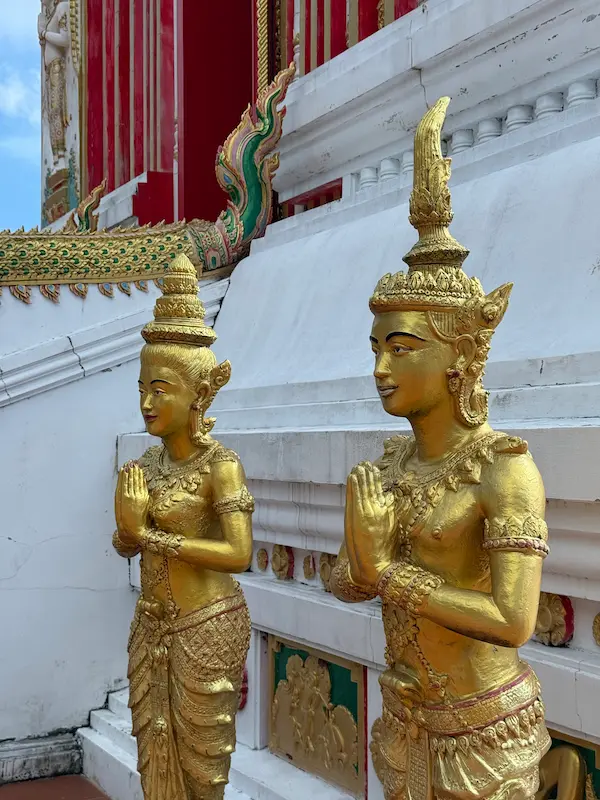
Standing before the entrance are two imposing Yaksha guardians, whose role is to symbolically protect the sacred relics housed within. Their colourful appearance and fierce expressions contrast with the peaceful atmosphere of the monastery, representing strength and vigilance rather than aggression.
The chedi itself stands upon an elevated terrace constructed into the hillside, creating a broad platform that invites visitors to walk slowly around the monument. From every side, new perspectives open across Patong, the bay and the surrounding hills. Despite being only minutes from one of Phuket’s busiest tourist districts, the elevated setting encourages visitors to pause, reflect and appreciate both the architecture and the peaceful surroundings.
Travel With Insight
Walk completely around the Phra Maha Chedi rather than viewing it only from the entrance. Besides revealing how the naga sculptures form a single continuous artwork, the terrace also offers changing perspectives over Patong and the surrounding hills.
Inside the Sacred Chedi
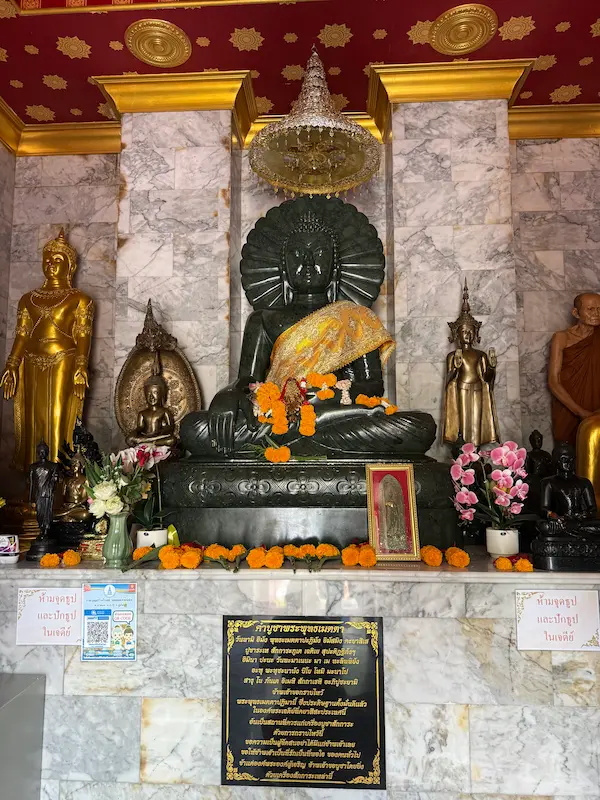
Stepping inside the Phra Maha Chedi Phurithatto, the atmosphere changes immediately. The open views and fresh mountain breeze outside give way to a quiet, intimate space designed for prayer, contemplation and respect. Although the chamber is relatively compact, its peaceful surroundings encourage visitors to slow down and appreciate the spiritual significance of the temple’s most sacred building.
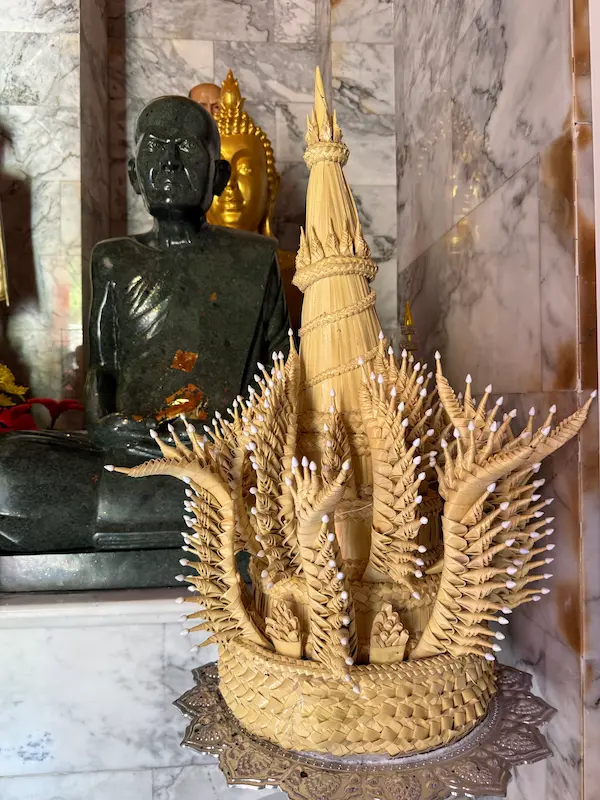
At the centre of the chamber sits Phra Phuttha Metta, the principal Buddha image of the chedi. Carved in a distinctive dark green stone, the seated Buddha represents metta, or loving-kindness, one of the central teachings of Buddhism. The image serves as the focal point for worship, inviting visitors to reflect on compassion, generosity and inner peace.
Surrounding the chamber are hundreds of small Buddha images displayed within glass cabinets, each donated as an act of merit by devotees. Together they create a striking visual reminder of the faith and generosity that continue to support the monastery.
Visitors will also notice statues of revered Buddhist monks positioned around the chamber. These honour respected meditation masters of Thailand’s Forest Tradition and reinforce the monastery’s close connection to this influential lineage of Buddhist practice.
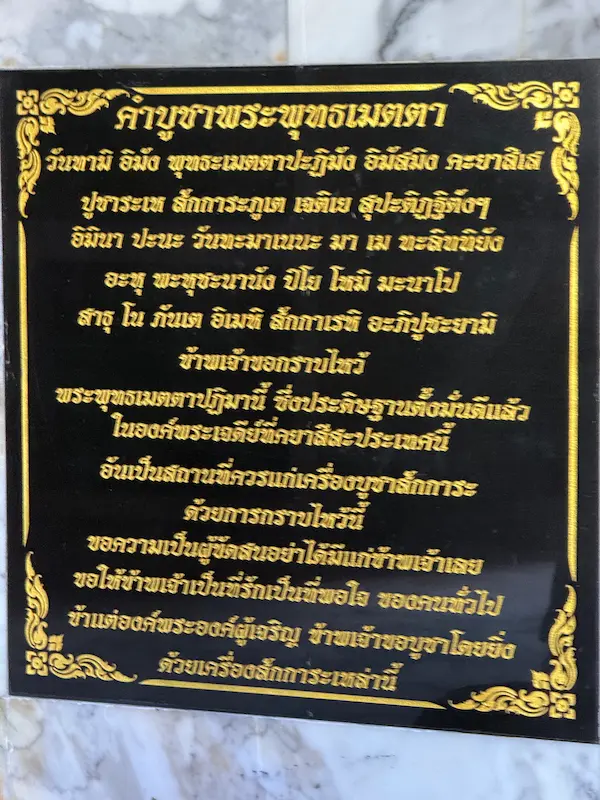
Unlike many Thai temples, incense is not permitted inside the chedi. Clear signs request that visitors refrain from lighting or placing incense within the sacred chamber. Instead, the space is intended to remain clean, quiet and free from smoke, allowing worshippers to focus on silent prayer and contemplation while helping preserve the interior and its sacred images.
Although the chamber itself is modest in size, it is arguably the spiritual heart of Wat Doi Thep Nimit. Many visitors spend only a few minutes inside, yet its calm atmosphere often leaves one of the strongest impressions of the entire visit.
Travel With Insight
Even if you don’t normally enter temple buildings, take a few quiet minutes inside the chedi. The contrast between the expansive views outside and the peaceful stillness within is one of the defining experiences of visiting Wat Doi Thep Nimit.
The Naga Guardians
Approaching the entrance to the Phra Maha Chedi Phurithatto, it is almost impossible not to notice the two magnificent seven-headed naga that appear to guard the monument. At first glance, they look like separate sculptures flanking either side of the staircase. However, a walk around the chedi reveals a fascinating detail that many visitors overlook.
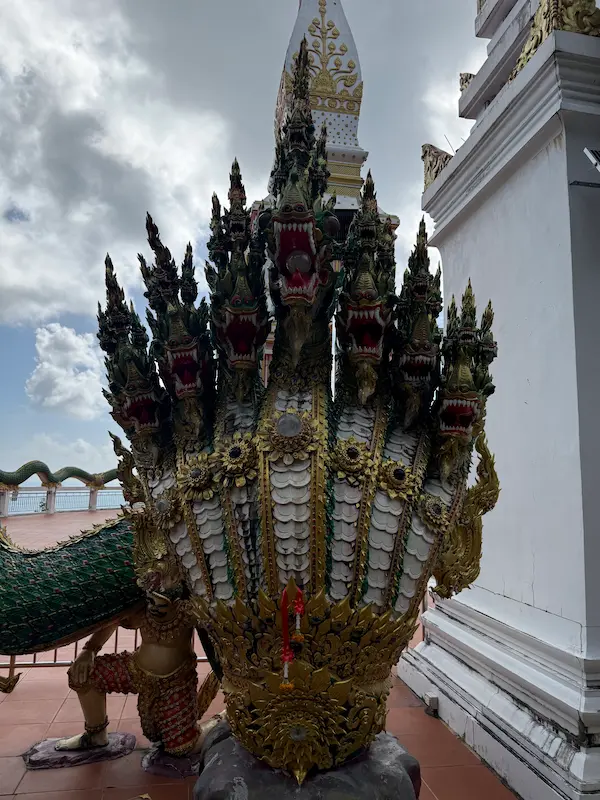
The two naga are actually one continuous sculpture. Beginning at the entrance, their bodies flow gracefully around both sides of the elevated platform before meeting behind the chedi, where their tails intertwine. It is an impressive piece of craftsmanship that transforms the entire platform into a single symbolic artwork rather than simply decorating the staircase.
In Buddhist tradition, nagas are revered as powerful guardian beings associated with water, protection and wisdom. Throughout Buddhist history they are often depicted protecting the Buddha and safeguarding sacred places. Their presence around the chedi symbolically protects the sacred relic enshrined within while also welcoming visitors into a place of spiritual importance.
Each naga displays seven heads, a common feature in Thai Buddhist art. The multiple heads symbolise the naga’s spiritual power and its ability to offer protection in every direction. Combined with the sweeping curves of their bodies, they create a striking visual contrast against the clean white architecture of the chedi.
While many visitors naturally photograph the impressive naga heads at the entrance, taking the time to walk around the entire platform reveals the full scale of the artwork. Only then does it become clear that what first appears to be two separate sculptures is, in fact, one beautifully unified design embracing the entire chedi.
Travel With Insight
Don’t stop at the front staircase. Walk completely around the chedi to appreciate how the naga sculptures wrap around the entire platform before joining at the rear. Along the way you’ll also enjoy some of the temple’s best views across Patong and the surrounding hills.
Guardian Yaksha
Standing on either side of the entrance to the Phra Maha Chedi Phurithatto, two towering Yaksha immediately command attention. With their colourful armour, fierce expressions and imposing stance, they create a dramatic contrast to the peaceful surroundings of the monastery. Although they may appear intimidating, their purpose is not to frighten visitors but to protect one of the temple’s most sacred places.
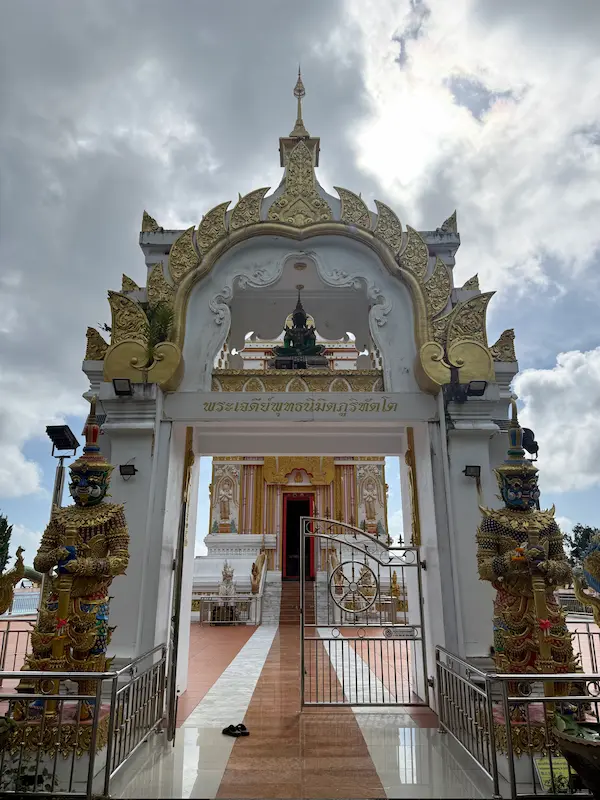
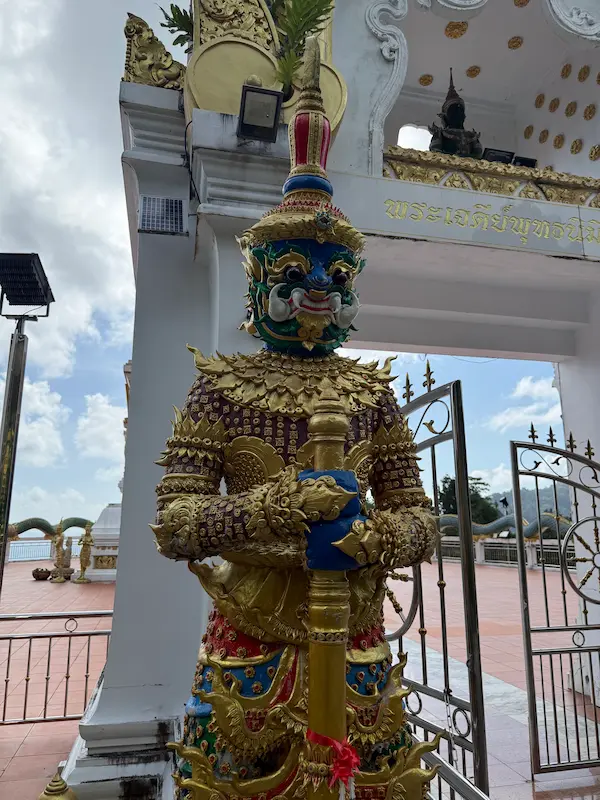
Yaksha have their origins in ancient Indian mythology and became an important part of both Hindu and Buddhist traditions. In Thai Buddhism, they are commonly placed at the entrances of temples, chedis and important shrines as guardian spirits, symbolically protecting sacred relics and Buddhist teachings from harmful influences.
At Wat Doi Thep Nimit, the Yaksha stand watch over the entrance to the chedi, where a tooth relic of Luang Pu Man Phurithatto is enshrined. Their presence marks the transition from the outside world into a sacred space, reminding visitors to enter with respect and mindfulness.
Despite their fierce appearance, Yaksha are not considered evil figures. Instead, they represent strength, loyalty and the protection of Buddhism. Their elaborate costumes, expressive faces and ornate weapons reflect centuries of artistic tradition, with each detail carefully crafted to emphasise their role as vigilant guardians.
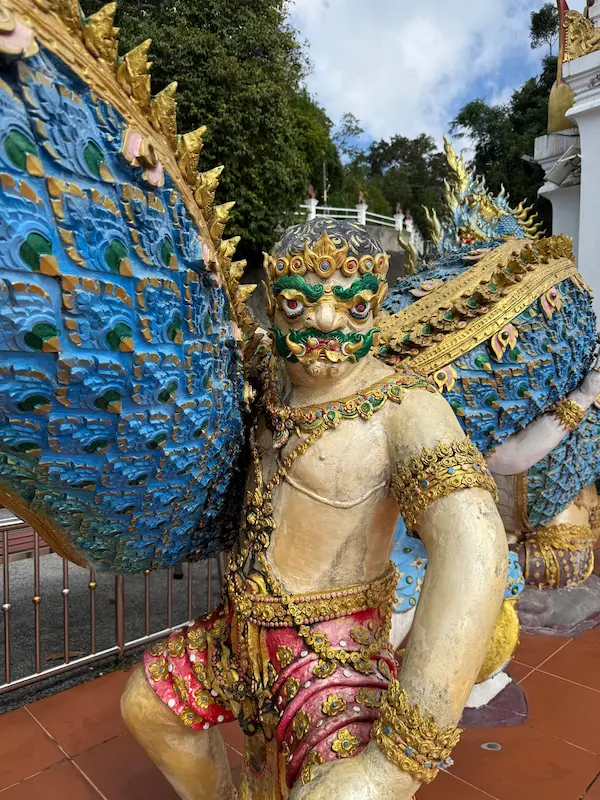
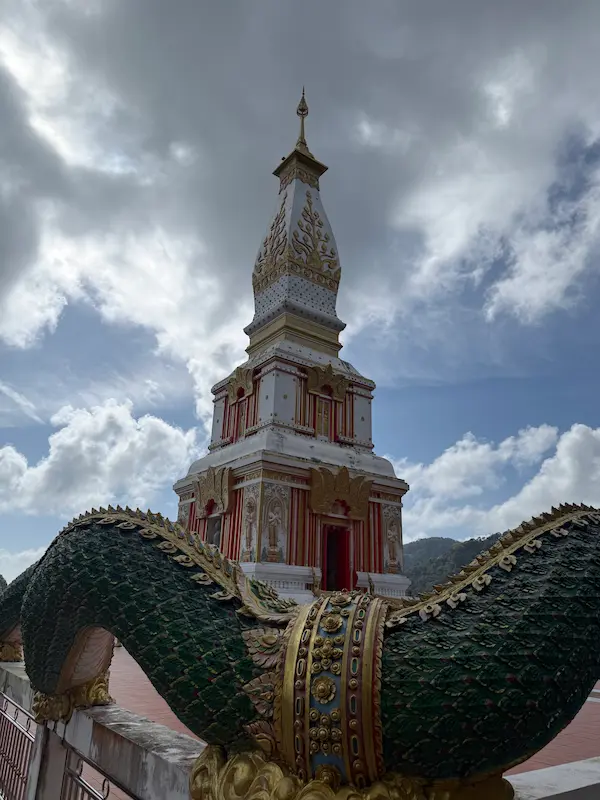
For many visitors, the Yaksha provide one of the temple’s most striking photographic subjects. Positioned beneath the elegant white chedi and framed by the surrounding naga, they create a powerful visual welcome while reinforcing the spiritual importance of the monument they protect.
Travel With Insight
Before entering the chedi, spend a moment looking closely at each Yaksha rather than simply walking past. Their expressions, armour and posture are rich in symbolic detail, and they serve as a reminder that temple guardians represent protection and devotion—not fear.
Bell Pavilion
Although the Phra Maha Chedi Phurithatto dominates the temple skyline, one of Wat Doi Thep Nimit’s most enjoyable discoveries is its two-level bell pavilion. Unlike many temple bell towers that remain closed to visitors, this pavilion is open and invites visitors to explore both levels while enjoying some of the finest panoramic views in the monastery.
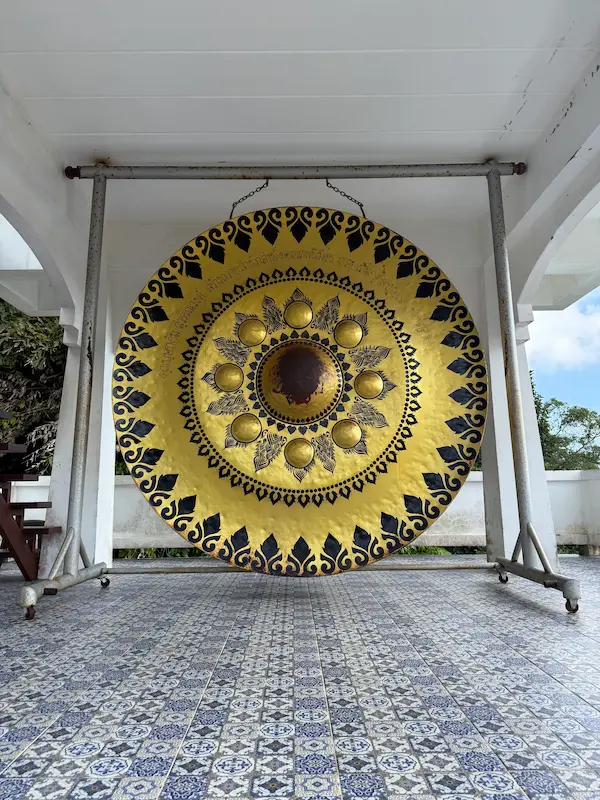
At ground level, the pavilion is centred around a large ceremonial gong, positioned as the focal point beneath the roof. In Thai temples, gongs are traditionally sounded during important ceremonies and religious occasions, their deep resonance symbolising the spread of the Buddha’s teachings and calling the community together for worship.
A staircase leads to the upper level, where several large bronze temple bells hang beneath the open roof. Temple bells have long played an important role in Buddhist monasteries, announcing prayer times, ceremonies and significant events. Many visitors also associate the ringing of temple bells with making merit and carrying prayers into the surrounding world, although local customs differ from temple to temple.
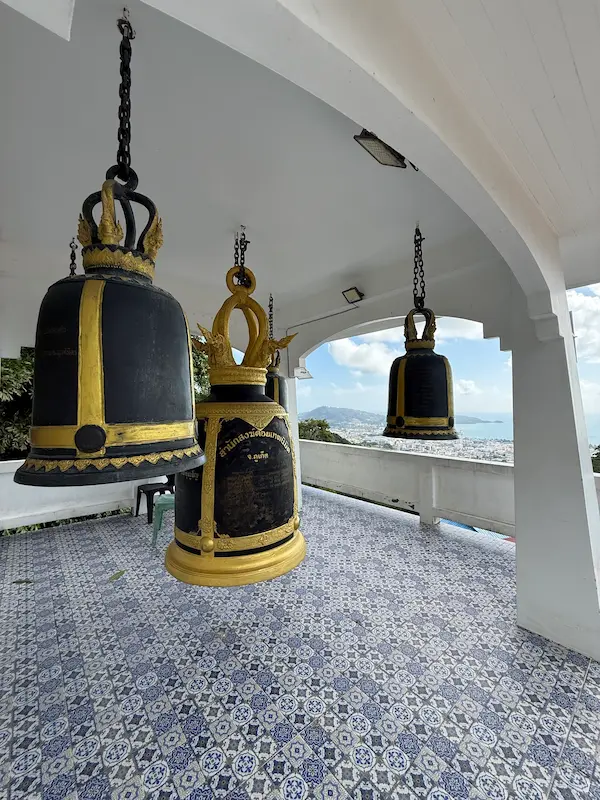
Beyond its religious purpose, the upper level offers one of the best viewpoints within the temple grounds. Looking across Patong Bay and the surrounding hills, the elevated position provides a striking contrast between the tranquillity of the monastery and the busy town below. It is an ideal place to pause, enjoy the cool mountain breeze and appreciate the peaceful setting that defines Wat Doi Thep Nimit.
While many visitors naturally head straight for the chedi, the bell pavilion rewards those who take the time to climb its stairs. It offers not only beautiful views but also a deeper appreciation of how the temple has been designed to combine places of worship with quiet spaces for reflection.
Travel With Insight
Visit the bell pavilion before exploring the chedi. From the upper level you’ll gain a wonderful perspective across the temple grounds, making it easier to appreciate how the chedi, forest setting and panoramic views come together to create the monastery’s unique atmosphere.
Phra Phuttha Palilai Shrine
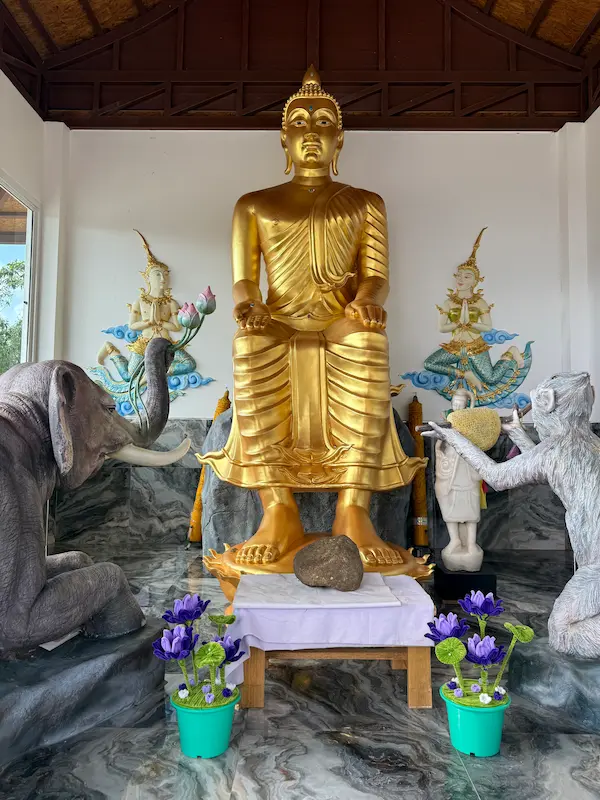
Tucked away in a smaller shrine near the temple’s main grounds is one of Wat Doi Thep Nimit’s most meaningful yet easily overlooked treasures. Here, visitors will find Phra Phuttha Palilai, a distinctive Buddha image depicting an important episode from the Buddha’s life known as the Parileyyaka Forest Retreat.
Unlike many Buddha images that represent moments of enlightenment or teaching, Phra Phuttha Palilai tells a story of peace, compassion and harmony. According to Buddhist tradition, the Buddha withdrew into the Parileyyaka Forest after becoming saddened by persistent disagreements among his disciples at Kosambi. Seeking solitude rather than conflict, he spent time meditating quietly beneath the forest trees.
During his retreat, a wild elephant named Parileyyaka recognised the Buddha’s peaceful presence and began caring for him. Each day the elephant gathered food, fetched water and attended to the Buddha’s needs. Inspired by this devotion, a monkey also wished to make an offering and presented the Buddha with a honeycomb.
Thai tradition adds an important detail to this story. When the monkey first offered the honey, it still contained tiny bee larvae. To avoid harming living creatures, the Buddha gently declined the offering. The monkey carefully removed the larvae before presenting the honey again, which the Buddha then accepted. This moment is reflected in the image itself, with the Buddha’s hands symbolising both compassionate restraint and the eventual acceptance of a gift offered with pure intention.
The kneeling elephant is often shown holding a lotus flower, a symbol of purity, wisdom and spiritual awakening. While the earliest texts describe the elephant bringing practical necessities such as food and water, Thai religious art uses the lotus to express the elephant’s deep reverence for the Buddha.
More than simply illustrating a story, the shrine conveys several enduring Buddhist teachings. It reminds visitors that harmony is preferable to conflict, that even the simplest act of generosity can carry great spiritual significance, and that compassion extends to all living beings.
Although smaller than the nearby chedi, the Phra Phuttha Palilai Shrine rewards those who take the time to pause and understand its symbolism. It is a beautiful example of how Thai temples preserve Buddhist teachings through art, allowing visitors to learn not only from written texts but also from the stories carved into the temple itself.
Travel With Insight
Take a moment to look beyond the Buddha image itself. The elephant, monkey and lotus are not decorative additions—they each tell part of the Parileyyaka Forest story. Understanding their symbolism transforms the shrine from a beautiful sculpture into one of the temple’s most meaningful lessons.
Luang Pho Ong Dam Shrine
A short walk from the Phra Maha Chedi is an open shrine dedicated to Luang Pho Ong Dam, surrounded by statues of other revered Buddhist monks. While visitors are often drawn first to the chedi, this quieter shrine offers a deeper insight into the monastery’s spiritual identity and the traditions it continues to uphold.
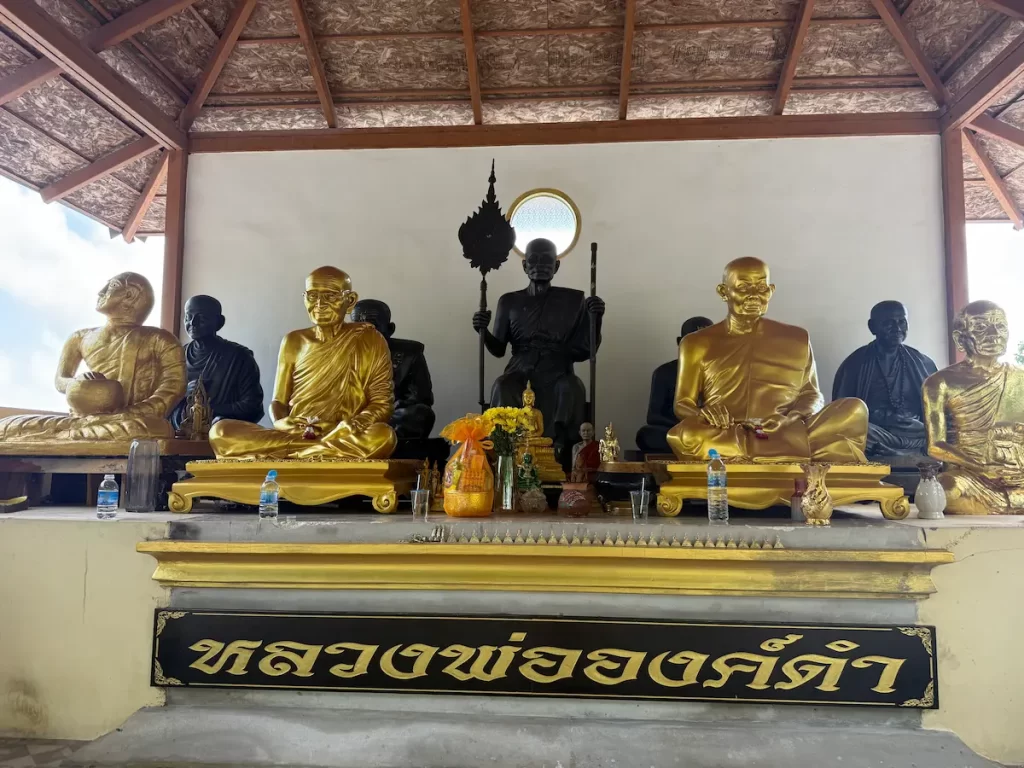
Unlike Buddha images, which represent the Enlightened One, these statues honour respected monks whose lives and teachings have inspired generations of Buddhists. Within the Thai Forest Tradition, accomplished meditation masters are remembered not as objects of worship, but as examples of discipline, wisdom and compassionate living. Their images encourage visitors to reflect on the possibility of following the Buddha’s teachings through dedicated practice.
The shrine’s open design creates a peaceful setting for prayer and contemplation. Fresh flowers, candles and other offerings placed before the statues reflect the continued respect shown to these teachers by local devotees and visiting Buddhists alike.
For travellers unfamiliar with Thai Buddhism, this shrine also highlights an important distinction found in many monasteries. Thai temples often contain both Buddha images, which commemorate the Buddha, and statues of revered monks, which honour influential teachers who helped preserve and pass on the Buddhist tradition. Understanding this difference provides a deeper appreciation of the role monasteries play within Thai religious life.
Although smaller and less prominent than the Phra Maha Chedi, the Luang Pho Ong Dam Shrine reflects the living heart of Wat Doi Thep Nimit. It reminds visitors that the monastery is not simply a place of beautiful architecture, but a community shaped by the teachings and example of those who have devoted their lives to Buddhist practice.
Travel With Insight
It’s easy to assume every statue in a Thai temple represents the Buddha. Before moving on, take a closer look at the robes, ceremonial fan and facial features of the figures in this shrine. They are portraits of respected monks whose lives continue to inspire the monastery today.
Panoramic Viewpoints
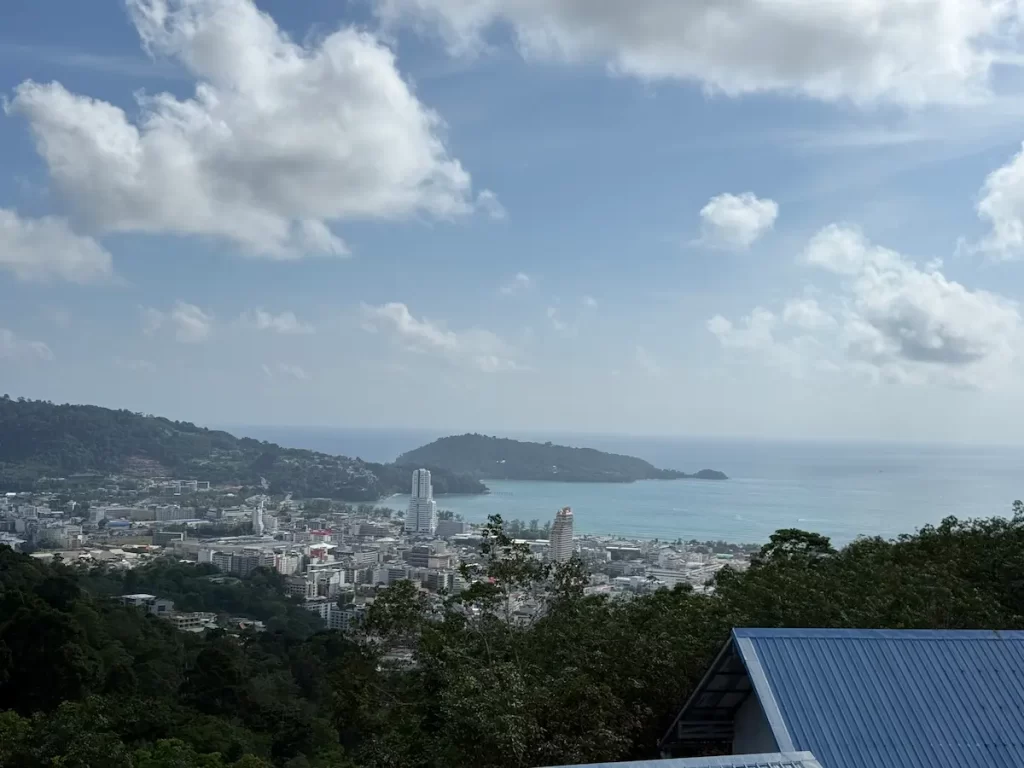
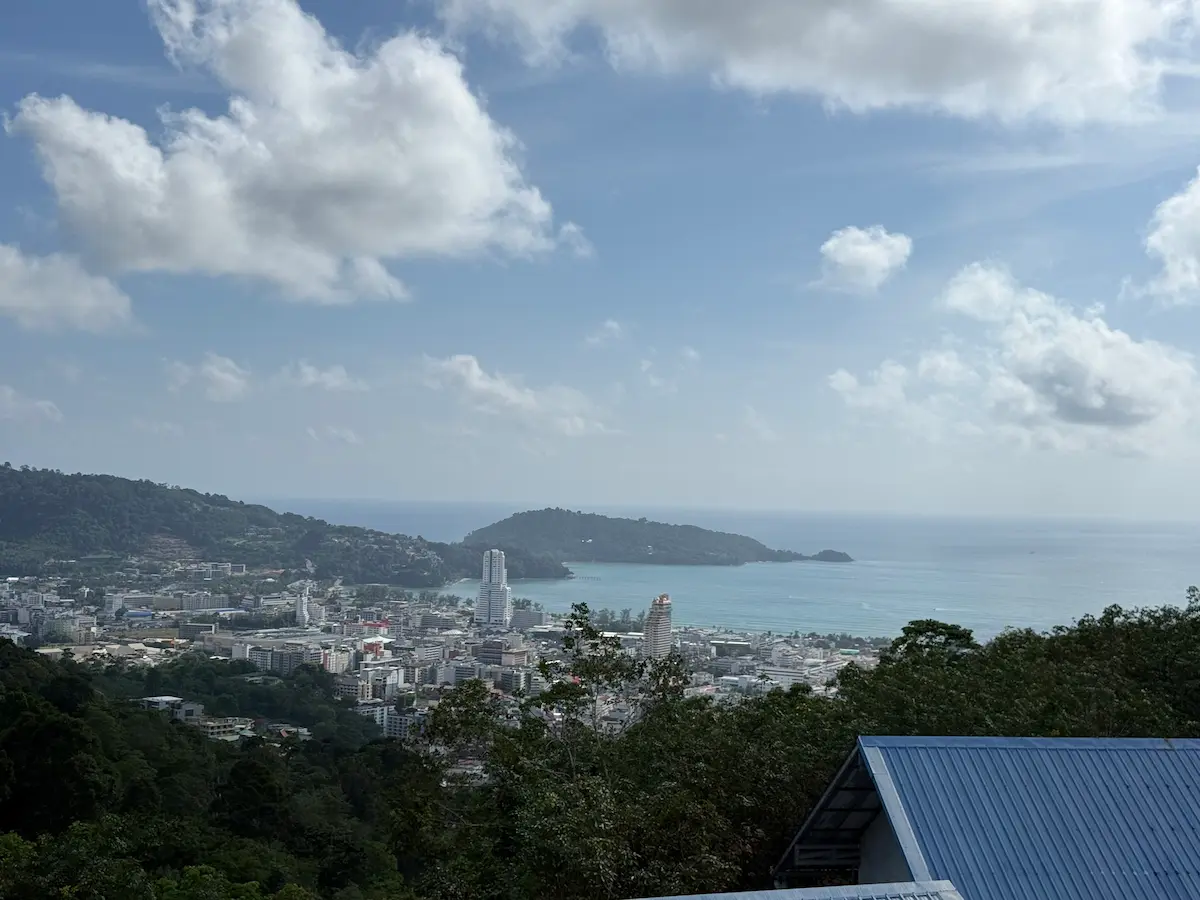
One of Wat Doi Thep Nimit’s greatest attractions isn’t found inside a shrine or beneath the chedi—it’s the remarkable sense of perspective offered by its elevated position above Patong. From several locations throughout the monastery, visitors are treated to sweeping views across Patong, Patong Bay and the surrounding mountains, creating one of the most peaceful viewpoints on Phuket’s west coast.
The best views can be enjoyed from several different locations. The upper level of the bell pavilion provides a wide panorama across the bay, while the terrace surrounding the Phra Maha Chedi offers constantly changing perspectives as visitors walk around the monument. Even the smaller shrines positioned around the grounds have been thoughtfully placed to frame glimpses of the coastline through the surrounding forest.
What makes these views particularly memorable is the contrast they create. Just a few minutes earlier, visitors have left one of Phuket’s busiest roads behind, surrounded by traffic, hotels and the constant energy of Patong. From the temple, that same town appears calm and distant, almost disconnected from the bustle below. The elevated setting transforms the familiar skyline into a peaceful landscape that encourages visitors to pause, reflect and simply enjoy the quiet surroundings.
Unlike many viewpoints designed purely for sightseeing, the views at Wat Doi Thep Nimit feel like a natural extension of the monastery itself. They complement the atmosphere of meditation and contemplation, reminding visitors why so many Buddhist monasteries are built on hillsides, mountains or within forests where nature becomes part of the spiritual experience.
Whether you come for photography, cultural discovery or simply a break from Patong’s busy streets, the panoramic setting is likely to become one of the lasting memories of your visit.
Travel With Insight
Spend a few minutes at more than one viewpoint rather than taking a single photograph and moving on. The bell pavilion, chedi terrace and surrounding walkways each reveal a different perspective over Patong, and the changing angles make it easy to appreciate how peacefully the monastery sits above the town below.
Understanding the Temple
One of the most rewarding aspects of visiting Wat Doi Thep Nimit is discovering that every building, statue and decorative feature has a purpose. While the temple is undeniably beautiful, its architecture and artwork are designed to teach Buddhist principles, preserve tradition and inspire reflection.
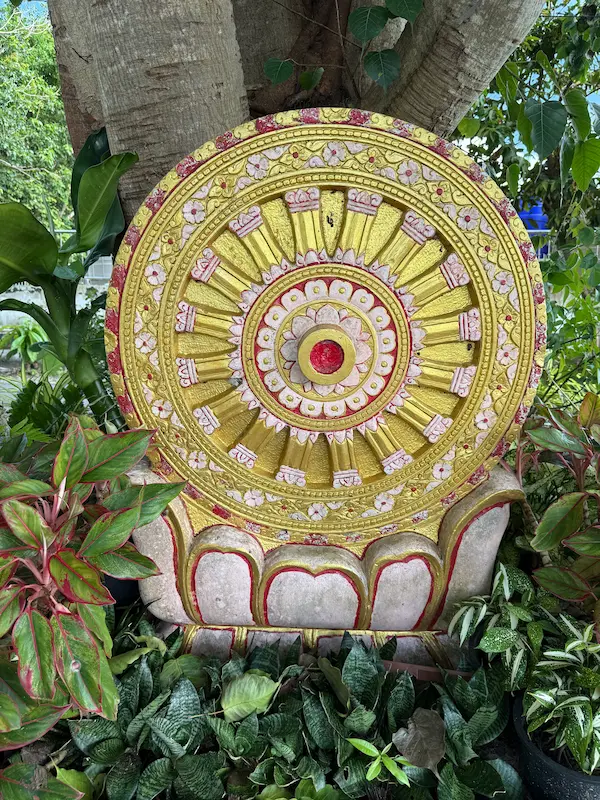
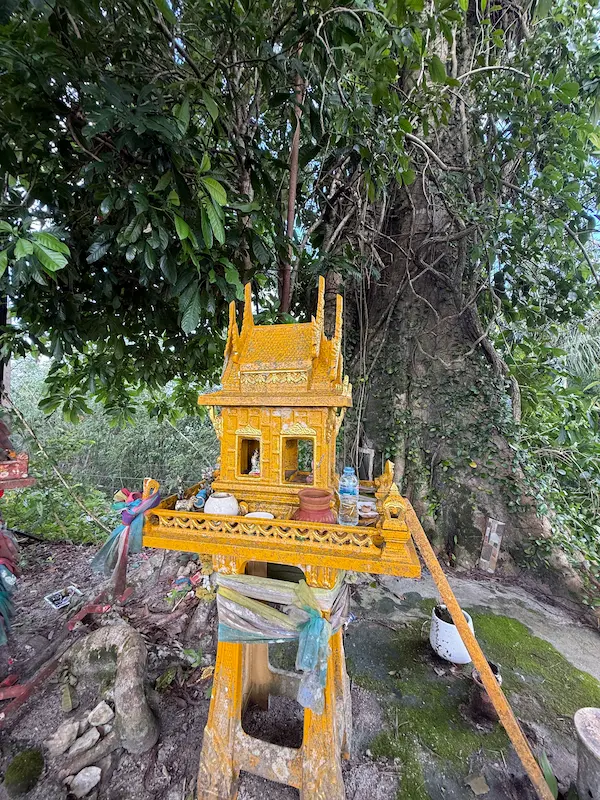
Understanding the meaning behind these features transforms a visit from simply admiring impressive buildings into appreciating the stories, beliefs and symbolism that have shaped Thai Buddhism for centuries.
What Is a Chedi?
The towering white Phra Maha Chedi Phurithatto is the spiritual centre of Wat Doi Thep Nimit, but what exactly is a chedi?
A chedi is a Buddhist monument built to enshrine sacred relics or commemorate important events and revered teachers. While their appearance varies across Thailand, their purpose remains the same—to serve as a place of remembrance, devotion and merit-making.
Unlike a viharn or ubosot, a chedi is not designed for congregational ceremonies. Instead, visitors typically walk around it in a clockwise direction as an act of respect while reflecting on the teachings of the Buddha.
At Wat Doi Thep Nimit, the chedi houses a tooth relic of Luang Pu Man Phurithatto, making it both the physical and spiritual heart of the monastery.
What Is the Thai Forest Tradition?
Wat Doi Thep Nimit follows the Thai Forest Tradition, a branch of Theravada Buddhism that places particular emphasis on meditation, simplicity and living close to nature.
Rather than developing in large cities, Forest Tradition monasteries are often established in forests, mountains or other peaceful environments where monks can devote themselves to meditation and disciplined practice away from everyday distractions.
The influence of this tradition can be seen throughout Wat Doi Thep Nimit—from its forest setting and quiet atmosphere to the shrines honouring revered meditation masters such as Luang Pu Man Phurithatto and Luang Pu Bunpin Katapunyo.
For visitors, understanding the Thai Forest Tradition helps explain why the monastery feels noticeably different from many of Phuket’s larger, more ceremonial temples.
Why Are Nagas So Important?
One of the temple’s most striking features is the pair of seven-headed naga surrounding the chedi.
In Buddhist tradition, nagas are revered guardian beings associated with protection, wisdom and water. They are closely linked to one of Buddhism’s most famous stories, in which the serpent king Mucalinda sheltered the Buddha from a violent storm shortly after his enlightenment.
Today, naga continue to symbolise protection and are commonly found guarding temple staircases, bridges and sacred monuments throughout Thailand.
At Wat Doi Thep Nimit, the naga embrace the entire chedi platform, symbolically protecting the sacred relic housed within.
Who Are the Yaksha?
Standing beside the chedi entrance are two imposing Yaksha guardians.
Although their fierce appearance often surprises first-time visitors, Yaksha are not evil figures. In Thai religious tradition they are powerful protectors who guard sacred places from harmful influences and remind visitors that they are entering a place deserving of respect.
Their presence at Wat Doi Thep Nimit reinforces the importance of the relic housed within the chedi and the monastery’s role as an active place of Buddhist practice.
Why Do Temples Have Bells and Gongs?
The bell pavilion at Wat Doi Thep Nimit is more than an attractive viewpoint.
For centuries, bells and gongs have been used in Buddhist monasteries to announce prayer times, call monks together and mark important ceremonies. Their clear, resonant sound carries across the surrounding landscape, creating a gentle reminder of mindfulness and the rhythms of monastic life.
Many visitors also associate the ringing of temple bells with making merit or offering prayers, although local customs vary from temple to temple.
Why Are Revered Monks Honoured with Statues?
Visitors are often surprised to find statues of monks alongside Buddha images.
While Buddha images represent the Enlightened One, statues of respected monks commemorate teachers whose lives and practice helped preserve and transmit the Buddha’s teachings.
Within the Thai Forest Tradition, these meditation masters are remembered for their discipline, wisdom and compassion. Their statues are not worshipped in the same way as Buddha images but serve as reminders that enlightenment is pursued through lifelong practice and dedication.
The shrines at Wat Doi Thep Nimit honour this living lineage and highlight the important role these teachers continue to play in Thai Buddhism.
Travel With Insight
One of the easiest ways to enrich your visit to any Thai temple is to pause and ask a simple question whenever you encounter something unfamiliar:
“Why is this here?”
Whether it’s a chedi, a naga, a bell, a monk’s statue or a guardian giant, every feature has a purpose. Once you begin recognising their meaning, Thai temples become far more than beautiful places to photograph—they become places that tell stories, preserve history and express centuries of Buddhist belief through art and architecture.
Visitor Experience
Visiting Wat Doi Thep Nimit is less about following a fixed route and more about discovering the monastery at your own pace. While the temple’s white chedi immediately captures your attention, one of the greatest pleasures is simply wandering the grounds, moving between viewpoints, shrines and quiet spaces while enjoying the peaceful atmosphere.
Despite being only a few minutes from Patong, the monastery feels surprisingly secluded. The climb up the steep, winding access road gradually leaves the sounds of traffic behind, replacing them with birdsong, gentle breezes and the quiet rhythm of an active Buddhist monastery. Rather than attracting large tour groups, the temple remains a place where visitors can slow down and explore without feeling rushed.
The grounds are compact enough to explore comfortably within an hour, yet there is enough variety to reward a longer visit. Walking around the Phra Maha Chedi reveals changing views across Patong, climbing the bell pavilion provides an elevated perspective over the bay, and the smaller shrines encourage visitors to pause and appreciate the stories and symbolism they contain.
One of the most memorable aspects of the visit is the contrast between the monastery and the town below. From the terraces surrounding the chedi, Patong appears calm and distant. It’s difficult to imagine that one of Thailand’s busiest beach destinations lies just a few minutes away. That sense of separation is one of Wat Doi Thep Nimit’s greatest strengths and contributes greatly to its peaceful character.
Although the monastery welcomes respectful visitors, it remains an active place of Buddhist practice. Some roads continue further down the hillside towards monks’ accommodation and operational areas. Unless clearly signposted or invited, visitors should remain within the public sections of the temple and allow the monastery to continue its daily routines undisturbed.
Whether you visit for its architecture, Buddhist heritage, photography or simply to enjoy a quiet moment above Patong, Wat Doi Thep Nimit offers an experience that feels authentic, reflective and refreshingly different from many of Phuket’s more heavily visited attractions.
Travel With Insight
Don’t treat Wat Doi Thep Nimit as a quick photo stop. Allow yourself time to sit quietly on one of the terraces or at the bell pavilion. Often the most memorable part of the visit isn’t a particular building—it’s experiencing the remarkable sense of calm that exists only minutes from the energy of Patong.
Who Will Enjoy Wat Doi Thep Nimit?
Not every traveller visits a temple for the same reason. Some are interested in Buddhist culture, others are searching for beautiful viewpoints or photography opportunities, while many simply want a peaceful break from Phuket’s busy beaches. Wat Doi Thep Nimit appeals most to visitors who appreciate quiet surroundings and are happy to spend time exploring at a relaxed pace rather than rushing between attractions.
Perfect For
Travellers seeking peace and quiet
If you’re looking to escape the energy of Patong without travelling far, Wat Doi Thep Nimit is one of Phuket’s most rewarding short excursions. The calm atmosphere is one of the monastery’s defining characteristics and often leaves the strongest impression on visitors.
Photography enthusiasts
From the white Phra Maha Chedi and colourful guardian Yaksha to the bell pavilion and panoramic views across Patong Bay, the monastery offers a wide variety of photographic subjects. The changing perspectives around the chedi and the elevated viewpoints make it particularly rewarding during the softer light of the morning or late afternoon.
Visitors interested in Thai Buddhism
The temple provides an excellent introduction to the Thai Forest Tradition, Buddhist symbolism and temple architecture. Features such as the Phra Phuttha Palilai shrine, naga sculptures and sacred relic become far more meaningful once their stories and purpose are understood.
Couples and independent travellers
The peaceful setting encourages visitors to slow down, wander the grounds and spend time appreciating the views. Its quieter atmosphere makes it especially enjoyable for couples, solo travellers and anyone seeking a more reflective experience.
Less Suitable For
Wat Doi Thep Nimit may be less appealing if you’re looking for a large temple complex with multiple ceremonial buildings, museums or extensive cultural displays. Families with very young children should also be aware that the steep access road, stairs and sloping pathways require a little more care than some of Phuket’s larger temples.
Recommended Visit
- Allow: 45–90 minutes.
- Best Time: Early morning for cooler temperatures and quieter conditions, or late afternoon when the light softens over Patong Bay.
- Atmosphere: Peaceful, uncrowded and ideal for slow exploration.
Travel With Insight
If your itinerary includes only one or two temples in Phuket, Wat Doi Thep Nimit probably shouldn’t replace landmarks such as Wat Chalong. However, if you’ve already experienced Phuket’s better-known temples and want somewhere quieter, more contemplative and less commercial, this monastery offers one of the island’s most rewarding experiences. Its greatest strength isn’t that it’s the biggest or most famous—it’s that it allows you to experience a very different side of Phuket only minutes from Patong.
Photography Guide
Wat Doi Thep Nimit offers an excellent mix of architectural, landscape and cultural photography, all within a relatively compact area. Whether you’re using a smartphone or a dedicated camera, the monastery provides a variety of compositions that reward visitors who take the time to explore beyond the obvious viewpoints.
Unlike many of Phuket’s busier attractions, the peaceful atmosphere also allows photographers to work at a slower pace, making it easier to observe changing light, experiment with different angles and wait for moments when the temple grounds are free from distractions.
Best Photography Locations
Phra Maha Chedi
The temple’s white Phra Maha Chedi Phurithatto is naturally the primary photographic subject. Rather than photographing only the front entrance, walk around the entire terrace to discover different compositions. The changing angles reveal the full scale of the chedi while also incorporating the surrounding forest and panoramic views over Patong.
Naga Staircase
The entrance to the chedi provides some of the temple’s most striking architectural photographs. Wide-angle compositions emphasise the sweeping curves of the seven-headed naga, while lower viewpoints help showcase their impressive scale against the white chedi rising behind them.
Bell Pavilion
Climb to the upper level of the bell pavilion for elevated views across Patong Bay and the surrounding hills. The hanging bronze bells also make excellent foreground elements when framing the landscape beyond, creating images that combine culture and scenery.
Panoramic Viewpoints
Several terraces surrounding the chedi provide uninterrupted views across Patong. These viewpoints work particularly well for wide landscape photographs and also allow the chedi to be included in the foreground for a stronger sense of place.
Temple Details
Don’t overlook the smaller details that give the monastery its character. The guardian Yaksha, Phra Phuttha Palilai shrine, Luang Pho Ong Dam shrine, temple bells, ceremonial gong and architectural ornamentation all provide opportunities for more intimate photographs that help tell the story of the temple.
Best Time to Photograph
Early morning and late afternoon generally provide the most flattering light, with softer shadows and more comfortable temperatures for exploring the grounds.
Following rain during the green season, the surrounding forest often appears especially vibrant, while passing clouds can add atmosphere to photographs overlooking Patong Bay.
Respectful Photography
Wat Doi Thep Nimit remains an active Buddhist monastery. When photographing inside shrines or the chedi, avoid interrupting worshippers and keep noise to a minimum. Flash photography should be avoided where it may disturb visitors or detract from the peaceful atmosphere.
Remember that some areas beyond the main visitor grounds are used by resident monks. These should only be photographed if access is clearly permitted.
Travel With Insight
Some of the temple’s strongest photographs aren’t found by standing directly in front of the chedi. Walk the grounds slowly and look for opportunities to combine architectural features such as the bells, naga or Yaksha with the surrounding landscape. These layered compositions tell a much richer story of the monastery than a single landmark photograph.
Visitor Etiquette
Wat Doi Thep Nimit welcomes visitors from all backgrounds, whether you’re a practising Buddhist, interested in Thai culture or simply exploring Phuket’s attractions. As an active monastery, however, it’s important to remember that the temple is first and foremost a place of worship and meditation rather than a tourist attraction.
Following a few simple guidelines helps preserve the peaceful atmosphere while showing respect to the monks, worshippers and local community.
Dress Respectfully
Modest clothing is recommended throughout the temple grounds. When entering the chedi or any shrine, shoulders and knees should be covered where possible. Lightweight clothing that provides suitable coverage is usually the most comfortable option, particularly during Phuket’s warmer months.
Remove Your Shoes
Shoes should always be removed before entering the chedi or any building containing sacred Buddha images. Look for the designated areas outside each building where footwear can be left.
Keep Noise to a Minimum
One of Wat Doi Thep Nimit’s defining characteristics is its remarkable sense of peace. Speaking quietly, silencing mobile phones and avoiding loud conversations helps maintain the tranquil atmosphere that makes the monastery so special.
Respect Sacred Spaces
The Phra Maha Chedi houses a sacred relic and serves as the spiritual heart of the monastery. Move calmly through the interior, avoid blocking worshippers and take time to appreciate the space rather than rushing through it.
Incense
Unlike many Thai temples, incense is not permitted inside the Phra Maha Chedi. Clear signage asks visitors not to light or place incense within the sacred chamber. Please follow these instructions and use any designated offering areas provided elsewhere within the temple grounds.
Photography
Photography is welcomed throughout much of the monastery, but it should never interfere with worship or meditation. If people are praying, wait until they have finished before taking photographs, and avoid using flash inside sacred buildings unless specifically permitted.
Respect Private Areas
Some roads continue beyond the visitor areas towards monks’ accommodation and the monastery’s operational buildings. Unless these areas are clearly open to the public or you have been invited, it’s respectful to remain within the main temple grounds.
Travel With Insight
One of the easiest ways to show respect at any Thai temple is simply to slow down. Walk quietly, observe before taking photographs and remember that you’re visiting a place where people come to pray, meditate and reflect. That same slower pace often leads to a far richer experience for visitors as well.
Practical Information
Planning a visit to Wat Doi Thep Nimit is straightforward, but knowing what to expect before you arrive will help you make the most of your time at the monastery.
Getting There
Wat Doi Thep Nimit is located on the hillside above Patong, only around five minutes by scooter or car from central Patong. The entrance is accessed from Phra Barami Road, one of the main roads connecting Patong with Kathu and Phuket Town.
The final approach follows a steep, winding road that climbs through the forest to the temple. While noticeably uphill, it is shorter and generally less demanding than the road leading to Phuket’s Big Buddha.
Parking
Free parking is available within the temple grounds. After passing through the entrance gate, the road descends to a small parking area near the main visitor facilities, providing convenient access to the chedi and surrounding shrines.
Opening Hours
Daily: 6:00 AM – 7:00 PM
These hours are displayed at the temple entrance.
Admission
There is no admission fee to visit Wat Doi Thep Nimit.
As with many Thai temples, donations are appreciated and help support the ongoing maintenance of the monastery.
Facilities
Facilities are limited but appropriate for a peaceful monastery. The focus here is on quiet reflection rather than commercial tourism, so visitors should not expect cafés, souvenir shops or large visitor centres.
Accessibility
The main visitor areas are connected by paved walkways, but the temple is built into a hillside. Visitors should expect:
- A steep access road.
- Sloping paths.
- Several staircases.
- Uneven gradients around some viewpoints.
Those with limited mobility may find parts of the monastery challenging to access.
How Long Should You Allow?
Most visitors will comfortably explore the monastery in 45 to 90 minutes.
Photography enthusiasts or those wishing to spend time enjoying the peaceful atmosphere may prefer to allow a little longer.
Best Time to Visit
Early morning offers cooler temperatures and beautifully soft light, while late afternoon provides excellent conditions for photography across Patong Bay.
If visiting during Phuket’s green season, the surrounding hillsides are particularly lush after rain, although the access road may be wet and should be driven with extra care.
Travel With Insight
Wat Doi Thep Nimit is one of those rare attractions where the journey forms part of the experience. As you leave the busy roads of Patong behind and begin climbing into the hills, you’ll notice the surroundings becoming progressively quieter. By the time you reach the monastery, it already feels as though you’ve left the city far behind—even though you’re only a few minutes away.
A Different Side of Patong
For many travellers, Patong is synonymous with busy beaches, nightlife and constant activity. It’s a place known for its energy, entertainment and fast pace. Yet only a few minutes beyond the town centre, Wat Doi Thep Nimit reveals a completely different side of Phuket—one defined by quiet forests, mountain breezes and peaceful reflection.
From the moment you leave Phra Barami Road and begin climbing the winding hillside, the atmosphere begins to change. Traffic noise gradually fades, the surrounding forest closes in and the pace naturally slows. By the time you arrive at the monastery, it’s difficult to believe that one of Thailand’s busiest tourist destinations lies just minutes below.
Whether you come to admire the elegant Phra Maha Chedi Phurithatto, learn about the Thai Forest Tradition, discover the stories behind the temple’s shrines or simply enjoy the panoramic views across Patong Bay, Wat Doi Thep Nimit offers far more than a scenic viewpoint. It provides an opportunity to experience Thai Buddhism in a peaceful setting while gaining a deeper appreciation of the symbolism, architecture and traditions that shape temples throughout Thailand.
As you leave the monastery and descend the hill, the transition is almost immediate. The sounds of traffic return, the streets become busier and the familiar rhythm of Patong resumes. That contrast is perhaps Wat Doi Thep Nimit’s greatest gift. It reminds us that even in one of Phuket’s most vibrant destinations, places of peace, contemplation and quiet discovery are never far away.
Travel With Insight
The most memorable part of visiting Wat Doi Thep Nimit may not be the magnificent chedi, the panoramic views or the beautiful shrines. It may simply be the realisation that only a few minutes from the heart of Patong, there is a place where the noise fades, time slows and a different side of Phuket quietly reveals itself.
Frequently Asked Questions
Is Wat Doi Thep Nimit worth visiting?
Yes, particularly if you’re looking for a quieter and more contemplative temple experience than some of Phuket’s larger attractions. The combination of panoramic views, the impressive Phra Maha Chedi, Buddhist symbolism and peaceful surroundings makes it one of the island’s most rewarding lesser-known temples.
How much does it cost to visit Wat Doi Thep Nimit?
Admission is free. Like many Buddhist temples in Thailand, donations are welcomed to help support the monastery and its ongoing maintenance, but they are entirely voluntary.
How long should I spend at Wat Doi Thep Nimit?
Most visitors spend between 45 and 90 minutes exploring the temple grounds. If you enjoy photography, quiet reflection or taking time to understand the temple’s symbolism, you may wish to allow a little longer.
Is there parking at the temple?
Yes. Free parking is available within the temple grounds near the main visitor area, only a short walk from the Phra Maha Chedi.
Can I climb the bell pavilion?
Yes. One of the unique features of Wat Doi Thep Nimit is that visitors can access the upper level of the bell pavilion, where several bronze temple bells and excellent views over Patong Bay await.
What is the large white chedi?
The Phra Maha Chedi Phurithatto is the spiritual heart of the monastery. Completed in 2018, it was inspired by the famous Wat Phra That Phanom in northeastern Thailand and houses a tooth relic of Luang Pu Man Phurithatto, one of Thailand’s most revered Forest Tradition monks.
Why are there giant serpent statues around the chedi?
The seven-headed naga are symbolic guardians of sacred places in Buddhist tradition. At Wat Doi Thep Nimit, they form one continuous sculpture that wraps around the entire platform supporting the chedi before their tails meet at the rear.
Why can’t visitors light incense inside the chedi?
The temple asks visitors not to light or place incense inside the sacred chamber in order to maintain a clean, peaceful environment and help preserve the interior. Visitors should always follow the guidance displayed on temple signage.
What is the Buddha with the elephant and monkey?
The shrine depicts Phra Phuttha Palilai, illustrating the Buddha’s retreat in the Parileyyaka Forest. The elephant represents devoted service, while the monkey’s offering of honey symbolises selfless generosity and compassion—one of the most meaningful stories represented within the temple grounds.
Is Wat Doi Thep Nimit suitable for families?
Yes. Families are welcome, although parents should be aware that the monastery is built on a hillside with stairs and sloping paths. Children should also be encouraged to respect the quiet atmosphere, particularly inside the chedi.
Continue Exploring Patong
Patong Travel Guide
Start here for a complete overview of Patong, including its beaches, different areas, attractions, food, nightlife, transport and practical travel information.
Phuket Travel Guide
Explore Phuket beyond Patong, including its beaches, towns, cultural attractions, viewpoints and other places worth discovering around the island.
Related Reading
Wat Suwan Khiri Wong Visitor Guide
Explore Patong’s historic Buddhist temple and learn what to expect when visiting one of the town’s most important cultural landmarks.
The History of Wat Suwan Khiri Wong
Discover the history of Patong’s best-known temple and the community that developed around it.
Phra Phrom Shrine Patong
Visit the four-faced shrine near Dolphin Roundabout and learn more about one of Patong’s smaller but culturally significant sacred places.
Explore Phuket Your Way
If you’d prefer some help turning Phuket’s temples, culture, beaches and other experiences into a trip that suits the way you want to travel, Resurgence Travel creates personalised Thailand itineraries and private travel experiences.
Your trip can be shaped around the places and experiences that genuinely interest you, while leaving enough flexibility to enjoy Phuket at your own pace.
About the Author
David Hibbins is a travel writer and photographer based in Phuket, Thailand. He spends much of his time exploring the island on foot, photographing its beaches, neighbourhoods, food and everyday life, and writing practical guides based on firsthand experience. His approach to travel writing focuses on helping visitors understand what a destination is actually like so they can make choices that suit the way they want to travel.