7 Adventure Activities in Southern Thailand—and the Best Place to Try Each One
Adventure in Southern Thailand extends far beyond sightseeing boats and organised island tours. Across the region, travellers can climb limestone cliffs, learn to dive, trek through tropical rainforest, hike Southern Thailand’s highest mountain and develop new skills on the water.
For this guide, we have selected seven adventure activities in Southern Thailand that require genuine participation. Each involves physical effort, technical learning or engagement with a natural environment that introduces an element of challenge. We have not included an experience simply because it is widely promoted as adventurous.
Rather than presenting another long list of activities, we have also identified the destination we consider the strongest choice for each one. From learning to scuba dive on Koh Tao and climbing at Railay to trekking through Khao Sok and attempting the summit of Khao Luang, these seven experiences offer different levels and styles of adventure for travellers ready to do more than observe.
Quick Summary: Where to Find the Best Adventures in Southern Thailand
Each of these destinations leads a different type of adventure. Some activities can be experienced during a single introductory session, while others require training, advance planning or several days of physical effort.
| Adventure activity | Recommended destination | Best for | Challenge level | Best period |
|---|---|---|---|---|
| Rock climbing | Railay and Tonsai, Krabi | First-time climbers through to experienced climbers | Beginner to advanced | November to March |
| Learning to scuba dive | Koh Tao, Surat Thani | Introductory dives and recognised certification courses | Beginner to advanced | Available year-round |
| Mountain hiking | Khao Luang National Park, Nakhon Si Thammarat | Fit and experienced trekkers | Demanding | Generally January to July |
| Rainforest trekking | Khao Sok National Park, Surat Thani | Guided jungle experiences of varying lengths | Easy to demanding | December to April |
| Self-paddled kayaking | Ao Thalane, Krabi | Active travellers and first-time paddlers | Accessible to moderate | Available year-round |
| Surfing | Kata Beach, Phuket | Beginners and improving surfers | Beginner to intermediate | May to October |
| Kitesurfing | Koh Phangan, Surat Thani | Travellers prepared to learn a technical water sport | Moderate to demanding | January to April |
These periods provide a general planning guide rather than guaranteed conditions. Rainfall, wind, waves, tides and national-park restrictions can affect individual activities, so always confirm current conditions before travelling.
1. Rock Climbing at Railay and Tonsai, Krabi
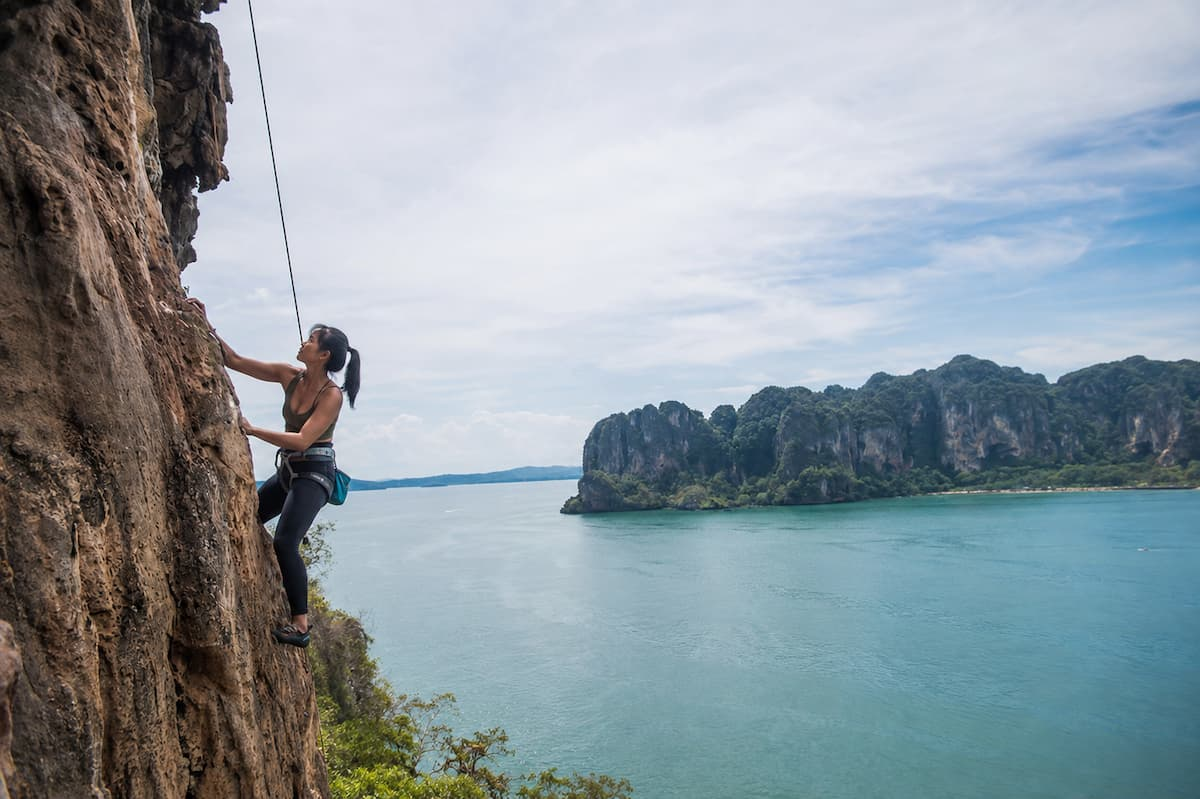
Rising directly from the beaches and tropical vegetation of the Railay Peninsula, Krabi’s limestone cliffs have developed into Southern Thailand’s leading rock-climbing destination. Hundreds of bolted routes provide opportunities for complete beginners, developing climbers and experienced visitors seeking steep overhangs or multi-pitch ascents.
The setting contributes to the experience, but it is the concentration and variety of established routes that distinguish Railay and neighbouring Tonsai from smaller climbing areas elsewhere in the region.
Why Railay and Tonsai Lead Southern Thailand for Climbing
Railay combines accessible climbing walls with established schools, equipment rental and introductory sessions that can be fitted into a wider Krabi holiday. Several popular climbing areas can be reached on foot from Railay East, allowing beginners to try the activity without organising a specialist climbing trip.
Tonsai has a stronger independent-climbing culture and is particularly known for steeper, more physically demanding routes. Although the two areas are close together, they do not provide identical experiences.
Railay or Tonsai: Which Should You Choose?
Railay is generally the better starting point for first-time climbers. A guided introductory session normally covers basic equipment, communication, foot placement, belaying and several supervised climbs selected for the participant’s ability.
Tonsai is better suited to climbers who already understand route grades, equipment and climbing technique. Its overhanging limestone and more demanding routes have helped build its reputation among experienced international climbers.
Neither area is limited exclusively to one ability level, but beginners should not select a route based solely on how accessible it appears from the beach.
What the Experience Involves
Most introductory experiences use top-rope systems or accessible bolted sport-climbing routes. Half-day sessions provide enough time to learn the basic movements and complete several short climbs, while full-day programs allow greater progression.
Experienced climbers can explore single-pitch sport routes, steep overhangs and selected multi-pitch climbs. These require considerably more judgement, endurance and technical knowledge than a supervised introductory session.
Who It Suits
Rock climbing at Railay can suit active beginners with no previous experience, provided they use a reputable instructor. The range of routes also allows intermediate and advanced climbers to build a longer stay around the activity.
A reasonable level of mobility and upper-body strength helps, but beginners often discover that balance, foot placement and controlled movement matter more than attempting to pull themselves up using their arms alone.
Best Time to Go
The most comfortable climbing conditions generally occur from November to March, when Krabi experiences less rain and lower humidity. Climbing may remain possible during other months, but heat, wet rock and sudden rain can restrict suitable routes.
What to Know Before Climbing
First-time climbers should use an established climbing school that provides suitable helmets, harnesses and footwear. Experienced climbers travelling with their own equipment should obtain current route information and assess bolts, anchors and rock conditions rather than relying on an old guidebook.
For qualified climbers seeking a quieter and less developed alternative, Koh Yao Noi offers striking limestone climbing in a more secluded setting. Railay remains the stronger overall recommendation because it provides the easiest transition from a first supervised climb to more technically demanding experiences.
A TRAVEL WITH INSIGHT
When I went rock climbing at Railay, I travelled by longtail boat to Railay East and had arranged a climbing session with one of the schools there. I went with two other people, and although we had each spent a little time on indoor climbing walls, it was the first time any of us had climbed outdoors.
We started with top-rope climbing, where the rope runs through an anchor above the route and is controlled by a belayer below. This meant we could pause and rest when needed without feeling that we had to complete the climb in one continuous effort. I have a natural discomfort with heights—not enough to make me panic, but certainly enough to make reaching the top feel like an achievement.
Everything was well organised, and the guides were experienced, encouraging and good fun. The routes were not especially technical at our level, but climbing them provided an enjoyable workout. We each climbed three times, following a slightly different route on every attempt.
Afterwards, we followed the trail behind the resorts and watched more experienced climbers tackling some of the more difficult walls on the other side of the peninsula. We then finished the day with a swim and time relaxing on the beach. It was a genuinely enjoyable adventure and showed how easily Railay can accommodate everyone from first-time outdoor climbers to people seeking much more demanding routes.
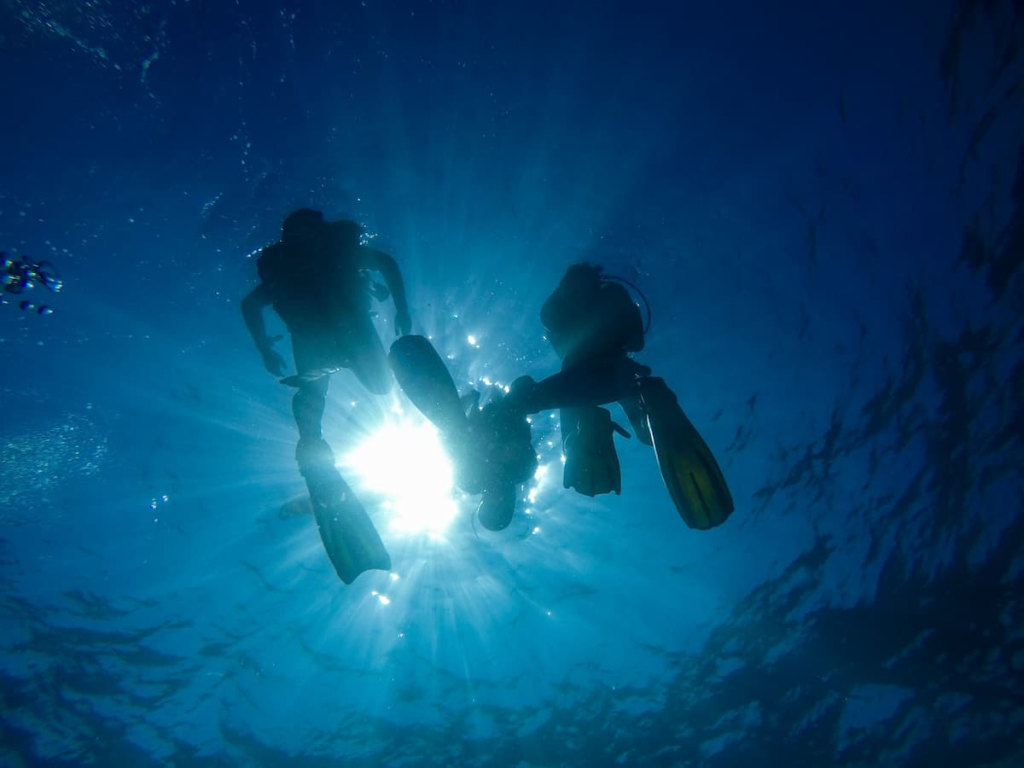
2. Learn to Scuba Dive on Koh Tao
Surrounded by warm tropical water and numerous accessible dive sites, Koh Tao has become one of Southern Thailand’s most established destinations for learning to scuba dive. The island supports a large diving community, frequent boat departures and courses ranging from supervised introductory dives to professional-level training.
Koh Tao is not necessarily the best destination for every experienced diver. The Similan and Surin islands generally offer stronger opportunities for qualified divers seeking more ambitious underwater experiences. Koh Tao leads this category because it provides one of the region’s most accessible environments in which to learn.
Why Koh Tao Is the Best Place to Learn
Several dive sites around Koh Tao provide the shallow water, manageable conditions and sandy areas needed for practising essential skills. Beginners can develop confidence before progressing towards reefs, rock formations and deeper sites.
The large number of established schools also gives travellers a choice of course schedules, teaching languages and group sizes. This competition can make learning relatively affordable, but the lowest advertised price should not be the deciding factor when selecting a school.
Introductory Dive or Open Water Certification?
A supervised introductory dive is suitable for travellers who want to experience breathing underwater without immediately committing to a complete course. It normally includes a safety briefing, basic skills and one or more closely supervised dives. Completing the experience does not provide a qualification to dive independently.
An Open Water course is the better option for travellers who want a recognised recreational diving certification. Most courses take approximately three days and combine theory, confined-water practice and four assessed open-water dives.
This requires a greater commitment than a single holiday activity, but the resulting certification can be used at suitable diving destinations around the world.
What Learning to Dive Involves
Before entering deeper water, students learn how to assemble and use their equipment, breathe through a regulator, clear water from a mask, control buoyancy and respond to common underwater problems. These skills are practised in a controlled setting before being repeated in open water.
The physical movements are not normally extreme, but learning to remain calm underwater creates a genuine mental challenge. Equalising pressure, managing unfamiliar equipment and communicating through hand signals all require attention.
Who It Suits
Koh Tao suits first-time divers, travellers seeking certification and qualified divers continuing into advanced, deep or wreck-diving courses. Participants need basic swimming ability, reasonable physical health and comfort in the water.
Anyone with a relevant medical condition should disclose it honestly and obtain appropriate medical clearance rather than assuming that warm, calm water removes the physical demands of diving.
Best Time to Go
Diving operates around Koh Tao throughout the year, although visibility, rain, wind and sea conditions change between seasons. Conditions are often favourable from the first half of the year into September, while the Gulf monsoon can bring more disruption later in the year.
Whale sharks are occasionally encountered around deeper sites, particularly during recognised seasonal periods, but sightings should be treated as a possibility rather than a reason to select a particular course date.
Choosing a Responsible Dive School
Before booking, ask about the number of students assigned to each instructor, the condition of the equipment, which sites are used for training and what happens if weather affects the course. An instructor who communicates clearly and allows students to progress without pressure is more valuable than a school offering the fastest or cheapest qualification.
For already-certified divers whose priority is exceptional marine scenery rather than training, the Similan and Surin islands provide the strongest alternative. Koh Tao remains our preferred recommendation for travellers taking their first serious step into scuba diving.
A TRAVEL WITH INSIGHT
After not diving for several years, I chose Koh Tao partly because of its worldwide diving reputation and partly because it was relatively close to where I was travelling. There are a huge number of dive schools on the island, although—as with most popular destinations in Southern Thailand—you should expect plenty of other visitors.
Although I already held an advanced diving certification, I booked a recreational fun dive because I wanted to re-establish my knowledge and confidence before attempting anything more demanding. I paid an additional ฿1,200 at the time for private instruction, principally so I could review the skills and progress at my own pace.
The instructor was very good, and we spent time revisiting the essential procedures before travelling to White Rock. We remained at a depth of around ten metres, where there was relatively little current and plenty to observe. I saw several stingrays, anemones and numerous species of fish. Some of the coral appeared to be suffering, although brain coral remained plentiful in the areas we explored.
Overall, it was an excellent return to diving. Conversations with other divers also revealed how much variety exists around Koh Tao, including more distant sites and locations that receive fewer visitors. That range makes the island a strong option not only for people learning to dive, but also for qualified divers returning after a long break or looking for experiences beyond the busiest training sites.
3. Hike to the Summit of Khao Luang, Nakhon Si Thammarat
Reaching the summit of Khao Luang is the most physically demanding adventure included in this guide. As the highest mountain in Southern Thailand, it offers a genuine multi-day expedition through dense tropical forest rather than a short national-park walk ending at an easily accessible viewpoint.
The mountain rises within Khao Luang National Park west of Nakhon Si Thammarat. Summit treks commonly begin near Ban Khiri Wong and require local arrangements, camping equipment and several consecutive days of walking.
Why Khao Luang Is Southern Thailand’s Leading Mountain Hike
Many national parks in Southern Thailand contain nature trails, waterfalls and elevated viewpoints, but comparatively few provide a recognised multi-day summit objective. Khao Luang combines altitude, rainforest, remoteness and changing mountain terrain in a way that distinguishes it from the region’s more accessible walks.
The experience is not based on reaching one photographed viewpoint. Much of its appeal comes from travelling through different forest environments, camping on the mountain and completing a sustained physical journey.
What the Trek Involves
A typical summit itinerary takes approximately three days and two nights. The precise route, camping locations and daily distances depend on current trail conditions and the arrangements made with local guides or park personnel.
Trekkers should expect long periods of walking over uneven ground, steep ascents, exposed roots, streams and potentially wet or muddy terrain. Food, water and camping equipment must also be organised for the duration of the trek.
The tropical setting makes the challenge different from hiking at similar elevations in a cooler climate. Heat, humidity and heavy rainfall can increase fatigue even when the daily distance does not appear exceptional on paper.
How Difficult Is Khao Luang?
Khao Luang is best treated as a demanding trek for people with reasonable fitness and previous hiking experience. Participants need to be comfortable walking for several hours on consecutive days and sleeping in basic camping conditions.
The route does not require technical mountaineering, but that should not be confused with being easy. Slippery ground, changing weather and the cumulative effort of a multi-day ascent make preparation important.
Travellers who have only completed short paved trails or urban walks should undertake some longer hikes before attempting the summit.
Who It Suits
This experience suits trekkers looking for a serious physical objective and a less commercialised side of Southern Thailand. It will particularly appeal to visitors who value the journey through the forest as much as the view from the summit.
It is not the best choice for someone wanting to add a spontaneous half-day hike to a Nakhon Si Thammarat itinerary. Khao Sok provides a more accessible alternative for travellers seeking a shorter introduction to jungle trekking.
Best Time to Go
The recognised trekking period generally begins in January, when rainfall and trail conditions become more manageable. Different sources place the end of the season between July and September, reflecting the effect of changing weather rather than a guaranteed annual timetable.
Access should therefore be confirmed directly with the national park or a knowledgeable local guide before booking transport and accommodation. Heavy rain can alter trail conditions or cause the park to restrict summit access.
Planning the Trek
A guide or ranger arrangement should be made in advance rather than after arriving at the trailhead. Travellers also need to confirm how tents, food, cooking equipment and drinking water will be carried and whether porters are included.
Suitable footwear, rain protection, quick-drying clothing and protection from insects are essential. Packing lightly remains important, but not at the expense of equipment needed to remain dry and safe.
Khao Luang rewards preparation. For travellers ready to commit the time and effort, it provides Southern Thailand’s clearest transition from an enjoyable nature walk to a genuine mountain expedition.
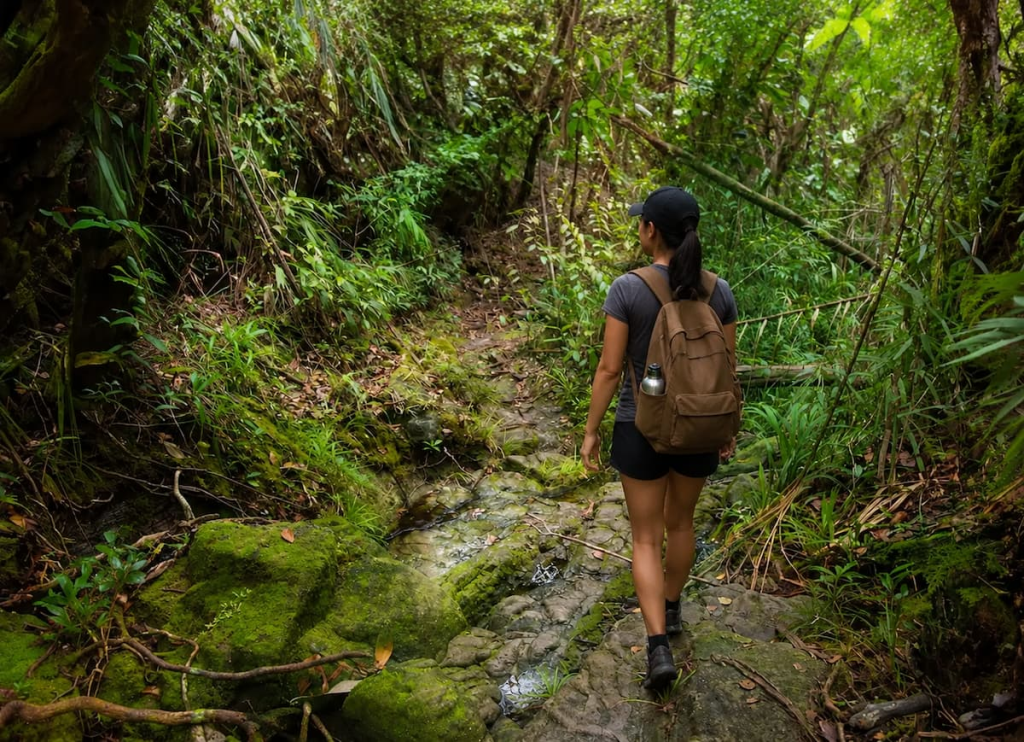
4. Trek Through the Rainforest at Khao Sok National Park
Khao Sok National Park provides a more accessible introduction to rainforest trekking than the multi-day ascent of Khao Luang, but the experience can still involve genuine physical and environmental challenges. Heat, humidity, mud, insects, uneven trails and rapidly changing weather are all part of exploring this tropical landscape on foot.
The park contains two principal visitor areas: the rainforest surrounding the national-park headquarters and Cheow Lan Lake farther east. Both offer trekking opportunities, but the routes, access and character of the experience are different.
Why Khao Sok Is Southern Thailand’s Leading Rainforest Adventure
Khao Sok combines dense rainforest, limestone formations, streams, waterfalls, caves and wildlife habitats within a destination that can be reached from Phuket, Khao Lak, Krabi and Surat Thani.
Visitors can select anything from a short forest walk to a guided overnight experience. This range makes Khao Sok suitable for travellers who want meaningful time in the rainforest without necessarily committing to a demanding summit expedition.
The quality of the experience depends heavily on the itinerary chosen. A sightseeing trip across Cheow Lan Lake can be visually impressive, but it should not automatically be described as jungle trekking if it includes only a brief walk.
Choosing the Right Khao Sok Trek
Shorter routes near the national-park headquarters provide the most approachable introduction. These may combine forest walking with streams and waterfalls and can be completed within part of a day.
Guided night walks offer a different experience. Darkness changes the forest considerably, and guides may identify insects, frogs, reptiles and nocturnal wildlife that visitors would otherwise overlook.
Longer guided routes can venture deeper into the forest or begin from landing points around Cheow Lan Lake. Some itineraries combine a boat journey, trekking and cave exploration, while overnight programs allow visitors to experience the forest or lake beyond the busiest daytime period.
Before booking, confirm how many hours will actually be spent walking. The terms “jungle safari” and “adventure tour” are sometimes applied to itineraries containing considerably more driving and boating than trekking.
What Makes the Trek Challenging?
Khao Sok’s trails are not necessarily difficult because of altitude. The challenge comes from the tropical conditions and the terrain.
Heavy rain can turn firm ground into mud, while roots, rocks and stream crossings become slippery. Humidity increases the effort required, and leeches are more common during wetter periods. Even a moderate route can feel demanding when undertaken in heat and high humidity.
Lightweight, quick-drying clothing and footwear with reliable grip are more useful than clothing selected principally for appearance. Carry drinking water and protect electronics and valuables from sudden rain.
Do You Need a Guide?
A limited number of routes close to the park headquarters can be explored independently when open. Longer trails, less clearly marked routes and most cave experiences require a guide.
A good local guide contributes more than navigation. Guides can interpret animal calls, identify plants and locate wildlife that most visitors would pass without noticing. They should also understand how rainfall affects streams, caves and trail safety.
Hiring a guide does not remove every risk, but attempting an unfamiliar closed or guide-required route independently creates an unnecessary one.
Best Time to Go
December to April normally provides the most manageable trekking conditions, with less persistent rain and firmer trails. This is also the more popular visitor period.
The wetter months create particularly lush vegetation, fuller streams and increased wildlife activity, but trails can become muddier and more strenuous. Closures may also affect individual waterfalls, caves and forest routes.
Rather than treating one season as universally best, travellers should select a route appropriate to the conditions on the day.
Cave and Flash-Flood Safety
Cave exploration requires particular caution. Rain falling elsewhere in a catchment can cause water levels to rise even when conditions at the cave entrance appear manageable.
Nam Talu Cave and other sensitive routes can close during the wet season because of flash-flood danger. These restrictions must be treated as safety measures rather than obstacles for an operator to work around.
Never enter a closed cave or continue when park personnel or an experienced guide considers conditions unsafe.
For travellers wanting quieter forest and waterfall walking, Sri Phang Nga National Park provides a worthwhile alternative. Khao Sok remains the stronger overall recommendation because its range allows visitors to progress from an accessible guided walk to a much deeper rainforest adventure.
5. Paddle Through the Mangroves at Ao Thalane, Krabi
Ao Thalane offers an active kayaking experience through mangrove forest, limestone canyons and narrow tidal waterways approximately 30 kilometres from Krabi Town. Unlike many excursions in Phang Nga Bay, where passengers are transported between locations on a larger boat and then paddled by a guide, visitors at Ao Thalane generally control and propel their own kayaks.
The water is normally sheltered rather than rough, but navigating winding channels and completing several kilometres of paddling introduces enough effort and coordination to make this a genuine, accessible adventure.
Why Ao Thalane Qualifies as an Adventure
A typical route covers approximately five to seven kilometres over around two hours. Participants paddle across the bay before entering channels enclosed by mangroves and towering limestone formations.
The challenge does not come from speed, waves or dangerous rapids. It comes from maintaining a steady paddling rhythm, steering through confined passages and coordinating movements with another person in a tandem kayak.
This makes Ao Thalane particularly suitable for travellers who want to participate actively in the landscape without requiring previous technical experience.
What the Kayaking Experience Involves
Most trips begin with a basic introduction to paddling, steering and using a life jacket. A guide then leads the group through the waterways while participants paddle their own kayaks.
Depending on the tide, the route can include mangrove channels, limestone canyons, caves and enclosed lagoons. Wildlife sightings may include macaques, kingfishers and other animals associated with the mangrove ecosystem, although encounters can never be guaranteed.
Half-day trips generally provide enough paddling for most first-time visitors. Full-day programs may add a second route or another activity, so check whether the longer itinerary actually includes more kayaking before choosing it.
How Challenging Is It?
Ao Thalane is accessible to beginners, but it still requires sustained upper-body effort. Tandem paddlers must coordinate their strokes and communicate when turning through narrow sections.
The route can feel more demanding in direct sun, against wind or when the tide creates stronger water movement. Travellers who rarely exercise may notice the effort in their shoulders and arms, particularly during the return journey.
It is not an extreme kayaking destination. More experienced paddlers seeking open-water crossings, longer daily distances and remote camping should consider a specialist expedition around Koh Tarutao instead.
Why the Tide Matters
Tide level changes both the appearance and accessibility of Ao Thalane. Higher water can open passages deeper within the mangroves and cover exposed roots, while lower water may reveal mud, sandbanks and obstacles that restrict parts of the route.
A low tide does not necessarily make every trip unsuitable, but it can create a noticeably different experience. Ask the operator how the expected tide will affect the route rather than relying only on a standard departure time.
Weather also matters. Heavy rain, strong wind or poor visibility can alter conditions even though much of the paddling takes place in protected water.
Who It Suits
Ao Thalane suits active couples, friends and families with children old enough to paddle or sit safely in a kayak. It is also a good choice for travellers who want a nature-based activity that requires more participation than a conventional sightseeing tour.
Basic swimming confidence is advisable even when life jackets are provided. Take drinking water, sun protection and a waterproof bag for items that cannot become wet.
Best Time to Go
Kayaking is available through much of the year, with the most comfortable conditions commonly occurring during Krabi’s drier months from approximately November to April. Green-season trips can still be enjoyable when weather permits, but rain and wind become less predictable.
Ao Thalane is not Southern Thailand’s most extreme paddling challenge. It earns its place because it allows ordinary travellers to move through a remarkable environment under their own power—and provides considerably more involvement than simply sitting in a canoe while someone else does the paddling.
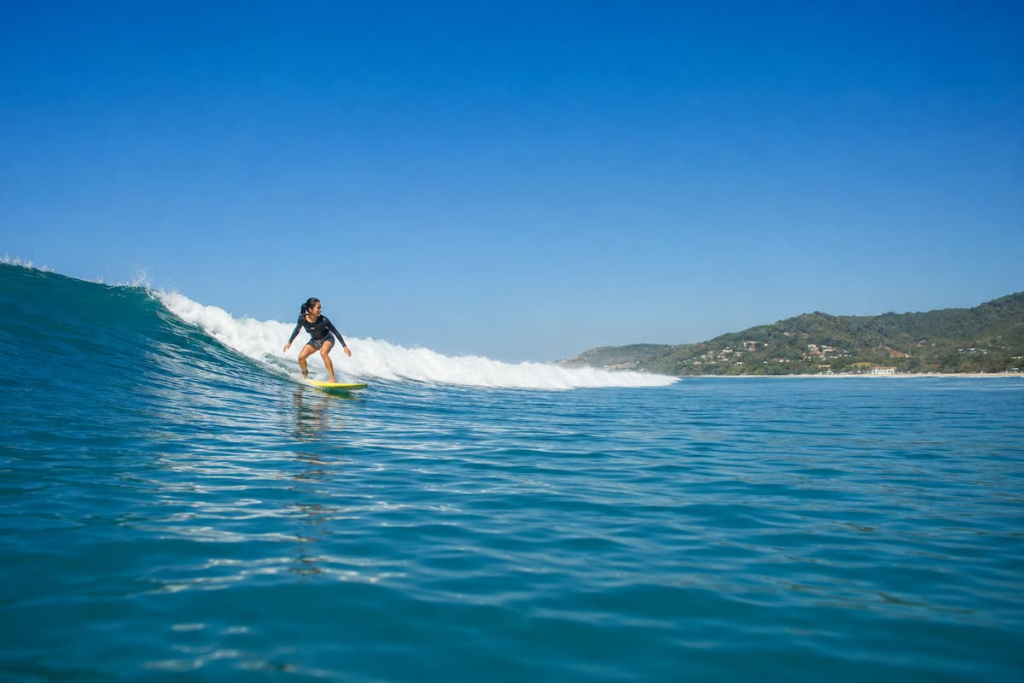
6. Learn to Surf at Kata Beach, Phuket
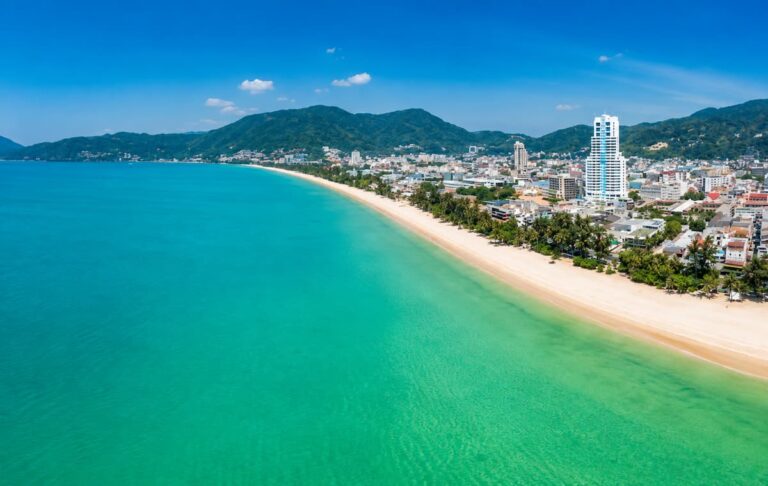
Kata Beach becomes one of Phuket’s principal surfing centres when southwest-monsoon swells begin reaching the island’s west coast. Board rentals, established instructors and a sandy seabed make it one of the most approachable places in Southern Thailand to experience surfing for the first time.
Kata is not the region’s most technically demanding surf break. Its strength is providing conditions in which beginners can take an introductory lesson while developing surfers can practise when the waves are suitable.
Why Kata Is Southern Thailand’s Best Place to Try Surfing
Several beaches along Phuket’s west coast receive rideable waves during the green season, but Kata has developed the most recognisable concentration of surf schools, board rental and beginner activity.
The sandy bottom is generally more forgiving than the reef found at breaks such as Kalim. Instructors can also select an appropriate part of the beach according to the swell, currents and the ability of the student.
Accessibility contributes to Kata’s recommendation. Travellers do not need to organise a specialist surf holiday or transport equipment across the island before trying their first lesson.
What a Beginner Lesson Involves
An introductory lesson normally begins on the beach. Students learn how to position themselves on the board, paddle, move from lying down to standing and maintain balance once the wave begins carrying them forward.
The instructor should also explain how to handle the board safely, identify the area being used for the lesson and respond after falling into the water. Initial attempts generally take place in broken waves close to shore rather than on larger unbroken waves farther out.
Standing successfully may take several attempts. The physical challenge comes from repeatedly paddling, pushing up from the board, balancing and returning through the water for another attempt.
When Is Phuket’s Surf Season?
Phuket’s principal surf season generally runs from May to October, when the southwest monsoon produces waves along the island’s western beaches. The most consistent opportunities commonly occur between June and September, although conditions can change considerably from one day to the next.
This means surfing is largely a green-season activity in Phuket. During the drier high-season months, Kata Beach is usually better suited to swimming and conventional beach activities than surfing.
Travellers should not expect a particular wave size simply because they arrive during the recognised season. Wind direction, offshore weather and local currents all influence the conditions on an individual day.
How Challenging Is Kata Beach?
On a manageable day, Kata can provide an accessible introduction for someone who has never stood on a surfboard. As the swell increases, however, the same beach can develop stronger waves and currents that are inappropriate for beginners.
Surfing requires more energy than it can appear to from the shore. Repeated paddling and standing attempts provide a substantial workout, particularly for visitors unaccustomed to swimming through moving water.
Beginners should allow the instructor to determine whether conditions are suitable rather than insisting on proceeding because a lesson has already been scheduled.
Who It Suits
Kata suits first-time surfers, active teenagers and adults, and developing surfers wanting to practise on a relatively accessible beach. Basic swimming confidence is important, even when the lesson takes place close to shore.
More experienced surfers may find stronger or more technically interesting conditions at Nai Harn or Kalim. Kalim breaks over reef and should not be treated as an alternative beginner beach simply because it is close to Patong.
Surfing Safely in Phuket
The waves that make surfing possible arrive during the same season associated with rougher seas and stronger rip currents. Red flags and lifeguard warnings therefore remain important even when surfers are visible in the water.
A beach described as beginner-friendly is not suitable for beginners under every condition. Use an instructor familiar with the beach, wear the board leash correctly and keep sufficient distance from swimmers and other surfers.
Karon and Bang Tao can provide alternatives when learners want more space or conditions are better there. Kata remains our overall recommendation because it combines seasonal waves with the easiest access to instruction, equipment and a supportive first-time surfing experience.
7. Learn Kitesurfing on Koh Phangan
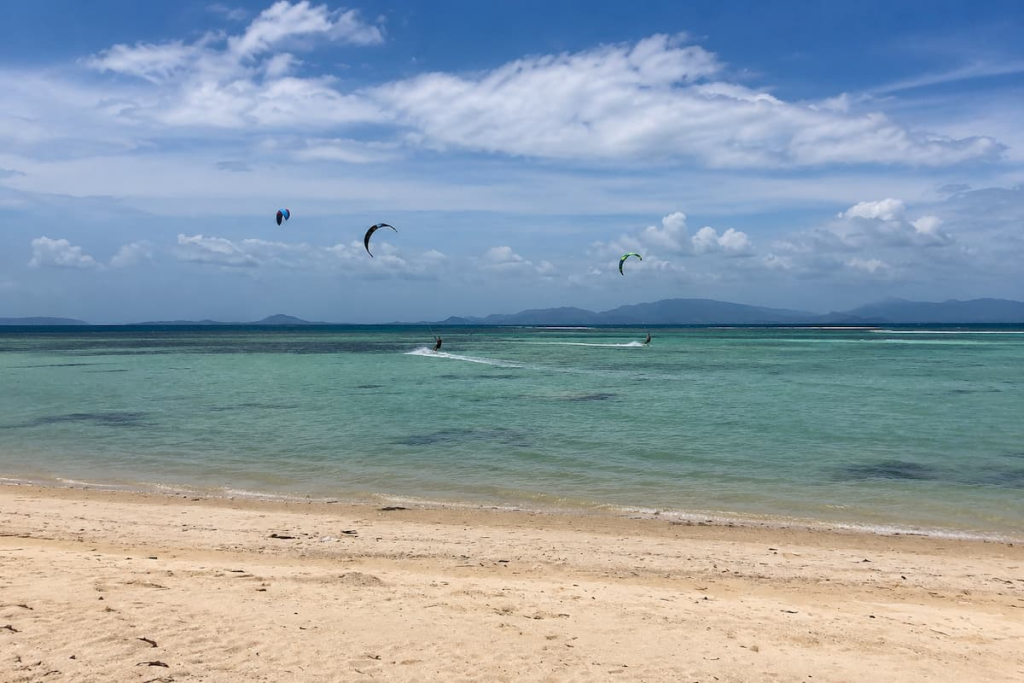
Kitesurfing combines wind, water and board control in one of the most technically demanding activities included in this guide. Rather than being pulled behind a boat, the rider uses a large controllable kite to generate power, move across the water and eventually perform turns and jumps.
Koh Phangan’s southern coast provides some of Southern Thailand’s most approachable learning conditions. Shallow reef-protected water around Baan Tai and Thong Sala, combined with several established schools, allows beginners to develop essential skills in a relatively controlled environment.
Why Koh Phangan Leads for Learning Kitesurfing
A wide, shallow lagoon gives beginners space to practise while remaining able to stand in many areas. The water is commonly flatter than an exposed surf beach, reducing the number of variables students must manage during their first lessons.
These conditions do not make kitesurfing easy. They create a more suitable environment in which to learn kite control before attempting to ride independently.
The island also has an established kitesurfing community and schools offering equipment and multi-session courses. This is important because most beginners need considerably more than a short introduction before they can combine kite handling, body position and board control.
What Learning Kitesurfing Involves
Initial instruction normally begins on land or in shallow water. Students learn how the wind window works, how to prepare and control the kite, and how to launch and land safely.
The next stage commonly involves body dragging, where the kite pulls the student through the water without a board. This teaches power control and provides an essential method of recovering the board after a fall.
Only after demonstrating sufficient kite control do students begin practising water starts. This requires positioning the board, directing the kite through its power zone and standing while maintaining balance.
Progress can initially feel slow because several movements must be coordinated at once. That learning process is precisely what gives kitesurfing its sense of achievement.
How Long Does It Take to Learn?
A single introductory session can teach basic safety and provide an initial experience of controlling a kite. It is unlikely to make a complete beginner an independent kitesurfer.
Several lessons are normally required before a student can launch, ride, stop and recover equipment with reasonable control. Progress depends on the individual, the consistency of the wind and how much usable practice time conditions allow.
Travellers should therefore allocate several days rather than scheduling one lesson immediately before leaving Koh Phangan.
Who It Suits
Kitesurfing suits confident swimmers who enjoy learning a technical skill and are prepared to repeat movements until they begin to work together. Balance, coordination and general fitness help, but patience and careful attention to instruction are equally important.
The activity may be unsuitable for people with certain shoulder, back or joint conditions. Medical concerns should be discussed before committing to a course.
Best Time to Go
Koh Phangan’s principal kitesurfing season generally runs from January to April, with February and March commonly providing the most dependable combination of wind and weather.
A secondary period can occur from approximately July to September. Winds during this time may be stronger but less predictable, with rain and squalls creating conditions better suited to experienced riders.
Even during the principal season, wind is never guaranteed. A flexible schedule gives a school the opportunity to move lessons to the most suitable part of the day.
Understanding Wind and Tide Limitations
Wind that is too light provides insufficient power, while strong or unstable wind can make learning unsafe. A responsible instructor should postpone a session when conditions fall outside an appropriate range.
Tide is also important. Water that is too shallow can expose reef or leave insufficient depth for safe falls, while higher water can change the amount of protected practice space available.
Beginners should not buy an independent equipment rental as a substitute for instruction. Incorrect launching, poor kite control and unfamiliarity with local wind can endanger the rider and other beach users.
Koh Samui and parts of Phuket offer seasonal alternatives, but their suitability changes with wind direction and time of year. Koh Phangan remains our leading recommendation because its shallow southern lagoon, established schools and multi-day learning environment provide the strongest overall setting for taking a first serious step into kitesurfing.
Which Southern Thailand Adventure Is Right for You?
The best activity depends on how much time you have, your existing experience and the type of challenge you want. Some of these adventures can be tried during a single introductory session, while others require several days of instruction, preparation or sustained physical effort.
| If you want… | Choose… | Why |
|---|---|---|
| An accessible first outdoor adventure | Rock climbing at Railay | A supervised top-rope session provides a physical challenge without requiring previous outdoor climbing experience. |
| A recognised qualification you can use elsewhere | Scuba diving on Koh Tao | An Open Water course normally takes around three days and provides an internationally recognised recreational diving certification. |
| The greatest endurance challenge | Hiking Khao Luang | The multi-day summit trek requires preparation, camping and consecutive days of physically demanding walking. |
| A flexible rainforest experience | Trekking in Khao Sok | Routes range from shorter guided walks to overnight forest, lake and cave combinations. |
| An active but approachable nature experience | Kayaking at Ao Thalane | Participants paddle through mangroves and limestone channels without needing advanced technical skills. |
| A water sport you can experience in one lesson | Surfing at Kata Beach | Beginners can learn the fundamentals and attempt to stand during a supervised introductory session. |
| A technical water sport to develop over several days | Kitesurfing on Koh Phangan | Learning to combine kite control and board skills provides a substantial challenge and a strong sense of progression. |
Travellers seeking a short introduction should consider Railay, Ao Thalane or Kata Beach. Koh Tao and Koh Phangan are better suited to people prepared to spend several days learning, while Khao Luang requires the greatest advance planning and physical commitment.
Khao Sok provides the most flexible middle ground. The length and difficulty of the experience can be adjusted, but selecting an itinerary with meaningful trekking is essential if the objective is genuine adventure rather than sightseeing.
Planning an Adventure Holiday in Southern Thailand
Adventure activities are more dependent on weather and local conditions than conventional sightseeing. Building some flexibility into your itinerary can prevent unsuitable conditions from turning one cancelled activity into a major disruption.
Allow Time for Conditions to Change
Do not schedule a weather-dependent activity immediately before a flight, ferry connection or departure from the destination. Wind can disappear, waves can become too powerful, rain can close a trail and poor visibility can affect diving.
A spare day is particularly valuable when travelling specifically to surf, kitesurf, dive or complete a national-park trek.
Match the Activity to Your Experience
Choose the version of an activity that reflects your current ability rather than the experience you hope to have. A first-time climber belongs on a supervised introductory route, while a qualified diver returning after a long break may benefit from a refresher or private assistance before attempting deeper sites.
Being physically fit in one area does not automatically provide the technical skills needed for another. Follow the progression recommended by a qualified instructor.
Check Park Access and Seasonal Restrictions
National parks may close trails, caves and other areas because of rain, flooding, maintenance or environmental protection. Published opening periods provide a useful guide, but current park decisions take precedence.
Confirm access shortly before travelling, particularly when a closed trail would remove the principal reason for visiting.
Choose Instructors and Operators Carefully
Compare group sizes, instructor qualifications, equipment condition and safety procedures rather than selecting an operator solely by price. Ask what happens if conditions become unsuitable and whether the activity will be postponed, changed or refunded.
A responsible operator should be willing to cancel when conditions exceed the ability of the group. Pressure to continue despite an official warning or obvious safety concern is a reason to leave.
Prepare for the Environment
Southern Thailand’s heat and humidity can make moderate physical activity more demanding than expected. Carry sufficient water, use sun protection and select quick-drying clothing appropriate to the activity.
Rain protection, insect repellent and footwear with reliable grip are especially important for forest and mountain routes. For water activities, protect medication, electronics and essential documents in a properly sealed dry bag.
Check Your Travel Insurance
Standard travel insurance does not necessarily cover every adventure activity. Scuba diving below a specified depth, independent climbing, multi-day trekking and kitesurfing may be subject to exclusions or additional conditions.
Check that the specific activity, destination and intended experience level are covered. Insurance requirements should be resolved before participating, not after an accident.
Be Honest About Health and Fitness
Disclose relevant medical conditions to instructors and complete diving or activity questionnaires accurately. Travellers returning to a sport after a long break should consider refresher training even when their previous certification remains valid.
Adventure should involve challenge, but it should be a challenge matched to preparation, conditions and individual ability—not an avoidable risk created by ignoring them.
Are These Adventure Activities Suitable for Beginners?
Several of these adventures are suitable for complete beginners when undertaken in the right conditions with qualified instruction. Others require previous experience, greater fitness or a commitment to learning over several days.
Rock climbing at Railay, kayaking at Ao Thalane and surfing at Kata Beach provide the easiest opportunities to try something new within a half-day session. Beginners remain active participants, but the route, equipment and level of exposure can be managed by an experienced guide or instructor.
Koh Tao is also highly suitable for first-time divers, although learning to scuba dive involves more than following a guide underwater. Students must understand the equipment, demonstrate essential safety skills and remain calm in an unfamiliar environment. A complete certification course normally requires several days.
Kitesurfing has beginner programs, but it is the most technically complicated activity in this guide. A first lesson may introduce kite control and safety without progressing to riding a board. Travellers should view it as a skill developed over multiple sessions rather than an activity guaranteed to be mastered in an afternoon.
Khao Sok can accommodate beginners when the route is selected carefully. Shorter guided forest walks provide an accessible introduction, while longer trails, wet-season conditions and cave approaches require considerably more stamina and awareness.
The Khao Luang summit trek is the principal exception. Although it does not require technical mountaineering, its multi-day duration, camping conditions and tropical terrain make it unsuitable as someone’s first serious hike.
| Activity | Suitable for complete beginners? | Important qualification |
|---|---|---|
| Rock climbing at Railay | Yes | Use a guided introductory session |
| Scuba diving on Koh Tao | Yes | Complete an introductory dive or recognised course |
| Hiking Khao Luang | Generally no | Previous hiking experience and strong fitness recommended |
| Trekking in Khao Sok | Yes, on selected routes | Match the route to fitness and conditions |
| Kayaking at Ao Thalane | Yes | Basic fitness and swimming confidence advisable |
| Surfing at Kata Beach | Yes | Conditions must be appropriate for learning |
| Kitesurfing on Koh Phangan | Yes | Expect several lessons before riding independently |
Beginner-friendly should never be interpreted as risk-free. The safest introduction comes from choosing an appropriate route, allowing enough time to learn and accepting when weather or local conditions make postponement necessary.
Other Adventure Activities to Consider
Southern Thailand offers many other active experiences beyond our principal seven. Some require specialist arrangements, while others provide worthwhile additions to a wider itinerary without being strong enough to lead their own category in this guide.
Multi-Day Cycling Across Southern Thailand
Long-distance cycling routes can connect the Gulf of Thailand with the Andaman coast through plantations, rural communities, limestone landscapes and the countryside surrounding Khao Sok. Supported itineraries commonly cover substantial daily distances and require several consecutive days of riding.
This can be a rewarding endurance adventure, although no single destination stands out as clearly as Railay does for climbing or Koh Tao does for learning to dive.
Advanced Diving in the Similan and Surin Islands
Qualified divers looking beyond Koh Tao should consider the Similan and Surin islands, including recognised sites such as Richelieu Rock. These areas are better suited to travellers prioritising marine scenery, deeper sites and multi-day liveaboard experiences.
Access is seasonal, and individual sites may involve currents or depths inappropriate for inexperienced divers.
Expedition Kayaking Around Koh Tarutao
Koh Tarutao and the surrounding marine park provide a more remote alternative to Ao Thalane. Specialist itineraries can involve longer coastal paddling, isolated beaches and multiple days away from major tourism centres.
The additional distance, limited infrastructure and dependence on sea conditions make this more adventurous, but also considerably less accessible to ordinary visitors.
Trail Running in National Parks
Experienced runners can find challenging terrain in several southern national parks and forest areas. Heat, humidity, steep ground and unclear trail access make independent route selection more complicated than following an established urban running path.
Joining an organised event or running with someone who understands the route is preferable to entering an unfamiliar forest trail alone.
White-Water Rafting at Song Phraek
Song Phraek in Phang Nga offers short guided rafting trips and is easily reached on excursions from Phuket, Krabi and Khao Lak. It can provide an entertaining introduction to moving water, particularly for travellers combining it with other activities.
We have not included it among the principal seven because the commonly sold experience uses a relatively short, commercially controlled section of river and is frequently packaged with ATVs, ziplines and elephant activities. This makes it less representative of an independent rafting adventure than sales descriptions sometimes suggest.
Frequently Asked Questions
Travellers who choose to participate should assess the rafting operator separately from the bundled itinerary and avoid packages involving questionable treatment of animals.
What Is the Best Adventure Activity for Beginners in Southern Thailand?
A guided top-rope climbing session at Railay provides one of the best introductions to outdoor adventure. Beginners can attempt several routes while the rope system and instructor allow them to pause when needed.
Kayaking at Ao Thalane is another approachable choice for travellers who prefer a nature-based activity without heights. Surfing at Kata Beach can also suit complete beginners when waves and currents are appropriate.
What Is the Most Physically Demanding Adventure in Southern Thailand?
The multi-day summit trek in Khao Luang National Park is the most physically demanding activity in this guide. It normally involves approximately three days of walking, two nights of camping and sustained effort in humid mountain conditions.
Experienced climbers, kitesurfers and divers can undertake technically demanding activities, but their difficulty depends heavily on the route, site and individual experience.
Where Is the Best Place to Learn Scuba Diving in Southern Thailand?
Koh Tao is our leading recommendation for learning to scuba dive. The island has numerous dive schools, regular boat departures, warm water and several sites suitable for training.
Qualified divers seeking stronger marine experiences may prefer the seasonal diving around the Similan and Surin islands.
Can Beginners Go Rock Climbing at Railay?
Yes. Several climbing schools at Railay offer introductory top-rope sessions for people with no previous outdoor climbing experience. Equipment and instruction are normally provided, with routes selected according to individual ability.
Tonsai also contains routes across different grades, but its steeper walls and climbing culture make it particularly attractive to more experienced climbers.
What Is the Best Rainy-Season Adventure in Southern Thailand?
Surfing at Kata Beach is one of the best activities associated specifically with Southern Thailand’s rainy season. Phuket’s surf season generally runs from May to October, when southwest-monsoon swells reach the island’s west coast.
Conditions can also produce strong currents and red-flag days. Beginners should use an instructor and only enter the water when conditions are appropriate.
Do I Need a Guide for Hiking in Southern Thailand?
It depends on the location and route. The Khao Luang summit trek requires advance arrangements with local guides or park personnel. At Khao Sok, a limited number of trails near park headquarters can be explored independently, while longer, less clearly marked and cave-related routes generally require a guide.
Always follow current national-park regulations rather than relying on an old trail report.
Which Southern Thailand Adventures Require Several Days?
The Khao Luang summit trek normally requires approximately three days and two nights. An Open Water diving course on Koh Tao also commonly takes around three days.
Kitesurfing beginners should allow several days because usable lesson time depends on wind and tide. Multi-day climbing, rainforest trekking and expedition kayaking are also available for travellers wanting a longer adventure.
When Is the Best Time for Adventure Activities in Southern Thailand?
There is no single period that is best for every activity. Climbing, mountain hiking and rainforest trekking generally benefit from drier conditions, while surfing depends on the southwest monsoon. Diving operates throughout the year around Koh Tao, and kitesurfing requires suitable seasonal wind.
The best travel period therefore depends on the activity rather than Southern Thailand as a whole.
Finding Your Adventure in Southern Thailand
The strongest adventures in Southern Thailand are not necessarily the activities promoted most heavily through resort desks and day-tour packages. They are the experiences that allow travellers to participate, develop a skill or test themselves within the region’s distinctive natural environments.
That challenge can take very different forms. It might mean overcoming a discomfort with heights while climbing at Railay, rebuilding confidence underwater on Koh Tao or spending several days walking towards the summit of Khao Luang. For other travellers, paddling through the mangroves at Ao Thalane or catching a first wave at Kata Beach may provide exactly the right level of adventure.
Choose an experience that reflects your ability, available time and willingness to learn. With suitable preparation and respect for local conditions, Southern Thailand offers opportunities ranging from an enjoyable first challenge to an expedition requiring genuine physical commitment.
Continue Exploring Southern Thailand
Thailand Travel Guide
Explore Thailand’s regions, destinations and different holiday experiences through our complete country guide.
Southern Thailand Travel Guide
Plan where to go, how to combine destinations and when to visit the different parts of Southern Thailand.
Best National Parks in Southern Thailand
Compare rainforest, marine and mountain environments across the region’s leading national parks.
Best Islands in Southern Thailand
Find the island that best matches your interests, from established holiday destinations to quieter natural escapes.
Best Beaches in Southern Thailand
Discover seven beaches selected for different coastal experiences rather than fame alone.
Making the Most of Your Southern Thailand Holiday
Learn how to combine beaches, islands, national parks and cultural experiences within a realistic itinerary.
About the Author
David Hibbins is an Australian travel publisher, destination researcher and the creator of Travel With Insight.
David spends considerable time in Phuket and has travelled extensively throughout Thailand and Southeast Asia. His work combines first-hand experiences, repeat visits and practical observations with careful destination research and current information.
Where David has visited a destination himself, those experiences help shape the guidance he provides—from understanding how places feel beyond their best-known attractions to recognising transport challenges, changing conditions and small practical details that shorter visits can miss. Research is used to verify historical context, current visitor information and aspects he has not experienced personally.
His work focuses on helping travellers move beyond popularity rankings, marketing claims and generic “best of” lists. Rather than telling readers where they should travel, his goal is to explain the strengths, limitations and individual character of each destination so they can choose the places that best match their interests, travel style and available time.
Through Travel With Insight, David explores not only where travellers go, but why they choose particular destinations, how experiences differ and what helps turn a well-researched trip into a genuinely memorable journey.
Explore More Travel Resources
Every rewarding journey begins with informed decisions. The more you understand a destination before arriving, the easier it becomes to choose experiences that suit your interests, expectations and preferred pace.
Whether you are researching one destination, comparing several possibilities or preparing a complete itinerary, these additional travel resources can help.
Travel With Insight
Continue exploring in-depth destination guides, first-hand travel insight and practical planning advice created to help you make informed travel decisions throughout Thailand and Southeast Asia.
Go Find Asia
Discover destinations, attractions and travel ideas from across Asia, with inspiration to help you decide where to go, what to experience and which places deserve a closer look.
Resurgence Travel
Move from research to practical planning with curated itineraries, personalised travel support and local insight focused on creating more rewarding journeys through Thailand and Southeast Asia.