
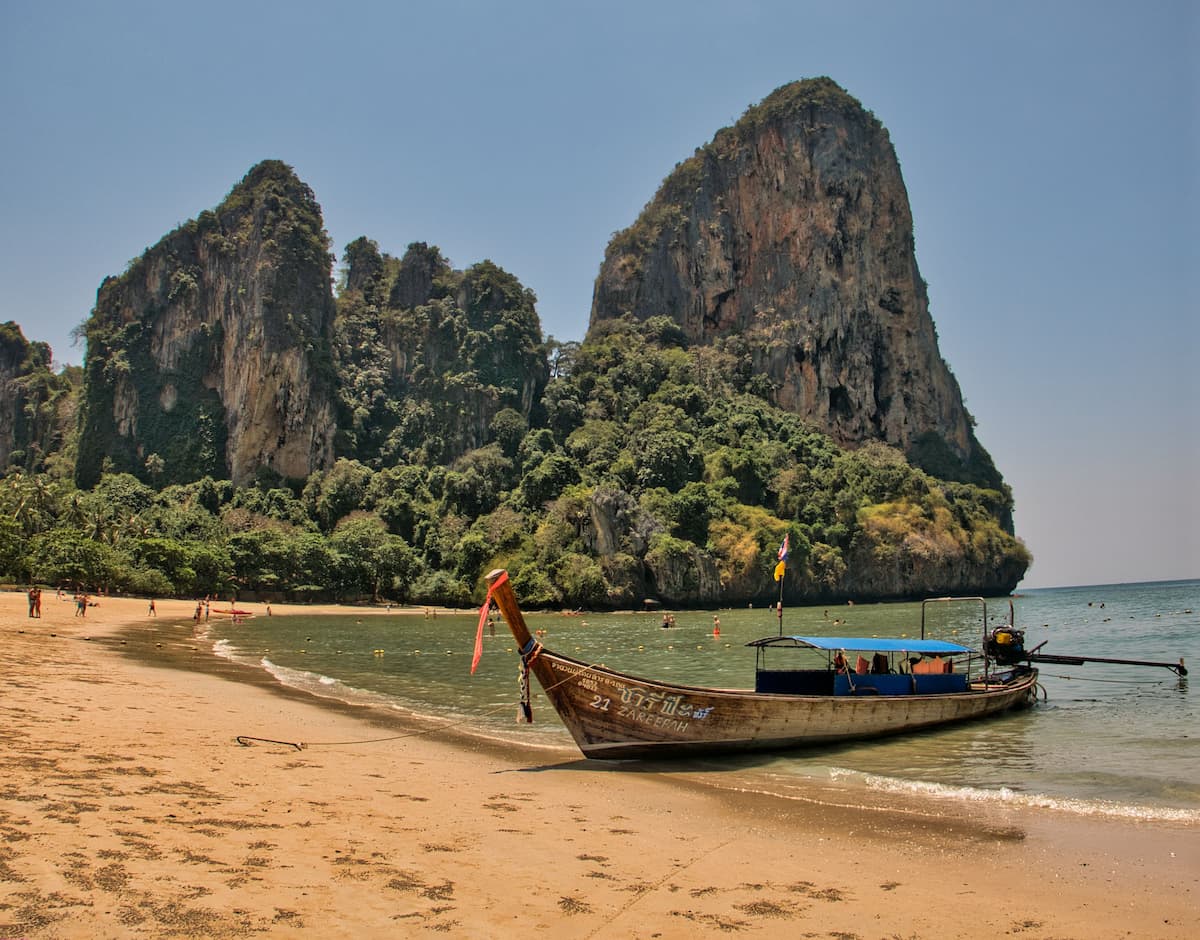
Best Beaches in Southern Thailand: 7 Beaches for Different Experiences
Southern Thailand is home to hundreds of beaches spread between the Andaman Sea and Gulf of Thailand. Some are framed by towering limestone cliffs, others offer clear water and accessible snorkelling, while quieter stretches of coastline provide an escape from the country’s established holiday destinations.
This is not simply another ranking of Thailand’s prettiest beaches. In this best beaches in Southern Thailand guide we have selected seven beaches that offer distinctly different experiences—from the iconic landscape of Maya Bay and the dramatic cliffs of Railay to the convenient beach holiday found at Nai Harn and the largely undeveloped coastline around Khanom.
Not every selection will suit every traveller. Some are ideal for swimming or spending an entire holiday beside the sea, while others are better experienced as protected natural attractions or memorable stops within a wider journey.
Use this guide to compare Southern Thailand’s most celebrated beaches with several quieter alternatives and find the coastal experience that best matches how you want to travel.
Quick Summary: Best Beaches In Southern Thailand
The best beach for your trip depends on whether you value scenery, swimming, snorkelling, nightlife or seclusion. Railay West and Maya Bay deliver the most dramatic landscapes, while Sunrise Beach and Nai Harn provide more conventional beach experiences.
For a quieter holiday, consider Kantiang Bay or Khanom. Choose Chaweng when you want restaurants, accommodation and nightlife within easy reach of the sand.
| Beach | Best for | What to know |
|---|---|---|
| Railay West, Krabi | Dramatic limestone scenery | Accessible only by boat |
| Maya Bay, Phi Phi Leh | An iconic protected landscape | Not a conventional swimming beach |
| Sunrise Beach, Koh Lipe | Clear water and snorkelling | Reaching Koh Lipe requires more travel |
| Nai Harn Beach, Phuket | An accessible all-round beach | Swimming conditions change during the monsoon |
| Chaweng Beach, Koh Samui | Facilities and nightlife | The busiest beach in our selection |
| Kantiang Bay, Koh Lanta | A peaceful island stay | Quieter and more remote than northern Koh Lanta |
| Khanom Beach, Nakhon Si Thammarat | A quieter mainland coast | Less developed than the major beach destinations |
1. Railay West, Krabi
Best for Dramatic Coastal Scenery
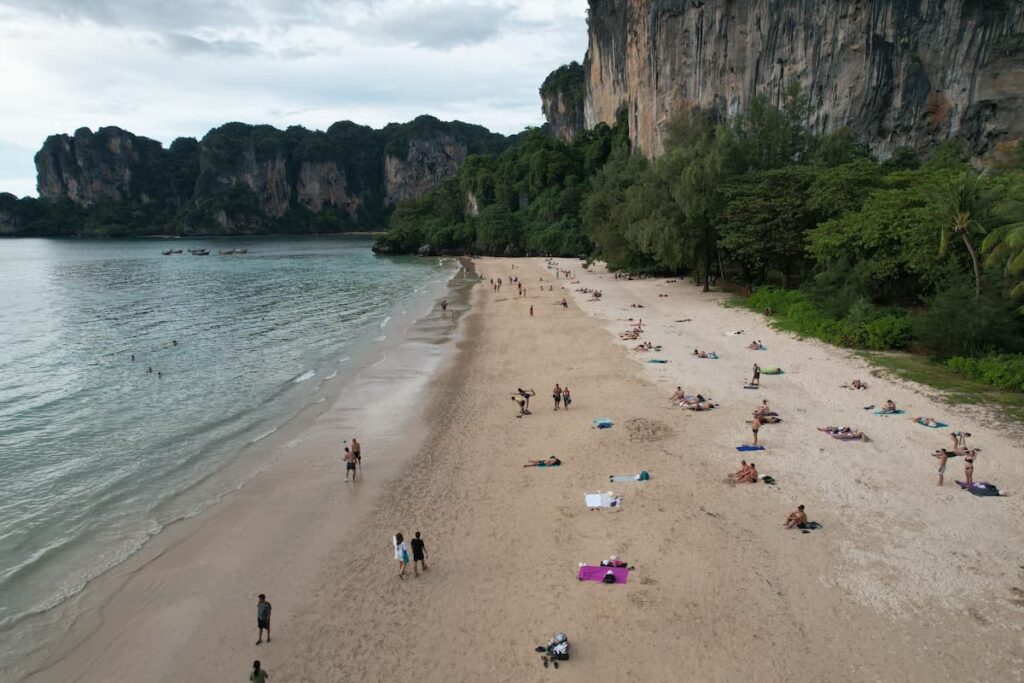
Railay West delivers one of Southern Thailand’s most recognisable beach landscapes. Towering limestone cliffs rise behind a broad curve of sand, while traditional longtail boats travel between the peninsula and the surrounding Krabi coastline.
Although Railay is connected to the mainland, the cliffs prevent road access, so visitors arrive by boat. Longtail boats commonly operate from Ao Nang, with the journey taking approximately 10–15 minutes when sea conditions are suitable. This separation from the road network gives Railay a distinctive island-like atmosphere despite its mainland location.
The beach is suitable for swimming when conditions are calm, particularly during the drier months from approximately November to April. It is also an attractive place to kayak beneath the limestone formations or watch the evening light settle across the Andaman Sea. However, boat activity increases through the day, and the beach can become busy with visitors arriving from Ao Nang and elsewhere in Krabi.
Railay is particularly rewarding because the beach is only one part of the experience. Visitors can walk across the peninsula to Phra Nang Beach, explore the cave beside its southern end, try rock climbing or follow the steep trail towards the Railay viewpoint and lagoon.
Choose Railay West if dramatic scenery matters more than complete seclusion. Staying overnight provides a different experience from a short excursion, allowing you to enjoy the peninsula before many day visitors arrive and after the final boats begin returning to the mainland.
2. Maya Bay, Phi Phi Leh
Best for an Iconic Protected Landscape
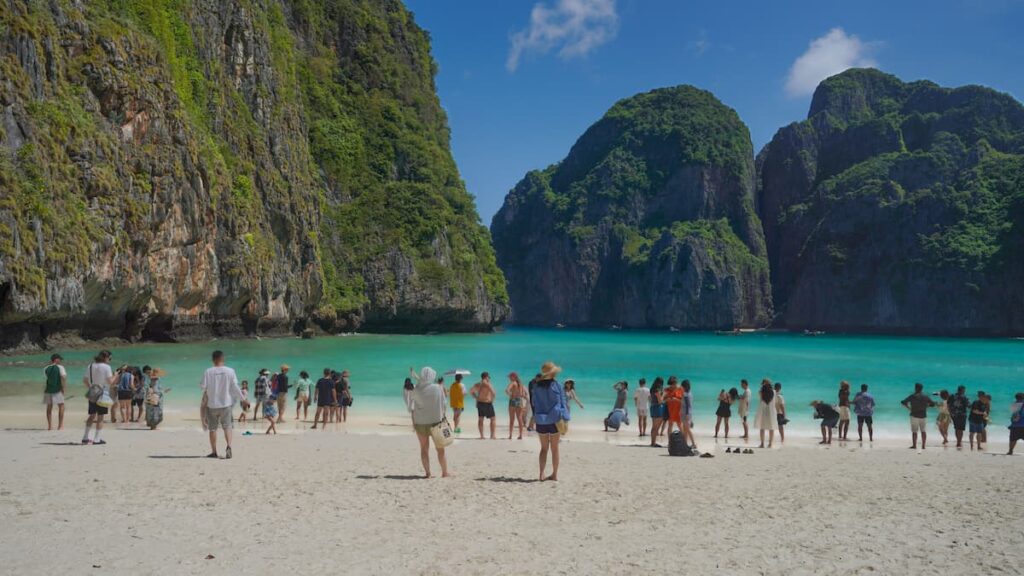
Maya Bay is not included because it offers the best conventional beach day in Southern Thailand. It earns its place because the enclosed bay, pale sand, turquoise water and limestone cliffs create one of the country’s most remarkable coastal landscapes.
The experience has changed considerably since boats once entered the bay and deposited visitors directly onto the sand. Boats now arrive at the floating pier in Loh Samah Bay on the opposite side of Phi Phi Leh. From there, visitors follow a managed walkway across the island before emerging behind Maya Bay.
Swimming and snorkelling inside Maya Bay are prohibited to protect its recovering marine environment. Visitors may normally enter only the shallow water along the shoreline, generally no deeper than ankle or knee height, depending on the rules being enforced during the visit. Boats are also prohibited from entering the bay itself.
Maya Bay closes annually for environmental rehabilitation and during the roughest part of the Andaman monsoon. The announced closure for 2026 runs from 1 August to 30 September, with reopening normally scheduled for 1 October. Regulations can change in response to weather or conservation requirements, so check the latest national park announcement before travelling.
Crowds remain the greatest limitation. Arriving early can provide a calmer experience, although no departure time guarantees an empty beach. Most visitors reach Maya Bay as part of a Phi Phi boat tour from Phuket, Krabi or Koh Phi Phi Don.
Choose Maya Bay for its scenery and conservation story rather than swimming or relaxation. It is best approached as a protected natural attraction—and one memorable component of a wider Phi Phi Islands journey—rather than a beach where you can settle on the sand for the day.
3. Sunrise Beach, Koh Lipe
Best for Clear Water and Accessible Snorkelling
Sunrise Beach stretches along the eastern side of Koh Lipe, offering pale sand, remarkably clear water and open views towards mountainous Koh Adang. Unlike Maya Bay, this is a beach where visitors can swim, relax and build a substantial part of their island holiday around the shoreline.
Snorkelling is possible directly from parts of the beach when visibility and sea conditions are suitable. Small coral areas, tropical fish and the shallow channel between Koh Lipe and the neighbouring islands make it a convenient choice for travellers who want to explore beneath the water without joining a boat excursion every day. The northern end, around North Point and Bulow Beach, is particularly photogenic at lower tides when its curving sandbar becomes visible.
Sunrise Beach is developed, with beachfront resorts, restaurants and dive operators spread along much of its length. Longtail boats are also moored offshore, so the experience is not entirely untouched or consistently quiet. Nevertheless, the beach is long enough to find calmer sections, especially early in the morning and away from the principal boat areas.
Reaching Koh Lipe requires more planning than travelling to Phuket, Krabi or Koh Samui. Most visitors travel overland from Hat Yai to Pak Bara Pier before continuing by speedboat. Boat schedules and sea conditions vary seasonally, with the most dependable weather generally occurring during the Andaman dry season from approximately November to April.
Choose Sunrise Beach if clear water, swimming and accessible snorkelling are central to your holiday. The additional journey is worthwhile for travellers prepared to spend several nights on Koh Lipe rather than treating the island as a rushed overnight stop.
4. Nai Harn Beach, Phuket
Best Accessible All-Round Beach
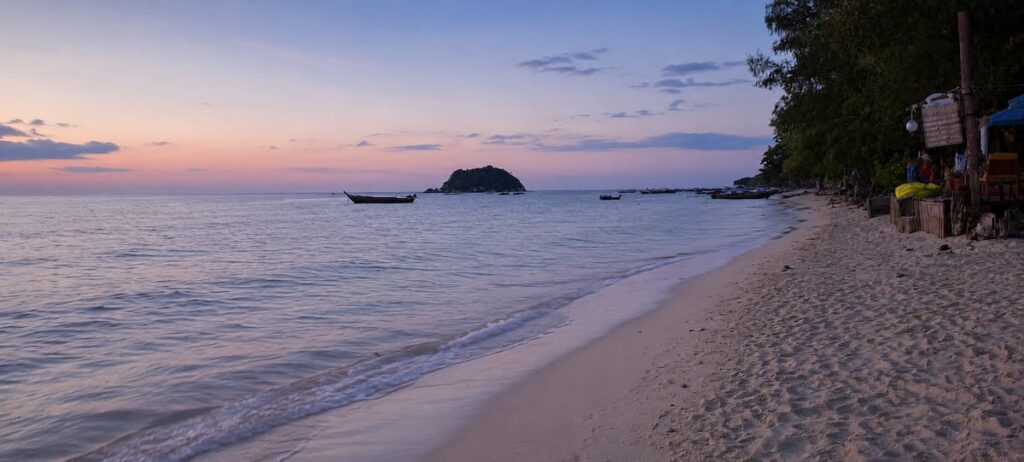
Nai Harn demonstrates that travellers do not have to leave Phuket to find an attractive beach with a more relaxed atmosphere. Set within a sheltered-looking bay near the island’s southern end, it combines soft sand, green headlands and useful facilities without the concentrated development found beside Patong or Karon.
During the drier months, the water is often calm enough for swimming, and the sandy entrance makes the beach approachable for a wide range of visitors. Restaurants, refreshments, sunbeds and massage services are readily available, while the neighbouring lake and shaded areas provide somewhere to walk or escape briefly from the beach.
Its greatest practical advantage is road access. Nai Harn can be reached without coordinating ferries, speedboats or national park excursions, making it considerably easier to include within a wider Phuket holiday. Rawai, Ya Nui Beach, Windmill Viewpoint and Promthep Cape are also nearby, allowing visitors to combine several southern Phuket experiences in one day.
However, the bay can be deceptive during the southwest monsoon. Strong waves and dangerous rip currents occur during the wetter months, and red warning flags must always be respected. A beautiful day does not necessarily mean the water is safe for swimming.
There is limited accommodation directly beside the sand, and Nai Harn does not provide the nightlife or extensive beachfront dining found in Phuket’s busier resort areas. Many travellers stay around Nai Harn or Rawai and use local transport to reach the beach.
Choose Nai Harn if you want a scenic and practical beach without leaving Phuket. It provides one of the strongest balances of swimming, atmosphere, facilities and accessibility in our selection, particularly when sea conditions are calm.
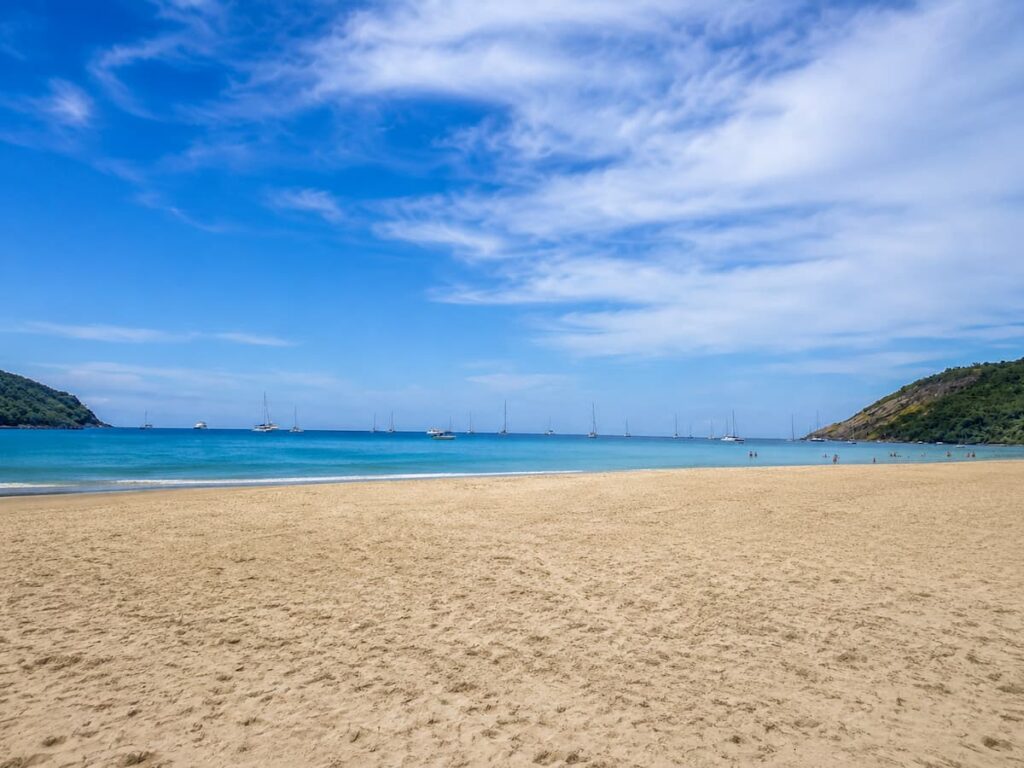
5. Chaweng Beach, Koh Samui
Best for Facilities and Nightlife
Chaweng Beach is the most developed selection in this guide, but that does not prevent it from being one of Southern Thailand’s most appealing resort beaches. Its long stretch of pale sand and typically clear, shallow water sits beside Koh Samui’s greatest concentration of accommodation, restaurants, shopping and nightlife.
The beach changes noticeably along its length. Central Chaweng provides the liveliest atmosphere and easiest access to beachfront restaurants, activities and evening entertainment. Other sections become progressively calmer, allowing visitors to enjoy the convenience of Chaweng without remaining at the centre of its busiest beach scene throughout the day.
This is the best choice in our selection for travellers who want to minimise travel once they arrive. Samui Airport is nearby, accommodation ranges from modest hotels to luxury beachfront resorts, and most holiday essentials are within easy reach. Boat trips, island tours and excursions into Samui’s interior can all be arranged locally.
That convenience comes with obvious compromises. Chaweng is commercially developed, music can be heard from some beachfront venues, and the central area feels considerably busier than Kantiang Bay or Khanom. Water depth and swimming conditions also vary along the beach and with the seasons, so local flags and conditions should still guide decisions about entering the sea.
The Gulf coast follows a different weather pattern from the Andaman side of Southern Thailand. Chaweng can be a useful alternative during parts of the Andaman monsoon, but it is not immune to rain or rough water, particularly around the later-year Gulf monsoon.
Choose Chaweng if you want an attractive beach to form part of a complete resort holiday. It works particularly well for first-time visitors, groups with different interests and travellers who want restaurants and nightlife close by rather than complete seclusion.
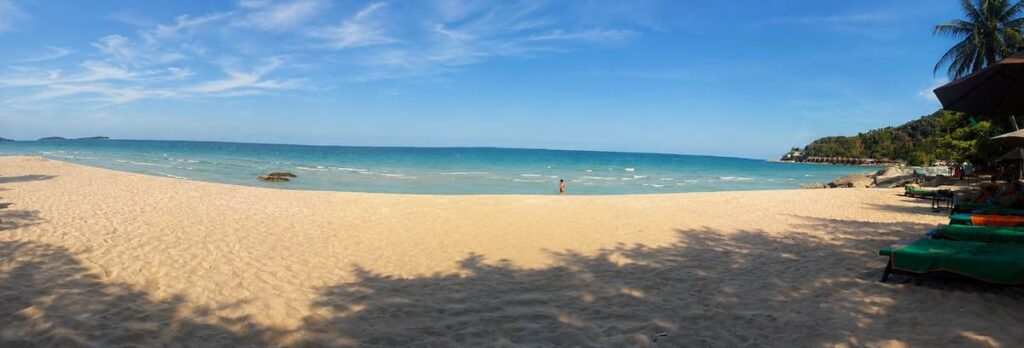
6. Kantiang Bay, Koh Lanta
Best for a Peaceful Island Stay
Kantiang Bay, sometimes written as Ba Kantiang Bay, occupies a broad curve of sand on the quieter southern side of Koh Lanta. Forested hills rise behind the beach, development remains relatively restrained, and the bay feels removed from the busier accommodation areas farther north.
This is not an entirely isolated beach. Several resorts, restaurants and small businesses provide enough choice for a comfortable stay, but they do not dominate the entire shoreline. The result is a useful middle ground between an undeveloped beach with few services and a heavily built-up holiday resort.
Swimming is generally most appealing during the Andaman dry season, when the sea is calmer and businesses are fully operating. Conditions become rougher during the southwest monsoon, and some local restaurants, tours and accommodation may reduce their services or close temporarily during the quietest months.
Kantiang Bay is better suited to a longer stay than a rushed visit from northern Koh Lanta. Its southern location places it closer to Mu Ko Lanta National Park, Bamboo Bay and Khlong Chak Waterfall, while the island’s main arrival points and busiest northern beaches require a longer journey by road.
The setting attracts couples, independent travellers and anyone wanting slow beach days without becoming completely disconnected from restaurants and accommodation. Travellers seeking extensive nightlife, large shopping areas or a packed activity schedule may find the location too quiet.
Choose Kantiang Bay when peaceful surroundings matter more than convenience. It offers the atmosphere many travellers imagine when planning a quieter Thai island holiday, while retaining enough infrastructure to make staying for several days comfortable.
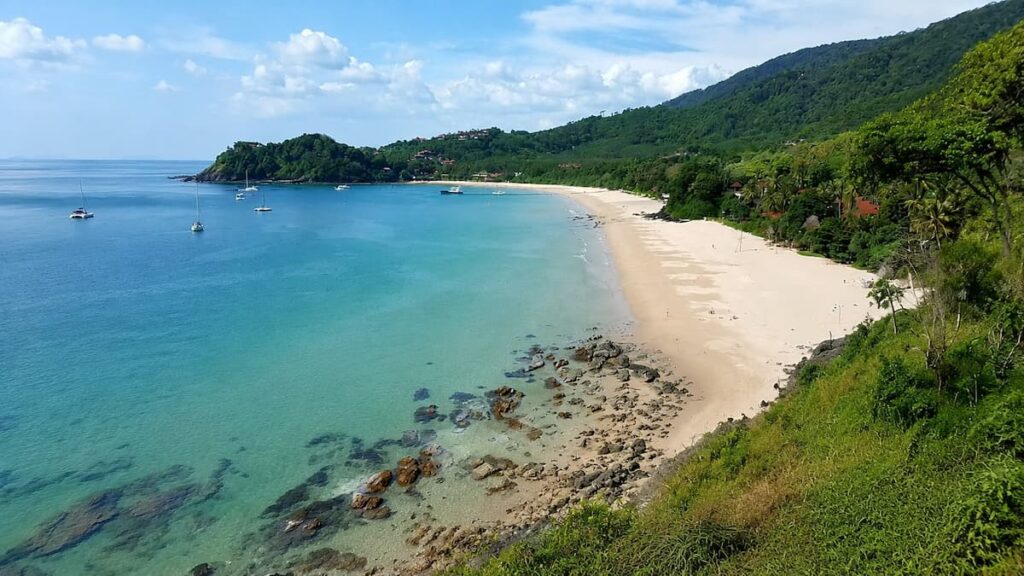
7. Khanom Beach, Nakhon Si Thammarat
Best for a Quieter Mainland Coast
Khanom offers a very different experience from Southern Thailand’s famous island and resort beaches. Rather than one compact tourist bay, the district contains a long, lightly developed coastline that includes Nadan Beach, Nai Phlao Beach and several smaller stretches of sand.
The scenery is less dramatic than Railay, and the water does not always display the intense turquoise colour associated with Koh Lipe. Khanom’s appeal comes instead from space, quiet surroundings and the absence of large-scale international tourism. Long sections of beach remain backed by coconut palms, casuarina trees and low-rise accommodation.
Visitors can find beachfront resorts, independent hotels and local restaurants, but facilities are spread across the district. Having private transport or arranging transport through your accommodation makes exploring considerably easier. Khanom can be reached by road from Nakhon Si Thammarat or Surat Thani, avoiding the ferry journey required for the Gulf islands.
The area is also associated with its resident Indo-Pacific humpback dolphins, commonly called Khanom’s pink dolphins. Morning boat excursions operate from the coastline, although sightings are never guaranteed. Choose an operator that observes the dolphins from a responsible distance and does not chase, surround or attempt to feed them.
As part of the Gulf of Thailand, Khanom experiences a different seasonal pattern from the Andaman coast. Conditions can become wetter and rougher during the later months of the year, so travellers should check the local forecast rather than assuming that all of Southern Thailand shares the same beach season.
Choose Khanom if you value tranquillity, local atmosphere and a long mainland coastline more than perfect water colour or extensive entertainment. It is particularly suitable for a slow road trip or a few quiet days between Southern Thailand’s better-known destinations.
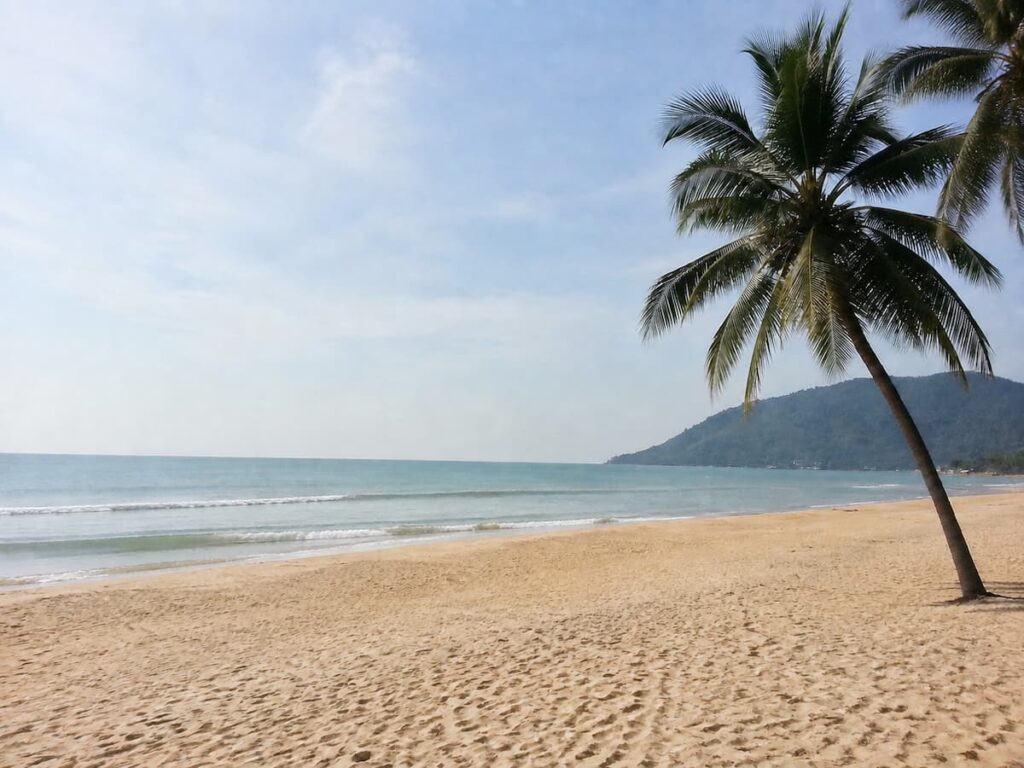
Other Southern Thailand Beaches Worth Considering
Seven beaches cannot represent every worthwhile stretch of coastline in Southern Thailand. These five alternatives narrowly missed our main selection but may better suit particular travel plans.
Phra Nang Beach, Krabi
Located on the Railay Peninsula, Phra Nang combines clear water, limestone cliffs and views of distinctive offshore rock formations. It is arguably more visually dramatic than Railay West, but it can become crowded with day tours and overlaps heavily with the wider Railay experience.
Thong Nai Pan Noi, Koh Phangan
Thong Nai Pan Noi offers soft sand, a sheltered bay and a polished collection of beachfront resorts on Koh Phangan’s quieter northeastern coast. Choose it for a relaxed resort stay away from Haad Rin and the island’s main party areas.
Ao Yai, Koh Phayam
Ao Yai is a long, west-facing beach on one of Ranong Province’s least developed visitor islands. Its water is not always postcard turquoise, but the beach offers space, sunsets, simple accommodation and a slower island atmosphere that has disappeared from many better-known destinations.
Tanote Bay, Koh Tao
Tanote Bay is a strong alternative for travellers primarily interested in snorkelling. Coral, rocks and marine life can be reached directly from the beach, although the bay is smaller and less suited to travellers wanting extensive restaurants, nightlife or a classic resort centre.
Kata Noi Beach, Phuket
Kata Noi is a compact, attractive beach surrounded by green headlands on Phuket’s southwest coast. It provides good dry-season swimming and is quieter than neighbouring Kata Beach, although accommodation immediately around the bay tends to favour higher-end resorts.
Andaman Coast or Gulf Coast?
Southern Thailand faces two different bodies of water. Phuket, Krabi, Koh Lanta and Koh Lipe lie along the Andaman Sea, while Koh Samui, Koh Phangan, Koh Tao and Khanom face the Gulf of Thailand.
The Andaman coast delivers Southern Thailand’s most dramatic limestone scenery and provides access to destinations such as Railay, Phi Phi and the islands around Trang and Satun. The Gulf coast offers another collection of tropical islands alongside quieter mainland beaches and can experience favourable conditions when parts of the Andaman coast are affected by the southwest monsoon.
| Choose the Andaman coast for | Choose the Gulf coast for |
|---|---|
| Limestone cliffs and dramatic scenery | Koh Samui’s established resort facilities |
| Phuket, Krabi and Phi Phi itineraries | Koh Tao’s diving and snorkelling |
| Koh Lanta and Koh Lipe island stays | Koh Phangan’s mix of nightlife and quiet bays |
| The most dependable conditions between approximately November and April | A potential beach alternative during parts of the Andaman wet season |
The Gulf should not be treated as a guaranteed dry-season substitute. Koh Samui, Koh Phangan and nearby areas commonly experience their wettest and roughest period later in the year, particularly around October to December. Conditions also vary between individual destinations.
If your travel dates are fixed, compare the usual weather pattern on both coasts before choosing a destination. If your itinerary is flexible, check the local forecast and sea conditions shortly before committing to boat transfers and water-based activities.
When to Visit Southern Thailand’s Beaches
There is no single best month for every beach in Southern Thailand. The Andaman Sea and Gulf of Thailand follow different weather patterns, and conditions can vary considerably between destinations during the same week.
Andaman Coast
The most dependable beach conditions around Phuket, Krabi, Koh Lanta and Koh Lipe generally occur from November to April. These months typically bring calmer seas, clearer water and more reliable boat services.
The southwest monsoon usually has its greatest influence from approximately May to October. Rain does not necessarily fall throughout every day, but rough seas, strong waves and rip currents can affect swimming and boat travel. Some seasonal businesses and boat routes around quieter islands reduce their schedules during this period.
Maya Bay is subject to an annual environmental closure. In 2026, the announced closure runs from 1 August to 30 September, although travellers should verify the current national park schedule before visiting.
Gulf Coast
Koh Samui, Koh Phangan and Koh Tao often experience favourable beach conditions from approximately January through August, although short periods of rain remain possible throughout the year.
The Gulf’s heaviest rain and roughest seas commonly arrive later than on the Andaman coast, particularly around October to December. Khanom can also experience significant rain and unsettled coastal conditions during the later part of the year.
Choosing Your Travel Dates
January to March provides one of the strongest compromises for travellers wanting to combine beaches on both sides of Southern Thailand. However, this is also a popular period, so accommodation prices can be higher and celebrated beaches busier.
The shoulder months can provide lower prices and fewer visitors, but they also bring less predictable conditions. Whatever month you travel, check local weather forecasts, ferry schedules and beach warning flags rather than relying entirely on a regional seasonal guide.
Beach Safety and Responsible Travel
Southern Thailand’s beaches are natural environments, and conditions can change quickly. Calm-looking water does not always mean safe swimming, particularly during the monsoon periods on either coast.
Always follow warning flags and lifeguard instructions. A red flag means the water is unsafe, while designated swimming zones help separate swimmers from longtail boats, speedboats and personal watercraft. Rip currents can occur even close to shore, so inexperienced swimmers and families should be especially cautious when waves are present.
Do not stand on, touch or remove coral while swimming or snorkelling. Choose reef-safe practices, keep a sensible distance from marine animals and avoid operators that chase, feed or surround wildlife. This is particularly important when joining dolphin-watching trips around Khanom or marine excursions elsewhere in Southern Thailand.
National parks and protected bays may impose visitor limits, seasonal closures and restrictions on swimming, snorkelling or boat access. These measures are not inconveniences to work around—they help damaged environments recover and preserve the places travellers have come to experience.
Take reusable water containers where practical, remove everything you bring onto quieter beaches and avoid leaving cigarette ends, food packaging or plastic behind. On beaches without regular cleaning services, even small amounts of waste can remain in the environment or enter the sea.
Frequently Asked Questions
Which part of Southern Thailand has the best beaches?
The Andaman coast offers the most dramatic scenery, particularly around Krabi, Phi Phi and Koh Lipe. The Gulf coast provides excellent beaches around Koh Samui, Koh Phangan and Koh Tao, together with quieter mainland areas such as Khanom. The better coast depends on your travel dates and preferred experience.
Which Southern Thailand beach is best for swimming?
Sunrise Beach on Koh Lipe is one of the strongest choices for clear water and enjoyable swimming when conditions are calm. Nai Harn, Railay West, Chaweng and Kantiang Bay can also provide good swimming, but conditions vary by season and daily weather.
Which is the best quiet beach in Southern Thailand?
Kantiang Bay is our preferred quiet island beach because it combines peaceful surroundings with enough accommodation and restaurants for a comfortable stay. Khanom is better for travellers wanting a spacious and lightly developed mainland coastline.
What is the best beach in Southern Thailand for families?
Nai Harn is a practical family choice during the dry season because it has road access, a sandy entrance and useful facilities nearby. Chaweng also works well for families wanting beachfront accommodation and convenient restaurants. Always assess the sea conditions and observe warning flags before children enter the water.
When is the best time to visit Southern Thailand’s beaches?
November to April generally brings the most dependable conditions along the Andaman coast. Koh Samui, Koh Phangan and Koh Tao often experience favourable weather from approximately January through August, with their wetter period arriving later in the year. No month guarantees calm seas or dry weather.
Can you swim at Maya Bay?
No. Swimming and snorkelling inside Maya Bay are prohibited to protect its recovering marine environment. Visitors may normally enter only the shallow water at the edge of the beach, subject to the rules being enforced by national park authorities.
Continue Exploring
Plan your journey across Thailand with practical guidance on its regions, major destinations, cultural experiences, beaches and different types of holiday.
Southern Thailand Travel Guide
Explore the beaches, islands, national parks and major destinations found across Southern Thailand’s Andaman and Gulf coasts.
Related Southern Thailand Reading
Where to Go in Southern Thailand
Explore Phuket, Krabi, Koh Samui, Khao Lak and other destinations to find the part of Southern Thailand that best suits your interests.
Best Islands in Southern Thailand
Compare established holiday destinations and smaller tropical islands offering beaches, snorkelling, nature and peaceful surroundings.
Making the Most of Your Southern Thailand Holiday
Discover how to combine beaches, islands, national parks and cultural experiences into a rewarding Southern Thailand itinerary.
About the Author
David Hibbins is a travel publisher, destination researcher and the creator of Travel With Insight.
Through years of travel, tourism and publishing projects across Southeast Asia, he has developed a particular interest in how travellers research destinations, compare experiences and make travel decisions.
His work focuses on helping travellers move beyond popularity rankings, marketing claims and generic “best of” lists by providing balanced, research-driven destination guides. Rather than telling people where they should travel, his goal is to help readers understand the strengths, limitations and unique character of each destination so they can choose the places that best match their own interests, travel style and goals.
As the creator of Travel With Insight, David researches destinations throughout Southeast Asia, exploring not only where travellers go, but why they choose certain places, how destinations differ and what creates genuinely memorable travel experiences.
His work covers destination research, regional travel planning, traveller behaviour and the decision-making frameworks that help people plan more rewarding journeys.
Explore More Travel Resources
Every great journey begins with informed decisions. The more you understand a destination before you arrive, the more rewarding your travel experience becomes.
Whether you’re still researching Southern Thailand or you’re ready to start planning your itinerary, these additional resources can help.
Travel With Insight
Continue exploring our in-depth destination guides, travel inspiration and practical planning advice designed to help you make informed travel decisions throughout Thailand and Southeast Asia.
Go Find Asia
Looking for even more travel inspiration? Go Find Asia explores destinations, experiences and travel ideas across Asia, helping you discover where to go, what to see and how to plan your next adventure.
Resurgence Travel
When you’re ready to turn your research into reality, Resurgence Travel offers curated itineraries, personalised travel planning and local expertise to help you experience the very best of Thailand and Southeast Asia.



4 Comments
Comments are closed.