Wat Thipphaksong Laem Phet Visitor Guide, Patong
Tucked away in the quieter northern side of Patong, Wat Thipphaksong Laem Phet is very different from the larger and more familiar temples visitors usually encounter in Phuket. This is a modest local monastic site, with shaded grounds, mature trees, small devotional shrines, bells, Buddha images and the everyday signs of a place still closely connected to the surrounding community.
It is not a grand sightseeing attraction, and that is part of its appeal. Laem Phet offers a glimpse of a more ordinary side of Buddhist life in Patong — one that feels lived-in rather than presented for visitors. For travellers interested in local culture, smaller religious sites and places that sit slightly outside the usual tourist circuit, it can be a rewarding short stop.
Quick Summary
| Best for | Travellers interested in local culture, smaller Buddhist sites and quieter places away from Patong’s main tourist attractions |
| Time needed | Around 20–40 minutes |
| Cost | Free to visit |
| Dress | Modest clothing recommended; cover shoulders and knees where possible |
| Opening hours | Daytime visits are best; hours can vary |
| Location | Northern Patong, close to the local community and sports facilities |
| Photography | Generally fine in the grounds; be respectful around monks, worshippers and ceremonies |
| Overall feel | Quiet, local and lived-in rather than polished or tourist-focused |
What Makes Wat Thipphaksong Laem Phet Different
Wat Thipphaksong Laem Phet feels very different from the better-known temples around Patong. There is no grand entrance sequence, large tourist area or sense that the site has been arranged for visitors. Instead, the grounds feel informal and closely tied to the local community.
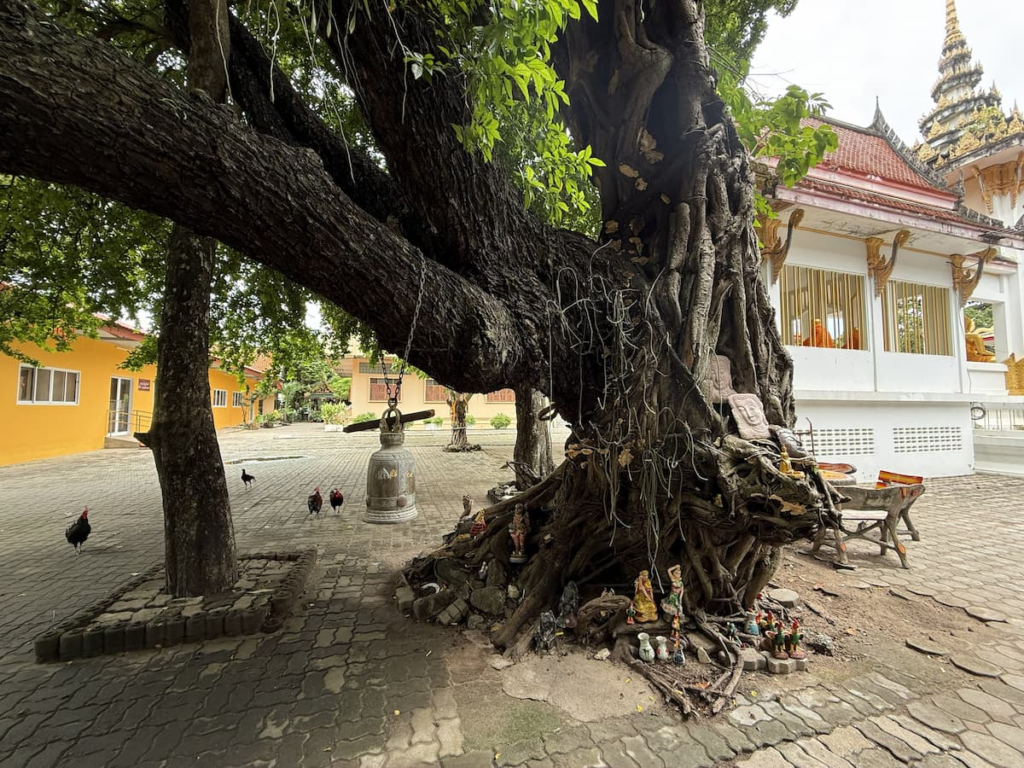
Mature trees provide shade across much of the compound, while small shrines, bells, Buddha images and simple religious structures are scattered through the grounds. Chickens wandering beneath the trees and modern buildings rising in the background reinforce the contrast between everyday Buddhist life and the dense urban environment surrounding it.
That contrast is what gives Laem Phet much of its character. It is not a temple to visit for spectacle. It is a place to slow down, look around and see a quieter side of Patong that many visitors never notice.
Arriving at Wat Thipphaksong Laem Phet
The entrance to Wat Thipphaksong Laem Phet is easy to miss if you are not specifically looking for it. From the street, the ornate gateway is the clearest sign that you are entering a Buddhist site, but the surroundings still feel very much part of everyday Patong.
Once inside, the approach is simple rather than ceremonial. Parking, local buildings, trees and religious structures all share the same space, which immediately gives the temple a more practical, community-focused feel.
That sense continues as you walk further into the grounds. Instead of a carefully staged visitor route, Laem Phet feels like a place you discover gradually, with small details and individual structures revealing themselves as you move through the compound.
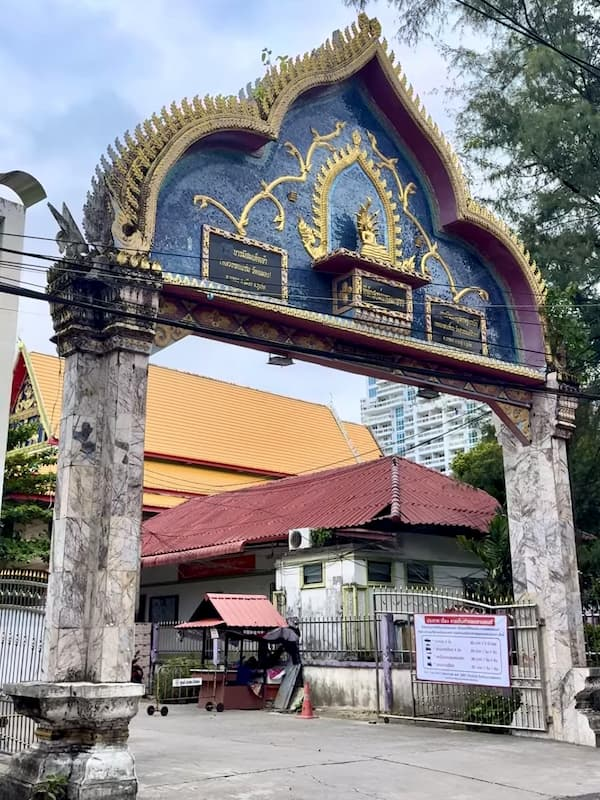 The ornate gateway marks the entrance to Wat Thipphaksong Laem Phet in northern Patong.
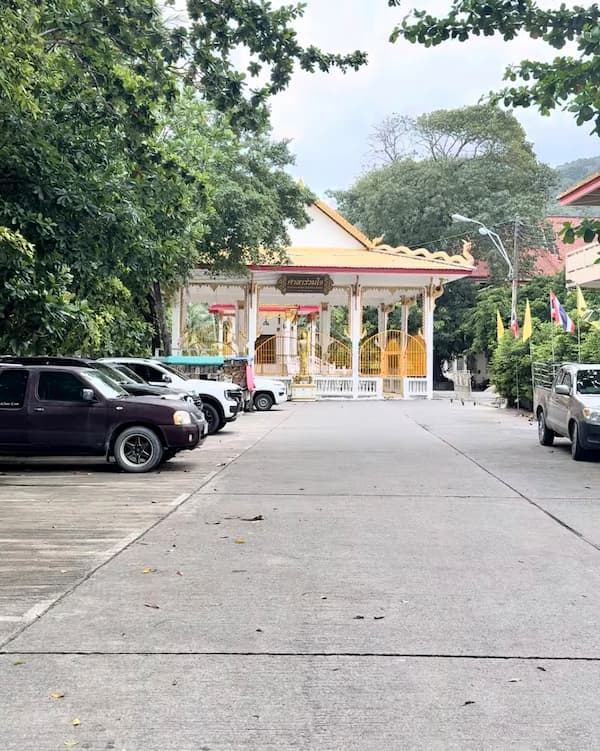 The simple approach through the grounds reflects the monastery’s quiet, local character.
Inside the Grounds
Once you are inside, Laem Phet feels more like a working religious compound than a conventional visitor attraction. The buildings are modest, the layout is informal, and there is no obvious route telling you where to go next.
That makes wandering part of the experience. Small shrines sit among the plants, bells hang beneath mature trees, and Buddha images appear in different corners of the site rather than being concentrated in one grand central space.
The grounds also feel surprisingly green for somewhere so close to central Patong. Modern buildings are still visible beyond the trees, but inside the compound the atmosphere is noticeably calmer and more enclosed.
This is probably the best place to slow down and pay attention to the smaller details. Laem Phet is less about one standout structure and more about the way everyday religious life, vegetation and local surroundings all sit together.
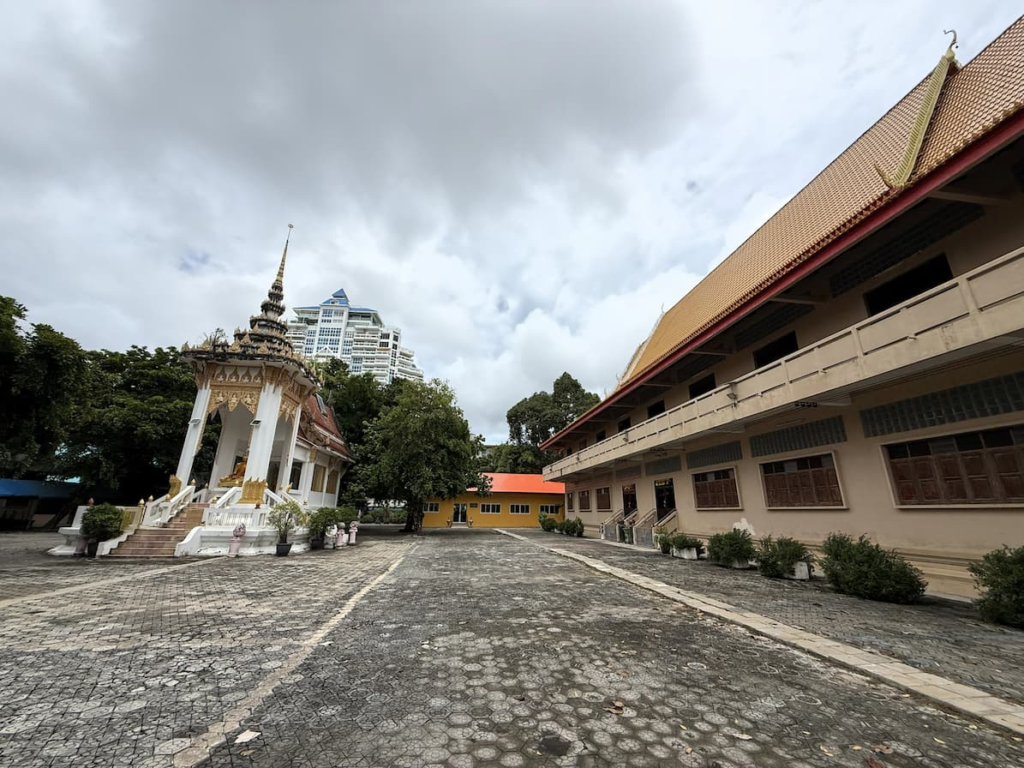
The Main Shrine and Buddha Images
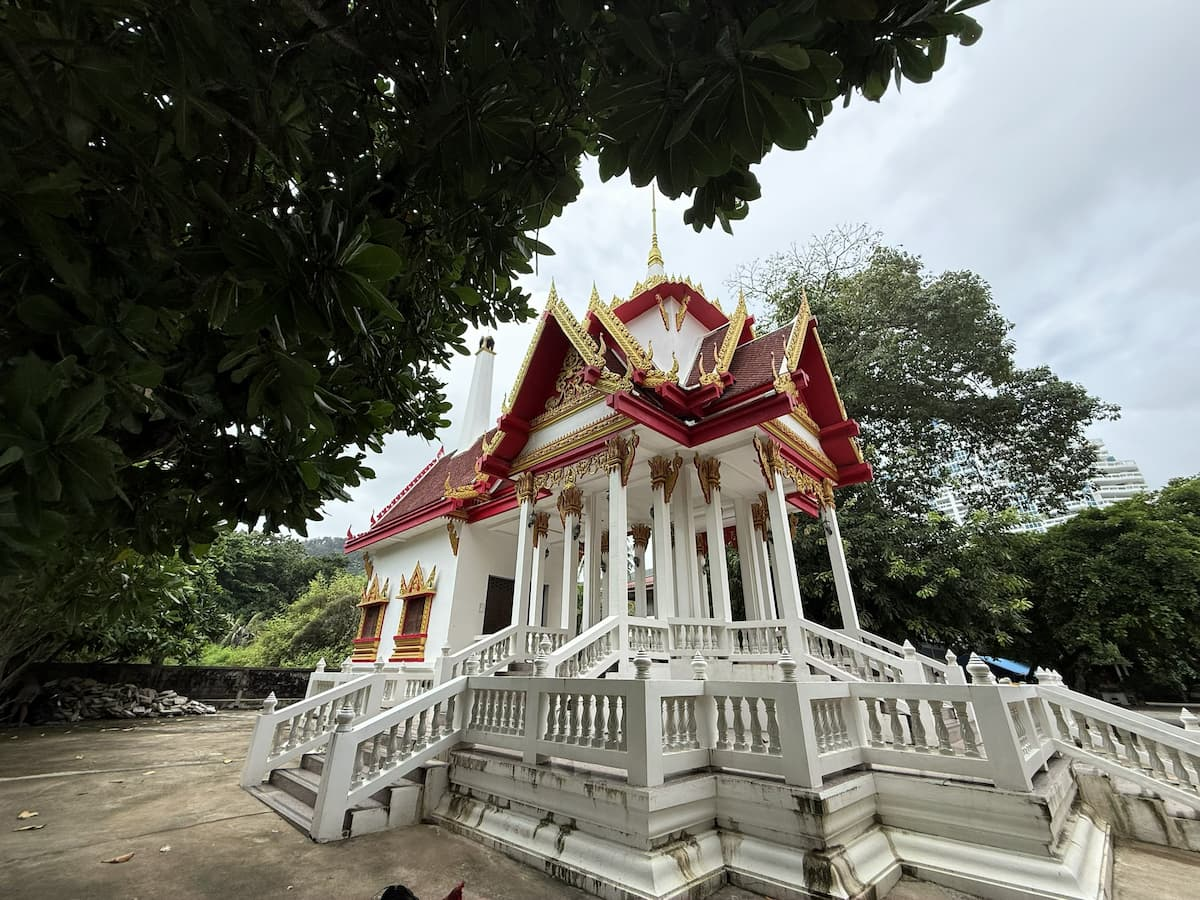
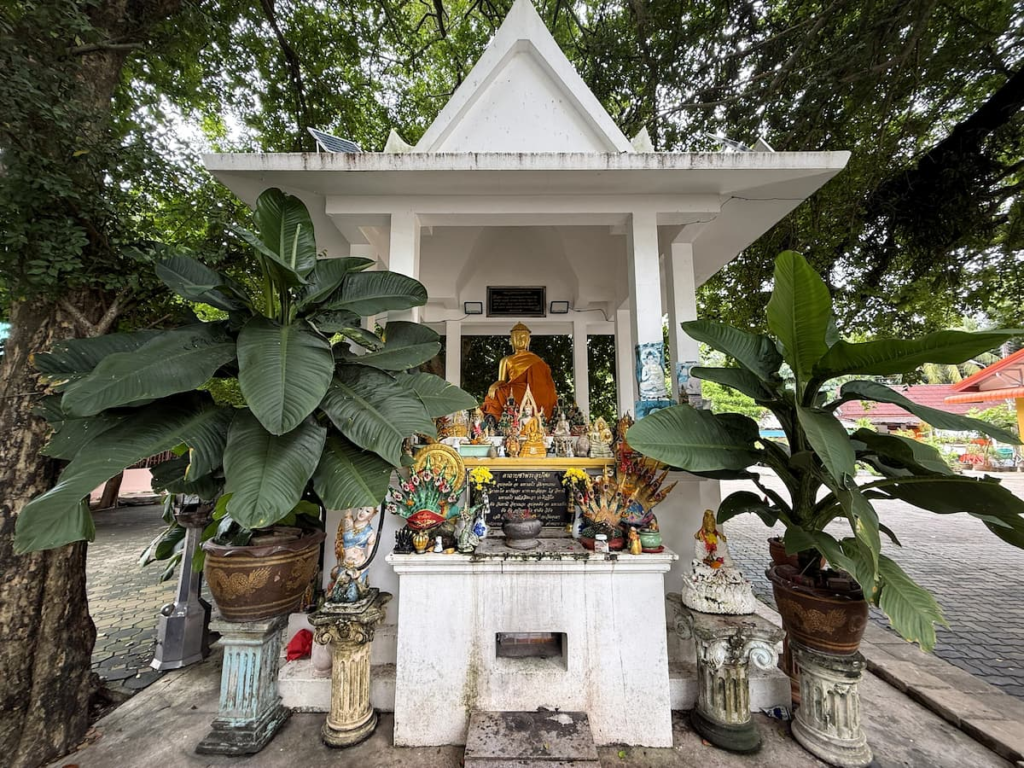
The central religious structures at Laem Phet are modest but distinctive. A small multi-level shrine rises above the surrounding courtyard, while nearby Buddha images sit within open-sided structures that feel accessible rather than formal or imposing.
The seated Buddha is one of the clearest focal points in the grounds. Framed by white columns and gold detailing, it provides a more traditional visual centre within an otherwise informal compound.
What stands out here is the lack of separation between architecture and everyday surroundings. Religious structures, trees, pathways and modern Patong buildings all sit within the same visual space, which gives the site much of its character.
Laem Phet is not about monumental scale. Its appeal comes from the smaller details and the way the religious elements are woven into an ordinary neighbourhood setting.
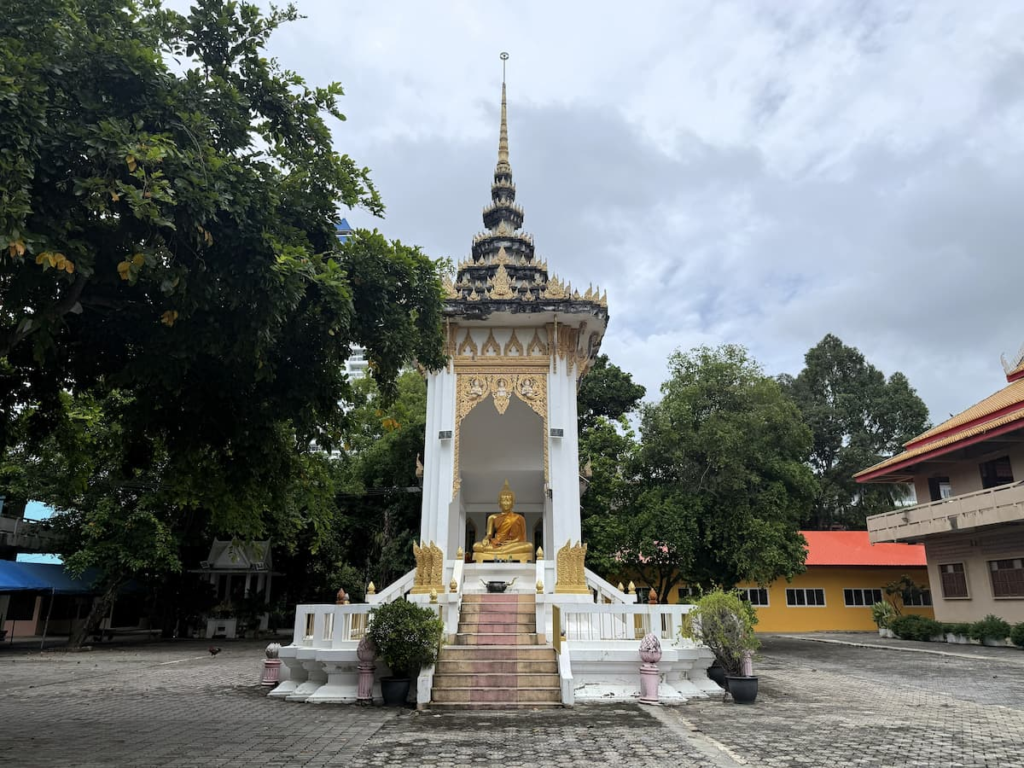
Everyday Buddhism at Laem Phet
One of the most interesting things about Laem Phet is how informal the religious life of the site feels. Bells, small devotional figures, shrines and Buddha images are not separated into one formal display area; they are woven through the grounds beneath trees and beside ordinary pathways.
That gives the monastery a very different atmosphere from larger temple complexes. The religious elements feel less like objects to be viewed and more like part of the daily life of the place.
The large trees are especially important to that feeling. Their roots, shade and age create natural gathering points around bells and devotional figures, while chickens wandering through the grounds add to the sense that this is a lived-in community space rather than a polished visitor attraction.
For travellers interested in how Buddhism fits into everyday life in Thailand, these quieter details are arguably more revealing than any single building.
Funeral and Community Role
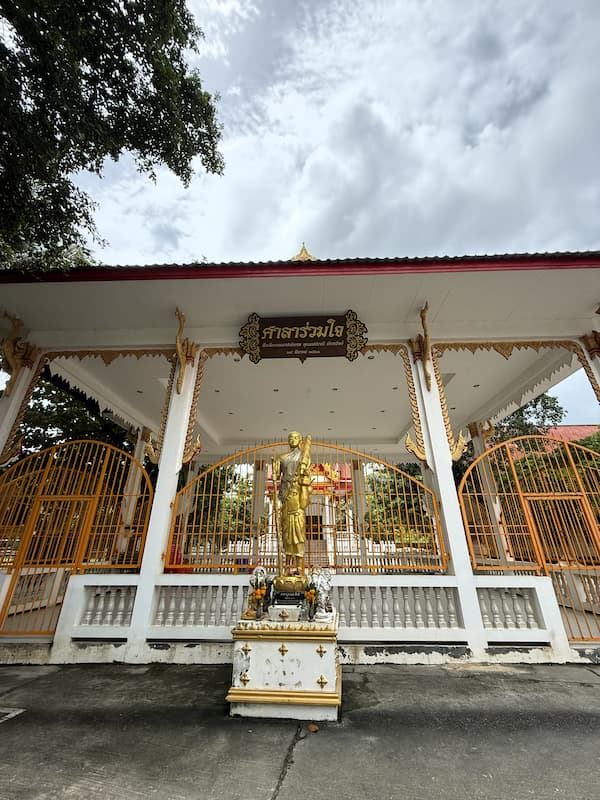
Laem Phet also appears to have an important practical role within the local community. During our visit, signage and facilities at the site pointed to its use for funeral-related activities, including cremation.
That gives the monastery another layer of significance beyond its shrines and Buddha images. In Thailand, Buddhist religious sites often serve community functions that visitors may not immediately notice, and Laem Phet seems to be one of those places where religious practice and important life events come together.
For visitors, this is also a reminder to be especially respectful if a ceremony is taking place. Keep some distance, avoid photographing mourners without permission, and remember that what may look like an interesting cultural scene is first and foremost a private moment for the people involved.
What to Expect When You Visit
Wat Thipphaksong Laem Phet is best approached as a short cultural stop rather than a major sightseeing destination. There is little tourist infrastructure, limited English signage, and no obvious visitor route through the grounds.
That is also part of its appeal. You can walk slowly, look around the shrines and Buddha images, and take in the quieter atmosphere without the crowds found at some of Phuket’s better-known temples.
A visit of around 20–40 minutes is usually enough. Dress modestly, keep your voice low around religious areas, and avoid interrupting monks, worshippers or ceremonies for photographs.
If you are looking for elaborate temple architecture or a major Phuket landmark, Laem Phet may feel understated. If you are interested in local religious life and seeing a less tourist-focused side of Patong, it is much more rewarding.
Is Wat Thipphaksong Laem Phet Worth Visiting?
Wat Thipphaksong Laem Phet will not suit every visitor, and that is worth being clear about. It is a small, local religious site rather than one of Phuket’s headline temple attractions.
For travellers interested in everyday Buddhist life, quieter neighbourhood temples and places that feel closely connected to the surrounding community, it can be a worthwhile stop. The mature trees, informal shrines, bells and modest religious buildings give the site a character that is very different from the larger temples around Patong.
If your priority is elaborate architecture, panoramic views or a major sightseeing landmark, there are stronger options elsewhere. Laem Phet is better appreciated for its atmosphere, local context and the glimpse it offers into a side of Patong that most visitors pass without noticing.
Yep — good catch. The FAQ should sit before Continue Exploring / Related Reading, so it catches the practical search questions before the article wraps up.
Frequently Asked Questions
Where is Wat Thipphaksong Laem Phet?
Wat Thipphaksong Laem Phet is in the northern part of Patong, close to local community and sports facilities. The entrance is easy to miss, so it helps to look out for the ornate Buddhist gateway rather than expecting a large temple complex.
Is Wat Thipphaksong Laem Phet free to visit?
Yes. There is no admission fee to enter the grounds.
How long do you need to visit?
Around 20–40 minutes is usually enough for a relaxed walk through the grounds, although you may spend longer if you enjoy photography or exploring smaller religious details.
Is Wat Thipphaksong Laem Phet a major tourist attraction?
No. It is a small local religious site rather than one of Phuket’s major sightseeing temples. Its appeal is the quiet atmosphere, local character and everyday Buddhist setting.
What should I wear?
Modest clothing is recommended. Covering shoulders and knees is a good rule, especially when approaching Buddha images or active religious areas.
Can I take photos?
Photography is generally fine around the grounds, but be respectful around monks, worshippers and ceremonies. Avoid photographing people closely without permission.
Is the site used for funerals or cremations?
Signage and facilities at Laem Phet indicate that the site has a funeral and cremation role within the local community. If a ceremony is taking place, visitors should keep a respectful distance and avoid treating it as a sightseeing opportunity.
Is Wat Thipphaksong Laem Phet worth visiting?
It is most worthwhile for travellers interested in local culture, smaller Buddhist sites and places away from Patong’s main tourist circuit. Visitors looking for elaborate architecture or a major landmark may prefer one of Phuket’s larger temples.
Continue Exploring
If you are spending more time in the area, our Patong Travel Guide brings together the beaches, viewpoints, temples, food, nightlife and quieter corners that make up the wider destination.
For planning beyond Patong, the Phuket Travel Guide is a good next step, with more places to visit across the island and ideas for building a broader Phuket itinerary.
Related Reading
You may also enjoy:
- Wat Suwan Khiri Wong Visitor Guide — explore Patong’s best-known Buddhist temple and its role in the local community.
- Wat Doi Thep Nimit Visitor Guide — visit a peaceful hilltop temple overlooking Patong, with distinctive architecture and views across the area.
- Patong Viewpoints Guide — discover some of the best places to see Patong from a different perspective, from hillside viewpoints to quieter roadside stops.
About the Author
David Hibbins is the founder of Travel With Insight and has spent several years exploring Phuket beyond its main tourist areas. His guides focus on practical first-hand travel information, local places, and the smaller details that help visitors understand a destination more deeply.
Planning Your Phuket Trip?
If you’d like help turning places like Laem Phet into part of a wider Phuket itinerary, Resurgence Travel can help you plan a trip built around your interests, pace and travel style.