Island Hopping in Southern Thailand: The Best Multi-Island Routes
Island hopping in Southern Thailand can mean joining a boat tour that visits several islands in one day, but it can also mean something far more rewarding: staying on two or three islands and allowing each destination to become a distinct part of your holiday. Instead of returning to the same resort every evening, you might travel from Phuket to Koh Phi Phi and Koh Lanta, explore Koh Samui, Koh Phangan and Koh Tao, or follow the lower Andaman coast towards Koh Lipe.
The islands may appear close together on a map, but creating a practical route involves more than choosing the places you most want to see. Ferry seasons, departure piers, hotel transfers and the location of your final airport can determine whether the journey flows naturally or requires hours of unnecessary backtracking. Even a relatively short boat crossing can occupy much of the day once check-in, luggage handling and transfers are included.
This guide explores three multi-day island-hopping routes that combine contrasting experiences with logical transport connections. It also includes three same-day island trips for travellers who would prefer to keep one accommodation base. For each longer route, we consider how many nights to allow, where to begin and finish, and whether returning to your original departure point makes sense.
Island Hopping in Southern Thailand: Quick Summary
| Route | Best for | Suggested duration | Best arrival point | Best departure point | Best period |
|---|---|---|---|---|---|
| Phuket → Koh Phi Phi → Koh Lanta | First-time island hopping and varied experiences | 7–10 nights | Phuket Airport | Krabi Airport | November–April |
| Koh Samui → Koh Phangan → Koh Tao | Resorts, beaches, nightlife and diving | 8–12 nights | Koh Samui Airport | Chumphon or Koh Samui | February–September |
| Koh Lanta → Koh Mook or Koh Kradan → Koh Lipe | Quieter islands and a more adventurous journey | 10–14 nights | Krabi Airport | Hat Yai Airport or Langkawi | November–April |
| Phi Phi Islands day trip | Iconic limestone scenery and snorkelling | Full day | Phuket or Krabi | Return to the same base | November–April |
| Hong Islands day trip | Lagoons, beaches and a more compact boat journey | Full day | Ao Nang or Krabi | Return to the same base | November–April |
| Ang Thong Marine Park day trip | Gulf islands, viewpoints and kayaking | Full day | Koh Samui | Return to Koh Samui | Outside the annual closure |
The best route for most first-time visitors: Phuket → Koh Phi Phi → Koh Lanta offers the easiest balance of famous scenery, activities and relaxation.
The easiest natural island chain: Koh Samui → Koh Phangan → Koh Tao has frequent connections and three islands with noticeably different characters.
The best route for quieter island travel: Koh Lanta → Koh Mook or Koh Kradan → Koh Lipe works particularly well as a one-way journey from Krabi to Hat Yai.
Boat schedules, journey times and seasonal operating periods can change. Confirm each connection before booking accommodation or flights, and leave additional time before any important onward departure.
What Island Hopping in Southern Thailand Actually Involves
Multi-day island hopping involves moving between islands with your luggage and staying for several nights in each destination. It provides more time to experience beaches, restaurants and local life after the day-trip boats have departed, but it also requires more planning than using one resort as a base.
Most journeys involve several separate stages. You may need a transfer from your hotel to the departure pier, time for check-in and loading, the boat crossing itself, and another transfer after arriving. A sailing advertised as 60 or 90 minutes can therefore occupy half a day, particularly when the boat makes intermediate stops or your accommodation is far from the pier.
The type of arrival also varies between islands. Major destinations such as Phuket, Koh Samui and Koh Lanta have established piers and extensive transfer services. Smaller islands may use floating pontoons, longtail transfers or direct beach landings, making heavy wheeled luggage less convenient.
Successful island hopping is therefore not about fitting the greatest possible number of islands into one holiday. The best itineraries combine destinations with different experiences, allow enough time to enjoy each one and finish near a practical airport or onward transport connection.
Choosing Between the Andaman Sea and the Gulf of Thailand
Southern Thailand’s islands are divided between the Andaman Sea to the west and the Gulf of Thailand to the east. Both coasts offer excellent beaches and island-hopping opportunities, but their weather patterns, transport networks and overall character are different.
The Andaman Coast
The Andaman side includes Phuket, the Phi Phi Islands, Koh Lanta, the Trang islands and Koh Lipe. It is known for towering limestone formations, clear-water snorkelling, marine national parks and routes that progress south through increasingly smaller and quieter islands.
The most dependable period for a multi-island journey is generally from November to April. During the southwest monsoon, rougher seas can disrupt crossings, some national parks close and several connections to smaller islands operate less frequently or stop altogether.
This coast provides the greatest variety of routes, but seasonality becomes increasingly important as you travel south from Koh Lanta towards Koh Mook, Koh Kradan and Koh Lipe.
The Gulf of Thailand
The Gulf route connects Koh Samui, Koh Phangan and Koh Tao. These islands form one of Thailand’s most convenient natural island chains, with regular services and three destinations offering distinctly different experiences.
Koh Samui provides the widest range of resorts and facilities, Koh Phangan combines quiet beaches and wellness stays with famous nightlife, and Koh Tao is particularly associated with diving and snorkelling. The Gulf follows a different weather pattern from the Andaman coast, so conditions can be favourable here while the western islands are experiencing their wetter season.
Travellers should still allow flexibility later in the year, when rough seas and heavy rain can affect crossings. Conditions also vary between individual islands and from one week to another.
Should You Combine Both Coasts?
Combining the Andaman and Gulf islands is possible, but it rarely works as one continuous island-hopping route. Travelling between them requires crossing the mainland by road and then joining a separate ferry network, usually consuming most of a day.
For a holiday of one or two weeks, it is normally better to choose one coast and explore it properly. Combining both becomes more practical during a longer Thailand journey or when seasonal conditions make one coast significantly more suitable than the other.
The Best Multi-Day Island-Hopping Routes
The following three routes have been selected because the islands connect logically, provide contrasting experiences and offer practical ways to continue towards an airport or another destination. Each can be adjusted to suit the length of your holiday, but allowing at least two nights on the smaller islands prevents the journey from becoming a succession of check-ins and boat transfers.
1. Phuket → Koh Phi Phi → Koh Lanta
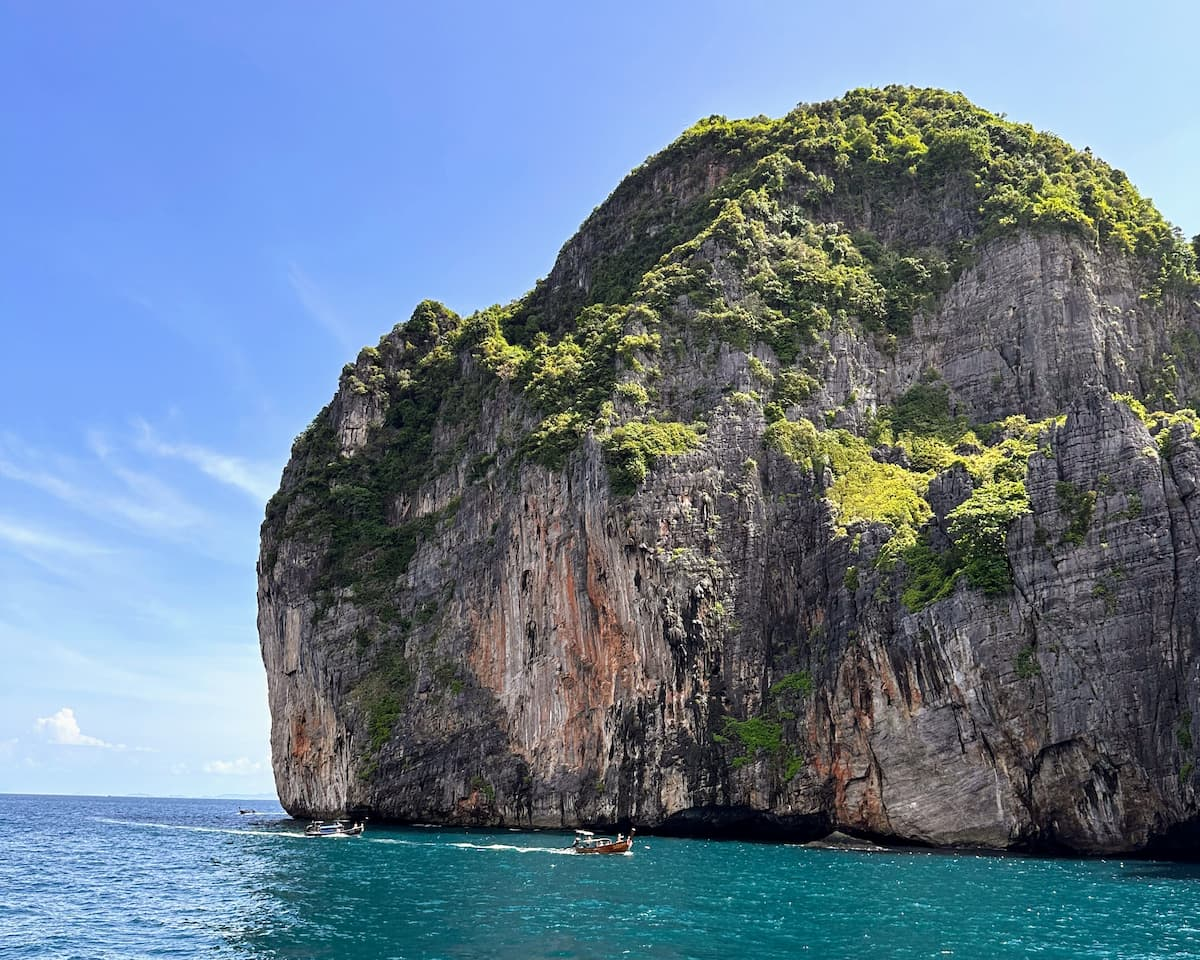
This is the most accessible multi-island route for first-time visitors to Southern Thailand. Phuket provides convenient flight connections and an extensive choice of beaches, attractions and accommodation. Koh Phi Phi introduces the dramatic limestone scenery for which the Andaman Sea is famous, while Koh Lanta creates a calmer conclusion with longer beaches and a more relaxed pace.
The sequence also works geographically. Travellers can fly into Phuket, move south through the islands and finish by travelling from Koh Lanta to Krabi Airport. This avoids returning to Phuket and turns the route into a largely continuous journey rather than a circular trip with unnecessary backtracking.
Why This Route Works
The strength of this route is the contrast between its three destinations. Phuket suits travellers who want convenience, restaurants, nightlife and a broad choice of experiences. Koh Phi Phi places the emphasis on island scenery, boat exploration and evenings without the daytime excursion crowds. Koh Lanta then provides more space and a slower rhythm, making it a comfortable place to finish the holiday.
It is also flexible. Seven nights is enough to experience all three islands without rushing excessively, while ten nights allows more time for Phuket and Koh Lanta. Travellers with additional time can extend the final stay rather than adding another destination simply to increase the number of islands visited.
Suggested 7–10-Night Itinerary
A balanced version of this route would allow:
- Phuket: 3–4 nights
- Koh Phi Phi: 2 nights
- Koh Lanta: 3–4 nights
Three or four nights in Phuket provide enough time to enjoy the chosen beach area, explore part of the island and take a day away from organised travel. Visitors interested in nightlife may prefer Patong, while Kata, Karon, Kamala and other coastal areas offer different balances of atmosphere and convenience.
Two nights on Koh Phi Phi allow one full day between arrival and departure. This makes it possible to explore the surrounding bays and islands without treating Phi Phi Don merely as a transfer point. Staying overnight also reveals a different side of the destination once many day visitors have returned to Phuket and Krabi.
Koh Lanta deserves at least three nights. Its beaches and attractions are spread across a much larger area than Phi Phi, and the island’s relaxed appeal is best experienced without a tightly packed schedule. Four nights provides time for the beaches, Lanta Old Town, the national park or a boat excursion while still leaving room for an unplanned day.
For a seven-night holiday, a practical split would be two nights in Phuket, two on Phi Phi and three on Koh Lanta. This is workable, but the ten-night version provides a noticeably better balance between travelling and actually enjoying each destination.
Getting Between Phuket, Koh Phi Phi and Koh Lanta
The journey begins with a transfer from your Phuket accommodation to Rassada Pier, east of Phuket Town. Travel time to the pier varies considerably across the island, so travellers staying in Patong, Kata, Karon or the northern beach areas should include the road transfer when comparing departure times.
Ferries and speedboats connect Phuket with Tonsai Pier on Koh Phi Phi Don. Larger ferries generally provide more space and a steadier journey, while speedboats reduce the crossing time but can feel considerably rougher when the sea is unsettled. Some tickets include hotel pickup in Phuket, although the collection period can begin well before the scheduled boat departure.
The onward crossing from Koh Phi Phi to Koh Lanta is relatively short, with boats arriving at Saladan Pier in northern Koh Lanta. Services are normally strongest during the Andaman high season, while the number and type of departures can change during wetter months. Travellers should confirm that both legs operate on their chosen dates rather than assuming the same timetable applies throughout the year.
Accommodation location also matters after reaching Koh Lanta. Resorts near Klong Dao and Long Beach are relatively close to Saladan, while properties around Klong Nin, Kantiang Bay and the island’s southern beaches require a longer road transfer. The advertised crossing time therefore represents only one part of the complete hotel-to-hotel journey.
Where to Start and Finish
The most efficient version of this itinerary begins at Phuket International Airport and finishes at Krabi International Airport:
Phuket Airport → Phuket → Koh Phi Phi → Koh Lanta → Krabi Airport
This open-jaw arrangement allows the journey to continue naturally south without retracing the route. Koh Lanta is connected to the mainland by road, short vehicle-ferry crossings and a bridge between Koh Lanta Noi and Koh Lanta Yai. A private transfer or shared minivan can therefore collect travellers from their accommodation and continue directly to Krabi Airport.
The complete journey from a Koh Lanta hotel to Krabi Airport commonly requires around two to three hours, depending on the accommodation’s location, traffic and queues at the vehicle ferry. A property in the far south of the island will require more time than one near Saladan.
Early-morning flights from Krabi can be inconvenient from Koh Lanta. Travellers should either choose a suitably timed departure or spend the final night on the mainland when the flight is particularly important.
If You Need to Return to Phuket
A circular journey remains possible when return flights from Phuket are more convenient or have already been booked. Travellers can return from Koh Lanta by direct boat to Rassada Pier or travel by road through Krabi and Phang Nga.
Neither option should be judged by its headline travel time alone. A boat journey also requires transportation from the hotel to Saladan Pier and from Rassada Pier to the airport or final Phuket accommodation. The road journey is longer but provides door-to-door convenience and may be more practical with children or substantial luggage.
Avoid travelling from Koh Lanta to Phuket on the same day as an important international flight unless the schedule provides a generous margin. Spending the final night in Phuket removes the risk of a delayed boat, road congestion or unfavourable sea conditions disrupting the departure.
Who This Route Suits
Phuket, Koh Phi Phi and Koh Lanta work particularly well for first-time visitors who want to experience several sides of Southern Thailand without navigating the more seasonal connections of the lower Andaman islands.
The route is a good choice for:
- Couples wanting activities followed by a quieter beach stay
- Friends combining nightlife, boat trips and relaxation
- First-time visitors who want recognisable destinations
- Travellers arriving internationally through Phuket
- Families comfortable with two island transfers
- Visitors who want to finish near Krabi rather than return to Phuket
It also suits travellers who are undecided between an active holiday and a slower island escape. Phuket provides extensive choice, Phi Phi delivers the dramatic scenery, and Koh Lanta creates space to unwind before leaving the region.
Limitations to Consider
Phuket and Koh Phi Phi are among Southern Thailand’s busiest destinations, particularly from December through February. Travellers seeking solitude throughout their holiday may find the first half of the route too developed or crowded.
Changing accommodation twice also means repacking, arranging transfers and surrendering part of two days to transport. Speedboats can be uncomfortable in choppy conditions, while conventional ferries take longer. Anyone prone to seasickness should consider vessel type rather than automatically selecting the fastest advertised crossing.
The route is most dependable during the Andaman dry season. It may still be possible at other times, but reduced schedules and weather disruption make tight itineraries less sensible. Travellers with mobility limitations should also confirm boarding arrangements directly, as assistance and accessibility can differ between vessels and piers.
2. Koh Samui → Koh Phangan → Koh Tao
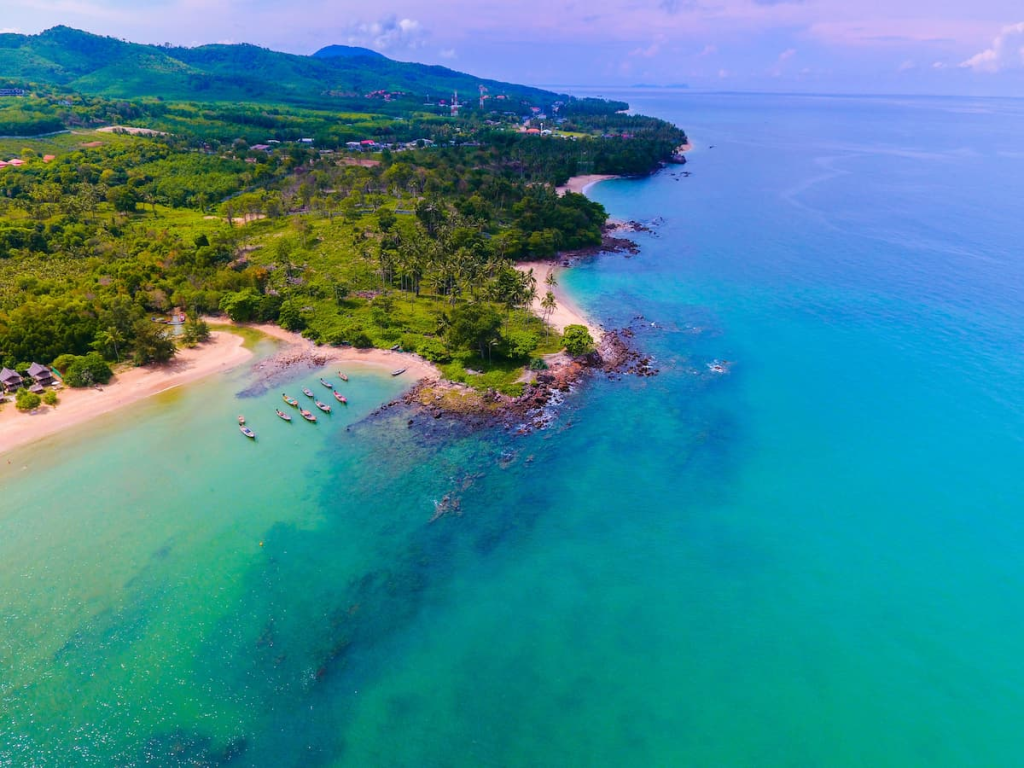
Koh Samui, Koh Phangan and Koh Tao form the most natural island-hopping chain in the Gulf of Thailand. Regular boat services connect the three islands, travel distances are manageable, and each destination contributes something different to the holiday.
Koh Samui provides the easiest arrival point, with its airport, extensive accommodation choice and well-developed tourism infrastructure. Koh Phangan combines quiet beaches, wellness retreats and local communities with the nightlife surrounding its Full Moon Party. Koh Tao is smaller and particularly well suited to diving, snorkelling and exploring coastal bays.
The route can either return to Koh Samui for an onward flight or continue from Koh Tao to Chumphon on the mainland. This makes it suitable for a self-contained island holiday as well as a longer Thailand journey continuing north towards Hua Hin or Bangkok.
Why This Route Works
Connections naturally progress from Samui to Phangan and then Tao, allowing travellers to experience three different island environments without crossing the mainland between them. Numerous services operate within the Gulf network, although departure pier, vessel type and frequency vary.
The order also creates a gradual change in scale. Samui offers the greatest choice and convenience, Phangan feels more independent and varied, and Tao places greater emphasis on the sea itself. Ending on Koh Tao works especially well for travellers who want to dive or snorkel, while reversing the route suits visitors arriving from Bangkok through Chumphon.
Unlike the Andaman routes, this journey can also be attractive during parts of the European summer. However, the Gulf follows its own weather cycle, and conditions often become less dependable later in the year. Travellers should choose the coast according to their actual travel dates rather than applying one weather rule to all of Southern Thailand.
Suggested 8–12-Night Itinerary
A balanced version of this route would allow:
- Koh Samui: 3–5 nights
- Koh Phangan: 2–4 nights
- Koh Tao: 3–4 nights
Koh Samui generally deserves the longest stay for first-time visitors. The island is large, and its beaches, restaurants, temples, viewpoints and inland attractions are spread across several areas. Three nights provide an introduction, while four or five allow travellers to explore beyond their chosen resort.
Two nights on Koh Phangan may be sufficient for a particular beach, wellness stay or Full Moon Party visit, but three or four nights reveal more of the island. Phangan is much larger and more varied than its party reputation suggests, with quieter northern and eastern beaches that feel removed from Haad Rin.
Koh Tao deserves at least three nights, especially when diving is part of the plan. An introductory dive or refresher session can occupy much of a day, while certified divers may want several separate outings. Non-divers can use the time for snorkelling, viewpoints, beaches or a boat trip around Koh Tao and nearby Koh Nang Yuan.
For an eight-night holiday, a practical split would be three nights on Samui, two on Phangan and three on Tao. With 10–12 nights, add time according to your priorities rather than dividing the holiday equally: Samui for choice and comfort, Phangan for beaches or wellness, and Tao for underwater activities.
Getting Between Koh Samui, Koh Phangan and Koh Tao
Several ferry, high-speed catamaran and speedboat services operate within the Gulf island network. The crossings are relatively straightforward, but travellers must check the exact departure and arrival piers rather than booking on the island names alone.
Koh Samui has several passenger piers, including locations around Maenam, Bangrak, Nathon and Lipa Noi. The most convenient departure therefore depends on both the operator and the location of your accommodation. A sailing from a nearby pier can save a lengthy transfer across Samui, while the cheapest ticket may become less attractive once an early hotel pickup or private taxi is included.
Most services to Koh Phangan arrive at Thong Sala Pier on the island’s west coast. Accommodation in Haad Rin, the northern beaches or the more isolated east coast may still require a substantial onward road or boat transfer. Visitors travelling around the Full Moon Party should reserve both the ferry and accommodation early, as demand increases sharply around the event.
Services from Koh Phangan continue to Mae Haad Pier on Koh Tao. Although the crossing itself is not particularly long, sea conditions can affect both comfort and punctuality. High-speed catamarans generally provide more space than small speedboats, but no vessel is entirely immune to rough Gulf conditions.
When booking, compare the complete hotel-to-hotel journey. A ticket that includes pickup or drop-off may be more practical than arranging each stage separately, particularly when the departure pier is on the opposite side of an island. Travellers should also reconfirm the service shortly before departure because schedules and pier assignments can change.
Option One: Return to Koh Samui
Travellers holding a return flight from Koh Samui can complete the route by taking a ferry from Koh Tao back to Samui. This involves some backtracking, but regular connections make it a straightforward circular itinerary:
Koh Samui → Koh Phangan → Koh Tao → Koh Samui
The complete journey does not end when the ferry reaches Samui. Travellers must also disembark, collect their luggage and transfer from the arrival pier to the airport or hotel. The time required depends on which pier the operator uses.
It is safer to return to Samui for the final night rather than combine a ferry from Koh Tao with an important flight on the same day. This provides protection against rough seas, schedule changes and delayed arrivals while creating a more relaxed end to the holiday.
Option Two: Continue Through Chumphon
A more linear alternative is to continue from Koh Tao to Chumphon:
Koh Samui → Koh Phangan → Koh Tao → Chumphon
Combined ferry-and-transfer tickets can connect Koh Tao with Chumphon railway station or airport. This works particularly well for travellers continuing north by train or road towards Hua Hin or Bangkok.
Chumphon should not be treated as equivalent to Koh Samui as an aviation gateway. Flight choices may be limited, and the ferry timetable must align with the onward departure. The railway is often the more useful connection, especially for travellers incorporating the islands into a longer overland journey.
Allow a comfortable gap before any onward train or flight. When a connection is especially important, spending a night in Chumphon provides greater security than relying on the sea crossing operating exactly to schedule.
Travelling in the Reverse Direction
The route can work equally well in reverse for travellers arriving from Bangkok:
Chumphon → Koh Tao → Koh Phangan → Koh Samui
This direction begins with the smallest and most marine-focused island, then moves through Phangan before finishing with Samui’s wider choice of resorts, restaurants and flights. It eliminates backtracking and allows the traveller to fly onward from Koh Samui.
The better direction therefore depends less on the islands themselves than on where the wider Thailand itinerary begins and ends. Travellers arriving internationally through Phuket or Bangkok may make different choices from someone planning a self-contained Gulf island holiday.
Planning Around the Full Moon Party
The Full Moon Party can affect travel throughout Koh Phangan even when attending it is not part of your plans. Ferries, accommodation and transfers become busier around the event, with the greatest demand concentrated around Haad Rin in the island’s southeast.
Travellers who want to attend should check the confirmed event date before booking flights or island transfers. Party dates do not always fall on the astronomical full moon because they may be adjusted around important Buddhist holidays. Staying for at least two nights avoids depending on a late-night boat and provides time to recover before continuing to Koh Tao.
Visitors seeking a quieter stay do not necessarily need to avoid Koh Phangan altogether. Accommodation on the northern, western or northeastern beaches can feel far removed from Haad Rin, although transport may take longer and taxi prices can increase on party nights.
Travellers continuing to Koh Tao immediately after the party should reserve their ferry in advance and expect a busier departure. Adding an extra night on Phangan produces a more relaxed itinerary and reduces the chance that one late evening dominates the following travel day.
Who This Route Suits
The Samui, Phangan and Tao route suits travellers who want three contrasting islands without navigating the more fragmented connections of the lower Andaman coast.
It is particularly suitable for:
- Couples combining resort comfort with smaller-island stays
- Divers and snorkellers planning several days on Koh Tao
- Solo travellers following an established island route
- Visitors interested in wellness retreats or yoga on Koh Phangan
- Groups including the Full Moon Party in a longer holiday
- Travellers continuing north through Chumphon
- Visitors travelling when Gulf conditions are preferable to the Andaman coast
The route is also flexible enough to accommodate different budgets. Samui offers everything from simple guesthouses to luxury resorts, while Phangan and Tao provide beach bungalows, hostels, boutique accommodation and dive packages.
Limitations to Consider
Although the islands are well connected, the journey still requires two or three hotel changes. Samui and Phangan are also larger than they may appear, so reaching the correct pier can involve a substantial road transfer.
Sea conditions in the Gulf can become rough, particularly later in the year. Fast vessels reduce journey times but may be uncomfortable for travellers prone to seasickness, and delays can interfere with onward flights or trains.
Koh Tao’s steep roads and limited transport require additional care. Renting a scooter is common but should not be treated as essential, particularly by inexperienced riders. Choosing accommodation near the activities and beaches you most want to enjoy can reduce the need to travel across the island.
The route may also become considerably busier around the Full Moon Party. Travellers seeking a completely quiet holiday should check event dates and choose both their location on Phangan and their ferry dates accordingly.
3. Koh Lanta → Koh Mook or Koh Kradan → Koh Lipe
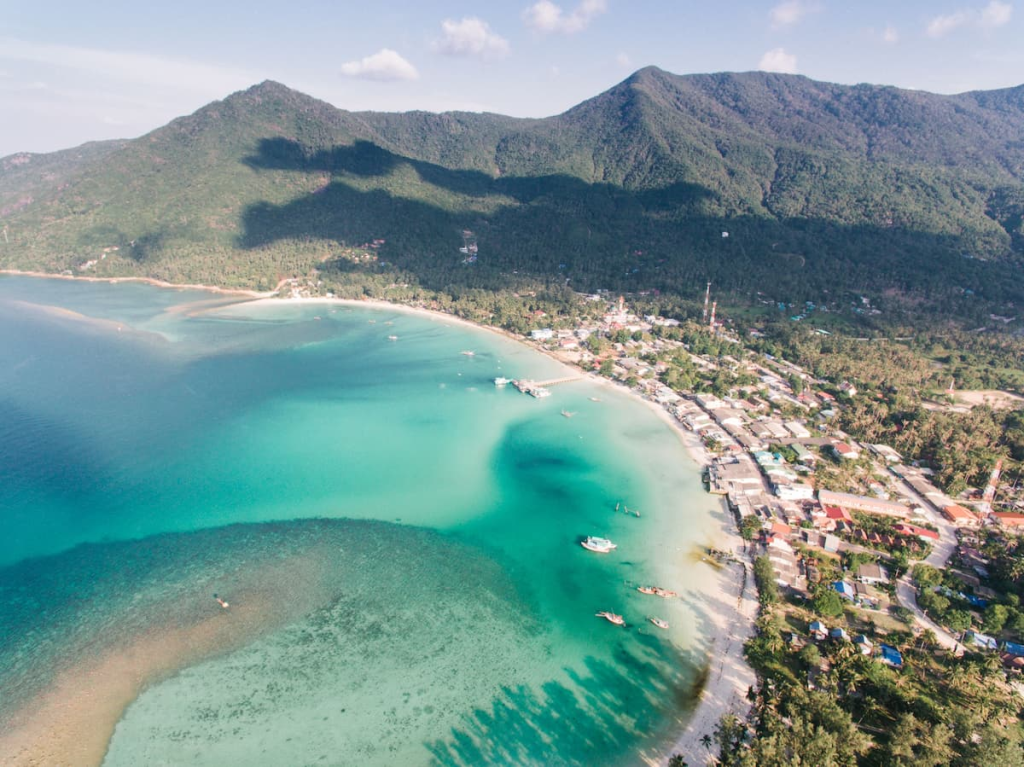
This lower-Andaman route is designed for travellers who want quieter islands, clear-water snorkelling and a more gradual journey away from Southern Thailand’s largest tourism centres. It begins on Koh Lanta, continues through one of Trang’s smaller islands and finishes on Koh Lipe near Thailand’s southern maritime border.
The route requires more planning than Phuket, Phi Phi and Lanta. Boat connections are strongly seasonal, smaller islands have fewer facilities, and some arrivals involve pontoons, longtail transfers or direct beach landings. In return, travellers experience a side of the Andaman coast that feels more intimate and less dominated by large-scale development.
It also has an unusually logical finish. Rather than returning north to Krabi or Phuket, travellers can leave Koh Lipe through Pak Bara Pier and continue to Hat Yai Airport. Those extending their journey into Malaysia may instead take a seasonal international ferry to Langkawi.
Why This Route Works
The route follows the coast from north to south without requiring travellers to retrace their journey. Koh Lanta provides a comfortable starting point with established accommodation, restaurants and road connections. Koh Mook or Koh Kradan then introduces a smaller-island experience before Koh Lipe adds a livelier final stay with excellent access to the surrounding Tarutao archipelago.
Each destination offers a different balance. Lanta has sufficient size and variety for several days of independent exploration. Koh Mook provides local island life and access to Emerald Cave, while Koh Kradan is more strongly focused on beaches, clear water and snorkelling. Koh Lipe is compact but has a broader range of accommodation, dining and boat trips than the smaller Trang islands.
This is not the best route for travellers trying to visit Southern Thailand during the Andaman monsoon. Its appeal depends on seasonal inter-island boats and suitable sea conditions, making approximately November to April the most dependable period. It works best when treated as a carefully planned high-season journey rather than a year-round itinerary.
Choosing Between Koh Mook and Koh Kradan
Most travellers should choose either Koh Mook or Koh Kradan as the middle stop. Including both is possible, but another accommodation change may add more inconvenience than value unless the holiday is long enough to allow at least two nights on each island.
| Island | Best for | Character | Main consideration |
|---|---|---|---|
| Koh Mook | Local life, varied experiences and Emerald Cave | Inhabited island with villages, restaurants and beaches | Beach quality varies between different parts of the island |
| Koh Kradan | Clear water, snorkelling and quiet beach time | Small, resort-focused island with limited development | Fewer restaurants, services and independent activities |
| Both islands | Slow travel through the Trang archipelago | Combines community life with an exceptional beach stay | Requires another transfer and at least two additional nights |
Koh Mook provides the more varied experience. Travellers can explore the island’s villages, eat at independent restaurants and join a guided visit to Emerald Cave. The cave must be approached through the water and should be visited with an experienced local guide who understands the tide and sea conditions.
Koh Kradan is the stronger choice when the priority is staying beside clear water and snorkelling directly from the beach. Its limited development is part of its appeal, but restaurant choice, shopping and evening activity are correspondingly restricted. Accommodation should be reserved early during popular travel periods.
For a first journey through the lower Andaman, Koh Mook may provide greater contrast with Koh Lipe. Travellers primarily seeking the best possible beach sequence may prefer Koh Kradan. Those with 14 nights or more could include both, following Koh Lanta → Koh Mook → Koh Kradan → Koh Lipe, without compressing each stay into a single night.
Suggested 10–14-Night Itinerary
A balanced version of this route would allow:
- Koh Lanta: 3–4 nights
- Koh Mook or Koh Kradan: 2–3 nights
- Koh Lipe: 4–5 nights
- One mainland buffer night when required
Koh Lanta provides the easiest beginning because it has the greatest range of accommodation, restaurants and activities. Three nights allow time for its beaches and one day of exploration, while four nights make it possible to include Lanta Old Town, Mu Ko Lanta National Park or an offshore excursion without rushing.
Two nights are the practical minimum on Koh Mook or Koh Kradan. This provides one complete day between arrival and departure. Three nights are better for travellers who want an unhurried smaller-island experience or need flexibility around an Emerald Cave visit, snorkelling conditions or changing weather.
Koh Lipe merits four or five nights because reaching it requires more effort and it provides access to several surrounding islands and snorkelling areas. The additional time also creates some protection against losing a planned boat day to poor conditions.
For a ten-night holiday, a workable split would be three nights on Koh Lanta, two on Koh Mook or Koh Kradan and four on Koh Lipe, followed by one night in Hat Yai if the onward flight is important. With 14 nights, travellers can extend each stay or include both Koh Mook and Koh Kradan without reducing either to an overnight transfer stop.
Getting Between Koh Lanta, the Trang Islands and Koh Lipe
Seasonal speedboats connect Koh Lanta with Koh Ngai, Koh Mook, Koh Kradan and Koh Lipe, allowing travellers to move south without returning to the mainland between each stay. Services are normally most dependable during the Andaman high season, with fewer choices or no practical inter-island connection during parts of the monsoon.
Boats generally leave Koh Lanta from Saladan Pier. Some services travel directly to the selected island, while others make several stops as they continue south. The advertised journey time can therefore vary according to the operator, vessel and number of intermediate landings.
Arrival arrangements become less conventional on the smaller islands. Koh Mook has a pier, but Koh Kradan commonly uses direct beach landings. Passengers may need to step into shallow water, walk across sand or transfer between boats while their luggage is carried ashore. The landing location may also depend on the tide, weather and accommodation.
Koh Lipe does not have a conventional large passenger pier. Boats commonly use an offshore floating platform or landing area near Pattaya Beach, with passengers transferred ashore by longtail boat when required. Some tickets include this final transfer, while others may involve a separate local charge.
Travellers should tell each accommodation which boat they expect to arrive on and ask whether pickup or luggage assistance is provided. Boat times should also be reconfirmed locally before departure, as weather, passenger numbers and operational changes can affect the planned service.
Where to Start and Finish
The most efficient version of this route begins through Krabi and finishes through Hat Yai:
Krabi Airport → Koh Lanta → Koh Mook or Koh Kradan → Koh Lipe → Pak Bara Pier → Hat Yai Airport
Krabi Airport is the most practical arrival gateway for Koh Lanta. Private vehicles and shared minivans travel from the airport to accommodation across the island using the mainland road, vehicle ferry and bridge connections. Journey time depends on the hotel’s location, with the southern beaches requiring longer than properties near Saladan.
After the final stay, speedboats connect Koh Lipe with Pak Bara Pier on the Satun mainland. Combined tickets can include the onward minivan journey to Hat Yai Airport or Hat Yai city. The entire island-to-airport journey commonly requires approximately four to five hours once check-in, the sea crossing, transfer time at Pak Bara and the road journey are considered.
A later domestic flight may be achievable on the same day, but the itinerary should not depend on the boat arriving exactly as scheduled. For an important international departure—or a flight with no convenient replacement—leave Koh Lipe one day earlier and spend the final night in Hat Yai.
Returning to Krabi or Phuket after reaching Koh Lipe would create substantial backtracking. Unless flights have already been booked, using Krabi as the arrival gateway and Hat Yai as the departure gateway produces a more logical and less tiring journey.
Continuing from Koh Lipe to Langkawi
Travellers who want to extend the journey into Malaysia can continue from Koh Lipe to Langkawi rather than returning to the Thai mainland. This creates an attractive international route:
Krabi → Koh Lanta → Koh Mook or Koh Kradan → Koh Lipe → Langkawi
Direct ferries generally operate seasonally during the calmer Andaman months rather than throughout the year. Operating dates, departure points and frequency can change between seasons, so confirm the service before booking accommodation or an onward flight from Langkawi.
This is an international crossing rather than an ordinary island transfer. Passengers must complete Thai departure formalities on Koh Lipe and Malaysian immigration after arriving in Langkawi. Allow additional time for passport processing, check-in and luggage handling at both ends, and confirm current visa or entry requirements for your nationality before travelling.
Malaysia is one hour ahead of Thailand. Ferry tickets and arrival information may display local times, so check carefully when arranging hotel transfers or flights from Langkawi.
The Langkawi option works best for travellers already intending to visit Malaysia. If the holiday remains entirely within Thailand, travelling from Koh Lipe to Pak Bara and continuing to Hat Yai is usually the simpler departure route.
Who This Route Suits
The lower-Andaman route is best suited to travellers who value quieter beaches, smaller destinations and a sense of progression through the islands more than nightlife or extensive resort facilities.
It is particularly suitable for:
- Couples looking for a slower and more scenic island journey
- Repeat visitors wanting to explore beyond Phuket and the Phi Phi Islands
- Independent travellers comfortable coordinating seasonal boats
- Snorkellers and beach-focused travellers
- Visitors planning a one-way journey from Krabi to Hat Yai
- Travellers continuing from Thailand into Langkawi
- People with enough time to spend at least two nights on each smaller island
The route is less suitable for anyone who prefers highly developed destinations, extensive shopping and entertainment, or predictable year-round connections. It also requires greater flexibility than the Phuket–Phi Phi–Lanta route.
Limitations to Consider
Seasonality is the most important limitation. Direct boats between Koh Lanta, the Trang islands and Koh Lipe may operate only during the calmer part of the year. Poor weather can still cause delays or cancellations during the usual high season.
Boarding arrangements can also be physically demanding. Travellers may encounter floating platforms, longtail transfers, wet landings or uneven sand while managing their luggage. Those with limited mobility should discuss every transfer with the operator and accommodation before committing to the route.
Facilities are more restricted on Koh Mook and especially Koh Kradan. Medical services, shops, cash access and transport choices cannot be assumed to match those available on Koh Lanta or in Phuket. Carry essential medication and enough cash for smaller businesses, while avoiding unnecessary valuables.
Finally, this route should not be compressed. Attempting to include Lanta, Mook, Kradan and Lipe within a short holiday creates repeated packing and makes the itinerary vulnerable to a single disrupted crossing. For most travellers, choosing either Koh Mook or Koh Kradan produces the better-balanced journey.
Island Hopping Without Changing Hotels
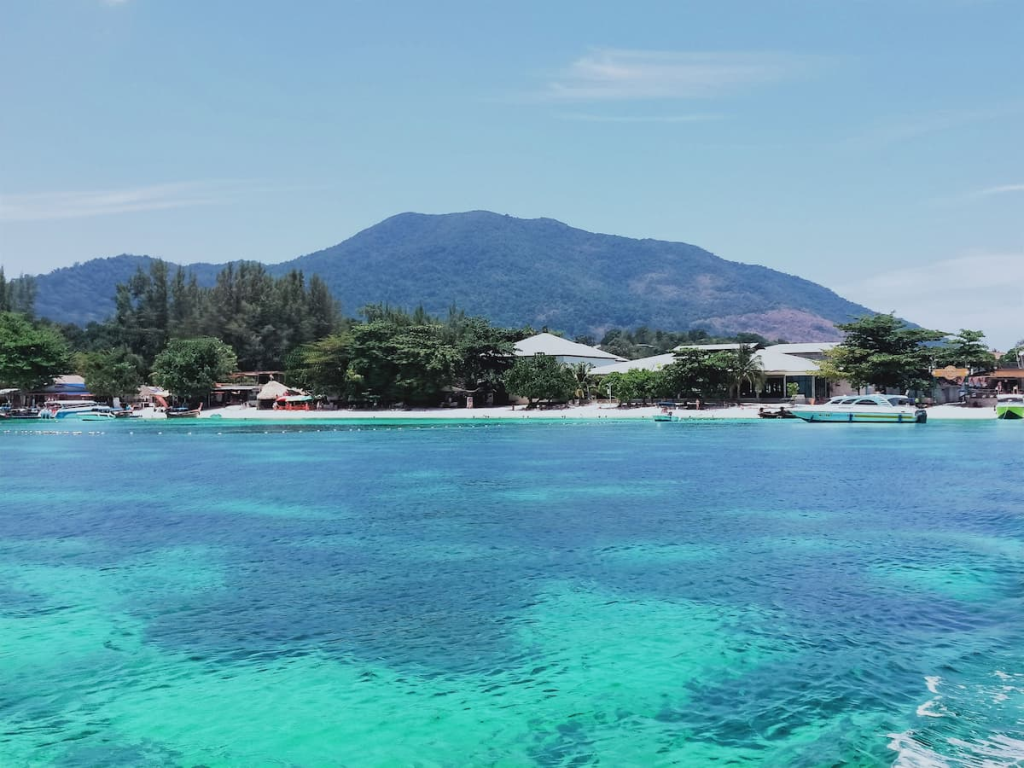
Travellers do not need to change accommodation repeatedly to experience several Southern Thailand islands. Organised day trips depart from major destinations each morning, visit multiple beaches, bays or snorkelling locations, and return to the same base by evening.
This approach is particularly convenient for shorter holidays, families and travellers who prefer not to manage luggage on ferries. The compromise is that visits follow a relatively fixed schedule and usually coincide with the busiest excursion hours. You experience the scenery, but not the quieter mornings and evenings that come with staying overnight.
1. Phi Phi Islands from Phuket or Krabi
A Phi Phi Islands day trip is one of Southern Thailand’s most recognisable boat excursions. Typical itineraries combine Maya Bay, Pileh Lagoon, snorkelling stops and time on Phi Phi Don, although the precise route depends on the operator, sea conditions and national-park restrictions.
Tours depart from both Phuket and the Krabi area. Krabi is geographically closer, but the most convenient choice is normally the destination where you are already staying. Travelling across the mainland merely to use a different departure point usually adds more inconvenience than it saves.
Speedboats complete the route more quickly and can reach several locations within one day, but the journey may feel rough in unsettled conditions. Larger vessels provide more space and a steadier ride, although they may spend longer travelling and cannot always enter the same shallow areas.
Crowds are an unavoidable consideration at the most famous locations. Early-departure or smaller-group tours may improve the experience, but no operator can guarantee an empty Maya Bay. Visitors must also follow current national-park rules, which may restrict swimming, landing locations or access during conservation closures.
A day trip works well for travellers with limited time or those who are uncertain about staying on Phi Phi Don. However, anyone who wants to explore at a slower pace, experience the island after the excursion boats leave or arrange an early private boat should consider staying for at least two nights.
2. Hong Islands from Ao Nang or Krabi
The Hong Islands provide one of the most convenient day trips from Ao Nang and other parts of Krabi. The archipelago combines limestone cliffs, sheltered water, beaches and snorkelling stops without requiring the longer journey associated with some Phi Phi excursions.
Most itineraries centre on Hong Island and its enclosed lagoon, which boats enter through a narrow opening between the cliffs. Tours may also include smaller islands such as Pak Bia and Lao Lading, although the sequence varies according to tides, weather and the operator.
Visitors may have time to swim, snorkel or relax on the beach, while some tours allow sufficient time to climb the viewpoint on Hong Island. The staircase is steep and exposed to the heat, but the elevated view across the surrounding islands is one of the excursion’s distinctive experiences.
Longtail boats offer a more traditional and often less expensive journey from Ao Nang, while speedboats reduce travelling time and may be more comfortable for groups wanting to visit several stops. Longtails are slower and more exposed to spray, but the relatively compact geography makes them practical for this route.
The Hong Islands are an excellent choice for travellers based around Ao Nang or Krabi who want dramatic limestone scenery without relocating to another island. As with other marine excursions, confirm whether the quoted price includes hotel transfers, lunch, snorkelling equipment and the national-park entrance fee.
3. Ang Thong Marine Park from Koh Samui
Mu Ko Ang Thong National Marine Park is a protected Gulf archipelago northwest of Koh Samui. Its many limestone islands, forested cliffs, sheltered bays and elevated viewpoints make it one of the most rewarding full-day boat trips from Samui.
Excursions commonly include kayaking, snorkelling, beach time and a viewpoint climb, although the precise stops depend on the operator and sea conditions. Some itineraries visit the emerald-coloured saltwater lagoon on Ko Mae Ko, while others provide time for the steep climb to the viewpoint on Ko Wua Talap.
Larger tour boats offer more space and a generally steadier journey, but take longer to reach the park. Speedboats reduce travelling time and may visit more locations, although the ride can be uncomfortable when conditions are choppy. Travellers with limited mobility should ask about boat boarding and viewpoint access, as steep steps and beach landings may form part of the day.
Before booking, confirm whether the price includes hotel transfers, meals, kayaking, snorkelling equipment and the marine-park entrance fee. The park normally has an annual closure period, and tours may also be cancelled when sea conditions are unsuitable, so travellers should verify access for their specific dates.
Ang Thong is best for visitors who want to experience a wider Gulf archipelago while keeping Koh Samui as their accommodation base. It provides dramatic scenery and several activities in one day, but travellers wanting an overnight island experience should instead consider continuing independently to Koh Phangan or Koh Tao.
Multi-Day Island Hopping or Day Trips: Which Is Better?
Both approaches allow travellers to experience several Southern Thailand islands, but they create very different holidays. Multi-day routes provide greater depth and independence, while day trips offer convenience and require far less organisation.
| Multi-day island hopping | Same-day island trips |
|---|---|
| Experience islands during quieter mornings and evenings | Return to the same accommodation each night |
| Spend several days exploring beaches and local areas | Visit several scenic locations within one day |
| Choose accommodation and activities independently | Follow a fixed itinerary and timetable |
| Requires packing, luggage handling and hotel changes | Avoids moving luggage between boats and islands |
| Transfers consume part of several holiday days | Usually requires only one full travel day |
| More vulnerable to disrupted ferry connections | Operator manages most transport arrangements |
| Best for holidays of approximately 7–14 days | Best for shorter stays of approximately 3–7 days |
| Better for experiencing island life | Better for seeing famous scenery efficiently |
Multi-day island hopping is the stronger choice when the journey itself is a central part of the holiday. Staying overnight provides time to explore beyond the principal tour stops and experience destinations after many excursion boats have departed.
Day trips are more practical when time is limited, when travelling with substantial luggage or when keeping one reliable accommodation base matters more than experiencing each island in depth. They can also suit families and travellers who do not want every few days interrupted by check-outs and transfers.
Neither approach is universally better. A particularly effective holiday may combine the two—for example, staying on Phuket, Koh Phi Phi and Koh Lanta while choosing one carefully selected boat excursion from each longer base.
How Many Islands Should You Include?
The ideal number of islands depends less on the total length of the holiday than on how many complete days remain after transfers. Every change of island involves checking out, reaching the pier, waiting for the boat, completing the crossing and travelling to the next accommodation. Even when the islands appear close together, this process commonly removes at least half a useful day.
As a general guide:
- One week: two islands provide the best balance
- Ten days: two or three islands can be visited comfortably
- Two weeks: three islands allow a relaxed journey
- Four or more islands: sensible only when connections are short and frequent hotel changes are part of the appeal
Single-night stays should generally be avoided. Arriving during the afternoon and departing the following morning provides very little time to experience the destination, while still requiring all the effort of another transfer.
Smaller islands are not automatically suitable for shorter stays. Limited boat schedules may dictate arrival and departure times, and poor weather could remove the only complete day planned for snorkelling or exploration. Allowing two or three nights creates a more enjoyable experience and provides some flexibility.
For most travellers, three contrasting islands are more rewarding than five similar beach stops. Choose destinations that contribute different experiences—such as resort facilities, dramatic scenery, diving or quieter island life—rather than adding islands simply to increase the number visited.
How to Plan Your Arrival and Departure Points
Choosing the airports before booking accommodation can remove hours of unnecessary backtracking. Instead of automatically purchasing a return flight through the same city, check whether a multi-city or open-jaw ticket allows you to arrive through one gateway and depart through another.
The most efficient combinations for the three routes in this guide are:
- Phuket Airport in → Krabi Airport out for Phuket, Koh Phi Phi and Koh Lanta
- Koh Samui Airport in → Chumphon out for Samui, Phangan and Tao
- Krabi Airport in → Hat Yai Airport out for Lanta, the Trang islands and Lipe
Begin by identifying the mainland or airport gateway closest to the final island. Then work backwards through the available boats, hotel transfers and flight times. A cheaper return airfare may not represent a genuine saving if it requires an additional hotel night, long road transfer or full day of backtracking.
Circular routes can still be more convenient when return flights are substantially cheaper, the itinerary begins and ends in the same part of Thailand, or a direct international departure is available only from the original airport. Returning to Samui after Koh Tao, for example, may be simpler than continuing through Chumphon for travellers flying internationally.
Avoid relying on the final scheduled boat to connect with an important flight. Ferry delays, rough seas and changed departure times can disrupt even a well-planned itinerary. When the consequences of missing the flight would be significant, spend the final night near the departure airport or on the mainland.
Ferry, Speedboat or Catamaran?
The fastest advertised crossing is not always the best choice. Vessel size, boarding arrangements, intermediate stops and transfers between your accommodation and the pier can matter more than the sailing time alone.
Conventional Ferries
Conventional ferries generally provide more space for passengers and luggage than smaller speedboats. They allow greater freedom to move around and may feel steadier in moderate conditions, making them a practical choice for families and travellers carrying larger cases.
Their main disadvantage is speed. Ferries can take considerably longer and may make intermediate stops. They also operate only on particular routes, so a conventional ferry will not always be available when travelling between smaller islands.
Speedboats
Speedboats reduce crossing times and connect many islands that larger vessels cannot easily serve. Their shallow draft also makes them useful for beach landings and routes involving smaller piers.
The journey can feel rough and cramped when the sea is unsettled. Boarding may require stepping between vessels, crossing a floating platform or entering shallow water. Travellers prone to seasickness, those with limited mobility and families with very young children should consider conditions and boarding arrangements before choosing speed purely for convenience.
High-Speed Catamarans
High-speed catamarans are particularly important on the Gulf route between Koh Samui, Koh Phangan, Koh Tao and Chumphon. They are generally faster than conventional ferries and more substantial than small speedboats, offering a useful balance between journey time and onboard space.
However, catamarans can still move considerably in rough conditions, and services remain vulnerable to delays or cancellations. Larger size should not be interpreted as a guarantee of a smooth crossing.
Before booking any vessel, compare the complete hotel-to-hotel journey. A slightly slower service using a nearby pier and including transfers may be more convenient than a faster boat requiring lengthy taxi journeys at both ends.
Luggage, Beach Landings and Accessibility
Island hopping becomes significantly easier when travelling with light, manageable luggage. Large wheeled suitcases may be acceptable on major ferries, but they can become awkward on narrow gangways, floating pontoons, sandy beaches and longtail boats.
Keep passports, money, medication and electronics in a small waterproof bag that remains with you throughout the crossing. Larger luggage may be stacked with other bags and exposed briefly to rain or sea spray during loading and unloading.
For routes involving smaller islands:
- Confirm the operator’s baggage allowance before departure
- Wear footwear suitable for wet or uneven boarding
- Expect to carry or lift bags for short distances
- Protect documents and electronic devices from water
- Tell the accommodation which boat you will arrive on
- Ask whether luggage assistance or a beach pickup is available
- Avoid packing items that would be difficult to replace if delayed or damaged
Do not assume every island has a conventional pier. Koh Kradan commonly involves a beach landing, while Koh Lipe may require passengers to transfer from a larger vessel to a longtail boat before reaching shore. Conditions and procedures can change with the tide, weather and operator.
Travellers with limited mobility should discuss the entire route with both the boat company and accommodation. Asking whether assistance is available is not enough; confirm whether boarding involves steps, ladders, unstable platforms, shallow water or transferring between moving boats. Some routes may be manageable with support, while others may require a different vessel or destination.
Weather, Seasonal Routes and Cancellations
Weather conditions vary considerably between Southern Thailand’s two coasts. The Andaman Sea and Gulf of Thailand follow different seasonal patterns, so a month that is generally favourable for one island route may be wetter or rougher on the other.
Andaman routes are usually most dependable from approximately November to April. During the southwest monsoon, some services continue with reduced frequency, while connections between smaller islands may stop entirely. Marine parks and individual attractions can also close seasonally for safety or environmental recovery.
The Gulf islands can be attractive during parts of the year when the Andaman coast is experiencing its wetter season. However, conditions often become less reliable later in the year, and heavy rain or rough seas can still interrupt ferries between Samui, Phangan and Tao.
Seasonal expectations are useful for planning, but they do not guarantee calm conditions. Boats may be delayed or cancelled during the normal dry season, while some days within the wetter months can be perfectly suitable for travel.
To reduce the effect of disruption:
- Reconfirm each service shortly before departure
- Avoid tightly connecting a ferry with an important flight
- Keep one flexible or buffer night near the end of the route
- Check whether accommodation and transport bookings can be changed
- Follow national-park and operator announcements
- Never pressure a boat operator to travel in unsafe conditions
For a fuller coast-by-coast explanation, see our Best Time to Visit Southern Thailand guide before selecting the route and travel dates.
Responsible Island Hopping
Southern Thailand’s islands and marine parks receive large numbers of visitors, particularly during the busiest months. Small choices by individual travellers can help reduce pressure on coral reefs, wildlife and communities with limited waste-management systems.
- Never stand on or touch coral while swimming or snorkelling
- Avoid feeding, handling or chasing marine wildlife
- Follow seasonal closures and restricted-access rules
- Choose operators that use established moorings rather than dropping anchors on reefs
- Reduce disposable plastics and refill water bottles where facilities exist
- Take rubbish away from beaches and smaller islands when disposal is limited
- Use reef-conscious sun protection and cover exposed skin where practical
- Respect villages, religious sites and private property on inhabited islands
Marine-park closures should not be viewed as inconveniences to overcome. They protect vulnerable environments and may also reflect unsafe seasonal conditions. If an attraction or island is closed, choose an alternative rather than seeking an operator willing to ignore the restriction.
Inhabited islands such as Koh Mook are also communities rather than simply stops on a tourist itinerary. Supporting locally owned accommodation, restaurants, guides and transport providers helps ensure that more of the benefit from island tourism remains with the people who live there.
Frequently Asked Questions
What is the best island-hopping route for first-time visitors?
Phuket → Koh Phi Phi → Koh Lanta provides the most accessible introduction. It combines Phuket’s convenience and activities, Phi Phi’s limestone scenery and Koh Lanta’s more relaxed atmosphere. Flying into Phuket and departing through Krabi also avoids unnecessary backtracking.
How many islands can I visit in one week?
Two islands usually provide the best balance. Three are possible when connections are short, but changing accommodation twice can consume a substantial part of a seven-day holiday. Allow at least two nights on each island rather than reducing destinations to overnight stops.
Can I go island hopping during the rainy season?
Yes, but suitability depends on the coast and specific route. Some major islands retain year-round connections, while services between smaller Andaman islands may stop during the monsoon. Check current schedules and sea conditions before booking a tightly structured itinerary.
Should I book ferries before arriving in Thailand?
Important high-season routes should be booked in advance, particularly around Christmas, New Year and the Full Moon Party. However, schedules should still be reconfirmed shortly before departure because weather, demand and operational changes can affect services.
Is it better to take ferries or speedboats?
Conventional ferries generally offer more space and may feel steadier, while speedboats reduce journey times and reach smaller islands. The best choice depends on sea conditions, luggage, boarding arrangements, mobility and susceptibility to seasickness—not speed alone.
Can I take a large suitcase when island hopping?
Usually, but lighter luggage is considerably easier to manage. Large cases can become difficult on narrow gangways, longtail transfers, floating platforms and beach landings. Confirm baggage allowances and ask whether assistance is available at smaller-island accommodations.
Should I return to the same airport?
Not necessarily. Open-jaw routes such as Phuket in and Krabi out—or Krabi in and Hat Yai out—can remove substantial backtracking. A return journey through the same airport may still be worthwhile when flights are much cheaper or more convenient.
Is Koh Lipe connected directly to Langkawi?
A direct international ferry generally operates seasonally. Travellers must complete Thai departure and Malaysian arrival formalities, check entry requirements and account for Malaysia being one hour ahead of Thailand. Confirm the operating period before booking onward travel.
Continue Exploring
Southern Thailand Travel Guide
Return to the regional guide to explore Southern Thailand’s destinations, attractions and travel-planning information.
Thailand Travel Guide
Move up to the country guide and discover how Southern Thailand can fit into a wider journey through Thailand.
Related Southern Thailand Reading
Best Islands in Southern Thailand
Compare islands offering different combinations of beaches, diving, nightlife, nature and quieter surroundings.
Best Beaches in Southern Thailand
Discover celebrated beaches and less-developed coastal escapes across the Andaman Sea and Gulf of Thailand.
Best Time to Visit Southern Thailand
Compare the weather patterns on both coasts and choose the most suitable island route for your travel dates.
Planning an Island-Hopping Route That Works
The best island-hopping itinerary is not the one that includes the greatest number of islands. It is the route that combines contrasting destinations, allows enough time to experience each one and finishes near a practical airport or onward connection.
For first-time visitors, Phuket, Koh Phi Phi and Koh Lanta provide an accessible introduction to the Andaman Sea. Samui, Phangan and Tao form the Gulf’s most natural island chain, while Lanta, the Trang islands and Lipe reward travellers prepared for greater seasonality and simpler infrastructure.
Whichever route you choose, plan the arrival and departure gateways before booking accommodation, treat every transfer as at least half a travel day and leave a buffer before an important flight. A well-paced journey through three islands will almost always provide a more memorable holiday than rushing through five.
About the Author
David Hibbins is an Australian travel publisher, destination researcher and the creator of Travel With Insight.
David spends considerable time in Phuket and has travelled extensively throughout Thailand and Southeast Asia. His work combines first-hand experiences, repeat visits and practical observations with careful destination research and current information.
Where David has visited a destination himself, those experiences help shape the guidance he provides—from understanding how places feel beyond their best-known attractions to recognising transport challenges, changing conditions and small practical details that shorter visits can miss. Research is used to verify historical context, current visitor information and aspects he has not experienced personally.
His work focuses on helping travellers move beyond popularity rankings, marketing claims and generic “best of” lists. Rather than telling readers where they should travel, his goal is to explain the strengths, limitations and individual character of each destination so they can choose the places that best match their interests, travel style and available time.
Through Travel With Insight, David explores not only where travellers go, but why they choose particular destinations, how experiences differ and what helps turn a well-researched trip into a genuinely memorable journey.
Explore More Travel Resources
Every rewarding journey begins with informed decisions. The more you understand a destination before arriving, the easier it becomes to choose experiences that suit your interests, expectations and preferred pace.
Whether you are researching one destination, comparing several possibilities or preparing a complete itinerary, these additional travel resources can help.
Travel With Insight
Continue exploring in-depth destination guides, first-hand travel insight and practical planning advice created to help you make informed travel decisions throughout Thailand and Southeast Asia.
Go Find Asia
Discover destinations, attractions and travel ideas from across Asia, with inspiration to help you decide where to go, what to experience and which places deserve a closer look.
Resurgence Travel
Move from research to practical planning with curated itineraries, personalised travel support and local insight focused on creating more rewarding journeys through Thailand and Southeast Asia.