
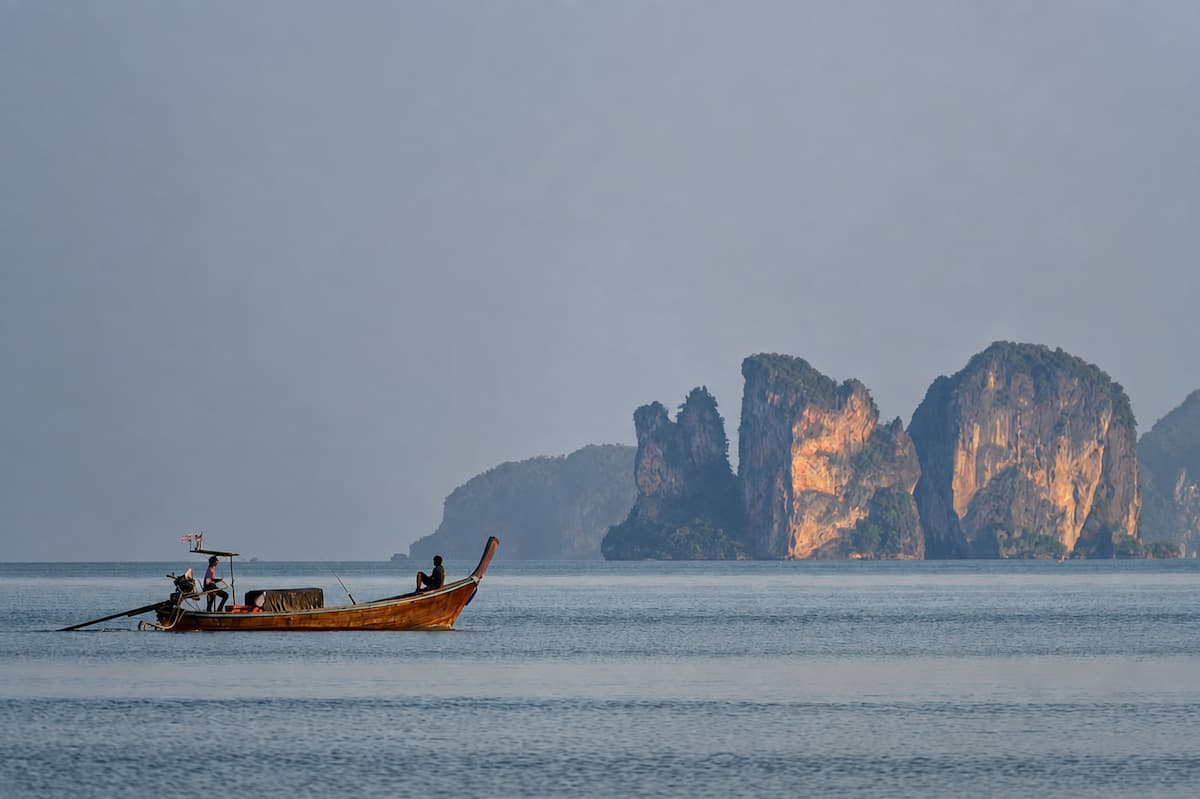
Making the Most of Your Southern Thailand Holiday
You have been working hard, getting on with everyday life and finally decided it is time for a proper holiday. Thailand sounds exciting, different and perhaps exactly what you need. Then you begin looking at Southern Thailand and discover Phuket, Krabi, Khao Lak, Khao Sok, Koh Samui and dozens of islands that all appear worth visiting. The difficult question soon becomes: how do you turn the time available into the holiday you are hoping for?
I travelled around Southeast Asia for many years before eventually deciding to base myself here more permanently, and Southern Thailand accounted for a significant part of my own holiday time. I now live in Phuket and have travelled through the region in many different ways. Over those years, I made mistakes, discovered destinations that worked wonderfully together and occasionally attempted to fit far too much into one journey.
I have developed this series of guides to share those lessons and help you make better use of your own time. The aim is not to persuade you to visit every famous island or give you an exhausting itinerary filled with as many beaches and boat trips as possible. It is to help you choose experiences that work naturally together, spend enough time enjoying them and avoid losing too much of your holiday to ferries, hotel changes and unnecessary transfers.
Having visited many of Southern Thailand’s best-known destinations—some of them repeatedly—I have put together four realistic approaches to exploring the region. These combine established beach resorts, tropical islands, limestone landscapes and rainforest, but each creates a distinctly different kind of Southern Thailand holiday.
You do not need to follow any of these routes exactly. Think of them as practical starting points that will help you choose the right coast, understand what fits comfortably into the time available and decide when an island deserves more than a hurried day trip. Making the most of your Southern Thailand holiday is not about collecting the greatest number of islands. It is about choosing the experiences that matter to you and giving yourself enough time to enjoy them.
Why Southern Thailand Works So Well as a Combined Holiday
Southern Thailand brings together an extraordinary range of experiences within one broad region. International beach destinations, smaller islands, rainforest, limestone mountains, national parks, fishing communities and culturally distinctive towns can all form part of the same holiday.
The region’s greatest appeal is the contrast available between destinations. Phuket offers extensive accommodation, restaurants, nightlife and convenient flight connections. Khao Lak provides a quieter resort coast, while Khao Sok replaces beaches with rainforest and dramatic limestone scenery. Krabi combines mainland convenience with easy access to islands and Railay, while Koh Lanta creates space for a slower and more independent stay. Across the peninsula, Koh Samui, Koh Phangan and Koh Tao provide another sequence of islands with their own atmospheres and strengths.
This variety does not mean that every destination should be included in one journey. Southern Thailand stretches across both the Andaman Sea and Gulf of Thailand, and the two coastlines have different transport networks and seasonal weather patterns. A route that looks straightforward on a map may involve a long road transfer, waiting at a pier, a ferry crossing and another journey after arriving on the island.
The most rewarding approach is usually to choose one coast and combine destinations that sit naturally along the same route. Travellers with more time can cross the peninsula or add another part of the region, but the additional experience should justify losing much of a day to travel.
A well-designed Southern Thailand holiday might combine an established resort destination with a smaller island, or follow several beach days with rainforest and wildlife. The objective is not to repeat the same type of beach in three different places. It is to create enough contrast that each destination adds something meaningful to the journey.
Think in Routes Rather Than a Checklist of Islands
When planning a Southern Thailand holiday, it is easy to create a list of beautiful places without considering how they connect. Phuket, Koh Phi Phi, Krabi, Koh Lanta, Khao Sok, Koh Samui and Koh Tao may all appear close enough to combine, but coastlines, mountains and ferry schedules make the practical journey more complicated than the map suggests.
The first decision should be whether to concentrate on the Andaman coast or the Gulf of Thailand.
The Andaman side includes Phuket, Khao Lak, Krabi, Koh Phi Phi and Koh Lanta. Its established airports, roads and ferry services support several natural combinations. Khao Sok also connects reasonably well with Phuket and Khao Lak, providing an inland rainforest experience without crossing completely to the Gulf islands.
The principal Gulf route connects Koh Samui, Koh Phangan and Koh Tao. Regular ferries make island hopping possible, but reaching the islands from the Andaman coast requires travelling across the peninsula and completing a ferry connection.
It is therefore more useful to think of Southern Thailand as several possible routes:
- The northern Andaman route: Phuket, Khao Lak and Khao Sok for beaches, resorts and rainforest.
- The classic Andaman route: Phuket, Koh Phi Phi and Krabi for famous islands and limestone scenery.
- The slower Krabi route: Krabi and Koh Lanta for coastal exploration with fewer hotel changes.
- The Gulf island route: Koh Samui, Koh Phangan and Koh Tao for resorts, nightlife, diving and contrasting island stays.
Combining routes is possible, but each additional island creates more than a short ferry ride. You must also reach the pier, wait for departure, handle luggage and travel from the arrival pier to the next hotel. Rough weather can introduce further delays.
Start by choosing the experiences that matter most. Select Phuket, Phi Phi and Krabi for a classic first Andaman journey; Khao Lak and Khao Sok for beaches followed by nature; Krabi and Koh Lanta for a slower holiday; or the Gulf islands if Samui, diving or Koh Phangan’s different personalities are the priority.
The route should help you enjoy Southern Thailand rather than turn the holiday into a challenge to collect every famous island.
How Many Places Should You Include?
The number of destinations that fit into a Southern Thailand holiday depends less on the total number of days than on how many times you are willing to pack, check out, reach a pier or airport and begin again somewhere new.
Island transfers are particularly deceptive. A ferry may spend only two hours on the water, but the complete journey can occupy most of a morning or afternoon. Hotel pickup, pier check-in, waiting, boarding, luggage handling and transport after arrival all need to be included.
Five to Seven Days
Choose one principal destination and no more than one easy addition.
Good options include:
- Phuket with a Khao Lak extension
- Phuket with two nights on Koh Phi Phi
- Krabi with an overnight stay at Railay
- Krabi and Koh Lanta
- Koh Samui with Koh Phangan
- Phuket with Khao Sok for travellers prioritising nature
A week is not enough for Phuket, Phi Phi, Krabi and Koh Lanta without making transfers a major part of the holiday.
Eight to Ten Days
Combine two or three destinations along one natural route.
This could mean:
- Phuket, Koh Phi Phi and Krabi
- Phuket, Khao Lak and Khao Sok
- Krabi and Koh Lanta at a slower pace
- Koh Samui and one additional Gulf island
This length offers meaningful variety without requiring constant movement. Three bases are possible when they connect naturally, although two longer stays may create a more relaxing holiday.
Eleven to Fourteen Days
A longer holiday allows one regional route to be explored properly or two compatible routes to be combined.
You could travel through Phuket, Koh Phi Phi and Krabi before continuing to Koh Lanta, or combine Phuket and Khao Lak with a multi-night Khao Sok experience. In the Gulf, ten to fourteen days provide enough time for Koh Samui, Koh Phangan and Koh Tao.
Even with two weeks available, crossing between the Andaman and Gulf coasts should be a deliberate decision. The transfer consumes much of a day and may add another flight, bus or ferry connection.
As a general rule, two or three principal bases are enough for most Southern Thailand holidays. Four can work across two weeks if the route is linear, but each destination should contribute something different. Changing islands simply to find another attractive beach rarely adds as much as allowing yourself another full day in a place you already enjoy.
Four Ways to Combine Southern Thailand
There is no single route that represents the perfect Southern Thailand holiday. The right combination depends on whether you prioritise established resorts, island life, diving, nightlife, rainforest or simply having enough time to relax beside the sea.
The following four approaches are not rigid itineraries. Each provides a practical framework that can be shortened, extended or adapted around your interests. More importantly, each limits unnecessary transfers and combines destinations that contribute something different to the overall experience.
1. Phuket, Khao Lak and Khao Sok
Best for: Resort beaches, road travel, rainforest and travellers who prefer fewer ferry transfers
Recommended length: Nine to twelve days
Suggested allocation: Four or five nights in Phuket, three nights in Khao Lak and two or three nights in Khao Sok
This route combines the convenience and variety of Phuket with Khao Lak’s quieter coastline and the rainforest landscapes of Khao Sok. It is the strongest option for travellers who want Southern Thailand to provide more than islands and beaches but do not want every hotel change to depend on a boat.
Phuket is the natural gateway. Its international airport, extensive accommodation and broad range of experiences make it a practical place to begin. You can choose an active base such as Patong, a more relaxed beach area or Phuket Old Town, depending on the kind of holiday you want.
Travelling north brings you to Khao Lak, where the atmosphere becomes noticeably quieter. Long beaches, resort accommodation and access to the wider Phang Nga region make it particularly suitable for couples, families and travellers wanting several uncomplicated coastal days. During the appropriate season, it is also a principal departure area for excursions to the Similan and Surin islands.
Khao Sok changes the experience completely. Beaches and resorts give way to rainforest, rivers, wildlife and limestone mountains. However, the name covers two distinct visitor areas: the village and national-park entrance used for jungle activities, and Cheow Lan Lake, reached from a separate pier farther east.
Two nights can provide an introduction to either the jungle or lake experience. Three nights are preferable if you want to combine the national-park village with Cheow Lan Lake without spending most of the visit checking in, transferring and checking out again.
The route is easiest by car, private driver or organised transfers. Public services are available, but they may leave travellers at highway junctions rather than directly at their accommodation. Having your own transport also makes it easier to stop in Phang Nga and explore places between the main bases.
This combination works because each destination has a clear role. Phuket provides choice and energy, Khao Lak slows the pace and Khao Sok replaces the coast with one of Southern Thailand’s most distinctive natural environments.
2. Phuket, Koh Phi Phi and Krabi
Best for: First-time visitors, famous Andaman scenery, island life and established holiday destinations
Recommended length: Eight to eleven days
Suggested allocation: Four nights in Phuket, two nights on Koh Phi Phi and three or four nights in Krabi
This is the strongest first-time Andaman route. It connects three of Southern Thailand’s most recognisable destinations in a natural sequence, allowing travellers to experience Phuket’s variety, stay on a tropical island and finish among Krabi’s limestone landscapes.
Phuket provides the easiest starting point through its international airport, extensive accommodation and broad choice of beaches and activities. After several nights, ferries and speedboats connect Rassada Pier with Koh Phi Phi, where the holiday changes from a large, developed island to a compact destination reached entirely by sea.
Koh Phi Phi is often treated only as a day trip from Phuket or Krabi. That approach can cover several famous sights, but it also means arriving and leaving during the busiest part of the day. Staying for two nights creates one complete day without checking in or out and allows time for an early or later boat trip, viewpoints and the evening atmosphere on Phi Phi Don.
One night is possible, but the two transfer periods leave relatively little time to experience the island. Travellers who do not want to stay can visit Phi Phi from either Phuket or Krabi, but they should avoid repeating essentially the same excursion from both bases.
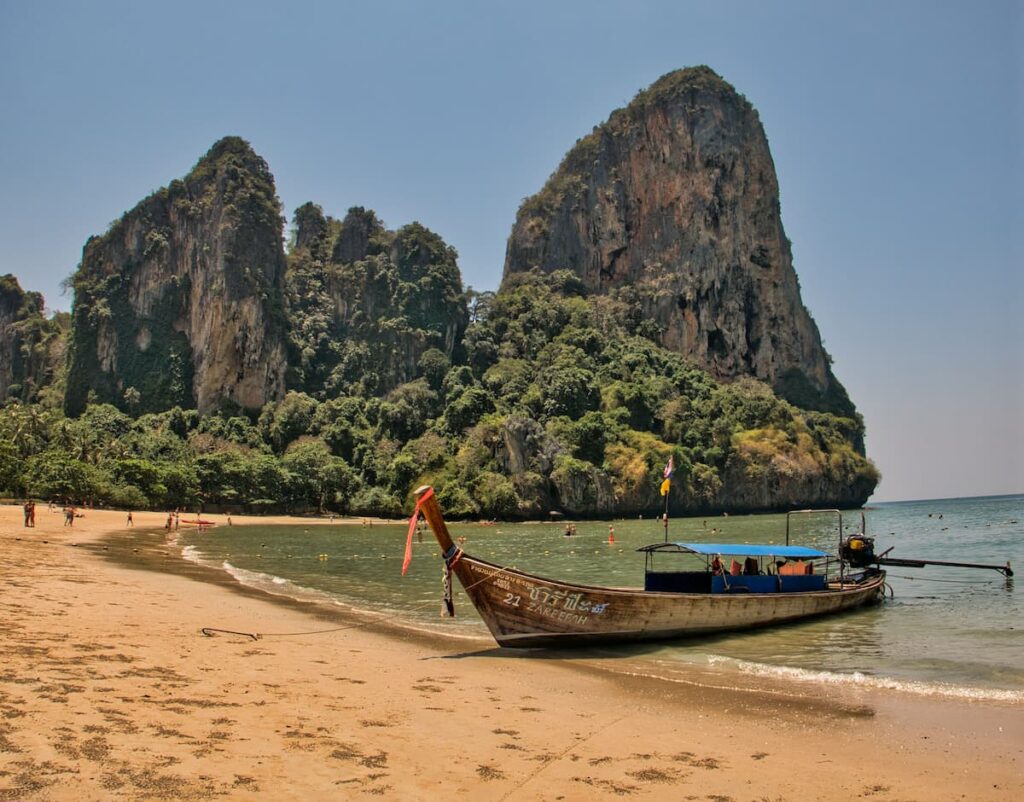
From Phi Phi, scheduled boats continue towards the Krabi coast. The most convenient general base is Ao Nang, which offers restaurants, accommodation and easy access to Railay and surrounding islands. Travellers wanting a more contained stay can choose Railay, while Krabi Town provides more local character and practical onward connections. Klong Muang and Tubkaek suit those seeking quieter resort surroundings.
The route works especially well when flights support a linear journey. Arriving through Phuket and departing from Krabi—or travelling in the opposite direction—avoids returning to the original airport. If flights require a round trip through Phuket, allow enough time for the final road or boat transfer and avoid relying on a ferry connection immediately before departure.
Although the scheduled crossings may take only a few hours, each transfer can occupy much of a morning or afternoon once hotel pickup, pier check-in, waiting and onward transport are included. Treat those periods as travel time rather than trying to add major sightseeing around them.
This combination succeeds because each stage feels different. Phuket offers choice and energy, Phi Phi creates the sense of staying on an island, and Krabi provides dramatic scenery with enough mainland convenience to end the holiday comfortably.
3. Krabi and Koh Lanta
Best for: Couples, families, independent exploration and travellers wanting fewer hotel changes
Recommended length: Seven to ten days
Suggested allocation: Three or four nights in the Krabi area and four or five nights on Koh Lanta
Krabi and Koh Lanta create the slowest and most straightforward of the four routes. Rather than moving through several famous islands, the combination uses two substantial bases that offer enough variety for a complete holiday.
Krabi provides the more active beginning. Ao Nang is the most convenient general base, with restaurants, accommodation and regular boats to Railay and nearby islands. Railay offers a more dramatic and contained coastal stay, while quieter areas such as Klong Muang and Tubkaek suit travellers who prefer resort surroundings away from Ao Nang’s busiest streets.
The province also extends well beyond its beaches. Krabi Town, Tiger Cave Temple, mangrove communities, hot springs and natural pools can add culture and inland exploration between coastal days. Choosing only the experiences that genuinely interest you is important because Krabi can easily fill an entire holiday on its own.
Koh Lanta then provides a slower island environment without requiring travellers to sacrifice every practical convenience. Long beaches, a paved coastal road, Lanta Old Town, mangroves and the national park create opportunities to explore, while the island remains developed enough to offer a broad range of accommodation and restaurants.
Reaching Koh Lanta is easier than many first-time visitors expect. Road transfers use a short car-ferry crossing to Koh Lanta Noi before continuing across the bridge to Koh Lanta Yai. Minivans and private transfers operate throughout the year, while additional passenger boats may operate during the high season.
Accommodation location matters because Koh Lanta Yai extends for more than 30 kilometres. The northern part of the island provides easier access to Saladan and a greater concentration of services. Travelling farther south generally brings quieter beaches and more dramatic surroundings, but increases the time and cost involved in getting around.
This route is especially appealing for travellers who prefer unpacking properly and exploring from two bases. You can take island excursions, visit Railay, drive through Koh Lanta or simply allow several beach days without feeling that the holiday is falling behind schedule.
The main seasonal limitation occurs during the Andaman monsoon. Koh Lanta remains accessible, but some smaller surrounding islands, marine attractions and boat services close or operate less frequently. Travellers visiting during the green season should choose Koh Lanta for its quiet atmosphere rather than expecting the complete high-season island-hopping network.
Krabi and Koh Lanta work well together because the first provides activity and easy excursions while the second encourages you to slow down. For many travellers, that transition creates a more satisfying holiday than adding a third or fourth island.
4. Koh Samui, Koh Phangan and Koh Tao
Best for: Gulf island hopping, diving, nightlife and travellers wanting three distinctly different island experiences
Recommended length: Ten to fourteen days
Suggested allocation: Four or five nights on Koh Samui, three nights on Koh Phangan and three or four nights on Koh Tao
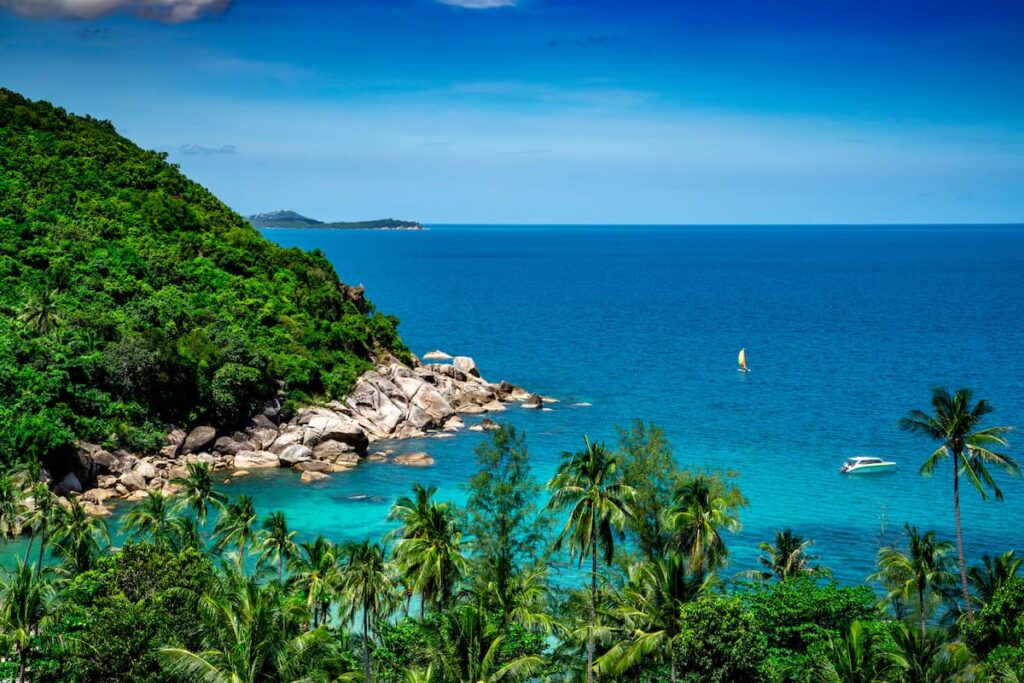
Koh Samui, Koh Phangan and Koh Tao form the most natural island-hopping route in the Gulf of Thailand. Regular ferries connect the three islands, but each offers a different experience and deserves more than a brief stop between boat journeys.
Koh Samui is the most convenient gateway. Its airport, extensive accommodation, restaurants, beach areas and developed tourism services make it the easiest place to begin. The island is large enough to offer lively visitor centres, quieter beaches, luxury resorts and local communities, so choosing the right area will strongly influence the holiday.
Koh Phangan is often associated almost entirely with the Full Moon Party, but that represents only one part of the island. Travellers can also find quieter beaches, wellness retreats, yoga, jungle landscapes and smaller communities. Three nights provide time to experience something beyond the arrival pier and the island’s most publicised event.
Koh Tao is the smallest of the three principal islands and requires the longest ferry journey. It is particularly well known for diving and snorkelling, but its bays, viewpoints and compact atmosphere can also appeal to non-divers. Allow at least three nights, especially if you plan to complete diving activities or need flexibility around sea conditions.
Travellers with only five to seven days should choose Koh Samui and one additional island. Attempting all three would create repeated hotel changes and leave little time between ferry journeys. Ten days is the practical minimum for the complete route, while twelve to fourteen days allow each island to feel distinct.
The most efficient journey may not require returning to the starting point. One option is to fly into Koh Samui, travel north through Koh Phangan and Koh Tao, and then continue by ferry to Chumphon for onward travel to Bangkok. Travellers with a return flight from Samui will need to reverse part of the route, so sufficient time should be allowed for the return crossing.
Never schedule an international flight immediately after an island ferry. Weather and sea conditions can delay or cancel services, particularly during the Gulf’s wetter and rougher periods. Returning to Samui or the mainland at least one day before an important flight provides a safer margin.
This route works because the islands are close enough to combine but different enough to justify moving. Samui provides convenience and choice, Phangan offers contrasting social and quieter experiences, and Tao rewards travellers interested in the sea and a smaller-island atmosphere.
How to Plan a Five-to-Seven-Day Southern Thailand Holiday
With less than a week available, choose one principal base and add no more than one easily connected destination. Southern Thailand rewards variety, but each ferry, road transfer and hotel change removes time that could otherwise be spent enjoying the coast.
Five Days
Use one destination as your only base.
Strong options include:
- Phuket for the greatest variety
- Krabi for limestone scenery and island excursions
- Khao Lak for a quieter resort holiday
- Koh Samui for a convenient Gulf island stay
- Koh Lanta for travellers wanting to slow down immediately
Five days pass quickly once arrival and departure are included. Day trips can provide additional scenery without requiring another hotel, but avoid filling every day with a long boat excursion.
Six Days
A sixth day creates enough space for one short extension, such as:
- Phuket with Khao Lak
- Phuket with a two-night Khao Sok experience
- Krabi with one night at Railay
- Krabi and Koh Lanta
- Koh Samui with Koh Phangan
Koh Phi Phi can also be added between Phuket and Krabi, but two nights are preferable. One night leaves relatively little time once both ferry transfers are considered.
Seven Days
A full week allows two destinations to work comfortably.
Balanced combinations include:
- Four nights in Phuket and three in Khao Lak
- Four nights in Phuket and two nights on Phi Phi, with the remaining time used for arrival and departure
- Three nights around Ao Nang and four on Koh Lanta
- Four nights on Koh Samui and three on Koh Phangan
- Four nights in Phuket and three around Khao Sok
I would not attempt Phuket, Phi Phi, Krabi and Koh Lanta within one week. Nor would I recommend all three Gulf islands. Both routes are technically possible, but the resulting holiday would be measured by departure times rather than experiences.
With five to seven days, the best decision is often to remain in one place longer and use carefully selected excursions to add variety. Leaving an island for a future journey is better than spending much of the current one moving between piers.
How to Plan an Eight-to-Ten-Day Southern Thailand Holiday
Eight to ten days provide enough time to combine two substantial destinations or follow one carefully designed three-stop route. This is where Southern Thailand begins to offer meaningful variety without every transfer feeling like a major sacrifice.
Eight Days
The strongest options include:
- Phuket and Khao Lak
- Phuket and Khao Sok
- Phuket, Koh Phi Phi and Krabi
- Krabi and Koh Lanta
- Koh Samui and Koh Phangan
- Koh Samui and Koh Tao
The Phuket–Phi Phi–Krabi route is possible in eight days if flights support a linear journey. Arriving through Phuket and departing from Krabi avoids using the final day to return across the region.
Nine Days
Nine days provide enough time to divide the holiday among three naturally connected bases.
A balanced first Andaman route could include:
- Four nights in Phuket
- Two nights on Koh Phi Phi
- Three nights in Krabi
For a beach-and-rainforest alternative:
- Four nights in Phuket
- Three nights in Khao Lak
- Two nights in Khao Sok
The second version provides only an introduction to Khao Sok. Add another night if you want both the national-park village and Cheow Lan Lake.
Ten Days
Ten days allow the strongest routes to work without compressing every destination.
Good combinations include:
- Phuket, Koh Phi Phi and Krabi
- Phuket, Khao Lak and Khao Sok
- Krabi and Koh Lanta at a slower pace
- Koh Samui and one additional Gulf island
- Koh Samui, Koh Phangan and Koh Tao at a relatively fast pace
Ten days is the practical minimum for all three Gulf islands. Even then, ferry schedules and the return journey need careful planning. Travellers primarily interested in diving should consider omitting one island and allowing more time on Koh Tao.
This is also enough time to include a deliberately quiet period. Three beach days in the same place are not wasted simply because another island could be reached. Repeated packing, ferry check-ins and hotel transfers often cost more enjoyment than the additional destination provides.
For most travellers, three bases are the upper limit within eight to ten days. Two will create the more relaxed holiday, while three can provide greater contrast when the route is linear and each destination serves a distinct purpose.
Ignore the stray code that appeared after the final paragraph of the previous section—it is not part of the article.
How to Plan an Eleven-to-Fourteen-Day Southern Thailand Holiday
Eleven to fourteen days allow you to explore one Southern Thailand route properly or combine two compatible routes without turning every second day into a transfer. The additional time is most valuable when it creates longer stays, weather flexibility and room for unexpected discoveries.
Eleven to Twelve Days
This is a comfortable length for any of the four principal combinations.
A varied first-time Andaman route could include:
- Four nights in Phuket
- Two nights on Koh Phi Phi
- Four nights in Krabi
- Remaining time for arrival, departure and transfers
For beaches and rainforest:
- Four nights in Phuket
- Three nights in Khao Lak
- Three nights in Khao Sok
- Remaining time for arrival and departure
The second route provides enough time to experience both the Khao Sok village area and Cheow Lan Lake, provided the internal transfer is planned carefully.
A slower alternative would divide the holiday between Krabi and Koh Lanta. Several nights in each location allow island excursions and inland exploration without requiring another accommodation change.
Thirteen to Fourteen Days
Two weeks allow a longer linear route, such as:
- Phuket
- Koh Phi Phi
- Krabi
- Koh Lanta
This works best when arriving through Phuket and departing through Krabi. Reversing the entire route to reach the original airport would reduce the value of adding Koh Lanta.
In the Gulf, two weeks provide the most comfortable version of:
- Koh Samui
- Koh Phangan
- Koh Tao
Travellers can return to Samui for a flight or continue from Koh Tao to Chumphon and travel onwards through the mainland. Either option should include enough time to absorb ferry delays.
Should You Combine the Andaman and Gulf Coasts?
A two-week holiday makes crossing the peninsula possible, but it does not automatically make it worthwhile. A route such as Krabi to Koh Samui involves road transport, waiting at the mainland pier, a ferry crossing and another transfer after reaching the island.
Combine the two coasts only when:
- A particular destination on each side is essential
- The seasonal weather supports both
- Your flights create a reasonably linear journey
- You accept losing most of a day to the transfer
- You are comfortable reducing the number of islands visited on each coast
For most travellers, two weeks spent exploring one coastline will produce a more complete holiday than dividing the time between both.
Use the Additional Days to Improve the Experience
Longer holidays benefit from leaving some time unallocated. An additional day can be used to:
- Adjust boat plans around sea conditions
- Extend a stay somewhere you particularly enjoy
- Take a locally recommended excursion
- Recover after several active days
- Explore beyond the principal beach area
- Spend an afternoon doing very little
Two weeks in Southern Thailand do not require two weeks of continuous island hopping. The advantage of having more time is not simply reaching more places—it is being able to enjoy them without constantly watching the next ferry schedule.
When to Take a Day Trip and When to Stay Overnight
Day trips can add variety without requiring another hotel change. They work particularly well when the destination is close to your existing base, the principal experience fits comfortably into one day and scheduled tours simplify transport.
An overnight stay becomes more valuable when travel consumes several hours, the destination changes after excursion groups leave or its attractions require more than one boat trip. Island accommodation also allows you to experience early mornings and evenings that day visitors never see.
| Destination | Day trip or overnight? | Why |
|---|---|---|
| Koh Phi Phi | Either | A day trip covers famous bays; two nights provide a full island day and time outside the busiest excursion hours |
| Railay | Either | Easy to visit from Ao Nang; staying overnight adds quieter mornings, evenings and a more contained beach experience |
| Khao Lak | Overnight | Best experienced as a coastal base rather than a long Phuket excursion |
| Khao Sok | Overnight | Road travel, jungle activities and Cheow Lan Lake justify at least two nights |
| Koh Lanta | Overnight | The island is too large and distant to experience properly during a rushed day trip |
| Koh Samui | Overnight | A substantial destination and the principal Gulf gateway |
| Koh Phangan | Either from Samui, but overnight preferred | A day trip offers an introduction; several nights reveal much more than the party areas |
| Koh Tao | Overnight | The longer ferry journey and diving or snorkelling opportunities justify at least three nights |
| Similan or Surin islands | Usually a day trip or liveaboard | Highly seasonal marine destinations without conventional resort stays inside the protected areas |
The choice also depends on what you want from the destination. Phi Phi can be visited efficiently during a day tour, but that does not mean a day trip is best for someone who wants an early boat, evening atmosphere or time to explore Phi Phi Don. Railay is easily reached from Ao Nang, yet staying overnight can make it feel like a separate destination rather than another stop during a crowded coastal day.
Conversely, moving hotels for one night can create more inconvenience than value. If you arrive during the afternoon and leave the following morning, much of the stay may be consumed by pier transfers and check-in procedures.
Before adding another overnight stop, ask what the stay will provide that an excursion cannot. If the answer is a different atmosphere, access to early or late experiences, or enough time to explore beyond one attraction, staying is probably worthwhile. If it simply adds another hotel beside a similar beach, retaining your existing base may create the better holiday.
Getting Between Southern Thailand’s Destinations
Southern Thailand combines airports, highways, ferries, speedboats and local transfers, but no single transport method works across every route. The right choice depends on the coastline, season, luggage and whether you value speed, flexibility or a more relaxed journey.
The most important distinction is between the advertised travel time and the complete hotel-to-hotel transfer. A ferry listed as taking two hours may require an earlier hotel pickup, pier check-in, waiting, boarding and another road transfer after arrival.
Domestic and Regional Flights
Phuket, Krabi and Koh Samui provide the most useful airports for the routes in this guide.
Phuket International Airport is the principal gateway for Phuket, Khao Lak and the northern Andaman coast. Krabi Airport works well for Ao Nang, Krabi Town and Koh Lanta, while Koh Samui Airport provides the easiest direct access to the Gulf islands.
Where possible, use different arrival and departure airports to create a linear journey. Flying into Phuket and departing from Krabi can simplify the Phuket–Phi Phi–Krabi route. Gulf travellers continuing from Koh Tao to Chumphon may be able to return to Bangkok without reversing the entire island sequence.
Ferries and Speedboats
Scheduled boats connect:
- Phuket, Koh Phi Phi and Krabi
- Krabi, Koh Lanta and seasonal Andaman destinations
- Koh Samui, Koh Phangan and Koh Tao
- Koh Tao and Chumphon
Conventional ferries are generally more spacious and may provide a steadier journey, while speedboats reduce crossing times but can feel considerably rougher in unsettled conditions.
Before booking, confirm:
- The exact departure and arrival piers
- Required check-in time
- Whether hotel transfers are included
- Luggage restrictions
- Seasonal operation
- Cancellation or rescheduling conditions
- The final connection from the arrival pier to your hotel
A ticket described as Phuket to Krabi may use piers some distance from the beach areas where most visitors stay.
Road Transfers
Road travel is particularly useful between:
- Phuket and Khao Lak
- Khao Lak and Khao Sok
- Phuket and Krabi
- Krabi Airport and Koh Lanta
- Surat Thani and the Gulf ferry piers
Private vehicles provide the greatest flexibility, while shared minivans offer a lower-cost alternative. Shared services may take longer because of multiple hotel pickups, passenger stops and luggage handling.
Koh Lanta can be reached by road using the short car-ferry crossing to Koh Lanta Noi and the bridge to Koh Lanta Yai. This connection operates beyond the principal passenger-boat season, making the island more accessible throughout the year than many visitors expect.
Combined Tickets
Combined bus, minivan and ferry tickets simplify journeys to the Gulf islands and between some Andaman destinations. They reduce the need to arrange each connection independently, but the complete journey may still occupy most of a day.
Check whether the ticket includes:
- Hotel pickup
- Road transport
- Ferry passage
- Pier transfers
- Final hotel delivery
A cheap fare may cover only the principal vehicle and leave several local transfers to arrange separately.
Local Transport After Arrival
Reaching an island does not mean reaching your hotel.
Koh Samui, Koh Phangan, Koh Tao, Koh Lanta and Phuket all have different local transport systems and pricing. Accommodation far from the arrival pier may require a prearranged hotel transfer, shared songthaew, taxi or rental vehicle.
Confirm the transfer before arriving late in the day, particularly when staying in quieter parts of Koh Lanta, Koh Phangan or Khao Sok.
Protect Important Connections
Never depend on a ferry arriving on schedule immediately before an international flight. Sea conditions, mechanical problems and timetable changes can all affect boat services.
Where practical, return to the airport island or mainland at least one day before an important departure. The final night may feel less adventurous, but it protects the entire journey home.
Choosing the Best Time to Visit Southern Thailand
Southern Thailand can be visited throughout the year, but the region does not follow one uniform weather pattern. The Andaman coast and Gulf of Thailand face different seas and experience their wettest periods at different times.
This matters because weather affects more than the appearance of the beach. Rough seas can alter ferry schedules, close marine attractions and make speedboat journeys uncomfortable or unsafe.
November to April: The Main Andaman Season
November to April generally provides the most reliable conditions for:
- Phuket
- Khao Lak
- Krabi
- Koh Phi Phi
- Koh Lanta
- Similan and Surin island excursions
December through March usually brings the greatest chance of calmer seas, sunnier days and access to the full island-hopping network. It is also the busiest and most expensive period, particularly around Christmas, New Year and Chinese New Year.
November and April act more like transition months. Conditions can be excellent, but lingering or early monsoon weather remains possible.
May to October: The Andaman Green Season
The Andaman monsoon brings heavier rain, rougher seas and fewer reliable boat services. Phuket, Krabi, Khao Lak and Koh Lanta remain open, but the experience changes.
Potential advantages include:
- Greener landscapes
- Lower accommodation prices
- Fewer visitors
- Quieter beaches
- Dramatic skies and sunsets
Limitations can include:
- Red swimming flags
- Cancelled boat trips
- Rough speedboat journeys
- Reduced ferry schedules
- Temporarily closed marine attractions
- Some seasonal businesses closing on quieter islands
Several smaller islands within marine national parks close during part of this period. Choose a developed base with enough land-based activities rather than planning the entire holiday around daily boat trips.
February to September: A Broad Gulf Travel Window
Koh Samui, Koh Phangan and Koh Tao often experience more favourable conditions during months when the Andaman coast is entering or already within its wetter season.
February and March are often particularly appealing, while the middle of the year can still provide good Gulf island conditions. Hot weather, tropical showers and occasional unsettled periods remain possible.
This makes the Gulf islands useful for travellers visiting Thailand during parts of the European or North American summer, although no month guarantees calm seas.
October to December: The Gulf’s Wetter Period
The Gulf islands commonly experience their heaviest and most disruptive rain later than the Andaman coast, particularly during October and November. Unsettled conditions can continue into December in some years.
Possible effects include:
- Heavy or prolonged rainfall
- Rough ferry crossings
- Delayed or cancelled services
- Localised flooding
- Reduced visibility for diving and snorkelling
- Disrupted onward connections
November can therefore provide improving conditions around Phuket and Krabi while Koh Samui and its neighbouring islands remain much wetter. This is one reason travellers should not apply Phuket’s seasonal advice to all of Southern Thailand.
Khao Sok and Inland Nature
Khao Sok receives substantial rainfall and remains green throughout much of the year. Wetter months can strengthen rivers and waterfalls, while drier periods may provide easier walking conditions.
Rainforest weather is inherently changeable. Travellers should expect humidity, showers, insects and muddy trails in any season. Some cave, river and walking activities may be altered when water levels or conditions become unsafe.
Choose the Coast Before Choosing the Month
If your dates are fixed, compare the likely conditions on both coastlines before selecting the route. If your destination is fixed, adjust expectations and choose experiences suited to that season.
Seasonal patterns provide useful guidance, but they are not guarantees. Leave flexibility around boat trips, follow local safety instructions and never enter the sea when red flags are displayed.
Common Southern Thailand Planning Mistakes
Most disappointing Southern Thailand itineraries are not caused by choosing the wrong island. They result from underestimating transfers, misunderstanding the seasons or repeating similar experiences without allowing enough time to enjoy any of them.
Assuming All of Southern Thailand Has the Same Weather
Phuket and Koh Samui sit on different coastlines and experience their wettest periods at different times. November can bring improving conditions to the Andaman coast while the Gulf islands remain much wetter.
Choose the coast around your travel dates rather than applying one general “Thailand rainy season” to the entire region.
Counting Only the Ferry Crossing
A two-hour boat journey can occupy half a day after hotel pickup, pier check-in, waiting, luggage handling and transport after arrival are included.
Treat each ferry day as a transfer period. Avoid placing an important excursion immediately before departure or after arrival.
Visiting Too Many Islands
Adding another island may appear to provide greater variety, but many routes simply repeat beaches, boat trips and similar coastal scenery.
Choose destinations that serve different purposes. A resort base, smaller island and rainforest stay will usually create more contrast than three islands offering broadly comparable experiences.
Treating Phi Phi Only as a Day Trip
A Phi Phi day tour can cover famous bays and viewpoints from the water, but it also arrives during the busiest part of the day. Two nights provide a full day on the island and allow greater flexibility around boat times and conditions.
A day trip is not wrong—it is simply a different experience from staying.
Underestimating Khao Sok
Khao Sok village and Cheow Lan Lake are separate visitor areas. Attempting the jungle, lake, caves and river activities within a single rushed visit creates more transfer time than nature time.
Allow at least two nights and preferably three if both the village and lake matter to you.
Assuming Every Island Operates Normally Throughout the Year
Koh Lanta remains accessible during the green season, but some surrounding islands, marine attractions, ferries and businesses reduce or suspend operations. Similar seasonal changes affect other Andaman destinations.
Confirm that the particular experience motivating your visit will operate during your dates.
Choosing Accommodation Without Checking the Location
Phuket, Koh Samui, Koh Phangan and Koh Lanta are substantial islands. A hotel described as being on the island may still be a long drive from restaurants, the principal beach or arrival pier.
Research the area rather than choosing accommodation solely by property photographs or price.
Connecting a Ferry Directly to a Flight
Boat services can be delayed or cancelled by sea conditions. Even a modest disruption can cause a missed flight when no buffer exists.
Return to the airport island or mainland at least one day before an important international departure whenever practical.
Crossing Between Coasts Without Allowing a Full Day
Krabi and Koh Samui may look reasonably close on a map, but travelling between them involves road transport, waiting at a mainland pier, a ferry and another island transfer.
Treat the crossing as a full travel day and include it only when experiencing both coastlines is worth the time lost.
Planning Every Day Around a Boat Tour
Island excursions can become repetitive and are vulnerable to weather. Balance them with beach time, local food, viewpoints, inland attractions and unallocated periods.
A Southern Thailand holiday should contain enough space to enjoy being beside the sea—not only scheduled departures across it.
Frequently Asked Questions
How many days do you need in Southern Thailand?
Five to seven days are enough for one principal destination and an easy extension. Allow eight to ten days for a route such as Phuket, Koh Phi Phi and Krabi. Eleven to fourteen days provide enough time for a longer Andaman route or Koh Samui, Koh Phangan and Koh Tao.
Which Southern Thailand route is best for a first visit?
Phuket, Koh Phi Phi and Krabi provide the strongest first-time combination. The route includes established accommodation, famous Andaman scenery, island life and convenient airport access at either end.
Is the Andaman coast or Gulf of Thailand better?
The answer depends on your travel dates and interests. The Andaman coast is strongest for Phuket, Krabi, Phi Phi, Khao Lak and limestone scenery. The Gulf route suits travellers interested in Koh Samui, Koh Phangan, Koh Tao and diving. Their wettest seasons occur at different times.
Can you combine Phuket and Koh Samui?
Yes, but the journey crosses the peninsula and normally requires a flight or a long road-and-ferry connection. It is rarely worthwhile during a short holiday. Allow at least two weeks and treat the transfer as a substantial part of one day.
Is Koh Phi Phi better as a day trip or overnight stay?
A day trip works if you want to see several famous bays without changing hotels. Stay for two nights if you want a full island day, greater flexibility, evenings on Phi Phi Don and opportunities to explore outside the busiest excursion period.
How long should you stay in Khao Sok?
Allow at least two nights for an introduction. Three nights are better if you want to combine the national-park village and jungle activities with Cheow Lan Lake.
Can you visit Koh Lanta during the rainy season?
Koh Lanta remains accessible by road and car ferry, but the experience becomes quieter. Some surrounding islands, marine attractions, passenger boats and seasonal businesses close or operate less frequently from approximately May through October.
Do you need a car in Southern Thailand?
No. Airports, shared minivans, ferries and combined tickets connect the principal destinations. A car becomes particularly useful for Phuket, Khao Lak, Khao Sok, Phang Nga, Krabi’s mainland attractions and Koh Lanta.
What is the best time to visit Southern Thailand?
November to April generally offers the most reliable Andaman conditions. The Gulf islands often provide better options from approximately February through September, while October and November are commonly wetter around Samui, Phangan and Tao.
Should you return to the mainland before flying home?
If your journey depends on a ferry, return to the airport island or mainland at least one day before an important international flight. Weather, sea conditions and mechanical problems can delay or cancel boat services.
Continue Exploring
Southern Thailand Travel Guide
Explore Phuket, Krabi, Koh Samui, Khao Lak and the wider southern region through practical destination advice, cultural insights and carefully selected travel experiences.
Plan the wider journey through Thailand’s different regions, compare destinations and find the guides that best match the kind of holiday you want to create.
Related Southern Thailand Reading
Where to Go in Southern Thailand
Compare Phuket, Krabi, Koh Samui, Khao Lak and other destinations to decide which parts of Southern Thailand best suit your interests and available time.
Must-See Attractions in Southern Thailand
Discover tropical islands, limestone landscapes, cultural landmarks and remarkable natural attractions across Thailand’s southern provinces.
Best Beaches in Southern Thailand
Explore celebrated beaches and quieter coastal escapes across the Andaman Sea and Gulf of Thailand.
Best Islands in Southern Thailand
Compare established holiday destinations and smaller tropical islands offering beaches, snorkelling, nature and peaceful surroundings.
Best National Parks in Southern Thailand
Discover rainforest, marine environments, limestone landscapes and protected natural areas offering distinctly different outdoor experiences.
Quick Summary: Planning Your Southern Thailand Holiday
Southern Thailand is best explored by choosing one coastline and following a natural route rather than trying to collect as many islands as possible. The Andaman Sea and Gulf of Thailand have different transport networks and seasonal weather patterns, making your travel dates an important part of choosing where to go.
| Time available | Recommended approach |
|---|---|
| 5–7 days | Choose one main destination and one easy addition |
| 8–10 days | Combine two or three destinations along one natural route |
| 11–14 days | Explore one coast properly or combine two compatible routes |
| Best first-time route | Phuket, Koh Phi Phi and Krabi |
| Best for beaches and rainforest | Phuket, Khao Lak and Khao Sok |
| Best for a slower holiday | Krabi and Koh Lanta |
| Best Gulf island route | Koh Samui, Koh Phangan and Koh Tao |
The Andaman coast—including Phuket, Khao Lak, Krabi, Phi Phi and Koh Lanta—generally offers its most reliable beach and boating conditions from approximately November to April. The Gulf islands often provide better options from February through September, while October and November can bring heavier rain and rougher seas around Samui, Phangan and Tao.
Allow at least two nights on Koh Phi Phi if you want more than a day tour, two or preferably three nights around Khao Sok, four or five nights on Koh Lanta and at least ten days for all three principal Gulf islands.
Treat ferry days as genuine transfer periods. Hotel pickups, pier check-in, waiting, luggage handling and transport after arrival can turn a short crossing into most of a morning or afternoon. Never rely on a ferry arriving immediately before an important international flight.
Above all, choose destinations that add different experiences. An established resort, smaller island and rainforest stay will usually create a more rewarding Southern Thailand holiday than moving repeatedly between similar beaches.
About the Author
David Hibbins is a travel publisher, destination researcher and the creator of Travel With Insight.
Through years of travel, tourism and publishing projects across Southeast Asia, he has developed a particular interest in how travellers research destinations, compare experiences and make travel decisions.
His work focuses on helping travellers move beyond popularity rankings, marketing claims and generic “best of” lists by providing balanced, research-driven destination guides. Rather than telling people where they should travel, his goal is to help readers understand the strengths, limitations and unique character of each destination so they can choose the places that best match their own interests, travel style and goals.
As the creator of Travel With Insight, David researches destinations throughout Southeast Asia, exploring not only where travellers go, but why they choose certain places, how destinations differ and what creates genuinely memorable travel experiences.
His work covers destination research, regional travel planning, traveller behaviour and the decision-making frameworks that help people plan more rewarding journeys.
Explore More Travel Resources
Every great journey begins with informed decisions. The more you understand a destination before you arrive, the more rewarding your travel experience becomes.
Whether you’re still researching Southern Thailand or you’re ready to start planning your itinerary, these additional resources can help.
Travel With Insight
Continue exploring our in-depth destination guides, travel inspiration and practical planning advice designed to help you make informed travel decisions throughout Thailand and Southeast Asia.
Go Find Asia
Looking for even more travel inspiration? Go Find Asia explores destinations, experiences and travel ideas across Asia, helping you discover where to go, what to see and how to plan your next adventure.
Resurgence Travel
When you’re ready to turn your research into reality, Resurgence Travel offers curated itineraries, personalised travel planning and local expertise to help you experience the very best of Thailand and Southeast Asia.



One Comment
Comments are closed.