Making the Most of Your Central Thailand Holiday
You have been working hard, getting on with everyday life and finally decided it is time for a proper holiday. Thailand sounds exciting, different and perhaps exactly what you need. But once you have made that decision, a more difficult question soon follows: how do you turn the time available into the holiday you are hoping for?
I travelled around Southeast Asia for many years before eventually deciding to base myself here more permanently, and Thailand accounted for much of my own holiday time. Over those years, I made mistakes, discovered destinations that worked wonderfully together and occasionally tried to fit far too much into a single trip. Each journey taught me something about how greatly a holiday can be shaped by the route, pace and decisions made before it begins.
I have developed this series of guides to share those lessons and help you make better use of your own time. The aim is not to persuade you to visit everywhere or give you an exhausting itinerary filled with as many attractions as possible. It is to help you choose experiences that work naturally together, spend enough time enjoying them and avoid losing too much of your holiday to unnecessary transfers and rushed sightseeing.
Having visited Bangkok many times and travelled through Central Thailand in different ways, I have put together four realistic approaches to exploring the region. These combine the energy of Bangkok with ancient cities, riverside communities, wartime history, national parks and the upper Gulf coast, but each creates a distinctly different kind of Central Thailand holiday.
You do not need to follow any of these routes exactly. Think of them as practical starting points that will help you understand what fits comfortably into the time available, what deserves an overnight stay and when a destination that appears close on a map may be less convenient to reach than expected. Making the most of your Central Thailand holiday is not about covering the greatest possible distance. It is about choosing the experiences that matter to you and giving yourself enough time to enjoy them.
Quick Summary: Planning Your Central Thailand Holiday
Central Thailand is best explored by combining Bangkok with one carefully chosen route rather than attempting to connect every worthwhile destination. Most transport services extend outwards from the capital, so places that appear close on a map may still require indirect journeys or a return through Bangkok.
| Time available | Recommended approach |
|---|---|
| 5–7 days | Bangkok with an Ayutthaya day trip or overnight stay |
| 8–10 days | Bangkok with Ayutthaya and Kanchanaburi, the western markets and Kanchanaburi, or Phetchaburi and Hua Hin |
| 11–14 days | Combine two regional branches or explore one route more slowly |
| Best first-time route | Bangkok, Ayutthaya and Kanchanaburi |
| Best shorter route | Bangkok and Ayutthaya |
| Best for local markets and rivers | Maeklong, Amphawa and Kanchanaburi |
| Best for a coastal finish | Bangkok, Phetchaburi and Hua Hin or Pranburi |
Allow at least three full days for Bangkok and avoid changing hotels simply to add another name to the itinerary. Ayutthaya works as either a day trip or overnight stay, while Kanchanaburi deserves at least two nights and preferably three if you want to combine its wartime history with national parks or waterfalls.
November to February generally provides the most comfortable sightseeing conditions. The hotter and rainier months can still be rewarding, but require a slower pace, flexible plans and additional care around exposed ruins, waterfalls, caves and national parks.
Above all, judge the holiday by the quality of the experiences rather than the number of destinations visited. Leaving enough time for coffee, conversation, an unexpected stop or a quiet afternoon is often what turns a well-planned route into a genuinely enjoyable holiday.
Why Central Thailand Works So Well as a Combined Holiday
Central Thailand brings together several very different sides of the country within a relatively compact region. Bangkok provides the international gateway, major cultural landmarks, neighbourhoods, restaurants, shopping and nightlife. Travel beyond the capital and the experience changes quickly, with ancient cities, riverside communities, historic railway routes, forested national parks and established coastal towns all offering reasons to extend your journey.
The region’s greatest advantage is that you can create a varied holiday without taking additional domestic flights. Ayutthaya can add ancient temples and royal history, Kanchanaburi combines important wartime sites with rivers and waterfalls, while Phetchaburi and the upper Gulf coast provide palaces, traditional food, beaches and a slower pace. Each can offer a meaningful contrast to Bangkok without requiring you to cross the entire country.
This does not mean every destination should be included in one trip. Central Thailand’s main transport routes extend outwards from Bangkok, while connections between provincial destinations can be less convenient. Places that look reasonably close on a map may involve indirect public transport, limited departure times or a return through the capital.
The most rewarding approach is usually to combine Bangkok with one carefully chosen part of the wider region. Travellers with more time can add a second, but the experiences should complement one another rather than simply increase the number of places visited. A few days exploring Bangkok followed by ancient history, western rivers and forests, or a quieter stay beside the Gulf will usually produce a better-balanced holiday than attempting to include everything.
Think in Routes Rather Than a Checklist of Destinations
When planning a Central Thailand holiday, it is tempting to create a list of appealing places and then try to connect them in the order they appear on a map. Bangkok, Ayutthaya, Kanchanaburi, Phetchaburi and Hua Hin may all seem close enough to include, but travelling between them is not always as direct as the distances suggest.
Most of the region’s convenient train, bus and minivan services extend outwards from Bangkok. Ayutthaya lies to the north, Kanchanaburi and the market towns sit to the west, while Phetchaburi and Hua Hin are reached by travelling southwest. Transport within each direction can be relatively straightforward, but moving across from one branch to another may require limited services, private transfers or a return through Bangkok.
It is more useful to think of Central Thailand as several possible routes:
- The northern route: Bangkok and Ayutthaya for city life, temples and ancient history.
- The western route: Bangkok, the market communities and Kanchanaburi for rivers, railway history and nature.
- The southwestern route: Bangkok, Phetchaburi and the upper Gulf coast for palaces, traditional towns and coastal relaxation.
This does not make combining routes impossible. Bangkok, Ayutthaya and Kanchanaburi can create an excellent first Central Thailand holiday, while a longer visit may continue towards Phetchaburi or Hua Hin. The important point is to recognise when a transfer will consume much of a day and decide whether the additional destination contributes enough to justify it.
Starting with the experience you most want will usually make the decision easier. Choose Ayutthaya if ancient history is essential, Kanchanaburi for a combination of wartime history and nature, or the upper Gulf coast if you want to finish with a few slower days. The route should support the kind of holiday you want rather than becoming a challenge to cover every place on your original list.
A Travel With Insight Lesson
I once decided to drive from central Bangkok to Hua Hin for a short getaway. Google Maps estimated the journey at around two and a half hours, which seemed perfectly reasonable for a drive of approximately 200 kilometres. I even thought I could stop at a couple of places along the way and make the journey part of the day.
The reality was very different. Traffic was so intense that my easy two-and-a-half-hour drive became more than five hours in hectic conditions. By the time I arrived, most of the day had disappeared and I had little interest in doing anything beyond checking into the hotel and recovering from the journey.
It taught me never to judge travel time in Thailand by distance alone. Bangkok traffic, roadworks, congestion around provincial towns and busy holiday periods can all transform a seemingly straightforward transfer. Allow additional time, avoid planning important activities immediately after a long journey and treat map estimates as a starting point rather than a promise.
How Many Places Should You Include?
The number of destinations that fit into a Central Thailand holiday depends less on the total number of days than on how frequently you are prepared to change hotels. Two travellers with ten days available can create very different experiences: one may spend meaningful time in three places, while the other loses several mornings packing, checking out, travelling and waiting to check in again.
As a general guide, allow at least three full days for Bangkok on a first visit. This provides enough time to experience some of its major landmarks, neighbourhoods, food and evening atmosphere without treating the city as a brief arrival point. Four or five nights will feel considerably more comfortable, particularly after a long international flight.
Five to Seven Days
Choose Bangkok and one accessible addition.
The most natural option is Ayutthaya, either as a full-day excursion or an overnight stay. You could instead spend the entire holiday in Bangkok and use one or two days for nearby experiences. There is not enough time to add Ayutthaya, Kanchanaburi and the coast without making transfers a dominant part of the trip.
Eight to Ten Days
Combine Bangkok with one substantial regional route.
This could mean:
- Bangkok, Ayutthaya and Kanchanaburi
- Bangkok, the western market communities and Kanchanaburi
- Bangkok, Phetchaburi and Hua Hin
This length allows two or three contrasting bases, although careful choices are still necessary. Kanchanaburi Province alone can justify several days if you want to see its museums, travel on the Death Railway and visit one of its national parks.
Eleven to Fourteen Days
A longer holiday allows you to combine two branches of Central Thailand or explore one route at a more relaxed pace.
You might visit Bangkok, stay overnight in Ayutthaya, spend several nights in Kanchanaburi and then return through Bangkok before travelling towards Hua Hin. Alternatively, you could avoid the additional transfer and use the extra time for river accommodation, nature, local communities or several quiet days beside the Gulf.
Even with two weeks available, I would avoid filling every night with a different destination. Travel days are part of the holiday, and each additional hotel change carries a hidden cost in packing, waiting and adjusting to a new location. In most cases, three or four well-chosen bases will provide more variety than you need while still leaving enough time to enjoy them.
A Travel With Insight Perspective
Bangkok is a beautiful, busy and sometimes overwhelming city, filled with people, traffic and an extraordinary number of places to explore. With a well-located base, you could easily fill several weeks—or considerably longer—with different neighbourhoods, cultural sites, food experiences and short half-day or full-day excursions.
In this guide, I am assuming that you want to experience Central Thailand as a broader region rather than use Bangkok as your only base. That does not mean you need to leave the capital quickly or that a Bangkok-focused holiday would be any less rewarding. Our Bangkok Travel Guide explores many of the worthwhile experiences available within and around the city.
The destinations included here are also starting points rather than complete accounts of everything they offer. I could spend considerably longer exploring Ayutthaya, Kanchanaburi, Phetchaburi and the upper Gulf coast individually. The purpose of these routes is to help you decide which places work well together, while the relevant destination guides can help you explore each one more deeply.
Four Ways to Combine Central Thailand
There is no single route that represents the perfect Central Thailand holiday. The right combination depends on whether you are most interested in ancient history, local communities, nature, wartime heritage or a few slower days beside the coast.
The following four approaches are not rigid itineraries. Each provides a realistic framework that can be shortened, extended or adapted around your interests. More importantly, each limits unnecessary travel and combines places that contribute something different to the overall experience.
1. Bangkok and Ayutthaya
Best for: First-time visitors, shorter holidays, ancient history and travellers who prefer fewer hotel changes
Recommended length: Five to seven days
Suggested allocation: Four or five nights in Bangkok, with an Ayutthaya day trip or one overnight stay
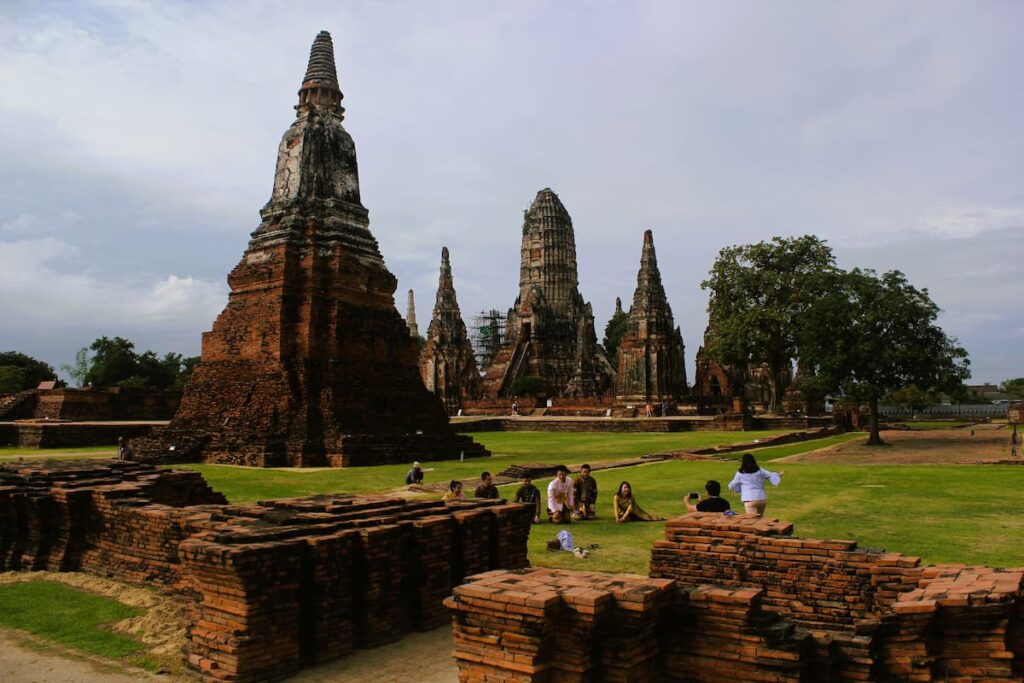
Bangkok and Ayutthaya provide the easiest introduction to Central Thailand. The combination brings together the modern capital with the remains of an earlier one, allowing you to experience royal landmarks, living neighbourhoods, markets and contemporary city life before exploring the temples and archaeological sites of the former Ayutthaya Kingdom.
Ayutthaya lies approximately 86 kilometres north of Bangkok and is accessible by train, road and organised tour. This makes it a realistic full-day excursion for travellers with limited time. You can visit several of the principal ruins, stop for lunch and return to Bangkok without changing accommodation.
The danger is trying to include every major temple, museum, palace and river experience in a single day. Three or four well-chosen historical sites will usually provide a more rewarding introduction than rushing through a longer list. Bang Pa-in Royal Palace can also be included, but it should replace part of the historical-park programme rather than simply being added to an already crowded schedule.
Staying overnight changes the experience. Once many day visitors have left, you can enjoy the river, see the ruins in softer evening light and begin exploring again before the following day becomes hot. An overnight stay also creates space for a museum, boat trip or several less-visited temples without forcing everything into a few hours.
Choose the day trip if you have limited time, want to keep one convenient hotel base or are mainly interested in seeing Ayutthaya’s best-known ruins. Stay for one night if history and photography are important to you, or if you simply prefer giving a significant destination more time than a hurried excursion allows.
A Travel With Insight Experience
I took a road trip to Ayutthaya two years ago and decided to stay rather than treat it as a hurried day trip. When I am driving, I tend to stop whenever I notice something interesting along the way. This is a wonderful way to discover unexpected places, although it rarely does anything helpful for my planned arrival time. On this occasion, however, I drove directly to Ayutthaya and arrived during the late afternoon.
Because exploring the ruins was the main purpose of the visit, I chose a hotel virtually across the road from the historical park. After checking in, I resisted the temptation to begin sightseeing immediately and simply relaxed after the drive. The following morning, I woke reasonably early and went for a walk. The park was not yet open, but I was not ready to begin sightseeing either. I could enjoy the quiet surroundings, take some photographs and stop at a slow and easy coffee shop before returning to my room for a shower.
When I was ready, I only had to cross the road to begin exploring the ruins. I am not a historian, but Ayutthaya represents a significant part of Thailand’s story and I wanted to include it properly. Spending several unhurried hours there felt like the right decision. Afterwards, I had time to explore more of the town rather than immediately beginning the journey back to Bangkok.
Later that day, I found a restaurant offering dinner together with a boat trip past some of Ayutthaya’s riverside ruins. A private boat cost only a little more, so my friend and I chose that option. The waterways were beautiful, and the trip included a sunset stop at the ruins—an experience that felt quite different from visiting them during the day. We returned to the restaurant, enjoyed a delicious meal and sat talking before heading back to the hotel.
Staying close to the historical park did not help me see the greatest possible number of attractions. It gave me something more valuable: time to walk, stop for coffee, explore the ruins properly, experience the river at sunset and begin the following morning without feeling exhausted. For me, that was the right way to experience Ayutthaya.
2. Bangkok, Ayutthaya and Kanchanaburi
Best for: First-time visitors wanting city life, ancient history, wartime heritage and nature
Recommended length: Eight to eleven days
Suggested allocation: Four or five nights in Bangkok, one night in Ayutthaya and two or three nights in Kanchanaburi
This is the strongest all-round route for travellers who want to experience several different sides of Central Thailand. Bangkok introduces the country through its neighbourhoods, temples, food and contemporary city life. Ayutthaya provides the remains of an earlier capital, while Kanchanaburi combines important Second World War history with rivers, forests, waterfalls and scenic railway journeys.
The combination looks simple on a map, but Ayutthaya and Kanchanaburi sit on different transport branches from Bangkok. Limited direct transfers may be available, particularly through private operators, but they do not offer the same frequency or flexibility as services connecting each destination with the capital. Check the available connection before finalising the order of your journey. Returning through Bangkok may sometimes be the easiest public-transport option, while a private transfer provides the most straightforward direct journey.
The larger planning mistake is underestimating Kanchanaburi itself. Visiting the bridge, cemetery and a museum in Kanchanaburi town is quite different from exploring the wider province. Erawan National Park lies well beyond the town, while the Death Railway, Sai Yok and Hellfire Pass extend farther west. These experiences cannot all be enjoyed properly during one rushed excursion.
Two nights in Kanchanaburi allow enough time to explore the town and choose one major experience, such as Erawan Waterfall or the Death Railway and Hellfire Pass. Three nights are preferable if you want to include both history and nature without spending each day moving quickly between distant attractions.
Where you stay will also influence the holiday. Kanchanaburi town is the most convenient base for museums, restaurants and independent transport. Accommodation near the River Kwai bridge provides a balance of atmosphere and accessibility, while properties farther upriver towards Sai Yok are better suited to travellers seeking raft houses, forest scenery and a slower riverside stay.
This route works particularly well because each destination has a clear purpose. Bangkok supplies the energy, Ayutthaya adds ancient history and Kanchanaburi opens the journey into western Thailand. Give each enough time and the result is a varied holiday; rush through them and much of that variety will be experienced through a vehicle window.
3. Bangkok, the Western Markets and Kanchanaburi
Best for: Local communities, markets, rivers, railway experiences and travellers looking beyond the most familiar route
Recommended length: Eight to eleven days
Suggested allocation: Four or five nights in Bangkok, an optional night in Amphawa and two or three nights in Kanchanaburi
This route travels west from Bangkok through the river and market communities of Samut Songkhram before continuing towards Kanchanaburi. It offers a more locally focused alternative to Ayutthaya, combining working markets, canals and smaller towns with the wartime history and natural landscapes of western Thailand.
Maeklong Railway Market is the easiest place to begin. The market operates daily around an active railway line, with vendors drawing back their awnings and moving produce as trains pass through. The train is the famous moment, but the market is more interesting when you allow time to observe its everyday activity rather than arriving only for a photograph and immediately leaving.
Nearby Amphawa creates a different experience. Its floating market develops beside the canal later in the day, making it a natural continuation after visiting Maeklong in the morning. However, Amphawa currently operates primarily from Friday to Sunday. The route should therefore be planned around the weekend rather than assuming the market will be active every day.
You can visit Maeklong and Amphawa during a long excursion from Bangkok, stay overnight beside the canal or incorporate them into the journey towards Kanchanaburi. An overnight stay provides time to enjoy the evening atmosphere and surrounding waterways without facing a late return to Bangkok. Continuing directly may be preferable if you want to reduce hotel changes and have arranged private transport.
Public transport can reach the individual towns, but completing the full route with luggage is less straightforward than travelling directly from Bangkok to Kanchanaburi. A car, driver or prearranged transfer makes it easier to stop along the way and continue without repeatedly returning to the capital.
I would also resist trying to include Maeklong, Amphawa and Damnoen Saduak simply because all three markets appear within the same general area. They offer different experiences, but forcing them into one day risks turning the journey into a race between similar attractions. Maeklong and Amphawa already provide a balanced combination of a working morning market and a later canal-side experience.
Once you reach Kanchanaburi, allow another two or three nights for its museums, railway history, rivers and national parks. The markets should introduce the western route rather than consume it. The real strength of this combination is watching the landscape and pace gradually change as you leave Bangkok and travel deeper into Central Thailand.
A Travel With Insight Experience
Having visited Maeklong Railway Market a couple of times, I think it is well worth seeing once. The defining experience is, of course, watching the train move slowly through the marketplace while vendors pull back their awnings and clear goods from beside the tracks.
For me, the surrounding market did not require a great deal of time. Many Thai markets sell a broadly similar range of produce and everyday goods, so I walked through the visible market areas, stopped for a smoothie, took the requisite photograph and then continued to my next destination.
My arrival happened to coincide reasonably well with the train, and I found parking in nearby temple grounds, so the entire visit was easy and did not consume much of the day. If your arrival does not align with a train movement, there are restaurants nearby where you can have a proper meal, or you can pick up some street food while you wait.
I would plan the visit around a confirmed train time rather than allocate an entire day to the market itself. Arrive early enough to explore, find a comfortable viewing position and enjoy something to eat or drink. The train passing through is unusual enough to justify the stop, but the experience does not need to be stretched unnecessarily once you have seen it.
4. Bangkok, Phetchaburi and the Upper Gulf Coast
Best for: Royal history, traditional towns, local food and a relaxed coastal finish
Recommended length: Nine to twelve days
Suggested allocation: Four or five nights in Bangkok, one night in Phetchaburi and three or four nights around Hua Hin or Pranburi
This southwestern route replaces the forests and wartime history of Kanchanaburi with palaces, temples, caves and several slower days beside the Gulf of Thailand. It works particularly well for travellers who want to begin with the energy of Bangkok and finish their holiday somewhere that requires fewer daily decisions.
Phetchaburi is the cultural link between the capital and the coast. Known as the city of three palaces, it combines royal history with important temples, traditional neighbourhoods, caves and a strong local food identity. Phra Nakhon Khiri occupies three hilltops above the town, while Tham Khao Luang and the historic temples provide reasons to look beyond Phetchaburi as simply another station on the journey south.
One night is enough to gain a meaningful introduction without making the route unnecessarily complicated. It allows you to explore during the cooler parts of two days, try some of the town’s food and continue towards the coast without forcing several attractions into a hurried roadside stop. Travellers who prefer maintaining fewer hotel bases can instead visit Phetchaburi during a day trip from Hua Hin.
Hua Hin is the most convenient coastal base. It offers a broad choice of accommodation, restaurants, markets and transport while remaining close enough to Phetchaburi, Pranburi and other regional attractions for selected excursions. Its beach is suitable for walking, relaxing and taking a break from sightseeing, but it should not be approached as a substitute for the tropical islands or dramatic beaches of Southern Thailand.
Pranburi is the quieter alternative. It suits travellers who prefer a resort stay, peaceful coastal surroundings and easier access to Khao Sam Roi Yot National Park. You could base yourself entirely in Hua Hin, choose Pranburi instead or divide several coastal nights between them if the slower change of setting justifies moving hotels.
Phraya Nakhon Cave is one of the region’s most memorable natural attractions, but reaching it requires more effort than photographs sometimes suggest. Visitors must reach Laem Sala Beach by boat or by crossing the coastal headland and then climb a steep, uneven trail to the cave. Heat, humidity, footwear, fitness and sea conditions can all affect the experience. It deserves most of a day and is better approached from Hua Hin, Pranburi or Sam Roi Yot than attempted as a rushed excursion from Bangkok.
Kaeng Krachan can also be added by travellers with a strong interest in forests and wildlife, but it should be treated as a separate extension rather than another casual day trip. Trying to include Phetchaburi, Hua Hin, Pranburi, Sam Roi Yot and Kaeng Krachan would turn what should be the most relaxing route into the busiest.
The strength of this combination comes from its change of pace. Bangkok provides intensity and variety, Phetchaburi adds history and local character, and the upper Gulf coast creates space to slow down before the holiday ends.
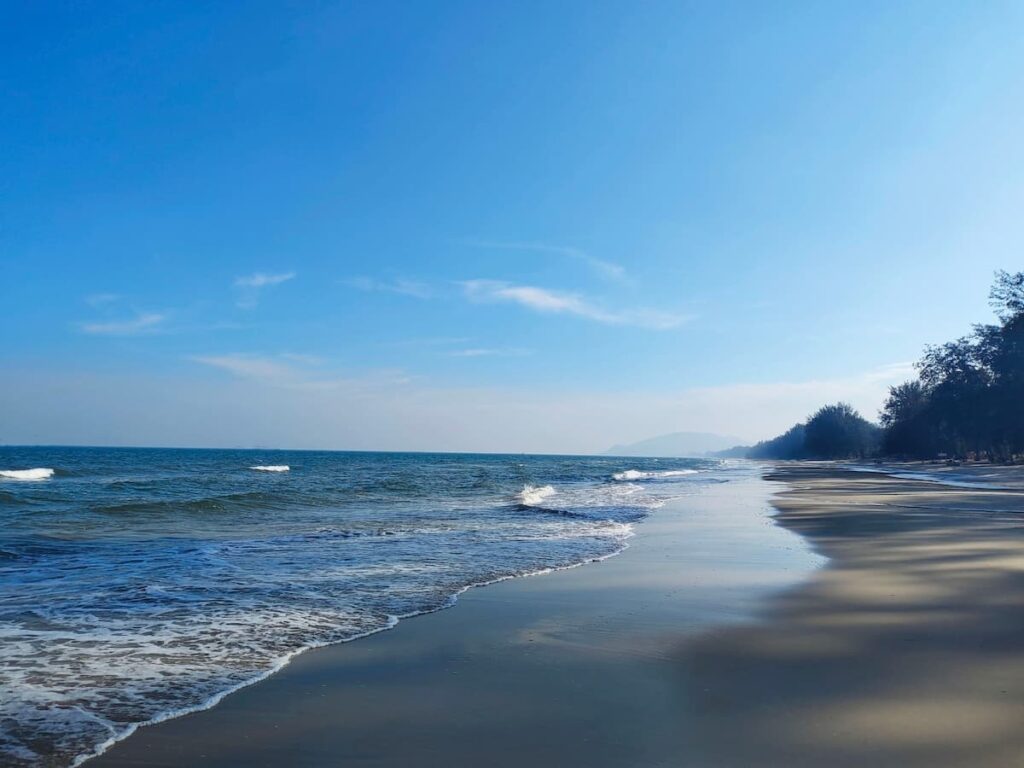
How to Plan a Five-to-Seven-Day Central Thailand Holiday
With less than a week available, Bangkok should remain the principal base. This is enough time to experience the capital and add one carefully chosen excursion, but not enough to travel through several provinces without sacrificing much of the holiday to packing and transfers.
Five Days
Use Bangkok as your only base and allow:
- Three full days for different parts of Bangkok
- One day for Ayutthaya or another priority excursion
- Arrival and departure time without ambitious sightseeing plans
Five days pass quickly, particularly after an international flight. An Ayutthaya day trip provides the clearest contrast to Bangkok without requiring another hotel, but it is also reasonable to spend the entire visit exploring the capital.
Six Days
The additional day creates greater flexibility. You could:
- Spend four days exploring Bangkok and take one Ayutthaya day trip
- Stay one night in Ayutthaya
- Keep Bangkok as your base and include two contrasting excursions
- Leave one deliberately slower day for food, shopping, a river trip or revisiting an area you enjoyed
If you stay overnight in Ayutthaya, travel there after several days in Bangkok and return to the capital before departure. Avoid arranging the return journey on the same day as an international flight unless you have allowed a very generous margin.
Seven Days
A full week allows Bangkok and Ayutthaya to be combined comfortably. A balanced approach would include:
- Four or five nights in Bangkok
- One night in Ayutthaya
- Enough flexibility for arrival, departure and slower periods
Kanchanaburi could replace Ayutthaya, but it should not be added alongside it unless you are comfortable with a much faster holiday. Two nights in Kanchanaburi would allow time for the town and one principal experience, although travelling there and back would consume a larger share of the week.
The most important decision is not which attraction to add on the final available day. It is whether that addition improves the holiday enough to justify the travel involved. With only five to seven days, leaving something for a future visit is often the better choice.
How to Plan an Eight-to-Ten-Day Central Thailand Holiday
Eight to ten days provide enough time to experience Bangkok and one substantial regional route. You can introduce a second or third base without making the holiday feel like a continuous series of transfers, although each destination still needs a clear purpose.
Eight Days
The most balanced options are:
- Bangkok and Ayutthaya, with more time in both
- Bangkok and Kanchanaburi
- Bangkok, Phetchaburi and Hua Hin
- Bangkok, Maeklong or Amphawa and Kanchanaburi
If choosing Kanchanaburi, allow at least two nights. This gives you time to explore the town and select one major excursion rather than attempting the bridge, museums, Death Railway, Hellfire Pass and Erawan Waterfall in a single hurried visit.
Nine Days
A ninth day makes the Bangkok, Ayutthaya and Kanchanaburi combination more realistic. You could allow:
- Four nights in Bangkok
- One night in Ayutthaya
- Three nights in Kanchanaburi
- Remaining time for transfers and departure
This still requires attention to the Ayutthaya–Kanchanaburi connection. Confirm a direct transfer before relying on it, arrange a private vehicle or plan to travel through Bangkok.
For a slower alternative, combine Bangkok with Phetchaburi and Hua Hin. One night in Phetchaburi followed by several nights beside the coast produces a gentler change of pace.
Ten Days
Ten days provide room to absorb delays and include quieter periods without feeling that time is being wasted. Strong combinations include:
- Bangkok, Ayutthaya and Kanchanaburi
- Bangkok, the western markets and Kanchanaburi
- Bangkok, Phetchaburi and Hua Hin
- Bangkok and Ayutthaya followed by a longer stay in either Kanchanaburi or Hua Hin
This is also enough time to divide your Bangkok stay. Spending several nights in the capital at the beginning and returning for a final night can simplify transport between separate routes and reduce the risk of a delayed provincial transfer affecting an international flight.
Even with ten days, I would generally limit the holiday to three principal bases. A fourth may work when it is geographically natural or used for a brief overnight stop, but it should add a genuinely different experience rather than another hotel and another packing session.
How to Plan an Eleven-to-Fourteen-Day Central Thailand Holiday
Eleven to fourteen days allow you to combine two branches of Central Thailand or explore one route much more deeply. The additional time is most valuable when it creates slower mornings, longer stays and room for unexpected discoveries—not when it is used simply to add more destinations.
Eleven to Twelve Days
This is a comfortable length for any of the four principal combinations.
A varied first-time route could include:
- Four or five nights in Bangkok
- One night in Ayutthaya
- Three nights in Kanchanaburi
- One final night in Bangkok
- Remaining time for transfers and departure
The final Bangkok night is not wasted repetition. It creates a buffer before an international flight and avoids depending on a long provincial transfer on departure day.
For a less intensive holiday, travel southwest instead:
- Four or five nights in Bangkok
- One night in Phetchaburi
- Three or four nights in Hua Hin or Pranburi
- A final Bangkok night if required by your flight arrangements
This version provides a clearer transition from sightseeing towards relaxation.
Thirteen to Fourteen Days
Two weeks allow you to combine two regional branches, but you should still avoid treating every destination as mandatory.
One possible route is:
- Bangkok
- Ayutthaya
- Kanchanaburi
- Return through Bangkok
- Hua Hin or Pranburi
Another is to travel more slowly through the west:
- Bangkok
- Maeklong and Amphawa
- Kanchanaburi town
- A riverside stay towards Sai Yok
- Return to Bangkok
The second approach covers fewer famous destinations but allows you to experience Kanchanaburi’s town, railway history, rivers and natural surroundings without using one hotel as the base for repeated long journeys.
Use the Additional Days to Improve the Holiday
Longer holidays benefit from leaving some space unallocated. An extra day can be used to:
- Recover after the international flight
- Return to a Bangkok neighbourhood you enjoyed
- Extend a riverside or coastal stay
- Adjust plans around rain or transport delays
- Take an excursion recommended after you arrive
- Spend an afternoon doing very little
Two weeks do not require two weeks of continuous sightseeing. By this stage of the journey, a free morning, long lunch or quiet day beside the river may be more memorable than another attraction added only because time remained on the calendar.
For most travellers, three or four principal bases remain enough. The advantage of a longer Central Thailand holiday is not how many more places you can reach, but how much better you can experience the places you choose.
When to Take a Day Trip and When to Stay Overnight
Day trips can simplify a Central Thailand holiday by reducing hotel changes and allowing you to keep a comfortable base. They work particularly well when the destination is easy to reach, its principal attractions are reasonably concentrated and you are satisfied with a focused introduction.
An overnight stay becomes more valuable when the journey is long, attractions are widely dispersed or the destination changes character after the main excursion groups leave. It also allows you to explore during the cooler morning and late-afternoon periods rather than spending them travelling from Bangkok.
| Destination | Day trip or overnight? | Why |
|---|---|---|
| Ayutthaya | Either | A day covers several principal ruins; one night adds quieter mornings, sunset, river experiences and a slower pace |
| Nakhon Pathom | Day trip | Close enough to Bangkok for a focused cultural excursion without changing hotels |
| Maeklong Railway Market | Day trip or route stop | The train passage and visible market can be experienced within a few hours |
| Amphawa | Either | A day trip works on market days; one night allows you to enjoy the evening and surrounding waterways |
| Kanchanaburi | Overnight | The town, railway history, waterfalls and national parks are too dispersed for one rewarding day |
| Phetchaburi | Either | Visit from Hua Hin for the principal sights or stay one night for temples, food and a slower introduction |
| Hua Hin | Overnight | The journey from Bangkok is too substantial for a worthwhile beach day trip |
| Pranburi | Overnight or Hua Hin excursion | Best for a quiet coastal stay or as a base for Khao Sam Roi Yot |
| Khao Sam Roi Yot | Full-day excursion | Reaching its attractions and completing the cave walk require most of a day |
The decision should also reflect what you want from the destination. Ayutthaya can be visited efficiently in a day, but that does not mean a day trip is best for someone interested in photography, history or an evening river experience. Conversely, a traveller who mainly wants to see the principal ruins may gain little from moving hotels for one night.
Your transport method matters as well. Private vehicles can make some day trips considerably easier by reducing waiting and providing direct access to dispersed attractions. Public transport may be inexpensive and enjoyable, but station locations, limited departures and onward connections can shorten the time available once you arrive.
Before booking another hotel, ask what the overnight stay will provide that a day trip cannot. If the answer is quieter exploration, a distinctive evening atmosphere or access to experiences farther from the town, staying is probably worthwhile. If the hotel is simply somewhere to sleep before returning along the same route, retaining your existing base may be the better choice.
Getting Between Central Thailand’s Destinations
Central Thailand offers several ways to travel, but no single transport method is best for every route. Trains can become part of the experience, buses and minivans provide useful direct services, while a private car offers greater freedom once you move beyond the main towns.
The most important distinction is between reaching a destination and exploring the surrounding area after you arrive. Getting to Kanchanaburi town is relatively straightforward; reaching Erawan, Sai Yok or Hellfire Pass requires further planning. Hua Hin is well connected with Bangkok, but Phraya Nakhon Cave and the wider Khao Sam Roi Yot National Park require separate local transport.
Travelling by Train
Rail travel works particularly well between:
- Bangkok and Ayutthaya
- Bangkok and Kanchanaburi
- Bangkok and Phetchaburi
- Bangkok and Hua Hin
- Kanchanaburi and sections of the Death Railway
The train can provide more than transportation. The approach to Ayutthaya, the journey west towards Kanchanaburi and the railway through the Kwai Noi valley can all become memorable parts of the holiday.
However, train services do not always depart from the station visitors expect. Trains towards Kanchanaburi commonly use Thonburi Station, while other long-distance routes may use Krung Thep Aphiwat Central Terminal or additional Bangkok stations. Some local services cannot be conveniently reserved far in advance, and journey times may be longer than travelling by road.
Check the departure station, service number and current timetable before leaving your hotel.
Travelling by Bus or Minivan
Buses and minivans connect Bangkok with most major provincial centres and can be faster or more frequent than local trains. They are useful for reaching Ayutthaya, Kanchanaburi, Samut Songkhram, Phetchaburi and Hua Hin.
Before booking, confirm:
- The Bangkok terminal used
- The precise arrival point
- Whether the service is direct
- The space available for luggage
- Whether onward local transport will be required
- The final departure time for the return journey
Bangkok has several bus terminals, and travelling across the city to the correct one can add considerable time.
Hiring a Car or Driver
A car becomes particularly useful when exploring:
- Maeklong, Amphawa and the western market towns
- Attractions surrounding Kanchanaburi
- Phetchaburi’s dispersed palaces, temples and caves
- Pranburi and Khao Sam Roi Yot
- Routes involving several stops on the same travel day
Driving provides flexibility, but it does not eliminate delays. Leaving Bangkok, finding parking and passing through congested towns can add far more time than the distance suggests. A private driver may be preferable if you are uncomfortable with Bangkok traffic, unfamiliar road behaviour or returning after dark.
Taxis, Ride-Hailing and Local Transport
Taxis and ride-hailing services are convenient within Bangkok and some larger towns, but availability becomes less dependable in rural areas. Tuk-tuks, songthaews and local drivers may be the most practical way to explore once you arrive, particularly in Ayutthaya and Kanchanaburi.
Arrange the return journey before travelling to an isolated attraction. Mobile coverage, driver availability and closing times can become important when visiting national parks, caves or distant railway stations.
Allow for the Entire Transfer
A two-hour journey rarely consumes only two hours of the holiday. You must also pack, check out, travel to the station, wait for departure, reach the new hotel and check in. A relatively short transfer can therefore occupy half a day.
For that reason, I prefer to place one useful stop along the route when it can be done naturally, or accept that the transfer itself is the main activity for that part of the day. Planning a major attraction immediately after arrival leaves little room for traffic, delays or simply feeling tired.
A Travel With Insight Preference
My preferred way to travel through Central Thailand is by car. It may add to the budget and driving through heavy traffic can be tiring, but having your own transport becomes extremely useful once you leave Bangkok. You can change the pace, stop when something interests you and reach places that would otherwise require several local connections.
I recommend considering a car if you are a confident driver, properly licensed and comfortable adapting to unfamiliar roads. I have not experienced significant problems finding fuel or overcoming language barriers during road trips. Service stations are widely available along the principal routes, and basic communication has generally been enough when stopping for fuel, food or directions.
Do not be afraid to slow down. The purpose of having a car is not to complete the route as quickly as possible; it is to give yourself flexibility. If a drive takes longer than expected, remove something from the day rather than trying to recover the time by rushing.
I also prefer to avoid driving at night. Visibility is reduced, unfamiliar roads become harder to read and there can be considerably more interaction with heavy trucks on major routes. Completing the journey during daylight makes it easier to stop, find the hotel and deal with unexpected changes.
When returning to Bangkok, choose accommodation with confirmed onsite parking whenever possible. Parking in the capital can be difficult and expensive, and arriving after a long drive is considerably easier when you already know where the car will go.
Choosing the Best Time to Visit Central Thailand
Central Thailand can be visited throughout the year, but heat, rainfall and visitor numbers can significantly change the pace of the holiday. The best period depends on whether you prioritise comfortable sightseeing, greener landscapes, lower prices or quieter attractions.
November to February: The Most Comfortable Period
The cooler and generally drier months are the easiest time for a combined Central Thailand holiday. Conditions are usually more comfortable for:
- Walking through Bangkok
- Exploring Ayutthaya’s exposed ruins
- Visiting outdoor markets
- Cycling and river activities
- Walking in national parks
- Longer road journeys
This is also the busiest period. Popular hotels, trains and guided experiences may require earlier booking, particularly around Christmas, New Year and major Thai holidays.
Even during the cooler season, the middle of the day can still feel hot. Begin outdoor sightseeing early and avoid assuming that Thailand’s winter will feel cold in the same way as winter elsewhere.
March to May: Hot but Still Rewarding
The hottest months require a slower approach. Bangkok, Ayutthaya and Phetchaburi contain many exposed outdoor sites where heat can make an ambitious itinerary uncomfortable.
Plan around the conditions by:
- Visiting ruins and temples early
- Using museums and indoor attractions during the hottest hours
- Allowing longer breaks over lunch
- Carrying drinking water
- Choosing accommodation with a pool or comfortable communal areas
- Reducing the number of attractions planned for each day
April also brings Songkran, which can be a highlight of the holiday but affects traffic, accommodation, business hours and transport availability. Decide whether you want to participate in the celebrations or plan around them.
May to October: Greener Landscapes and Greater Flexibility
The rainy season can produce beautiful conditions across western Central Thailand. Forests become greener, rivers and waterfalls carry more water, and cloudy skies can make historical sites more comfortable to explore than during the hottest months.
Rain does not necessarily continue throughout the day. Many days include dry periods interrupted by heavy showers, although prolonged rain and local flooding are possible. Keep some flexibility rather than cancelling the entire season from consideration.
Rainy-season travel requires additional care around:
- Waterfalls and fast-moving water
- Slippery cave and forest trails
- Boat trips
- Rural roads
- Flood-prone areas
- Temporary national-park or attraction closures
September and October can bring particularly unsettled conditions in parts of the central plains. Check weather forecasts, road conditions and official park announcements shortly before travelling.
Consider the Experience, Not Only the Weather
The statistically driest month is not automatically the best time for every traveller. A photographer may prefer greener landscapes and dramatic skies, while someone planning long days around Ayutthaya’s ruins may prioritise cooler conditions. Travellers seeking lower accommodation prices may also find the rainy season attractive.
Choose the season that best supports the experiences most important to you, then adjust the daily pace around the conditions you encounter. Central Thailand does not need perfect weather to be rewarding, but it does reward travellers who remain flexible.
Common Central Thailand Planning Mistakes
Most disappointing itineraries are not caused by choosing the wrong destinations. They result from underestimating travel, attempting too much and leaving no room for the conditions encountered along the way.
Treating Bangkok as Only an Arrival Point
Bangkok is not simply the airport gateway to Central Thailand. Its historic districts, riverside communities, markets, restaurants, nightlife and contemporary neighbourhoods can justify a substantial stay.
On a first visit, allow at least three full days and preferably longer. Leaving after one night may create more provincial time, but it removes one of the region’s most varied destinations.
Judging Travel Time by Distance
Places can look close on a map while remaining inconvenient to connect. Traffic leaving Bangkok, limited provincial services, roadworks and stops along the way can transform a short-looking transfer into most of a day.
Consider the complete journey rather than the driving estimate. Packing, checking out, reaching the station, waiting and checking into the next hotel all consume time.
Trying to Connect Every Branch
Ayutthaya, Kanchanaburi and Hua Hin lie in different directions from Bangkok. They can be combined, but they do not form an effortless circuit using public transport.
Choose one principal branch for a shorter holiday. If combining two, accept that returning through Bangkok or arranging a private transfer may be the most practical solution.
Adding Too Many Hotel Changes
A one-night stay can be worthwhile when it creates a distinctive evening or early-morning experience. It becomes less useful when you arrive late, leave early and spend most of the visit handling luggage.
Before adding another base, decide what staying overnight provides that a day trip would not.
Treating Kanchanaburi as a Single Attraction
The River Kwai bridge, museums and war cemetery are concentrated around Kanchanaburi town, but Erawan, Sai Yok and Hellfire Pass lie much farther away.
Two nights allow the town and one major excursion. Three nights are better if you want both the wartime history and natural landscapes without rushing.
Planning Markets Without Checking Their Schedules
Maeklong Railway Market is most rewarding when your visit coincides with a train movement. Amphawa Floating Market currently operates primarily from Friday to Sunday and becomes livelier later in the day.
Verify current days and times shortly before visiting. Arriving at the right place on the wrong day can change the experience completely.
Filling Every Day Before You Arrive
Weather, traffic and tiredness will not always cooperate with the itinerary. You may also discover a neighbourhood, restaurant or activity that deserves more time than expected.
Leave some unallocated space, particularly during longer holidays. A free afternoon provides room to adapt without abandoning something already booked.
Scheduling a Long Transfer Before an International Flight
Road congestion, train delays and unexpected disruptions can all affect the return to Bangkok. Travelling from Kanchanaburi, Hua Hin or another provincial destination immediately before a long-haul flight creates unnecessary risk.
Where practical, spend the final night in Bangkok or close to the departure airport. The extra buffer offers greater value than squeezing one more provincial night into the itinerary.
Frequently Asked Questions
How many days do you need for Central Thailand?
Five to seven days are enough for Bangkok and Ayutthaya. Allow eight to ten days to add Kanchanaburi, Phetchaburi or Hua Hin comfortably. Eleven to fourteen days provide enough time to combine two regional routes or explore one part of Central Thailand more slowly.
Is Ayutthaya better as a day trip or an overnight stay?
Ayutthaya works well as a day trip from Bangkok if you mainly want to see several important ruins. Stay overnight if you want quieter mornings, sunset photography, an evening river experience or more time for museums and less-visited temples.
Can you visit Kanchanaburi on a day trip from Bangkok?
Kanchanaburi town can be visited during a long day trip, but this provides only a limited introduction. Stay for at least two nights if you want to combine the town’s historical sites with Erawan Waterfall, the Death Railway or Hellfire Pass. Three nights offer a much better balance of history and nature.
Can you travel directly from Ayutthaya to Kanchanaburi?
Limited direct transfers may be available, including private and prebooked van services, but they are less frequent than connections through Bangkok. Check services for your exact date before planning around a direct journey. A private transfer is the simplest option, while returning through Bangkok remains a dependable alternative.
Is Hua Hin worth visiting after Bangkok?
Hua Hin is a good choice if you want several slower coastal days without taking a domestic flight. It offers beaches, restaurants, markets and a wide selection of accommodation. However, its coastline should not be expected to resemble the tropical islands and dramatic beaches of Southern Thailand.
Do you need a car to explore Central Thailand?
No. Bangkok, Ayutthaya, Kanchanaburi, Phetchaburi and Hua Hin can all be reached by public transport. A car or driver becomes more useful when visiting dispersed attractions, western market communities, national parks or several places during one travel day.
What is the best route for a first Central Thailand holiday?
For five to seven days, combine Bangkok with Ayutthaya. With eight to eleven days, Bangkok, Ayutthaya and Kanchanaburi provide the broadest mixture of city life, ancient history, wartime heritage and nature.
What is the best time to visit Central Thailand?
November to February generally provides the most comfortable conditions for outdoor sightseeing. March to May can be extremely hot, while the rainy season from approximately May to October brings greener landscapes, heavier showers and the possibility of temporary disruption.
Should you return to Bangkok before flying home?
Where possible, spend the final night in Bangkok or near the departure airport. Provincial transfers can be affected by traffic, weather and transport delays, so returning a day earlier reduces the risk of missing an international flight.
Continue Exploring
Central Thailand Travel Guide
Explore Bangkok, Ayutthaya, Kanchanaburi, Phetchaburi and the wider central region through practical destination advice, cultural insights and carefully selected travel experiences.
Plan the wider journey through Thailand’s different regions, compare destinations and find the guides that best match the kind of holiday you want to create.
Related Central Thailand Reading
Where to Go in Central Thailand
Compare Bangkok, Ayutthaya, Kanchanaburi, Hua Hin and other destinations to decide which parts of Central Thailand best suit your interests and available time.
Must-See Attractions in Central Thailand
Discover royal palaces, historic cities, cultural landmarks and remarkable natural attractions representing different sides of the region.
Best Temples in Central Thailand
Explore seven carefully selected temples offering different experiences of Thai history, architecture, belief and living Buddhist culture.
Historical Places in Central Thailand
Follow the region’s story through ancient cities, royal landmarks, wartime sites and places connected with important periods of Thailand’s past.
About the Author
David Hibbins is a travel publisher, destination researcher and the creator of Travel With Insight.
Through years of travel, tourism and publishing projects across Southeast Asia, he has developed a particular interest in how travellers research destinations, compare experiences and make travel decisions.
His work focuses on helping travellers move beyond popularity rankings, marketing claims and generic “best of” lists by providing balanced, research-driven destination guides. Rather than telling people where they should travel, his goal is to help readers understand the strengths, limitations and unique character of each destination so they can choose the places that best match their own interests, travel style and goals.
As the creator of Travel With Insight, David researches destinations throughout Southeast Asia, exploring not only where travellers go, but why they choose certain places, how destinations differ and what creates genuinely memorable travel experiences.
His work covers destination research, regional travel planning, traveller behaviour and the decision-making frameworks that help people plan more rewarding journeys.
Explore More Travel Resources
Every great journey begins with informed decisions. The more you understand a destination before you arrive, the more rewarding your travel experience becomes.
Whether you’re still researching Southern Thailand or you’re ready to start planning your itinerary, these additional resources can help.
Travel With Insight
Continue exploring our in-depth destination guides, travel inspiration and practical planning advice designed to help you make informed travel decisions throughout Thailand and Southeast Asia.
Go Find Asia
Looking for even more travel inspiration? Go Find Asia explores destinations, experiences and travel ideas across Asia, helping you discover where to go, what to see and how to plan your next adventure.
Resurgence Travel
When you’re ready to turn your research into reality, Resurgence Travel offers curated itineraries, personalised travel planning and local expertise to help you experience the very best of Thailand and Southeast Asia.