7 Best National Parks in Thailand for Different Experiences
Thailand’s national parks protect some of the country’s most remarkable natural environments, from mist-covered mountains and tropical rainforests to cascading waterfalls, limestone islands and coral-rich seas.
With more than 150 national parks across the country, choosing the “best” is not as simple as ranking seven beautiful places. Each offers something different, and many that do not appear on this list are exceptional destinations in their own right.
Instead, we have selected seven of the best national parks in Thailand for seven distinctly different experiences. Our choices include places to explore ancient rainforest and spectacular lakes, encounter elephants in the wild, experience Thailand’s highest mountains, swim beneath waterfalls, dive tropical reefs and kayak through towering limestone landscapes.
The right national park for your Thailand holiday ultimately depends on what you want to experience. This guide will help you compare seven outstanding choices and decide which deserves a place in your itinerary
Quick Summary: Which National Park in Thailand Should You Visit?
The best national parks in Thailand for your trip depends on the experience you want. Some parks are ideal for wildlife watching or mountain scenery, while others are best explored by boat, kayak or beneath the water.
Use this quick comparison to find the national park that best matches your interests.
| National Park | Best For | Choose This Park If You Want… | Region |
|---|---|---|---|
| Khao Sok | Rainforest & lake adventures | Rainforest, limestone mountains, Cheow Lan Lake and an immersive multi-day nature experience | Southern Thailand |
| Khao Yai | Best all-round experience | Wildlife, waterfalls, forest trails and an accessible introduction to Thailand’s national parks | Central Thailand |
| Kui Buri | Wild elephants | The opportunity to observe elephants and other wildlife living naturally in a protected environment | Western Thailand |
| Doi Inthanon | Mountains & highland nature | Thailand’s highest mountain, cooler forests, waterfalls, birdlife and highland scenery | Northern Thailand |
| Erawan | Waterfalls | A seven-tier waterfall, forest walking and swimming in natural pools where permitted | Western Thailand |
| Mu Ko Similan | Diving & underwater scenery | Clear Andaman water, coral reefs, marine life and outstanding diving | Southern Thailand |
| Ao Phang Nga | Sea kayaking & limestone scenery | Towering marine karsts, caves, hidden lagoons and kayaking through sheltered waterways | Southern Thailand |
1. Khao Sok National Park — Best for Rainforest and Lake Adventures
Khao Sok National Park offers one of Thailand’s most immersive wilderness experiences, combining dense tropical rainforest, towering limestone formations and the remarkable waters of Cheow Lan Lake. If you want your national park visit to feel like a genuine journey into the landscape rather than a short sightseeing stop, Khao Sok is our choice.
Located in Surat Thani Province in Southern Thailand, the park forms part of a much larger protected forest landscape. Its dramatic limestone mountains rise above thick vegetation, while rivers, caves and forest trails provide opportunities to explore on foot and by water.
Exploring Cheow Lan Lake
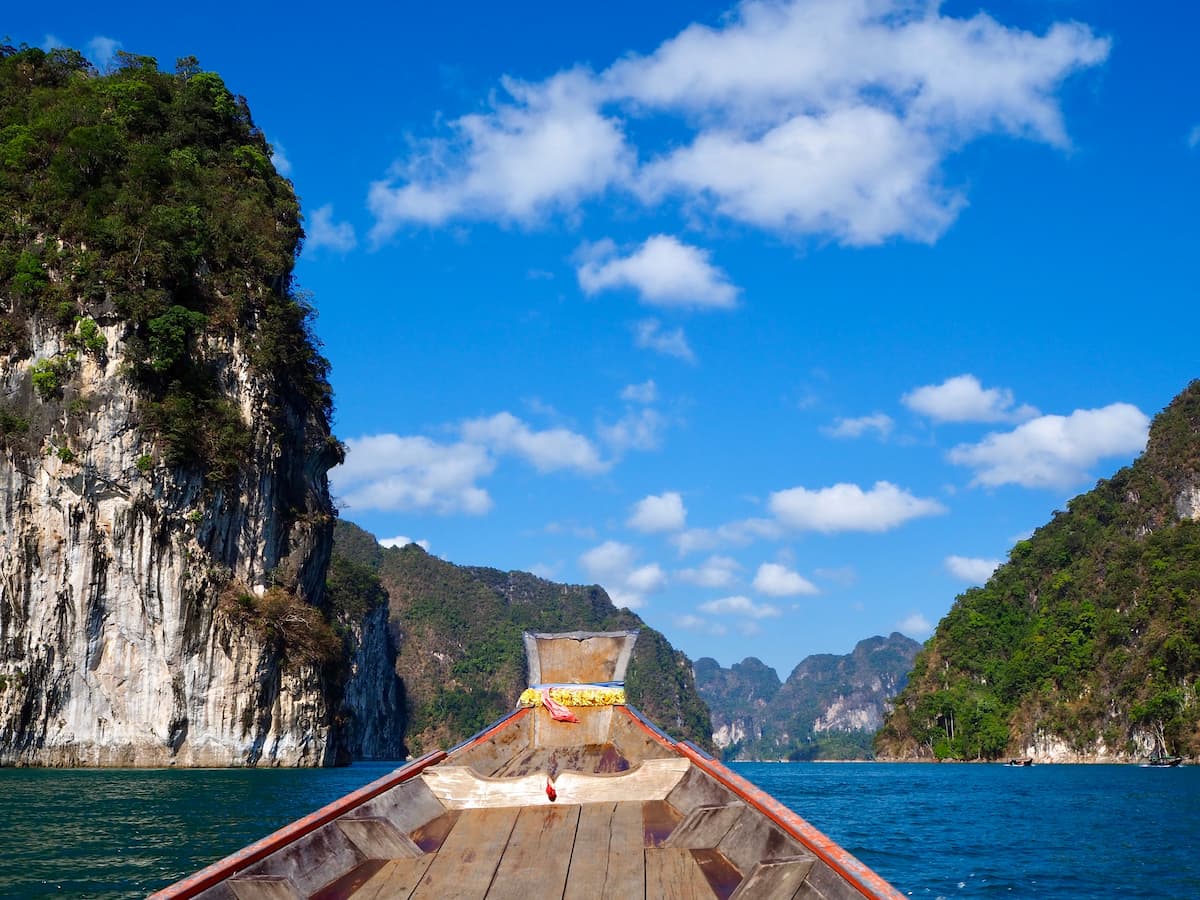
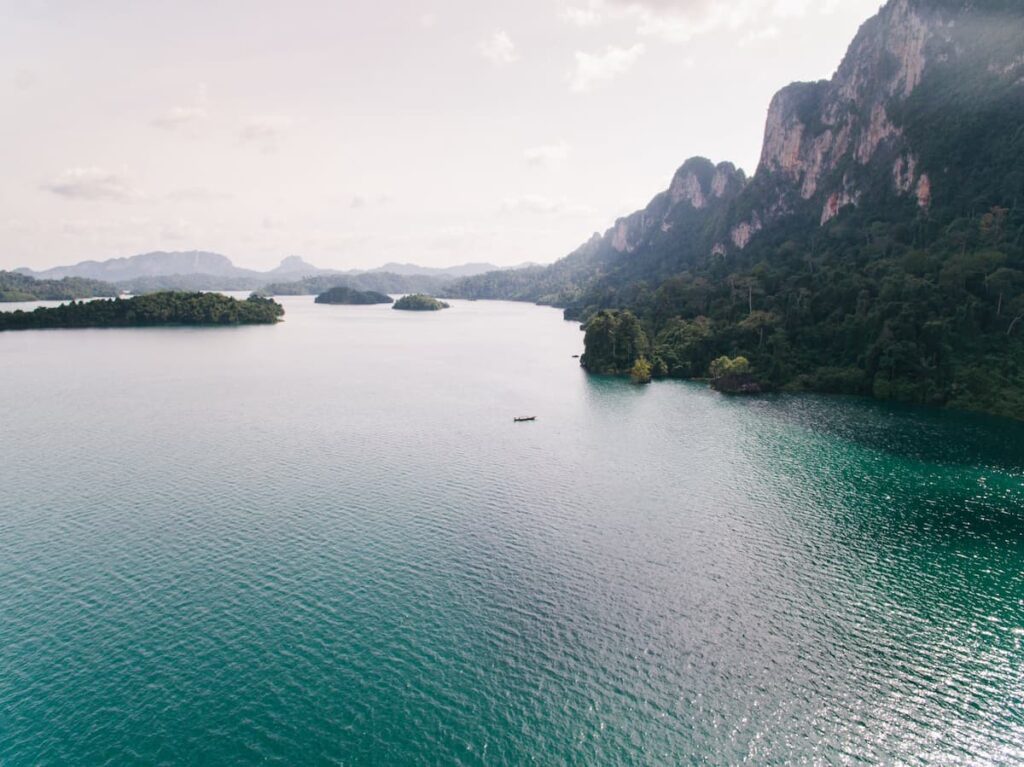
Cheow Lan Lake is the experience that distinguishes Khao Sok from Thailand’s other major national parks. Limestone cliffs and forest-covered peaks rise directly from the expansive reservoir, creating scenery that can feel remarkably remote once you travel away from the pier.
Longtail boat journeys are one of the best ways to experience the lake, with trips passing limestone formations, secluded coves and stretches of rainforest accessible primarily from the water. Kayaking, cave visits and guided walks can also form part of an overnight lake experience.
Floating raft houses make it possible to stay directly on Cheow Lan Lake. Waking to still water surrounded by rainforest and mountains transforms Khao Sok from a day trip into one of Thailand’s more memorable nature experiences.
Rainforest, Wildlife and Walking Trails
Away from the lake, Khao Sok offers forest trails, waterfalls, caves and opportunities to experience the tropical rainforest at a much closer level.
The protected forests support an impressive variety of wildlife, including gibbons, macaques, hornbills and numerous reptiles, amphibians and insects. Larger mammals also inhabit the wider forest landscape, although visitors should never expect guaranteed sightings in dense tropical forest.
Guided walks can be particularly worthwhile. A knowledgeable local guide can identify wildlife calls, plants and small creatures that are easily overlooked and help visitors explore trails appropriate to current weather and conditions.
Who Should Choose Khao Sok?
Choose Khao Sok if you want rainforest, dramatic scenery and adventure combined in one national park experience. It is particularly rewarding for travellers prepared to stay overnight rather than simply arrive, photograph a viewpoint and leave.
Allowing two or three days gives you considerably more flexibility to combine the national park headquarters area with Cheow Lan Lake. An overnight stay on the lake is worth considering if your itinerary and budget allow.
Khao Sok is also an excellent addition to a Southern Thailand itinerary. Its inland rainforest environment provides a striking contrast to the beaches and islands for which the region is better known.
Best for: Rainforest, Cheow Lan Lake, limestone scenery and multi-day nature experiences.
Consider instead: Khao Yai if you want a more accessible all-round national park experience with a particularly strong emphasis on wildlife and waterfalls.
2. Khao Yai National Park — Best All-Round National Park Experience
Khao Yai National Park is our choice for travellers who want a little of everything. Forest trails, waterfalls, viewpoints and an impressive variety of wildlife are all found within a park that is relatively easy to incorporate into a trip from Bangkok.
Established in 1962 as Thailand’s first national park, Khao Yai protects more than 2,000 square kilometres of forest and grassland across several provinces. It also forms part of the UNESCO-listed Dong Phayayen–Khao Yai Forest Complex, one of mainland Southeast Asia’s important remaining forest ecosystems.
Wildlife, Forests and Waterfalls
Wildlife is one of the major reasons to visit Khao Yai. The park supports wild elephants, gibbons, macaques, deer, hornbills and many other species, although sightings vary considerably and should never be regarded as guaranteed.
Open grasslands and wildlife observation areas provide a different experience from the dense rainforest found elsewhere in the park. Early mornings and later afternoons can be particularly rewarding, while travelling with an experienced guide can greatly improve your chances of noticing animals, tracks and calls you might otherwise miss.
Khao Yai is also known for its waterfalls. Haew Suwat is the most recognisable, while Haew Narok is considerably larger and particularly impressive when water levels are high. Trails, viewpoints and forest roads allow visitors to combine several different environments during the same trip.
An Accessible Introduction to Thailand’s Wild Side
Part of Khao Yai’s appeal is its accessibility. The park lies within practical travelling distance of Bangkok, making it possible to experience a substantial protected forest without travelling to Thailand’s far north or south.
However, Khao Yai is large. Having your own transport, arranging a driver or joining a guided tour makes exploring considerably easier, and staying nearby allows more time for early-morning and late-afternoon wildlife activity.
For most travellers, at least one full day is worthwhile. Two days provides a more relaxed experience and creates more opportunities for walking, waterfalls and wildlife watching.
Khao Yai or Kui Buri for Wildlife?
If wildlife is important but you also want waterfalls, hiking and varied landscapes, Khao Yai is the stronger all-round choice.
If your overriding priority is specifically seeing wild elephants, however, continue to Kui Buri National Park below. Its more focused wildlife-viewing experience gives it the edge for that particular reason to visit.
Who Should Choose Khao Yai?
Choose Khao Yai if this is your first experience of a Thai national park or you want the broadest combination of wildlife, forests, waterfalls and outdoor activities in one destination.
Its proximity to Bangkok also makes it particularly useful for travellers whose itinerary does not extend far into Thailand’s northern or southern regions.
Best for: The complete national park experience, wildlife, waterfalls and accessibility from Bangkok.
Consider instead: Kui Buri if seeing wild elephants is your main objective, or Khao Sok for a more immersive rainforest and lake adventure.
3. Kui Buri National Park — Best for Seeing Wild Elephants
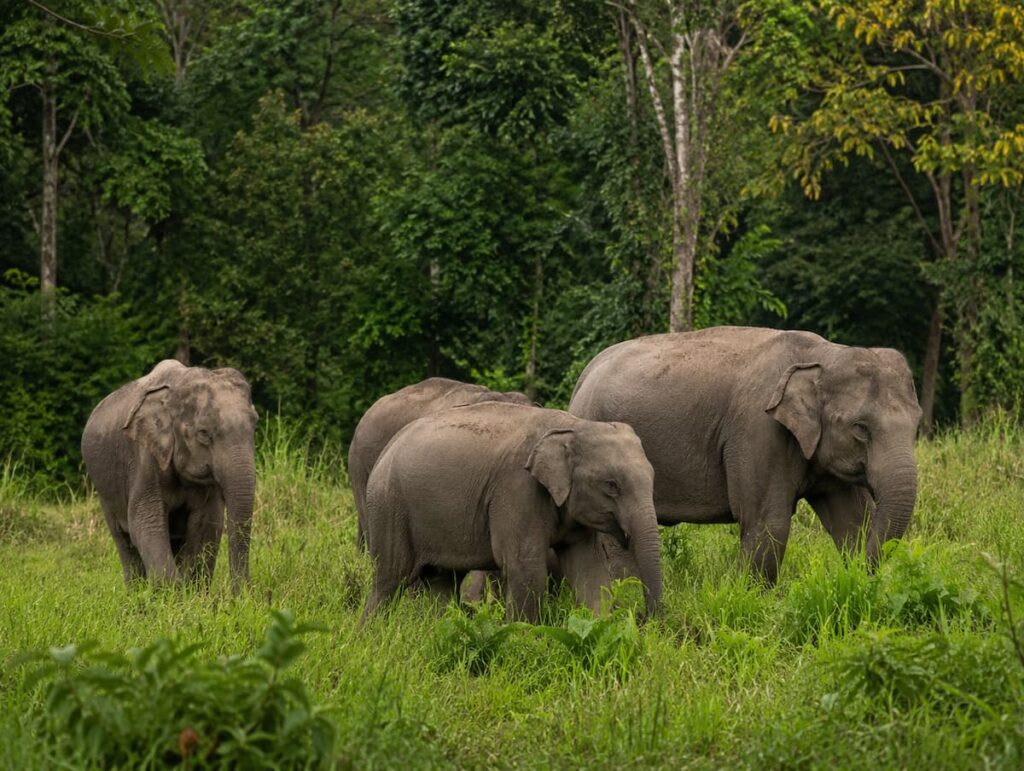
For travellers hoping to see elephants living freely in their natural environment, Kui Buri National Park offers one of Thailand’s most rewarding wildlife experiences. The park is particularly known for its wild elephant population, with gaur and other wildlife also inhabiting its forests and grasslands.
Located in Prachuap Khiri Khan Province, Kui Buri provides a very different experience from visiting an elephant sanctuary or attraction. There are no scheduled encounters and wildlife sightings can never be guaranteed. Instead, visitors enter a protected landscape and hope to observe animals behaving naturally from an appropriate distance.
Wild Elephant Watching at Kui Buri
Wildlife viewing is concentrated around designated areas where grasslands and forest edges provide opportunities to spot elephants emerging from the surrounding vegetation.
Visitors explore the wildlife-viewing area using authorised local vehicles and guides rather than simply driving independently through the observation zone. This controlled approach helps manage access while creating economic opportunities for communities living around the national park.
Elephants are the principal attraction, but they are not the only reason to keep watching. Kui Buri is also particularly notable for gaur, the enormous wild cattle native to South and Southeast Asia, along with deer, primates, birds and other forest wildlife.
The experience requires patience. You may spend considerable time scanning distant hillsides and forest edges before anything appears, and no responsible guide can promise an elephant sighting. That uncertainty is precisely what separates observing genuinely wild animals from a managed wildlife encounter.
Kui Buri or Khao Yai for Elephants?
Wild elephants also inhabit Khao Yai, and fortunate visitors occasionally encounter them while travelling through the park. But elephants are only one component of Khao Yai’s much broader national park experience.
At Kui Buri, wildlife observation is the primary reason many travellers visit. If seeing elephants in the wild sits near the top of your Thailand wish list, we would choose Kui Buri. If you want to combine the possibility of elephants with waterfalls, hiking and a wider range of easily accessible park attractions, Khao Yai is likely to suit you better.
Who Should Choose Kui Buri?
Choose Kui Buri if you value authentic wildlife observation over guaranteed encounters and are comfortable accepting that nature operates on its own schedule.
The park also works particularly well as part of a journey through Prachuap Khiri Khan Province. Travellers staying around Hua Hin or exploring Thailand’s upper Gulf coast can incorporate Kui Buri without building an entire itinerary around a remote wilderness expedition.
Also Consider: Kaeng Krachan National Park
Serious wildlife enthusiasts should also consider Kaeng Krachan National Park. Part of the UNESCO-listed Kaeng Krachan Forest Complex, it protects an exceptionally biodiverse landscape and is particularly rewarding for birdwatching and travellers interested in Thailand’s forest ecosystems.
For our seven, however, Kui Buri earns the wildlife position because its wild-elephant viewing experience gives travellers a particularly clear reason to choose it.
Best for: Wild elephants, gaur and focused wildlife watching.
Consider instead: Khao Yai for a broader wildlife-and-waterfall experience, or Kaeng Krachan for biodiversity and birdwatching.
4. Doi Inthanon National Park — Best for Mountains and Highland Nature
Doi Inthanon National Park reveals a side of Thailand that can surprise travellers more familiar with tropical beaches and lowland heat. Rising to 2,565 metres above sea level, Doi Inthanon is Thailand’s highest mountain and our choice for experiencing the country’s cooler highland landscapes.
Located in Chiang Mai Province, the park changes noticeably as you climb. Lower-elevation forests and waterfalls gradually give way to cooler, wetter montane environments, where mist, mosses and dense vegetation can make the landscape feel very different from the Thailand found at sea level.
Thailand’s Highest Mountain
Reaching Thailand’s highest point is one of the obvious reasons to visit, although the summit itself is more about the surrounding environment than a dramatic panoramic lookout.
Nearby, the short Ang Ka Nature Trail passes through exceptionally moist high-altitude forest. Mosses, ferns and other vegetation thrive in the cool conditions, creating one of the park’s most distinctive environments.
Doi Inthanon is also highly regarded for its birdlife. Changes in altitude create several habitats within a relatively compact area, making the park particularly interesting for birdwatchers as well as travellers simply hoping to experience Thailand’s mountain ecosystems.
Waterfalls, Trails and Mountain Views
The park offers considerably more than its summit. Powerful waterfalls, walking trails and viewpoints can be combined during a full-day visit, while the changing landscape means the journey up the mountain is part of the experience.
The twin royal pagodas and their landscaped gardens are among the best-known stops near the upper mountain and can offer expansive views when conditions are clear. Mist and cloud are common at higher elevations, however, and should be regarded as part of Doi Inthanon’s character rather than necessarily a ruined visit.
Temperatures near the summit can also be surprisingly cool, particularly early in the morning and during Thailand’s cooler months. Bringing an extra layer is sensible even when Chiang Mai itself feels warm.
Who Should Choose Doi Inthanon?
Choose Doi Inthanon if you want to experience Thailand’s highest mountain, cool highland forest, waterfalls and changing environments within a single national park.
It is particularly easy to incorporate into a Chiang Mai itinerary, making it an excellent choice for travellers who want a substantial nature experience without committing to a multi-day wilderness expedition.
A full day allows time for the summit area, selected trails, waterfalls and viewpoints without rushing between every possible stop.
Also Consider: Phu Kradueng National Park
If your idea of a mountain experience involves earning the views on foot, Phu Kradueng National Park is a compelling alternative. Reaching its elevated plateau requires a substantial hike, and camping or staying overnight allows visitors to explore trails, viewpoints and waterfalls above.
For this guide, Doi Inthanon takes the mountain category because it makes Thailand’s high-altitude environment accessible to a much broader range of travellers. Phu Kradueng may be the better choice for those specifically seeking a more demanding hiking and camping adventure.
Best for: Mountains, highland forests, waterfalls, birdlife and experiencing Thailand’s highest point.
Consider instead: Phu Kradueng if hiking and camping are the main reasons you want to visit a national park.
5. Erawan National Park — Best for Waterfalls
Thailand has spectacular waterfalls hidden throughout its national parks, but Erawan National Park offers one of the country’s most enjoyable waterfall experiences. Its famous seven-tiered cascade combines forest walking, turquoise pools and a succession of waterfalls that change character as you climb.
Located in Kanchanaburi Province, Erawan is considerably more accessible than many of Thailand’s wilderness parks. That makes it possible to experience an impressive natural environment as part of a wider Kanchanaburi itinerary without committing several days to the national park itself.
Exploring the Seven Tiers of Erawan Waterfall
Erawan Waterfall extends through seven main levels, with a trail climbing alongside the water through the surrounding forest. Rather than arriving at a single viewpoint, visitors gradually discover different cascades, pools and rock formations as they make their way upwards.
The lower levels are relatively easy to reach and consequently attract the most visitors. Continuing higher requires more effort, with sections of the trail becoming steeper and less developed as you progress.
Reaching the upper levels is worthwhile if conditions and your fitness allow, but there is no requirement to complete the entire climb to enjoy Erawan. One of the strengths of the park is that visitors can adapt the experience to the amount of walking they want to undertake.
Swimming is permitted in designated areas when conditions allow, adding another dimension that distinguishes Erawan from waterfalls primarily viewed from a distance. Always follow current national park instructions, as access and swimming conditions can change with weather and water levels.
When to Visit Erawan
Erawan can become busy, particularly around weekends, public holidays and popular travel periods. Arriving earlier in the day provides more time to explore the upper levels and can make the experience considerably more relaxed.
Water levels and appearance also vary throughout the year. Heavy rain can transform the cascades but may affect swimming or trail conditions, while extended dry periods can reduce water flow.
This is one national park where current conditions matter as much as the month shown on a calendar.
Who Should Choose Erawan?
Choose Erawan if waterfalls are your priority and you want an experience that combines walking, forest scenery and opportunities to enter the water rather than simply photograph a waterfall from a viewpoint.
It also works particularly well for travellers already visiting Kanchanaburi, allowing the province’s historical attractions to be combined with a very different natural experience.
Also Consider: Khlong Lan National Park
For waterfall enthusiasts willing to venture beyond Thailand’s most internationally recognised destinations, Khlong Lan National Park in Kamphaeng Phet Province is a strong alternative.
Its powerful Khlong Lan Waterfall descends dramatically from the surrounding forested mountains and provides a very different experience from Erawan’s sequence of smaller tiers and pools.
Erawan earns our selection because the seven-level journey makes the waterfall itself an activity as well as an attraction. But travellers particularly interested in impressive individual waterfalls should not overlook Khlong Lan.
Best for: Waterfalls, forest walking and swimming in natural pools where permitted.
Consider instead: Khlong Lan for a less internationally famous waterfall destination with an impressive single major cascade.
6. Mu Ko Similan National Park — Best for Diving and Underwater Scenery
Thailand’s national parks extend far beyond its forests and mountains. In the Andaman Sea, Mu Ko Similan National Park protects a remarkable marine environment of clear tropical water, granite islands, coral reefs and abundant marine life.
For travellers whose idea of exploring a national park involves going beneath the surface, the Similan Islands are our choice for diving and underwater scenery.
Located offshore from Phang Nga Province, the islands are reached primarily from the Khao Lak area, with Thap Lamu serving as the main mainland gateway. The journey by speedboat typically takes around 60–90 minutes depending on the vessel and sea conditions.
Diving and Snorkelling in the Similan Islands
The Similans have developed an international reputation as one of Thailand’s premier diving destinations. Underwater landscapes include coral reefs, granite formations, deeper dive sites and areas attracting a considerable variety of tropical marine life.
Visibility can be excellent during favourable conditions, while the contrast between enormous submerged granite formations, clear blue water and marine life creates an underwater environment very different from the shallow tropical reefs many travellers first associate with Thailand.
You do not need to be a diver to appreciate the park. Snorkelling forms an important part of many day trips and provides access to coral, reef fish and clear Andaman water without specialist diving qualifications.
Above the surface, pale beaches and distinctive rounded granite boulders make the Similans visually striking in their own right. However, this is one selection where what lies beneath the water is the principal reason the park earns its place on our list.
A Highly Seasonal National Park
The Similan Islands should not be treated as a year-round destination.
The marine park normally closes during part of the southwest monsoon season, allowing ecosystems time to recover while avoiding periods when sea conditions can make access unsafe. Exact opening and closing dates should always be checked with Thailand’s Department of National Parks before planning a trip.
Even during the open season, boat journeys and marine activities remain dependent on weather and sea conditions.
Similan or Surin Islands?
Mu Ko Surin National Park strongly competes with the Similans and may actually be the better choice for some travellers.
While the Similans earn our selection for their diving reputation and dramatic underwater scenery, Surin is particularly attractive for snorkelling and exploring extensive shallow-water coral reefs. Travellers who do not dive should therefore consider both rather than automatically assuming the more famous Similan Islands are the better destination.
Interestingly, the Surin Islands are not dramatically closer to the mainland than the Similans. Speedboat journeys from Khura Buri are typically around an hour, broadly comparable with the crossing from Thap Lamu to the Similans.
The greater difference is the mainland journey. Thap Lamu is conveniently positioned near Khao Lak and within the established Phuket–Khao Lak tourism corridor, while reaching the main Surin departure point at Khura Buri requires travelling considerably farther north.
Choose Similan if: diving, dramatic underwater scenery and convenient access from Khao Lak are your priorities.
Choose Surin if: shallow-water snorkelling and coral reefs are more important and you are happy to make the additional journey north to Khura Buri.
Neither should be considered a lesser version of the other. They offer two exceptional but somewhat different ways to experience Thailand’s Andaman marine environment.
Who Should Choose the Similan Islands?
Choose Mu Ko Similan if you want your national park experience to revolve around diving, snorkelling and the underwater world rather than hiking through the landscape above it.
It is particularly easy to incorporate into a Khao Lak holiday and can also be visited from the wider Phuket region, although transfer times become considerably longer.
Divers may want to consider a dedicated diving itinerary rather than treating the islands purely as a sightseeing day trip.
Best for: Diving, underwater scenery, clear Andaman water and marine life.
Consider instead: Mu Ko Surin for exceptional snorkelling and shallow reefs, particularly if diving is not your priority.
7. Ao Phang Nga National Park — Best for Sea Kayaking and Limestone Landscapes
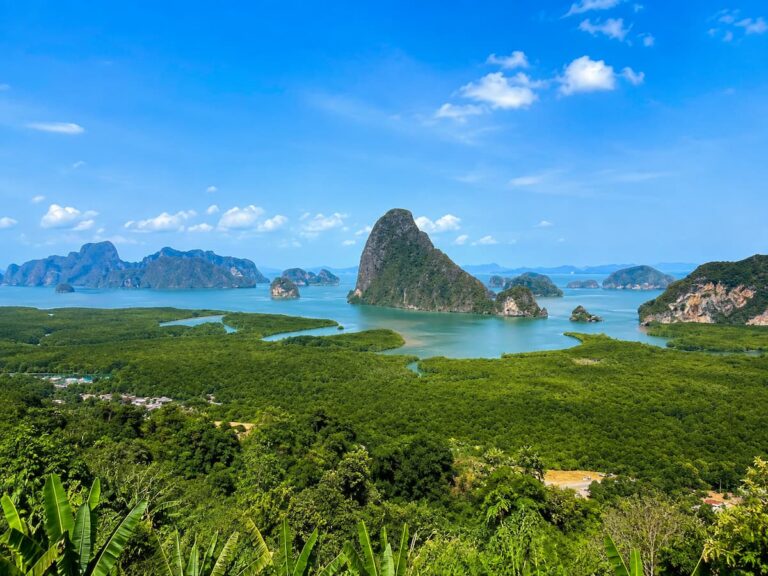
Few national parks capture the distinctive scenery of Southern Thailand as immediately as Ao Phang Nga National Park. Towering limestone karsts rise almost vertically from sheltered green-blue water, while caves, mangroves, islands and hidden lagoons create a landscape that is best explored from the water.
For that reason, Ao Phang Nga is our choice for sea kayaking and limestone scenery.
Located in Phang Nga Province between mainland Phang Nga and Phuket, the park protects much of Phang Nga Bay. Its relatively sheltered waters make boat exploration possible across a landscape that looks dramatically different from the open beaches and exposed islands found elsewhere along the Andaman coast.
Kayaking Through Caves and Hidden Lagoons
Sea kayaking is one of the most rewarding ways to experience Ao Phang Nga. Small kayaks can enter spaces inaccessible to larger boats, passing beneath limestone overhangs and, when tides permit, through caves leading into enclosed lagoons known locally as hongs.
Inside, steep limestone walls can surround calm water and mangrove vegetation, creating an intimate experience that contrasts with viewing the same formations from the deck of a tour boat.
Timing matters. Access to some caves and hongs depends heavily on tides, and experienced operators plan routes around water levels and current conditions. In some locations passengers are paddled by guides familiar with the narrow cave systems rather than kayaking independently.
More Than James Bond Island
Ao Phang Nga is internationally associated with Khao Phing Kan and the distinctive limestone pinnacle of Ko Tapu, widely known as James Bond Island following its appearance in The Man with the Golden Gun.
It is an iconic stop, but reducing Phang Nga Bay to James Bond Island misses much of what makes the national park exceptional.
The broader landscape contains countless limestone formations, mangrove channels, caves and sheltered waterways. Nearby Ko Panyee, a historic Muslim fishing community built largely over the water, is also included on many excursions through the bay and adds a cultural dimension to the journey.
For travellers interested primarily in nature, a kayaking-focused excursion that spends meaningful time exploring caves and hongs can provide a more revealing experience than an itinerary built around quickly visiting famous photo stops.
An Easy Addition to a Phuket or Phang Nga Holiday
Unlike some of the more remote parks on this list, Ao Phang Nga can be incorporated relatively easily into a Southern Thailand itinerary.
Excursions operate from different parts of Phang Nga and the wider Phuket region, making the park accessible to travellers staying on either side of the bay. The precise experience can vary considerably depending on the departure point, boat type, tides and itinerary.
This is therefore one park where choosing the right excursion matters. Look beyond the number of attractions advertised and consider how much time the itinerary actually allows for kayaking and exploring the natural environment.
Who Should Choose Ao Phang Nga?
Choose Ao Phang Nga if you want to experience Thailand’s extraordinary marine limestone landscapes from inside the scenery rather than simply looking at them from shore.
It is particularly well suited to travellers who enjoy gentle adventure but do not necessarily want strenuous hiking, diving or a multi-day wilderness expedition.
Together with Khao Sok and the Similan Islands, it also demonstrates just how varied Thailand’s southern national parks can be: rainforest and freshwater lakes in one, coral reefs and open Andaman water in another, and a maze of limestone islands and sheltered waterways here.
Best for: Sea kayaking, limestone karsts, caves, hongs and sheltered marine scenery.
Consider instead: Khao Sam Roi Yot for limestone mountains, caves and wetlands in a predominantly mainland setting.
Other National Parks in Thailand Worth Considering
Selecting only seven national parks inevitably leaves out some exceptional places. Thailand has more than 150 national parks, and our choices above were selected to represent seven distinctly different experiences rather than suggest that every park outside the list is somehow less beautiful or worthwhile.
Depending on what you want from your trip, one of these alternatives could easily be the better choice.
Kaeng Krachan National Park — For Biodiversity and Birdwatching
Kaeng Krachan is Thailand’s largest national park and forms part of the UNESCO-listed Kaeng Krachan Forest Complex. Its extensive forests support extraordinary biodiversity, making it particularly rewarding for birdwatchers and serious wildlife enthusiasts.
The park is known for its rich birdlife, butterflies and mammals, while areas such as Ban Krang provide opportunities to spend considerably more time observing the details of a forest ecosystem.
We selected Kui Buri for our main seven because it offers travellers a clearer opportunity to focus specifically on wild-elephant observation. Choose Kaeng Krachan instead if biodiversity, birdwatching and deeper forest exploration are your priorities.
Phu Kradueng National Park — For Hiking and Camping
Phu Kradueng offers a mountain experience very different from the comparatively accessible roads and attractions of Doi Inthanon.
Reaching its elevated plateau requires a substantial uphill hike, turning the journey itself into a major part of the national park experience. Once above, visitors can explore walking routes connecting viewpoints, forests and waterfalls, with overnight stays allowing considerably more time to experience the plateau.
Choose Phu Kradueng over Doi Inthanon if a challenging hike and overnight mountain experience sound more appealing than reaching Thailand’s highest elevations by road.
Seasonal closures are important here, so check current park access before building it into an itinerary.
Khao Sam Roi Yot National Park — For Caves, Wetlands and Limestone Mountains
Khao Sam Roi Yot combines limestone peaks, freshwater wetlands, beaches and caves within a remarkably varied landscape in Prachuap Khiri Khan Province.
Its best-known attraction is Phraya Nakhon Cave, where a small royal pavilion sits beneath an opening in the cavern roof. When sunlight enters at the right angle, it creates one of Thailand’s most recognisable cave scenes.
The surrounding wetlands are also important for birdlife and give the park a character quite different from Thailand’s densely forested mountain parks.
Choose Khao Sam Roi Yot if you want limestone scenery and caves without travelling to the islands and marine landscapes of Southern Thailand.
Mu Ko Surin National Park — For Snorkelling and Shallow Coral Reefs
Mu Ko Surin deserves another mention because it competes so strongly with the Similan Islands.
Its shallow coral reefs and marine life make it particularly attractive to snorkellers, while reaching the islands from Khura Buri requires a speedboat crossing of roughly an hour under normal conditions.
The disadvantage for many travellers is not the sea journey itself but reaching Khura Buri, which lies considerably farther north than the main Khao Lak tourism area.
If you are a non-diver primarily interested in snorkelling, coral reefs and marine life, Surin could be a better choice than our selected Similan Islands.
Tarutao National Park — For Island Wilderness and History
Mu Ko Tarutao National Park offers another side of Thailand’s Andaman coast. Located in Satun Province close to the Malaysian border, this extensive marine park combines islands, beaches, forest and a fascinating human history.
Ko Tarutao was once used as a prison settlement, leaving historical sites alongside the island’s natural attractions. Its location and scale give the park a sense of separation from Thailand’s busiest island destinations.
Tarutao was Thailand’s first marine national park and remains an excellent choice for travellers attracted to island wilderness, history and a slower exploration of the Andaman coast.
These five parks also demonstrate why there can be no definitive list of Thailand’s seven “best” national parks. Change the experience you are looking for, and the list can change with it.
When Is the Best Time to Visit Thailand’s National Parks?
There is no single best time to visit every national park in Thailand. The country stretches across different landscapes and weather patterns, and conditions in a northern mountain park can be very different from those affecting a marine park in the Andaman Sea.
As a general rule, November to February offers comfortable conditions for visiting many of Thailand’s inland national parks. Temperatures are typically cooler, humidity can be lower and walking conditions are often more pleasant. This can be an excellent period for Khao Yai, Kui Buri and Doi Inthanon, although it also coincides with some of Thailand’s busiest travel months.
The rainy season should not automatically be dismissed. Forests become intensely green, waterfalls can be at their most impressive and some parks feel particularly atmospheric during wetter conditions. However, heavy rainfall can also affect trails, caves, swimming areas, roads and individual attractions.
Marine national parks require greater attention to seasonality. Parks such as the Similan and Surin Islands normally close during part of the southwest monsoon season, when rougher Andaman Sea conditions make boat access less reliable and seasonal closures provide important periods for environmental recovery.
Opening dates should never be assumed from previous years. Thailand’s Department of National Parks can temporarily close entire parks or individual attractions because of weather, trail conditions, wildlife activity, environmental protection or other safety considerations.
For that reason, use the seasons as a planning guide rather than a guarantee. Check current national park opening conditions shortly before travelling, particularly if your visit depends on a specific island, cave, trail, waterfall or marine activity.
What to Know Before Visiting a National Park in Thailand
Thailand’s national parks range from easily accessible waterfalls and mountain viewpoints to remote islands and extensive forest environments. A little preparation can make a considerable difference, particularly when access depends on weather, tides or seasonal opening arrangements.
National Park Entrance Fees Vary
Entrance fees are not identical across Thailand’s national parks, and Thai residents and international visitors may be charged different rates. Children generally have reduced admission, while vehicles, camping, accommodation, boats or particular activities may involve additional charges.
Rather than relying on an old price found online, check the current fee for the specific park you intend to visit.
Check Current Opening Conditions
A national park being officially open does not necessarily mean that every attraction inside it is accessible.
Trails, caves, waterfalls, viewpoints, islands and marine areas can close temporarily because of heavy rain, rough seas, maintenance, wildlife activity or environmental protection measures. Some parks and attractions also have scheduled annual closures.
This is particularly important for marine parks such as the Similan and Surin Islands, but changing conditions can affect parks anywhere in Thailand.
Respect Wildlife as Wildlife
Never approach, feed or attempt to interact with wild animals.
Elephants, monkeys and other animals can behave unpredictably, particularly when they have become accustomed to people or associate vehicles and visitors with food. Maintain an appropriate distance and follow instructions from park staff and guides.
Seeing an animal naturally is never guaranteed. That uncertainty is part of visiting a genuine protected environment.
Prepare for the Environment
Conditions can change quickly in tropical and mountain environments. Carry adequate drinking water, suitable footwear, sun protection and rain protection appropriate to the park and season.
Higher elevations such as Doi Inthanon can be surprisingly cool, while rainforest trails may be hot, humid, muddy and slippery even when conditions elsewhere appear dry.
For marine parks, remember that boat journeys and activities remain dependent on sea conditions regardless of the forecast on land.
Follow Park-Specific Rules
Rules vary according to the environment being protected. Restrictions may apply to swimming, drones, camping, food, alcohol, fishing, collecting natural materials, entering particular areas or bringing certain items into the park.
Do not assume that something permitted at one national park will automatically be allowed at another.
Thailand’s national parks protect environments that remain special precisely because access is managed. Treat the rules as part of the conservation experience rather than an inconvenience, and check current information before setting out.
How We Chose the Best National Parks in Thailand
With more than 150 national parks protecting mountains, forests, wetlands, waterfalls, islands and marine environments across Thailand, any list of only seven requires difficult choices.
We have not ranked these parks according to visitor numbers, nor are we suggesting they are objectively more beautiful than every national park that does not appear on our list. Comparing a coral reef with a mountain forest or a wildlife reserve with a waterfall would tell travellers very little about which park they should actually visit.
Instead, we selected seven outstanding national parks representing seven distinctly different experiences.
Our choices considered the quality and distinctiveness of the natural environment, the experience available to visitors, accessibility and practical travel considerations, and how effectively each park represents a different aspect of Thailand’s national park system.
This is why some exceptional parks appear as alternatives rather than in the main seven. Mu Ko Surin may be a better choice than the Similan Islands for a traveller primarily interested in shallow-water snorkelling. Phu Kradueng may appeal more than Doi Inthanon to someone seeking a demanding hiking and camping experience, while Kaeng Krachan can be particularly rewarding for dedicated birdwatchers and wildlife enthusiasts.
Ultimately, the best national park in Thailand depends on the experience you want to have. Our seven selections are designed to help you make that choice rather than provide an arbitrary ranking of places that are fundamentally different.
Choosing Your National Park in Thailand
Thailand’s national parks are far too diverse for one destination to be right for everyone. The best choice might mean watching wild elephants at Kui Buri, waking beside Cheow Lan Lake in Khao Sok, hiking through the cool forests of Doi Inthanon or exploring the Andaman Sea above or below the water.
Whichever experience draws you, allow enough time to explore beyond the main viewpoint or attraction. Thailand’s national parks are at their most rewarding when they become part of the journey rather than simply another stop on the itinerary.
Frequently Asked Questions About Best National Parks In Thailand
How many national parks are there in Thailand?
Thailand currently has more than 150 national parks, protecting an enormous variety of terrestrial and marine environments across the country. These include tropical rainforests, mountain ecosystems, wetlands, waterfalls, caves, islands, beaches and coral reefs.
New protected areas can be established and classifications can change, so travellers interested in the current total should check information from Thailand’s Department of National Parks, Wildlife and Plant Conservation.
What is the best national park in Thailand?
There is no single national park that is best for every traveller. Khao Sok is our choice for rainforest and lake adventures, while Khao Yai provides perhaps the strongest all-round introduction to Thailand’s national parks.
For more specific experiences, choose Kui Buri for wild elephants, Doi Inthanon for mountain environments, Erawan for waterfalls, the Similan Islands for diving or Ao Phang Nga for sea kayaking and limestone scenery.
Which national park in Thailand is best for seeing wild elephants?
We recommend Kui Buri National Park for travellers whose primary objective is seeing elephants living in the wild.
Khao Yai and other protected forests also support wild elephant populations, but Kui Buri’s established wildlife-viewing experience makes it particularly suitable for visitors specifically hoping to observe them.
Wildlife sightings are never guaranteed. Elephants should always be viewed from a safe distance and according to instructions from national park staff and authorised guides.
Which Thai national park is best for snorkelling or diving?
We recommend Mu Ko Similan National Park for diving and dramatic underwater scenery, but snorkellers should also seriously consider Mu Ko Surin National Park.
Surin’s shallow coral reefs can make it particularly rewarding for travellers who want to experience marine life without diving. Both destinations are seasonal and access depends on national park opening dates and sea conditions.
Do Thailand’s national parks close during the rainy season?
Some do, but there is no nationwide rainy-season closure covering every national park.
Marine parks and individual islands, trails, caves and other attractions may have scheduled seasonal closures, while temporary restrictions can also be introduced because of heavy rainfall, rough seas, environmental recovery or safety concerns.
Many national parks remain open through at least part of Thailand’s wetter months, and waterfalls and forests can be particularly impressive during this period.
Always check the current status of the specific park and attraction you intend to visit rather than assuming that historical opening dates will remain unchanged.
Continue Exploring Thailand
Thailand’s national parks reveal just one part of the country’s extraordinary natural diversity. Continue planning your journey with our broader destination guides, or explore more of the beaches, islands and attractions that can be combined with your national park itinerary.
Continue Reading
Thailand Travel Guide
Start with our complete Thailand guide for help choosing where to go, what to see and how the country’s different destinations fit together.
Southern Thailand Travel Guide
Explore the islands, beaches, national parks and destinations of Southern Thailand, including several of the protected landscapes featured in this guide.
Further Reading
Most Popular Islands in Thailand
Compare seven of Thailand’s most popular islands and discover which one best suits the experience you want from your holiday.
Most Popular Beaches in Thailand
Explore some of Thailand’s most popular beaches, from major resort destinations to spectacular island settings.
What Are the Must-See Attractions in Thailand?
Discover the landmarks, cultural sites and natural attractions that help define a first journey through Thailand.
About the Author
David Hibbins is a travel publisher, destination researcher and the creator of Travel With Insight.
Through years of travel, tourism and publishing projects across Southeast Asia, he has developed a particular interest in how travellers research destinations, compare experiences and make travel decisions.
His work focuses on helping travellers move beyond popularity rankings, marketing claims and generic “best of” lists by providing balanced, research-driven destination guides. Rather than telling people where they should travel, his goal is to help readers understand the strengths, limitations and unique character of each destination so they can choose the places that best match their own interests, travel style and goals.
As the creator of Travel With Insight, David researches destinations throughout Southeast Asia, exploring not only where travellers go, but why they choose certain places, how destinations differ and what creates genuinely memorable travel experiences.
His work covers destination research, regional travel planning, traveller behaviour and the decision-making frameworks that help people plan more rewarding journeys.
Explore More Travel Resources
Every great journey begins with informed decisions. The more you understand a destination before you arrive, the more rewarding your travel experience becomes.
Whether you’re still researching Southern Thailand or you’re ready to start planning your itinerary, these additional resources can help.
Travel With Insight
Continue exploring our in-depth destination guides, travel inspiration and practical planning advice designed to help you make informed travel decisions throughout Thailand and Southeast Asia.
Go Find Asia
Looking for even more travel inspiration? Go Find Asia explores destinations, experiences and travel ideas across Asia, helping you discover where to go, what to see and how to plan your next adventure.
Resurgence Travel
When you’re ready to turn your research into reality, Resurgence Travel offers curated itineraries, personalised travel planning and local expertise to help you experience the very best of Thailand and Southeast Asia.