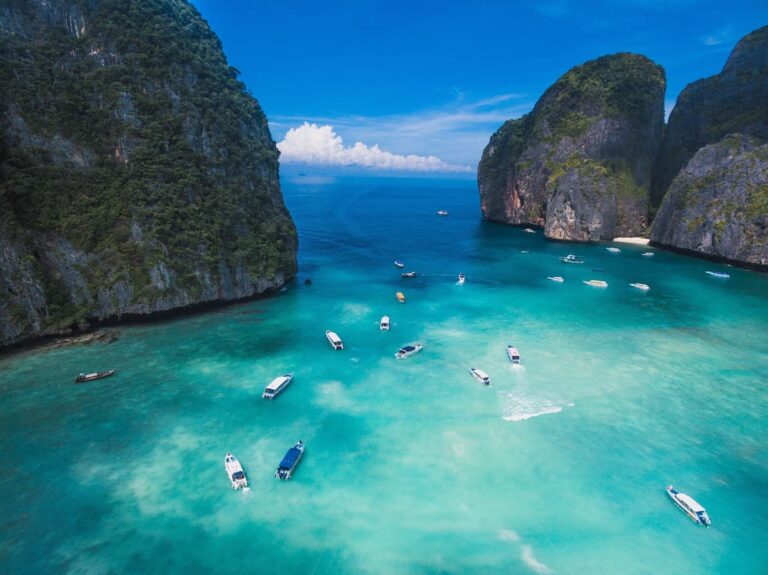
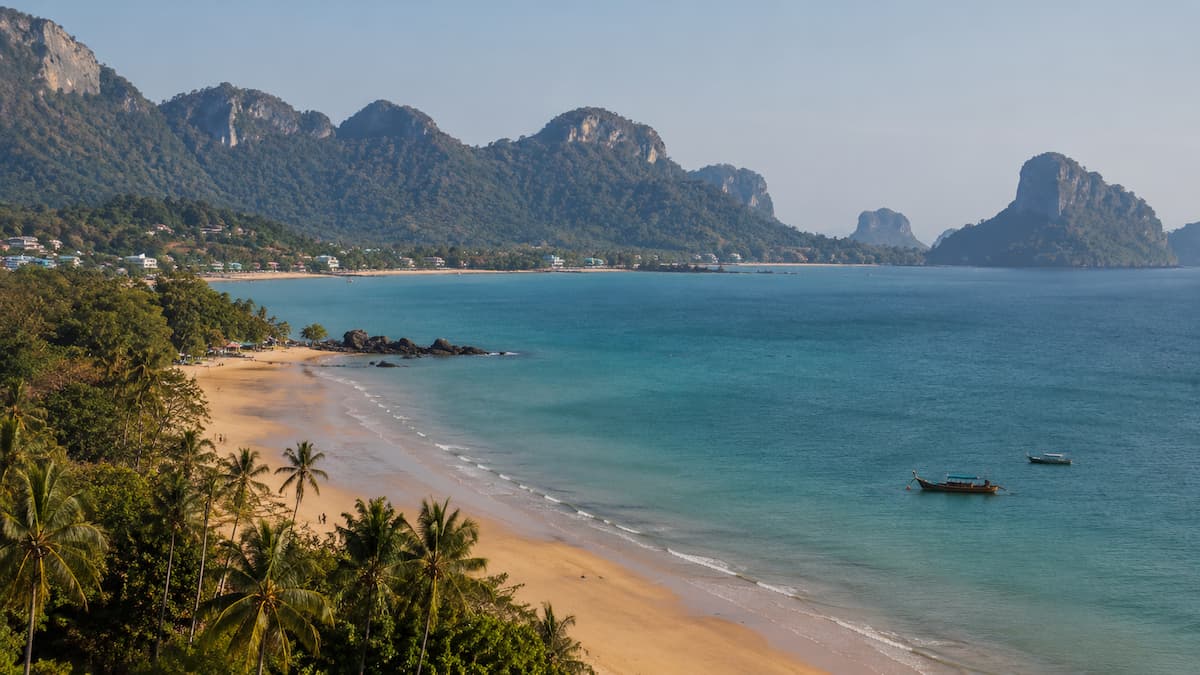
Best Places in Thailand for Different Types of Holiday
Thailand can offer remarkably different holidays depending on where you choose to go. One traveller may imagine quiet days beside a tropical beach, while another wants mountain adventures, historic temples, exceptional food or energetic nightlife. Families, couples and nature lovers will each have different priorities—and the destination that works perfectly for one may disappoint another.
This Best places in Thailand for different types of holiday guide matches nine popular types of holiday with three destinations especially well suited to each. Rather than relying on reputation alone, the recommendations consider the experiences available, ease of travel, atmosphere, seasonal limitations and the compromises each place may require. Every choice also includes three defining things to experience, so you can understand why the destination belongs before exploring its complete travel guide.
There is no single best place in Thailand for everyone. The right choice is the destination that offers more of what you want from your holiday—and fewer of the compromises that matter to you.
Quick Summary: Best places in Thailand for different types of holiday
The best destination depends on what you most want from your holiday. Phuket provides the strongest all-round choice for beaches and families, while Bangkok leads for food and nightlife, Chiang Mai for culture and land-based adventure, and Khao Sok for nature.
Use this table for the fast answer, then explore the relevant section to understand why each destination was chosen, the three defining experiences it offers and the principal compromise to consider.
| Type of Holiday | Best Overall Choice | Also Consider |
|---|---|---|
| Beach holiday | Phuket — for beach variety, convenience and activities | Krabi and Koh Samui |
| Cultural holiday | Chiang Mai — for temples, crafts and living northern culture | Bangkok and Sukhothai |
| Food holiday | Bangkok — for Thailand’s greatest culinary range | Chiang Mai and Phuket |
| Nightlife holiday | Bangkok — for bars, clubs, live music and late dining | Patong and Pattaya |
| Family holiday | Phuket — for access, accommodation and activity choice | Hua Hin and Koh Samui |
| Couples’ holiday | Koh Samui — for resorts, relaxation and island atmosphere | Krabi and Chiang Mai |
| Nature holiday | Khao Sok — for rainforest and dramatic limestone scenery | Khao Yai and Kanchanaburi |
| Adventure holiday | Chiang Mai — for trekking, rafting and varied land activities | Krabi and Koh Tao |
| Quieter escape | Koh Yao Noi — for accessible tranquillity and slow island life | Koh Lanta and Koh Kood |
Best Places in Thailand for a Beach Holiday
Thailand’s beach destinations are remarkably varied. Some offer an extensive choice of beaches, accommodation and activities, while others are defined by dramatic scenery or the relaxed atmosphere of an island resort. The right choice depends on whether you value convenience, coastal exploration, nightlife, tranquillity or simply having plenty of options within reach.
Our three recommendations provide distinctly different beach holidays: Phuket for variety and convenience, Krabi for spectacular coastal scenery and Koh Samui for a self-contained island escape.
Phuket — Best for Beach Variety and Convenience
Phuket is the strongest all-round choice for travellers who want their beach holiday to include more than one stretch of sand. As Thailand’s largest island, it offers developed resort beaches, lively coastal towns, quieter northern shores and small coves that can feel surprisingly removed from the island’s busiest areas.
Kata and Karon combine attractive beaches with restaurants, accommodation and easy access to activities. Kamala and Bang Tao generally provide a more relaxed resort experience, while Nai Yang and Mai Khao offer greater space in the north. Patong suits visitors who want nightlife and entertainment immediately available, whereas Nai Harn and Kata Noi appeal to those seeking a smaller beach setting.
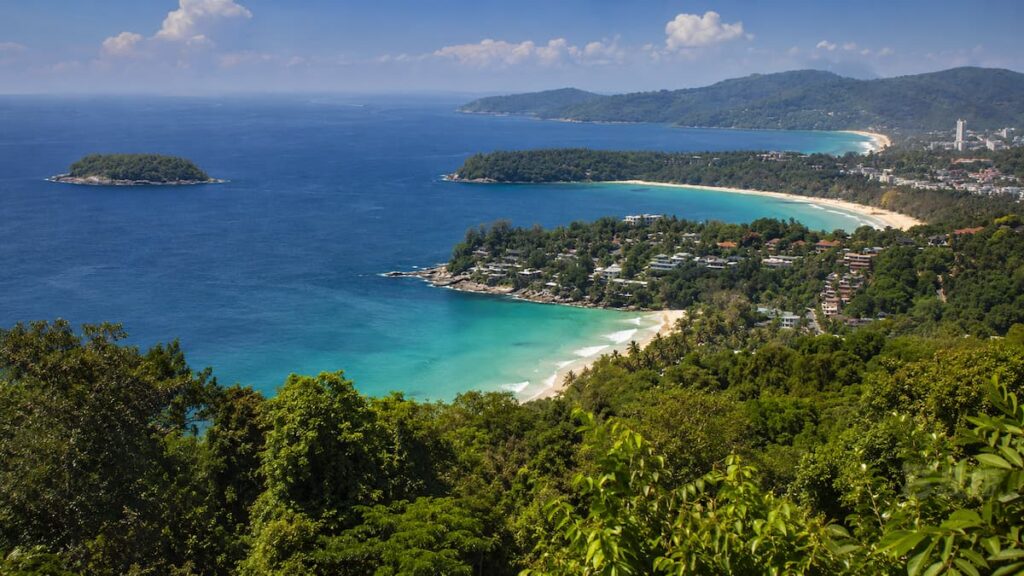
Phuket’s international airport, extensive accommodation range and established tourism infrastructure also make it one of Thailand’s easiest beach destinations to organise. Its greatest strength is choice: travellers can change beaches, take island excursions, explore local culture and enjoy completely different evenings without moving to another destination.
Three Beach Experiences Not to Miss in Phuket
| Experience | Why Include It |
|---|---|
| Explore Phuket’s contrasting beaches | Visiting more than one beach reveals how dramatically the atmosphere changes around the island, from energetic Patong to quieter northern shores. |
| Take a Phang Nga Bay or offshore island excursion | Boat trips add limestone scenery, sheltered waterways, snorkelling and smaller islands to the beach holiday. |
| Combine the coast with Phuket Old Town and a sunset viewpoint | These experiences demonstrate that Phuket offers more than resorts and allow a break from spending every day beside the sea. |
Choose Phuket if: you want extensive beach choice, convenient access, organised activities and plenty to experience away from the water.
Consider somewhere else if: you want a compact island with a consistently quiet atmosphere. Phuket’s busiest beaches and roads can feel heavily developed, particularly during peak periods.
Continue planning: Explore the Phuket Travel Guide
Krabi — Best for Dramatic Coastal Scenery
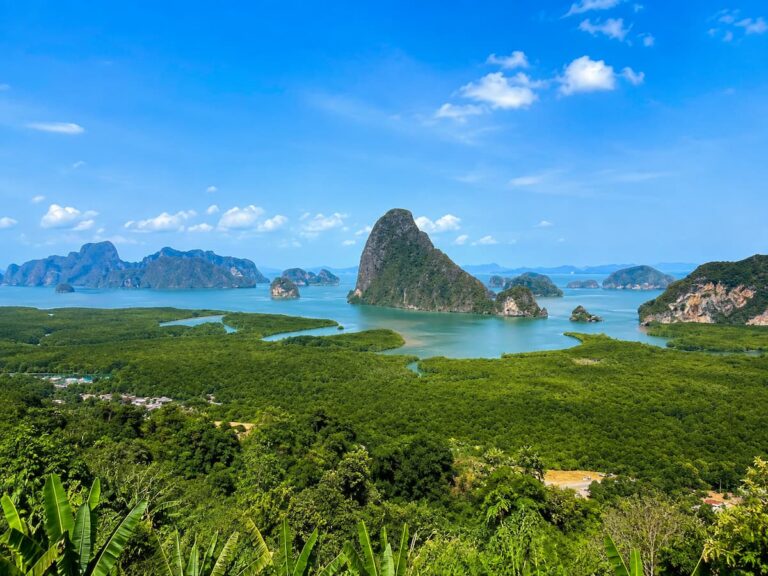
Krabi is the better choice for travellers who want their beach holiday to feel closely connected to the surrounding landscape. Towering limestone cliffs, forested islands, sheltered lagoons and longtail boats give the province one of Thailand’s most recognisable coastal settings.
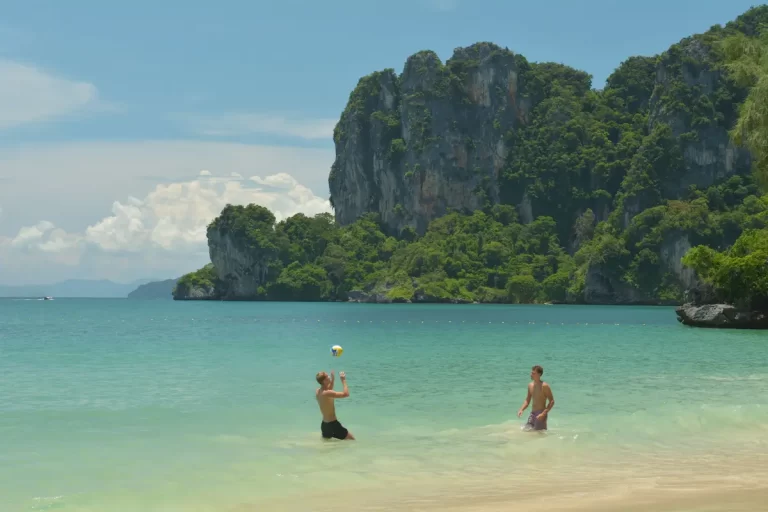
The experience is spread across several bases. Ao Nang provides the greatest convenience, with abundant accommodation, restaurants and boat connections, but its town beach is not the principal reason to choose Krabi. Railay offers the most dramatic setting, enclosed by limestone cliffs and accessible only by boat, while quieter coastal areas such as Klong Muang and Tubkaek suit travellers who prefer a more relaxed resort stay.
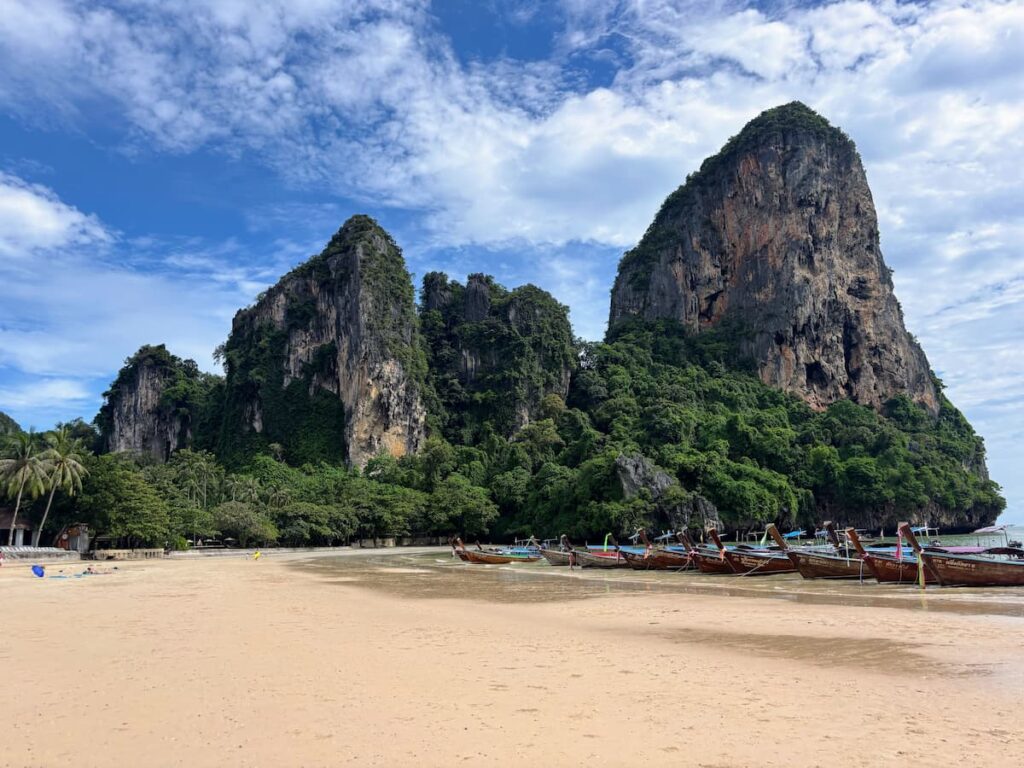
Krabi is particularly rewarding for visitors who want to explore rather than remain on a single beach. Longtail boats provide access to offshore islands and secluded stretches of coastline, while kayaking and walking reveal landscapes that cannot be fully appreciated from a resort. The result is a more visually dramatic and exploratory beach holiday than Phuket or Koh Samui typically provides.
Three Beach Experiences Not to Miss in Krabi
| Experience | Why Include It |
|---|---|
| Visit Railay and Phra Nang | Limestone cliffs rising directly behind the beaches create one of southern Thailand’s most distinctive coastal settings. |
| Explore the Hong Islands | A boat trip introduces beautiful beaches, clear water, limestone formations and a sheltered lagoon away from the mainland. |
| Kayak through mangroves and limestone waterways | Kayaking provides a quieter way to experience Krabi’s cliffs, forests and hidden coastal passages. |
Choose Krabi if: dramatic scenery, longtail-boat journeys and active coastal exploration matter more to you than having every convenience immediately available.
Consider somewhere else if: you want all your beaches, restaurants, nightlife and attractions connected by easy road transport. Krabi’s most memorable experiences are dispersed across the province and often require travelling by boat.
Continue planning: Explore the Krabi Travel Guide
Koh Samui — Best for a Self-Contained Island Resort Holiday
Koh Samui suits travellers who want the atmosphere of a tropical island without giving up comfortable resorts, restaurants and a broad choice of activities. It feels more contained than Phuket and less geographically fragmented than Krabi, making it particularly easy to settle into one beach area and explore the rest of the island at a relaxed pace.
Chaweng offers the greatest concentration of restaurants, shopping and nightlife, while Lamai provides a somewhat calmer alternative without feeling isolated. Bophut combines convenient dining and evening activity around Fisherman’s Village with access to the quieter north coast. Beaches such as Maenam, Choeng Mon and those along the island’s less-developed southern coast appeal to travellers seeking a slower resort stay.
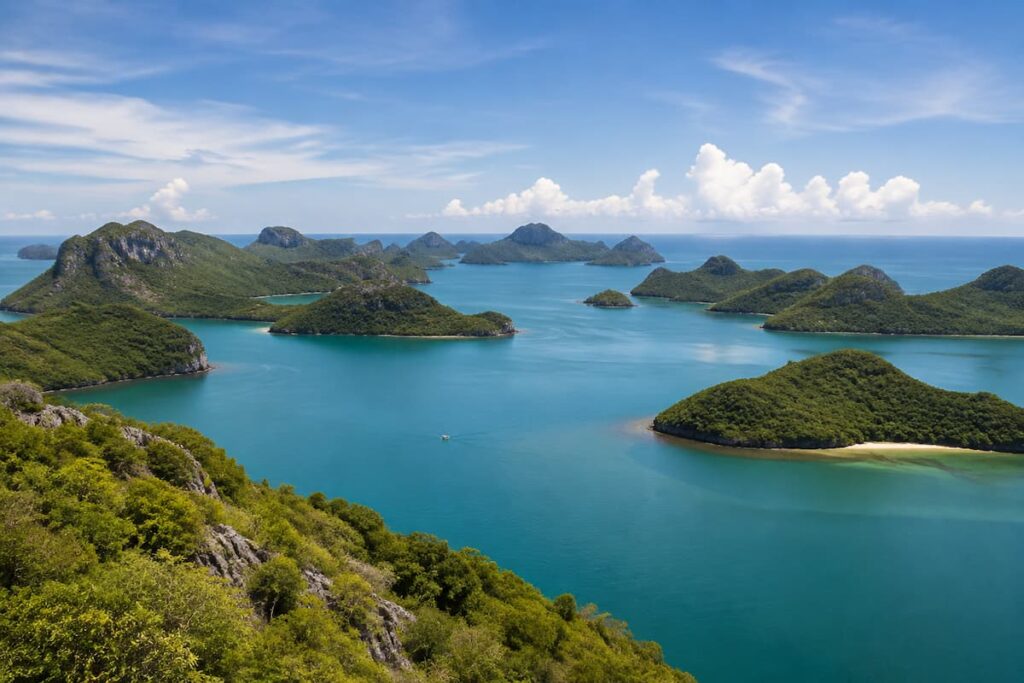
Samui’s strength is the balance between relaxation and variety. Visitors can spend several days beside the beach, then explore waterfalls, temples, viewpoints and small communities without leaving the island. Boat excursions also provide access to the remarkable seascapes of Ang Thong National Marine Park.
Three Beach Experiences Not to Miss on Koh Samui
| Experience | Why Include It |
|---|---|
| Experience more than one of Samui’s beach areas | Chaweng, Lamai, Bophut, Maenam and Choeng Mon offer noticeably different levels of activity, development and tranquillity. |
| Explore Ang Thong National Marine Park | The archipelago adds limestone islands, viewpoints, kayaking and marine scenery to a Samui beach holiday. |
| Discover the island beyond its resorts | Waterfalls, temples, viewpoints and local communities reveal a more varied island than its resort coastline initially suggests. |
Choose Koh Samui if: you want a relaxed island holiday with quality accommodation, attractive beaches and sufficient variety for a longer stay.
Consider somewhere else if: you want the widest possible choice of day trips or are travelling during a period when Gulf weather may disrupt beach and boat plans. Koh Samui’s seasonal pattern differs from the Andaman coast, so conditions should be checked for your intended dates.
Continue planning: Explore the Koh Samui Travel Guide
Which Beach Destination Should You Choose?
| Destination | Best For | Main Consideration |
|---|---|---|
| Phuket | Beach variety, convenience and activities | Some areas are busy and heavily developed |
| Krabi | Dramatic scenery and coastal exploration | The best experiences are spread across the province |
| Koh Samui | A relaxed, self-contained island holiday | Gulf weather differs from Phuket and Krabi |
Best Places in Thailand for Culture
Thailand’s culture is not confined to ancient temples and historical ruins. It remains visible in religious practice, food, craftsmanship, architecture, festivals and the rhythms of everyday life. The strongest destination therefore depends on whether you want to experience living regional traditions, understand Thailand’s royal and religious heritage or spend time among the remains of an earlier kingdom.
Chiang Mai offers the most complete introduction to northern Thai culture, Bangkok provides the country’s greatest cultural range, and Sukhothai creates the most immersive historical escape.
Chiang Mai — Best for Living Northern Culture
Chiang Mai is our strongest overall choice because its culture is not experienced through one attraction or historical park. Lanna heritage remains woven through the city’s temples, cuisine, architecture, festivals and surrounding craft communities, allowing travellers to encounter northern culture throughout their stay.
Inside the Old City, centuries-old temples stand among neighbourhood markets, cafés and traditional wooden buildings. Wat Chedi Luang and Wat Phra Singh introduce important aspects of Chiang Mai’s religious and architectural heritage, while Wat Phra That Doi Suthep overlooks the city from its mountain setting and remains one of northern Thailand’s most revered temples.
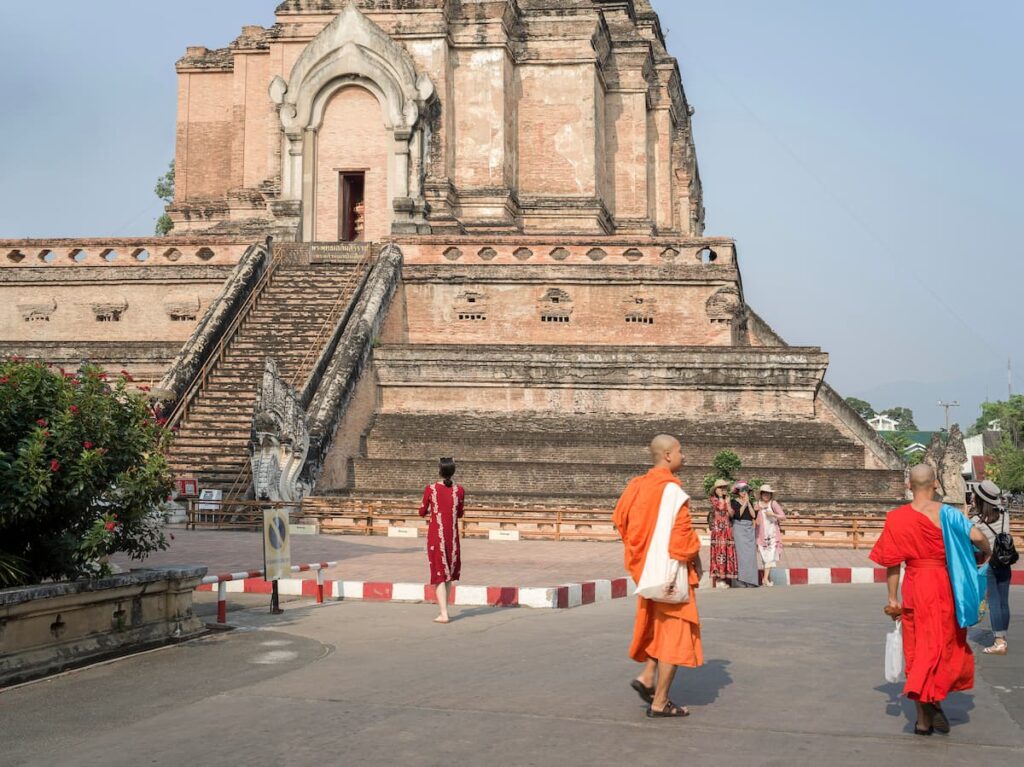
Chiang Mai’s cultural appeal also extends beyond its principal landmarks. Artisan communities continue traditions involving textiles, silverwork, pottery, woodcarving and umbrella-making. Markets and restaurants introduce the distinctive flavours of northern Thailand, while festivals such as Songkran, Yi Peng and Loi Krathong reveal how religion, community and celebration continue to overlap.
Three Cultural Experiences Not to Miss in Chiang Mai
| Experience | Why Include It |
|---|---|
| Explore the temples and historic streets of the Old City | Walking between temples such as Wat Chedi Luang and Wat Phra Singh introduces Chiang Mai’s religious heritage within the fabric of the living city. |
| Visit Wat Phra That Doi Suthep | Its sacred importance, mountain location and relationship with Chiang Mai make it far more than a scenic viewpoint. |
| Experience northern crafts, food and community traditions | Workshops, markets and traditional restaurants show how Lanna identity remains present beyond the major monuments. |
Choose Chiang Mai if: you want temples, regional food, traditional crafts and living culture to form part of everyday exploration rather than remain confined to individual attractions.
Consider somewhere else if: your primary interest is royal history, Thailand’s major national institutions or the ruins of an ancient capital. Chiang Mai can also become extremely busy during major festivals, while smoke season may affect outdoor sightseeing and views.
Continue planning: Explore the Chiang Mai Travel Guide
Bangkok — Best for the Breadth of Thai Culture
Bangkok offers the broadest introduction to Thai culture because it brings together royal heritage, Buddhism, historic communities, contemporary creativity and influences from across the country. Its size can initially feel overwhelming, but that same scale allows travellers to experience several different sides of Thailand within one city.
The Grand Palace and Wat Phra Kaew introduce the symbolism and ceremony of the Thai monarchy, while nearby Wat Pho and Wat Arun demonstrate the artistic and religious importance of Bangkok’s historic riverside. Travelling along the Chao Phraya River and into the city’s canals also reveals communities, temples and traditional houses that developed around the water long before modern Bangkok expanded around them.
Bangkok’s culture is not limited to its most famous monuments. Yaowarat reflects the influence of the city’s Thai-Chinese community, museums provide deeper historical context, and neighbourhoods such as Talat Noi, Thonburi and the old city preserve their own architecture, crafts and food traditions. Contemporary galleries, design spaces and creative districts demonstrate that Bangkok’s cultural identity continues to evolve.
Three Cultural Experiences Not to Miss in Bangkok
| Experience | Why Include It |
|---|---|
| Visit the Grand Palace and Wat Phra Kaew | The complex provides an essential introduction to Thailand’s monarchy, religious symbolism and traditional decorative arts. |
| Explore Wat Pho, Wat Arun and the historic riverside | These landmarks reveal how Buddhism, royal history and the Chao Phraya River shaped the development of Bangkok. |
| Discover one of Bangkok’s historic communities or creative districts | Exploring beyond the headline attractions introduces the city’s Thai-Chinese heritage, local neighbourhoods and contemporary culture. |
Choose Bangkok if: you want Thailand’s widest concentration of royal heritage, important temples, museums, historic communities and contemporary cultural life.
Consider somewhere else if: you prefer a slower destination that can be explored largely on foot. Bangkok’s traffic, heat and scale mean its cultural attractions are best approached selectively rather than treated as a checklist.
Continue planning: Explore the Bangkok Travel Guide
Sukhothai — Best for Historical Immersion
Sukhothai is the strongest choice for travellers who want history to shape the atmosphere of their entire stay. Rather than encountering ancient ruins within a modern city, visitors can move slowly through open historical landscapes filled with temple remains, Buddha images, ponds and tree-lined paths.
Sukhothai Historical Park preserves the remains of the first capital of the Sukhothai Kingdom, which flourished during the 13th and 14th centuries. Its central zone contains many of the best-known monuments, including Wat Mahathat and Wat Si Sawai, while the northern and western zones reward travellers who allow more time to explore.
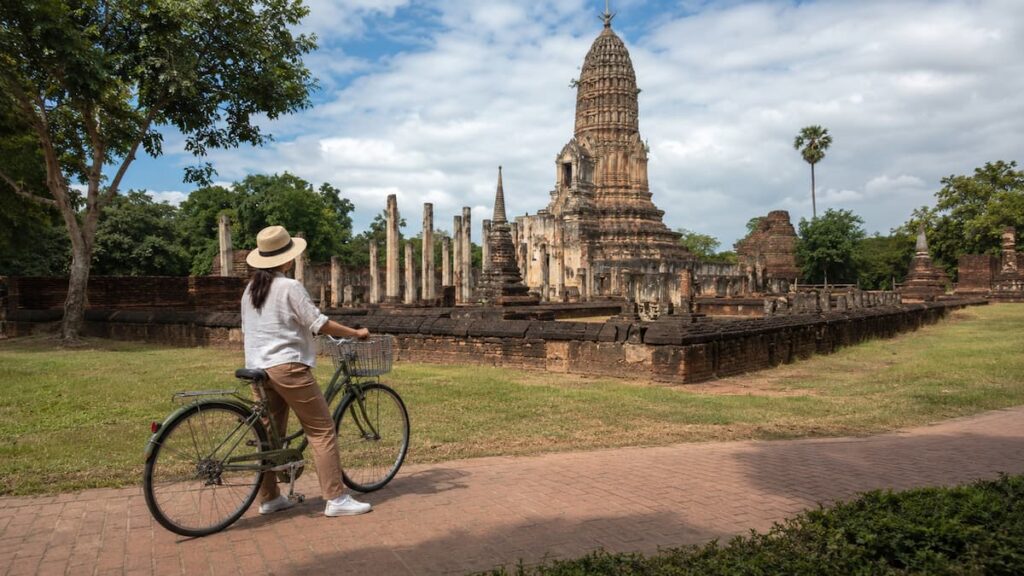
Cycling is one of the most enjoyable ways to experience the park. It creates a sense of connection between the monuments and provides opportunities to stop at quieter ruins beyond the principal group-tour routes. The wider province also adds Si Satchanalai Historical Park, traditional ceramic production and rural communities, giving Sukhothai enough cultural depth to justify more than a brief visit.
Three Cultural Experiences Not to Miss in Sukhothai
| Experience | Why Include It |
|---|---|
| Cycle through Sukhothai Historical Park | Moving slowly between temples, Buddha images and ponds reveals the scale and atmosphere of the former capital. |
| Explore Si Satchanalai Historical Park | This quieter associated city extends the historical experience and rewards travellers willing to explore beyond Sukhothai’s central zone. |
| Discover Sukhothai’s ceramics and surrounding communities | Local craftsmanship and rural life connect the ancient city with traditions that continued beyond its political decline. |
Choose Sukhothai if: you want a slower cultural holiday centred on ancient history, atmospheric ruins and time to explore independently.
Consider somewhere else if: you want extensive nightlife, modern attractions or a broad choice of activities unrelated to history. Ayutthaya is also easier to incorporate as a day trip from Bangkok, but Sukhothai provides the more immersive multi-day historical experience.
Continue planning: Explore the Sukhothai Travel Guide
Which Cultural Destination Should You Choose?
| Destination | Best For | Main Consideration |
|---|---|---|
| Chiang Mai | Living northern culture, temples and crafts | Major sites and festivals can become busy |
| Bangkok | Royal heritage and cultural variety | Its scale, traffic and heat require planning |
| Sukhothai | Ancient history and slow exploration | Limited variety beyond its cultural experiences |
Best Places in Thailand for Food
Food can become one of the most memorable parts of any holiday in Thailand, but the experience changes considerably between regions. Ingredients, cooking techniques and outside influences have created distinct local cuisines, while markets, street stalls, family restaurants and contemporary dining rooms each provide a different way to explore them.
Bangkok offers the greatest culinary range, Chiang Mai provides the strongest introduction to northern Thai food, and Phuket combines southern flavours with a distinctive Thai-Chinese heritage.
Bangkok — Best for Culinary Variety
Bangkok is the strongest overall destination for a food-focused holiday because nowhere else in Thailand offers the same breadth of regional cuisines, neighbourhood specialities and dining styles. A single day might include breakfast from a street stall, lunch in a generations-old restaurant and an evening tasting menu interpreting Thai flavours in an entirely different way.
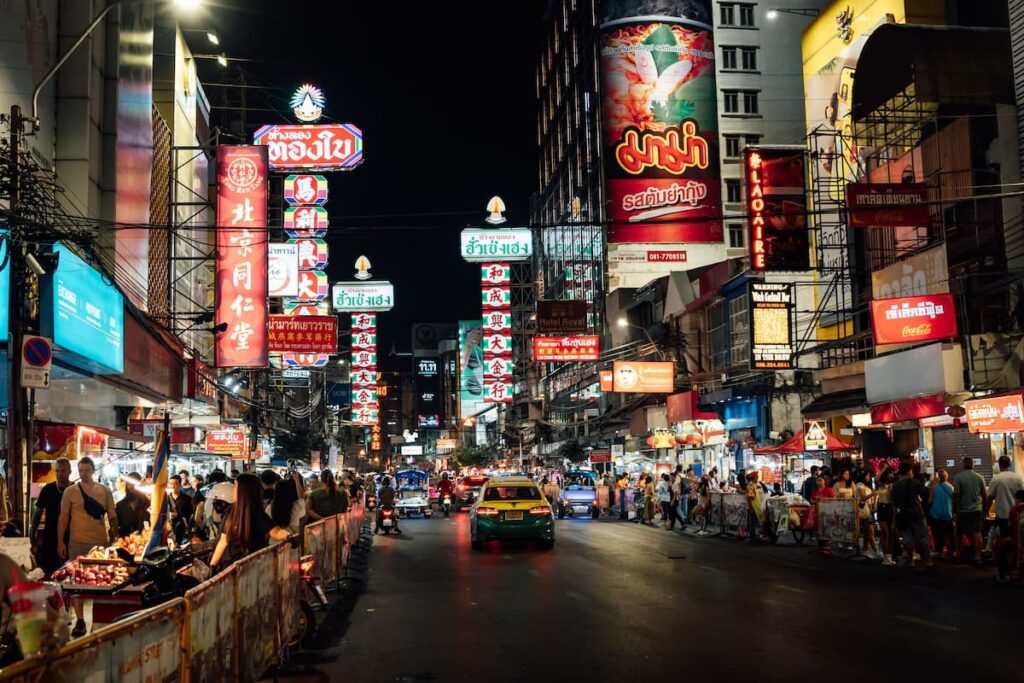
Yaowarat is one of the city’s most famous food areas, but Bangkok’s culinary identity extends far beyond Chinatown. Markets and neighbourhoods across the capital specialise in noodles, curries, grilled meats, seafood, desserts and dishes brought to the city by communities from every region of Thailand. Areas such as Bang Rak, Nang Loeng and Thonburi reward travellers who explore beyond the most familiar visitor districts.
Bangkok is equally strong at the opposite end of the dining spectrum. Its contemporary restaurants reinterpret traditional recipes, highlight regional ingredients and connect Thai cooking with international techniques. This combination of accessible local food and ambitious modern dining makes Bangkok suitable for almost every appetite and budget.
Three Food Experiences Not to Miss in Bangkok
| Experience | Why Include It |
|---|---|
| Eat through Yaowarat and a historic food neighbourhood | This reveals Bangkok’s Thai-Chinese heritage while demonstrating how strongly food remains connected to individual communities. |
| Explore a traditional market or specialist street-food area | Markets introduce the ingredients, snacks and everyday dishes that support the city’s food culture beyond famous restaurants. |
| Experience contemporary Thai dining | Bangkok’s modern restaurants show how chefs reinterpret regional recipes and traditional ingredients without abandoning their origins. |
Choose Bangkok if: you want Thailand’s greatest concentration of street food, regional cooking, historic restaurants and contemporary dining.
Consider somewhere else if: you want one clearly defined regional cuisine or prefer a compact food scene that can be explored almost entirely on foot. Bangkok’s best food is distributed across a very large city, so some planning is worthwhile.
Continue planning: Explore the Bangkok Travel Guide
Chiang Mai — Best for Northern Thai Food
Chiang Mai is the strongest choice for travellers who want to explore a distinctive regional cuisine rather than Thailand’s widest possible dining scene. Northern Thai food reflects the history, climate and cultural influences of the former Lanna Kingdom, producing flavours and dishes that can feel noticeably different from those encountered in Bangkok or southern Thailand.
Khao soi is the city’s best-known dish, combining noodles with a fragrant curry broth, crispy noodles and contrasting accompaniments. However, treating Chiang Mai only as the home of khao soi would overlook much of its culinary depth. Sai ua is a herb-filled northern sausage, while nam phrik noom and nam phrik ong are chilli dips traditionally served with vegetables and pork crackling. Northern-style larb, local curries and sticky rice further demonstrate the region’s distinctive approach to seasoning and texture.
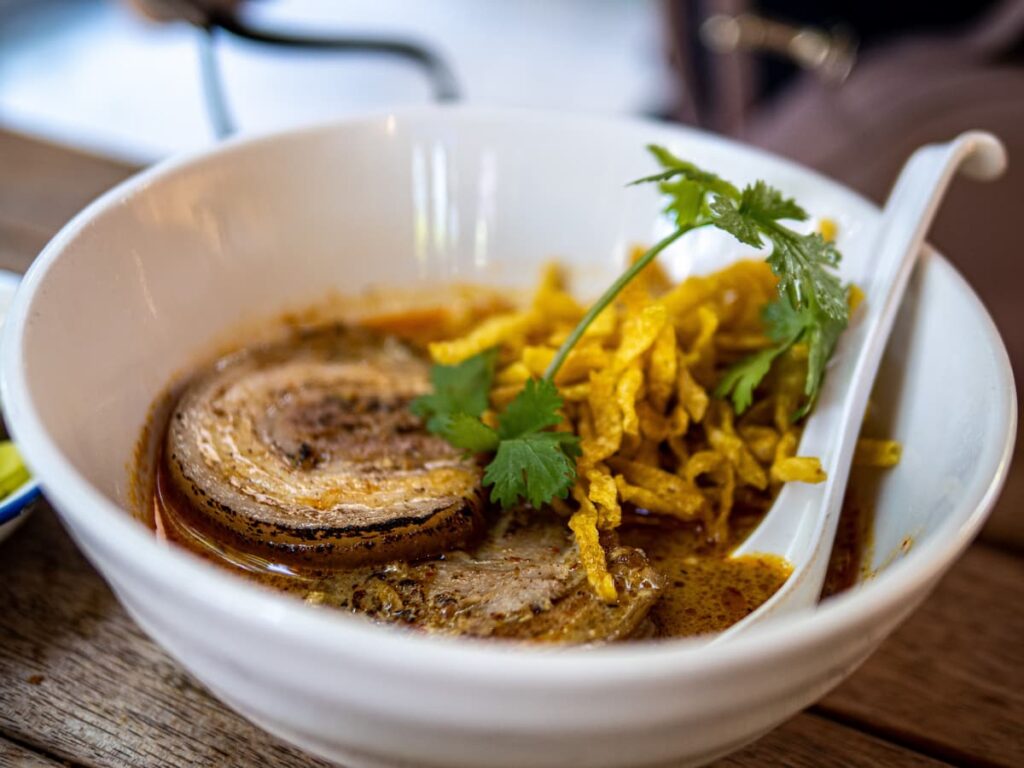
Markets provide one of the easiest ways to see how these foods fit into daily life. Morning and evening markets offer grilled meats, sausages, curries, sweets and seasonal produce, while traditional Lanna restaurants make it possible to try several dishes together. Chiang Mai’s growing café and contemporary restaurant scene adds further variety without replacing the regional food traditions that make the city special.
Three Food Experiences Not to Miss in Chiang Mai
| Experience | Why Include It |
|---|---|
| Compare more than one bowl of khao soi | Different broths, noodles, meats and levels of richness reveal that Chiang Mai’s signature dish is not represented by one fixed recipe. |
| Try sai ua, northern larb and traditional chilli dips | These dishes introduce the herbs, spice combinations and communal style that distinguish northern Thai food. |
| Explore a local market and eat in a Lanna restaurant | Markets show the cuisine in everyday life, while a shared meal makes it easier to experience several complementary dishes together. |
Choose Chiang Mai if: you want an approachable introduction to northern Thai cuisine supported by markets, traditional restaurants and an increasingly varied contemporary food scene.
Consider somewhere else if: you want Thailand’s greatest range of regional and international cooking in one destination. Remaining around the most tourist-oriented streets can also result in repetitive menus, so exploring local markets and neighbourhood restaurants is important.
Continue planning: Explore the Chiang Mai Travel Guide
Phuket — Best for Southern and Multicultural Food
Phuket offers one of Thailand’s most distinctive regional food experiences. Its position on historic maritime trading routes brought together southern Thai, Chinese, Malay and other influences, creating a culinary identity that differs considerably from the resort menus many visitors first encounter.
Phuket Old Town is the natural starting point. Local breakfast shops, noodle restaurants, markets and long-established family businesses serve dishes connected to the island’s Peranakan and Hokkien heritage. Mee Hokkien, usually prepared as fried yellow noodles with seafood or pork, is among the best-known examples, while dishes such as lo bak, o-aew and Phuket-style dim sum reveal further layers of the island’s food history.
The wider cuisine of southern Thailand is equally important. Curries tend to be intensely flavoured and can be considerably hotter than travellers expect. Turmeric, coconut, local herbs, seafood and ingredients such as stink beans appear frequently. Phuket’s coastal location also supports an extensive seafood culture, from simple local restaurants to more refined contemporary dining.
The strongest food experience is therefore found by looking beyond the international restaurants of the principal resort areas and allowing time for markets, Old Town neighbourhoods and establishments specialising in Phuket and southern Thai dishes.
Three Food Experiences Not to Miss in Phuket
| Experience | Why Include It |
|---|---|
| Explore the traditional food of Phuket Old Town | Breakfast shops, family restaurants and local markets reveal the island’s Thai-Chinese and Peranakan heritage. |
| Try Hokkien noodles, local dim sum and Phuket specialities | These dishes demonstrate how migration and maritime trade shaped a cuisine distinct from other parts of Thailand. |
| Experience southern curries and Andaman seafood | Strong spices, regional ingredients and fresh seafood introduce the broader culinary identity of southern Thailand. |
Choose Phuket if: you want a food holiday combining southern Thai flavours, seafood and a multicultural culinary history within a major beach destination.
Consider somewhere else if: you plan to remain entirely within an international resort environment. Phuket’s most distinctive dishes require some exploration beyond hotel dining and the principal tourist strips.
Continue planning: Explore the Phuket Travel Guide
Which Food Destination Should You Choose?
| Destination | Best For | Main Consideration |
|---|---|---|
| Bangkok | Thailand’s greatest culinary range | The best food is spread across a large city |
| Chiang Mai | Distinctive northern Thai cuisine | Tourist areas can offer repetitive menus |
| Phuket | Southern and Thai-Chinese food traditions | Resort dining alone misses much of its depth |
Best Places in Thailand for Nightlife
Nightlife in Thailand can mean very different things. Some travellers want rooftop cocktails, sophisticated clubs and live music, while others imagine beach bars, cabaret shows or streets where the entertainment continues into the early hours. Choosing the right destination therefore depends as much on the kind of evening you enjoy as the intensity of nightlife you want.
Bangkok offers the greatest variety, Patong combines energetic nightlife with a beach holiday, and Pattaya provides Thailand’s most concentrated entertainment scene.
Bangkok — Best for Nightlife Variety
Bangkok is Thailand’s strongest all-round nightlife destination because it provides far more than one entertainment district. Rooftop bars, nightclubs, jazz venues, live bands, craft-cocktail bars, night markets and late-night restaurants are distributed across the capital, making it possible to create a completely different evening every night.
Sukhumvit contains some of the city’s best-known nightlife areas, including the bars and clubs around Thonglor and Ekkamai as well as the more adult-oriented entertainment around Nana and Asoke. Silom combines rooftop venues, LGBTQ+ nightlife and busy streets, while Khao San Road remains associated with backpackers, inexpensive drinks and an energetic social atmosphere. Areas beside the Chao Phraya provide a more relaxed alternative through riverside restaurants, cruises and skyline views.
Bangkok’s evening appeal also extends beyond drinking and clubbing. Travellers can visit a night market, watch Muay Thai, enjoy live music, take an evening food tour or eat long after many other destinations have become quiet. This breadth makes Bangkok the easiest recommendation for groups whose members do not all enjoy the same type of nightlife.
Three Nightlife Experiences Not to Miss in Bangkok
| Experience | Why Include It |
|---|---|
| Visit a rooftop or specialist cocktail bar | Bangkok’s skyline and increasingly sophisticated bar scene provide an evening experience unavailable in Thailand’s smaller destinations. |
| Experience live music or one of the city’s club districts | Different neighbourhoods cater to electronic music, jazz, live bands and more casual social evenings. |
| Combine a night market with late-night dining | Bangkok’s evening food culture provides an alternative for travellers who want atmosphere without making bars or clubs the focus. |
Choose Bangkok if: you want the widest possible choice of sophisticated bars, energetic clubs, live entertainment and late-night food.
Consider somewhere else if: you want all the nightlife concentrated within walking distance of your accommodation. Bangkok’s entertainment districts are spread across a very large city, and travelling between them can consume part of the evening.
Continue planning: Explore the Bangkok Travel Guide
Patong — Best for Beach Nightlife
Patong is Thailand’s strongest choice for travellers who want energetic nightlife immediately beside a major beach destination. The concentration of bars, clubs, live music and entertainment around Bangla Road makes going out remarkably easy, while the surrounding town adds restaurants, markets, shopping and late-night food within a relatively compact area.
Bangla Road is the centre of Patong’s nightlife. After dark, the pedestrianised street becomes a brightly lit entertainment district filled with open-fronted bars, music venues, nightclubs and street performers. Its atmosphere is loud, commercial and unapologetically intense. Some visitors consider it an essential part of the Patong experience, while others find that one evening is enough.
However, staying in Patong does not mean every night must be spent on Bangla Road. Live-music venues, sports bars, restaurants and quieter bars can be found throughout the surrounding streets. Phuket’s sunset venues and beach clubs provide more relaxed or polished alternatives, although reaching them may require transport to another part of the island.
Patong’s real advantage is its combination. Travellers can spend the day at the beach, take an island excursion or explore Phuket, then return to a town that remains active well into the night.
Three Nightlife Experiences Not to Miss in Patong
| Experience | Why Include It |
|---|---|
| Walk along Bangla Road after dark | Even if its atmosphere is not for everyone, the street is the defining centre of Patong’s nightlife and must be experienced to understand the destination. |
| Spend an evening at a live-music or entertainment venue | Patong offers alternatives to moving between open-fronted bars, including live bands, clubs, performances and sporting events. |
| Experience a Phuket sunset bar or beach club | Looking beyond central Patong reveals a more relaxed and scenic side of Phuket’s evening entertainment. |
Choose Patong if: you want a lively beach holiday with bars, clubs, entertainment and late-night food close to your accommodation.
Consider somewhere else if: you want quiet evenings, understated nightlife or a setting that feels traditionally Thai after dark. Bangla Road can be crowded, confronting and overwhelmingly commercial, particularly for first-time visitors.
Continue planning: Explore the Patong Travel Guide
Pattaya — Best for Concentrated Entertainment
Pattaya offers Thailand’s most concentrated and persistent nightlife. Bars, clubs, live music, cabaret and adult-oriented entertainment occupy several districts, making it possible to find activity every night of the week and well beyond the hours kept by most beach destinations.
Walking Street is its best-known nightlife area, transforming after dark into a dense corridor of illuminated venues, music and crowds. However, Pattaya’s evening scene extends considerably further. Beach Road, Soi Buakhao and surrounding streets contain everything from inexpensive open-fronted bars and live bands to nightclubs and sports bars. Jomtien generally provides a more relaxed evening atmosphere for visitors who want access to Pattaya without remaining at its most intense centre.
Cabaret is another important part of the city’s entertainment identity. Large productions provide an alternative to bars and clubs, while night markets, restaurants and beachfront venues give visitors less alcohol-focused ways to spend an evening.
Pattaya is not included because it offers Thailand’s finest beaches or most atmospheric cultural setting. It earns its place because few destinations can match the sheer concentration, variety and consistency of its nightlife.
Three Nightlife Experiences Not to Miss in Pattaya
| Experience | Why Include It |
|---|---|
| Explore Walking Street after dark | The street remains Pattaya’s most recognisable nightlife district and demonstrates the scale and intensity of its entertainment scene. |
| Watch a cabaret or live performance | Pattaya’s established performance culture provides a different evening experience from simply visiting bars and clubs. |
| Discover the nightlife beyond Walking Street | Soi Buakhao, Beach Road and Jomtien reveal different prices, crowds and atmospheres within the wider destination. |
Choose Pattaya if: nightlife and evening entertainment are among the main purposes of your holiday and you want an exceptional concentration of venues.
Consider somewhere else if: you want nightlife to remain secondary to beautiful beaches, cultural immersion or a peaceful resort atmosphere. Pattaya’s adult-entertainment reputation is prominent and will not suit every traveller.
Continue planning: Explore the Pattaya Travel Guide
Which Nightlife Destination Should You Choose?
| Destination | Best For | Main Consideration |
|---|---|---|
| Bangkok | Variety, sophisticated venues and late dining | Nightlife is spread across several districts |
| Patong | Energetic nightlife beside a major beach | Bangla Road can feel intense and commercial |
| Pattaya | Concentrated late-night entertainment | Its adult-entertainment identity will not suit everyone |
Best Places in Thailand for Families
A successful family holiday requires more than an attractive beach and a hotel with a children’s pool. Travel time, suitable accommodation, medical access, changing sea conditions, wet-weather alternatives and activities for different ages can all influence how easy and enjoyable the destination feels.
Phuket provides the strongest all-round combination of convenience and variety, Hua Hin offers an uncomplicated mainland escape, and Koh Samui suits families seeking a more relaxed island resort holiday.
Phuket — Best All-Round Family Destination
Phuket is our strongest overall recommendation because it gives families more alternatives when plans, weather or energy levels change. The island combines an international airport, extensive accommodation, established medical facilities and a broad choice of beaches, organised attractions and day trips.
Choosing the right area is important. Kata, Kamala and Bang Tao are frequently considered by families because they combine beach access with restaurants, shops and resort facilities. Quieter northern areas may appeal to families planning to spend most of their time within a resort, while Patong provides maximum convenience and activity but may feel too busy for those seeking a relaxed family setting.
Away from the beach, Phuket offers water parks, an aquarium, shopping centres, cinemas, mini golf, cultural attractions and other organised activities. This variety becomes particularly valuable during poor weather or when children want something different. Boat trips into Phang Nga Bay or towards nearby islands can also become family highlights, provided the route, vessel and sea conditions are appropriate for the children’s ages.
Three Family Experiences Not to Miss in Phuket
| Experience | Why Include It |
|---|---|
| Stay near a beach suited to your family’s preferred pace | Phuket’s beach areas differ considerably, allowing families to choose between convenience, activity and quieter resort surroundings. |
| Visit a water park, aquarium or indoor attraction | Organised attractions provide variety and valuable alternatives when beach conditions or weather are unsuitable. |
| Take an age-appropriate Phang Nga Bay or island excursion | A carefully selected boat trip introduces limestone scenery, islands and marine experiences beyond the resort. |
Choose Phuket if: you want straightforward access, extensive accommodation, strong visitor infrastructure and enough activities to satisfy different ages and interests.
Consider somewhere else if: you want a small destination with minimal traffic and a consistently quiet atmosphere. Families must also select swimming areas carefully and observe local warning flags; no Phuket beach should be presumed safe in all weather or seasons.
Continue planning: Explore the Phuket Travel Guide
Hua Hin — Best for an Easy Mainland Family Holiday
Hua Hin is a strong choice for families who value simplicity, space and a relaxed pace more than dramatic island scenery. Its mainland location removes the need for a ferry, while road and rail connections make it relatively straightforward to reach from Bangkok.
The long beach supports an uncomplicated resort holiday, with accommodation ranging from serviced apartments and family hotels to large beachfront resorts. The sea and sand may not appear as classically tropical as the best beaches in southern Thailand, but Hua Hin compensates with convenience, a broad choice of restaurants and activities that do not depend entirely on perfect beach weather.
Water parks and other organised attractions give children opportunities to do more than swim at the hotel. Evening visits to markets introduce Thai snacks, seafood and a lively but manageable atmosphere, while nearby destinations such as Khao Sam Roi Yot National Park and Pranburi add caves, wetlands, mangroves and coastal scenery for active families.
Hua Hin’s familiarity among Thai holidaymakers also gives it a different character from international island resorts. It feels like an established seaside town rather than a destination created primarily around foreign tourism.
Three Family Experiences Not to Miss in Hua Hin
| Experience | Why Include It |
|---|---|
| Enjoy an uncomplicated beach-and-resort day | Hua Hin’s long coastline and extensive accommodation make it easy to alternate between the beach, pool and nearby restaurants. |
| Visit a water park or family attraction | These provide a full day of entertainment and reduce the family’s dependence on favourable sea conditions. |
| Explore a night market or nearby natural area | Markets introduce local food and atmosphere, while Pranburi and Khao Sam Roi Yot add mangroves, wildlife and outdoor exploration. |
Choose Hua Hin if: you want a relaxed family break with mainland access, spacious resorts and enough attractions to fill several days without complicated travel.
Consider somewhere else if: brilliant tropical water, island-hopping and dramatic coastal scenery are central to your plans. The journey from Bangkok can also take considerably longer during busy road periods.
Continue planning: Explore the Hua Hin Travel Guide
Koh Samui — Best for a Relaxed Family Island Holiday
Koh Samui suits families who want the atmosphere of a tropical island while retaining a comfortable level of tourism infrastructure. Direct flights remove the need for a long ferry journey, and the island offers a wide range of family resorts, restaurants and activities without the scale and intensity of Phuket.
The choice of beach area has a significant influence on the holiday. Choeng Mon is relatively compact and popular with families seeking a quieter resort setting, while Bophut combines beach access with the restaurants and evening atmosphere of Fisherman’s Village. Maenam generally feels more relaxed, whereas Chaweng provides the greatest convenience and activity but may be busier than some families prefer.
Days can be divided between the beach, resort pool and gentle exploration of the island. Waterfalls, temples, viewpoints and local markets provide manageable outings, while boat excursions introduce older or more confident children to snorkelling and the marine landscapes around Samui. Ang Thong National Marine Park can be a memorable family experience, although travel time and sea conditions must be considered carefully.
Three Family Experiences Not to Miss on Koh Samui
| Experience | Why Include It |
|---|---|
| Stay beside a beach suited to your family | Choeng Mon, Bophut, Maenam and Chaweng offer different balances of tranquillity, convenience and activity. |
| Explore waterfalls and accessible island attractions | Short outings provide variety without requiring families to spend an entire day travelling or remain exclusively at the resort. |
| Take a carefully selected boat or snorkelling excursion | A suitable trip can introduce children to island scenery and marine life beyond Koh Samui’s beaches. |
Choose Koh Samui if: you want a comfortable tropical island holiday with family resorts, attractive beaches and enough activities for occasional days away from the pool.
Consider somewhere else if: you need the widest possible range of indoor attractions, medical services or inexpensive transport. Flights, private transfers and family boat trips can also make Samui more expensive than expected.
Continue planning: Explore the Koh Samui Travel Guide
Which Family Destination Should You Choose?
| Destination | Best For | Main Consideration |
|---|---|---|
| Phuket | Convenience, activities and the widest choice | Beach areas and conditions must be selected carefully |
| Hua Hin | An uncomplicated mainland family break | Less dramatic tropical scenery |
| Koh Samui | A relaxed family island holiday | Flights and transport can increase costs |
Best Places in Thailand for Couples
A couples’ holiday does not have to mean an isolated honeymoon resort. Some couples want privacy and relaxation, while others prefer shared adventures, memorable meals, cultural discovery or enough variety to explore independently during the day.
Koh Samui provides the strongest resort-style escape, Krabi combines romantic scenery with coastal adventure, and Chiang Mai offers culture, food and atmosphere without relying on a beach.
Koh Samui — Best for Resort-Style Romance
Koh Samui is our strongest overall choice for couples seeking a relaxed tropical holiday with privacy, attractive surroundings and a little indulgence. Its beachfront resorts, hillside villas, spas and restaurants make it easy to build a holiday around time together without feeling confined to one property.
The island’s different coastal areas allow couples to choose the atmosphere they want. Bophut combines boutique accommodation with restaurants and evening walks around Fisherman’s Village. Lamai provides a balance between activity and relaxation, while Maenam and parts of the southern coast offer a quieter setting. Chaweng suits couples who want nightlife and extensive dining close at hand.
Samui also provides enough experiences to prevent the holiday from becoming repetitive. Couples can explore waterfalls and temples, visit scenic viewpoints, share a spa treatment or travel by boat into Ang Thong National Marine Park. Sunset cruises and beachfront dining add naturally romantic moments without requiring every activity to be arranged as a formal couples’ experience.
Three Experiences for Couples on Koh Samui
| Experience | Why Include It |
|---|---|
| Stay in a beachfront or hillside villa | Samui offers extensive accommodation designed around privacy, views and time spent together. |
| Share a spa or wellness experience | The island’s established wellness scene provides an easy way to slow down and make relaxation part of the holiday. |
| Take a sunset cruise or explore Ang Thong Marine Park | A boat journey adds shared discovery and memorable scenery beyond the resort. |
Choose Koh Samui if: you want an attractive island setting, quality accommodation, relaxed evenings and enough activities to balance time beside the beach.
Consider somewhere else if: your budget does not comfortably accommodate premium resorts, internal flights or private experiences. Samui can provide good value, but its most polished romantic options are frequently more expensive than comparable stays elsewhere.
Continue planning: Explore the Koh Samui Travel Guide
Krabi — Best for Scenery and Shared Adventure
Krabi suits couples who want their holiday to include memorable experiences as well as time beside the beach. Its limestone cliffs, offshore islands and longtail boats provide a naturally dramatic setting, while kayaking, climbing, walking and boat excursions create plenty of opportunities to explore together.
Railay is the province’s most obviously romantic setting. Reached only by boat and enclosed by limestone cliffs, it feels separated from the mainland despite being only a short journey from Ao Nang. Couples wanting greater convenience may prefer Ao Nang, while Klong Muang and Tubkaek offer quieter resort surroundings with impressive sunset views across the Andaman Sea.
The strongest Krabi itinerary does not remain entirely within the resort. A private or small-group longtail excursion can reveal beaches and islands at a more relaxed pace, while kayaking provides access to mangroves and sheltered limestone waterways. Viewpoints, sunset cruises and dinners overlooking the coast give couples quieter moments between more active days.
Krabi works particularly well when one partner wants relaxation and the other becomes restless after several days beside the pool. Its combination of scenery and accessible adventure allows both styles to form part of the same holiday.
Three Experiences for Couples in Krabi
| Experience | Why Include It |
|---|---|
| Travel by longtail boat to Railay and Phra Nang | The journey and limestone setting create one of southern Thailand’s most memorable shared coastal experiences. |
| Kayak through mangroves or limestone waterways | Kayaking allows couples to explore together at a slower pace and reach landscapes that cannot be appreciated from the road. |
| Share a sunset cruise or visit a scenic viewpoint | Krabi’s coastline and limestone islands are particularly atmospheric in the softer light at the end of the day. |
Choose Krabi if: you want striking scenery, attractive resorts and shared coastal adventures rather than spending the entire holiday beside one beach.
Consider somewhere else if: your ideal couples’ holiday revolves around complete privacy and avoiding organised excursions. Krabi’s most famous islands and boat routes can become crowded, especially during peak season.
Continue planning: Explore the Krabi Travel Guide
Chiang Mai — Best for Culture and Atmosphere
Chiang Mai is the strongest non-beach choice for couples who enjoy discovering a destination together. Its temples, neighbourhoods, markets, restaurants and surrounding mountains provide a varied holiday built around shared experiences rather than resort facilities.
The Old City rewards unhurried exploration, with historic temples, shaded courtyards and small streets that can be discovered on foot. Areas such as Nimmanhaemin add contemporary cafés, galleries and restaurants, while riverside and garden settings provide quieter places for dinner. Chiang Mai’s accommodation also includes intimate boutique hotels, traditional-style properties and mountain retreats that suit couples without necessarily carrying luxury-resort prices.
Food can become a significant part of the holiday. Couples can explore markets, compare different bowls of khao soi, share a northern Thai meal or take a cooking class together. Outside the city, Doi Suthep, Doi Inthanon and the surrounding countryside provide viewpoints, walking opportunities and cooler mountain landscapes.
Chiang Mai is particularly suitable for couples who value atmosphere and discovery over conventional honeymoon imagery. It provides plenty to do while still allowing time for cafés, massage, long meals and evenings that feel relaxed rather than heavily programmed.
Three Experiences for Couples in Chiang Mai
| Experience | Why Include It |
|---|---|
| Explore the Old City’s temples and neighbourhoods together | Chiang Mai encourages slow, shared discovery rather than moving between isolated attractions. |
| Take a cooking class or explore northern Thai food | Preparing or tasting regional dishes provides an experience that is both social and distinctive to the destination. |
| Escape into the surrounding mountains | Viewpoints, national parks and mountain accommodation add nature and tranquillity to a city-based holiday. |
Choose Chiang Mai if: you want culture, food, boutique accommodation and shared exploration to matter more than beaches or resort luxury.
Consider somewhere else if: a tropical coastline is essential to your idea of a romantic holiday. Smoke season can also significantly affect mountain views, air quality and outdoor activities.
Continue planning: Explore the Chiang Mai Travel Guide
Which Destination for Couples Should You Choose?
| Destination | Best For | Main Consideration |
|---|---|---|
| Koh Samui | Resort-style romance and relaxation | Premium accommodation and transport can be expensive |
| Krabi | Dramatic scenery and shared adventure | Famous excursions can become crowded |
| Chiang Mai | Culture, food and atmospheric exploration | No tropical beach |
Best Places in Thailand for Nature
Thailand’s natural landscapes extend far beyond its tropical beaches. Rainforests, mountains, rivers, waterfalls and protected wildlife habitats can become the focus of an entire holiday, but the experience differs considerably between destinations. Some places provide deep immersion in one ecosystem, while others combine several natural environments with easier access and more comfortable visitor facilities.
Khao Sok offers the most complete rainforest experience, Khao Yai provides the strongest opportunities for guided wildlife exploration, and Kanchanaburi combines rivers, forests and waterfalls within relatively easy reach of Bangkok.
Khao Sok — Best for Rainforest Immersion
Khao Sok is our strongest overall nature destination because the landscape shapes almost every part of the visit. Ancient evergreen rainforest covers limestone mountains, waterways pass beneath dense vegetation, and the immense cliffs rising from Cheow Lan Lake create one of Thailand’s most dramatic inland settings.
The destination is experienced through two principal areas. Khao Sok Village provides access to the national park headquarters, rainforest trails and activities along the Sok River. Cheow Lan Lake is reached separately through Rajjaprabha Dam and offers longtail-boat journeys, kayaking, caves and floating accommodation. The two gateways are approximately 64 kilometres apart, so travellers should allow enough time to experience both rather than assuming they occupy one compact area.
Guided walks reveal plants, insects, birds and smaller rainforest animals that are easily missed when moving quickly. Wild elephants and other large mammals inhabit the wider protected landscape, but sightings should never be expected or promised. For many visitors, the sounds of gibbons, flights of hornbills and details of the forest become more representative experiences.
Three Nature Experiences Not to Miss in Khao Sok
| Experience | Why Include It |
|---|---|
| Explore Cheow Lan Lake by longtail boat | Travelling beneath the lake’s limestone towers reveals the scale and defining scenery of Khao Sok. |
| Join a guided rainforest walk | A knowledgeable guide improves safety while revealing wildlife, plants and ecological details that visitors might otherwise overlook. |
| Canoe or bamboo-raft along the Sok River | The river provides a slower perspective of the forest and limestone landscape surrounding Khao Sok Village. |
Choose Khao Sok if: you want rainforest, dramatic scenery and nature-based activities to become the central purpose of your holiday rather than a single day trip.
Consider somewhere else if: you want simple independent sightseeing or guaranteed wildlife encounters. Some trails and caves close when heavy rain creates unsafe conditions, and travelling between the village and lake requires advance planning.
Continue planning: Explore the Khao Sok Travel Guide
Khao Yai — Best for Wildlife and Forest Exploration
Khao Yai is the strongest choice for travellers who want to explore a major wildlife habitat without travelling into one of Thailand’s most remote protected areas. Located within reach of Bangkok, the national park contains evergreen forest, grasslands, waterfalls and an extensive road network that allows visitors to experience several environments during the same stay.
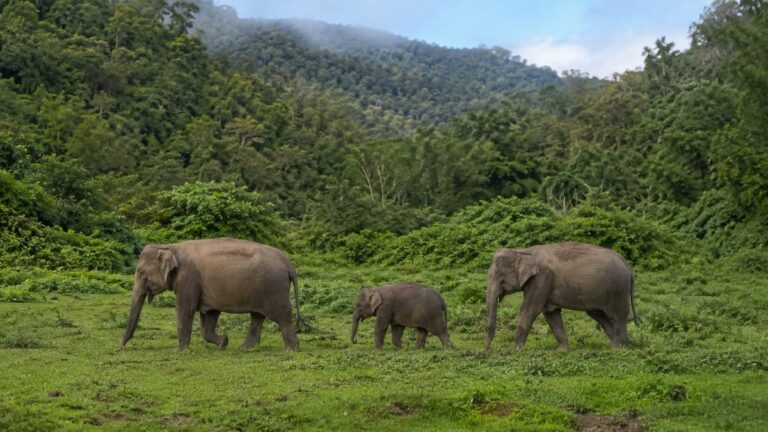
Wild elephants are Khao Yai’s most famous inhabitants, but the park also supports gibbons, macaques, hornbills, deer and many other species. No particular sighting can be guaranteed. Wildlife experiences depend on timing, patience, conditions and the knowledge of the guide accompanying you.
Guided excursions significantly improve a visit. Experienced guides recognise calls, tracks and movement that most visitors would miss, while also explaining how to behave safely around wild animals. Some walks require a guide, and even where independent access is permitted, local expertise can turn an ordinary forest walk into a much richer experience.
Waterfalls such as Haew Suwat and Haew Narok provide additional reasons to explore, although their appearance changes with the seasons. Viewpoints, forest roads and evening wildlife activities make Khao Yai suitable for a stay of several days rather than a rushed excursion from Bangkok.
Three Nature Experiences Not to Miss in Khao Yai
| Experience | Why Include It |
|---|---|
| Join a guided wildlife excursion | Guides improve the possibility of finding and identifying wildlife while helping visitors behave responsibly within a wild habitat. |
| Hike one of the park’s appropriate forest trails | Walking beneath the forest canopy provides a closer understanding of the ecosystem than sightseeing only from a vehicle. |
| Visit Khao Yai’s waterfalls and viewpoints | These stops reveal the park’s scale and varied terrain while breaking up longer wildlife and forest excursions. |
Choose Khao Yai if: you want guided wildlife observation, forest walking and waterfalls within relatively practical reach of Bangkok.
Consider somewhere else if: you expect guaranteed elephant sightings or want to explore entirely without transport or assistance. A vehicle and experienced guide substantially improve the experience, while encounters with wild elephants require distance, patience and strict attention to park instructions.
Continue planning: Explore the Khao Yai Travel Guide
Kanchanaburi — Best for Rivers, Waterfalls and Varied Landscapes
Kanchanaburi suits travellers who want several different natural environments within one accessible province. Forested mountains, rivers, caves, reservoirs and waterfalls extend far beyond the city’s famous historical sites, allowing nature to become a substantial part of a longer stay.
Erawan National Park is the province’s best-known natural attraction. Its multi-level waterfall flows through forest into a succession of blue-green pools, with a trail connecting the different tiers. Arriving early allows more time to explore before the most popular lower levels become busy.
Sai Yok National Park provides a contrasting landscape shaped by the Khwae Noi River, forest, caves and waterfalls. Staying beside or on the river can be as memorable as visiting a specific attraction, particularly in quieter areas beyond Kanchanaburi town. Travellers with additional time can continue further into the province, where the landscapes become increasingly remote and less developed.
Kanchanaburi’s advantage is the ability to combine nature with history. The River Kwai, railway, museums and memorial sites give the holiday another dimension, while the surrounding national parks prevent the destination from becoming exclusively a historical visit.
Three Nature Experiences Not to Miss in Kanchanaburi
| Experience | Why Include It |
|---|---|
| Explore Erawan National Park | The forest trail and sequence of waterfall pools provide one of Thailand’s most recognisable and accessible nature experiences. |
| Visit Sai Yok National Park | Rivers, caves, forest and waterfalls reveal a quieter and more varied side of the province. |
| Stay beside or travel along the River Kwai | Experiencing the river slowly connects Kanchanaburi’s scenery, communities and history. |
Choose Kanchanaburi if: you want waterfalls, forests and rivers combined with important historical experiences within manageable reach of Bangkok.
Consider somewhere else if: you want deep immersion in one largely uninterrupted ecosystem. Kanchanaburi’s attractions are dispersed across a large province, so transport and sufficient time are essential.
Continue planning: Explore the Kanchanaburi Travel Guide
Which Nature Destination Should You Choose?
| Destination | Best For | Main Consideration |
|---|---|---|
| Khao Sok | Rainforest immersion and limestone scenery | The village and lake use separate gateways |
| Khao Yai | Guided wildlife and forest exploration | A vehicle and experienced guide improve the visit |
| Kanchanaburi | Rivers, waterfalls and natural variety | Attractions are spread across a large province |
Best Places in Thailand for Adventure
An adventure holiday in Thailand might involve trekking through northern mountains, rafting along forested rivers, climbing limestone cliffs or learning to dive in tropical water. The best destination therefore depends on whether you want your adventures on land, along the coast or beneath the sea.
Chiang Mai offers the broadest range of land-based activities, Krabi combines physical adventure with spectacular coastal scenery, and Koh Tao is Thailand’s strongest destination for an underwater-focused holiday.
Chiang Mai — Best for Land-Based Adventure
Chiang Mai is our strongest all-round adventure destination because the city provides access to mountains, forests, rivers and an established outdoor-activity industry. Travellers can attempt several different adventures while remaining based in or around one well-connected destination.
Trekking ranges from relatively gentle day walks to longer guided routes through mountain landscapes and rural communities. The quality and character of these experiences vary considerably, so travellers should select responsible operators that use knowledgeable local guides and treat communities as participants rather than attractions.
The Mae Taeng River adds white-water rafting, with conditions and difficulty influenced by recent rainfall. Mountain biking, cycling and ziplining provide further ways to experience the surrounding countryside. Chiang Mai also makes adventure relatively comfortable: active days can be balanced with excellent food, massage, markets and the cultural attractions of the city.
Three Adventures Not to Miss in Chiang Mai
| Experience | Why Include It |
|---|---|
| Trek through northern mountain landscapes | Guided trekking introduces forests, viewpoints and rural areas that cannot be fully experienced from Chiang Mai city. |
| Go white-water rafting on the Mae Taeng River | Rafting adds a more energetic river experience, with conditions shaped by season and water levels. |
| Cycle, mountain bike or zipline through the countryside | These activities provide a different perspective of the landscape and make the destination suitable for varied ability levels. |
Choose Chiang Mai if: you want several kinds of land-based adventure supported by the accommodation, food and convenience of a major city.
Consider somewhere else if: diving, sea kayaking or coastal climbing defines your idea of adventure. Outdoor conditions can also be affected by heavy rain, extreme heat and northern Thailand’s smoke season.
Continue planning: Explore the Chiang Mai Travel Guide
Krabi — Best for Coastal Adventure
Krabi is the strongest choice for travellers who want physical activity surrounded by some of Thailand’s most dramatic coastal scenery. Limestone cliffs, mangrove forests, offshore islands and sheltered bays create opportunities for climbing, kayaking, snorkelling and diving within one destination.
Railay and Tonsai are internationally recognised climbing areas, with routes rising above beaches and the Andaman Sea. Beginners can book introductory sessions with established climbing schools, while experienced climbers can select routes suited to their ability. Equipment, instruction and current access conditions should always be checked locally.
Kayaking reveals a quieter side of Krabi. Routes through mangroves and limestone formations allow travellers to enter narrow waterways and observe the landscape at close range. Offshore excursions add snorkelling and diving, although conditions, visibility and access vary with the season.
Krabi works particularly well for mixed holidays. Travellers can alternate challenging activities with beach days, boat trips and relaxed evenings rather than committing every day to intensive adventure. This balance makes it suitable for couples or groups whose enthusiasm and experience levels differ.
Three Adventures Not to Miss in Krabi
| Experience | Why Include It |
|---|---|
| Rock-climb at Railay or Tonsai | Krabi’s limestone cliffs provide one of Thailand’s most distinctive adventure experiences, with options for beginners and experienced climbers. |
| Kayak through mangroves and limestone waterways | Kayaking combines physical activity with access to sheltered landscapes that cannot be explored by road. |
| Snorkel or dive around the offshore islands | Marine activities extend the adventure beneath the water and reveal another side of Krabi’s coastal environment. |
Choose Krabi if: you want climbing, kayaking and marine adventure combined with beaches and spectacular scenery.
Consider somewhere else if: you are travelling when rough seas or heavy rain may disrupt the activities most important to you. Popular climbing areas and island routes can also become crowded during peak season.
Continue planning: [Explore the Krabi Travel Guide]
Koh Tao — Best for Underwater Adventure
Koh Tao is Thailand’s strongest choice for travellers who want diving to become the central experience of their holiday. The island has an extensive diving community, numerous training centres and access to sites suitable for beginners, experienced recreational divers and those progressing towards professional qualifications.
First-time divers can begin with an introductory experience or complete an entry-level certification over several days. The concentration of dive schools creates considerable choice, but price should not be the only consideration. Group size, instructor experience, equipment standards, safety procedures and the centre’s approach to marine conservation all deserve attention.
Certified divers can explore reefs, pinnacles and wrecks around the island, with potential encounters ranging from reef fish and turtles to larger seasonal visitors. Conditions and visibility vary, so no particular species should be expected. Travellers who do not want to scuba dive can still snorkel, freedive, kayak or explore bays around the island.
Koh Tao’s hills and viewpoints add some worthwhile land-based activity between dives. However, the island’s identity remains closely connected to the sea, making it the clearest recommendation for travellers who want to learn, improve or spend much of their holiday underwater.
Three Adventures Not to Miss on Koh Tao
| Experience | Why Include It |
|---|---|
| Complete an introductory dive or scuba certification | Koh Tao’s concentration of training centres and beginner-suitable sites makes learning to dive a defining island experience. |
| Explore reefs, pinnacles or wrecks suited to your ability | The variety of dive sites allows certified divers to progress beyond sheltered introductory locations. |
| Hike or kayak between viewpoints and bays | Land and surface activities provide active alternatives between dives while revealing more of the island. |
Choose Koh Tao if: you want to learn to dive, develop existing skills or build most of your holiday around underwater exploration.
Consider somewhere else if: you are uncomfortable with ferry travel or want a broad range of major attractions unrelated to the sea. Gulf weather can disrupt crossings and reduce underwater visibility, particularly during the wetter part of the year.
Continue planning: Explore the Koh Tao Travel Guide
Which Adventure Destination Should You Choose?
| Destination | Best For | Main Consideration |
|---|---|---|
| Chiang Mai | Trekking, rafting and varied land activities | Smoke and heavy rain can affect outdoor plans |
| Krabi | Climbing, kayaking and coastal adventure | Marine activities are weather-dependent |
| Koh Tao | Diving and underwater discovery | Ferry access and visibility vary with conditions |
Best Places in Thailand for a Quieter Escape
A quieter holiday does not necessarily require complete isolation. Some travellers want an island with very little development, while others prefer a slower atmosphere but still value restaurants, comfortable accommodation and a reasonable choice of activities. The important question is how much convenience you are willing to exchange for peace.
Koh Yao Noi offers accessible tranquillity within Phang Nga Bay, Koh Lanta provides quiet beaches without leaving visitors isolated, and Koh Kood creates the strongest sense of retreat for travellers willing to make the longer journey.
Koh Yao Noi — Best for Accessible Tranquillity
Koh Yao Noi is our strongest overall choice because it feels remarkably removed from the busy resorts of Phuket and Krabi despite lying between them in Phang Nga Bay. Small villages, rubber plantations, rice fields and coastal roads give the island a slower rhythm, while boutique resorts and local restaurants provide enough comfort for a longer stay.
The island is best explored gradually. Cycling or travelling carefully by scooter reveals fishing communities, farmland and viewpoints across the bay’s limestone islands. Kayaking and small-boat excursions provide access to mangroves, sheltered water and surrounding islands without requiring the pace of a conventional multi-stop speedboat tour.
Koh Yao Noi should not be chosen solely for perfect swimming beaches. Some sections of coastline become shallow or rocky at low tide, and the beaches are not consistently as impressive as those found on Koh Lanta or Koh Kood. The island’s real appeal lies in its atmosphere, views and close connection with local life.
Three Quiet Experiences Not to Miss on Koh Yao Noi
| Experience | Why Include It |
|---|---|
| Explore the island’s rural roads and villages slowly | Travelling without a rushed itinerary reveals the farms, fishing communities and everyday landscapes that define Koh Yao Noi. |
| Kayak or take a small-boat journey through Phang Nga Bay | Slower excursions complement the island’s atmosphere while providing close views of mangroves and limestone formations. |
| Stay overlooking the limestone islands | The views across Phang Nga Bay are among Koh Yao Noi’s defining qualities, particularly in the softer morning and evening light. |
Choose Koh Yao Noi if: you want a peaceful island atmosphere, beautiful bay views and convenient access from Phuket or Krabi without staying in a major resort destination.
Consider somewhere else if: long swimming beaches are your highest priority or you want extensive nightlife, shopping and organised attractions. Tides noticeably affect parts of the coastline, and the island’s quiet character depends on its limited entertainment.
Continue planning: Explore the Koh Yao Noi Travel Guide
Koh Lanta — Best for Quiet Without Isolation
Koh Lanta is ideal for travellers who want peaceful beaches and a slower island atmosphere without giving up a useful choice of accommodation, restaurants and activities. It is developed enough to support a comfortable holiday but remains considerably more relaxed than Phuket, Samui or the busiest parts of Krabi.
The island’s west coast becomes progressively quieter as you travel south. Beaches in the north provide easier access to the ferry, shops and a greater concentration of restaurants, while the southern beaches generally offer more space and less passing traffic. This allows travellers to choose the degree of tranquillity that suits them rather than accepting complete isolation.
Koh Lanta also offers enough variety for visitors who become restless after several days beside the sea. Lanta Old Town introduces a different side of the island through its wooden waterfront buildings and long-established communities. Mangrove excursions, national-park scenery, nearby islands and snorkelling trips provide additional reasons to explore.
Its greatest strength is balance. Koh Lanta feels calm without making every meal, transfer or excursion difficult to arrange, which makes it a particularly approachable quiet escape for first-time visitors to Thailand.
Three Quiet Experiences Not to Miss on Koh Lanta
| Experience | Why Include It |
|---|---|
| Stay beside one of the quieter southern beaches | Travelling further from the ferry areas generally produces a slower atmosphere and less-developed coastline. |
| Explore Lanta Old Town and the eastern side of the island | The waterfront community, mangroves and rural landscapes reveal a character quite different from the western resort beaches. |
| Visit nearby islands or snorkelling areas | Carefully selected excursions add marine scenery and activity without changing the relaxed pace of the holiday. |
Choose Koh Lanta if: you want quiet beaches, sufficient restaurants and accommodation, and enough activities to support a week or longer.
Consider somewhere else if: you want a compact island that can be explored easily on foot. Koh Lanta is long and spread out, so transport becomes important if you plan to explore beyond your immediate beach area.
Continue planning: Explore the Koh Lanta Travel Guide
Koh Kood — Best for a More Complete Island Retreat
Koh Kood is the strongest choice for travellers who want to withdraw more completely from Thailand’s busy visitor centres. Forested hills, waterfalls, fishing communities and beautiful beaches give the island a natural, unhurried atmosphere, while the limited nightlife encourages evenings centred on the resort, a quiet restaurant or the sound of the sea.
The island’s beaches are among its greatest strengths. Bays such as Khlong Chao, Bang Bao and Ao Phrao combine clear water, soft sand and considerably less development than Thailand’s most famous resort beaches. Accommodation ranges from simple properties to exclusive resorts, but dining and evening options remain concentrated around individual beach areas.
Khlong Chao Waterfall provides an inland alternative to the coast, while roads through the forested interior connect small settlements, viewpoints and fishing villages. Exploring Koh Kood requires more effort than remaining at a single resort, but the island rewards travellers who want to understand the place beyond its beaches.
Reaching Koh Kood also demands greater commitment. Most international visitors travel through Bangkok and Trat before continuing by road and boat. That journey helps preserve the island’s quieter character but makes it less suitable for a short or tightly scheduled holiday.
Three Quiet Experiences Not to Miss on Koh Kood
| Experience | Why Include It |
|---|---|
| Spend unhurried time on Koh Kood’s quieter beaches | The island’s attractive bays and limited development create the genuine beach retreat many travellers imagine. |
| Visit Khlong Chao Waterfall | The waterfall introduces Koh Kood’s forested interior and provides an experience away from the coast. |
| Explore a fishing village and the island’s rural roads | Travelling beyond the resort reveals local communities and the slower everyday life that supports Koh Kood’s atmosphere. |
Choose Koh Kood if: you want beautiful beaches, limited development and a holiday deliberately separated from energetic nightlife and extensive sightseeing.
Consider somewhere else if: you want easy access, numerous restaurants or reliable alternatives when poor weather affects beach and boat plans. Ferry services and sea conditions are more important considerations here than at mainland destinations.
Continue planning: Explore the Koh Kood Travel Guide
Which Quiet Destination Should You Choose?
| Destination | Best For | Main Consideration |
|---|---|---|
| Koh Yao Noi | Accessible tranquillity and Phang Nga Bay views | Beaches vary considerably with location and tide |
| Koh Lanta | Quiet beaches with sufficient amenities | The island is spread out and transport is useful |
| Koh Kood | A more complete island retreat | Longer journey and limited nightlife |
How We Chose the Best Places for Each Type of Holiday
The destinations in this guide were chosen for how convincingly they support a particular type of holiday—not simply because they are famous. We considered the strength and variety of the relevant experiences, ease of travel, visitor facilities, seasonal limitations and whether each place offers enough to become a genuine holiday destination rather than just a worthwhile day trip.
Each category is limited to three recommendations. The first provides the strongest all-round match, while the other two offer meaningfully different alternatives. For example, the best choice for beach variety may not be the right destination for someone seeking dramatic coastal scenery or the atmosphere of a smaller island.
Some destinations appear in more than one category because places such as Phuket, Bangkok, Chiang Mai and Krabi can suit several styles of holiday for different reasons. In every case, we explain why the destination belongs, identify three defining experiences and highlight the main consideration to understand before choosing it.
When Your Thailand Holiday Fits More Than One Category
Most travellers do not want only one experience from their holiday. You may want beautiful beaches without giving up nightlife, cultural discovery supported by memorable food, or outdoor adventure followed by several quiet days beside the sea.
The most suitable destination is often the one that performs strongly across your two highest priorities. It does not need to be Thailand’s absolute best place for either experience if it provides the most satisfying combination of both.
| If You Want… | Strongest Starting Point | Why |
|---|---|---|
| Beaches and nightlife | Phuket | Numerous beaches with easy access to Patong and other evening venues |
| Beaches and adventure | Krabi | Climbing, kayaking, snorkelling and island exploration beside a dramatic coast |
| Beaches and tranquillity | Koh Lanta | Relaxed beaches with enough restaurants and activities for a longer stay |
| Beaches and romance | Koh Samui | Attractive resorts, spas, island scenery and relaxed evenings |
| Culture and food | Chiang Mai | Northern traditions are expressed through temples, markets, crafts and regional cuisine |
| Culture and nightlife | Bangkok | Thailand’s greatest concentration of cultural attractions and evening variety |
| Nature and adventure | Khao Sok | Rainforest walking, river activities and exploration of Cheow Lan Lake |
| Family activities and convenience | Phuket | Straightforward access, extensive accommodation and alternatives beyond the beach |
| Romance and culture | Chiang Mai | Boutique accommodation, atmospheric temples, mountain escapes and shared food experiences |
| Peace and greater isolation | Koh Kood | Beautiful beaches, limited development and very little nightlife |
These combinations should be treated as starting points rather than fixed answers. The right choice can still change with the season, length of your holiday and amount of travel you are prepared to accept.
If two priorities cannot be satisfied convincingly in one place, combining complementary destinations may produce a better holiday. Phuket and Khao Sok work well for beaches and rainforest, while Bangkok and Chiang Mai combine urban variety with northern culture. Krabi and Koh Lanta provide a natural transition from coastal adventure to quieter beach days.
Choosing the Right Season for Your Thailand Holiday
A destination may perfectly match your interests but still be the wrong choice for your travel dates. Thailand’s weather does not change uniformly across the country, and the most favourable period for one coast can be unsettled on another.
Phuket, Krabi, Koh Lanta and Khao Sok are influenced by the southwest monsoon, with a greater likelihood of rough seas and sustained rain between approximately May and October. These destinations remain open and can still provide enjoyable holidays, but swimming conditions, boat excursions and access to individual marine attractions may be affected. Red warning flags should always be respected.
Koh Samui, Koh Tao and the lower Gulf coast follow a different pattern. Their wettest and most disruptive weather commonly arrives later in the year, particularly around October to December, although conditions vary. This difference can make the Gulf islands useful alternatives when the Andaman coast is experiencing its wetter season—but favourable weather is never guaranteed.
Northern destinations such as Chiang Mai are generally most comfortable during the cooler months, but smoke and agricultural burning can significantly affect air quality, visibility and outdoor activities during parts of the late dry season. Travellers planning trekking, mountain viewpoints or extended time outside should check current conditions rather than relying only on historic monthly averages.
Rain also changes Thailand’s nature destinations. Waterfalls may be more impressive and forests more vibrant during wetter periods, while trails can become slippery and caves or other flood-sensitive areas may close for safety. National parks and marine areas can additionally impose seasonal closures to protect visitors and ecosystems.
Before booking a holiday centred on diving, trekking, climbing, island-hopping or wildlife exploration, check the current operating status of the specific experience. Thailand can be visited throughout the year, but selecting the right region—and retaining some flexibility—can make a considerable difference to the holiday you receive.
Continue planning: Explore the Best Time to Visit Thailand
What If You Still Cannot Decide?
When several destinations appear suitable, begin with the experience you would be most disappointed to miss. If a Thailand holiday would feel incomplete without a tropical beach, choose the coast first and treat culture, food or nightlife as secondary considerations. If temples, regional cuisine or mountain landscapes matter more, begin with Bangkok or Chiang Mai and add the beach only if your available time allows.
Your travel dates may eliminate some choices. Seasonal weather, smoke, marine-park closures and rough sea conditions can matter more than small differences between otherwise suitable destinations. Access should also influence the decision: a quieter island may sound perfect until its additional flights, road transfers and ferry connections consume too much of a short holiday.
Consider how you want your days to feel. Phuket and Bangkok reward travellers who appreciate variety and activity, while Koh Yao Noi and Koh Kood are better suited to those comfortable with a slower pace and fewer alternatives. Khao Sok and Koh Tao are strongest when their defining nature or diving experiences are central to the trip rather than optional additions.
For shorter holidays, one well-chosen base is usually more rewarding than repeatedly changing accommodation. With ten days or longer, combining two complementary destinations can provide greater variety without making the itinerary feel rushed.
Thailand Destination Combinations That Work Well
| Combination | Best For |
|---|---|
| Bangkok and Chiang Mai | Culture, food, temples and contrasting city experiences |
| Bangkok and Hua Hin | Urban exploration followed by an uncomplicated beach break |
| Phuket and Khao Sok | Beach variety combined with rainforest and Cheow Lan Lake |
| Krabi and Koh Lanta | Coastal adventure followed by quieter island days |
| Koh Samui and Koh Tao | Resort relaxation combined with diving and underwater adventure |
| Bangkok and Pattaya | City nightlife followed by concentrated coastal entertainment |
| Chiang Mai and Krabi | Northern culture and adventure followed by dramatic beaches |
A destination does not need to satisfy every possible interest. It only needs to deliver the experiences that matter most to you while asking you to accept compromises you are comfortable with.
Frequently Asked Questions: Best places in Thailand for different types of holiday
Which Part of Thailand Is Best for a First Holiday?
For many first-time visitors, Bangkok combined with either Phuket, Krabi, Koh Samui or Chiang Mai provides the most balanced introduction. Bangkok adds royal landmarks, temples, food and city life, while the second destination can be chosen according to whether you prioritise beaches, scenery, island relaxation or northern culture.
If you prefer to remain in one place, Phuket offers the widest all-round range for a beach-based holiday, while Chiang Mai is an approachable choice for culture, food and outdoor experiences.
Which Destination in Thailand Offers the Greatest Variety?
Bangkok offers the greatest overall variety, including culture, food, shopping, nightlife, museums and day trips. For travellers specifically seeking a beach holiday, Phuket provides the broadest combination of beaches, accommodation, activities, nightlife, food and excursions.
Variety does not automatically make either destination the right choice. Travellers seeking tranquillity may find that the additional choice comes with more traffic, development and crowds than they want.
Where Should I Go in Thailand for Beaches Without Nightlife?
Khao Lak is one of the strongest choices for a quiet mainland resort holiday with long beaches and limited nightlife. Koh Lanta offers peaceful beaches with enough restaurants and activities for a longer stay, while Koh Yao Noi suits travellers more interested in tranquillity and Phang Nga Bay scenery than perfect swimming beaches.
Koh Kood provides an even greater sense of retreat but requires a longer journey and offers fewer alternatives when weather disrupts outdoor plans.
Where Is Best for Both Culture and Beaches?
Phuket provides the strongest practical combination. Its beaches can be paired with Phuket Old Town, Thai-Chinese food traditions, temples, shrines and important local festivals. However, it does not offer the same cultural depth as Bangkok, Chiang Mai or Sukhothai.
Travellers with sufficient time will receive a richer contrast by combining a cultural destination with a beach destination—for example, Bangkok and Phuket or Chiang Mai and Krabi.
Is It Better to Visit One Destination or Combine Several?
One destination is usually enough for a holiday of a week or less, particularly if reaching it involves an internal flight or ferry. Staying in one place reduces transfer time and allows travellers to understand the destination beyond its headline attractions.
With approximately ten to fourteen days, two complementary destinations can work extremely well. The best combinations have straightforward connections and provide a genuine change of experience rather than two similar beach resorts.
Which Thailand Destinations Are Easiest Without a Car?
Bangkok is the easiest because of its rail systems, river boats, taxis and ride-hailing services. Central Chiang Mai and Patong can also be explored without hiring a car, although transport is useful for attractions outside their central areas.
Khao Yai, Kanchanaburi, Koh Lanta, Koh Yao Noi and Koh Kood require more planning. Public transport is limited, attractions are dispersed or local transfers can become expensive. Travellers who do not want to drive should arrange tours, drivers or accommodation transfers in advance.
Continue Exploring Thailand
Choosing the right destination is only the beginning. Use our Thailand and regional travel guides to compare places in greater depth, understand how the different parts of the country connect and begin planning the experiences that matter most to you.
Essential Thailand Travel Guides
- Thailand Travel Guide — Begin with our complete country guide covering destinations, experiences, regions and practical travel planning.
- Northern Thailand Travel Guide — Explore Chiang Mai, Chiang Rai, Sukhothai and other northern destinations known for mountains, temples, food and regional culture.
- Southern Thailand Travel Guide — Compare Phuket, Krabi, Koh Samui and the islands and coastal destinations of southern Thailand.
Related Reading
- Most Popular Destinations in Thailand — Discover the places attracting the greatest visitor interest and understand what makes each one popular.
- Most Popular Beaches in Thailand — Compare ten of the country’s best-known beaches and the experiences surrounding them.
- Most Popular Islands in Thailand — Explore seven widely visited islands offering different combinations of beaches, activities and atmosphere.
- Best National Parks in Thailand — Find protected landscapes suited to rainforest, wildlife, waterfalls, mountains and marine exploration.
Finding the Right Place for Your Thailand Holiday
The best place in Thailand is not necessarily the most famous destination or the one that appears most often in photographs. It is the place that provides the experiences you most want while asking you to accept compromises you are comfortable with.
Phuket may be right for travellers who value beach choice and convenience, while Koh Yao Noi will better suit someone prepared to exchange variety for tranquillity. Chiang Mai provides culture, food and mountain adventure, while Bangkok offers an unmatched concentration of city experiences. None is universally better; they simply create different holidays.
Begin with the experience you would be most disappointed to miss, consider the season and be realistic about how much travelling you want to do. Once those decisions are made, choosing the right place in Thailand becomes considerably easier.
About the Author
David Hibbins is a travel publisher, destination researcher and the creator of Travel With Insight.
Through years of travel, tourism and publishing projects across Southeast Asia, he has developed a particular interest in how travellers research destinations, compare experiences and make travel decisions.
His work focuses on helping travellers move beyond popularity rankings, marketing claims and generic “best of” lists by providing balanced, research-driven destination guides. Rather than telling people where they should travel, his goal is to help readers understand the strengths, limitations and unique character of each destination so they can choose the places that best match their own interests, travel style and goals.
As the creator of Travel With Insight, David researches destinations throughout Southeast Asia, exploring not only where travellers go, but why they choose certain places, how destinations differ and what creates genuinely memorable travel experiences.
His work covers destination research, regional travel planning, traveller behaviour and the decision-making frameworks that help people plan more rewarding journeys.
Explore More Travel Resources
Every great journey begins with informed decisions. The more you understand a destination before you arrive, the more rewarding your travel experience becomes.
Whether you’re still researching Southern Thailand or you’re ready to start planning your itinerary, these additional resources can help.
Travel With Insight
Continue exploring our in-depth destination guides, travel inspiration and practical planning advice designed to help you make informed travel decisions throughout Thailand and Southeast Asia.
Go Find Asia
Looking for even more travel inspiration? Go Find Asia explores destinations, experiences and travel ideas across Asia, helping you discover where to go, what to see and how to plan your next adventure.
Resurgence Travel
When you’re ready to turn your research into reality, Resurgence Travel offers curated itineraries, personalised travel planning and local expertise to help you experience the very best of Thailand and Southeast Asia.