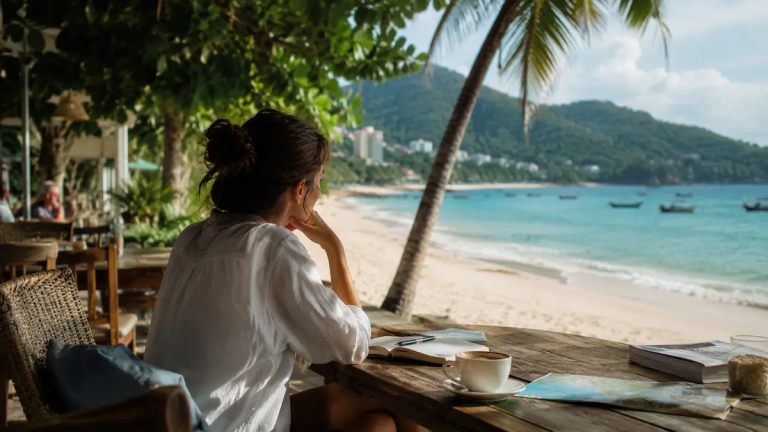
The Best Family Experiences in Southern Thailand
Southern Thailand offers much more than beaches, but families do not need to fill every day with organised entertainment. The strongest experiences are often those that allow children to participate actively, discover something unfamiliar and still return to the hotel before everyone becomes tired.
Beaches and Swimming
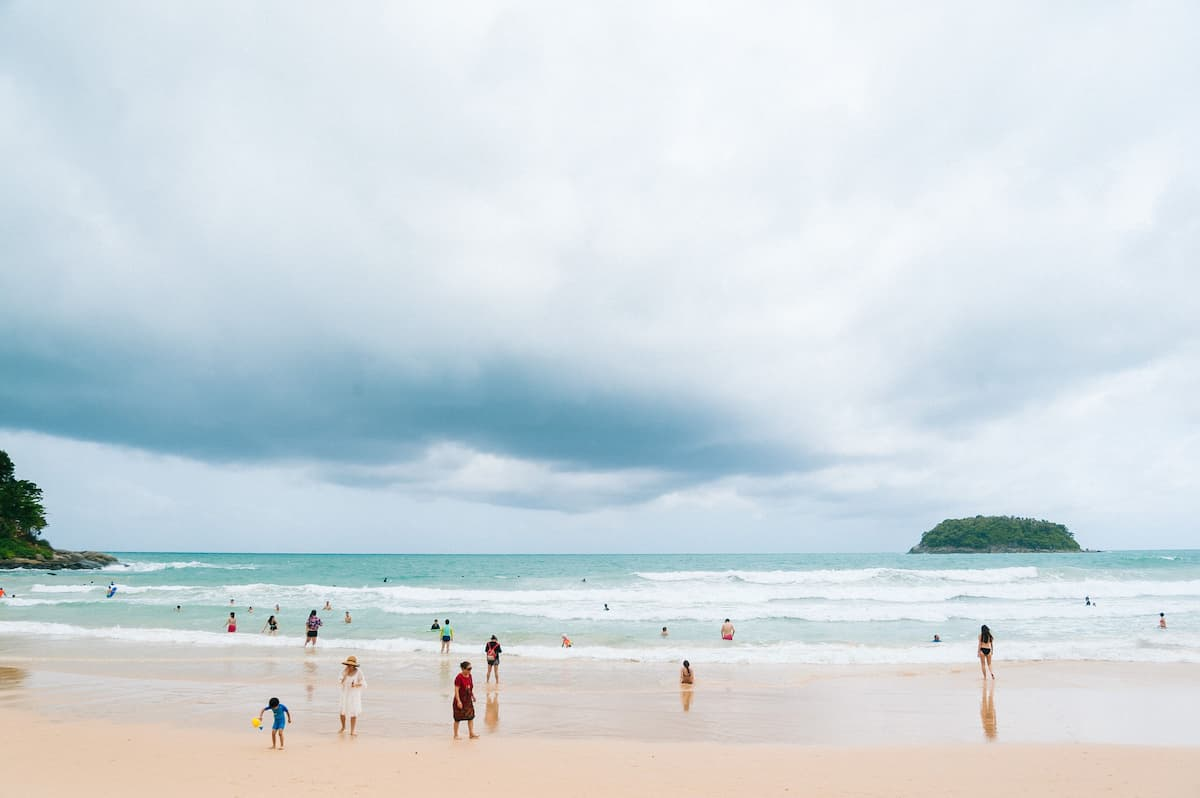
Beach time is likely to form the foundation of most family holidays in Southern Thailand. Younger children may be content building sandcastles and paddling near the shore, while older children can progress to swimming, snorkelling, kayaking or introductory surfing lessons in suitable conditions.
Choose beaches for practical qualities rather than appearance alone. Shade, nearby toilets, food, easy road access and a gradual entry into the water can matter considerably more than whether the beach regularly appears on social media. Staying within walking distance also allows families to visit during the cooler morning and late afternoon periods without turning every beach trip into an excursion.
Sea conditions change with the season, weather, wind and tide. A beach that appears calm one day may have strong waves or currents the next. Observe warning flags, follow lifeguard instructions where provided and never assume that popularity makes a beach safe.
Hotel swimming pools provide a useful alternative during poor sea conditions, but they require the same level of supervision. Private pool villas can be particularly hazardous with toddlers because the water may be only a few steps from the bedroom or living area.
Southern Thailand with Children: Quick Summary
| Destination Type | Beach, island, nature and cultural family holiday |
| Best For | Families seeking beaches, outdoor experiences and flexible resort choices |
| Best Overall Destination | Phuket for convenience, medical access and activities for different ages |
| Best for Younger Children | Khao Lak for a quieter resort-based holiday |
| Best for Older Children | Krabi, Phuket and Khao Sok |
| Best Gulf-Coast Choice | Koh Samui |
| Best Time for the Andaman Coast | Generally November to April |
| Best Choice for July and August | Koh Samui and the Gulf coast often provide more suitable seasonal conditions |
| Recommended Holiday Length | 7–14 days |
| Recommended Number of Bases | One base for seven days or two bases for 10–14 days |
| Getting Around | Prearranged private transfers, taxis, ride-hailing services and ferries |
| Main Family Considerations | Heat, sea conditions, child restraints, boat safety and excessive transfer days |
| Family Friendly | Yes, particularly when the destination, season and pace suit the children’s ages |
Is Southern Thailand Good for Families?
Southern Thailand can be an excellent choice for families, including those making their first long-distance journey with children. Thai people are generally welcoming towards younger visitors, while established destinations provide family rooms, international food, pharmacies, private transfers and activities for different ages. Beaches and swimming pools may occupy much of the holiday, but children can also experience markets, temples, cooking classes, wildlife, national parks and life in communities very different from home.
The region also gives families considerable choice. Phuket and Koh Samui provide extensive tourism infrastructure and convenient access to medical care. Khao Lak and Koh Lanta offer a slower atmosphere, while Krabi combines beaches with dramatic scenery and outdoor experiences. Families with older children can add the rainforest and lake environments of Khao Sok, creating a holiday that extends beyond the coast.
However, travelling with children requires more planning than the relaxed image of Southern Thailand sometimes suggests. Tropical heat can make full sightseeing days exhausting, sea conditions can disrupt boat trips, and child seats are not automatically provided in taxis or transfer vehicles. Moving between islands may involve vans, piers, ferries and waiting time, turning a seemingly short journey into much of a day.
The most successful family holidays are therefore rarely the busiest. Choosing one well-suited base, allowing time for rest and planning no more than one principal activity each day will usually produce a better experience than attempting to visit every famous beach and island.
Choosing the Right Coast for Your Travel Month
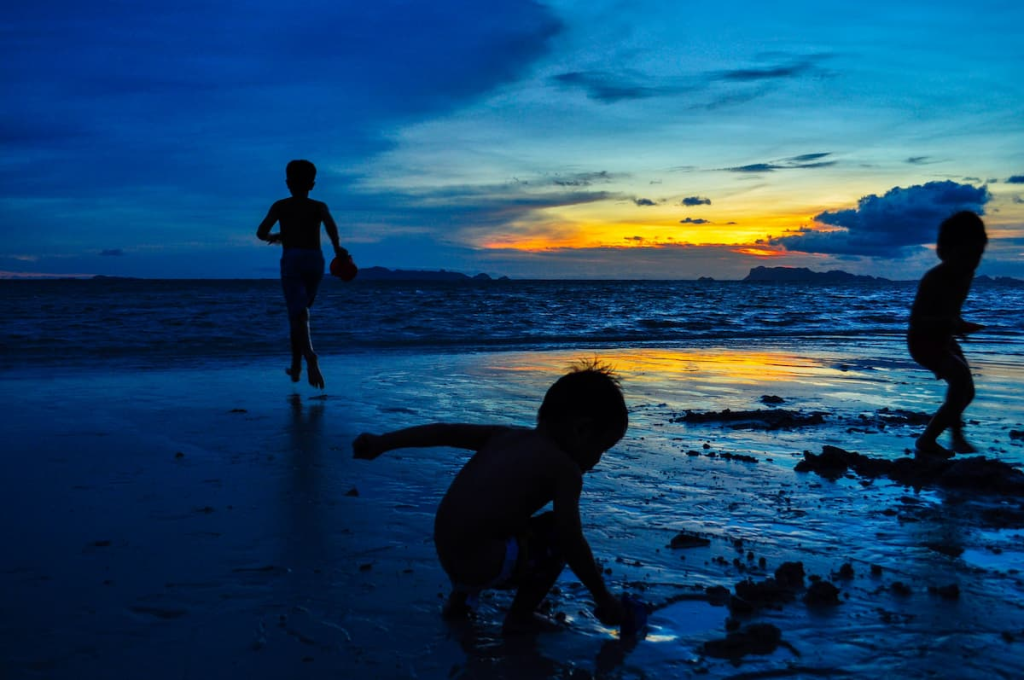
Southern Thailand has two distinct coastlines: the Andaman Sea to the west and the Gulf of Thailand to the east. Their wetter periods do not follow exactly the same pattern, so the month you travel should influence where you stay—particularly when beaches and boat excursions are central to your plans.
The Andaman Coast
Phuket, Khao Lak, Krabi and Koh Lanta are generally most dependable from November to April. January to March commonly provides the most settled combination of sunshine and manageable sea conditions, although this is also part of the busiest and most expensive period.
Rain and rougher seas become more likely from May through October. This does not mean it rains continuously, but families may encounter powerful waves, red warning flags, cancelled boat trips and days when swimming is unsuitable. Some seasonal businesses and island transport services also reduce their schedules.
The Gulf Coast
Koh Samui, Khanom, Koh Phangan and Koh Tao follow a different weather pattern. The Gulf can be a better choice for families travelling during July and August, when the Andaman coast is experiencing its wetter season.
The Gulf’s heaviest rain commonly arrives later in the year, particularly around October and November, sometimes continuing into December. Conditions vary between years, however, and tropical weather never follows an exact calendar.
| Travel Period | Andaman Coast | Gulf Coast |
|---|---|---|
| January–March | Usually one of the strongest periods | Generally a good period |
| April | Hot, with changing conditions later in the month | Hot and generally suitable |
| May–June | Increasing rain and less predictable seas | Often a more dependable alternative |
| July–August | Wet-season conditions and possible rough seas | Frequently the better coastal choice |
| September–October | Often among the least dependable Andaman months | Rain generally increases as the season progresses |
| November | Conditions begin improving, although transition timing varies | Often wet with potentially unsettled seas |
| December | Generally improving and entering high season | Conditions may improve during the month but can remain variable |
Weather should guide rather than completely dictate your plans. Families travelling outside the most dependable months can still enjoy Southern Thailand, but it is wise to choose accommodation with a good pool, nearby restaurants and wet-weather alternatives. Keep boat excursions flexible and never enter the sea when red flags or local warnings are displayed.
Where to Go in Southern Thailand with Children
No single destination is best for every family. Some make everyday travel easier, while others offer quieter beaches, outdoor adventures or a stronger feeling of island escape. The following destinations have been selected because each supports a different style of family holiday.
Phuket: Best for Convenience and Choice
Phuket is the easiest all-round choice for many families visiting Southern Thailand for the first time. Its international airport removes the need for an immediate ferry journey, while the island provides major hospitals, pharmacies, shopping centres, family resorts and one of the region’s broadest selections of activities. It is particularly useful for families with children of different ages because beach days can be combined with water parks, cultural attractions, markets, boat excursions and indoor entertainment.
The experience depends heavily on where you stay. Kata and Kamala are popular with families wanting a manageable combination of beaches, restaurants and activities. Bang Tao offers spacious resorts and a more relaxed atmosphere, while northern Patong can provide beach access within easy reach of shopping and entertainment. Families seeking peaceful surroundings should generally avoid staying close to Patong’s principal nightlife area.
Phuket’s size is its main disadvantage. Journeys between beaches and attractions can take considerably longer than they appear on a map, particularly during busy periods. Choose accommodation close to the places your family will use most rather than planning to cross the island every day.
Best for: First-time visitors, mixed-age families and parents who prioritise convenience and medical access.
Recommended stay: Five to seven nights.
Consider before booking: Phuket is not one uniform destination. Selecting the right beach and neighbourhood will have a greater effect on your holiday than choosing between many similarly equipped resorts.
Khao Lak: Best for a Relaxed Family Resort Holiday
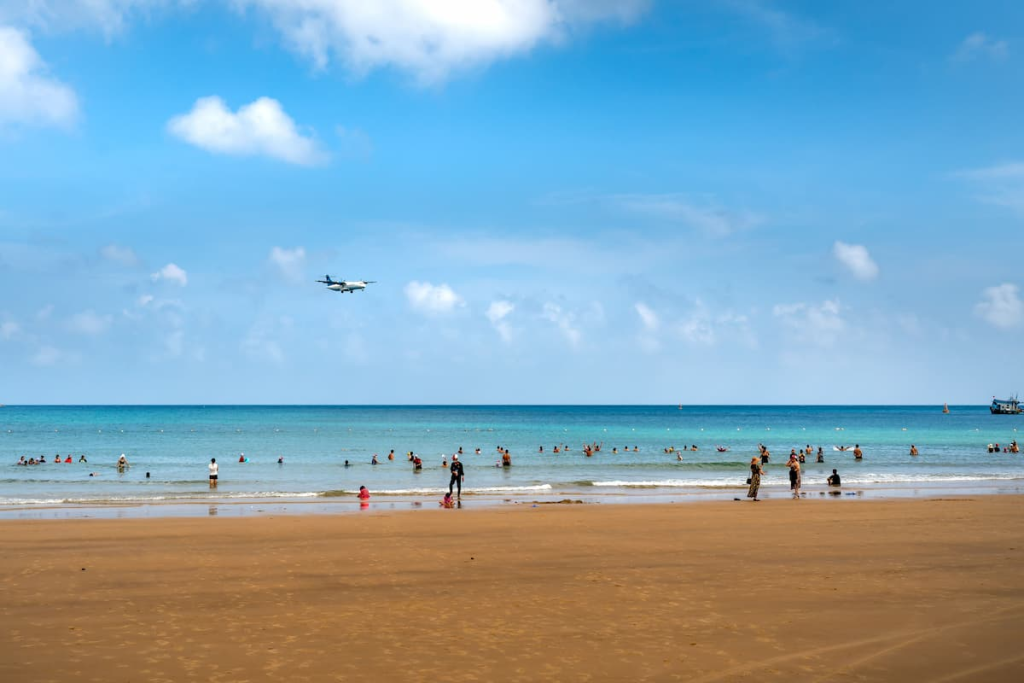
Khao Lak suits families wanting the beach and resort to form the centre of their holiday. Located north of Phuket, it offers a quieter atmosphere, long stretches of coastline and numerous resorts with family rooms, children’s pools, kids’ clubs and direct beach access. The relative lack of nightlife makes it particularly appealing to families with babies and younger children.
The journey from Phuket International Airport commonly takes around 75–90 minutes, depending on the resort and traffic. Once settled, families can divide their time between the beach, pool and short local excursions. Older children may enjoy waterfalls, nearby national parks, bamboo rafting or a visit to the Royal Thai Navy Sea Turtle Conservation Center.
Khao Lak is also used as a departure point for trips to the Similan Islands. However, the long and sometimes uncomfortable speedboat journey means this famous excursion is not automatically suitable for younger children. Sea conditions, travel time and the availability of correctly sized life jackets should be considered before booking.
The principal limitation is that Khao Lak offers fewer independent attractions than Phuket. A remote beachfront resort may also leave families dependent on hotel restaurants and organised transport. Staying close to Bang Niang or the main Nang Thong area provides easier access to restaurants, shops and markets.
Best for: Babies, younger children and families wanting an uncomplicated resort-based holiday.
Recommended stay: Five to seven nights.
Consider before booking: Check the resort’s distance from restaurants and shops, especially if you do not intend to hire a car or arrange a private driver.
Krabi and Ao Nang: Best for Scenery and Accessible Adventures
Krabi combines family-friendly tourism infrastructure with some of Southern Thailand’s most dramatic limestone scenery. Ao Nang is the most practical base for families, offering a wide selection of accommodation, restaurants, pharmacies and tour operators within easy reach of Krabi International Airport.
Families can enjoy quieter days around the hotel pool and beach while retaining access to Railay, local islands, mangroves, temples and inland natural attractions. Older children may particularly enjoy kayaking, snorkelling, rock climbing with an experienced operator or exploring the area by longtail boat.
Ao Nang Beach is useful as a departure point and a place to watch the sunset, but it is not necessarily Krabi’s best beach for an entire day of swimming. Families choosing Krabi primarily for beach time should consider accommodation near Nopparat Thara, Klong Muang or Tubkaek. These areas provide a calmer setting, although they offer fewer restaurants and less independent entertainment than central Ao Nang.
Many of Krabi’s signature experiences involve boats. Families with babies or young children should consider travel time, boarding conditions and sea conditions rather than assuming every island tour will be easy. Railay can be visited independently by longtail boat, but boarding may involve stepping through shallow water and handling luggage or a pushchair on the beach.
Best for: School-age children, active families and those wanting to combine beaches with nature and outdoor experiences.
Recommended stay: Four to six nights.
Consider before booking: Ao Nang is the most convenient base, but families seeking the best resort beach may prefer Klong Muang or Tubkaek.
Koh Lanta: Best for a Slower Island Holiday
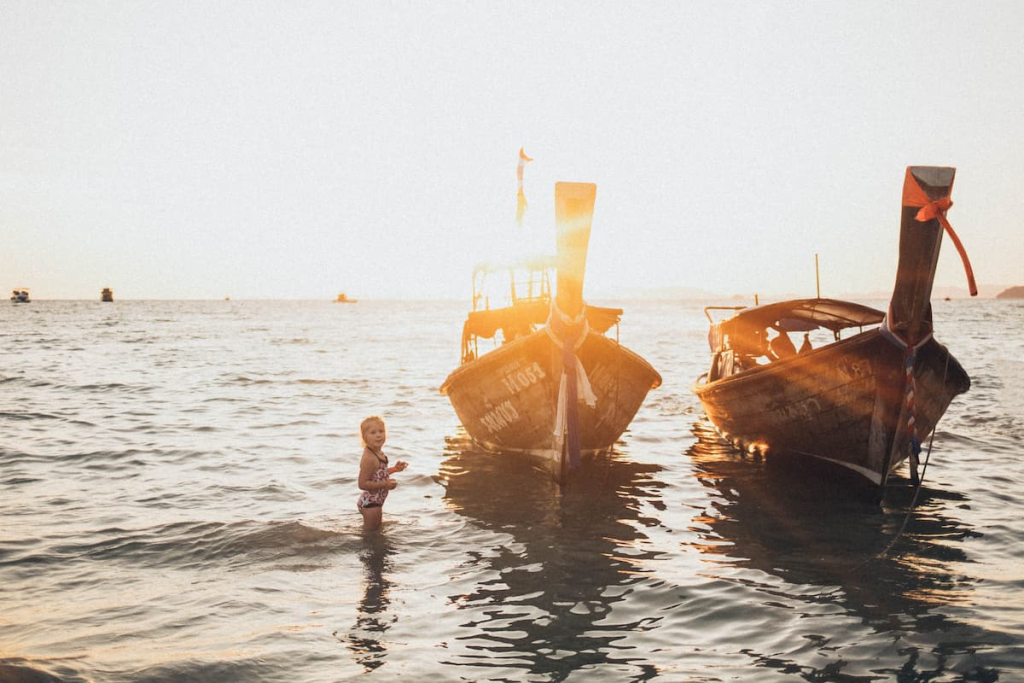
Koh Lanta offers a more relaxed island experience than Phuket or Koh Samui while retaining enough restaurants, accommodation and everyday services for a comfortable family stay. Its long west-coast beaches, spacious resorts and unhurried atmosphere make it particularly suitable for families who prefer swimming, eating and exploring locally rather than filling every day with organised attractions.
Klong Dao is one of the most practical areas for families with younger children. It has a broad beach, relatively shallow water during suitable conditions and convenient access to Saladan’s shops and restaurants. Long Beach provides a wider range of accommodation and dining, while families seeking greater seclusion can continue farther south.
Beyond the beaches, families can visit Lanta Old Town, explore mangroves, join a cooking class or take carefully selected snorkelling and island excursions. Older children may enjoy kayaking and visiting Mu Ko Lanta National Park, although the heat, uneven trails and local monkeys require some caution.
Reaching Koh Lanta takes more effort than reaching Phuket or Krabi. Transfers may combine road travel with a vehicle ferry, while some seasonal routes use passenger boats. Medical services and wet-weather entertainment are also more limited than on the larger tourist islands.
Best for: Families wanting a peaceful island atmosphere, a slower routine and plenty of unscheduled beach time.
Recommended stay: Five to seven nights.
Consider before booking: Koh Lanta works best when treated as a destination rather than a brief stop between several islands. Check seasonal transport and choose accommodation close to the restaurants and services your family expects to use.
Koh Samui: Best for Gulf-Coast Convenience
Koh Samui combines the atmosphere of a tropical island with an airport, international hospitals, shopping centres and an extensive range of family accommodation. It is particularly valuable for families travelling during July and August, when conditions on the Gulf coast are often more favourable than those along the Andaman Sea.
The island’s different areas support noticeably different holidays. Choeng Mon offers a quieter setting and a relatively sheltered bay, while Bophut combines resorts with the restaurants and evening atmosphere of Fisherman’s Village. Maenam suits families wanting a slower pace, and Lamai provides a practical balance between beach access and everyday facilities. Central Chaweng offers the greatest concentration of shopping and entertainment but can feel busy and noisy.
Families can combine beach and pool time with temples, markets, waterfalls, cooking activities and marine excursions. Older children may enjoy kayaking or snorkelling around Ang Thong National Marine Park, although the length of the boat journey and sea conditions should be considered before taking younger children.
Koh Samui is easier to manage than many smaller islands, but it is still large enough to require transport. Direct flights are convenient but can be significantly more expensive than flying to Surat Thani and continuing by road and ferry. The cheaper route adds several hours and another transfer, which may not represent good value for families with tired young children.
Best for: Families wanting an accessible island holiday, particularly during the European and Australian summer school holidays.
Recommended stay: Five to seven nights.
Consider before booking: Compare the total cost and travel time of flying directly to Koh Samui with the combined flight, road and ferry journey through Surat Thani.
Khao Sok: Best for Nature and Older Children
Khao Sok introduces children to a very different side of Southern Thailand. Dense rainforest, limestone mountains, rivers and Cheow Lan Lake provide a memorable contrast to the region’s beaches and resorts. Families can join guided nature walks, canoe along the river, look for wildlife or travel by longtail boat across the lake.
The experience is generally best suited to school-age children who are comfortable with heat, insects, boat travel and unfamiliar surroundings. Activity and accommodation rules vary considerably: some family programmes accept children from around four or five, while particular floating camps or more demanding excursions set higher minimum ages. Parents should therefore check the requirements of the exact operator rather than assuming every Khao Sok experience suits every child.
Families can stay near the national park’s village entrance or around Cheow Lan Lake. The village area offers easier access to restaurants and short activities, while an overnight raft-house stay creates a more immersive experience. Floating accommodation ranges from simple rooms with shared facilities to comfortable resorts, but decks, deep water, limited barriers and distance from medical care require additional supervision.
Khao Sok fits naturally between Phuket, Khao Lak, Krabi and Surat Thani. One or two nights can add significant variety without turning the holiday into an exhausting expedition.
Best for: School-age children, teenagers and families wanting a meaningful nature experience.
Recommended stay: Two to three nights.
Consider before booking: Confirm minimum ages, activity difficulty, room facilities, child-sized life jackets and the amount of walking and boat travel involved.
Khanom: Best for Quiet and Independent Families
Khanom offers a peaceful mainland alternative for families who want long beaches, local surroundings and considerably less commercial development. Located in Nakhon Si Thammarat province on the Gulf coast, it is particularly suited to repeat visitors who are comfortable arranging their own transport and do not need a large selection of organised children’s attractions.
Days in Khanom tend to revolve around the beach, hotel pool and short local explorations. Families can visit waterfalls, viewpoints, caves and local markets or take a boat trip in search of the area’s pink dolphins. Dolphin sightings are never guaranteed, and families should choose an operator that keeps a respectful distance rather than pursuing or attempting to feed the animals.
Khanom’s quiet character is also its main limitation. Restaurants, shops and attractions are dispersed, public transport is limited, and many resorts are isolated from the town centre. A private driver or rental car makes the area considerably easier to explore, particularly for families requiring regular access to shops or specific food.
Medical facilities and wet-weather entertainment are more limited than in Phuket or Koh Samui. Khanom is therefore better suited to confident, independent families than those making their first tropical journey with a baby or toddler.
Best for: Repeat Thailand visitors, independent families and those prioritising tranquillity over organised entertainment.
Recommended stay: Three to five nights.
Consider before booking: Check the accommodation’s distance from restaurants, shops and medical services, and arrange reliable transport before arrival.
Choosing a Destination for Your Children’s Ages
A destination that works beautifully for teenagers may be unnecessarily difficult with a toddler. Age affects far more than the choice of activities: it also changes how much heat, road travel, boat time and disruption a family can comfortably manage.
Babies and Toddlers
Families travelling with babies or toddlers will usually benefit from choosing an established destination with a direct airport transfer, dependable medical care and easy access to supermarkets and pharmacies. Phuket, Khao Lak and Koh Samui are generally the strongest choices, provided the accommodation is located close to the services the family expects to use.
The resort or hotel may matter more than the destination itself. Look for a cot, refrigerator, kettle or kitchenette, shaded areas, a gently sloping or separate children’s pool and a room that allows adults to remain awake after the child goes to sleep. Confirm whether a “family room” provides genuinely separated sleeping space or simply adds another bed to a standard room.
Avoid building the holiday around boat excursions or frequent changes of accommodation. Boarding boats from beaches, managing luggage across piers and completing several transfers in one day can be difficult with a pushchair and a tired child. One comfortable base with a pool, nearby restaurants and short optional outings will usually create a more enjoyable holiday.
Request an age-appropriate child seat when booking every airport transfer or private journey and obtain confirmation before arrival. Do not assume that taxis, hotel vehicles or tour vans will carry one automatically.
Strongest choices: Phuket, Khao Lak and Koh Samui.
Generally less convenient: Remote islands, basic floating accommodation and itineraries requiring several ferries or speedboats.
Children Aged Approximately 4–7
Children between four and seven can enjoy a much wider range of experiences, but long transfers, midday heat and full-day excursions may still become overwhelming. Destinations offering short activities and an easy return to the hotel provide the greatest flexibility.
Phuket works particularly well for this age because families can alternate beaches and pools with water parks, aquariums, markets and indoor attractions. Khao Lak offers a calmer resort holiday, while Koh Samui combines island surroundings with convenient access to shops, restaurants and medical care. Krabi can also be rewarding when excursions are selected carefully.
Plan one principal activity per day rather than a continuous sightseeing schedule. A short cooking activity, gentle nature walk, temple visit or half-day boat trip may be more enjoyable than an excursion involving several islands and many hours away from the hotel. Allowing time for the pool, snacks and an afternoon rest helps prevent the holiday from becoming tiring for both children and parents.
This age group may be accepted on some Khao Sok family programmes, but suitability depends on the individual child and exact itinerary. Before booking, check the amount of walking, boat time, swimming supervision and distance from medical assistance.
Strongest choices: Phuket, Khao Lak, Koh Samui and carefully planned stays in Krabi.
Consider carefully: Long speedboat excursions, demanding rainforest walks and accommodation with unfenced pools, balconies or direct access to deep water.
Children Aged Approximately 8–12
Children between eight and twelve are often old enough to appreciate Southern Thailand’s natural and cultural experiences without requiring the same level of logistical simplicity as younger children. Snorkelling, kayaking, cooking classes, wildlife observation, markets and gentle rainforest adventures can all become meaningful parts of the holiday.
Krabi is particularly strong for this age group because it combines accessible tourism facilities with beaches, limestone scenery and outdoor activities. Koh Lanta offers a slower island experience with opportunities for kayaking and carefully chosen snorkelling trips, while Phuket provides the greatest variety when siblings have different interests.
Khao Sok also becomes a more practical addition at this age. Children may be ready for guided walks, canoe trips, wildlife spotting and an overnight stay near or on Cheow Lan Lake. Nevertheless, parents should still check operator age limits, activity difficulty and safety equipment rather than treating age alone as proof of suitability.
Children in this age range may be enthusiastic about island excursions, but full-day speedboat tours can still involve early departures, long periods in direct sun and limited opportunities to rest. A shorter trip with fewer stops will often provide more time to swim, snorkel and understand each place.
Strongest choices: Krabi, Phuket, Koh Lanta and Khao Sok.
Consider carefully: Excursions marketed around the number of islands visited rather than the quality and pace of the experience.
Travelling with Teenagers
Teenagers can participate in many of the experiences that make Southern Thailand distinctive, including snorkelling, scuba-diving introductions, kayaking, rock climbing, hiking and more independent exploration. The main challenge may be finding a destination that offers enough variety and social energy without requiring the family to spend every day together on an organised excursion.
Phuket is the strongest all-round choice for teenagers because it combines beaches and adventure activities with shopping centres, markets, restaurants and entertainment. Krabi works well for active families, while Koh Samui provides a similar mixture of island scenery and modern conveniences. Khao Sok can add rainforest, wildlife and a degree of adventure to an otherwise beach-focused itinerary.
Teenagers may also appreciate the slower atmosphere of Koh Lanta, particularly when they enjoy diving, nature or photography. However, those wanting shopping, organised entertainment and a livelier evening atmosphere may find quieter areas restrictive after several days.
Families should discuss expectations before choosing accommodation. Reliable internet, separate sleeping space, access to food and some freedom to move around safely may matter as much to teenagers as the beach itself. Staying in an isolated resort can limit that independence and leave parents responsible for every journey.
Strongest choices: Phuket, Krabi, Koh Samui and Khao Sok.
Consider carefully: Remote accommodation with limited activities, dining or independent transport.
Families with Widely Separated Ages
Families travelling with both younger children and teenagers need a destination offering variety without requiring everyone to participate in the same activity. Phuket and Koh Samui are usually the strongest choices because beaches, children’s facilities, shopping, cultural attractions and more adventurous experiences can be accessed from a single base.
A well-equipped resort can make these holidays considerably easier. Look for age-separated children’s programmes, multiple pools, connecting rooms and activities that teenagers can join independently. Staying near restaurants and shops also gives older children some freedom while reducing the need to organise transport for every meal.
Avoid constructing the itinerary around the abilities of the oldest child. A full-day speedboat tour, challenging trek or remote raft-house stay may appeal to teenagers while creating a difficult day for a toddler. When possible, divide for selected activities: one parent might accompany older children on an adventure while the other enjoys an easier morning with the youngest, before the family reunites later.
The objective is not to find an experience every child will enjoy equally. A successful destination gives each family member enough suitable options while preserving relaxed time together.
Strongest choices: Phuket and Koh Samui, followed by Krabi when accommodation is chosen carefully.
Consider carefully: Small islands and isolated resorts offering limited alternatives when family members want different experiences.
The Best Family Experiences in Southern Thailand
Southern Thailand offers much more than beaches, but families do not need to fill every day with organised entertainment. The strongest experiences are often those that allow children to participate actively, discover something unfamiliar and still return to the hotel before everyone becomes tired.
Beaches and Swimming
Beach time is likely to form the foundation of most family holidays in Southern Thailand. Younger children may be content building sandcastles and paddling near the shore, while older children can progress to swimming, snorkelling, kayaking or introductory surfing lessons in suitable conditions.
Choose beaches for practical qualities rather than appearance alone. Shade, nearby toilets, food, easy road access and a gradual entry into the water can matter considerably more than whether the beach regularly appears on social media. Staying within walking distance also allows families to visit during the cooler morning and late afternoon periods without turning every beach trip into an excursion.
Sea conditions change with the season, weather, wind and tide. A beach that appears calm one day may have strong waves or currents the next. Observe warning flags, follow lifeguard instructions where provided and never assume that popularity makes a beach safe.
Hotel swimming pools provide a useful alternative during poor sea conditions, but they require the same level of supervision. Private pool villas can be particularly hazardous with toddlers because the water may be only a few steps from the bedroom or living area.
Island and Boat Excursions
A boat excursion can become one of the most memorable parts of a Southern Thailand family holiday, but the best trip is rarely the one visiting the greatest number of islands. Families generally benefit from shorter journeys, fewer stops and enough time to enjoy each location without repeatedly boarding and leaving the boat.
Longtail boats provide a distinctive local experience and can work well for short trips in sheltered conditions. Larger excursion boats usually offer more space, shade and easier movement, while speedboats reduce journey times but can feel harsh and uncomfortable when the sea becomes unsettled. Families with babies, very young children, back problems or susceptibility to seasickness should consider the vessel as carefully as the destination.
Before booking, ask about total travel time, the maximum number of passengers, shade, toilets and how guests board at every stop. Confirm that properly fitting child-sized life jackets will be available rather than assuming an adult jacket can be adapted safely.
Weather and sea conditions should always take priority over a prepaid itinerary. Avoid overcrowded vessels, do not travel after dark unnecessarily and be prepared to postpone an excursion when conditions appear unsuitable. A private or small-group trip can provide greater flexibility, but only when operated by a reputable provider following appropriate safety standards.
Wildlife and Nature
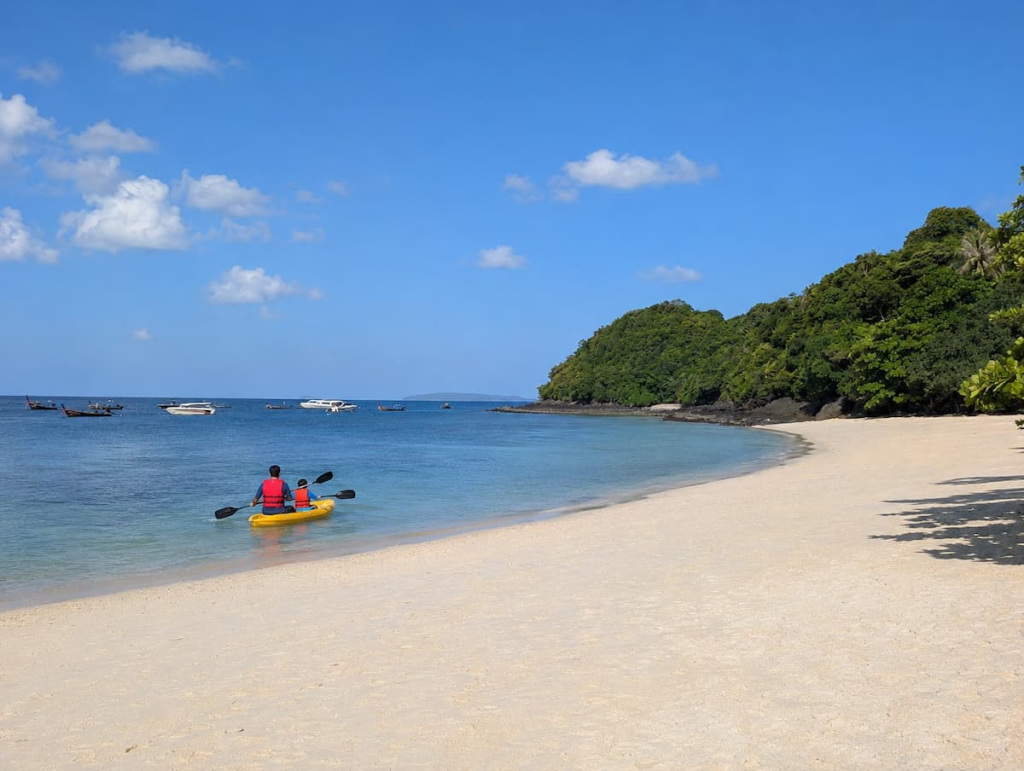
Southern Thailand gives children opportunities to experience rainforest, mangroves, marine environments and wildlife beyond what they may encounter at home. Guided walks in Khao Sok, mangrove kayaking around Krabi or Koh Lanta, turtle conservation visits and respectful dolphin-watching near Khanom can introduce natural environments without treating wildlife as entertainment.
Not every attraction using words such as sanctuary, rescue or conservation follows genuinely responsible practices. Avoid venues offering elephant riding, performances, forced bathing or close physical interaction arranged primarily for photographs. Responsible experiences should place the animals’ needs first, provide education and allow wildlife sufficient space and choice.
Families should also teach children not to touch or feed wild monkeys. Macaques can bite or scratch, particularly when food is visible, and seemingly playful encounters can change quickly. The same caution applies to unfamiliar dogs, cats and other animals because any bite or scratch may require urgent medical advice.
Choose nature activities according to the youngest participant rather than the operator’s promotional description. Ask about walking distance, shade, terrain, insects, toilet access and evacuation arrangements. A short, well-guided experience will often teach children more than a long excursion completed when they are hot and exhausted.
Cooking and Food Experiences
Food can provide one of the easiest and most enjoyable introductions to Southern Thai culture. Family-friendly cooking classes allow children to smell unfamiliar herbs, visit local markets and prepare dishes themselves rather than simply being presented with food they may be hesitant to try.
Choose a class with practical involvement rather than a demonstration designed mainly for adults. Shorter sessions are generally better for younger children, while older children and teenagers may enjoy selecting ingredients at a market before learning how several dishes are prepared. Confirm minimum ages, kitchen safety arrangements and whether recipes can be adapted for allergies or dietary requirements.
Everyday meals can also become part of the experience. Night markets allow families to sample small portions of grilled chicken, fresh fruit, roti, rice dishes and local desserts without committing to one unfamiliar meal. Ordering several dishes to share gives children an opportunity to explore at their own pace.
Thai dishes prepared for local tastes can be considerably hotter than children expect. Ask for food to be made mai phet, meaning not spicy, while recognising that sauces and ingredients prepared in advance may still contain chilli. Families managing serious allergies should carry translated information and confirm ingredients carefully, as removing a visible ingredient does not eliminate cross-contamination.
Markets, Temples and Local Culture
Markets and temples can introduce children to everyday life in Southern Thailand without requiring a full-day excursion. Night markets are particularly accessible because families can walk, try small portions of food, watch dishes being prepared and browse inexpensive clothing, crafts and souvenirs.
Visit markets early in the evening before crowds and heat become tiring. Agree on a meeting point with older children, keep younger children close around traffic and cooking equipment, and carry small notes for simple purchases. A market can be more engaging when children are given a modest budget or encouraged to choose one unfamiliar food to try.
Temple visits work best when they are kept relatively short and children understand what they are seeing. Explain basic expectations beforehand: dress respectfully, speak quietly, remove shoes where required and avoid climbing on religious structures. Clothing should cover shoulders and knees when entering active temple buildings.
The most rewarding cultural experiences do not need to be elaborate. Watching fishing boats return, visiting a local morning market or learning a few Thai phrases can help children recognise Southern Thailand as a lived-in region rather than simply a collection of resorts and beaches.
Water Parks and Rainy-Day Activities
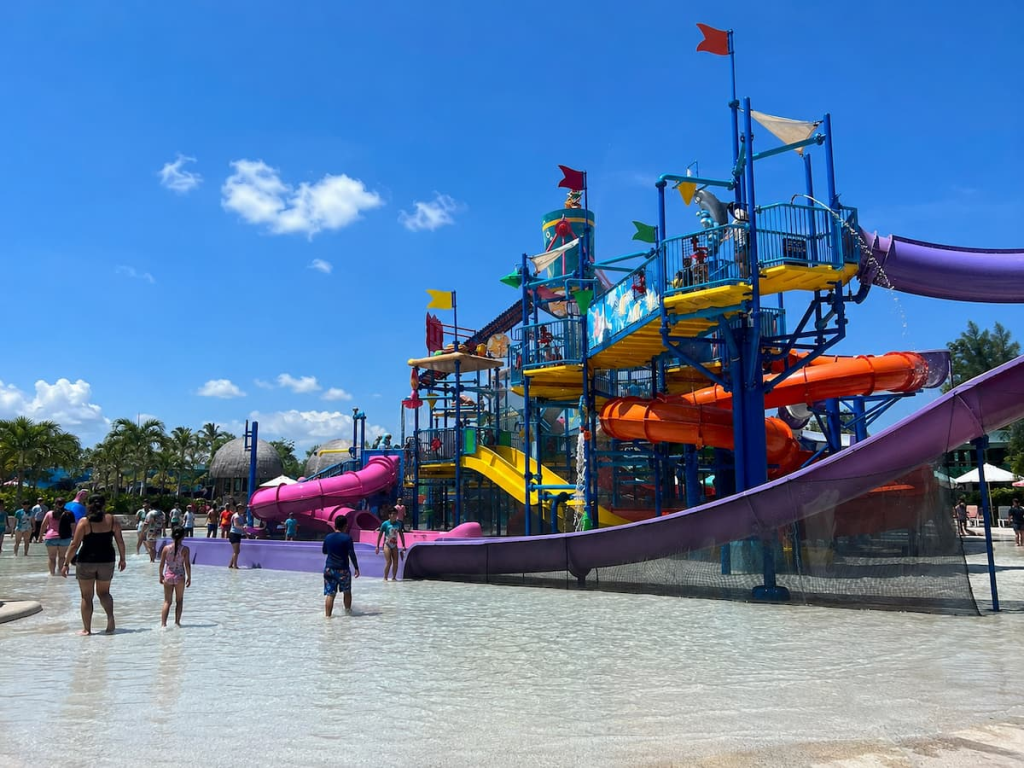
Water parks can provide a welcome change from the beach, particularly for school-age children and teenagers. Phuket offers the greatest selection, including large parks with separate areas for younger children, family rides and more adventurous slides. Some resorts elsewhere in Southern Thailand also operate smaller splash zones or children’s pools with slides.
Check height and age restrictions before buying tickets, as younger children may be unable to use many of the principal attractions. Families should also consider shade, footwear on hot surfaces, locker access and whether outside food or drinking water is permitted. Lifeguards provide additional oversight but do not replace direct parental supervision.
Rain does not always require abandoning outdoor plans, as tropical showers can be brief. Thunderstorms, strong winds and lightning are different and should be treated seriously, particularly around pools, beaches and boats.
Shopping centres, aquariums, interactive museums, cinemas, indoor play centres and family cooking classes provide alternatives during prolonged rain or the hottest part of the day. Phuket and Koh Samui offer the strongest wet-weather choices. Families staying in Khao Lak, Koh Lanta, Khanom or Khao Sok should choose accommodation they would be comfortable spending time in when outdoor plans are interrupted.
Adventures for Older Children and Teenagers
Older children and teenagers can experience a more adventurous side of Southern Thailand through kayaking, snorkelling, introductory scuba diving, rock climbing, surfing and guided rainforest walks. These activities can add genuine variety to a beach holiday, but suitability depends on confidence, physical ability and conditions on the day—not age alone.
Krabi is particularly strong for kayaking and professionally guided rock climbing, while Phuket offers seasonal surfing lessons and convenient access to diving operators. Koh Lanta and Koh Tao are established diving bases, and Khao Sok provides rainforest walks, canoeing and lake experiences.
Choose operators according to their safety practices rather than price or online photographs. Ask about instructor qualifications, group size, equipment, insurance and emergency procedures. For water activities, confirm that the operator assesses swimming ability and supplies correctly fitting safety equipment.
Children should never feel pressured to complete an activity because it has already been paid for. Weather, fatigue or anxiety can change how they respond on the day. A reputable operator should be willing to modify or cancel an experience when conditions or individual ability make continuing inappropriate.
Choosing Family-Friendly Beaches
A family-friendly beach is not simply one with soft sand and attractive photographs. The most practical choices combine suitable sea conditions with shade, easy access, nearby food and enough facilities to prevent a short swim from becoming a complicated day trip.
Consider the following when choosing your beach:
- Sea conditions: Waves, currents and water depth change according to the season, weather and tide. Check conditions each day and follow warning flags.
- Entry into the water: A gradual sandy entry is generally easier for younger children than rocks, coral or a sudden drop.
- Shade: Natural shade may be limited, particularly around midday. Confirm whether trees, umbrellas or shaded beachfront areas are available.
- Boat traffic: Beaches used heavily by longtail boats and jet skis can be less comfortable for swimming.
- Food and facilities: Nearby toilets, drinking water and simple meals make longer visits easier.
- Road access: Some beautiful beaches require steep paths, boat transfers or walks that are difficult with small children and pushchairs.
- Lifeguards: Coverage is not universal and may vary by season. Their presence should never replace close supervision.
Klong Dao on Koh Lanta, Choeng Mon on Koh Samui and several of the established resort beaches around Khao Lak can offer manageable surroundings during suitable conditions. In Phuket, Kata, Kamala and the quieter northern section of Patong provide different combinations of swimming, facilities and convenience.
No beach remains safe under every condition. Red flags indicate that entering the water may be dangerous, even when other visitors ignore them. Families should be willing to use the hotel pool or change plans rather than treating every planned beach day as fixed.
Travelling by Boat with Children
Boats are part of many Southern Thailand itineraries, but there is an important difference between choosing an optional island excursion and relying on a ferry to reach your accommodation. Families should consider every boat journey as part of the travel day, including road transfers, waiting at the pier, boarding and the final journey to the hotel.
Large ferries usually provide more space and stability than speedboats, although facilities vary. Speedboats may reduce the scheduled journey time but can be uncomfortable in choppy conditions. Longtail boats are useful for short local journeys, but passengers may need to step through shallow water or climb from a floating pier while carrying bags.
Before travelling:
- Confirm the type of vessel and expected journey time.
- Ask how passengers board and whether staff can assist with luggage and pushchairs.
- Check that a correctly fitting life jacket is available for every child.
- Keep medication, drinking water, sun protection and a change of clothes in hand luggage.
- Allow additional time between the boat and any onward flight.
- Avoid unnecessary crossings after dark.
- Do not board an overcrowded vessel or one without adequate safety equipment.
Weather-related delays and cancellations are possible, particularly during wetter months. Families should avoid scheduling a ferry or island transfer immediately before an international flight. Spending the final night near the departure airport can remove considerable risk and stress from the journey home.
Getting Around Southern Thailand with Children
Private airport transfers are often the easiest option for families, particularly when carrying luggage, a pushchair or equipment for a baby. Book in advance, provide the number and ages of the children and confirm the total price, vehicle size and child-seat arrangements in writing.
Thai law includes child-restraint requirements, but suitable seats are not automatically available in taxis, hotel vehicles or tour vans. When requesting one, provide the child’s age, height and weight rather than simply asking for a baby seat. Families with strict restraint requirements may prefer to bring an approved travel seat after confirming that it can be installed correctly in the vehicles they intend to use.
Grab and other ride-hailing services operate in several major destinations, but coverage and waiting times vary. Applications can make the fare and vehicle easier to identify, although they do not guarantee a child seat. Tuk-tuks and songthaews may be convenient for short local journeys, but they do not provide the same protection as a suitable enclosed vehicle with seatbelts and child restraints.
Hiring a car can give families flexibility in Phuket, Koh Samui, Khao Lak and Khanom. Drivers should hold the correct licence, understand local road conditions and confirm that their insurance provides adequate coverage. Avoid unnecessary night driving and allow more time than online maps suggest.
Scooters should not be used to transport children. Helmets cannot compensate for the exposure, limited protection and risk created by carrying a child on a motorcycle.
Walking conditions also vary considerably. Footpaths may be narrow, uneven, obstructed or absent, while steep roads can make pushchairs impractical. Before choosing accommodation, examine the immediate area rather than relying solely on the stated distance to the beach or town centre. A hotel described as five minutes from the beach may still involve a busy road, steep hill or difficult crossing.
Choosing Family Accommodation
The right accommodation can remove many of the daily difficulties of travelling with children. Location, room design and safety are often more important than the number of facilities shown in promotional photographs.
A “family room” may mean a spacious suite, connecting bedrooms or simply a standard room containing extra beds. Confirm the actual layout, bed sizes and maximum occupancy before booking. Families with younger children may benefit from a separate sleeping area, while those with teenagers should consider whether the arrangement provides enough privacy.
Useful features can include:
- Connecting rooms or a divided sleeping area
- A refrigerator, kettle or kitchenette
- A cot confirmed before arrival
- Laundry facilities or an affordable local laundry
- Shaded children’s areas
- Restaurants and shops within easy reach
- Flexible breakfast and room-service options
- A reputable kids’ club or babysitting service
- Reasonable access to a pharmacy or medical facility
Safety also deserves close attention. Check balcony doors and railings, pool access, stairs, bathroom surfaces and whether a private pool can be secured from the room. Ground-floor accommodation may be convenient with a pushchair but can create direct access to water or outdoor areas.
Kids’ clubs differ considerably. Some accept children only from a specified age, require parents to remain on the property or charge separately for supervised sessions. Ask what supervision is actually included rather than assuming every advertised children’s area provides childcare.
Finally, examine the accommodation’s precise location. A remote resort may be ideal for a quiet beach holiday but leave the family dependent on hotel food and paid transport. A centrally located hotel may sacrifice some tranquillity while making meals, supplies and short independent outings considerably easier.
Food, Heat and Everyday Health
Most established Southern Thailand destinations make travelling with children relatively straightforward, but tropical conditions can turn minor problems into larger ones quickly. Families should prepare for the everyday risks most likely to affect the holiday rather than becoming overwhelmed by every possible illness.
Food and drinking water: Bottled or properly filtered water is widely available and should also be used when preparing infant formula. Choose freshly cooked food served hot, wash or peel fruit when appropriate and be cautious with food that has been left exposed in the heat. Children hesitant about Thai food can usually find rice, noodles, eggs, grilled chicken, fruit and simple international dishes.
Allergies: Communicate serious allergies clearly and carry translated information explaining both the ingredient and the consequences of exposure. Sauces, stocks and curry pastes may contain ingredients that are not visible, while shared cooking surfaces can create cross-contamination. Families with severe allergies should carry prescribed emergency medication and discuss their plans with a medical professional before travelling.
Heat and hydration: Schedule beaches, markets and outdoor attractions during the morning or late afternoon. Encourage children to drink regularly rather than waiting until they feel thirsty, and allow time in shade or air conditioning during the hottest part of the day. Headache, unusual tiredness, dizziness and nausea can indicate heat-related illness and should not be dismissed as ordinary holiday fatigue.
Sun and mosquitoes: Use suitable sunscreen, protective clothing and shade, remembering that children can burn during boat trips even when the breeze makes conditions feel comfortable. Mosquito protection is necessary during the day as well as the evening because dengue is transmitted by mosquitoes that commonly bite during daylight hours.
Animals: Children should not feed or touch monkeys, stray dogs, cats or other unfamiliar animals. Any bite, scratch or contact with saliva on broken skin requires prompt medical advice because rabies treatment may be time-sensitive.
Medical care and insurance: Phuket and Koh Samui provide the broadest access to major private hospitals, while smaller islands and remote areas may offer only clinics or basic treatment. Carry essential medication in its original packaging, bring more than the minimum required and ensure travel insurance covers every planned family activity. Parents should obtain individual vaccination and medical advice from a qualified health professional before departure.
How Many Destinations Should a Family Combine?
Southern Thailand appears compact on a map, but changing destinations can consume much of a day. Checking out, reaching a pier or airport, waiting for transport and continuing to the next hotel is tiring for adults and even more disruptive for children.
For most families, a slower itinerary creates a better holiday:
| Holiday Length | Recommended Pace |
|---|---|
| 7 days | Choose one principal destination |
| 10 days | One main base with a short contrasting stay, or two easily connected destinations |
| 14 days | Two principal destinations, potentially with a two-night Khao Sok stay between them |
| 3 weeks or longer | Up to three bases, provided the connections remain sensible |
A seven-day family holiday does not need to include several islands. Phuket, Khao Lak, Krabi, Koh Lanta or Koh Samui can each support an entire week when the schedule combines selected activities with unplanned beach and pool time.
With 10–14 days, choose destinations that connect naturally. Phuket and Khao Lak work well together by road, while Krabi and Koh Lanta can be combined without crossing the entire region. Khao Sok can provide a contrasting rainforest experience between Phuket, Khao Lak, Krabi or Surat Thani.
Avoid changing hotels simply to collect destinations. Two nights often provide only one complete day after arrival and departure are considered. Families will usually experience more by staying longer in fewer places than by repeatedly packing, transferring and settling into new accommodation.
Suggested Southern Thailand Family Itineraries
These itineraries are intended as flexible frameworks rather than schedules that must be followed day by day. Leave space for weather changes, tired children and unplanned discoveries, and avoid committing every day to a prepaid excursion.
Seven Days: An Easy Phuket or Khao Lak Holiday
For a one-week family holiday, choose either Phuket or Khao Lak rather than dividing the stay between them. Both can be reached from Phuket International Airport without a ferry, but they provide different experiences.
Choose Phuket if your family wants a broad selection of restaurants, shopping, cultural attractions and wet-weather entertainment. Stay near a suitable beach and plan no more than two major excursions during the week. The remaining days can combine the beach, hotel pool, markets and short local outings.
Choose Khao Lak if the priority is a quieter resort holiday with fewer decisions. Families can spend most days around the beach and pool, adding a local market, waterfall, nature experience or turtle conservation visit according to the children’s ages.
Whichever destination you choose, keep the arrival and departure days largely free. This leaves five complete days for a comfortable mixture of rest and exploration without losing additional time to another hotel transfer.
Ten Days: Phuket and Khao Lak
Combining Phuket and Khao Lak gives families two contrasting experiences without requiring a ferry. Begin with five or six nights in Phuket for beaches, cultural attractions, shopping and a carefully selected family excursion. Follow this with four nights in Khao Lak, where the pace can slow around the resort, beach and nearby natural attractions.
Starting in Phuket allows children to recover from the flight somewhere with extensive facilities and plenty of food choices. Moving to Khao Lak later gives the holiday a calmer finish without introducing a complicated transfer. The journey between the two destinations commonly takes around two hours, although the exact time depends on the areas selected and traffic.
Families wanting to reduce travel further can reverse the order when their Khao Lak resort is relatively close to Phuket Airport. Whichever sequence you choose, avoid adding Phi Phi, Krabi or another overnight island stay simply because ten days appears long on paper. Phuket and Khao Lak already provide enough variety for a balanced family holiday.
Ten Days: Koh Samui and Khanom
Koh Samui and Khanom combine an accessible resort island with a much quieter stretch of the Gulf coast. Spend six nights on Koh Samui enjoying its beaches, markets, cultural attractions and family facilities, followed by four nights in Khanom for a slower mainland experience.
The two destinations are connected by ferry and road through the Donsak area. Although they appear close geographically, families should treat the transfer as a substantial part of the day. Check current ferry arrangements, book an appropriate vehicle transfer and avoid making the journey immediately before a flight.
This combination works best for independent families who actively want Khanom’s quiet surroundings. A family seeking water parks, shopping and organised entertainment may be happier spending the full ten days on Koh Samui. Khanom contributes space, local atmosphere and opportunities to explore the coastline rather than a large catalogue of attractions.
Families can also begin in Khanom after flying into Surat Thani or Nakhon Si Thammarat, then finish on Koh Samui and fly onward directly. Compare the total cost and journey time of each route before deciding the order.
Fourteen Days: Phuket, Khao Sok and Krabi
This itinerary combines beaches and convenient family attractions with rainforest, limestone scenery and outdoor experiences. Spend approximately five nights in Phuket, two nights in Khao Sok and the remaining five or six nights in Krabi.
Phuket provides an easy arrival point with extensive facilities and enough variety for the family to recover from the international journey. Khao Sok then introduces a contrasting landscape through guided nature activities, canoeing or a carefully selected Cheow Lan Lake experience. Finish in Krabi, where the family can alternate beach and pool days with Railay, kayaking or a short island excursion.
The route works because the destinations connect naturally by road, with boat travel required only for optional activities. Arrange private transfers where practical and avoid adding another island simply because it appears nearby.
Khao Sok should remain optional for families with babies or toddlers. In that case, divide the holiday between Phuket and Krabi or replace the rainforest stay with quieter time in Khao Lak. Families with school-age children or teenagers are more likely to appreciate the change of environment and activities.
Fourteen Days: Krabi and Koh Lanta at a Slower Pace
Krabi and Koh Lanta work well for families wanting dramatic scenery followed by a quieter island stay. Spend approximately six nights around Ao Nang, Klong Muang or Tubkaek before continuing to Koh Lanta for seven nights.
Krabi provides the more active part of the holiday. Families can visit Railay, explore mangroves, join a suitable island excursion or enjoy inland attractions while retaining access to extensive restaurants and services. Choose Ao Nang for convenience or Klong Muang and Tubkaek for a quieter resort environment.
Koh Lanta then allows the pace to slow. Beach and pool days can be combined with Lanta Old Town, mangroves, a cooking class or a carefully selected snorkelling trip. Staying for a full week makes the additional transfer worthwhile and removes pressure to organise an excursion every day.
The transfer may involve road travel and a vehicle ferry or a seasonal passenger-boat service. Confirm the current route with your accommodation and choose the simplest option for your children and luggage. Families flying home through Krabi should consider spending the final night on the mainland when weather or seasonal transport could affect the return journey.
What to Pack for Southern Thailand with Children
Most everyday supplies are readily available in Phuket, Krabi and Koh Samui, but specialised products can be harder to find on smaller islands or near remote resorts. Carry enough essential items to cover travel days and unexpected transport delays.
Useful items include:
- Lightweight, breathable clothing
- Sun hats and suitable sunscreen
- Child-appropriate mosquito repellent
- Refillable water bottles
- Swimwear and rash vests
- Water-resistant footwear
- A compact first-aid kit
- Regular medication in its original packaging
- Oral rehydration products appropriate for the child
- A light rain jacket or compact umbrella
- A waterproof bag for boat journeys
- Familiar snacks for long transfers
- Copies of insurance and medical information
- A compact pushchair or baby carrier where appropriate
Bring specialist formula, prescription medication and allergy supplies from home rather than assuming the exact product will be available locally. Parents using a pushchair should expect uneven or obstructed footpaths and may find a baby carrier more practical for markets, piers and short nature walks.
Avoid overpacking general toiletries, nappies and simple snacks when staying in a major destination near supermarkets. If travelling onward to Koh Lanta, Khanom, Khao Sok or a smaller island, purchase necessary supplies before leaving the larger tourism centre.
Frequently Asked Questions: Southern Thailand With Children
Is Southern Thailand safe for children?
Southern Thailand is generally suitable for family holidays, but parents should take particular care around roads, boats, swimming pools, animals and changing sea conditions. Choose reputable transport and activity providers, arrange suitable travel insurance and check current government travel advice before departure.
Which destination is best for toddlers?
Khao Lak is particularly suitable for a quiet resort-based holiday, while Phuket provides the strongest combination of medical care, supermarkets and wet-weather activities. Koh Samui is another convenient option, especially when its seasonal conditions better suit the family’s travel dates.
Is Phuket or Koh Samui better for families?
Phuket offers greater overall choice and usually more international flight connections. Koh Samui provides a more immediate island atmosphere and can be a stronger choice during July and August. The best option depends on the travel month, budget and preferred pace.
Can children travel on speedboats in Thailand?
Many operators accept children, but acceptance does not guarantee that a journey is suitable for every age. Consider sea conditions, journey length, boarding arrangements and the availability of correctly fitting life jackets. Families with babies or very young children may prefer larger, slower vessels.
Are child seats available in Thai taxis?
Child seats are not routinely carried in taxis, hotel vehicles or ride-hailing cars. Request one in advance, provide the child’s age, height and weight and obtain confirmation from the transport provider. Families may prefer a prearranged private transfer when an appropriate restraint is essential.
Is Khao Sok suitable for young children?
Some Khao Sok accommodation and family activities accept children from approximately four or five years old, but requirements vary. The destination is generally easier with school-age children who can manage heat, insects, boats and short walks. Check the exact itinerary and accommodation before booking.
Which coast is better during July and August?
Koh Samui and the Gulf coast are often more dependable during July and August than Phuket, Khao Lak, Krabi and Koh Lanta on the Andaman coast. Rain remains possible anywhere, and families should keep boat plans flexible.
How many Southern Thailand destinations should a family visit?
One destination is usually enough for a seven-day holiday. Two well-connected bases work comfortably across 10–14 days. Adding more places often creates extra transfer days without meaningfully improving the experience.
Can families visit Southern Thailand during the rainy season?
Yes, particularly when accommodation has a good pool, nearby restaurants and indoor alternatives. Expect greater weather variability, possible rough seas and changes to boat services. Avoid rigid excursion schedules and choose the coast most suited to the month.
Continue Exploring Southern Thailand
Planning a family holiday is easier when you understand how the region’s destinations, seasons and experiences fit together. Continue with these guides:
Southern Thailand Travel Guide
Explore the region’s principal destinations, beaches, islands, national parks and cultural experiences.
Where to Go in Southern Thailand
Compare Phuket, Krabi, Koh Samui, Khao Lak and other destinations to find the right base for your family.
Best Beaches in Southern Thailand
Discover celebrated beaches and quieter coastal settings across the Andaman Sea and Gulf of Thailand.
Best Islands in Southern Thailand
Compare established holiday islands with smaller destinations offering beaches, snorkelling and natural surroundings.
Best National Parks in Southern Thailand
Explore rainforest, marine environments, waterfalls and protected landscapes throughout the region.
Making the Most of Your Southern Thailand Holiday
Learn how to combine destinations, manage transfers and create a Southern Thailand itinerary at a comfortable pace.
Thailand Travel Guide
Continue to the main country guide to compare Southern Thailand with Thailand’s other regions.
About the Author
David Hibbins is an Australian travel publisher, destination researcher and the creator of Travel With Insight.
David spends considerable time in Phuket and has travelled extensively throughout Thailand and Southeast Asia. His work combines first-hand experiences, repeat visits and practical observations with careful destination research and current information.
Where David has visited a destination himself, those experiences help shape the guidance he provides—from understanding how places feel beyond their best-known attractions to recognising transport challenges, changing conditions and small practical details that shorter visits can miss. Research is used to verify historical context, current visitor information and aspects he has not experienced personally.
His work focuses on helping travellers move beyond popularity rankings, marketing claims and generic “best of” lists. Rather than telling readers where they should travel, his goal is to explain the strengths, limitations and individual character of each destination so they can choose the places that best match their interests, travel style and available time.
Through Travel With Insight, David explores not only where travellers go, but why they choose particular destinations, how experiences differ and what helps turn a well-researched trip into a genuinely memorable journey.
Explore More Travel Resources
Every rewarding journey begins with informed decisions. The more you understand a destination before arriving, the easier it becomes to choose experiences that suit your interests, expectations and preferred pace.
Whether you are researching one destination, comparing several possibilities or preparing a complete itinerary, these additional travel resources can help.
Travel With Insight
Continue exploring in-depth destination guides, first-hand travel insight and practical planning advice created to help you make informed travel decisions throughout Thailand and Southeast Asia.
Go Find Asia
Discover destinations, attractions and travel ideas from across Asia, with inspiration to help you decide where to go, what to experience and which places deserve a closer look.
Resurgence Travel
Move from research to practical planning with curated itineraries, personalised travel support and local insight focused on creating more rewarding journeys through Thailand and Southeast Asia.