
Where to Go in Central Thailand
Central Thailand brings together many of the experiences that define the country. Bangkok combines magnificent temples, neighbourhood markets, celebrated food and energetic city life, while Ayutthaya reveals the remains of an ancient capital. Beyond them, Kanchanaburi offers wartime history, rivers and waterfalls, and the Gulf coast provides relaxed escapes around Hua Hin and Cha-am.
The region also rewards travellers who look beyond its most familiar names. Phetchaburi combines royal heritage, caves and forested landscapes; Samut Songkhram is known for markets and canal communities; and provinces such as Ratchaburi, Lopburi and Nakhon Nayok offer historic sites, mountain countryside and outdoor experiences within reach of Bangkok.
This guide compares the best places to visit in Central Thailand by experience, suitable length of stay and ease of travel. Whether you want a convenient day trip, a multi-day cultural journey or a slower escape into nature, discover which Central Thailand destinations best suit the holiday you want.
Quick Summary: Choosing Where to Go in Central Thailand
Central Thailand’s destinations offer very different experiences, from the temples, food and city life of Bangkok to the ancient ruins of Ayutthaya, the natural landscapes of Kanchanaburi and the accessible Gulf coast. Use this comparison to identify the destinations that best match your interests and the time available.
| Destination | Best for | Recommended time |
|---|---|---|
| Bangkok | Temples, food, culture, shopping and city life | 3–5 days |
| Ayutthaya | Ancient ruins, Thai history and an accessible cultural journey | 1–2 days |
| Kanchanaburi | Wartime history, rivers, waterfalls and nature | 2–4 days |
| Hua Hin and Cha-am | A relaxed and accessible coastal holiday | 2–4 nights |
| Phetchaburi | Royal heritage, temples, caves and wilderness | 1–3 days |
| Samut Songkhram | Railway markets, floating markets and canal communities | 1–2 days |
| Ratchaburi | Markets, local culture and mountain countryside | 1–3 days |
| Nakhon Pathom | Buddhist heritage, regional food and an easy excursion | 1 day |
| Lopburi | Khmer ruins, King Narai’s history and seasonal sunflowers | 1 day |
| Nakhon Nayok and Saraburi | Waterfalls, rafting and countryside escapes | 1–2 days |
These are comfortable recommendations rather than fixed rules. Several destinations can be visited from Bangkok in a day, but staying overnight often creates a less hurried experience and allows you to see more than the principal attractions.
How to Choose the Right Central Thailand Destination
The right destination depends on what you want to experience and how much time you can comfortably allow. Bangkok and Ayutthaya are the natural starting points for a first visit, combining the energy and variety of the modern capital with the remains of one of Thailand’s most important historic cities.
Choose Kanchanaburi when you want history and nature within the same journey, or Hua Hin and Cha-am when your priority is a relaxed coastal stay that does not require flying to Southern Thailand. Phetchaburi suits travellers interested in royal heritage, temples, caves and forest landscapes, while Samut Songkhram is the strongest choice for railway markets, floating markets and traditional canal communities.
For a shorter journey from Bangkok, Nakhon Pathom offers Buddhist heritage and regional food in a comfortable day trip. Lopburi appeals more specifically to travellers interested in Khmer architecture and the history of King Narai, while Nakhon Nayok and Saraburi provide waterfalls, rafting and countryside experiences closer to the capital.
Distance alone should not determine your choice. Some provincial centres are relatively close to Bangkok, but their principal attractions are spread across a much wider area. A day trip may be sufficient for Ayutthaya or Nakhon Pathom, while Kanchanaburi, the Gulf coast and the western countryside become considerably more rewarding when given at least one or two nights.
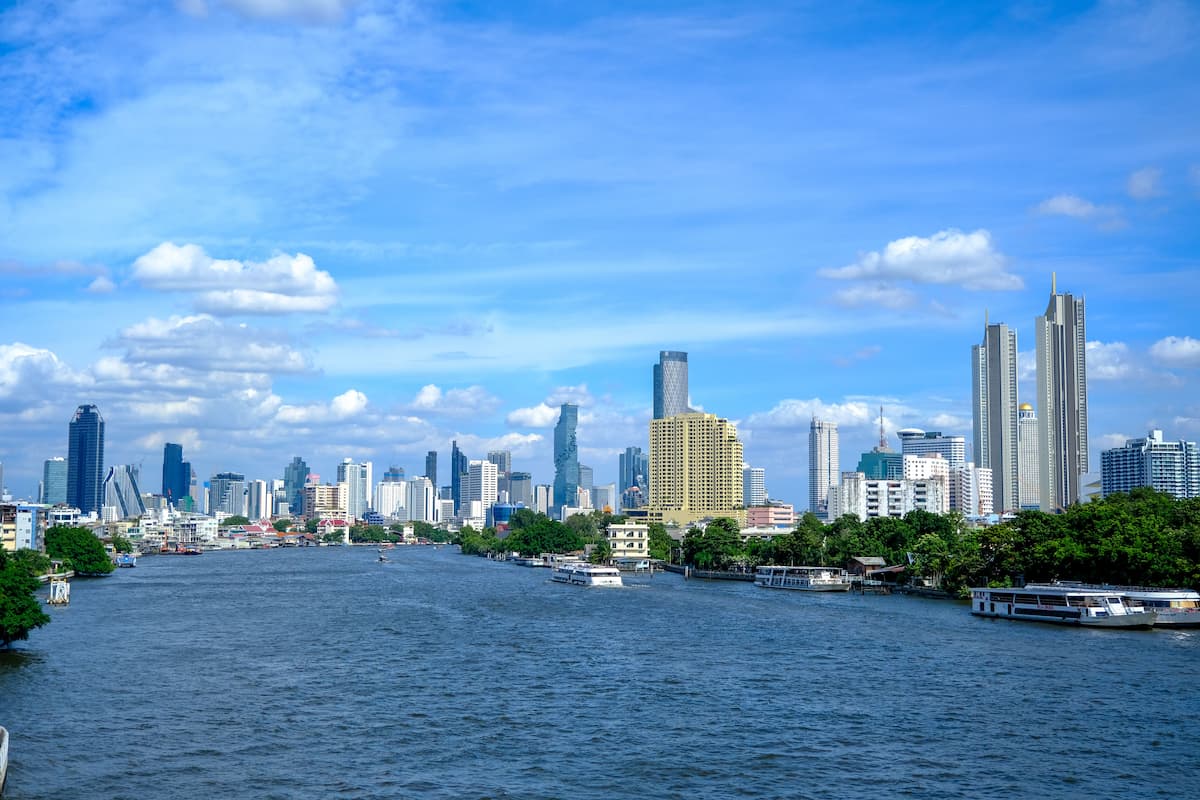
Bangkok – Best for Culture, Food and City Life
Bangkok is the natural starting point for exploring Central Thailand, but it deserves to be experienced as a destination rather than treated only as an arrival hub. The capital brings together royal landmarks, historic temples, traditional communities, contemporary culture, celebrated food and some of the country’s most energetic nightlife.
Why Choose Bangkok?
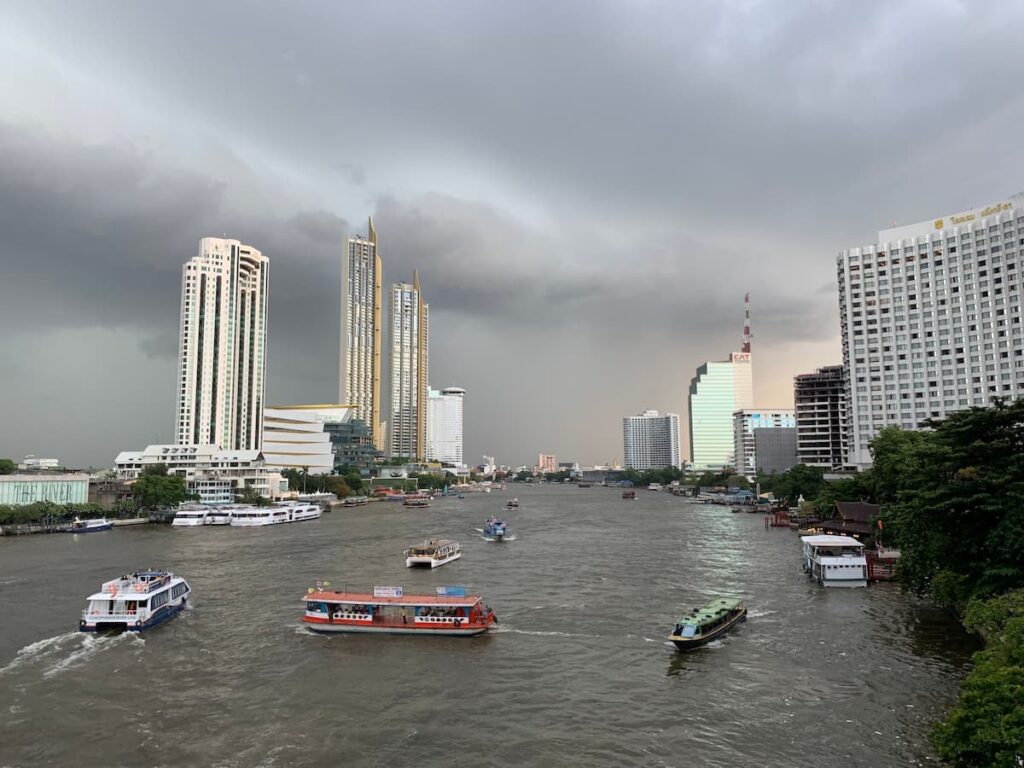
Few destinations in Thailand offer as much variety within one city. You can explore the Grand Palace, Wat Pho and Wat Arun, travel along the Chao Phraya River, wander through old neighbourhoods and markets, and then experience the shopping centres, restaurants and rooftop venues of modern Bangkok.
Food is one of the city’s greatest strengths. Street stalls, market vendors, family-run restaurants and internationally recognised dining rooms make it possible to explore regional Thai cooking alongside Chinese, Indian and other influences that have shaped the capital over generations.
Bangkok also provides Thailand’s widest choice of accommodation and the strongest public transport network. However, the city is extensive, and choosing the right area to stay can have a considerable effect on travel time and the character of your visit.
How Long Should You Stay in Bangkok?
Allow three to five full days for a first visit. Three days provide enough time for the principal temples, riverfront and several contrasting neighbourhoods, while four or five days create room for markets, museums, food experiences and a less hurried pace.
Avoid automatically counting arrival and departure days as full sightseeing days. Transfers from Suvarnabhumi or Don Mueang Airport can consume a significant part of the day, particularly when traffic is heavy or your accommodation is far from the airport.
Who Will Enjoy Bangkok Most?
Bangkok is particularly well suited to first-time visitors, food lovers, temple and culture enthusiasts, shoppers and travellers who enjoy the energy of a large city. It also works for people who prefer to base themselves in one well-connected location and take selected day trips rather than change accommodation continually.
Where Bangkok Fits into a Central Thailand Itinerary
Bangkok combines naturally with Ayutthaya, Nakhon Pathom and Samut Songkhram, all of which can be visited as day trips. Kanchanaburi and the Gulf coast are also accessible from the capital, but both become considerably more rewarding when treated as overnight or multi-day destinations.
Ayutthaya – Best for Ancient Temples and Thai History
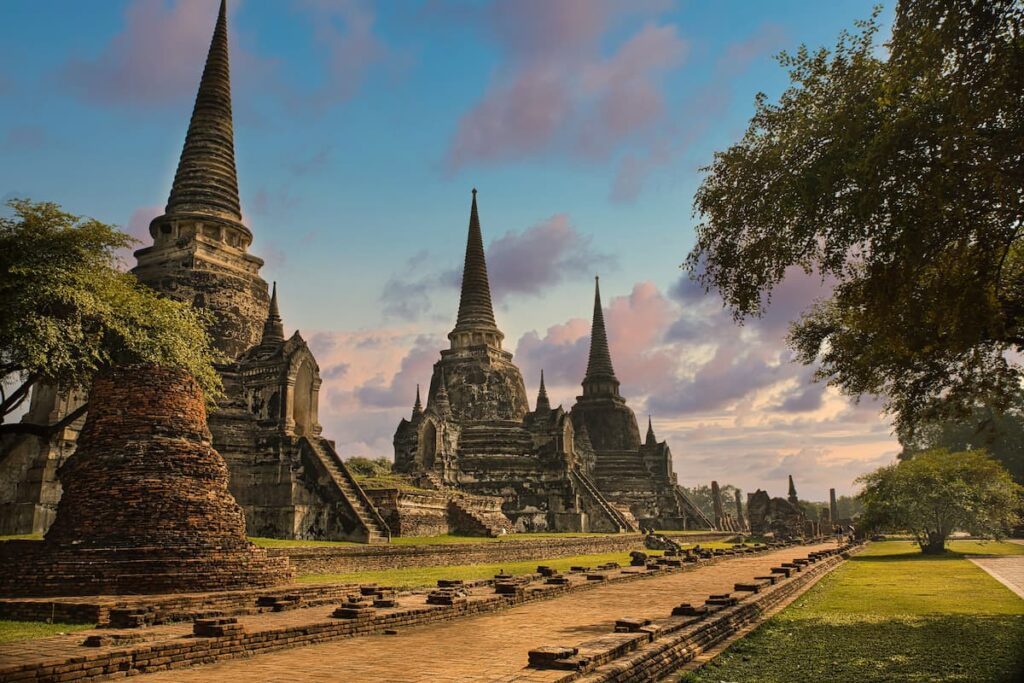
Once one of Southeast Asia’s most powerful cities, Ayutthaya is the most accessible major historical destination from Bangkok. Its ruined temples, monasteries and monumental prangs reveal the scale of the former Siamese capital, which flourished for more than four centuries before its destruction in 1767.
Why Choose Ayutthaya?
The UNESCO-listed Ayutthaya Historical Park contains many of the city’s most important remains. Wat Mahathat is known for its Buddha head entwined within tree roots, while Wat Phra Si Sanphet, Wat Ratchaburana and Wat Chaiwatthanaram each reveal a different part of Ayutthaya’s religious and royal history.
The destination offers more than a collection of ruins. Ayutthaya sits where the Chao Phraya, Pa Sak and Lopburi rivers meet, and its waterways, local neighbourhoods and food contribute to the experience. River prawns, boat noodles and roti sai mai are among the specialities worth trying during a visit.
The relatively compact historical area can be explored by bicycle, tuk-tuk or private transport. However, significant temples are spread across and beyond the central island, so attempting to walk between every major site is rarely the most practical approach.
Day Trip or Overnight Stay?
Ayutthaya works well as a full-day trip from Bangkok. Its principal ruins can be visited within one carefully planned day, making it a strong choice for travellers with limited time.
Staying overnight produces a slower and often more memorable experience. You can explore before many day tours arrive, remain for the softer late-afternoon light and enjoy the riverside atmosphere without watching the clock for the journey back to Bangkok.
Allow one full day for the headline historical sites or one night and parts of two days for a more complete visit.
Who Will Enjoy Ayutthaya Most?
Ayutthaya is particularly rewarding for travellers interested in Thai history, temple architecture, photography and cycling. It is also one of the easiest ways for first-time visitors to experience a destination beyond Bangkok without committing to a long journey.
Travellers with little interest in historical sites may find that one day is sufficient, while those who enjoy understanding how places developed could comfortably spend longer exploring the wider city.
Where Ayutthaya Fits into an Itinerary
Ayutthaya combines naturally with Bangkok and can also form part of a northbound journey by road or rail. Lopburi is a logical next stop for travellers interested in Khmer-influenced architecture and King Narai’s legacy, while Saraburi can be included by those continuing towards the countryside and Khao Yai region.
Kanchanaburi – Best for History, Rivers and Nature
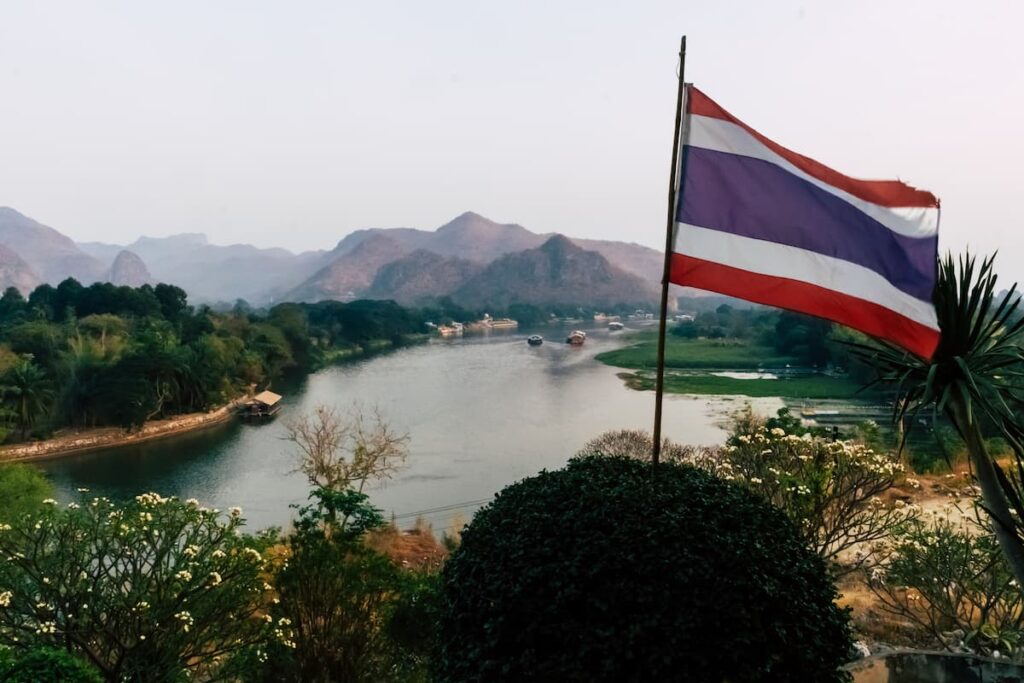
Kanchanaburi offers one of Central Thailand’s most varied journeys. The province is internationally known for the Death Railway and the Bridge over the River Kwai, but its rivers, waterfalls, forests and western mountains make it equally rewarding for travellers drawn to nature.
Why Choose Kanchanaburi?
Kanchanaburi town provides the most accessible introduction to the province’s Second World War history. The bridge, Kanchanaburi War Cemetery and museums tell part of the story of the prisoners of war and Asian labourers forced to construct the Thailand–Burma Railway under brutal conditions.
Travelling beyond the town reveals a very different side of the province. Erawan National Park is known for its tiered waterfall and forest trails, while Sai Yok combines river scenery, caves, waterfalls and sections of the historic railway. Riverside resorts and floating accommodation also make Kanchanaburi a place to slow down rather than move continually between attractions.
Travellers with more time can continue towards Sangkhla Buri near the Myanmar border. Its mountain setting, reservoir, Mon Bridge and culturally diverse communities create a distinctive experience, but it is far enough from Kanchanaburi town to require a separate commitment of time.
Kanchanaburi Town or the Wider Province?
A day trip from Bangkok can introduce you to the bridge, cemetery and railway history, but it cannot represent the full province. Kanchanaburi’s principal natural attractions are distributed across a large area, and travel between them can take considerably longer than the map initially suggests.
Stay in or near Kanchanaburi town if your priorities are the historical sites, riverfront and a short escape from Bangkok. Allow additional nights if you want to visit Erawan, explore Sai Yok or travel farther west to Sangkhla Buri.
How Long Should You Stay in Kanchanaburi?
Allow one or two days for Kanchanaburi town and its principal historical attractions. Two to three days provides time to add Erawan or Sai Yok without rushing, while an itinerary extending to Sangkhla Buri will normally require four days or more.
Kanchanaburi is therefore best approached as a multi-day destination when possible. The additional time allows its history and natural landscapes to complement one another rather than compete for a few hours.
Who Will Enjoy Kanchanaburi Most?
Kanchanaburi suits travellers interested in modern history, waterfalls, national parks, scenic rail journeys and relaxed riverside stays. It is also a strong choice for couples, families and road-trippers who want several different experiences within one province.
Where Kanchanaburi Fits into an Itinerary
Kanchanaburi combines naturally with Bangkok and works best as a dedicated journey west of the capital. Travellers with private transport can continue towards Nakhon Pathom or Ratchaburi, but attempting to include too many provinces can quickly turn a relaxed escape into a series of long road transfers.
Hua Hin and Cha-am – Best for an Accessible Coastal Break
Hua Hin and Cha-am offer the most convenient traditional beach holiday within easy reach of Bangkok. Their long Gulf coastline, extensive accommodation choice and relaxed atmosphere suit travellers who want to balance time in the capital with several slower days beside the sea.
Why Choose This Part of the Coast?
Hua Hin is the larger and more developed destination. Its appeal extends beyond the beach to night markets, seafood restaurants, golf courses, spas, water parks and a broad selection of resorts, hotels and guesthouses. It is particularly convenient for travellers who want a coastal break without giving up the restaurants and services of an established town.
Cha-am lies approximately 20 kilometres north of Hua Hin and offers a quieter, more locally oriented experience. Its long beachfront is popular with Thai families and weekend visitors, with seafood restaurants, casual accommodation and beach activities spread along the shore.
The surrounding coastline adds further variety. Travellers willing to continue south of Hua Hin can find quieter resort areas around Pranburi, mangrove landscapes and the dramatic limestone scenery of Khao Sam Roi Yot National Park.
Hua Hin or Cha-am?
Choose Hua Hin for the widest choice of accommodation, dining, markets, golf and evening activity. It is better suited to travellers who want a beach holiday combined with the convenience and variety of a developed resort town.
Choose Cha-am for a simpler and generally quieter seaside stay. It suits families, couples and travellers who are comfortable with fewer attractions and want the beach to remain the main focus of their visit.
Because the two destinations are close, it is possible to visit both. However, most travellers will have a more relaxed holiday by choosing the one that best matches their preferred atmosphere rather than changing accommodation between them.
How Long Should You Stay?
Allow two to four nights. Two nights provide a short break from Bangkok, while three or four allow time for the beach, markets and an excursion to nearby palaces, viewpoints or natural areas.
Although a day trip is technically possible, it provides little opportunity to enjoy what makes the coast appealing. Hua Hin and Cha-am work best as places to slow down rather than as attractions to briefly see.
Who Will Enjoy Hua Hin and Cha-am Most?
This part of the coast is particularly suitable for families, couples, golfers, resort travellers and visitors who want a beach stay without taking another flight. It also works well at the end of a Bangkok and Central Thailand itinerary when the priority shifts from sightseeing to relaxation.
What Should You Expect from the Beaches?
The beaches are long, accessible and supported by mature tourism infrastructure, but they should not be presented as direct substitutes for Phuket, Krabi or Thailand’s tropical islands. Their strength lies in convenience, relaxed coastal living, accommodation and food rather than exceptionally clear water or dramatic island scenery.
Travellers who understand that distinction are far more likely to appreciate Hua Hin and Cha-am for what they do particularly well.
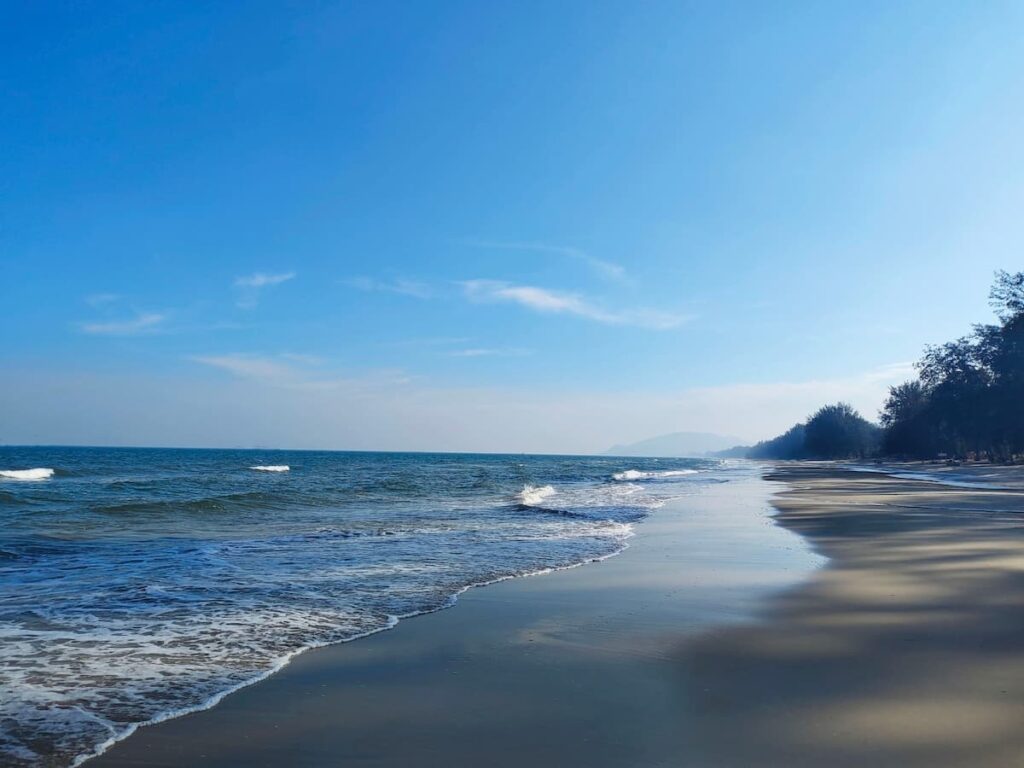
Phetchaburi – Best for Heritage, Caves and Wilderness
Phetchaburi is often passed on the journey from Bangkok to Cha-am or Hua Hin, but the province deserves attention in its own right. Its royal architecture, historic temples, cave sanctuaries, distinctive food and access to the forests of Kaeng Krachan create one of Central Thailand’s most varied and understated destinations.
Why Choose Phetchaburi?
Phra Nakhon Khiri Historical Park rises above Phetchaburi town and brings together royal residences, temples and viewpoints across three hilltops. Built during the reign of King Rama IV, the complex reflects a mixture of Thai, Chinese and European architectural influences and remains the city’s most recognisable landmark.
Below the hill, Phetchaburi’s old neighbourhoods contain important temples, traditional wooden buildings and shops producing the sweets for which the province is known. Khao Luang Cave provides a contrasting experience, with Buddha images arranged inside a limestone cavern illuminated by natural openings above.
The wider province extends from the Gulf coast to the forested mountains along the Myanmar border. This allows travellers to combine history and food with beaches, caves, birdlife and national-park landscapes within the same part of Central Thailand.
Phetchaburi Town or Kaeng Krachan?
Choose Phetchaburi town for royal heritage, temple architecture, caves and local food. Its principal cultural attractions can be explored in one full day, making the town a worthwhile stop while travelling between Bangkok and the coast.
Choose Kaeng Krachan for forests, wildlife, birdwatching and a more immersive outdoor experience. The national park forms part of the UNESCO-listed Kaeng Krachan Forest Complex, but it should not be treated as a quick extension of a town visit. Distances, access conditions and the location of different park areas require separate planning.
Combining both experiences reveals the province’s full range, but it is best done over several days rather than compressed into a single excursion.
How Long Should You Stay?
Allow one full day or an overnight stay for Phetchaburi town. Two to three days are more appropriate when including Kaeng Krachan or combining the historical area with the province’s coast and countryside.
Phetchaburi can also work as a meaningful stop between Bangkok and Hua Hin, adding cultural depth to an itinerary otherwise focused on the capital and beach.
Who Will Enjoy Phetchaburi Most?
Phetchaburi particularly suits travellers interested in architecture, temples, photography, regional food and less crowded historical destinations. Kaeng Krachan adds strong appeal for birdwatchers, wildlife enthusiasts and visitors who prefer forests to cities or beaches.
Where Phetchaburi Fits into an Itinerary
Phetchaburi combines naturally with Cha-am and Hua Hin, while Kaeng Krachan can become the focus of a separate nature-based journey. It is an especially good choice for travellers moving south by road or rail who want to experience more than the familiar route between Bangkok and the coast.
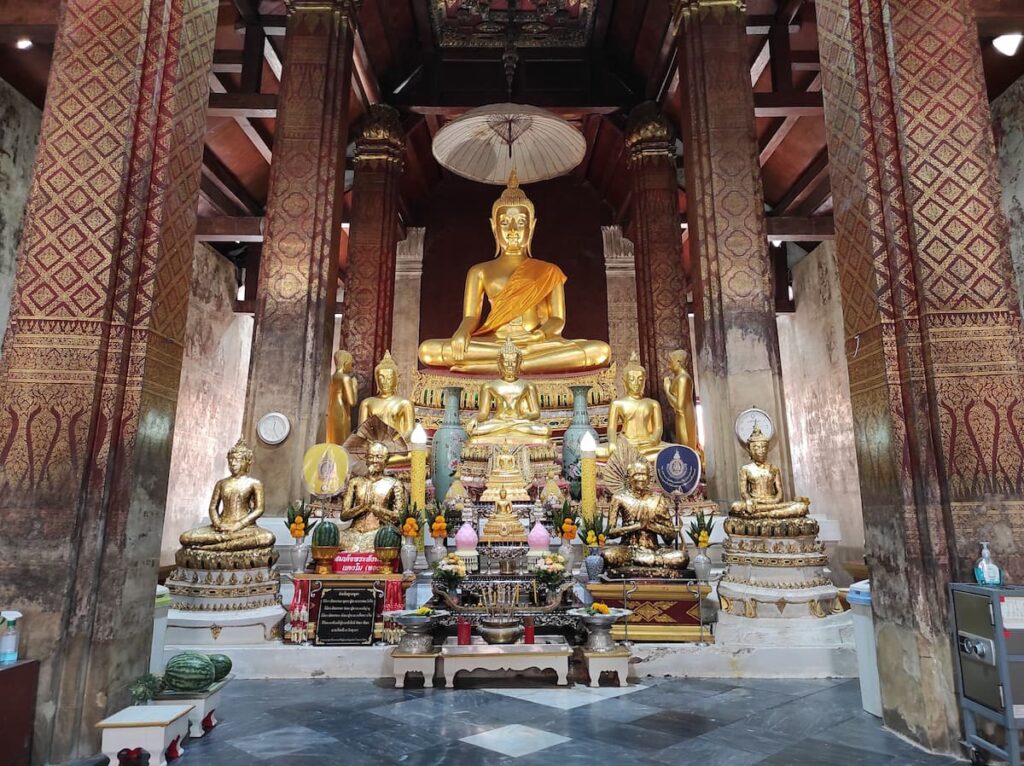
Samut Songkhram – Best for Markets and Canal Life
Samut Songkhram is one of Thailand’s smallest provinces, but it offers one of the most concentrated collections of market and canal experiences near Bangkok. The Mae Klong River, railway, orchards and waterways continue to shape local life, making the province particularly rewarding for travellers interested in food, photography and traditional communities.
Why Choose Samut Songkhram?
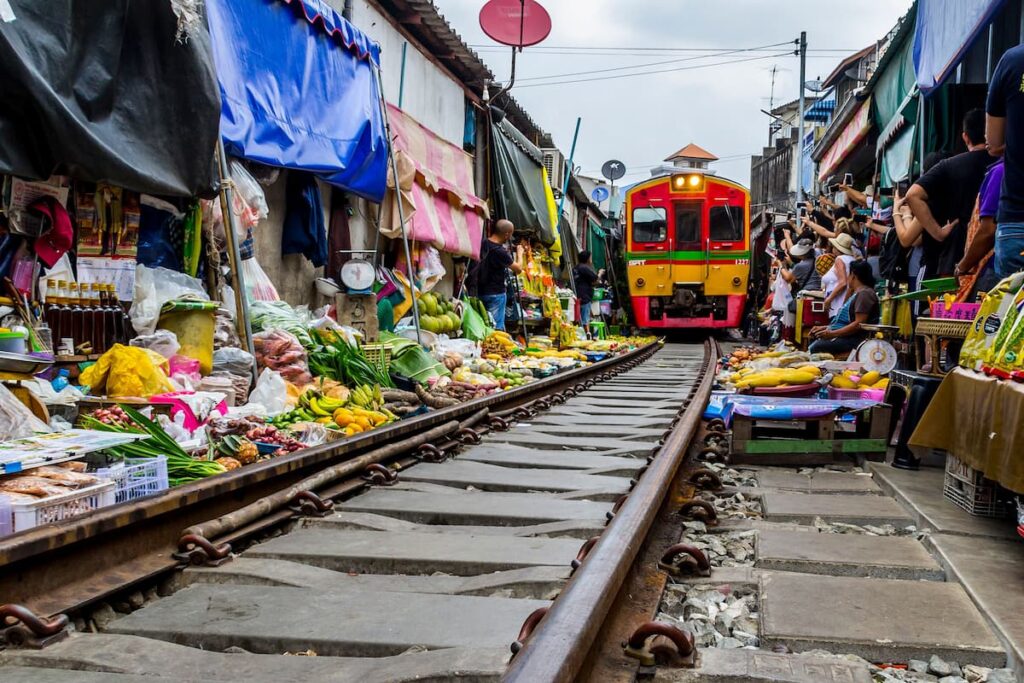
Mae Klong Railway Market is the province’s most immediately recognisable attraction. Vendors arrange produce beside and across the railway tracks, temporarily drawing back their awnings and moving goods as scheduled trains pass through the market. The spectacle attracts visitors, but Mae Klong remains a functioning fresh market rather than a purpose-built attraction.
Amphawa offers a different experience. Its canal is lined with wooden buildings, food vendors, cafés and accommodation, creating a lively waterside atmosphere later in the day. Boat trips explore the surrounding waterways, temples and riverside communities, with evening firefly tours also widely offered.
Tha Kha Floating Market is smaller and generally feels more closely connected to the surrounding agricultural community. Coconut plantations, orchards and traditional sugar production provide a deeper view of the province beyond its best-known markets.
Which Market Experience Should You Choose?
Choose Mae Klong Railway Market for its unusual interaction between the railway and a working local market. Visit around a scheduled train movement, but allow time to explore the produce stalls rather than arriving only for the few minutes when the train passes.
Choose Amphawa for food, weekend atmosphere and an evening beside the canal. It is the strongest option for travellers who want to stay overnight and experience the area after many Bangkok day tours have departed.
Choose Tha Kha for a smaller and generally quieter market experience connected to orchards and canal-side communities. It is better suited to travellers prioritising local atmosphere over the scale and activity of Amphawa.
Day Trip or Overnight Stay?
A day trip can combine Mae Klong with a floating market or another nearby attraction. However, the experience depends heavily on the day of the week, market operating patterns and railway timetable, so it should be planned rather than approached as a completely flexible excursion.
Staying one night allows you to experience Amphawa later in the day, explore the canals at a slower pace and avoid spending much of the visit travelling to and from Bangkok.
Who Will Enjoy Samut Songkhram Most?
The province suits food lovers, photographers, market enthusiasts and travellers interested in river communities and traditional livelihoods. It is also a good choice for visitors who want a distinctive experience beyond Bangkok without committing to a long journey.
Where Samut Songkhram Fits into an Itinerary
Samut Songkhram combines naturally with Bangkok and can also be paired with Damnoen Saduak in neighbouring Ratchaburi. Travellers continuing south can incorporate it before Phetchaburi, Cha-am or Hua Hin, although an overnight stay is preferable if Amphawa is a principal reason for visiting.
Ratchaburi – Best for Local Culture and Mountain Countryside
Ratchaburi is best known internationally for Damnoen Saduak Floating Market, but the province extends from the agricultural plains west of Bangkok to forested mountains along the Myanmar border. Historic remains, ceramics, caves, waterfalls and countryside resorts make it considerably more varied than a single morning market excursion suggests.
Why Choose Ratchaburi?
Damnoen Saduak provides the province’s most famous image, with vendors selling fruit, food and other goods from boats along its canal network. Visiting early offers the strongest market activity, while exploring beyond the busiest section provides a better sense of the surrounding orchards and waterside communities.
Ratchaburi town offers a different experience. Its museum, temples and archaeological sites introduce the province’s Dvaravati heritage, while its long tradition of pottery is represented by the large glazed dragon jars that have become a local symbol. Contemporary ceramic workshops and galleries show how that craft continues to develop.
Farther west, Suan Phueng replaces the plains and canals with hills, forest, waterfalls and hot springs. Its cooler rural setting and collection of small resorts make it a popular escape from Bangkok, particularly among domestic travellers.
Which Part of Ratchaburi Should You Visit?
Choose Damnoen Saduak for a famous floating-market experience that can be combined with Samut Songkhram.
Choose Ratchaburi town for local history, temples, museums and ceramics without the visitor numbers associated with the market.
Choose Suan Phueng for mountain scenery, countryside accommodation, waterfalls and a slower rural break. It is sufficiently far from Damnoen Saduak and the provincial capital that it should be treated as a separate part of the journey rather than an effortless addition.
How Long Should You Stay?
Damnoen Saduak can be visited during a morning excursion, while Ratchaburi town can be explored in approximately one day. Allow two or three days when including Suan Phueng and the western countryside.
The province’s attractions are dispersed, so private transport makes a substantial difference. Travellers relying on public transport may find it more practical to concentrate on one area rather than attempt to connect the market, town and mountains within the same short visit.
Who Will Enjoy Ratchaburi Most?
Ratchaburi suits road-trippers, market visitors, travellers interested in local crafts and repeat visitors looking beyond Central Thailand’s most familiar destinations. Suan Phueng particularly appeals to couples, families and anyone wanting a relaxed countryside stay within reach of Bangkok.
Where Ratchaburi Fits into an Itinerary
Damnoen Saduak combines naturally with Mae Klong and Amphawa, while Ratchaburi town can become a stop on the route towards Kanchanaburi or Phetchaburi. Suan Phueng works better as the focus of a dedicated western road trip than as one more attraction added to a busy Bangkok day tour.
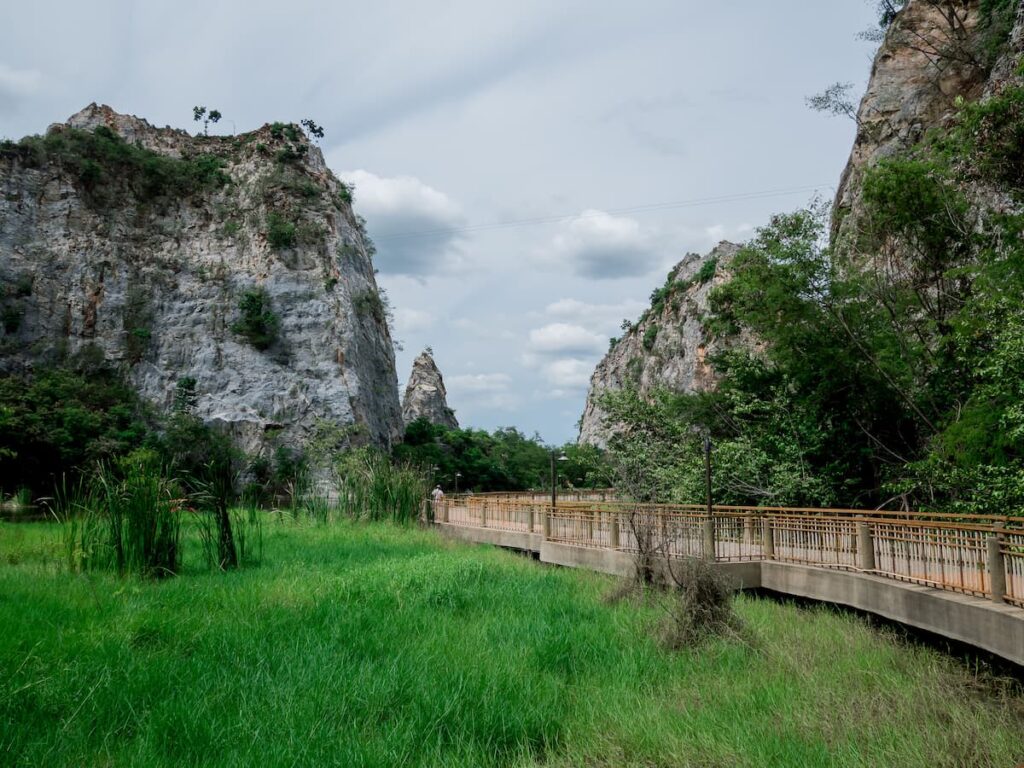
Nakhon Pathom – Best for an Easy Cultural Day Trip
Nakhon Pathom offers Buddhist heritage, Dvaravati history and regional food within easy reach of Bangkok. Although it does not provide the range of experiences found in Ayutthaya or Kanchanaburi, it is a rewarding choice for travellers wanting a comfortable cultural excursion beyond the capital.
Why Choose Nakhon Pathom?
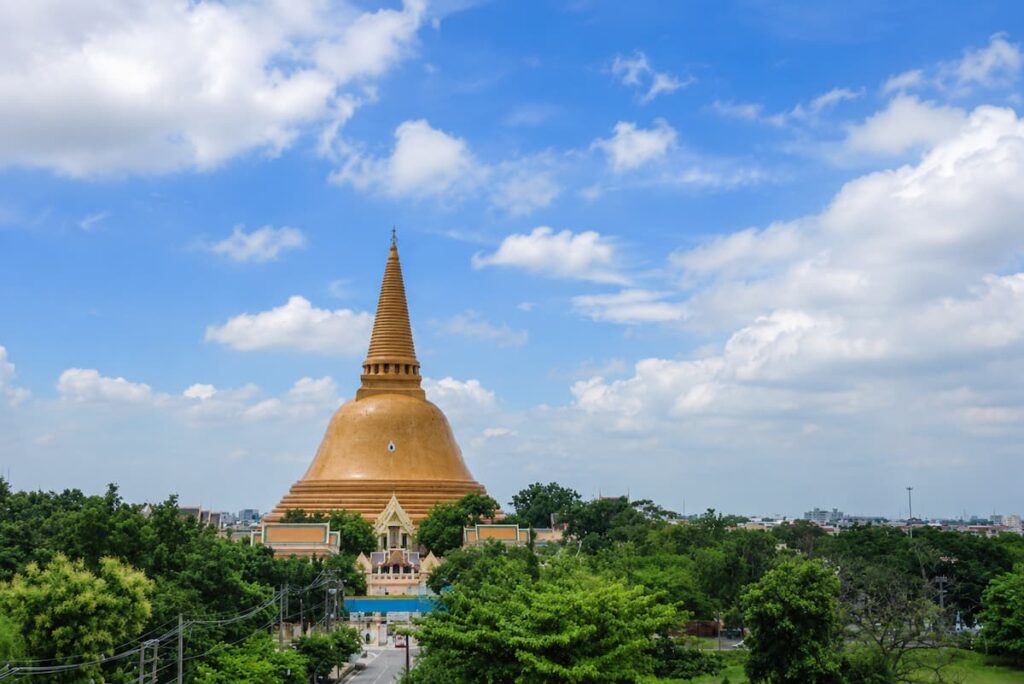
Phra Pathom Chedi dominates the city centre and provides the principal reason to visit. Considered the tallest stupa in Thailand, the immense structure stands on a site traditionally associated with the early introduction of Buddhism to the region.
The surrounding temple complex and nearby market allow visitors to combine religious heritage with an introduction to local food. Nakhon Pathom is particularly known for its pomelos, but the city and wider province also offer busy markets, traditional dishes and agricultural products from the fertile plains west of Bangkok.
Sanam Chandra Palace adds another historical dimension. Its collection of elegant residences was constructed during the reign of King Rama VI and contrasts with the much older religious identity represented by Phra Pathom Chedi.
How Long Do You Need?
One full day is sufficient for most visitors. Nakhon Pathom works particularly well when you want to leave Bangkok without committing to the longer journey or greater number of historical sites found in Ayutthaya.
An overnight stay is not usually necessary unless you plan to explore the wider province, travel slowly or continue west the following morning.
Who Will Enjoy Nakhon Pathom Most?
Nakhon Pathom best suits travellers interested in Buddhism, architecture, markets and regional food. It is also a useful alternative for repeat Bangkok visitors who have already seen the capital’s principal landmarks and want a less demanding provincial experience.
Travellers seeking extensive ruins, dramatic nature or a broad choice of evening activities will generally find Ayutthaya or Kanchanaburi more suitable.
Where Nakhon Pathom Fits into an Itinerary
Nakhon Pathom can be visited as a dedicated day trip from Bangkok or used as a cultural stop while travelling west towards Kanchanaburi or Ratchaburi. Its location makes it easy to incorporate, but its value comes from spending time around the temple, market and city rather than treating it only as somewhere passed on the road.
Lopburi – Best for Khmer Ruins and King Narai’s Legacy
Lopburi is widely associated with the macaques living around its historic centre, but the city’s real significance lies in its layered history. Khmer-influenced monuments, Ayutthaya-period palaces and evidence of international diplomacy during the reign of King Narai make it one of Central Thailand’s most distinctive destinations for history-focused travellers.
Why Choose Lopburi?
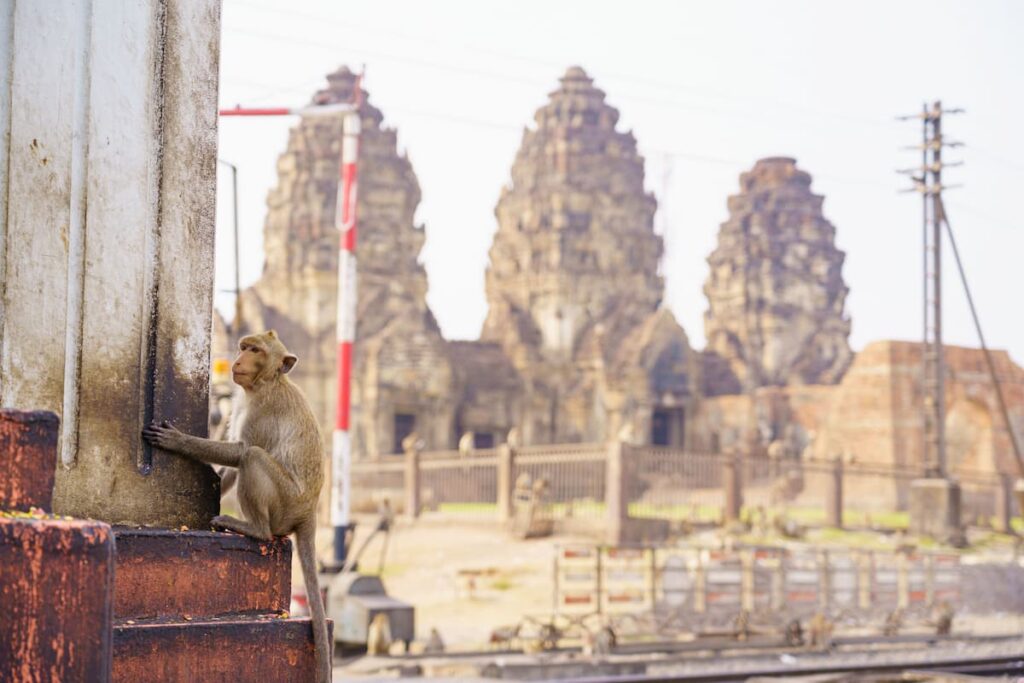
Phra Prang Sam Yot is Lopburi’s best-known landmark. Its three connected towers reflect the city’s Khmer heritage and stand near several other historic structures within the compact old town.
King Narai’s Palace represents a later and equally important chapter. King Narai used Lopburi as a second capital during the 17th century, and the palace complex now contains the Somdet Phra Narai National Museum. Nearby Ban Wichayen, once used to receive foreign diplomatic missions, reveals the international relationships and architectural influences of the period.
Wat Phra Si Rattana Mahathat adds further depth, with structures representing several periods of construction and influence. Together, these sites make Lopburi much more than an unusual stop for photographs of monkeys.
Lopburi Beyond the Monkeys
The macaques are part of the experience around Phra Prang Sam Yot and neighbouring streets, but they should not be the only reason to visit. Their behaviour can be unpredictable, and visitors should secure food, drinks, glasses, phones and loose belongings rather than attempting close interactions.
Approaching Lopburi through its history creates a more rewarding visit. The monkeys become one element of the modern city rather than a distraction from the temples, palace and stories that give it lasting importance.
How Long Do You Need?
One full day is sufficient to explore the principal sites in Lopburi’s historic centre. An overnight stay may be worthwhile if you prefer a slower visit, plan to explore the wider province or want to continue north the following morning.
The city can also be visited after Ayutthaya, although attempting to cover both historical centres properly within the same day would create an unnecessarily rushed experience.
When Should You Visit?
Lopburi’s historical attractions can be visited throughout the year, but its sunflower fields are seasonal. Flowering generally occurs between November and January, with the best dates varying according to rainfall, planting schedules and the individual field.
The fields lie outside the historic centre, so visitors travelling specifically for the sunflowers should confirm current conditions and arrange suitable transport rather than assuming they are part of a straightforward town visit.
Who Will Enjoy Lopburi Most?
Lopburi particularly suits travellers interested in Khmer architecture, Ayutthaya-period history and destinations with a more specialised cultural focus. It also works well for photographers and visitors travelling north by road or rail.
Where Lopburi Fits into an Itinerary
Lopburi combines most naturally with Ayutthaya or forms a stop on a longer northbound journey. Travellers with private transport can also incorporate Saraburi, Pa Sak Jolasid Dam or seasonal sunflower areas, but these require more time than the compact historic centre.
Nakhon Nayok and Saraburi – Best for Waterfalls and Outdoor Escapes
Nakhon Nayok and Saraburi offer accessible countryside, waterfalls and outdoor activities within reach of Bangkok. Neither province has one dominant international attraction, but both suit travellers who want to exchange the capital’s traffic and density for rivers, farms, forest edges and relaxed provincial resorts.
Although they share a similar role as short nature escapes, they are separate destinations. Nakhon Nayok is the stronger choice for rafting, dams and waterfalls, while Saraburi combines religious heritage with countryside attractions around Muak Lek.
Choose Nakhon Nayok For Waterfalls, Rafting and the Countryside
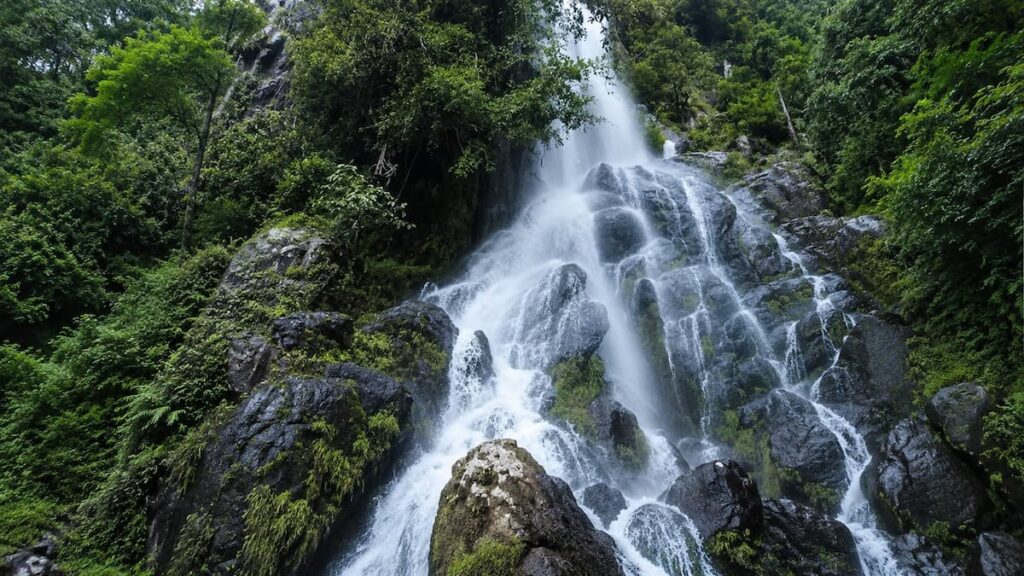
Khun Dan Prakan Chon Dam is Nakhon Nayok’s most prominent landmark, surrounded by forested hills and waterways that can be explored by boat when conditions allow. The province is also known for Sarika and Nang Rong waterfalls, riverside recreation and rafting suitable for travellers seeking accessible outdoor activity rather than a remote expedition.
Parts of Khao Yai National Park extend into Nakhon Nayok, although the province should not be presented as interchangeable with the more developed visitor areas around Pak Chong. Reaching particular trails, waterfalls or entrances requires advance planning and suitable transport.
Nakhon Nayok works particularly well as a short countryside break for families, groups and active travellers. Many of its attractions lie outside the provincial centre, making a private vehicle or arranged tour considerably more useful than relying entirely on public transport.
Choose Saraburi For Temples, Muak Lek and Seasonal Landscapes
Wat Phra Phutthabat is Saraburi’s most important religious site, centred on a footprint believed by devotees to be associated with the Buddha. It gives the province a cultural and spiritual dimension beyond its natural attractions.
Around Muak Lek, visitors can find farms, resorts and access to the seven-tiered Chet Sao Noi Waterfall. Saraburi and neighbouring Lopburi are also known for sunflower fields, although these are seasonal agricultural landscapes rather than permanent attractions.
Saraburi is particularly useful as a stop between Bangkok, Ayutthaya and the Khao Yai area. It suits travellers who enjoy combining temples, countryside and food without needing the scale of activities available in Kanchanaburi.
How Long Should You Stay?
Either province can be visited on a long day from Bangkok, but one or two nights allows a more relaxed experience. An overnight stay is especially worthwhile when combining several waterfalls, rafting, farms or countryside attractions spread beyond the main towns.
Travellers should also account for the journey out of Bangkok. A destination may appear close on a map, but traffic and the final transfer from the provincial centre to a waterfall or rural accommodation can substantially extend the travel time.
When Should You Visit?
Waterfalls generally become more impressive during and immediately after the wetter months, although heavy rainfall can also affect safety, water conditions and access. During drier periods, some falls may carry considerably less water.
Sunflower fields usually bloom between approximately November and January, but timing varies between farms and seasons. Check current local conditions before making them the principal reason for a journey.
Who Will Enjoy Nakhon Nayok and Saraburi Most?
These provinces suit active travellers, families, repeat Bangkok visitors and anyone wanting an uncomplicated countryside break. Choose Nakhon Nayok when waterfalls and river activities are the priority, or Saraburi when you want to combine natural surroundings with temples and a journey towards Khao Yai.
Travellers seeking a destination with several days of major historical and natural attractions will generally find Kanchanaburi stronger. Nakhon Nayok and Saraburi work best when their specific experiences match what you want from a shorter escape.
Can You Explore Central Thailand from One Base?
Bangkok is the most practical base for selected day trips in Central Thailand, but it is not an efficient base for the entire region. Ayutthaya, Nakhon Pathom and Samut Songkhram are close enough for comfortable excursions when transport and operating times are planned in advance.
Staying in Bangkok also removes the inconvenience of repeatedly changing hotels. This can be particularly useful for travellers with limited time who want to experience the capital while adding one historical city, market community or nearby province.
However, returning to Bangkok each evening becomes less practical as destinations grow more distant or their attractions become more dispersed. A day trip may introduce you to Kanchanaburi’s wartime history, but it leaves little time for Erawan, Sai Yok or a relaxed riverside stay. Phetchaburi and Ratchaburi also contain attractions spread across their towns, countryside and mountain areas, making repeated journeys from the capital inefficient.
Hua Hin and Cha-am should be treated as coastal stays rather than Bangkok sightseeing excursions. The same principle applies to Kaeng Krachan, Suan Phueng and the remote western districts of Kanchanaburi: their value comes from spending time in the landscape, not briefly arriving before beginning the return journey.
A balanced approach is to use Bangkok as a base for one or two nearby day trips, then change accommodation when travelling farther west or south. This keeps the convenient journeys convenient while giving the region’s larger and more distant destinations enough time to be properly experienced.
Suggested Central Thailand Destination Combinations
Central Thailand is easiest to explore by combining destinations that lie in the same direction from Bangkok. Choosing a coherent route reduces repeated transfers through the capital and leaves more time for the experiences that made you choose each place.
These combinations are starting points rather than fixed itineraries. The number of destinations you include should reflect how much time you have and whether you prefer a relaxed holiday or a faster journey between headline attractions.
For a First Central Thailand Visit
Bangkok, Ayutthaya and Kanchanaburi
This combination introduces three contrasting sides of the region: Bangkok’s food, temples and city life; Ayutthaya’s ancient ruins; and Kanchanaburi’s wartime history, rivers and waterfalls.
Allow at least one week to experience all three without continually rushing. Bangkok should receive three or four full days, Ayutthaya one day or an overnight stay, and Kanchanaburi at least two nights.
For Culture and the Coast
Bangkok, Phetchaburi and Hua Hin or Cha-am
Begin with Bangkok before travelling south to Phetchaburi for royal heritage, temples, caves and regional food. Continue to Hua Hin or Cha-am for several days beside the Gulf of Thailand.
This route works particularly well for travellers who want an active cultural beginning followed by a slower coastal finish. Allow approximately seven to ten days, depending on how extensively you want to explore Bangkok and whether you include Kaeng Krachan or the quieter coast south of Hua Hin.
For Markets and Local Communities
Bangkok, Samut Songkhram and Ratchaburi
This combination moves west through railway markets, floating markets, canals, orchards and provincial communities. Mae Klong and Amphawa provide the strongest market experiences, while Ratchaburi adds ceramics, historical sites or the mountain countryside around Suan Phueng.
The route is easiest with private transport, particularly if travelling beyond Damnoen Saduak and Ratchaburi town. Allow three or four days outside Bangkok if you want to include the western countryside rather than limiting the journey to market stops.
For Ancient History
Bangkok, Ayutthaya and Lopburi
This route connects Bangkok’s royal and religious landmarks with two earlier centres of power. Ayutthaya reveals the scale of the former Siamese capital, while Lopburi adds Khmer-influenced monuments and the diplomatic history of King Narai’s reign.
Allow one or two days in Ayutthaya and one day in Lopburi rather than attempting both cities in a single rushed excursion. The route can also form the beginning of a longer northbound journey.
For Nature and Outdoor Experiences
Bangkok with Kanchanaburi or Nakhon Nayok
Choose Kanchanaburi when you have several days and want the strongest combination of forests, waterfalls, rivers and history. Its scale and variety justify a dedicated two-to-four-day journey.
Choose Nakhon Nayok when you want a shorter escape centred on waterfalls, rafting and countryside resorts closer to Bangkok. One or two nights will usually be sufficient.
Trying to include both within a short itinerary adds travel without creating a more coherent experience. Selecting the province that best matches your available time will usually result in a more relaxed and rewarding journey.
Which Central Thailand Destination Should You Choose?
Choose Bangkok if you want the region’s greatest variety of temples, food, markets, culture and city life. It is the natural starting point for a first visit, but it deserves several full days rather than being treated only as a transport hub.
Add Ayutthaya when you want an accessible introduction to Thailand’s ancient history, or choose Kanchanaburi when rivers, waterfalls and natural landscapes matter as much as historical sites.
Choose Hua Hin or Cha-am for a relaxed coastal stay within reach of Bangkok. Add Phetchaburi when you want to bring royal heritage, caves, local food or forest experiences into the same southbound journey.
Choose Samut Songkhram for railway markets, floating markets and canal communities, while Ratchaburi is better suited to travellers interested in ceramics, provincial culture and the mountain countryside around Suan Phueng.
Consider Nakhon Pathom for an easy cultural day trip, Lopburi for Khmer architecture and King Narai’s history, or Nakhon Nayok and Saraburi for a shorter outdoor escape from Bangkok.
There is no single destination that represents all of Central Thailand. The best choice is the one that matches your interests, available time and preferred pace of travel. Choosing fewer places and allowing enough time to understand their differences will usually create a more rewarding journey than attempting to include every possible stop.
Travel With Insight
One of the most important lessons I have learned while travelling in Thailand is that distance on a map does not always reflect the real effort involved in reaching a destination. Bangkok’s traffic, transfers from the airport and the distance between a provincial centre and its surrounding attractions can turn what appears to be a short journey into a substantial part of the day.
This matters particularly in Central Thailand because so many places are promoted as possible day trips from Bangkok. Ayutthaya and Nakhon Pathom can work comfortably that way, but travelling to Kanchanaburi, Hua Hin or the western countryside simply to return to Bangkok that evening can leave more time spent in transit than experiencing the destination.
I have increasingly found that choosing fewer places produces the better journey. Staying overnight creates time to experience a destination after the tour groups leave, enjoy its food and atmosphere, and understand what makes it different from the next place on the route.
Central Thailand makes it easy to keep adding destinations, but you do not need to see all of them in one holiday. Choose the experiences that matter most to you and allow enough time to enjoy them without continually watching the clock.
Frequently Asked Questions About Where to Go in Central Thailand
What are the best places to visit in Central Thailand?
Bangkok, Ayutthaya, Kanchanaburi, Hua Hin and Phetchaburi offer the strongest range of experiences for most visitors. Samut Songkhram, Ratchaburi, Nakhon Pathom, Lopburi, Nakhon Nayok and Saraburi provide worthwhile alternatives for particular interests or shorter journeys.
Where should first-time visitors go in Central Thailand?
Bangkok, Ayutthaya and Kanchanaburi create the strongest introduction to Central Thailand. Together, they combine major temples, food, city life, ancient history, wartime heritage, rivers, waterfalls and forest landscapes.
Which Central Thailand destinations can be visited as day trips from Bangkok?
Ayutthaya, Nakhon Pathom and Samut Songkhram can be comfortably visited on well-planned day trips. Lopburi, Nakhon Nayok and parts of Kanchanaburi are also possible, but longer travel times can make staying overnight more enjoyable.
Where should I go in Central Thailand for beaches?
Hua Hin and Cha-am are the region’s principal beach destinations. Choose Hua Hin for greater dining, accommodation and activity choices or Cha-am for a quieter and more locally oriented coastal stay. Neither should be expected to resemble the tropical island beaches of Southern Thailand.
Where should I go in Central Thailand for history?
Choose Ayutthaya for the remains of the former Siamese capital, Kanchanaburi for Second World War history and Lopburi for Khmer-influenced architecture and King Narai’s legacy. Phetchaburi and Nakhon Pathom provide additional royal, religious and Dvaravati heritage.
Where should I go in Central Thailand for nature?
Kanchanaburi offers the greatest variety, including rivers, waterfalls, forests and national parks. Nakhon Nayok is better for a shorter outdoor escape from Bangkok, while Kaeng Krachan in Phetchaburi suits travellers interested in forests, birdwatching and wildlife.
How many days do you need for Central Thailand?
Allow at least seven days to combine Bangkok with two additional destinations at a comfortable pace. Ten to fourteen days provides enough time to add Ayutthaya, Kanchanaburi and a coastal or countryside stay without turning the journey into a series of rushed transfers.
Do you need a car to explore Central Thailand?
Bangkok, Ayutthaya, Hua Hin, Kanchanaburi town and Lopburi can be reached using public transport. A car becomes more useful when exploring national parks, waterfalls, Suan Phueng, Kaeng Krachan or attractions spread across the wider provinces.
Continue Exploring Thailand
Use these guides to place Central Thailand within a wider journey and explore its destinations and experiences in greater depth.
Explore Thailand’s regions, islands, cities, landscapes and cultural experiences to decide which parts of the country belong in your holiday.
Central Thailand Travel Guide
Discover the character of Central Thailand, including its history, food, landscapes, transport and the practical decisions involved in planning your journey.
Southern Thailand Travel Guide
Continue south from Bangkok, Phetchaburi and the upper Gulf coast to explore Thailand’s tropical islands, national parks, beaches and culturally distinctive southern provinces.
Related Reading
Must-See Attractions in Central Thailand
Discover the landmarks, historic sites, natural attractions and cultural experiences that deserve priority across the region.
Best Temples in Central Thailand
Explore ancient ruins, royal temples, pilgrimage sites and remarkable Buddhist architecture in Bangkok and the surrounding provinces.
Journey through ancient capitals, archaeological sites, wartime landmarks and other places that reveal different periods of Thailand’s history.
How to Plan a Thailand Itinerary
Balance travel time, destinations and experiences to create a realistic Thailand route without turning your holiday into a succession of rushed transfers.
About the Author
David Hibbins is a travel publisher, destination researcher and the creator of Travel With Insight.
Through years of travel, tourism and publishing projects across Southeast Asia, he has developed a particular interest in how travellers research destinations, compare experiences and make travel decisions.
His work focuses on helping travellers move beyond popularity rankings, marketing claims and generic “best of” lists by providing balanced, research-driven destination guides. Rather than telling people where they should travel, his goal is to help readers understand the strengths, limitations and unique character of each destination so they can choose the places that best match their own interests, travel style and goals.
As the creator of Travel With Insight, David researches destinations throughout Southeast Asia, exploring not only where travellers go, but why they choose certain places, how destinations differ and what creates genuinely memorable travel experiences.
His work covers destination research, regional travel planning, traveller behaviour and the decision-making frameworks that help people plan more rewarding journeys.
Explore More Travel Resources
Every great journey begins with informed decisions. The more you understand a destination before you arrive, the more rewarding your travel experience becomes.
Whether you’re still researching Southern Thailand or you’re ready to start planning your itinerary, these additional resources can help.
Travel With Insight
Continue exploring our in-depth destination guides, travel inspiration and practical planning advice designed to help you make informed travel decisions throughout Thailand and Southeast Asia.
Go Find Asia
Looking for even more travel inspiration? Go Find Asia explores destinations, experiences and travel ideas across Asia, helping you discover where to go, what to see and how to plan your next adventure.
Resurgence Travel
When you’re ready to turn your research into reality, Resurgence Travel offers curated itineraries, personalised travel planning and local expertise to help you experience the very best of Thailand and Southeast Asia.
4 Comments
Comments are closed.